The difference between a frustrating first flight and a soaring hobby often comes down to one decision: picking the right airframe. Many newcomers grab the cheapest option, only to face unstable flight characteristics, short battery cycles, and fragile components that break on the first hard landing. A well-chosen electric RC plane delivers predictable handling, durable construction, and enough performance to grow your skills without constantly repairing the airframe.
I’m Amir — the founder and writer behind Four Wheel Ask. My approach to evaluating RC aircraft focuses on cross-referencing manufacturer specifications with real-world owner feedback to identify which models actually deliver on their promises of stability and durability.
After analyzing dozens of models, seven planes stand out for their ability to balance price, performance, and build quality. This guide breaks down each option so you can confidently choose the best electric rc planes that matches your skill level and flying ambitions.
How To Choose The Best Electric RC Planes
Selecting an RC plane involves matching your experience level with the right technology. Beginners need forgiving stabilization and durable construction, while experienced pilots may want more control authority for aerobatics. Understanding a few core specifications will help you narrow the field quickly.
Stabilization Systems
Gyro-based stabilization, often called a 6-axis system, automatically corrects the plane’s attitude against wind gusts and control inputs. This feature dramatically reduces the learning curve because the plane self-levels when you release the sticks. Models with multiple flight modes let you gradually reduce assist as your skills grow.
Airframe Material
Most entry-level and mid-range planes use expanded polypropylene (EPP) or expanded polystyrene (EPS) foam. EPP is more flexible and resistant to cracking, making it ideal for beginners who will inevitably crash. EPS is lighter and can look more scale-like but is less forgiving. Plastic reinforcements around the nose and wings add critical durability.
Channel Count
Three-channel planes control throttle, rudder, and elevator—perfect for simple circuits and gentle turns. Four-channel adds aileron control, enabling rolls, inverted flight, and more precise maneuvering. Beginners should start with a 3-channel plane or a 4-channel model with a beginner mode that limits aileron authority.
Battery and Motor Type
Brushed motors are inexpensive and adequate for lightweight trainers, but they wear out faster and offer less power. Brushless motors provide higher efficiency, longer life, and better performance. Battery capacity, measured in mAh, directly affects flight time—look for at least 300mAh for a 10-minute session. Having two batteries doubles your air time.
Quick Comparison
On smaller screens, swipe sideways to see the full table.
| Model | Category | Best For | Key Spec | Amazon |
|---|---|---|---|---|
| SYMA X550 | Beginner | Kids and first-time pilots | 4-Ch, 2 speeds, one-key landing | Amazon |
| DEERC BF-109 | Trainer | Learning outdoor flying | 6-axis gyro, 2 batteries, EPP foam | Amazon |
| Top Race War Bird | Sport | Aerobatc training | 4-Ch, 3 modes, propeller saver | Amazon |
| LEAMBE P51 Mustang | Intermediate | Transitioning to aileron control | 4-Ch, Xpilot gyro, 3 modes | Amazon |
| VolantexRC Ranger600 | Glider | Extended flight times | Rear thrust, 20-min flight, 3 modes | Amazon |
| HobbyZone Sport Cub S 2 | Trainer | Indoor/small park flying | SAFE tech, panic recovery, telemetry | Amazon |
| HobbyZone AeroScout S 2 | Prem Trainer | Ultimate beginner durability | 1.1m span, brushless, SAFE | Amazon |
In‑Depth Reviews
1. LEAMBE P51 Mustang
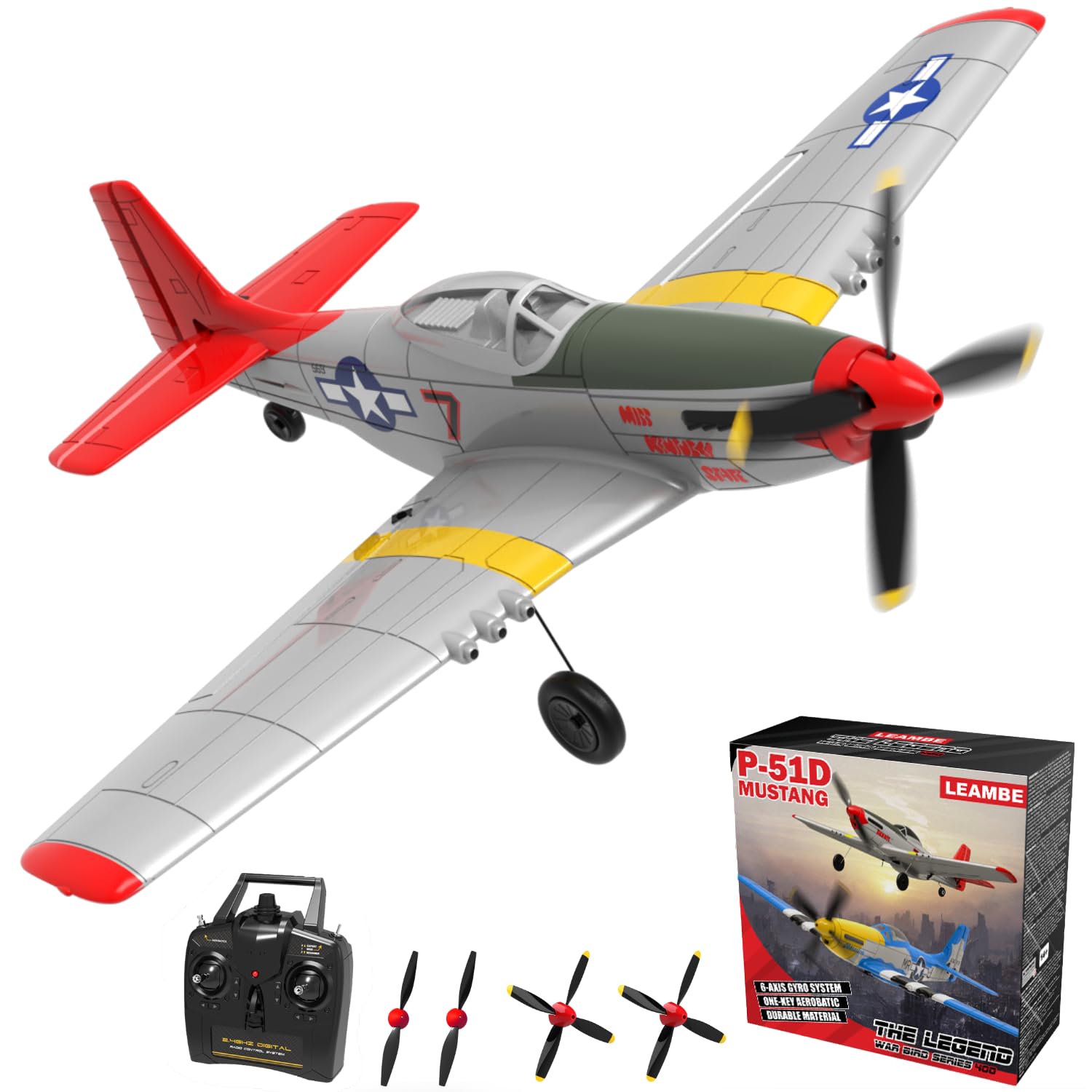
The LEAMBE P51 Mustang strikes the ideal balance between stability and performance. Its Xpilot stabilization system provides rock-solid self-leveling in beginner mode, while the intermediate and expert settings gradually hand over control. The dense foam airframe is remarkably resilient — multiple owners report surviving high-speed tree impacts and goalpost collisions with only minor damage that is easily repaired with foam-compatible glue.
With a 14-inch fuselage and 15-inch wingspan, this plane fits comfortably in small parks and tight spaces. The 8mm coreless motor delivers enough thrust for loops and rolls when you’re ready to push beyond basic circuits. Flight times around 12 minutes per charge are realistic, and the 2.4GHz radio provides a solid 656-foot range without dropouts. The propeller saver technology pops the prop off on impact, preventing damage to the motor shaft.
Where this model truly excels is in its forgiving nature for beginners transitioning to aileron control. The three-mode system allows new pilots to build confidence without the terror of a full 4-channel plane. Experienced flyers appreciate that the core airframe is essentially identical to the well-regarded Volantex 400mm series, meaning replacement parts and upgrade batteries are widely available.
What works
- Outstanding durability even after repeated crashes
- Smooth, predictable flight in beginner and intermediate modes
- Propeller saver effectively prevents motor damage
- Compact size ideal for small parks
What doesn’t
- Wing joint may separate from fuselage over time
- Batteries not included, requiring a separate purchase
- Limited wind tolerance above 5–7 mph
2. HobbyZone Sport Cub S 2

HobbyZone’s SAFE technology sets a benchmark for beginner-friendly flight. The Sport Cub S 2 offers three modes: Beginner limits bank angle and automatically self-levels; Intermediate opens up more control; and Experienced removes all restrictions. The panic recovery button is a genuine safety net — if you lose orientation or get into trouble, one press instantly returns the plane to straight and level flight.
This is a compact, lightweight airframe designed for calm conditions. Several owners note it flies beautifully indoors and in small outdoor spaces, but struggles in winds above 7 mph. The brushed motor is adequate for gentle cruising and basic aerobatics like loops and hammerheads. Telemetry support transmits battery voltage to a compatible Spektrum transmitter, giving you real-time awareness of remaining power.
The BNF (Bind-N-Fly) configuration requires a separate Spektrum transmitter, battery, and charger — an important consideration if you aren’t already invested in the Spektrum ecosystem. However, for those who already own compatible gear, this plane offers an incredibly polished training experience. The airframe is light enough that crashes often result in nothing more than a tumble, and replacement parts are widely stocked at hobby shops.
What works
- Panic recovery mode is a genuine safety feature for beginners
- Excellent indoor and calm-weather performance
- Telemetry provides real-time battery data
- Great for learning basic aerobatics
What doesn’t
- Requires separate transmitter, battery, and charger
- Barely handles wind above 7 mph
- Brushed motor has limited lifespan
3. HobbyZone AeroScout S 2 1.1m

The AeroScout S 2 is, by owner consensus, the most durable ready-to-fly trainer available. Its 1.1-meter wingspan provides visibility and stability that smaller planes cannot match. The pusher propeller configuration protects the prop on landing and is remarkably resilient to impacts — one owner described surviving a full-speed fence collision with no damage. This is the plane that experienced pilots recommend to anyone serious about learning without frustration.
SAFE technology is present with three flight modes, but the brushless motor sets this plane apart. It delivers unlimited vertical performance and long flight times even with the included 3S 1300mAh battery. The Spektrum DXS transmitter is basic but functional, and the AR631 receiver offers adjustable AS3X and SAFE settings for fine-tuning. Assembly takes about 15 minutes out of the box, requiring only the main wing attachment.
Owners who have graduated from smaller trainers consistently report that the AeroScout is the plane they keep flying. Expert mode unlocks full 3D capability, including flips and rolls, while beginner mode makes it nearly impossible to crash. The only real drawbacks are the need for a separate battery and charger, plus the requirement for a larger flying field — this is not a park flier.
What works
- Brushless motor delivers excellent power and efficiency
- Pusher prop design is highly crash-resistant
- Large wingspan provides superior visibility and stability
- Beginners can grow into aerobatic flying on the same plane
What doesn’t
- Requires a separate LiPo battery and charger
- Needs a large open field with a groomed runway
- Basic DXS transmitter lacks LCD screen
4. VolantexRC Ranger600 Stunt
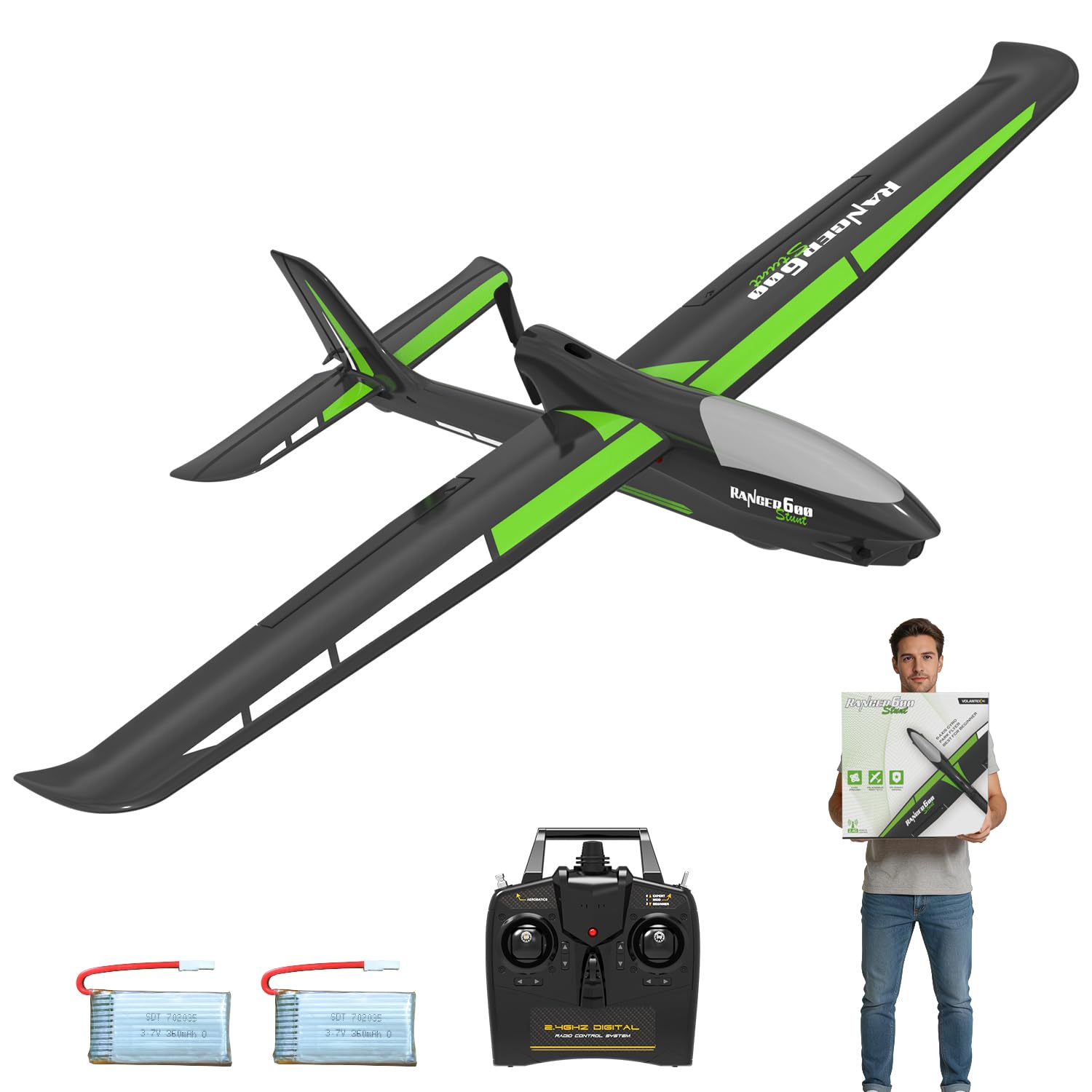
VolantexRC’s Ranger600 offers a distinct advantage over conventional trainers: its rear-mounted motor and glider-style airframe allow extended unpowered flight. Owners report that after climbing to altitude, the plane can glide for several minutes, stretching total flight time past 20 minutes on a single battery. The Xpilot gyro stabilization system provides the same self-leveling found on the Leambe P51, making this an approachable first plane despite its glider configuration.
The 3-level assistance system works well: beginner mode provides full stabilization for learning circuits; intermediate allows moderate bank angles; and expert hands full control to the pilot for aerobatic maneuvers like loops and stall turns. One-key takeoff and hover functions simplify launching — a particularly useful feature for pilots flying solo. The airframe is lightweight and durable enough to survive typical beginner mishaps.
With a 21-inch wingspan, the Ranger600 is larger than the micro-class planes but still small enough for a large park. The rear-prop design protects the motor and propeller during nose-in landings, a common beginner mistake. The Ready-to-Fly package includes two batteries and a charger, so you can fly immediately after charging the transmitter batteries. Some owners note the lack of ailerons limits advanced aerobatics, but for learning fundamental flight skills, it is an excellent platform.
What works
- Glider design enables extended unpowered flight
- Rear-mounted motor is well protected from impacts
- Two batteries included for extended sessions
- One-key takeoff simplifies solo launches
What doesn’t
- No ailerons limit full aerobatic control
- Very sensitive to wind above 10 mph
- Does not include batteries for the transmitter
5. Top Race War Bird (Cessna/P51)
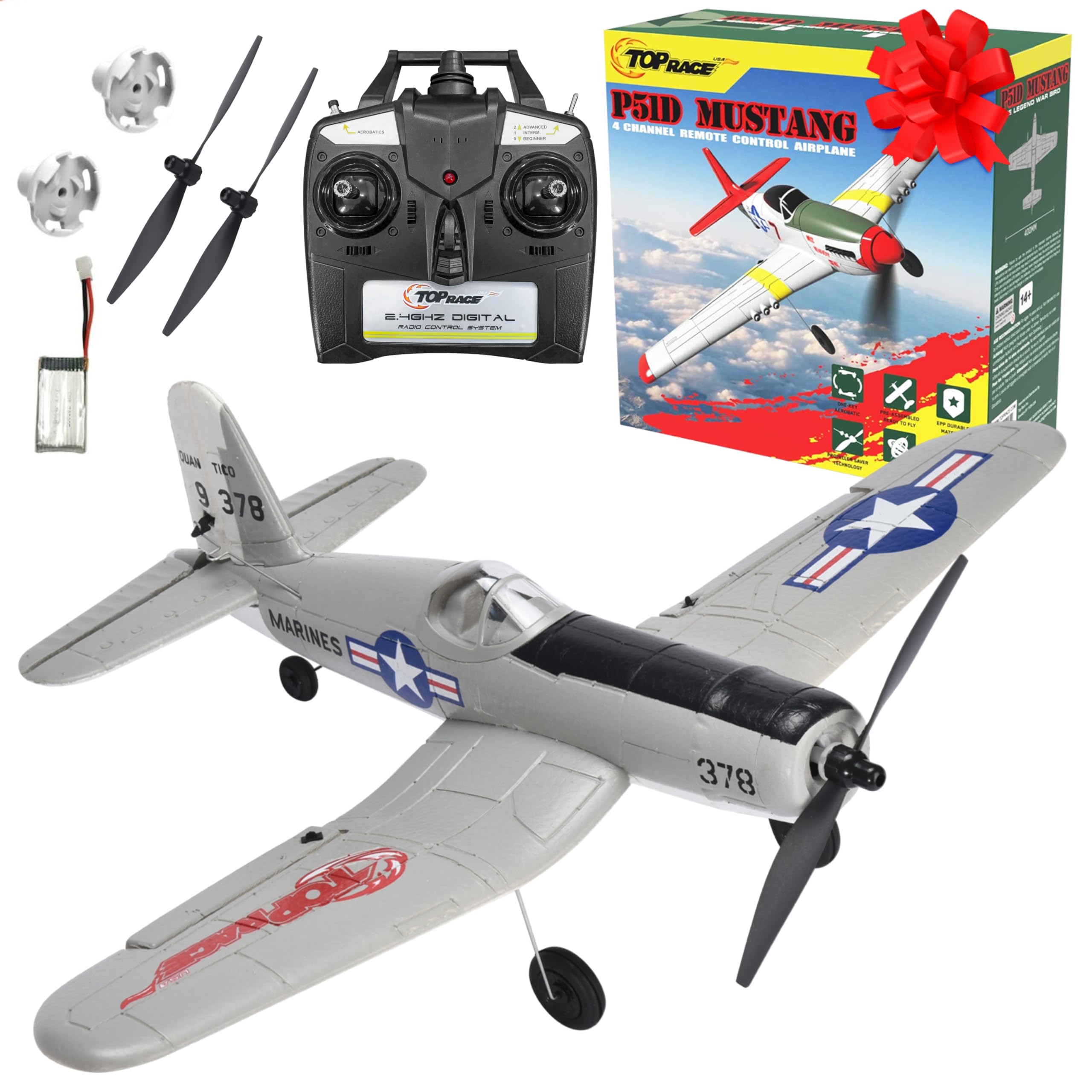
Top Race’s war bird series delivers a more aggressive flight experience than typical trainers. The 4-channel control includes ailerons, enabling rolls, inverted flight, and steeper turns. Owners with some experience find the beginner mode provides enough stability to learn aerobatics, while the intermediate and expert modes progressively remove assistance for full 3D capability. The propeller saver is effective — the prop pops off on impact, and owners report simply snapping it back on to continue flying.
The airframe is smaller and heavier than many competitors, which makes it faster and more responsive. This is not a negative for pilots looking to progress, but beginners may find it challenging. The 3-position gyro select switch lets you bail out of trouble by dropping back to beginner mode. Flight times of 10–15 minutes are achievable with the included battery, and owners recommend buying spares to stay in the air longer.
Durability is a strong point. The foam construction withstands repeated crashes, with only the propeller typically breaking — two spares are included. Some owners have reported issues with loss of radio connection after several flights, but this appears to be an isolated quality control variation rather than a widespread problem. For the price point, this plane offers an impressive feature set for pilots ready to move beyond simple circuits.
What works
- Effective 3-mode gyro system for progressive learning
- Prop saver prevents damage during hard landings
- Capable of full aerobatics in expert mode
- Durable foam withstands crashes well
What doesn’t
- Heavier and faster than typical beginner trainers
- Some owners reported radio connection loss after multiple flights
- Batteries not included
6. DEERC BF-109 Fighter

DEERC’s BF-109 is a 3-channel trainer that emphasizes ease of use above all else. The 6-axis gyro system provides excellent stability, and the dual-motor setup delivers enough thrust for spirited climbs. Two 350mAh batteries are included, providing roughly 20 minutes of combined flight time. The foam airframe is lightweight and surprisingly tough — owners report surviving water landings, tree impacts, and hard crashes with almost no damage.
The control system offers two speed settings, allowing beginners to start slow and gradually increase pace. Both hand-launch and sliding takeoff are possible, giving new pilots options based on the flying site. The 2.4GHz radio maintains a reliable connection up to 656 feet. Some owners note that the tail fins can break off in hard crashes, but they are easily repaired with superglue.
Several customers mention that the stock power system feels underpowered compared to what promotional videos suggest. The plane flies best in calm conditions and can struggle to climb in wind. For the entry-level price point, however, the BF-109 delivers a complete, ready-to-fly package that includes everything needed to start flying immediately, making it an excellent low-risk introduction to the hobby.
What works
- Includes two batteries for extended flying sessions
- 6-axis gyro provides good stability for beginners
- Durable EPP foam survives crashes well
- Dual speed modes allow skill progression
What doesn’t
- Power system feels underpowered in wind
- Tail fins are fragile and may break on impact
- Propellers break easily; spares are needed
7. SYMA X550 Army Plane
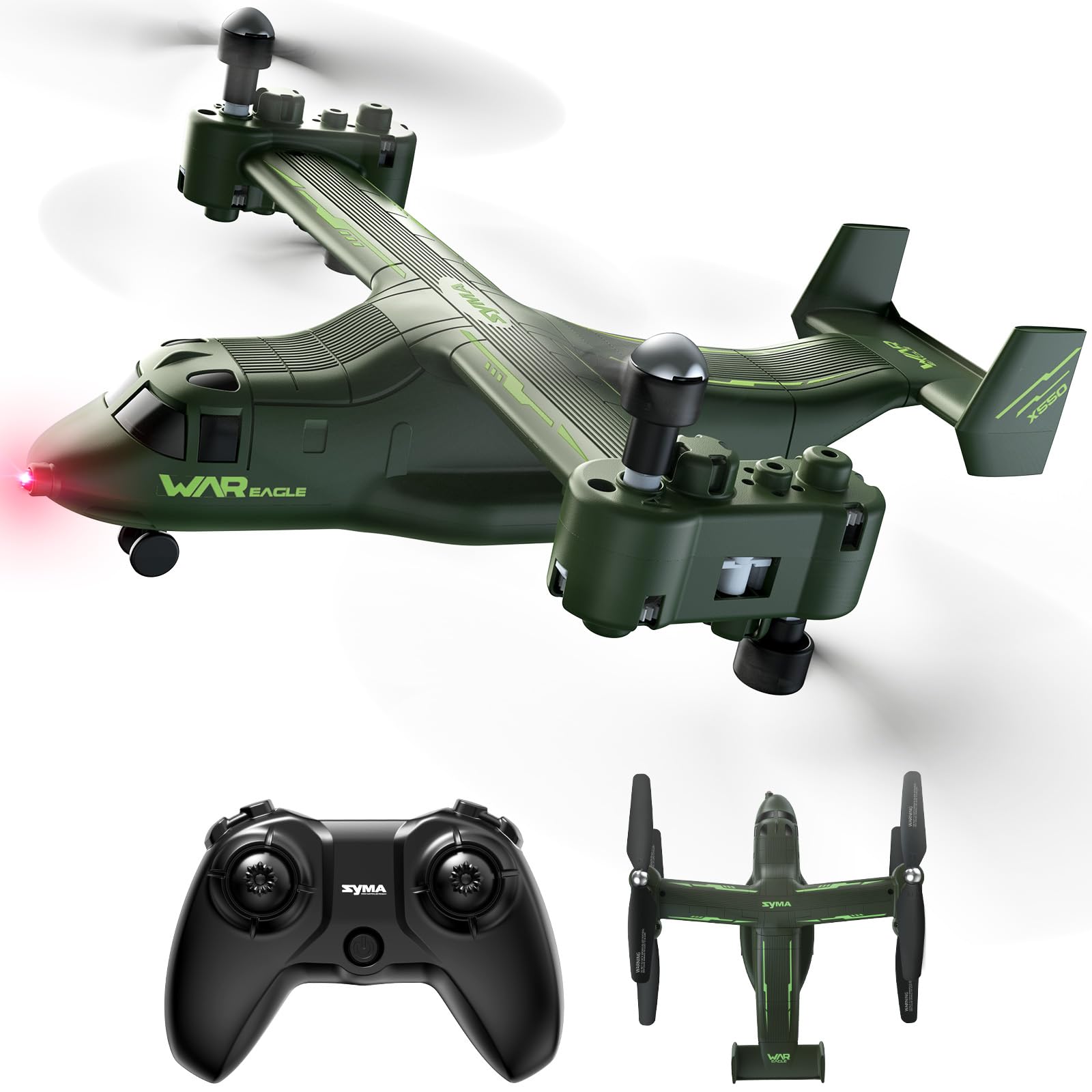
The SYMA X550 is positioned as an affordable, low-stakes entry point into RC flying. Its military-inspired design and display-ready appearance make it an appealing gift option. The plane features one-key takeoff and landing, which significantly reduces the learning curve for absolute beginners. Four-channel control provides more natural steering than simpler toys, while the stunt modes — 360-degree spins and circular routes — add excitement once basic flights are mastered.
The high/low speed setting is a thoughtful addition for skill progression. Beginners can keep the plane in low speed for gentle circuits, then switch to high speed for more dynamic flying. Owner feedback consistently praises the value and fun factor, particularly for children as young as eight years old. The Lithium Polymer battery provides adequate flight time for short sessions, though several owners express a desire for longer endurance.
At this price point, the X550 makes trade-offs. The plastic construction is not as durable as EPP foam, and the plane is best suited for indoor or dead-calm outdoor flying. Battery life is modest — owners suggest buying additional packs if you want longer sessions. For a gift or for someone who wants to try RC flying without a significant investment, the SYMA X550 delivers a satisfying experience with minimal risk.
What works
- One-key takeoff and landing make it very beginner-friendly
- Stunt modes add excitement for kids and new pilots
- Military styling is visually appealing
- Low entry cost for testing the hobby
What doesn’t
- Battery life is shorter than many competitors
- Plastic construction is less durable than foam
- Not suitable for moderate wind conditions
Hardware & Specs Guide
Motor Types
Brushed motors are found in budget-friendly trainers like the SYMA X550 and DEERC BF-109. They are cheap to manufacture and adequate for lightweight airframes, but brushes wear down over time, reducing power. Brushless motors, as found in the HobbyZone AeroScout, offer higher efficiency, more torque, and much longer service life. For anyone planning to fly regularly, a brushless plane is the better long-term investment.
Stabilization Systems
6-axis gyro stabilization, also called Xpilot or SAFE, uses accelerometers and rate sensors to detect the plane’s attitude. When the pilot releases the control sticks, the system automatically returns the aircraft to level flight. This is the single most important feature for beginners because it prevents the plane from entering unrecoverable spirals. Advanced pilots can switch to manual mode for unrestricted control.
Battery Considerations
LiPo batteries are standard, with capacities ranging from 150mAh for micro planes to over 1300mAh for larger models. Higher mAh ratings provide longer flight times but add weight. A good rule of thumb is that a 300-500mAh battery will deliver 8–12 minutes of cruising flight. Always purchase a quality balance charger to maintain battery health and prevent fire risk. Never store LiPo batteries fully charged for extended periods.
Airframe Construction
EPP (expanded polypropylene) foam is the gold standard for durability. It flexes rather than cracks on impact, making it ideal for beginners. EPS (expanded polystyrene) is lighter and can be molded into more scale-accurate shapes but shatters more easily. Some planes use plastic reinforcements at critical stress points. For a first plane, prioritize EPP construction or a model known for crash survivability, like the AeroScout.
FAQ
What is the best Electric RC Plane for a complete beginner?
How long do RC plane batteries last?
What is the difference between 3-channel and 4-channel RC planes?
Do I need FAA registration for a small RC plane?
Can I fly an RC plane indoors?
Final Thoughts: The Verdict
For most buyers, the best electric rc planes winner is the LEAMBE P51 Mustang because it offers an outstanding balance of durability, stabilization, and growth potential at a moderate price point. If you want the ultimate crash-resistant trainer with brushless performance, grab the HobbyZone AeroScout S 2. And for maximum flight time during calm evenings, nothing beats the VolantexRC Ranger600 Stunt.

Certification: BSc in Mechanical Engineering
Education: Mechanical engineer
Lives In: 539 W Commerce St, Dallas, TX 75208, USA
Md Amir is an auto mechanic student and writer with over half a decade of experience in the automotive field. He has worked with top automotive brands such as Lexus, Quantum, and also owns two automotive blogs autocarneed.com and taxiwiz.com.