Not all power adapters for your vehicle deliver the clean energy your devices need. A poorly chosen unit can drain your battery, damage sensitive electronics, or simply fail when you need it most. Understanding output waveform, wattage limits, and port configuration is the difference between a reliable road companion and an expensive mistake.
I’m Amir — the founder and writer behind Four Wheel Ask. My analysis draws from thousands of verified owner reports and detailed technical comparisons across multiple brands and power output classes in the portable automotive power space.
After examining owner feedback and spec sheets across the market, a clear winner emerges. The best electric plug to car adapter combines clean power conversion, multiple ports, and reliable safety features for all your road trip charging needs.
How To Choose The Best Electric Plug To Car Adapter
Selecting the right in-vehicle power adapter requires matching your device load to the inverter’s continuous rating while considering output cleanliness and port versatility. Overestimating your needs is safer than underestimating, but the wrong waveform choice can harm sensitive electronics.
Wattage and Power Rating
Continuous wattage is the real measure of what an adapter can sustain. Peak wattage matters only for brief startup surges. Add up the wattage of every device you plan to run simultaneously, then choose an adapter rated at least twenty percent higher to avoid thermal stress or blown fuses.
Output Waveform Quality
Modified Sine Wave inverters work fine for resistive loads like lights and basic chargers. Pure Sine Wave output mimics utility grid power, making it essential for laptops, CPAP machines, and any device with a sensitive power supply. The premium is worth it when protecting expensive gear.
Port Configuration and Charging Standards
USB-C Power Delivery and Quick Charge ports dramatically reduce charging time for modern phones and tablets. Multiple AC outlets allow simultaneous powering of traditional appliances. Evaluate both the number and type of ports to avoid carrying extra adapters on every trip.
Safety Certifications and Protections
Look for ETL or UL certification and built-in safeguards against overload, short circuit, overheat, and low voltage. A unit that shuts down automatically during faults protects both your devices and your vehicle’s electrical system from damage.
Quick Comparison
On smaller screens, swipe sideways to see the full table.
| Model | Category | Best For | Key Spec | Amazon |
|---|---|---|---|---|
| ZEEHOO 150W | Power Inverter | Sensitive Electronics | Pure Sine Wave Output | Amazon |
| DrimMek 400W | Power Inverter | High-Power Devices | 400W Max Output | Amazon |
| Vansoet 200W | Power Inverter | Daily Commuting | USB-C PD 65W | Amazon |
| DrimMek 300W | Power Inverter | Road Trips | LED Voltage Display | Amazon |
| Leviton 50A | EV Receptacle | Home EV Charging | 50 Amp Rating | Amazon |
In‑Depth Reviews
1. ZEEHOO 150W Car Power Inverter
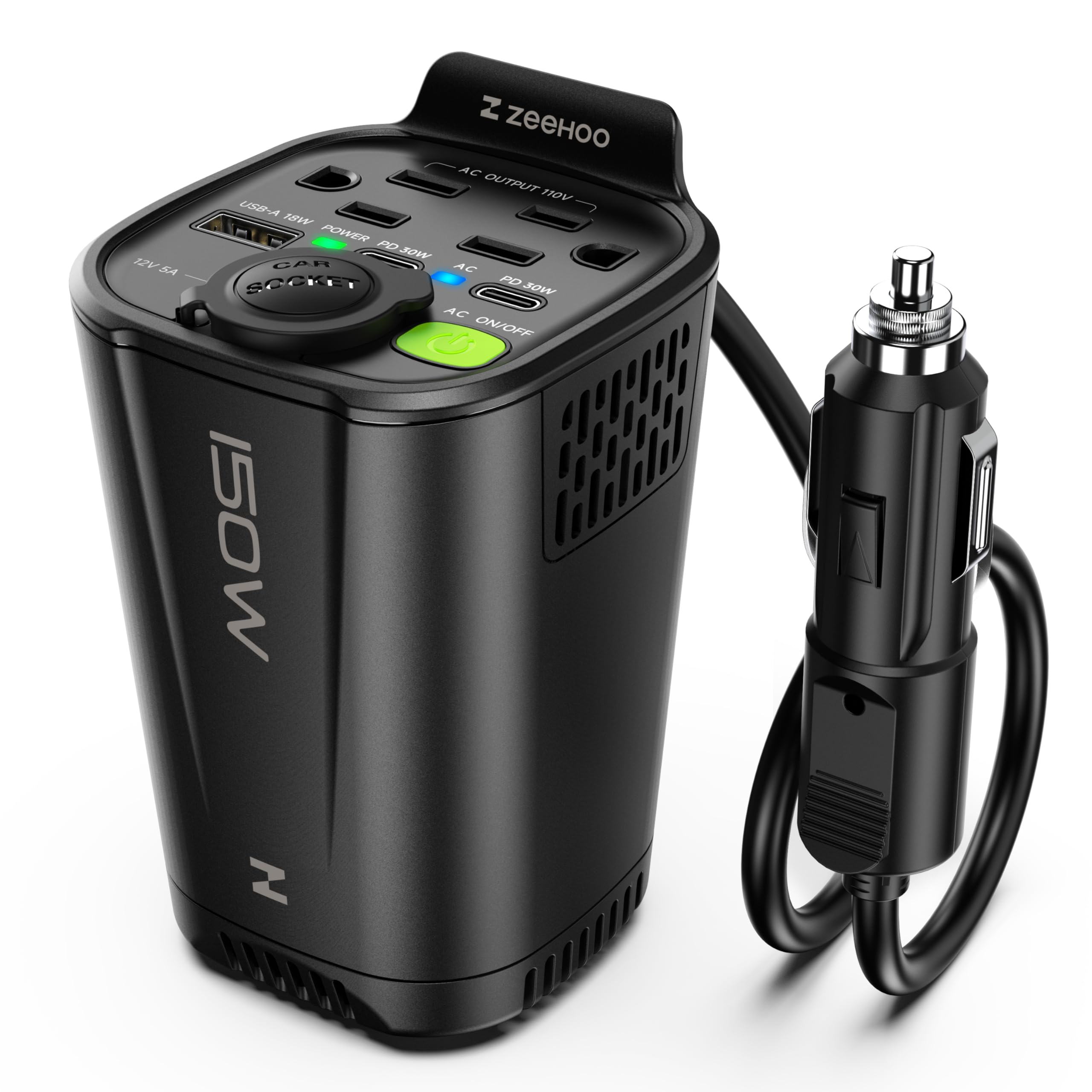
This unit stands apart from the vast majority of car adapters by delivering pure sine wave output at a price point where modified sine wave is the norm. That distinction matters for laptops, camera battery chargers, and any device with a switching power supply that runs cooler and more reliably on clean AC power. The 150-watt continuous rating covers phone, tablet, and notebook charging without breaking a sweat.
Port selection includes two standard three-prong AC outlets, a fast 18W USB-A port, and dual USB-C ports each capable of 30W Power Delivery. Owners consistently report that the compact cylindrical shape fits snugly in a cup holder and that the unit charges a Moto Edge from empty to full in under 45 minutes while simultaneously powering a laptop. The quiet cooling fan and auto-shutoff protection add peace of mind during extended use.
Build quality feels substantial for its size, with a sleek black finish that blends into most interiors. The only tradeoff is the 150-watt ceiling, which means high-draw appliances like mini-fridges or power tools are out of range. For everyday device charging and light electronics, however, the output cleanliness and port versatility make this the most well-rounded choice available.
What works
- Pure sine wave output protects sensitive electronics
- Dual USB-C PD 30W ports charge devices rapidly
- Compact cup-holder design saves cabin space
- Quiet fan and auto-shutoff safety features
What doesn’t
- 150W limit prevents powering larger appliances
- AC outlet button must be held to activate
2. DrimMek 400W Car Power Inverter

When you need to power tool battery chargers, small appliances, or multiple laptops simultaneously, the 400-watt continuous rating provides headroom most competitors cannot match. The four-port configuration includes two AC outlets, a USB-C port with 65W Power Delivery, and a 24W USB-C port, allowing simultaneous charging of high-drain devices without juggling connections. Owner reports confirm it charges two DeWalt drill batteries and a laptop in roughly two hours of driving.
Safety engineering includes overload, short circuit, and overheating protection with an intelligent monitoring system that automatically cuts power under fault conditions. The housing uses aviation-grade aluminum with a 12nm smart chip for stable current regulation. At just under four inches long, the footprint is remarkably compact for a 400-watt unit, though the included cigarette lighter cord is notably short, which may limit placement options in larger vehicles.
Fan noise registers as noticeable under sustained load, though no louder than a typical laptop cooling fan. The modified sine wave output is perfectly adequate for resistive loads and power tool chargers, but users powering sensitive audio equipment or medical devices should consider a pure sine wave alternative. For raw power capacity in a portable format, this adapter delivers the most versatility per dollar.
What works
- High 400W continuous output for demanding devices
- 65W USB-C PD charges laptops at full speed
- Compact aluminum housing with smart chip regulation
- Multiple safety protection systems
What doesn’t
- Short power cord limits placement flexibility
- Fan becomes audible under heavy load
3. Vansoet 200W Car Power Inverter
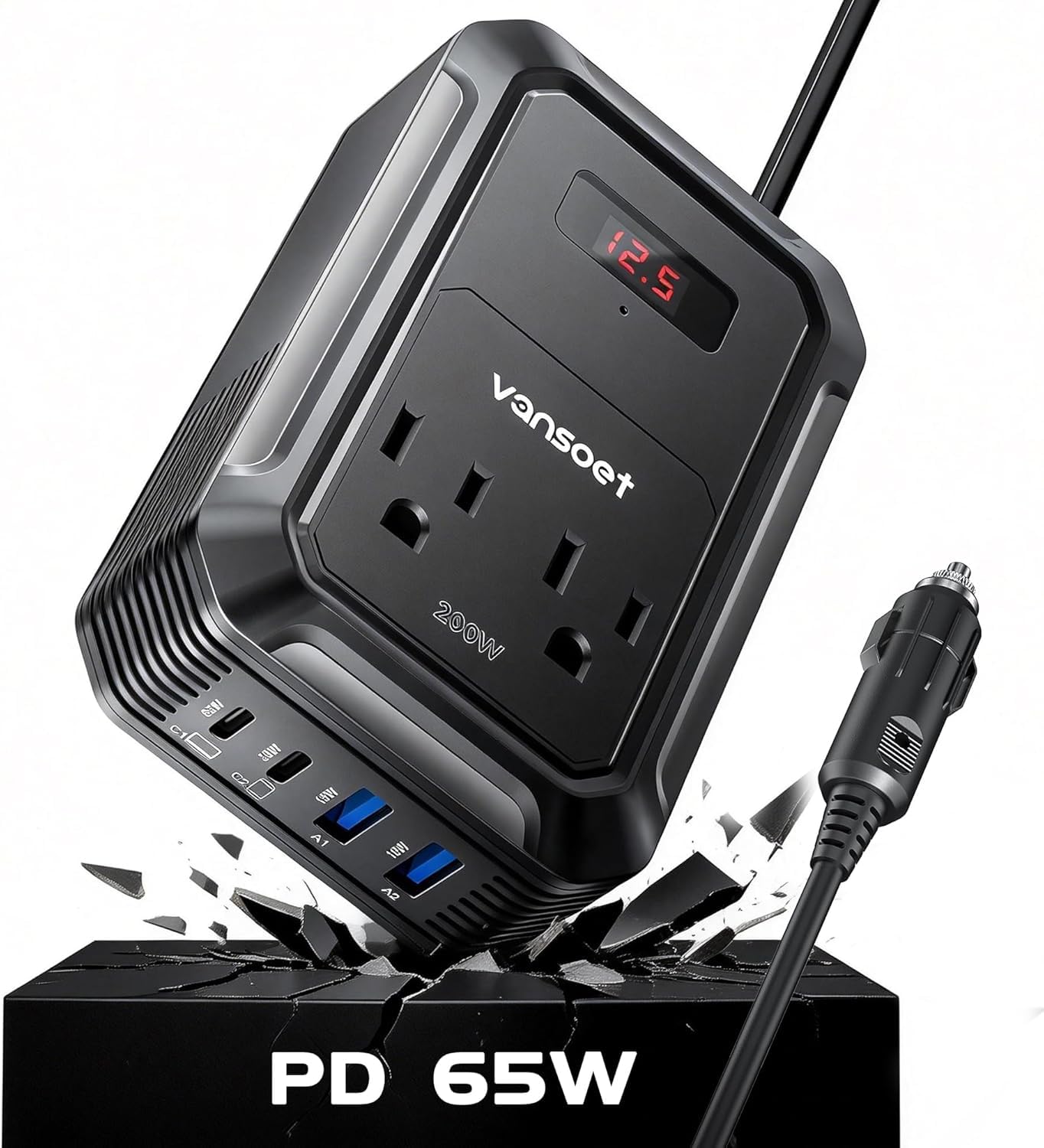
This ETL-certified inverter from vansoet delivers surprising build quality at a price that undercuts most competitors. The 200-watt continuous rating handles laptop charging, phone top-ups, and small electronics with ease, while the 23.8-inch cable provides decent reach from the cigarette lighter socket. An integrated LCD display shows real-time voltage, giving drivers immediate awareness of their vehicle’s electrical system status.
Charging capability includes two USB-C ports delivering 65W and 30W Power Delivery respectively, plus two 18W Quick Charge USB-A ports for a total USB output of 131 watts. The smart cooling fan varies its speed based on load and temperature, remaining nearly silent during light charging and ramping up only when pushed. Owners consistently praise the compact cup-holder-friendly form factor and the generous 180-day return policy backed by 18-month replacement warranty.
The modified sine wave output is clean enough for most consumer electronics, but some users report the unit shuts down when pushed beyond 50 watts sustained. This suggests the 200W rating may be optimistic for continuous high-draw applications. For daily commuters charging phones, tablets, and a single laptop, however, the feature set and reliability at this price point are difficult to beat.
What works
- Excellent USB charging speed with 65W PD and QC 18W
- LCD voltage display for battery monitoring
- Quiet temperature-controlled cooling fan
- Strong warranty and customer support
What doesn’t
- May throttle output below 200W continuous rating
- Modified sine wave limits sensitive device compatibility
4. DrimMek 300W Car Power Inverter
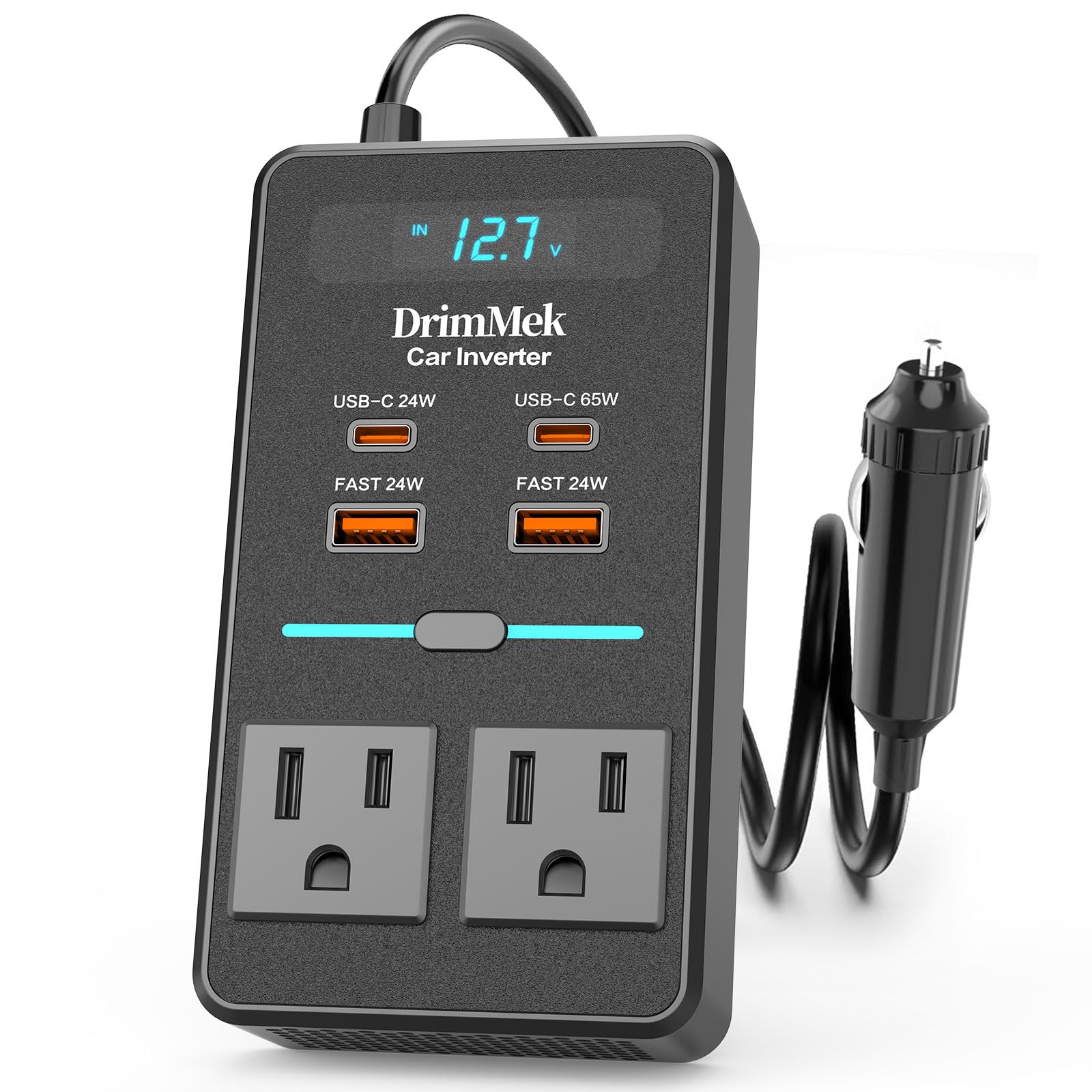
The DrimMek 300W hits a sweet spot between power capacity and physical footprint, measuring just 5.5 by 3 inches with a slim 1.4-inch profile. The LED display provides clear voltage readout, and the dedicated on-off switch prevents parasitic battery drain when the inverter is not in use. Owner reports highlight how easily it tucks into a glove box or center console, making it a natural choice for drivers who want power available without permanent installation.
Port configuration includes two AC outlets, a 65W USB-C port, a 24W USB-C port, and two 24W USB-A ports — enough simultaneous capacity for a family’s worth of devices on a long drive. The built-in quiet fan keeps temperatures in check without distracting cabin noise, and the plug-and-play design requires no wiring beyond inserting the cigarette lighter plug. Multiple protection mechanisms guard against overload, short circuit, overheating, and low voltage conditions.
Some owners note that the AC outlets have limited depth, making certain bulky wall warts difficult to seat fully. The modified sine wave output works well for laptop chargers and phone adapters, but users running induction motors or sensitive audio equipment should look elsewhere. For the majority of road-trippers who need reliable AC power for standard electronics, the combination of display, switch control, and compact packaging is thoughtfully executed.
What works
- LED voltage display with on-off switch prevents battery drain
- Six total ports accommodate multiple devices
- Compact size fits glove boxes and consoles
- Quiet fan operation during normal use
What doesn’t
- AC outlets have shallow depth for some plugs
- Modified sine wave not ideal for sensitive gear
5. Leviton 50 Amp EV Charging Receptacle

This is not a portable adapter but a permanent NEMA 14-50 receptacle engineered specifically for Level 2 electric vehicle charging. Standard household outlets are not designed for the sustained high-amperage draw and frequent insertion cycles that EV charging demands. The Leviton 1450R addresses this with heavy-duty nylon construction, pressure-wire terminal connections requiring 75 inch-pounds of torque, and reinforced internal contacts that resist heat buildup over extended charge sessions.
Owners who upgraded from builder-grade outlets report dramatically lower operating temperatures and peace of mind knowing the connection is rated for the full 50-amp continuous load. The receptacle requires a 2-inch deep junction box and a larger wall plate due to its slightly oversized face, but installation is straightforward for anyone comfortable with basic electrical work. Tesla owners in particular note that temperature readings at the plug remain safe even during peak charging sessions lasting multiple hours.
This is a specialized component for EV owners who prefer a plug-in charger over a hardwired unit. It does not convert DC to AC or provide USB ports. For its intended purpose, however, it outperforms every standard 14-50 outlet on the market and costs significantly less than commercial-grade Hubbell alternatives. If you drive an electric vehicle and charge at home, this is the receptacle that will not let you down.
What works
- Purpose-built for sustained EV charging loads
- Maintains lower temperature than standard outlets
- Pressure-wire terminals ensure secure connections
- More affordable than commercial Hubbell alternatives
What doesn’t
- Larger face may require box modification
- Not a portable adapter — requires permanent installation
Hardware & Specs Guide
Modified Sine Wave vs Pure Sine Wave
Modified sine wave inverters produce a stepped waveform that works for resistive loads like incandescent lights and basic chargers but can cause buzzing, overheating, or failure in devices with sensitive power supplies. Pure sine wave output matches the smooth sinusoidal curve of utility grid power, making it safe for laptops, CPAP machines, variable-speed tools, and medical equipment. The price premium for pure sine wave typically ranges from moderate to significant, but for protecting expensive electronics, it is money well spent.
Understanding Wattage Ratings
Continuous wattage is the sustained power an inverter can deliver indefinitely. Peak or surge wattage is the brief burst it can supply for a few seconds when motors or compressors start up. Always match your total device wattage to the continuous rating, not the peak number. Leaving a twenty percent safety margin prevents overheating and nuisance fuse blows. Remember that the cigarette lighter socket itself is usually limited to 120-150 watts, so higher-wattage inverters must connect directly to the battery.
USB-C PD and Fast Charging Protocols
Power Delivery negotiates voltage up to 20 volts for laptop-level charging, while Quick Charge boosts voltage to charge compatible phones up to four times faster than standard USB. Inverters with dedicated PD and QC ports eliminate the need for separate wall adapters, keeping your dashboard clutter-free. Check that the inverter’s USB-C port delivers at least 30 watts for reliable tablet and phone fast charging, and 60 watts or more for most ultrabook laptops.
Safety Protection Systems
Overload protection shuts down the inverter if connected devices draw too much current. Short circuit protection prevents sparks and fire if wiring faults occur. Overheat protection triggers automatic shutdown when internal temperatures exceed safe limits. Low voltage alarm warns you when the car battery drops below a safe threshold, preventing a dead battery. ETL or UL certification confirms the unit has passed independent safety testing for fire and electric shock risks.
FAQ
Can I use a car power inverter with my laptop?
What is the difference between 12V and 110V in a car?
Will a car power inverter drain my battery?
How many watts do I need for typical devices?
Final Thoughts: The Verdict
For most buyers, the best electric plug to car adapter winner is the ZEEHOO 150W because it delivers pure sine wave output that protects sensitive electronics while offering dual USB-C PD ports in a compact form factor. If you need raw power for tools and high-draw devices, grab the DrimMek 400W. And for daily commuters who want great USB charging speed without breaking the bank, nothing beats the Vansoet 200W.

Certification: BSc in Mechanical Engineering
Education: Mechanical engineer
Lives In: 539 W Commerce St, Dallas, TX 75208, USA
Md Amir is an auto mechanic student and writer with over half a decade of experience in the automotive field. He has worked with top automotive brands such as Lexus, Quantum, and also owns two automotive blogs autocarneed.com and taxiwiz.com.