Wind noise at highway speeds routinely exceeds 100 decibels — a level that can cause permanent hearing damage in under ten minutes. Yet many riders still treat earplugs as an afterthought, grabbing whatever foam pair is cheapest or skipping protection altogether. The right pair doesn’t just save your hearing; it transforms the ride by cutting fatigue, preserving engine and intercom clarity, and making long days in the saddle genuinely enjoyable.
I’m Amir — the founder and writer behind Four Wheel Ask. My analysis of earplug performance draws on thousands of verified owner reports, technical specification sheets, and noise attenuation data to separate the products that merely claim to work from those that actually deliver.
After sifting through rider feedback across dozens of models and filtering for fit, comfort under a helmet, and real-world noise reduction, the best earplugs for motorcycle use must balance wind attenuation with situational awareness so you stay safe and hear what matters.
How To Choose The Best Earplugs For Motorcycle
Not all earplugs are built for the unique demands of riding. Wind blast, helmet pressure, and the need to hear your bike and surroundings make choosing the right pair a different game than picking plugs for a concert or a noisy job site. Focus on these factors to narrow your options.
Noise Reduction vs. Sound Fidelity
A high Noise Reduction Rating (NRR) sounds appealing, but excessive attenuation can leave you disconnected from your bike’s engine, emergency sirens, and your intercom. The goal is to tame the wind — not silence the world. Look for earplugs with acoustic filters that lower volume evenly across frequencies so you still hear the important stuff clearly.
Comfort Under a Helmet
Helmet earpockets create pressure points. Bulky or rigid earplugs cause pain after an hour. Soft silicone, low-profile designs that sit flush with the ear canal work best. Triple-flange or oval-tip shapes often provide a secure seal without the deep insertion required by foam, reducing the “helmet push” effect that dislodges ordinary plugs.
Ease of Insertion and Removal With Gloves
Stopping to adjust earplugs on the roadside is inconvenient and unsafe. Models with a pull tab, a firm stem, or a small grip handle let you seat and remove them even while wearing riding gloves. A compact carry case that clips to your jacket or keychain also encourages consistent use.
Quick Comparison
On smaller screens, swipe sideways to see the full table.
| Model | Category | Best For | Key Spec | Amazon |
|---|---|---|---|---|
| Alpine MotoSafe Race | Premium | Riders who want purpose-built wind protection with intercom clarity | 17 dB SNR; AlpineThermoShape hypoallergenic material; mini-grip removal | Amazon |
| Alpine Tune | Premium | Multi-use riders who also attend concerts or festivals | 19 dB SNR; 4 oval tip sizes (XS–L); keychain carry case | Amazon |
| Mack’s High Fidelity | Mid-Range | Riders wanting a trusted brand with clear natural sound | 12 dB NRR; patented open-air membrane filter; aluminum travel case | Amazon |
| Hearprotek Silicone Concert | Mid-Range | Value-conscious riders who need a secure fit and low profile | 26 dB attenuation; 3-flange silicone; detachable cord and carry case | Amazon |
| Softvox Motorcycle Ear Plugs | Entry-Level | New riders on a budget who want solid wind reduction | 27 dB NRR; triple-layer ear tips; semi-curved earhook; zippered case | Amazon |
In‑Depth Reviews
1. Alpine MotoSafe Race
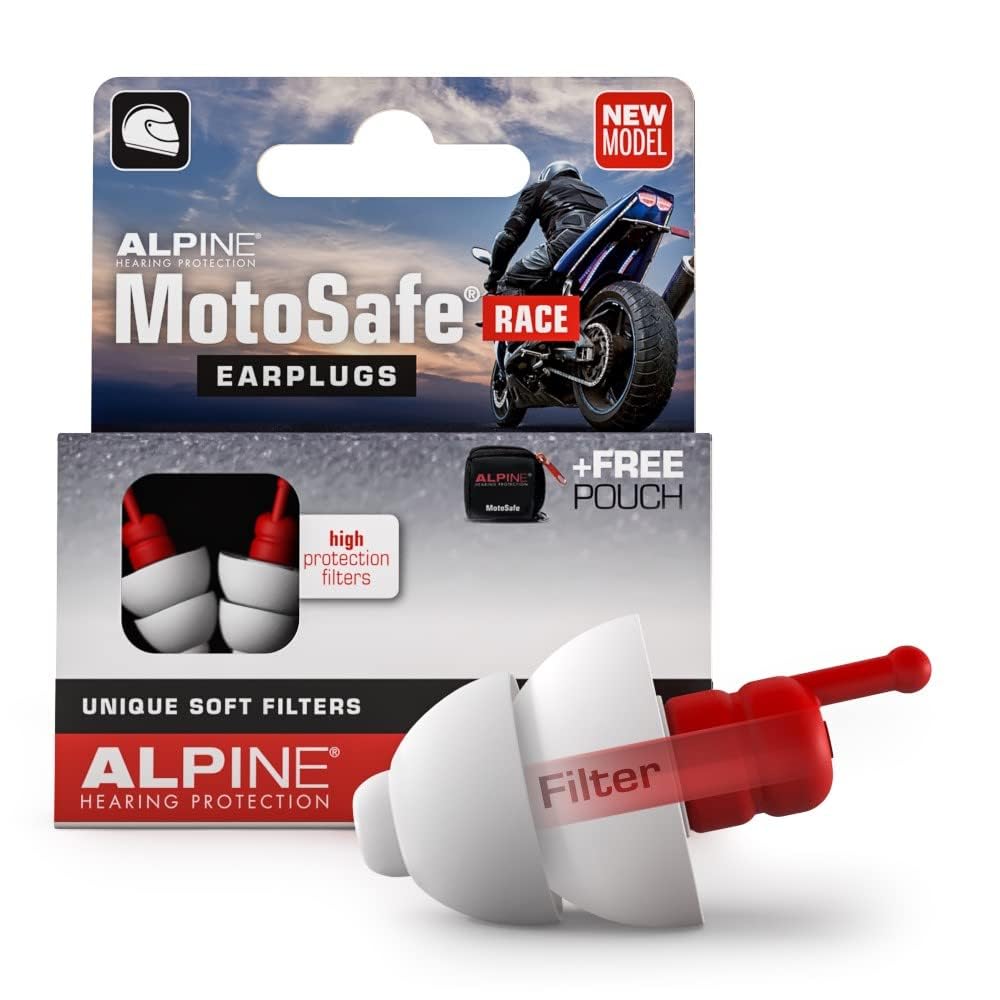
Alpine designed the MotoSafe Race specifically for high-speed riding, and it shows in every detail. The patented AlpineAcousticFilter targets the harsh wind frequencies that cause rider fatigue while preserving the engine note, intercom speech, and navigation prompts. At 17 dB SNR, the reduction is moderate by raw numbers, but the frequency-specific filtering makes the ride feel quieter without disconnecting you from the road.
The ThermoShape material is a standout — it’s hypoallergenic, silicone-free, and warms to body temperature for a custom-like fit. Owner reports consistently mention that the ultra-soft plugs remain comfortable under a helmet for five to six hours without pressure points. The mini-grip stem makes insertion and removal easy even with gloves on, and the low profile means they don’t rub against the helmet lining.
Riders on louder bikes, particularly those with aftermarket exhausts, note that the filter can amplify certain engine frequencies, so it’s worth checking compatibility with your specific setup. Overall, the MotoSafe Race earns its reputation as a purpose-built solution for riders who spend serious time at speed and want to arrive fresh.
What works
- Acoustic filter cuts wind noise while leaving intercom and engine audible
- Ultra-comfortable for full-day rides under a helmet
- Easy insertion and removal with gloved hands
What doesn’t
- May amplify certain exhaust frequencies on loud motorcycles
- Only one applicator included; losing it makes deep insertion trickier
2. Alpine Tune
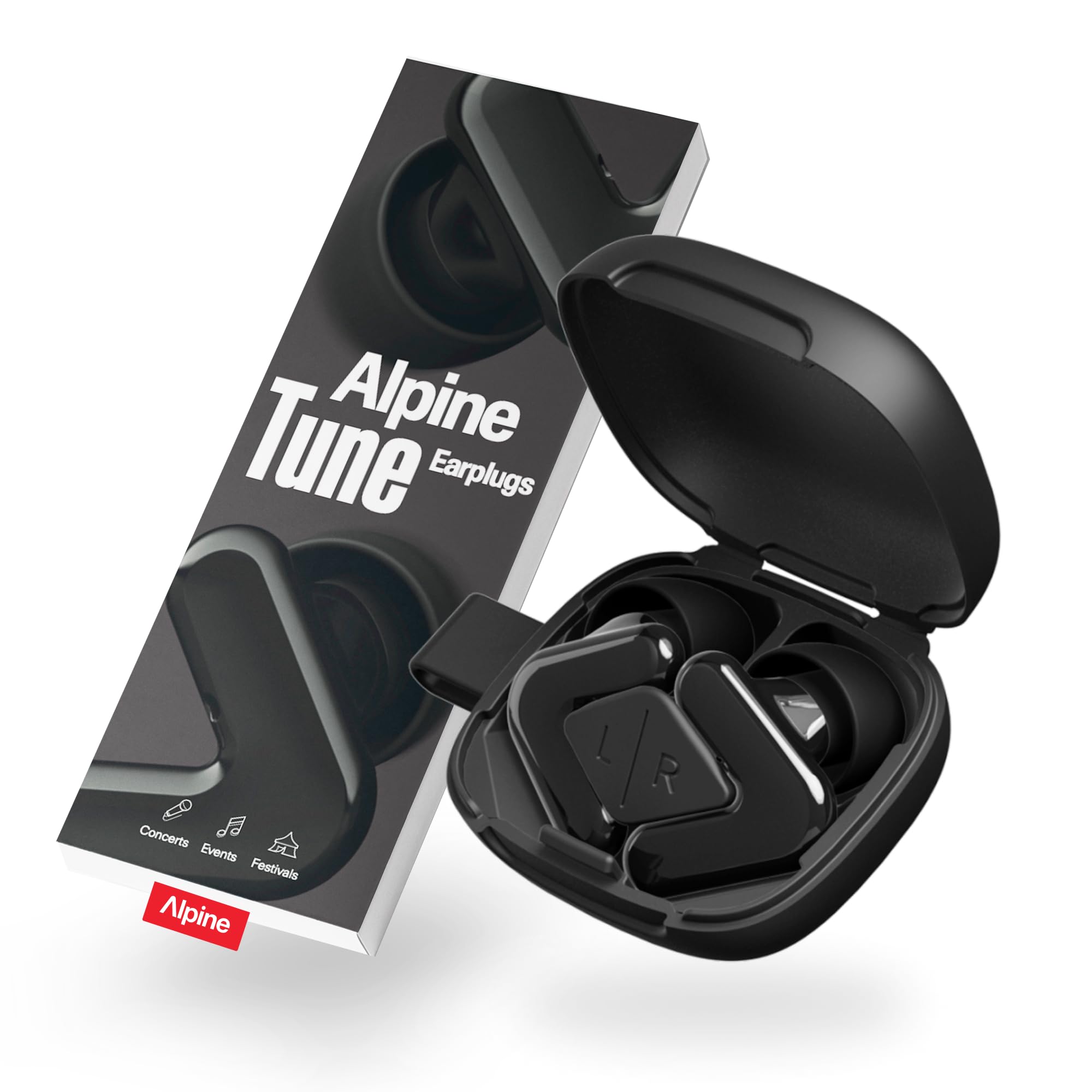
While the Alpine Tune is marketed primarily for concerts and festivals, its design philosophy — preserve sound quality while lowering overall volume — translates well to motorcycle use. The 19 dB SNR acoustic filters deliver a balanced attenuation curve that keeps wind in check without turning your bike into a muffled whisper. For riders who split time between the saddle and live music events, this is one pair that does both jobs well.
The oval tip shape in four sizes (XS through L) is a genuine advantage for achieving a comfortable seal. Owner feedback repeatedly highlights that the ergonomic tips stay put during movement and don’t create the “helmet push” dislodging effect common with round foam plugs. The keychain carry case is pocket-friendly and keeps the plugs clean, though the small size of the plugs themselves can make removal a bit fiddly.
Speech intelligibility is a strong point — multiple owners report being able to hold conversations without removing the plugs, which is useful at gas stops or group rides. The derma-tested materials are skin-friendly for long-term wear. If you want a refined, versatile earplug that works for riding and everything else, this is a top contender.
What works
- Excellent sound fidelity with even attenuation across frequencies
- Comfortable oval tips in four sizes for a custom seal
- Keeps speech intelligible so you can communicate without removing plugs
What doesn’t
- Small form factor can be tricky to grasp and remove
- Not specifically tuned for wind noise like the MotoSafe Race
3. Mack’s High Fidelity Ear Plugs

Mack’s is the brand most often recommended by ENT doctors, and the High Fidelity model shows why. The patented open-air membrane filter reduces volume by 12 dB NRR without the muffled, hollow sensation that cheap foam plugs create. For riders who are new to ear protection and wary of feeling disconnected from their bike, this is a gentle introduction that still delivers meaningful wind reduction.
The super-soft silicone flanges come in two tip sizes to fit a range of ear canals, and the low-profile design sits flush enough to avoid helmet interference. The aluminum travel case is a premium touch — it clips to a keychain or belt loop, keeping the plugs clean and accessible. Owners consistently praise the balance between noise reduction and sound clarity, with many noting they can still hear their intercom and traffic clearly.
At 12 dB NRR, the attenuation is lower than dedicated motorcycle plugs, so riders facing sustained highway speeds above 70 mph may want more aggressive wind blocking. But for around-town cruising, commuting, or shorter highway stints, the Mack’s High Fidelity offers a comfortable, doctor-approved starting point that protects without isolating.
What works
- Natural sound quality with no muffled effect
- Premium aluminum travel case with keychain clip
- Trusted brand backed by ENT recommendations
What doesn’t
- Modest 12 dB NRR may not be enough for extended high-speed highway riding
- Small size option may still be too large for some ear canals
4. Hearprotek Silicone Concert Ear Plugs
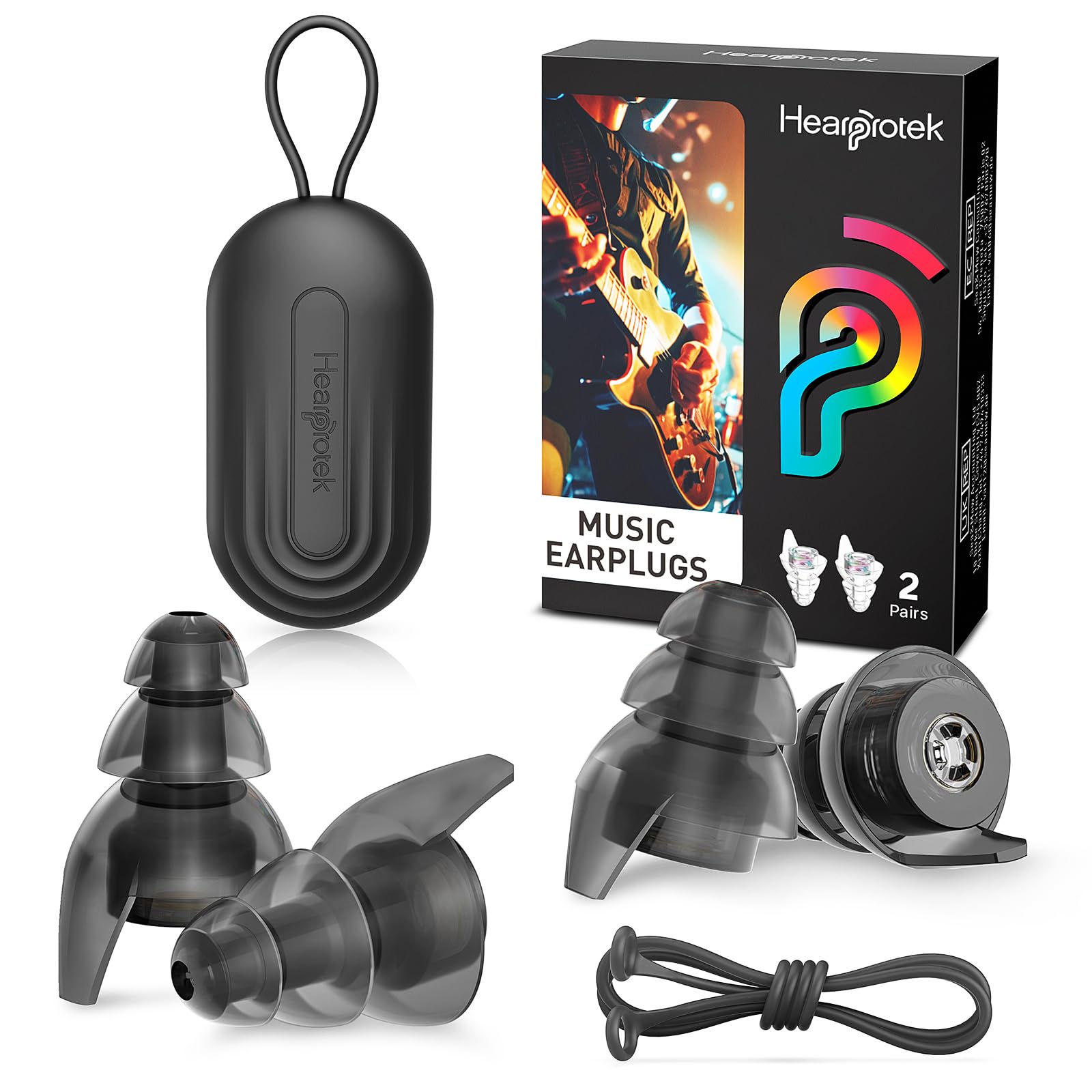
Hearprotek’s offering punches above its price point with a 26 dB attenuation rating and a triple-flange silicone design that creates a reliable seal. The high-fidelity filter aims to reduce volume while keeping sound clear, and owner reports confirm that music and speech remain intelligible even at loud venues. For riders, the low-profile black color blends with riding gear and doesn’t draw attention.
The kit includes two sizes (small and standard), a detachable silicone cord to prevent loss, and a durable carry case with a carabiner. The pull tab on the earplugs is a practical feature for removal, though some owners note that the plugs can feel slightly itchy after about 90 minutes of continuous wear. The cord is nice to have but some riders find it unnecessary under a helmet.
Where this set shines is versatility — it works well for concerts, construction noise, and riding alike. The attenuation is strong enough for highway wind, but the filters retain enough fidelity to hear your bike and surroundings. If you want a single affordable pair that covers multiple loud environments without sacrificing performance, the Hearprotek is a smart buy.
What works
- Strong 26 dB attenuation for serious wind blocking
- Two tip sizes plus detachable cord and carry case
- Pull tab makes removal easy even with gloves
What doesn’t
- Can cause itching or discomfort after 90+ minutes of wear
- Cord may be cumbersome inside a helmet for some riders
5. Softvox Motorcycle Ear Plugs
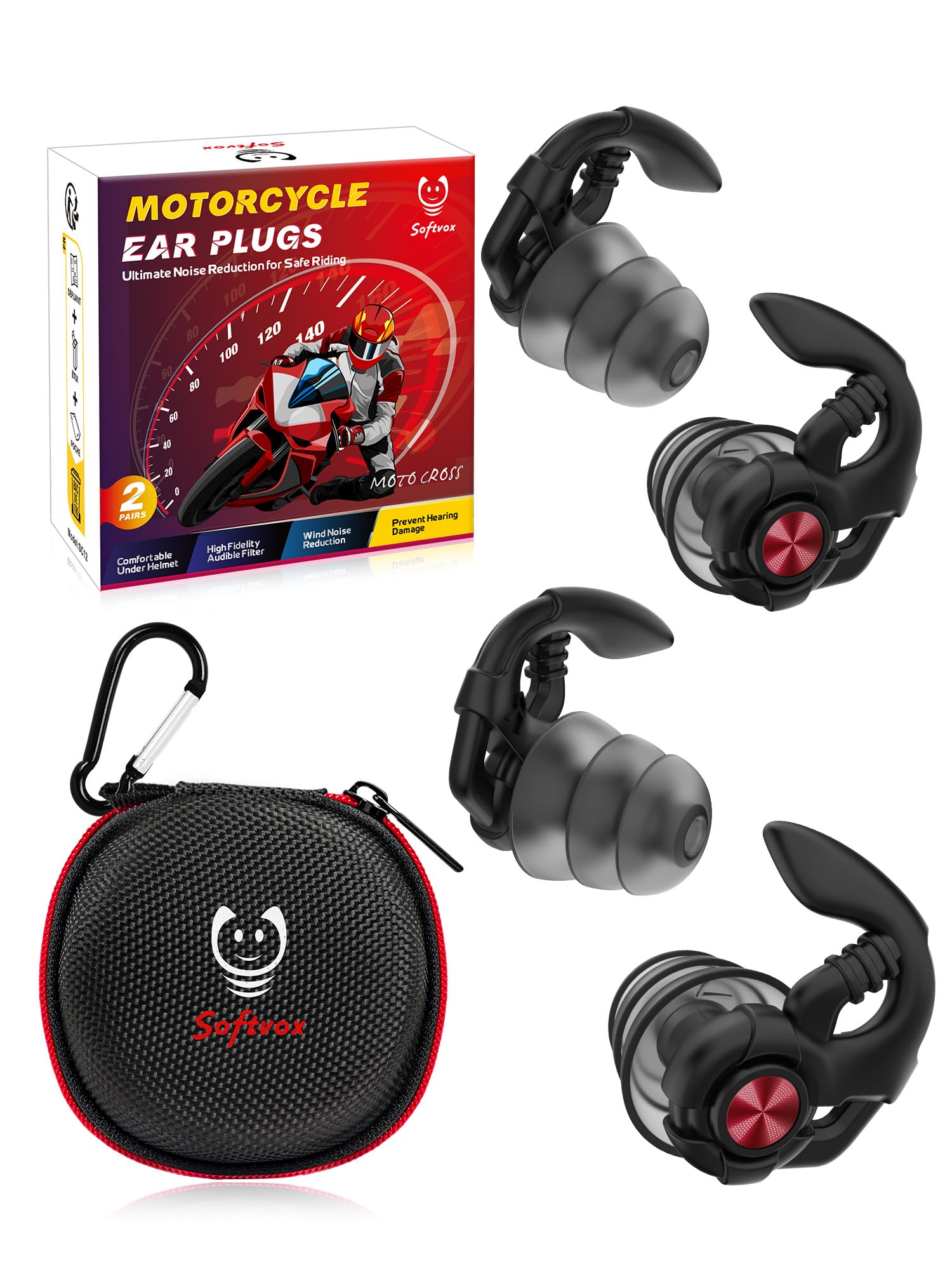
Softvox enters the market with a budget-friendly pair that doesn’t cut corners on the essentials. The 27 dB NRR is one of the highest attenuation ratings in this lineup, making it a strong choice for riders who prioritize maximum wind blocking. The triple-layer ear tip design is engineered to create a secure seal, and the semi-curved earhook helps the plugs stay seated during helmet adjustments.
Owner feedback is notably positive for a new product — riders report comfortable wear for full-day rides without pain, and the plugs stay in place even when removing a snug helmet. The package includes both small and large shells, though the earhooks are one-size, so fit depends on tip selection. The zippered carry case with a carabiner is compact and practical for jacket pocket storage.
The main compromise is sound fidelity — with heavy attenuation, some riders note that engine and intercom audio can feel more distant compared to dedicated high-fidelity plugs. For riders who simply want to cut wind and protect their hearing on a tight budget, the Softvox delivers effective noise reduction that rivals more expensive options.
What works
- High 27 dB NRR for serious wind reduction
- Comfortable and secure under a helmet for long rides
- Includes two tip sizes and a compact zippered case
What doesn’t
- Heavy attenuation can make engine and intercom sound distant
- Earhooks are one-size; fit depends on tip selection
Hardware & Specs Guide
Noise Reduction Rating (NRR) vs. SNR
NRR is the US standard measured in decibels under ideal lab conditions. SNR is the European equivalent, typically 2-3 dB higher than NRR for the same product. Real-world attenuation is usually 50-70% of the lab rating because of fit variability and seal quality. For motorcycle wind, a 17-20 dB SNR filter is generally sufficient to bring highway noise below the 85 dB danger threshold while preserving situational awareness.
Acoustic Filter Design
High-fidelity earplugs use a membrane, diaphragm, or tuned resonator to lower volume evenly across frequencies. Cheap foam plugs compress all sound equally, creating a muffled experience. The best motorcycle plugs use a frequency-specific filter that targets the 2000-8000 Hz range where wind noise is most damaging, while letting lower-frequency engine and traffic sounds pass through more naturally.
Material and Fit Under Helmet
Silicone and thermoplastic elastomer (TPE) are the dominant materials for reusable plugs. Silicone is durable and grippy but can cause friction against the helmet liner. TPE (used in Alpine products) is softer and more compressible, reducing pressure points. Low-profile designs that sit flush with the outer ear are critical — any part of the plug that protrudes will be pushed or dislodged when you put on or remove your helmet.
Carry Case and Hygiene
A hard-shell case prevents earplug deformation and keeps debris off the silicone. Keychain or carabiner compatibility encourages regular use. Reusable plugs should be cleaned with mild soap and water after each ride day; silicone absorbs oils and earwax over time, which can degrade the seal and cause irritation. Most manufacturers recommend replacing reusable plugs every 3-6 months depending on frequency of use.
FAQ
Can I still hear my GPS and intercom with motorcycle earplugs in?
How do I clean and maintain reusable motorcycle earplugs?
Will earplugs fit under my helmet without causing pain?
What dB rating do I need for motorcycle wind noise?
Final Thoughts: The Verdict
For most buyers, the earplugs for motorcycle winner is the Alpine MotoSafe Race because it combines a purpose-tuned wind filter, all-day comfort under a helmet, and easy glove-friendly handling. If you want a versatile pair that performs equally well at concerts and on the bike, grab the Alpine Tune. And for maximum wind blocking on a tight budget, nothing beats the Softvox Motorcycle Ear Plugs.

Certification: BSc in Mechanical Engineering
Education: Mechanical engineer
Lives In: 539 W Commerce St, Dallas, TX 75208, USA
Md Amir is an auto mechanic student and writer with over half a decade of experience in the automotive field. He has worked with top automotive brands such as Lexus, Quantum, and also owns two automotive blogs autocarneed.com and taxiwiz.com.