E-bikes push speeds well beyond what a standard bicycle helmet is designed to handle, and the difference in crash energy between 15 mph and 28 mph is not linear — it nearly quadruples. Skimping on head protection at those speeds is a gamble that the numbers simply do not support, which is why the NTA-8776 certification exists and why more riders are finally paying attention to it.
I’m Amir — the founder and writer behind Four Wheel Ask. I analyze safety certifications, construction materials, and owner-reported durability data across hundreds of helmet models to identify what actually holds up under real riding conditions.
After comparing dozens of models across safety certifications, build quality, and real-world feedback, I’ve identified the best e-bike helmet for every type of rider.
How To Choose The Best E-Bike Helmet
E-bike helmets occupy a specific safety category that sits between traditional bicycle helmets and full motorcycle lids. Understanding the key differences in certification, coverage, and features will help you pick a model that matches the speeds and riding conditions you actually face.
Certification Standards — NTA-8776 vs CPSC vs DOT
The NTA-8776 standard, developed in the Netherlands specifically for e-bikes, tests impact protection at speeds up to 28 mph and covers more of the temple and rear head area than standard CPSC bicycle helmet requirements. DOT certification, common on full-face motorcycle helmets, applies a different impact energy threshold. For class 3 e-bikes that reach 28 mph, NTA-8776 is the most relevant certification to look for.
MIPS and Impact Management Systems
Multi-directional Impact Protection System (MIPS) adds a low-friction layer that allows the helmet to rotate slightly on impact, reducing rotational forces transmitted to the brain. KinetiCore from Lazer employs crumple zones built into the EPS foam rather than a separate liner. Both approaches work, but MIPS remains the most broadly tested and widely adopted system across premium brands.
Integrated Lighting and Smart Features
Built-in LED lights, automatic brake signals, and turn indicators significantly improve visibility without requiring separate attachments. The best implementations use ambient light sensors that activate automatically in low-light conditions and offer multiple brightness modes. Battery life, charging method, and water resistance are practical considerations that separate well-executed smart helmets from gimmicky ones.
Quick Comparison
On smaller screens, swipe sideways to see the full table.
| Model | Category | Best For | Key Spec | Amazon |
|---|---|---|---|---|
| Smith Persist MIPS | Premium | Road & performance riders | MIPS + Zonal Koroyd, 11 oz | Amazon |
| XNITO Urban | Performance | High-speed e-bike commuters | NTA-8776 + CPSC, LED lights | Amazon |
| Thousand Chapter MIPS | Design | Style-conscious daily riders | MIPS, magnetic clasp, PopLock | Amazon |
| Lumos Ultra | Premium | Tech-focused safety seekers | NTA-8776, MIPS, app-controlled | Amazon |
| LAZER Tonic KinetiCore | Design | Lightweight road cycling | KinetiCore crumple zones, 240g | Amazon |
| ILM E3-12LS | Battery | Smart features on a budget | NTA-8776, auto brake lights | Amazon |
| Auboa AU-T801 | Value | Entry-level budget protection | DOT, dual visors, ABS shell | Amazon |
In‑Depth Reviews
1. Smith Persist Cycling Helmet – MIPS + Koroyd

The Smith Persist combines MIPS rotational impact management with Zonal Koroyd, a honeycomb-like material that crushes on impact to absorb energy while maintaining airflow. Owner reports consistently highlight how the helmet disappears on the head despite including dual-layer protection systems, which speaks to the shell design and pad placement. The 21 fixed vents paired with Smith’s AirEvac system keep eyewear clear even during extended climbs or warm-weather commutes.
Fit adjustability is a standout feature here — the rear dial provides fine incremental tuning, and the strap system sits flat without pressure points. Multiple owners noted that the helmet accommodates round head shapes particularly well, and the overall weight of 11 ounces keeps neck fatigue low on long rides. The Koroyd material also adds a layer of ventilation that traditional solid EPS shells cannot match.
This helmet meets CPSC, CE EN 1078, and AS/NZS 2063 standards, making it a globally recognized safety platform. It does lack integrated lighting and NTA-8776 certification, so riders operating exclusively at class 3 e-bike speeds may want additional visibility solutions. However, for the combination of weight, ventilation, and certified impact protection, the Persist sets a high bar.
What works
- MIPS plus Koroyd dual-layer protection in a lightweight package
- Superb ventilation with 21 fixed vents and anti-fog eyewear integration
- Excellent fit adjustability with comfortable, low-pressure strap system
What doesn’t
- No NTA-8776 certification for high-speed e-bike use
- Lacks integrated LED lights or turn signals
- Strap material feels stiff initially according to some owners
2. XNITO Bike Helmet with LED Lights – Urban

The XNITO Urban earns its place as a top-tier e-bike helmet by carrying dual CPSC and NTA-8776 certifications, meaning it has been tested specifically for impact protection at speeds up to 28 mph. Owner feedback emphasizes how the thicker EPS foam layer and extended rear and temple coverage provide noticeable reassurance at higher speeds. The integrated front and rear LED lights with three selectable modes improve visibility significantly in low-light conditions without requiring separate battery packs or mounts.
At 0.83 pounds, the in-mold construction keeps weight competitive with non-certified helmets, and the 10 vents with interior cooling channels manage heat well during moderate exertion. The detachable fabric visor shields the eyes from sun glare while remaining flexible enough to survive being tossed in a bag. Owners also report that the magnetic chin strap clasp simplifies fastening compared to traditional plastic buckles, especially with gloves on.
The lifetime accident replacement policy adds long-term value that few competitors match. Some owners note that the ventilation could be more aggressive for very hot climates, but the trade-off for higher-speed impact protection is reasonable. For class 3 e-bike commuters who want certified protection and integrated lighting in one package, the XNITO Urban is a strong contender.
What works
- Dual CPSC and NTA-8776 certification for 28-mph protection
- Integrated front and rear LEDs with multiple brightness modes
- Lifetime accident replacement warranty included
What doesn’t
- Ventilation could be better for hot-weather riding
- Sizing can run tight at the upper end of each range
- Visor is fabric-based and less durable than polycarbonate
3. Thousand Chapter MIPS Adult Bike Helmet
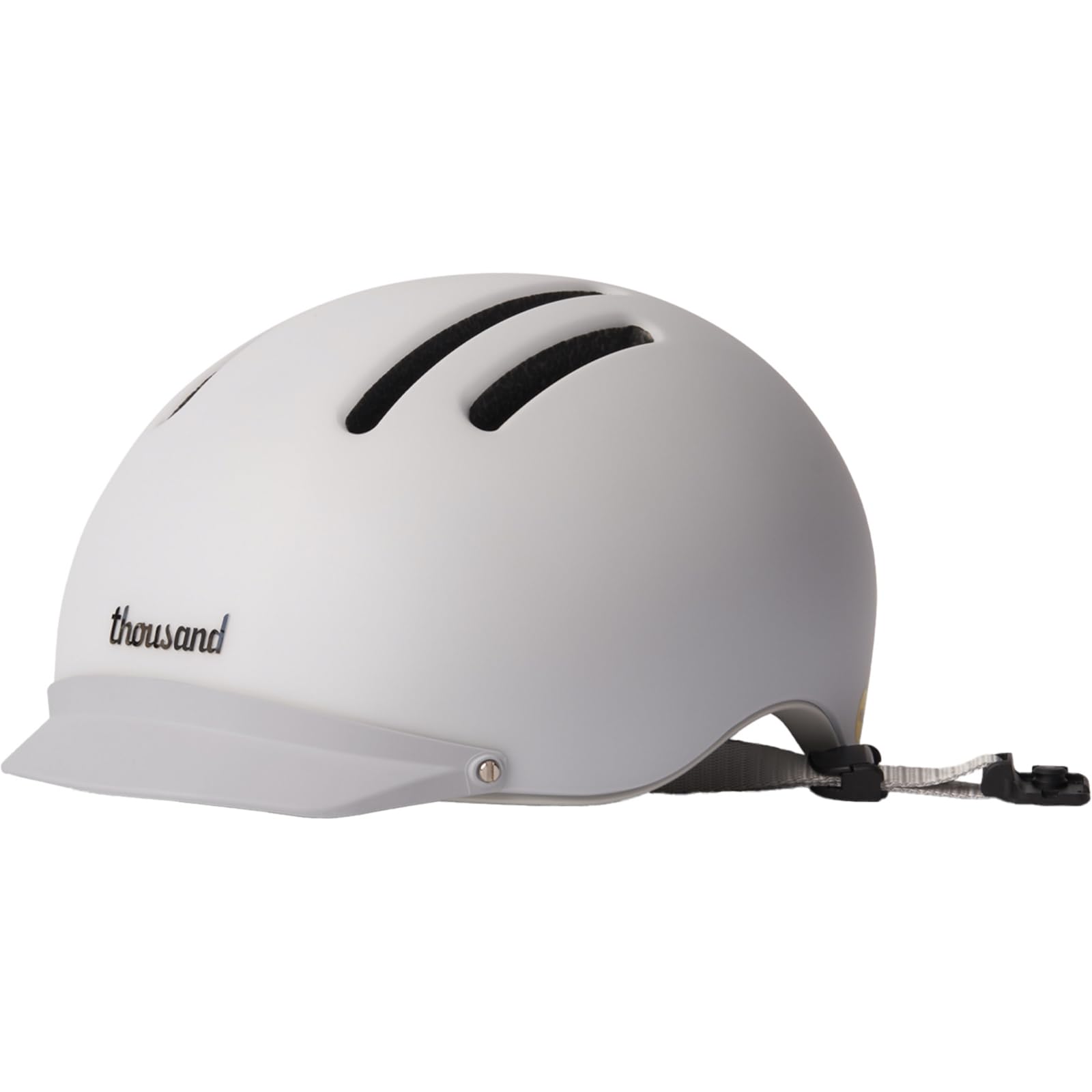
The Thousand Chapter brings MIPS protection into a clean, low-profile design that avoids the aggressive aerodynamic shapes common to performance helmets. Owner reviews frequently mention that this is the helmet that convinced a partner or family member to actually wear head protection regularly, which points to how much appearance and everyday comfort matter for compliance. The PopLock system built into the rear allows you to secure the helmet to your bike frame using a standard U-lock, adding practical anti-theft convenience.
The magnetic Fidlock-style chin strap clasp is a major usability upgrade over conventional buckles, especially for riders who take their helmet on and off multiple times per trip. The minimalist padding design keeps weight very low, though some owners note that the interior cushioning is less plush than helmets with thicker liner systems. The sunglass channel on the front provides a secure spot to store eyewear when you stop for a break.
This helmet meets CPSC safety standards and includes MIPS, but it lacks NTA-8776 certification, so it is best suited for class 1 and 2 e-bike riders or those who prioritize style and daily convenience over maximum certified speed protection. The fit leans toward round head shapes, and owners with long-oval head profiles have reported pressure points at the front and rear.
What works
- Elegant low-profile design that riders actually want to wear
- Magnetic clasp makes on-and-off effortless
- PopLock system secures helmet to bike with a U-lock
What doesn’t
- No NTA-8776 certification for higher-speed e-bikes
- Padding is minimal compared to more cushioned models
- Poor fit for long-oval head shapes based on owner feedback
4. Lumos Ultra E-Bike Smart Helmet

The Lumos Ultra is a fully integrated smart helmet that combines NTA-8776 certification with MIPS rotational impact protection and a wireless handlebar-mounted remote for turn signals. Owner reports emphasize how the LED visibility transforms the riding experience at night, with drivers noticing the helmet from significantly greater distances than standard reflectors or clip-on lights. The Lumos app allows customization of LED patterns and brightness levels, giving riders control over their visual signature in traffic.
The retractable face shield is a practical addition for riders who want eye protection without swapping visors or wearing goggles. It stores neatly inside the helmet shell when not in use. The included remote mounts easily to handlebars and provides intuitive left and right signal activation along with a brake light trigger. Battery life supports several days of commuting before needing a USB recharge, and the charging port is weather-sealed.
Some owners have noted that the plastic face shield can scratch with regular use and may fog in cold conditions when combined with face coverings. The helmet also carries a premium price that reflects the integrated electronics and MIPS system. For riders who prioritize maximum visibility, smart features, and certified e-bike speed protection, the Lumos Ultra delivers a cohesive package that separates it from simpler alternatives.
What works
- NTA-8776 certification plus MIPS in a single integrated design
- Wireless handlebar remote for turn signals and brake light
- Retractable face shield eliminates need for separate eyewear
What doesn’t
- Face shield scratches easily and can fog in cold weather
- Premium pricing reflects the electronics package
- Some owners report difficulty getting brake light to activate reliably
5. LAZER Tonic KinetiCore Bike Helmet

The LAZER Tonic KinetiCore stands out for its remarkably low weight of 240 grams — lighter than many standard bicycle helmets — while incorporating built-in crumple zones rather than a separate MIPS liner. Owner feedback highlights how the helmet feels nearly unnoticeable during long rides, which reduces neck fatigue and makes it an easy daily choice. The KinetiCore system uses deformable EPS blocks integrated into the shell structure to manage rotational forces without adding the weight or friction layer of MIPS.
Virginia Tech’s helmet testing program ranks the Tonic among the safest options under the premium tier, giving buyers independent validation of its protective performance. The rear dial adjustment provides a secure fit, and owners with round head shapes report excellent comfort right out of the box. The ventilation is sufficient for road cycling and moderate commutes, though it is not designed for the higher coverage demands of NTA-8776 certification.
This helmet lacks integrated lighting and is not certified for e-bike speeds above standard bicycle limits, so class 3 riders will need to supplement with separate lights. The minimalist design also omits a visor and silicone sunglass grippers found on higher-priced competition. For riders who prioritize ultralight weight and proven impact performance on standard road bikes and class 1 e-bikes, the LAZER Tonic delivers exceptional value.
What works
- Ultralight 240-gram design minimizes neck fatigue
- Integrated KinetiCore crumple zones for rotational protection
- Top safety ratings from independent testing programs
What doesn’t
- No NTA-8776 certification for high-speed e-bike use
- Lacks integrated lights or reflective elements
- No visor or sunglass retention features included
6. ILM Smart Adult Bike Helmet E3-12LS

The ILM E3-12LS brings NTA-8776 certification along with automatic brake lights and tilt-activated turn signals to a more accessible price point than most smart helmets on the market. Owner feedback highlights how the automatic light adjustment based on ambient conditions works well, with the front and rear LEDs activating in tunnels, garages, and dusk conditions without requiring manual intervention. The detection of head tilts beyond 15 degrees to trigger turn signals is a clever implementation that removes the need for handlebar controls.
The PC shell with EPS foam liner meets triple NTA-8776, CE, and CPSC standards, making it one of the most broadly certified e-bike helmets available. The detachable black visor provides sun protection, and the included clear visor swap extends usability into nighttime riding. The rear helmet locks allow securing the helmet to the bike frame, and the quick-release buckle on the chin strap is easy to operate with one hand.
Some owners note that ventilation is adequate but not exceptional, and the smart lighting features do not activate during daytime hours regardless of conditions. The included remote controller adds functionality but requires pairing. For budget-conscious e-bike riders who want certified speed protection and integrated smart lighting without paying a premium, the ILM E3-12LS delivers strong overall value.
What works
- NTA-8776, CE, and CPSC triple certification
- Automatic brake lights and tilt-activated turn signals
- Includes both tinted and clear visors for day and night use
What doesn’t
- Smart lights do not function in daytime mode
- Ventilation is moderate compared to road-focused helmets
- Some owners report padding durability concerns over time
7. Auboa AU-T801 Full Face Motorcycle Helmet

The Auboa AU-T801 is a DOT-certified full-face helmet that brings motorcycle-grade coverage to riders who want maximum facial protection without spending hundreds. Owner reviews emphasize that the fit is comfortable for a full-face design, with removable and washable liners that help manage odor over time. The included tinted and clear visor set covers day and night riding conditions, and the visor lock design reduces wind noise compared to budget full-face models.
The ABS outer shell with EPS impact liner provides strong structural integrity at a weight that owners describe as manageable for extended rides. Multiple front and rear vents promote airflow through the interior, though full-face coverage inherently retains more heat than open-face designs. The aerodynamic shell shape reduces lift at higher speeds, and the matte black finish with matching tinted visor creates a cohesive look that punches above the price point.
This helmet is DOT-certified rather than NTA-8776 or CPSC bicycle-certified, meaning it is designed for motorcycle impact energies rather than the specific e-bike speed profile. The extra weight and reduced peripheral visibility of a full-face design may be overkill for casual e-bike commuting. For riders who want full jaw and chin protection and already operate in mixed traffic conditions, the AU-T801 offers a solid entry into full-face protection.
What works
- DOT-certified full-face protection at an entry-level price
- Dual visor system with tinted and clear options included
- Removable washable liners for long-term hygiene
What doesn’t
- Heavier and warmer than open-face e-bike helmets
- Not NTA-8776 or CPSC bicycle certified
- Some owners report inner padding durability issues after extended use
Hardware & Specs Guide
NTA-8776 Certification
The NTA-8776 standard was developed specifically for e-bike helmets and tests impact protection at speeds up to 28 mph, covering a larger portion of the temple and rear skull than standard CPSC bicycle helmet requirements. Helmets with this certification use thicker EPS foam and often feature extended shell geometry to manage the higher kinetic energy of e-bike crashes. Riders using class 3 e-bikes or any bike that regularly reaches 20 mph should prioritize NTA-8776-certified models.
MIPS vs KinetiCore
MIPS adds a low-friction slip plane between the outer shell and inner liner that allows the helmet to rotate up to 15 mm on impact, reducing rotational forces transmitted to the brain. KinetiCore from Lazer uses deformable EPS blocks molded directly into the helmet structure that crush to absorb rotational energy without a separate liner. Both systems are independently tested and effective, though MIPS has broader adoption across more brands and price points.
Shell Construction
In-mold construction bonds the polycarbonate outer shell directly to the EPS foam liner during manufacturing, resulting in lighter weight and better impact energy distribution. Traditional hard-shell construction uses a separate plastic outer shell attached to the foam, which adds weight but improves durability against repeated impacts and abrasion. ABS shells like those on DOT-certified full-face helmets offer maximum puncture resistance at the cost of higher weight.
Smart Lighting Systems
Integrated LED systems typically use USB-rechargeable batteries that provide between 4 and 10 hours of illumination depending on brightness mode and ambient temperature. The best implementations use ambient light sensors to activate automatically in low-light conditions and offer at least three lighting modes. Turn signal systems may use tilt detection, handlebar remotes, or app-based control, with each approach offering different trade-offs in reliability and ease of use.
FAQ
Can I use a standard bicycle helmet for e-bike riding?
How do I measure my head for the correct helmet size?
What does MIPS actually do in a crash?
How often should I replace my e-bike helmet?
Is a full-face helmet necessary for e-bike riding?
Final Thoughts: The Verdict
For most buyers, the best e-bike helmet winner is the Smith Persist MIPS because it combines proven MIPS and Koroyd protection with outstanding ventilation and comfort at a price that reflects genuine engineering investment. If you want NTA-8776 certification with integrated lighting, grab the XNITO Urban. And for maximum smart features and visibility, nothing beats the Lumos Ultra.

Certification: BSc in Mechanical Engineering
Education: Mechanical engineer
Lives In: 539 W Commerce St, Dallas, TX 75208, USA
Md Amir is an auto mechanic student and writer with over half a decade of experience in the automotive field. He has worked with top automotive brands such as Lexus, Quantum, and also owns two automotive blogs autocarneed.com and taxiwiz.com.