Managing charging for two electric vehicles in the same household introduces a set of challenges that a single-standard charger simply cannot address. Whether you are juggling a Tesla and a J1772-equipped EV, or planning for future compatibility, the market now offers solutions that bridge connector types and deliver smart load management without requiring a panel upgrade.
I’m Amir — the founder and writer behind Four Wheel Ask. My work focuses on tracking EVSE market trends, analyzing build quality reports from multiple owner communities, and comparing real-world performance data across charging platforms to identify which units deliver lasting value.
This guide breaks down the key specifications, installation requirements, and smart features that separate a reliable dual-ready charger from one that will leave you hunting for adapters. After studying owner feedback across multiple brands, this guide helps you confidently select the right best dual ev charger for your home setup.
How To Choose The Best Dual EV Charger
Selecting a dual-ready EV charger means looking beyond peak amperage and price. You need a unit that pairs well with your home electrical system, supports the connector types your vehicles use, and offers software features that simplify daily use across multiple drivers. Below are the critical factors to evaluate before purchasing.
Hardwired vs Plug-In Installation
Hardwired chargers deliver maximum continuous amperage (typically 48A to 80A) because they eliminate the thermal limitations of a NEMA 14-50 receptacle. They also remove a potential failure point and simplify GFCI compliance. Plug-in models offer easier relocation and DIY setup but cap out around 40A on a standard outlet. If you need 48A or higher for fastest overnight charging, hardwiring is the right path — and requires a licensed electrician and a dedicated breaker rated 25 percent above the charger’s output.
Connector Compatibility: NACS and J1772
Native NACS (Tesla) connectors eliminate the need for a clunky adapter on Tesla vehicles and often support the charge-port release button directly. J1772 connectors remain the universal standard for all other North American EVs and plug-in hybrids. A true dual charger either includes both connector types — like the Tesla Universal Wall Connector — or relies on a secure, latchable adapter. If your household runs one Tesla and one J1772 vehicle, a dual-connector unit simplifies daily plug-in for both drivers.
Smart Features and Load Management
App-based scheduling lets you charge during off-peak utility windows, reducing electricity costs. Load-balancing capabilities — using CT clamps or integrated energy meters — prevent the charger from pulling current that could overload your main panel, which is especially valuable in homes with 100A service or multiple high-draw appliances. RFID card access and multi-user account management help track usage per vehicle and prevent unauthorized charging.
Build Quality and Environmental Rating
Outdoor installations demand at least a NEMA Type 4 rating for rain, snow, and dust resistance. Look for UL or ETL certification, a robust warranty (three years or more), and temperature sensors inside the connector and the charging handle. Metal enclosures dissipate heat better than plastic in direct sunlight, while cold-resistant cable jackets maintain flexibility in freezing garage conditions.
Quick Comparison
On smaller screens, swipe sideways to see the full table.
| Model | Category | Best For | Key Spec | Amazon |
|---|---|---|---|---|
| Tesla Universal Wall Connector | Premium | Dual-connector households | 48A, NACS+J1772, 24ft | Amazon |
| EMPORIA Level 2 EV Charger | Mid-Range | Smart home integration | 48A, J1772, 25ft, WiFi | Amazon |
| Grizzl-E 48A Ultimate | Premium | Harsh weather durability | 48A, J1772, 25ft, Metal | Amazon |
| ChargePoint HomeFlex | Premium | Network access & support | 50A, J1772, NEMA 14-50 | Amazon |
| Autel MaxiCharger 80A | Premium | Ultra-fast 80A charging | 80A, J1772, 25ft, AI | Amazon |
| Generac EV Charger Level 2 Plus | Premium | Brand reliability & power sharing | 48A, J1772, 25ft | Amazon |
| WOLFBOX Level 2 EV Charger | Mid-Range | Built-in LCD & RFID control | 48A, J1772, 25ft | Amazon |
| EVIQO NACS Charger | Mid-Range | Native Tesla charging | 40A, NACS, 25ft | Amazon |
| CleverCharge Level 2 EV Charger | Mid-Range | AI-powered multi-home management | 48A, J1772, 25ft | Amazon |
| IYILO Level 2 EV Charger | Mid-Range | Integrated temp sensors & load balancing | 48A, J1772, 25ft | Amazon |
| Schumacher Electric SEV1600HW | Mid-Range | Configurable current output | 50A, J1772, 25ft | Amazon |
In‑Depth Reviews
1. Tesla Universal Wall Connector

The Tesla Universal Wall Connector stands apart from the field because it ships with both a NACS and a J1772 connector integrated into a single unit, eliminating the need for an external adapter or swapping cables. This design makes it the only charger on this list that truly delivers dual-connector functionality out of the box. The 24-foot cable provides solid reach across a two-car garage, and the unit supports PowerShare technology — currently available for Cybertruck — allowing bi-directional power flow during an outage.
Owner reports consistently highlight the straightforward installation process and the robust build quality that matches Tesla’s automotive standards. The integrated adapter mechanism locks securely into place, preventing accidental disconnection or theft. The unit delivers up to 48A on a 60-amp breaker, and owners confirm it charges a Model 3 from 20 percent to 80 percent in roughly four and a half hours at 32A. Multiple reviewers note that the price premium over the standard Wall Connector is justified by the built-in adapter and future-proofing for non-Tesla EVs entering the household.
Setup requires a qualified electrician for hardwiring, but the included manual and onboard diagnostics simplify the process for experienced DIYers. The white enclosure suits both indoor and outdoor mounting, and the cable remains flexible in cold weather. For households that currently own a Tesla and plan to add a J1772 vehicle — or frequently host guests with different EVs — this charger eliminates the friction of adapter hunting and delivers a seamless daily charging experience.
What works
- True dual-connector design with integrated NACS and J1772
- PowerShare bi-directional capability for home backup
- Clean installation with onboard diagnostics
What doesn’t
- Higher price point than single-connector units
- Requires hardwiring for maximum output
2. EMPORIA Level 2 EV Charger
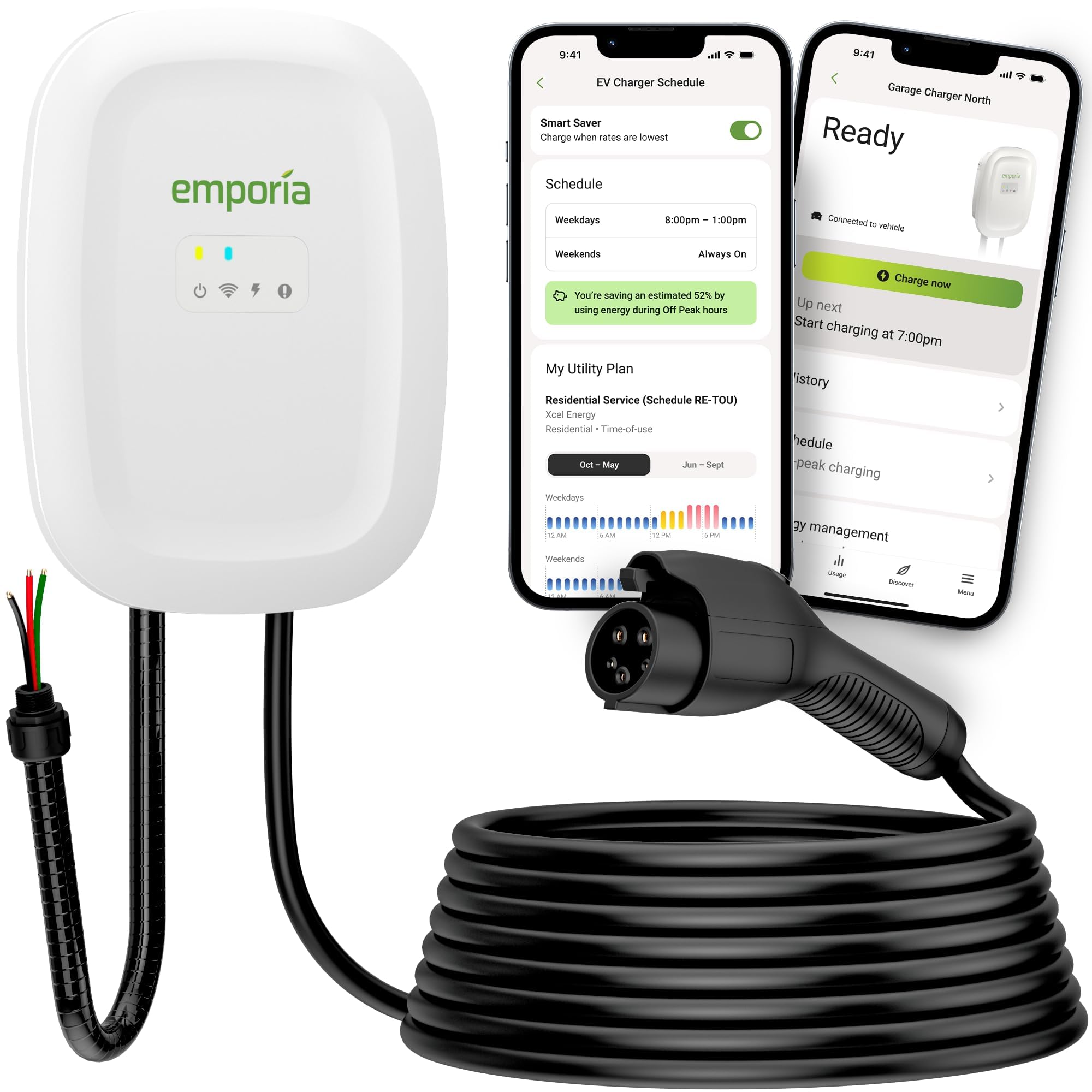
EMPORIA has built a strong reputation in the EVSE market by delivering a well-rounded package that combines fast charging, reliable app integration, and a robust set of certifications at a competitive price point. The 48-amp hardwired unit delivers up to 46 miles of range per hour and connects via 2.4 GHz WiFi to the Emporia Vue platform, which also supports whole-home energy monitoring when paired with their energy monitor. The UL listing and Energy Star certification ensure compliance with the highest safety standards and eligibility for many utility rebates.
Owner feedback across more than 350 reviews averages 4.6 stars, with users praising the straightforward installation process and the app’s ability to schedule charging during off-peak windows. Multiple reviewers note that the charger automatically reconnects and resumes scheduled charging after a power outage — a feature often overlooked but critical for homes in areas with frequent grid interruptions. The 25-foot cable offers generous reach, and the J1772 handle locks securely to the vehicle port.
For households running two J1772 EVs, EMPORIA’s multi-charger support within the same app allows you to monitor both units from a single dashboard. The white finish and compact profile look clean on any garage wall. The unit requires a 60-amp breaker for full 48-amp output, and professional installation is recommended. If you want a charger that integrates deeply with a broader home energy ecosystem and delivers reliable daily performance, this is a strong contender.
What works
- Excellent app with scheduling and multi-charger support
- UL listed and Energy Star certified for rebate eligibility
- Auto-resumes charging after power loss
What doesn’t
- 2.4 GHz WiFi only; no 5 GHz band support
- Hardwired installation requires professional electrician
3. Grizzl-E 48A Ultimate
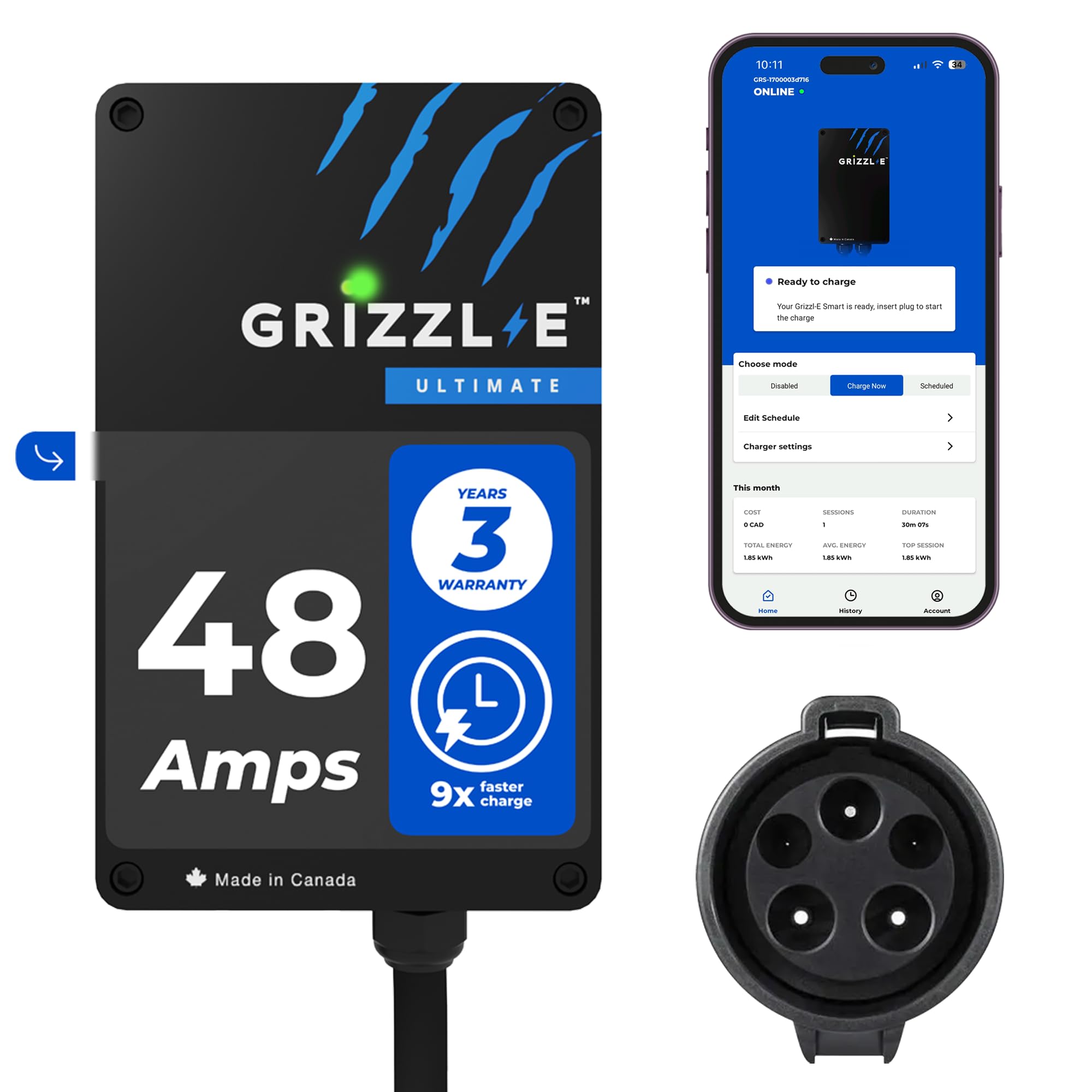
United Chargers’ Grizzl-E line has earned a loyal following for its no-compromise approach to physical durability. The 48A Ultimate model features a cast aluminum Type 4-rated enclosure that shrugs off rain, snow, dust, and direct sunlight far better than any plastic-bodied charger. The 25-foot J1772 cable is thick and cold-resistant, and the unit includes a hardwire kit with terminal lugs and heat shrink tubing for a clean installation. A one-time OCPP activation fee unlocks advanced integration capabilities for fleet or commercial use.
Owner reports from Canadian winters and coastal environments confirm the Grizzl-E maintains reliable operation in conditions that cause other chargers to throttle or fail. The external antenna improves WiFi connectivity even when the unit is mounted inside a metal-sided garage. The app provides real-time monitoring and scheduling, but the charger functions perfectly as a dumb unit — ideal for owners who prefer not to rely on cloud connectivity for daily charging. Multiple reviewers appreciate the ability to adjust amperage via DIP switches without needing the app.
The main trade-off is the basic plastic cable holster, which some owners feel does not match the premium build of the main unit. The J1772 handle latch also lacks the satisfying click of more expensive units. However, for anyone mounting a charger outdoors in a harsh climate or prioritizing long-term durability over app polish, the Grizzl-E 48A Ultimate is the most physically resilient option on this list.
What works
- Cast aluminum NEMA 4 enclosure for extreme weather
- Functions as a dumb charger or smart unit via app
- OCPP support for advanced commercial integration
What doesn’t
- Plastic cable holster feels cheap for the price
- Handle latch could be more secure
4. ChargePoint HomeFlex

ChargePoint is one of the most recognized names in EV charging infrastructure, and the HomeFlex brings that network expertise into the garage. This 50-amp unit uses a NEMA 14-50 plug for straightforward installation and delivers 29 to 30 miles of range per hour on a 50-amp circuit. The ChargePoint app provides access to over 274,000 public charging stations across North America, making it a strong choice for owners who frequently rely on public infrastructure and want a unified account for home and away charging.
Owner feedback emphasizes the easy wall-mount installation using the included template and the polished app experience that includes scheduling, usage tracking, and smart home integration with Alexa. The built-in GFCI eliminates the need for a GFCI breaker in many installations. The cold-resistant cable and robust holster design reflect the commercial-grade engineering that ChargePoint applies across its product line. The unit also supports OCPP for future compatibility with third-party management platforms.
The primary drawback reported by long-term owners is app reliability — some users experienced connectivity issues after firmware updates, and the scheduler does not automatically adjust for daylight saving time without manually updating the time zone. A small number of reviewers reported unit failures within the first year, though ChargePoint’s customer support resolved most cases under warranty. If you value brand reputation and a proven network, the HomeFlex remains a solid choice.
What works
- Trusted brand with large public charging network
- Easy plug-in installation with NEMA 14-50
- Built-in GFCI and cold-resistant cable
What doesn’t
- App connectivity issues reported after updates
- No auto daylight saving time adjustment
5. Autel MaxiCharger 80 Amp
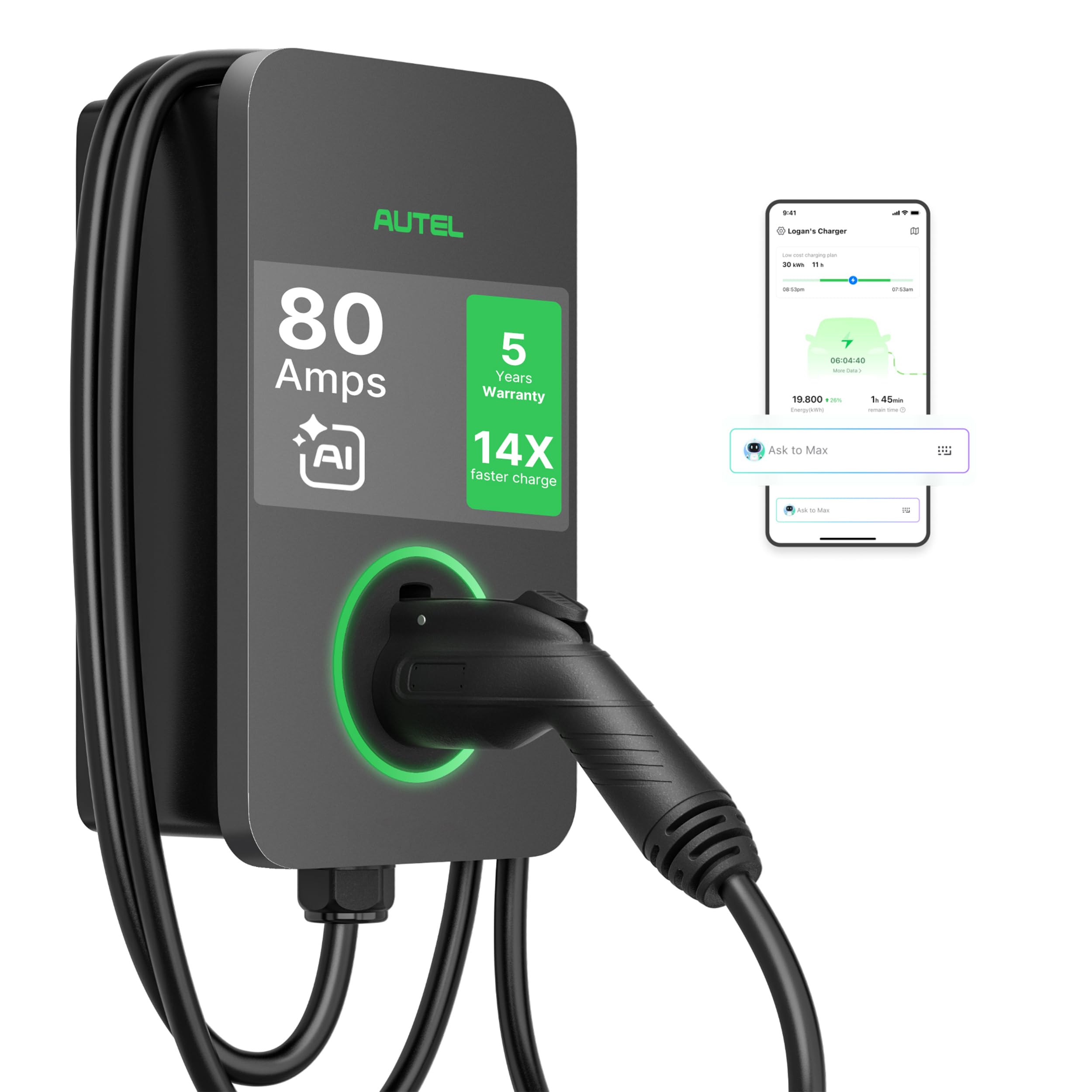
The Autel MaxiCharger pushes beyond typical 48-amp home chargers to deliver a full 80 amps of continuous output — adding roughly 70 miles of range per hour on compatible vehicles. This makes it the fastest Level 2 charger in this lineup, capable of fully replenishing a large-battery EV like a Cadillac Lyriq or Rivian R1T overnight even after a heavy driving day. The unit is CSA certified and built with a flame-retardant enclosure and internal temperature monitoring for sustained high-current operation.
Owners consistently note the clean internal wiring layout and the hardware amp dial that allows adjustment from 16A to 50A, with software fine-tuning down to 1A increments for precise load matching. The Autel app integrates AI-powered scheduling that optimizes for time-of-use rates, and the dual-network WiFi plus Wi-SUN ensures reliable connectivity even in challenging garage environments. The 25-foot SAE J1772 cable is heavy-gauge but does run warm at maximum output, as multiple reviewers observed.
The unit requires a 100-amp circuit for full 80-amp output and professional installation, which significantly raises the total setup cost compared to 48-amp chargers. A handful of owners reported early defects that required warranty replacement, though Autel’s support response times varied. For households with a large-battery EV and the electrical capacity to support it, the MaxiCharger delivers speed that no other home unit in this segment can match.
What works
- Ultra-fast 80A charging for large-battery EVs
- Hardware amp dial plus software fine-tuning
- Dual-network WiFi for reliable connectivity
What doesn’t
- Requires 100A circuit for full 80A output
- Cable runs warm at maximum amperage
6. Generac EV Charger Level 2 Plus
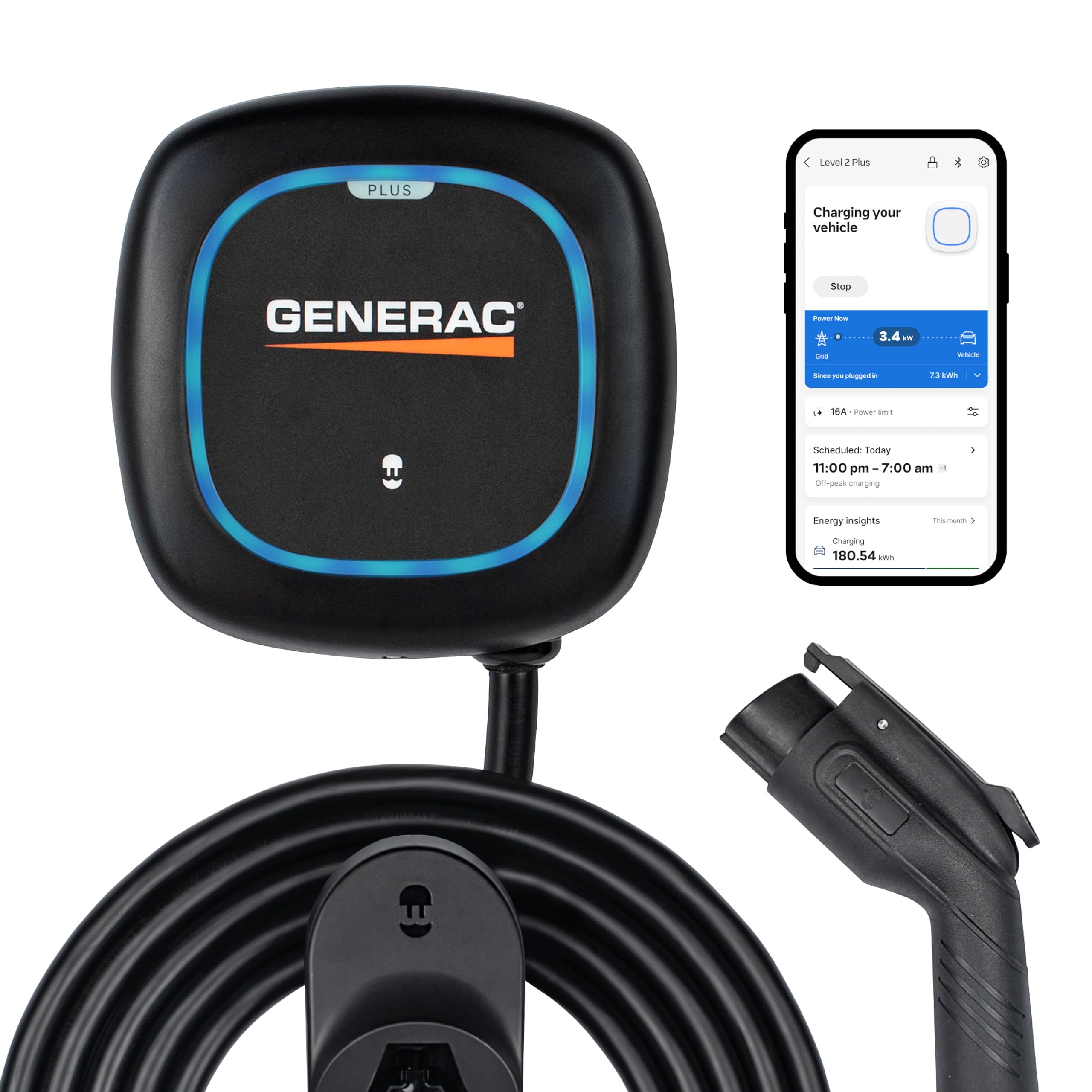
Generac brings 65 years of home energy expertise to the EVSE market, and the Level 2 Plus charger reflects that engineering background. The 48-amp unit features Power Boost Technology that dynamically adjusts charging speed based on your home’s real-time electrical load, preventing breaker trips without requiring a full panel upgrade. The compact NEMA 4 ABS enclosure mounts indoors or outdoors, and the 25-foot cable provides generous reach across multi-car driveways.
Owners report fast and easy app setup with intuitive timers for off-peak rate utilization, adjustable amperage control, and detailed usage statistics including a cost calculator based on your utility rate. The unit is compatible with Alexa and Google Home for voice control. Power Sharing capability allows multiple Generac chargers on the same circuit to intelligently distribute available current — a useful feature for homes with two EVs that park in the same garage bay.
Some users experienced 50-amp breaker tripping when the charger attempted continuous maximum output, requiring a reduction to 40 amps for stable operation — a known limitation of plug-in configurations on long runs. The Bluetooth and WiFi pairing process frustrated a small number of early adopters who encountered registration failures. With the backing of Generac’s national service network and a three-year warranty, this charger offers peace of mind for buyers who prioritize brand support.
What works
- Power Boost prevents circuit overloads
- Power Sharing for multiple chargers on one circuit
- National service network and 3-year warranty
What doesn’t
- 50A breaker may trip at full continuous load
- App pairing process can be finicky
7. WOLFBOX Level 2 EV Charger 48 Amp

WOLFBOX packs a surprising number of features into a mid-range package, starting with the 4.3-inch LCD screen that displays charging rate, time, voltage, and cumulative energy delivered. The integrated RFID card reader adds a layer of access control that is rare at this price point, making it easy to track usage per driver or prevent unauthorized charging. The 48-amp output delivers up to 46 miles per hour, and the CSA certification with UL safety standards ensures compliance with North American electrical codes.
Owners appreciate the seamless Google account login and the Alexa and Google Assistant voice control integration, which allows hands-free operation in the garage. The unit is configurable via internal DIP switches to 40 amps for homes with smaller breakers, and the app provides real-time monitoring and scheduling. Multiple reviewers noted the cable runs cooler than previous chargers they owned, and the lower connector temperatures indicate effective thermal management inside the handle.
The main caveat is that the unit must be hardwired to achieve 48 amps — using a plug configuration limits output to 40 amps. Some owners found the initial WiFi setup glitchy, with the email PIN verification occasionally hanging during onboarding. The app interface is basic compared to Emporia or ChargePoint but covers all essential functions. For budget-conscious buyers who want RFID control and a built-in display, the WOLFBOX delivers exceptional feature density.
What works
- Built-in LCD screen and RFID card reader
- Voice control via Alexa and Google Assistant
- Cable and connector run cool during charging
What doesn’t
- Initial WiFi pairing can be glitchy
- Basic app interface compared to premium brands
8. EVIQO NACS Charger 40 Amp
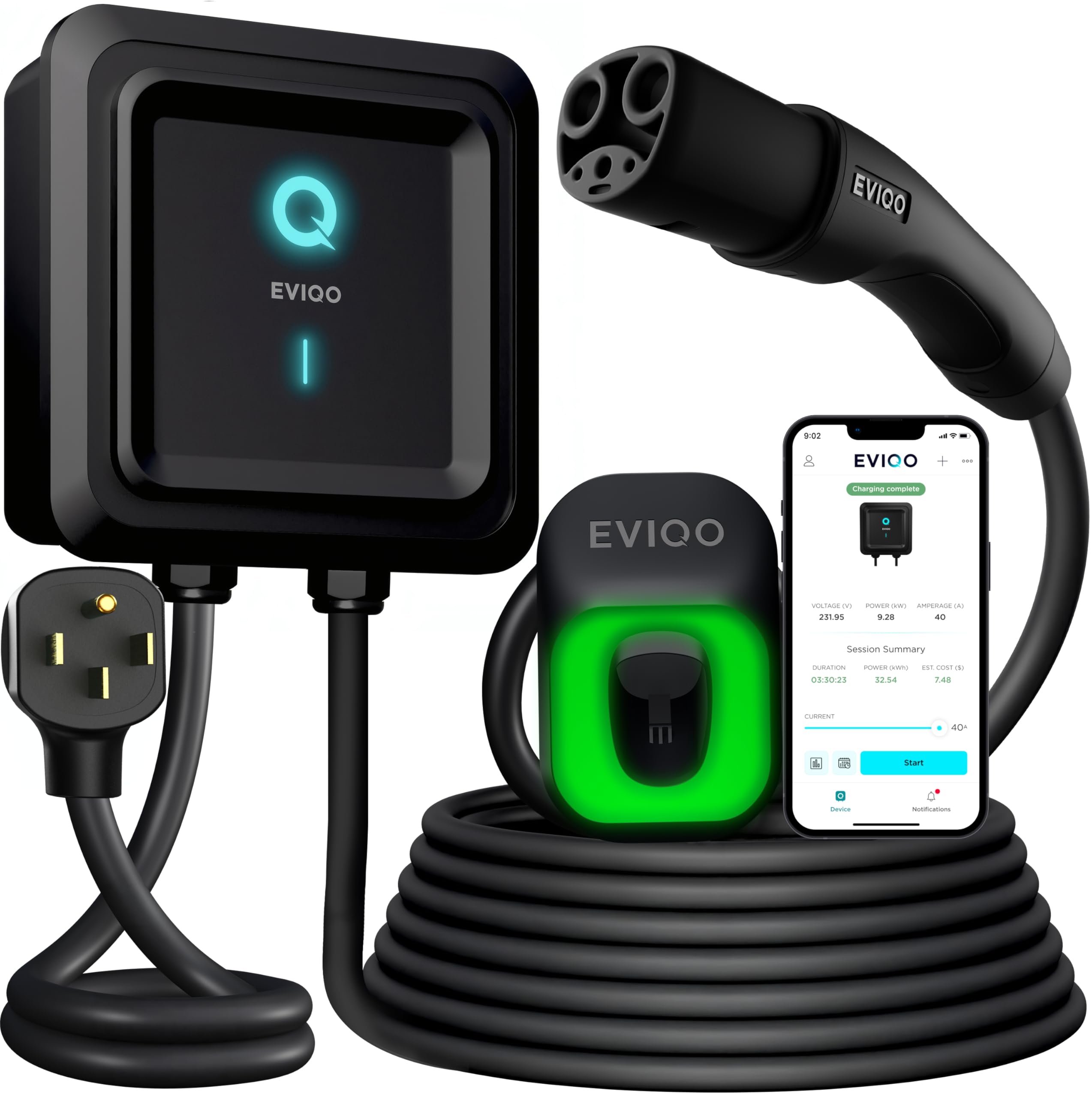
EVIQO’s NACS charger provides a native Tesla-connector option that bypasses the need for a J1772 adapter, supporting the full NACS protocol including the built-in charge-port release button. The 40-amp plug-in model uses a standard NEMA 14-50 outlet and delivers 9.6 kW — enough to add roughly 38 miles per hour and fully recharge most EVs overnight. The IP66 and NEMA 4 weatherproof rating ensures reliable outdoor operation in rain, snow, and dust.
Owners with Volkswagen ID.4 and Tesla Model 3/Y report consistent 5-to-7-hour full recharge times and praise the heavy-duty cable construction and easy plug-in handling. The blue fluorescent holster stands out in low-light garages, and the side reset button allows fault clearing without cycling the breaker. The app supports current adjustment from 6 to 40 amps in 1-amp increments, off-peak scheduling, and cost tracking based on local utility rates. Multiple reviews highlight the value proposition given the three-year warranty and US-based customer support.
The 40-amp limit means longer charge times for larger-battery EVs compared to 48-amp hardwired alternatives. The unit works natively only with NACS vehicles — J1772 vehicles require an adapter, which must be purchased separately. For Tesla-owning households that want a simple plug-in unit with robust weather sealing and app control at a competitive price, the EVIQO is a compelling option.
What works
- Native NACS connector with charge-port button
- IP66 weatherproof rating for outdoor mounting
- Fluorescent holster for low-light visibility
What doesn’t
- 40A limit slower than 48A hardwired chargers
- Requires adapter for J1772 vehicles
9. CleverCharge Level 2 EV Charger
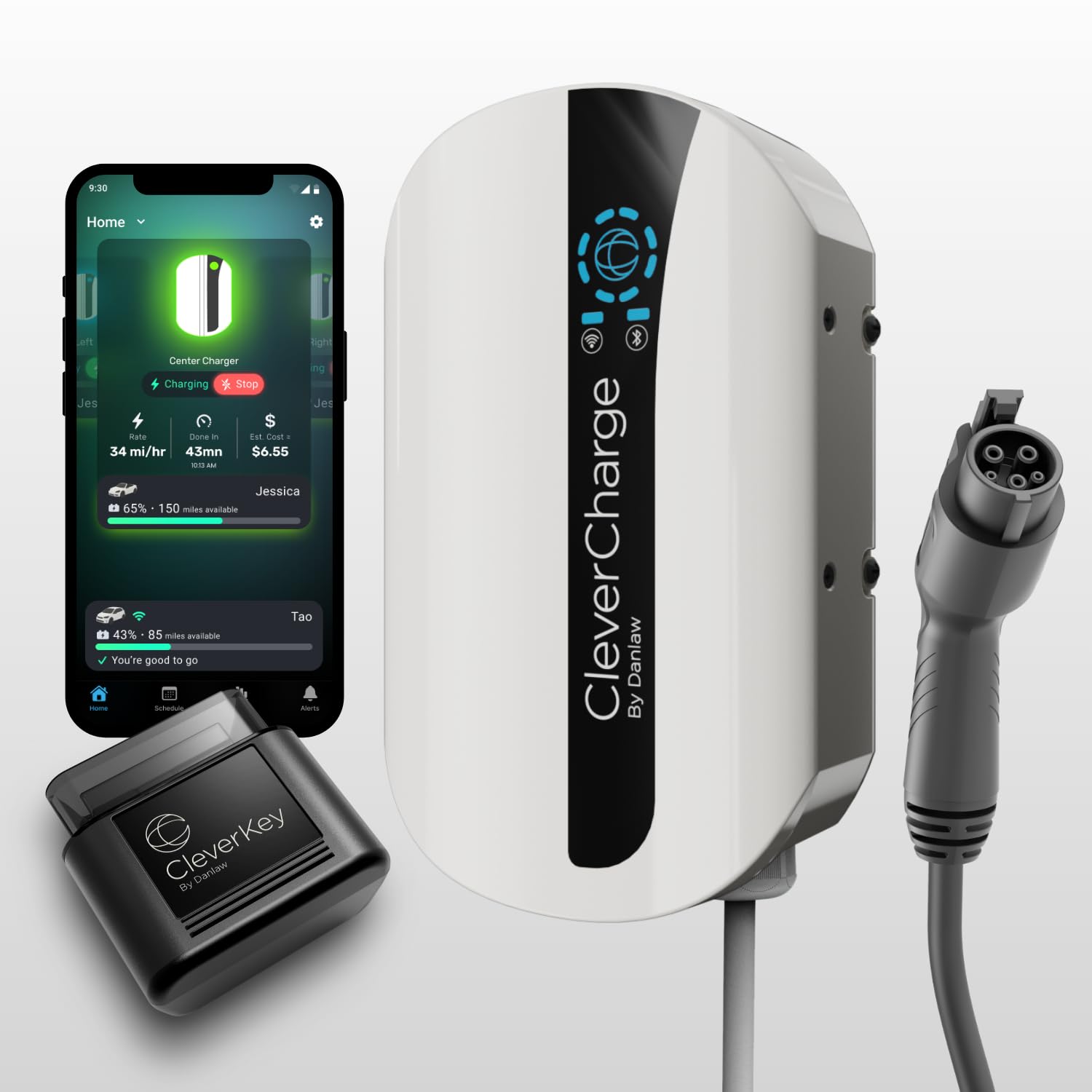
CleverCharge differentiates itself with the patent-pending CleverKey AI system that integrates with the vehicle’s OBD-II port to gather real-time battery data and optimize charging schedules based on actual state of charge rather than estimated time. The 48-amp hardwired unit delivers up to 46 miles per hour and supports multi-home account management — a rare feature for households with vacation properties or rental units. The UL, Energy Star, and NEMA Type 4 certifications confirm safety and all-weather readiness.
Owners consistently describe the app interface as intuitive and functional, with smart scheduling, AI-enhanced notifications, and energy consumption tracking. The charger supports multiple user accounts and vehicle profiles, making it easy for households with two EVs to track individual usage. The J1772 connection remains secure with no heat buildup at the connector, and the unit operates quietly without fan noise. The included OBD-II CleverKey unlocks advanced vehicle data integration that other chargers cannot provide.
The main drawback reported is that the app is not yet compatible with Rivian R1T Gen 2, limiting AI features for those owners. The 25-foot cable is adequate for most setups, but some owners wished for a longer option. The CleverKey AI features add complexity that some users may find unnecessary — the charger works perfectly fine as a standard smart unit without OBD-II integration. For tech-forward households that want data-driven charging optimization, the CleverCharge offers unique capabilities.
What works
- CleverKey AI uses OBD-II data for optimized scheduling
- Multi-home and multi-vehicle account management
- Quiet, cool operation with secure J1772 connection
What doesn’t
- App not yet compatible with Rivian Gen 2
- AI features add complexity for basic users
10. IYILO Level 2 EV Charger 48 Amp
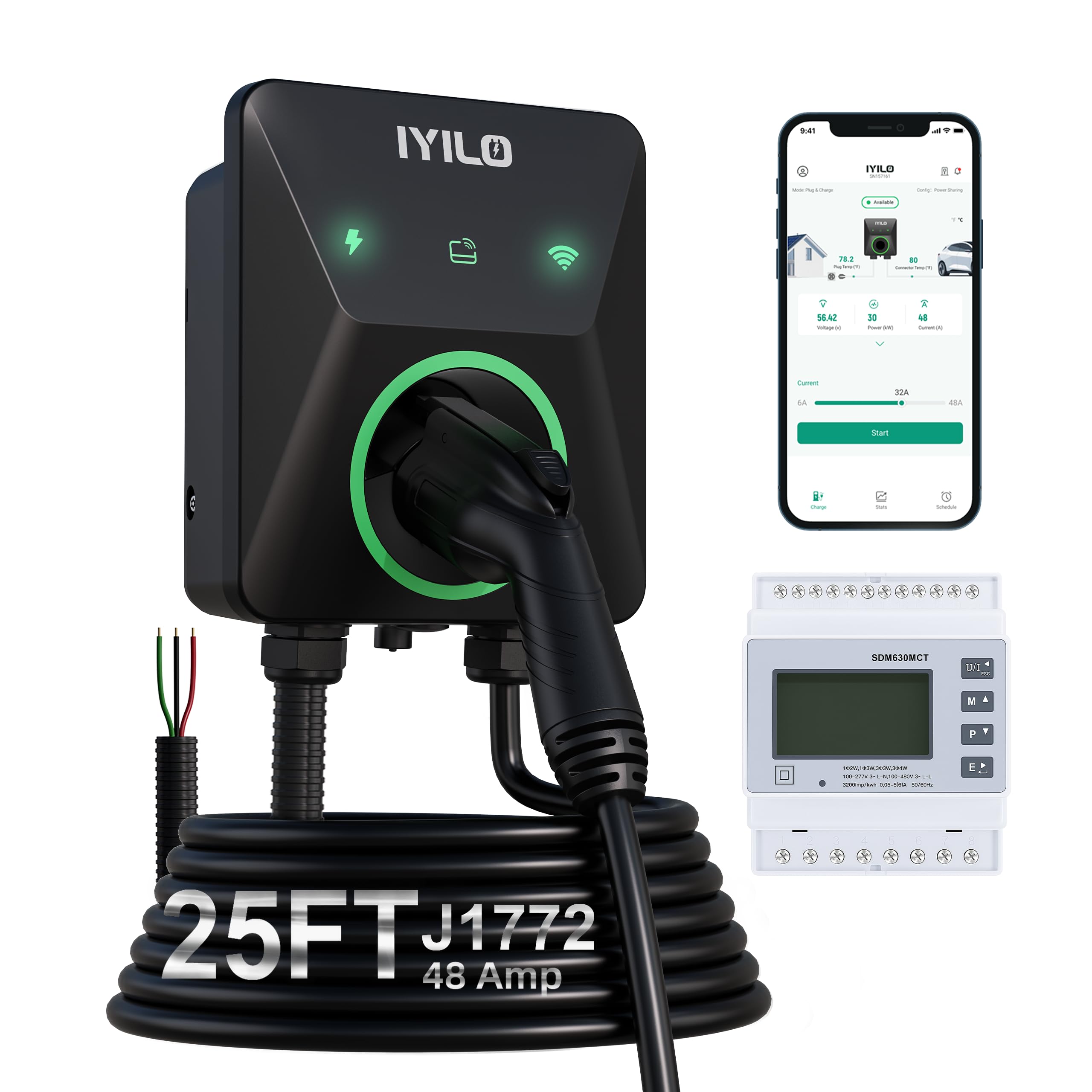
IYILO places safety engineering at the forefront by embedding NTC temperature sensors in both the J1772 connector and the NEMA 14-50 plug — a redundancy measure that automatically reduces power or shuts down the charger if any connection point exceeds 221°F. The 48-amp unit includes an energy meter with CT clamps out of the box, enabling real-time dynamic load balancing that prevents main panel overload without requiring a costly service upgrade. The ETL certification and NEMA 4 waterproof rating support indoor and outdoor installations.
Owner feedback highlights the exceptional connector quality and the metal locking clip on the J1772 handle, which provides more durable engagement than typical plastic clips. The flexible cable is easier to route in tight garage spaces, and the bright LED status indicators are visible from across the driveway. The app supports 1-amp current increments from 6 to 48 amps, time-of-use scheduling, and multi-user account management. The included RFID cards provide an additional access control layer for shared installations.
The primary criticism involves the 48-amp plug-in limitation — the unit only delivers 48 amps when hardwired, but the package does not include a hardwire whip or detailed hardwire instructions, requiring additional purchases. The 2.4 GHz-only WiFi can be unreliable in congested urban environments. Some users found the load-balancing setup complex due to the included CT clamp wiring. For safety-conscious buyers who prioritize thermal protection and panel load management, the IYILO offers features typically found in much more expensive units.
What works
- Dual NTC temperature sensors in both plugs
- Included energy meter with CT clamps for load balancing
- Metal locking clip on J1772 handle
What doesn’t
- No hardwire whip included for 48A installation
- Load-balancing setup requires careful wiring
11. Schumacher Electric SEV1600HW

Schumacher Electric brings decades of battery-charging expertise to the SEV1600HW, a hardwired unit rated for 50 amps — slightly more than typical 48-amp chargers — with current configurable from 16 to 50 amps during installation. The 25-foot charging cable provides generous reach across multiple garage bays, and the interchangeable dock allows the charging gun to be stored on either side of the unit for flexible mounting. The SAE J1772 connector ensures compatibility with all North American non-Tesla EVs and plug-in hybrids.
Owners note the durable build quality and straightforward installation when handled by a licensed electrician. The QR code in the manual links to installation videos and an electrician referral service. The 50-amp wiring requires a dedicated circuit with appropriate wire gauge, and the neutral wire is not used in this hardwired application. The included cable cradle simplifies cord management. The configurable current range makes this unit suitable for homes with smaller service panels that cannot support a full 50-amp draw.
The app has drawn consistent criticism for being basic and unreliable — some users report it shows the car as unplugged during charging sessions and fails to track historical data accurately. A small number of long-term owners experienced unit failure after two years with no warranty coverage beyond that point. The 10-inch power input cable is shorter than many competing units, limiting placement options. For buyers who prioritize raw power output and adjustable current over app polish, the Schumacher delivers foundational charging capability without smart-home frills.
What works
- 50A rating with configurable 16-50A current
- Interchangeable dock for flexible mounting
- Durable build from a trusted battery brand
What doesn’t
- App is basic and unreliable for tracking
- Short 10-inch power input cable limits placement
Hardware & Specs Guide
Hardwire vs Plug-In Power Delivery
A hardwired connection removes the NEMA 14-50 receptacle from the circuit, eliminating a common failure point and allowing the charger to draw its full rated current continuously. Plug-in chargers are limited to 40 amps on a 50-amp circuit because the receptacle is not designed for sustained maximum load. If your electrical panel can support a dedicated 60-amp breaker, hardwiring unlocks 48-amp charging — the most common sweet spot for overnight replenishment of large batteries.
Temperature Monitoring and Thermal Protection
Charging at 48 amps generates significant heat at the connector and receptacle. Premium chargers now embed NTC thermistors in the J1772 handle and sometimes in the wall plug to monitor real-time temperature. When the connector exceeds a threshold — typically around 221°F — the charger automatically reduces current or terminates the session. This feature is critical for older homes with aluminum wiring or outlets that have accumulated wear from repeated plug-in cycles.
Load Management and Panel Protection
Dynamic load balancing uses CT clamps around the main service conductors to measure total household current draw and adjust EV charging speed in real time. This prevents the main breaker from tripping when other high-load appliances — air conditioning, electric oven, water heater — are running. Some systems support wired RS-485 communication between the charger and the energy meter, while others use WiFi for data relay. Hardwired load management is the most reliable approach for 100-amp services.
Connector Standards: NACS vs J1772
The North American Charging Standard (NACS), originally developed by Tesla, is a compact connector rated for higher current and supports AC and DC charging through the same pin set. The SAE J1772 standard is larger and limited to Level 2 AC charging but is universally supported by all non-Tesla EVs and plug-in hybrids. A dual-connector charger eliminates the need for an external adapter, which improves reliability and maintains full communication between the vehicle and the EVSE.
FAQ
Can one EV charger handle two cars simultaneously?
What is the difference between a hardwired and plug-in EV charger?
Do I need a permit to install a Level 2 EV charger?
Can I use a J1772 charger with a Tesla vehicle?
How many amps do I need for overnight EV charging?
Final Thoughts: The Verdict
For most buyers, the best dual ev charger winner is the Tesla Universal Wall Connector because it is the only unit that ships with both NACS and J1772 connectors integrated into a single, elegantly designed system. If you want comprehensive smart-home integration and multi-charger management, grab the EMPORIA Level 2 EV Charger. And for extreme weather durability with OCPP support, nothing beats the Grizzl-E 48A Ultimate.

Certification: BSc in Mechanical Engineering
Education: Mechanical engineer
Lives In: 539 W Commerce St, Dallas, TX 75208, USA
Md Amir is an auto mechanic student and writer with over half a decade of experience in the automotive field. He has worked with top automotive brands such as Lexus, Quantum, and also owns two automotive blogs autocarneed.com and taxiwiz.com.