Finding a set of motorcycle tires that balance dependable traction with a sensible price tag often feels like chasing a mythical beast — every brand claims long mileage and sticky rubber, yet the difference between a tire that inspires confidence mid-corner and one that leaves you white-knuckled comes down to compound formulation, carcass construction, and real-world owner data that glossy marketing pages never show.
I’m Amir — the founder and writer behind Four Wheel Ask. I’ve spent years parsing technical spec sheets, analyzing owner feedback across thousands of verified reviews, and comparing build-quality metrics to separate genuine value from overpriced branding in the motorcycle tire market.
Riders seeking dependable traction without overspending will find the best discount motorcycle tires deliver genuine performance gains for daily commuting and weekend canyon carving.
How To Choose The Best Discount Motorcycle Tires
Selecting the right rubber for your bike without blowing your budget means understanding a handful of technical specs that directly impact safety, handling, and tread life. Price alone tells you nothing about whether a tire will hold its line in a wet corner or wear evenly after a thousand highway miles.
Ply Rating and Load Capacity
A tire’s ply rating indicates the strength of its internal carcass — more plies typically mean a stiffer sidewall that supports heavier loads and resists flex under hard cornering. A 6-ply or 10-ply construction offers greater stability for cruisers and touring bikes, while a 4-ply radial often delivers a more compliant ride for lighter sport bikes. Always verify that the load index matches your motorcycle’s wet weight plus rider and cargo.
Tread Pattern and Wet Performance
Deep circumferential grooves and functional siping are what evacuate water from the contact patch, not the brand logo on the sidewall. Tires designed with progressive side grooves and small central channels resist hydroplaning and maintain grip in rain, making them essential for year-round riders who cannot afford to park their bike at the first cloud.
Compound Formulation and Mileage
The rubber compound dictates the trade-off between initial grip and tread life. Softer compounds heat up quickly and stick to the pavement but wear faster, while harder compounds last longer but may feel slippery until fully warm. Look for tires that use new formulated polymers or advanced rubber blends — these are the ones that stretch your dollar without leaving you sliding through a turn.
Quick Comparison
On smaller screens, swipe sideways to see the full table.
| Model | Category | Best For | Key Spec | Amazon |
|---|---|---|---|---|
| Shinko 777 Front H.D. | Cruiser | Stability and wet traction | 100/90-19, 6-ply, H-rated | Amazon |
| Dunlop D404 Rear | Cruiser | Smooth ride and mileage | 130/90-16, bias-ply, H-rated | Amazon |
| Michelin Pilot Street 2 | Scooter/Small | Wet and dry commuting | 110/70-17, radial, 4-ply | Amazon |
| Kenda KM1 2-Pack | Sport-Touring | High-speed stability | 120/70ZR17 + 180/55ZR17, radial | Amazon |
| Shinko 777 Rear H.D. | Cruiser | Reinforced stability | 130/90B-16, 10-ply, H-rated | Amazon |
| Continental ContiMotion | Sport/Touring | Entry-level reliability | 120/70-17, 6-ply, steel-belted | Amazon |
| Kenda K657 Challenger | Standard | Budget-friendly daily use | 100/90H19, 6-ply, H-rated | Amazon |
In-Depth Reviews
1. Shinko 777 Front H.D. 100/90-19 (61H) Black Wall Motorcycle Tire

The Shinko 777 Front H.D. earns its position at the top of this list because it delivers the two things every rider actually needs from a discount tire: predictable grip in the wet and a carcass stiff enough to inspire confidence during hard braking. The H.D. (Heavy Duty) designation means an aramid-belted, reinforced construction that resists flex under load, which matters most when you’re hauling a heavy cruiser through a decreasing-radius turn. Multiple owner reports note that this tire effectively eliminated the notorious handlebar shake on bikes like the Yamaha Bolt — a fix that usually costs far more than the price of a single tire.
The tread design incorporates functional siping and grooves specifically laid out for cruiser geometry, channeling water away from the contact patch rather than trapping it. Several verified purchasers on larger V-Twin and metric cruiser platforms confirmed that the tire tracks straight over rain grooves and uneven pavement, which is where cheaper alternatives often drift or tramline. The rubber compound feels noticeably tackier than budget cruiser tires in the same price tier, especially after a few heat cycles.
That said, the break-in period is longer than some riders expect — roughly a few hundred miles before the tire feels fully settled, according to owner feedback. Low-speed turning effort is slightly higher than a standard passenger tire due to the stiffer sidewall, but that trade-off pays dividends the moment you lean into a corner at highway speed. For cruisers and standards that need a front tire that actually works when it matters, this Shinko represents the strongest value proposition on the market today.
What works
- Eliminates handlebar shake on many cruiser models
- Excellent wet-weather traction with functional siping
- Reinforced H.D. carcass feels planted under braking
What doesn’t
- Longer break-in period than expected
- Slightly heavier steering feel at low speeds
2. Dunlop D404 Rear 130/90-16 67H
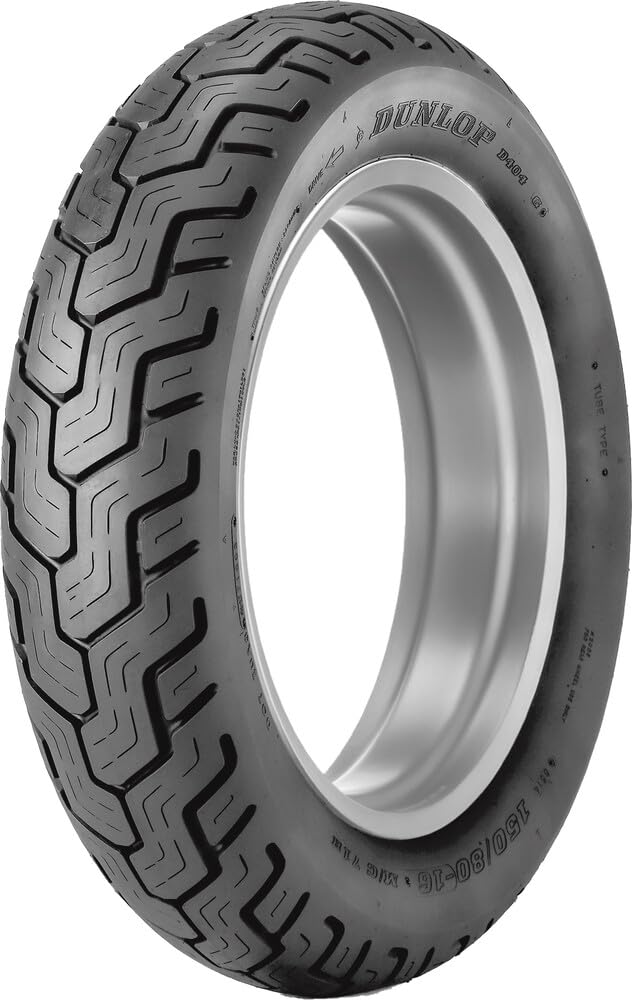
The Dunlop D404 has been a go-to replacement tire for Harley-Davidson Sportster and Kawasaki Vulcan owners for years, and the reason is straightforward: it delivers the balanced ride quality that cruisers need without the premium price tag of the brand’s higher-tier touring rubber. The bias-ply construction smooths out road imperfections better than many budget radials, which translates to less fatigue on long slogs down the interstate. Owner feedback consistently highlights how the tire holds its grip at speeds around 80 mph without developing that unsettled squirm that cheaper bias-ply tires sometimes exhibit.
Dunlop engineered the tread pattern with water evacuation as a priority — the front and rear designs work together to channel water outward, improving wet grip in a category where rain performance is often an afterthought. Several verified purchasers on 1200cc custom bikes reported getting around 4500 miles of mixed riding before noticeable wear set in, which aligns with the tread compound’s focus on balancing mileage versus stickiness. That is a solid return for a tire that sits well below the price of competing cruiser rubber from other major brands.
One consistent note in the review data is that the rubber compound is softer than some riders anticipated, meaning aggressive throttle riders may see faster wear on the rear. Additionally, a few owners mentioned that the tire feels less planted on rain grooves at highway speeds compared to more modern radial alternatives, though the majority found it perfectly acceptable for everyday riding. If you ride a cruiser that needs a reliable, comfortable rear tire and you prioritize smooth ride quality over ultimate cornering aggression, the D404 remains a proven choice.
What works
- Smooth bias-ply ride dampens road vibration
- Good wet-weather grip for a cruiser tire
- Trusted fitment on Sportster and Vulcan models
What doesn’t
- Soft compound wears faster with hard acceleration
- Not ideal for aggressive rain-groove highway stretches
3. Michelin Pilot Street 2 Tire (110/70-17)

The Michelin Pilot Street 2 punches well above its price bracket by bringing a genuine radial construction to the small-displacement and scooter market, where bias-ply designs are still the norm. Radial carcass technology means the tire runs cooler at highway speeds, distributes heat more evenly across the tread face, and offers a more compliant ride over broken pavement — all attributes that owners of smaller bikes rarely get to experience at this price level. The tire’s deep central grooves and progressive side grooves are engineered to evacuate water aggressively, which shows in the review data where multiple riders specifically praised the wet-weather confidence this tire provides.
Optimized for scooters and smaller motorcycles (including use on electric unicycles and talaria-style performance bikes, according to several verified purchasers), the Pilot Street 2 uses a specialized compound that Michelin developed to maximize mileage across a wide temperature range. Owners report that the tire heats up quickly from cold and maintains consistent grip throughout the ride, reducing that sketchy feeling during the first few corners on a chilly morning. The “responsive handling” claim from the spec sheet is backed by real world feedback — riders note that turn-in feels sharper compared to the stock tires many of these bikes ship with.
The biggest practical limitation is the load capacity: rated at 450 pounds, this tire is not suitable for heavy touring bikes or two-up riding on larger machines. A few owners also noted that the tire runs slightly narrower than some alternatives in the same size, which can affect the visual stance on certain bikes. Still, for lightweight motorcycles, scooters, and project builds that need a high-quality radial without the premium price, the Michelin Pilot Street 2 is arguably the best value tire in its segment.
What works
- Genuine radial construction at an entry-level price
- Excellent wet-weather groove design
- Quick warm-up and consistent grip from cold
What doesn’t
- Load rating limits use to lighter bikes
- Runs slightly narrower than some comparable sizes
4. Kenda KM1 (KM001) 120/70ZR17 Front & 180/55ZR17 Rear 2-Pack

The Kenda KM1 two-pack represents the upper echelon of what the discount tire category can deliver when a manufacturer focuses on high-speed stability and compound performance rather than just meeting a price point. This is a full radial sport-touring set engineered with an optimized apex geometry that balances quick steering response with straight-line stability — a combination that typically requires spending significantly more on premium Japanese or European rubber. The ZR speed rating on the front tells you this tire is built for sustained high-speed running, which is rare in this price tier and signals a compound that can handle the heat generated by aggressive pace riding.
Owner feedback consistently describes the KM1 as a budget tire that punches far above its weight in terms of grip and feel. The advanced rubber compound is designed to reach operating temperature quickly from a cold start, which eliminates the usual anxiety of the first few corners on a chilly morning. The tread wear pattern has been optimized for sport-touring duty, meaning you get even wear across the face rather than the center-flat or shoulder-cupping that plagues less refined designs. Verified purchasers on sport-touring machines reported that the tires generate near-zero noise at freeway speeds and feel grippy after a proper break-in.
The main hesitation from some owners involves a subtle slipping sensation when pushing the tire to its limit on wet pavement — though most noted this was more of a psychological feeling than an actual loss of traction, and the majority rated the tire highly for all-around performance. The 4-ply radial construction also means the sidewall is less resistant to impact damage than a heavier 6-ply touring tire, so riders who regularly tackle rough roads should monitor for cuts. For sport-touring riders who want genuine high-speed capability without the premium price tag, the Kenda KM1 two-pack is a compelling package.
What works
- ZR-rated high-speed stability at a discount price
- Quick warm-up compound for reliable cold-weather grip
- Even tread wear profile suits sport-touring mileage
What doesn’t
- Some riders report a vague slipping sensation in the wet
- 4-ply sidewall less robust on rough roads
5. Shinko 87-4594 777 Rear H.D. Motorcycle Tire 130/90B-16 (73H) Black Wall

The Shinko 777 Rear H.D. takes everything that made the front version a top pick and amplifies it with a massive 10-ply carcass that delivers an exceptionally stable, planted feel under heavy loads. This is the tire you want on the rear of a heavyweight cruiser or touring bike that spends its life hauling a passenger, saddlebags, and a full tank of fuel at highway speeds. The reinforced multi-ply construction with aramid belts resists centrifugal growth at speed, which means the tire maintains its footprint even when you’re pushing hard through a high-speed sweeper. Multiple owners on 1980s-era Harley-Davidson FXR and FLHS models confirmed that these tires transformed the handling character of their bikes.
The tread design mirrors the front Shinko 777 with functional siping and deep grooves engineered for wet-surface confidence, and the rubber compound is formulated to offer both grip and mileage. Owner reports indicate that these tires mount up easily and often require zero wheel weights to balance — a sign of consistent manufacturing quality that is rare at this price point. Several verified purchasers specifically mentioned that they appreciate getting comparable performance to premium cruiser tires at a fraction of the cost, and many return to buy a second set when the first wears out.
Some riders coming from softer-compound performance tires note that the Shinko 777 feels less sticky during aggressive cornering, which is expected given its heavy-duty touring focus. The 10-ply construction also contributes to a firmer ride feel over sharp bumps compared to a 4-ply or 6-ply tire. For cruiser and touring riders who prioritize stability, load capacity, and consistent all-weather traction over canyon-carving stickiness, the Shinko 777 Rear H.D. is a near-perfect match.
What works
- 10-ply construction provides exceptional stability under load
- Balances well with minimal or no wheel weights
- Consistent all-weather traction for heavy cruisers
What doesn’t
- Firmer ride over sharp bumps and rough pavement
- Less outright grip than softer sport-touring compounds
6. Continental ContiMotion Sport/Touring Motorcycle Tire Front 120/70-17

Continental engineered the ContiMotion as a value-oriented entry point into the world of sport-touring radials, and the numbers back it up: a 0-degree steel-belted rear construction (on the matching rear) provides the stability and ride comfort typically reserved for much more expensive tires, while the front maintains that same construction philosophy. The tire uses a polymer formulation designed to stretch mileage without sacrificing the safe, predictable feedback that riders need when conditions turn wet. Owner reviews consistently describe the ContiMotion as a tire that does exactly what it should without drama — which is precisely the hallmark of a well-engineered budget product.
Multiple verified purchasers noted that the tire arrived quickly and mounted without issues, which is often a hidden pain point with lesser-known budget tires that arrive out of round or with mold flash. The tread compound handles cold weather better than several competitors in the same price range, according to a rider who specifically called out its performance below 50°F. That cold-weather capability matters for commuters who ride year-round and cannot afford a tire that feels like a hockey puck until it warms up. Several buyers echoed the sentiment that the price-to-performance ratio is strong enough to make them repeat customers.
The most common critique in the review data is that the tire wears more quickly than some premium sport-touring options — one owner reported faster wear than any front tire they had previously purchased, though they still deemed it worth the price. Additionally, a few riders noted balance issues that required significant weight to correct, though this was not a universal experience. For riders on a strict budget who still want the construction quality of a major European brand, the ContiMotion delivers a genuinely impressive balance of capability and cost.
What works
- Steel-belted radial construction at a budget-friendly price
- Handles cold weather better than many peers
- Predictable, drama-free handling in varied conditions
What doesn’t
- Can wear faster than pricier sport-touring alternatives
- Occasional balance issues reported
7. Kenda K657 Challenger Street Tire – 100/90H19 FRT

The Kenda K657 Challenger is the tire that proves you do not need to spend a lot to get a DOT-approved, H-rated, 6-ply tire that fits older standard and sport bikes with 19-inch front rims. This tire uses a stiff sidewall design that improves handling response and cornering stability, which is especially valuable for vintage bikes that originally came with softer, less capable rubber. Owner feedback from riders fitting these to older Kawasaki GPZ and similar machines noted that the local shop mechanic who installed them even commented on the build quality — a strong signal that this tire over-delivers for its price tier.
The tread pattern is specifically engineered to resist tracking in rain grooves, which is a common failure point for budget tires that simply copy a generic pattern without considering how the carcass interacts with grooved pavement. Multiple verified purchasers reported that the tire arrived quickly, mounted without modification, and felt great on the bike from the first ride. The 6-ply tube/tubeless design gives you flexibility depending on your wheel setup, and the H-speed rating (up to 130 mph) means this tire is not limited to casual cruising — it can handle real highway speeds when needed.
The main trade-off with the K657 is that the compound leans toward longevity rather than ultimate grip, so riders who push hard in corners may find the tire’s limit sooner than they would with a sportier radial. A few owners also noted that the tire runs slightly heavier than premium alternatives, which is an expected consequence of the 6-ply construction. For budget-conscious riders who need a dependable, correctly sized 19-inch front tire for commuting, weekend cruising, or keeping an older bike on the road, the Kenda K657 delivers exactly what it promises with no pretense.
What works
- DOT-approved H-rated 6-ply construction at a low entry point
- Resists rain-groove tracking on the highway
- Fits older standard and sport bikes with odd sizes
What doesn’t
- Compound prioritizes mileage over peak cornering grip
- Slightly heavier feel compared to premium radials
Hardware & Specs Guide
Bias-Ply vs Radial Construction
Bias-ply tires use overlapping cord layers angled at 30 to 40 degrees, which creates a stiffer sidewall that supports heavy loads and provides a smooth, damped ride — ideal for cruisers and touring bikes. Radial tires place cords at 90 degrees to the direction of travel, allowing the sidewall and tread to act independently for better heat dissipation, improved high-speed stability, and more compliant ride quality over bumps. Most discount tires in the budget tier are bias-ply, but radials like the Michelin Pilot Street 2 and Continental ContiMotion bring genuine radial performance to the value segment.
Ply Rating and Load Capacity
Ply rating is a historical measure of a tire’s strength that now refers to the equivalent number of cotton plies in the carcass, even when modern synthetic materials are used. A standard 4-ply tire handles around 450 to 600 pounds depending on size, while a 6-ply tire supports up to 900 pounds or more, and the 10-ply Shinko 777 Rear H.D. can manage heavy touring loads with ease. Always match the load index number printed on the sidewall to your bike’s maximum gross weight including rider, passenger, and luggage to avoid dangerous overload conditions.
Speed Ratings Explained
Speed ratings indicate the maximum safe sustained speed for a tire. H-rated tires are certified up to 130 mph, which covers virtually all legal highway riding on cruisers and standards. ZR-rated tires (like the Kenda KM1 front) are tested above 149 mph and are suitable for high-performance sport-touring bikes that regularly see triple-digit speeds. Using a tire with a speed rating lower than your bike’s capability creates a safety risk, especially during long high-speed stretches where heat buildup can exceed the tire’s design limits.
Tread Pattern and Wet Performance
Deep circumferential grooves are the primary mechanism for water evacuation — they channel fluid away from the contact patch to prevent hydroplaning. Progressive side grooves that widen as they approach the shoulder help maintain grip during lean angles in wet conditions. Functional siping (small slits in the tread blocks) adds additional biting edges for wet traction but can reduce tread life on dry pavement. The Shinko 777 line and Michelin Pilot Street 2 both use thoughtfully designed groove layouts that outperform generic budget patterns in actual rain.
FAQ
What is the real difference between a cheap tire and a premium tire for motorcycles?
Can I mix a budget front tire with a premium rear tire?
How many miles should a discount motorcycle tire last?
Is it safe to buy motorcycle tires online from Amazon?
Do discount motorcycle tires have worse wet-weather performance?
Final Thoughts: The Verdict
For most buyers, the best discount motorcycle tires winner is the Shinko 777 Front H.D. because it combines a reinforced cruiser carcass with functional wet-weather siping and a price that undercuts the competition. If you want a premium radial set for sport-touring duty, grab the Kenda KM1 2-Pack. And for lightweight bikes and scooters that need genuine radial performance, nothing beats the Michelin Pilot Street 2.

Certification: BSc in Mechanical Engineering
Education: Mechanical engineer
Lives In: 539 W Commerce St, Dallas, TX 75208, USA
Md Amir is an auto mechanic student and writer with over half a decade of experience in the automotive field. He has worked with top automotive brands such as Lexus, Quantum, and also owns two automotive blogs autocarneed.com and taxiwiz.com.