Diesel fuel pressure regulators are the unsung gatekeepers of your engine’s health. A weak or failing regulator lets pressure wander, starving injectors or flooding them — either way, performance suffers and repair bills climb. I’ve watched owners chase misfires, hard starts, and black smoke only to find a part was the culprit.
I’m Amir — the founder and writer behind Four Wheel Ask. I’ve spent years studying diesel fuel system specifications and analyzing owner feedback to identify what truly matters in a pressure regulator.
I sorted through hundreds of real-world reports and spec sheets to bring you a filtered list. After reviewing dozens of owner reviews and specifications, the best diesel fuel pressure regulator emerges as a top choice for reliability and performance.
How To Choose The Best Diesel Fuel Pressure Regulator
Not all regulators are suited for diesel fuel’s viscosity and lubricity. The right regulator keeps pressure steady across idle to WOT, protects injectors, and holds up to ethanol‑blended diesel or winter fuel. Here are the key decisions you need to make.
Pressure Range & Engine Matching
Mechanical injection pumps (like P‑pumps) need a low 5‑15 PSI supply from the lift pump, while common‑rail engines require a high‑pressure pump — the regulator you choose sits on the low‑pressure side. Aftermarket EFI systems (e.g., LS swaps with diesel injectors) often need 40‑70 PSI. Match the regulator’s adjustable range to your system’s demands, not the pump’s maximum output.
Return Style: Bypass vs. Deadhead
A bypass (return‑style) regulator lets excess fuel flow back to the tank, keeping the pump cool and pressure stable. A deadhead regulator blocks flow when pressure is met, causing pump strain and fuel heating. For any electric fuel pump, choose a bypass regulator — it’s quieter, safer, and extends pump life.
Build Quality & Seal Material
Aluminum bodies with anodized or machined finishes resist corrosion from biodiesel and ethanol. Replaceable internal diaphragms and rubber O‑rings rated for diesel (nitrile or Viton) are essential. Avoid regulators with plastic vacuum barbs that can snap under hood heat.
Fittings & Port Configuration
Most aftermarket regulators use -6AN (6AN) ports for return and supply, plus a 1/8″ NPT gauge port. Ensure the kit includes barbed fittings or adapters that match your existing fuel lines. Some kits include mounting brackets; others require you to fabricate one. Check the number of inlet/outlet ports — dual inlets can simplify plumbing on parallel rail systems.
Quick Comparison
On smaller screens, swipe sideways to see the full table.
| Model | Category | Best For | Key Spec | Amazon |
|---|---|---|---|---|
| Aeromotive 13130 | EFI Diesel | Universal EFI systems up to 1000HP | 40‑75 PSI, aluminum, bypass | Amazon |
| Sinister Diesel Blue Spring Kit | Diesel Specific | 2003‑2007 6.0L Powerstroke | Billet housing, adjustable spring | Amazon |
| K‑MOTOR Performance | EFI Universal | Street/race EFI conversions | 30‑90 PSI, anodized aluminum, bypass | Amazon |
| Holley 12‑803BP | Carbureted | Low‑pressure carb systems | 4.5‑9 PSI, bypass, 3/8″ NPT | Amazon |
| AEM 25‑300BK | EFI Premium | High‑volume EFI builds | 40‑70 PSI, black anodized, bypass | Amazon |
| EVIL ENERGY | EFI Universal | Budget LS/Holley Sniper swaps | 30‑70 PSI, bypass, includes hoses | Amazon |
| LokoCar | EFI Universal | E85 & ethanol systems | 20‑80 PSI, aluminum, bypass | Amazon |
| YESHMA | EFI Universal | Mid‑range EFI conversions | 30‑70 PSI, 304 SS hose, bracket | Amazon |
| Plobeda EFI Kit | EFI Universal | Basic budget builds | 0‑100 PSI, gauge, 7 AN6 fittings | Amazon |
| WnSEu Purple Kit | EFI Universal | Color‑matched EFI systems | 0‑160 PSI, aluminum, bypass | Amazon |
| Quick Fuel 30‑803 | Carbureted | Small‑block gas carb swaps | 4.5‑9 PSI, deadhead, preset 7 PSI | Amazon |
In‑Depth Reviews
1. Aeromotive EFI Fuel Pressure Regulator and Fitting Kit 13130
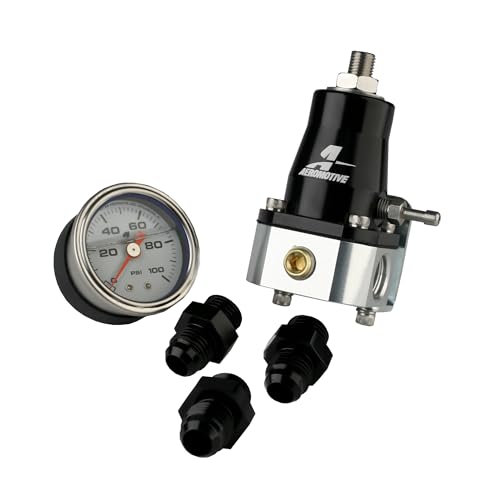
The Aeromotive 13130 kit bundles the 13129 bypass regulator with a gauge and three -6AN fittings, giving you a complete plug‑and‑play fuel pressure solution. The regulator body is machined from billet aluminum with a black anodized finish that resists corrosion from diesel and ethanol blends. It’s rated for up to 1000 HP and adjustable from 40 to 75 PSI, making it suitable for high‑flow EFI pumps used in common‑rail conversions or LS swaps.
Owner feedback consistently highlights reliable pressure hold, easy adjustment, and zero leaks out of the box. One land cruiser owner with a 255 LPH pump was able to dial pressure down to 58 PSI after factory Corvette regulators couldn’t keep up. The kit includes three 15606 fittings plus a dedicated 1/8″ NPT gauge port, so you don’t have to hunt for adapters.
At roughly twice the price of budget kits, Aeromotive delivers repeatable accuracy and durability that prevents fuel‑related tuning headaches. Several buyers who switched from Holley regulators report that the Aeromotive holds pressure consistently under boost and hot‑soak conditions. For a diesel EFI system you intend to trust for years, this kit is the benchmark.
What works
- Precise 40‑75 PSI adjustment with reliable set‑point hold
- Includes gauge and 3 AN6 fittings – no extra purchases
- Billet aluminum body, robust diaphragm construction
What doesn’t
- Higher price point than generic kits
- Limited to EFI applications; not for low‑pressure carbs
2. Sinister Diesel Blue Spring Kit with Adjustable Billet Spring Housing

This kit is purpose‑built for the 2003‑2007 Ford 6.0L Powerstroke, addressing the weak factory spring and plastic housing that causes fuel pressure drop and leaks. Sinister Diesel replaces both with a CNC‑machined billet aluminum housing and a stiffer blue spring, plus an integrated adjuster screw to fine‑tune pressure as the spring fatigues. The entire assembly installs directly into the original fuel filter housing.
Owner reports praise the easy installation — no special tools, just replace the O‑rings and tighten the housing. Adjusting the screw clockwise increases fuel pressure by up to 15% over stock, which helps protect injectors from overheating and wear. One reviewer on a 2006 F350 noted significant improvement in throttle response and a quieter fuel pump after the swap.
Be careful not to over‑tighten the adjuster screw — a few owners damaged the brass internal coupler by cranking it too far. The kit includes all necessary O‑rings and hard parts to rebuild the housing. For 6.0L owners looking to restore or upgrade fuel pressure without replacing the entire regulator, this is the definitive fix.
What works
- Vehicle‑specific fit for 6.0L Powerstroke
- Billet housing eliminates plastic failure points
- Adjustable screw compensates for spring wear
What doesn’t
- Only fits 2003‑2007 Ford 6.0L – not universal
- Adjuster screw can be damaged if over‑torqued
3. K‑MOTOR Adjustable Fuel Pressure Regulator 6AN Return Style
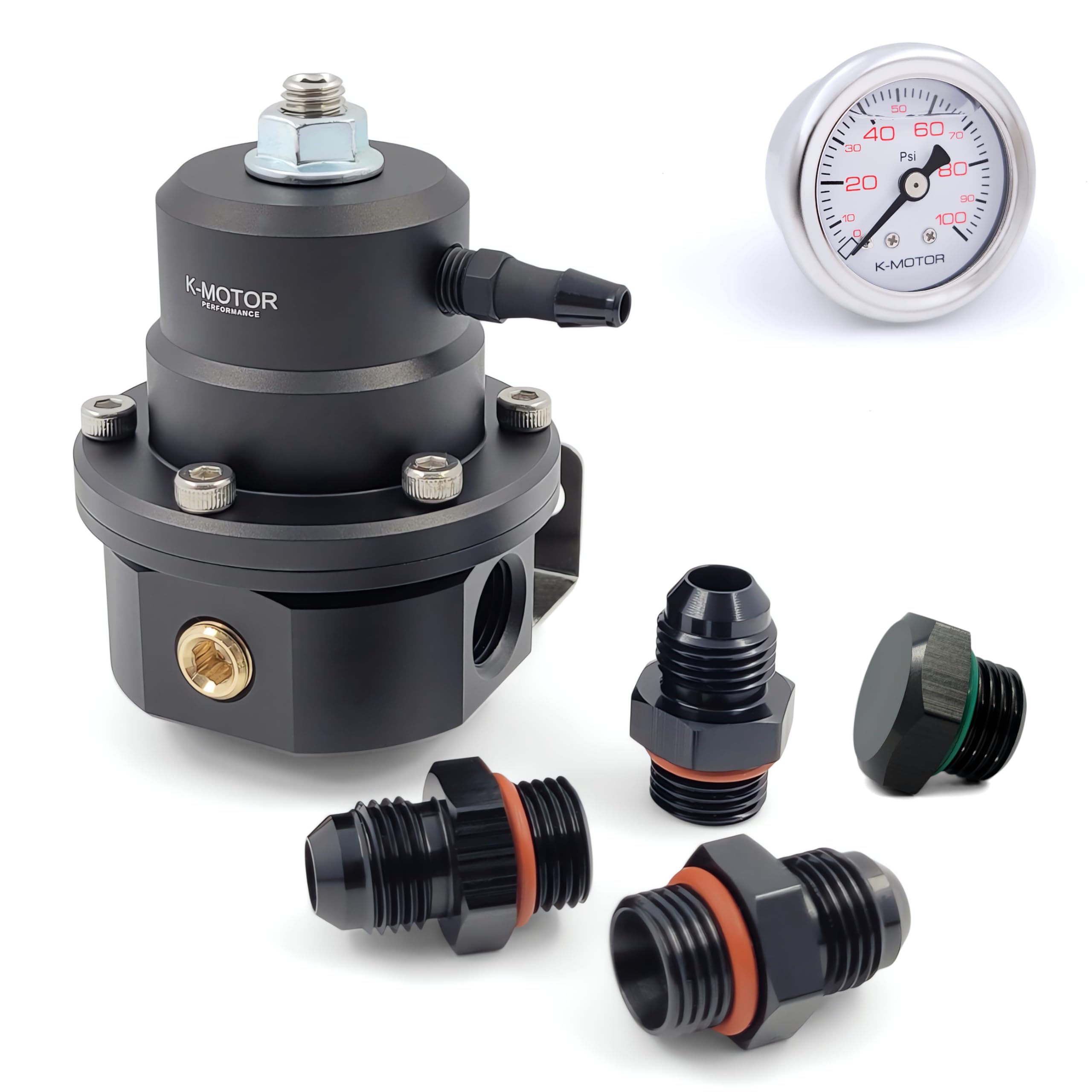
K‑MOTOR offers a clean, compact bypass regulator with two 6AN inlets, one 6AN return, and a 1/8″ NPT gauge port. The body is machined from 6061 aluminum with a black anodized finish that blends well in engine bays. Adjustment is done via a top screw that changes spring preload across a 30‑90 PSI range, covering most EFI applications including boosted setups.
Users on Honda K‑series swaps and Toyota IS300 return systems report steady pressure hold and no leaks after a year of daily driving. The internal steel components feel robust, and the gauge included in the kit stays accurate even under hood heat. One buyer compared it favorably to name‑brand units costing significantly more, noting comparable materials and build quality.
The only weak point identified is the plastic barb for the vacuum reference line — it’s not metal and could break if bumped during maintenance. If you’re looking for a reliable mid‑priced regulator that doesn’t cut corners on core components, this kit delivers strong value without the premium price tag of Aeromotive or AEM.
What works
- Wide 30‑90 PSI adjustment range
- Compact size fits tight engine bays
- Includes gauge and 3 AN6 fittings
What doesn’t
- Plastic vacuum barb prone to breakage
- No hold pressure after pump stops (normal for bypass style)
4. Holley 12‑803BP Carbureted Bypass Fuel Pressure Regulator

Though listed as carbureted, the Holley 12‑803BP is actually a bypass (return‑style) regulator that can be used on low‑pressure diesel injection systems that require 5‑9 PSI from a lift pump. It’s preset at 7 PSI and adjustable from 4.5 to 9 PSI. The three 3/8″ NPT ports (in, out, return) make it easy to plumb into a system that already has a return line to the tank.
Owners on engine swaps like a 280ZX into a 240Z report quiet pump operation and stable pressure after installation. One builder on a 2001 Chevy Blazer used the stock in‑tank pump and mounted the regulator on the frame rail, using brass 90° fittings to route hoses. Reviews note that the mounting holes are not threaded — you need to use self‑tapping screws or nuts.
For gasoline engines, it works flawlessly with Edelbrock and Holley carbs that want 5.5‑6.5 PSI. However, it’s not suitable for high‑pressure EFI. If your diesel conversion uses a low‑pressure mechanical lift pump, this Holley provides a reliable, name‑brand solution that won’t leak if you use thread sealant on all NPT joints.
What works
- Preset at 7 PSI out of the box, easy adjustment
- Bypass design reduces pump noise and heat
- Reputable brand with consistent quality
What doesn’t
- Mounting holes not threaded
- Only 4.5‑9 PSI – not for EFI systems
5. AEM 25‑300BK Black High Volume Adjustable Fuel Pressure Regulator

AEM’s high‑volume regulator uses the same Earl’s manufacturing pedigree as its drag‑race line. The 25‑300BK is a bypass‑style unit adjustable from 40 to 70 PSI, with -6AN inlet and outlet ports plus a 1/8″ NPT gauge port. The black anodized finish is durable and resists fuel corrosion. It’s designed to handle high‑flow pumps (up to 340 LPH) without restriction.
Owner feedback is mixed. Many Honda and LS swap users love it — “the only good one” after trying cheap knock‑offs. But a significant minority report internal leaks after a few months: one owner’s diaphragm popped, causing a fuel flood that hydro‑locked two cylinders. That failure may be due to overtightening or incompatible fuel, but it’s worth noting.
If you buy one, use proper AN wrenches, don’t over‑torque, and consider upgrading to Viton seals if running high‑ethanol diesel blends. For a clean‑looking regulator that flows well and holds pressure under normal use, the AEM is a solid pick, but it demands careful installation.
What works
- High flow capacity for up to 340 LPH pumps
- Compact, sleek black anodized body
- Good for boosted EFI builds
What doesn’t
- Isolated reports of diaphragm failure after months
- Included fittings are low‑grade
6. EVIL ENERGY Fuel Pressure Regulator 6AN EFI Bypass 30‑70PSI
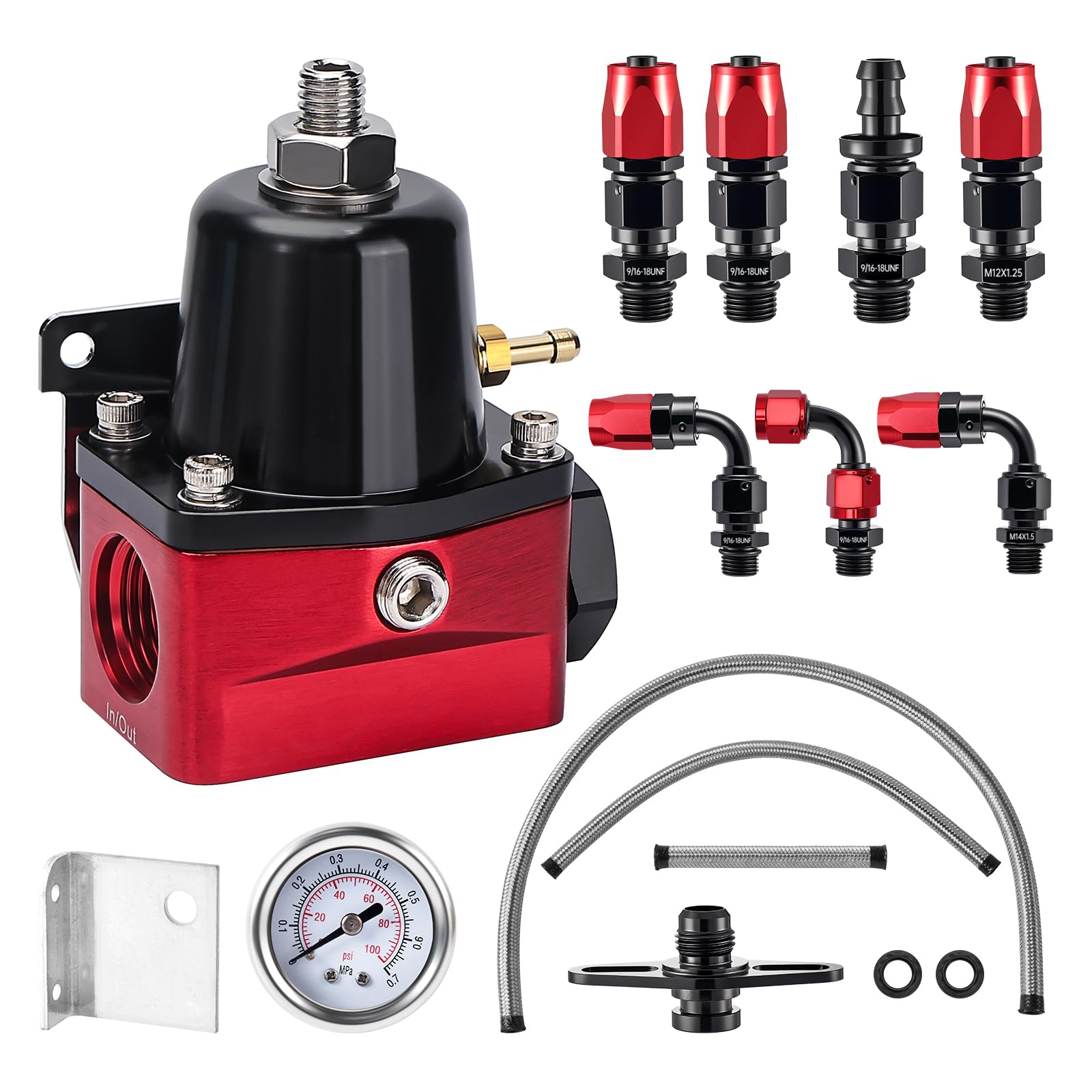
EVIL ENERGY’s kit is a budget‑friendly bypass regulator that has become a go‑to for Holley Sniper and Atomic EFI swaps. It’s adjustable from 30 to 70 PSI, supplied with a pressure gauge, bracket, a variety of AN6 fittings, and three lengths of hose. The regulator body is painted aluminum, and the internal design is standard spring/diaphragm.
Reviews highlight that the regulator itself holds pressure well and adjusts smoothly — ideal for dialing in 60 PSI on a Walbro pump. However, the included rubber hoses are not reinforced and several owners warn against using them; they tear easily. The gauge also gets criticism for a bouncing needle; swapping in a known good gauge fixes that.
For the price, the core regulator component is a capable performer on mild street builds up to about 500 HP. If you replace the supplied hoses with proper braided line and use thread tape on all NPT ports, you get a reliable setup. Just don’t expect the accessories to match the quality of the regulator itself.
What works
- Good pressure hold and adjustment
- Lots of fittings included for different plumbing
- Works well on Holley Sniper systems
What doesn’t
- Included hoses are low quality, need replacement
- Gauge can be bouncy or inaccurate
7. LokoCar Adjustable Fuel Pressure Regulator Kit 20‑80 PSI
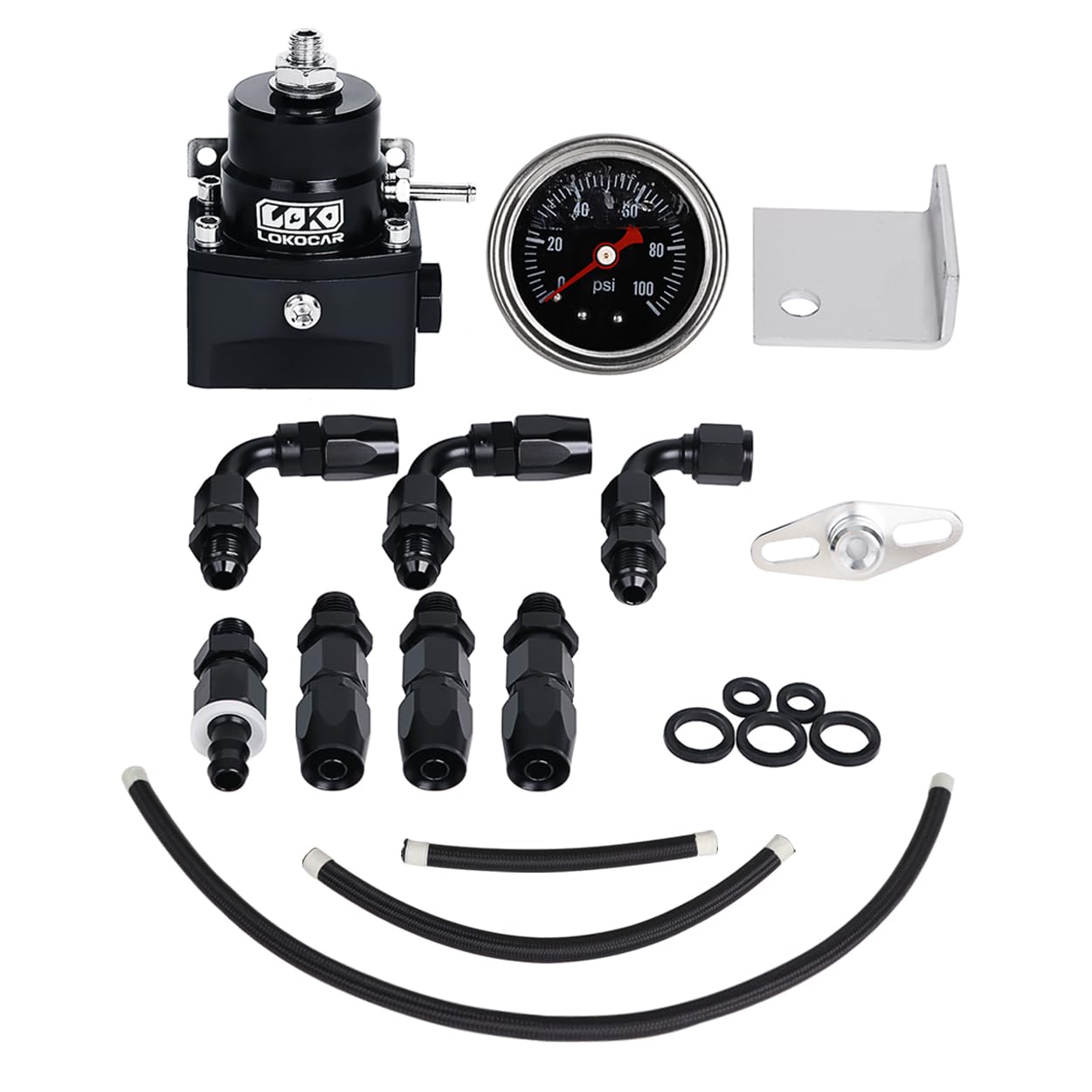
LokoCar’s regulator is a solid mid‑range option that supports gasoline, E85, and alcohol/ethanol (note: the nylon braided line included is not E85‑safe, but the regulator itself is). The adjustment range of 20‑80 PSI covers nearly all EFI needs. The kit includes a gauge, bracket, and several AN6 fittings in a compact package.
Buyers appreciate the straightforward install and that it holds set pressure reliably. One user who bought two units for separate builds reports both work great. However, there’s a recurring complaint: the O‑ring for the adjustment screw is not properly sized, requiring the owner to source a better fitting one. Additionally, a small percentage experience rapid pressure bleed‑off after the pump shuts off, which may indicate an internal seal issue.
For the price, it’s a capable regulator if you’re handy enough to replace the O‑ring and use thread tape. The 6‑month warranty from LokoCar gives some peace of mind. Not for those who want a no‑tinkering experience, but a decent value for a custom build.
What works
- Wide pressure range for diverse fuels
- Includes gauge and fittings
- Works well with E85 (regulator only)
What doesn’t
- O‑ring fitment may need replacement
- Some units lose pressure quickly
8. YESHMA EFI Fuel Pressure Regulator Kit 0‑100 PSI
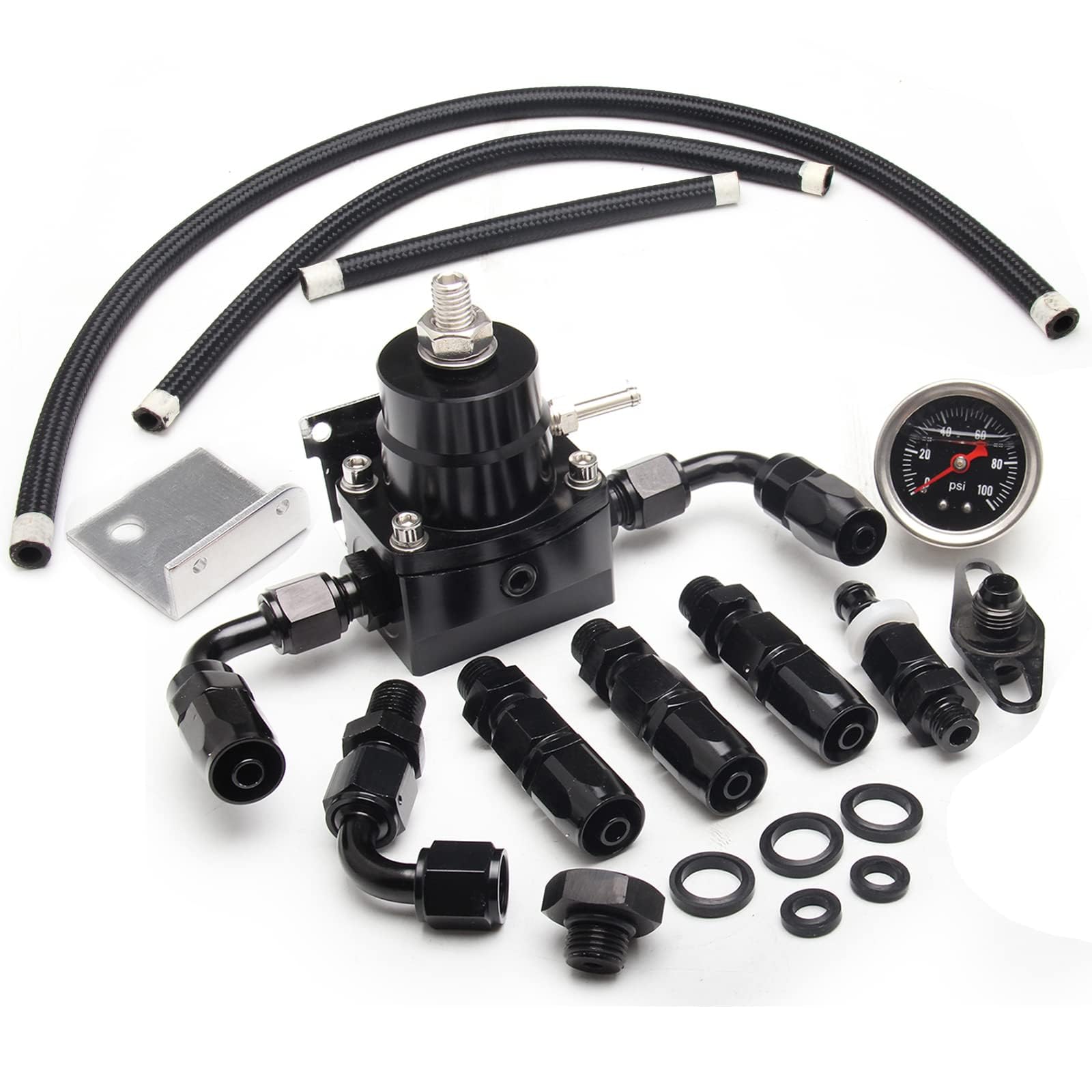
YESHMA’s kit competes directly with the Plobeda unit, offering a 0‑100 PSI gauge, three 6AN braided hoses, and a full set of adapters and bracket. The regulator itself is aluminum, and the hoses use 304 stainless steel braid over CPE synthetic rubber. The intended adjustment range is 30‑70 PSI, though the gauge reads up to 100.
Owner feedback is mostly positive: the regulator holds a constant 60 PSI for EFI conversions when installed correctly with thread tape. One reviewer noted the gauge leaked at the NPT port until he applied Teflon tape. Another reported that the minimum pressure wouldn’t go below 20 PSI, suggesting a possible internal bleeding issue — but that appears to be an outlier.
For the money, you get a complete kit with quality hoses (unlike EVIL ENERGY’s rubber ones). The main downside is the lack of instructions; professional installation is recommended. If you’re experienced with AN plumbing, this is a budget‑friendly way to get a functional bypass system.
What works
- Stainless braided hoses included
- Full set of fittings and bracket
- Holds steady pressure when properly sealed
What doesn’t
- No installation instructions
- Gauge port may leak without thread tape
9. Plobeda EFI Fuel Pressure Regulator Kit 0‑100 PSI

Plobeda’s kit is one of the most budget‑friendly entries, coming with a 0‑100 PSI gauge, 7 AN6 fittings, and three braided stainless hoses. The regulator is adjustable via a top screw and is made from premium aluminum alloy. It’s designed for use with an electric fuel pump where steady pressure is needed.
Customer experiences vary widely. About half the reviews praise it for holding 60 PSI without leaks, especially when used with the supplied rubber O‑rings instead of Teflon tape on the AN fittings. But a concerning number of buyers report that the regulator doesn’t regulate at all — fuel sprays from the outlet regardless of screw position, indicating a faulty diaphragm or internal bypass. One reviewer returned the unit after wasting time and fuel.
Given the hit‑or‑miss quality control, this regulator is best suited for builders who can test and possibly return a defective unit. If you get a good one, it’s a steal. But there’s a real risk of receiving a dud, so buy from a retailer with a solid return policy.
What works
- Very affordable complete kit
- Many AN6 fittings for flexible plumbing
- Good when it works
What doesn’t
- Quality control issues – some units don’t regulate
- No instructions included
10. WnSEu Adjustable Universal EFI Fuel Pressure Regulator Kit 0‑160 PSI (Purple)

WnSEu offers a nearly identical kit to the Plobeda but with a wider gauge (0‑160 PSI) and a choice of colors — though as one buyer learned, the color you order may not match what arrives. The regulator body is aluminum, capable of supporting up to 1000 HP, and uses AN6‑style connections. The kit includes enough fittings for most return‑style setups.
Reviews are generally positive: “Great for the price,” “Works great on a K‑swap return fuel system,” and “Looks good.” The pressure holds steady, and the AN fittings seal well with fuel‑resistant Teflon tape. The main complaint is the inaccurate color fulfillment — you might receive purple when you ordered lime green.
No major functional failures reported, which gives this kit a slight edge over the Plobeda for reliability. If you’re looking for a cheap way to get a return line system running and don’t care about brand name or exact color, this is a safe bet. Just be prepared to deal with potential color surprises.
What works
- Wide 0‑160 PSI gauge range
- Solid build with no major issues reported
- Complete kit with many fittings
What doesn’t
- Color may differ from order – no consistency
- No instructions; professional install advised
11. Quick Fuel 30‑803QFT Fuel Pressure Regulator
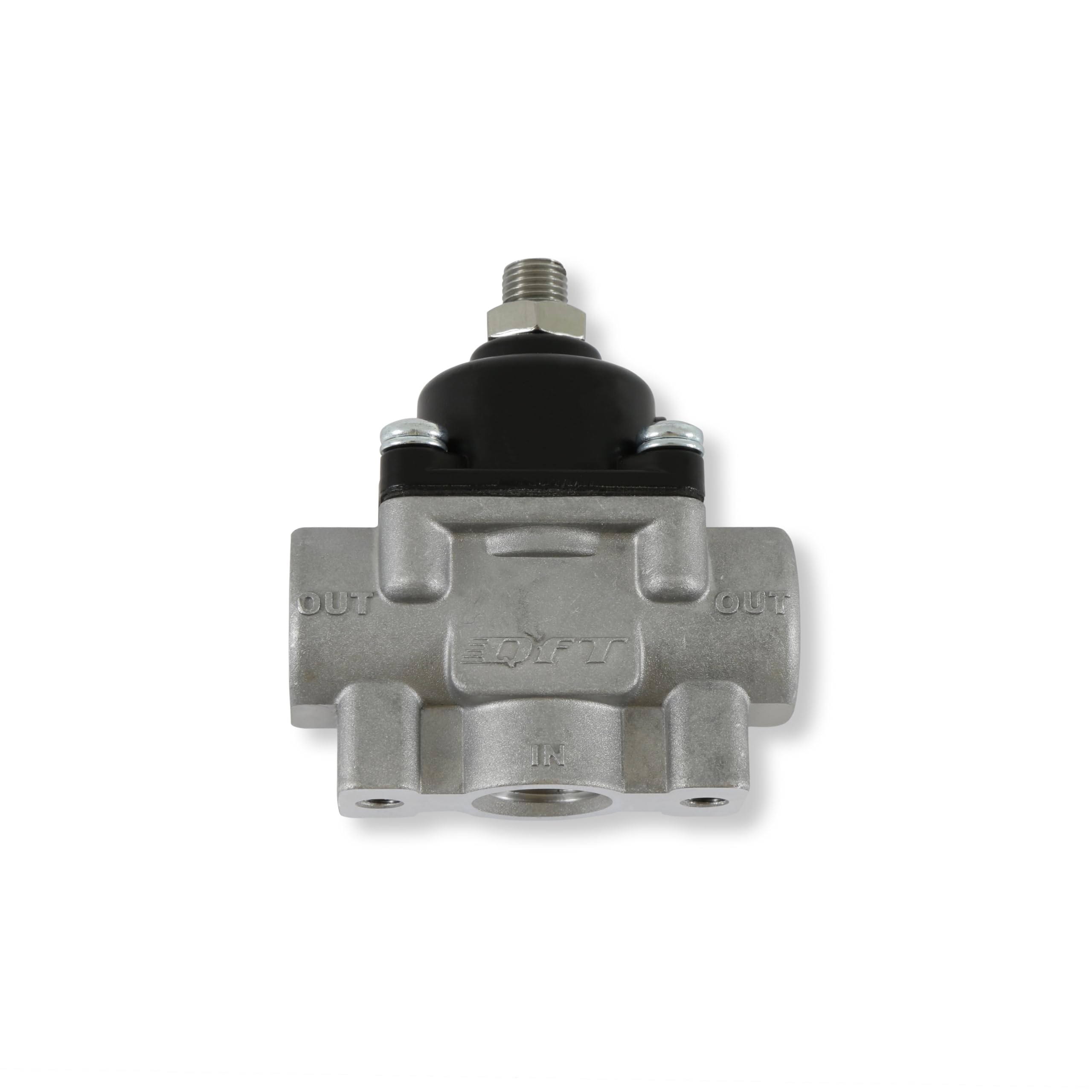
Quick Fuel’s 30‑803 is a deadhead‑style regulator designed for 4‑barrel carburetors on engines up to 600 HP. It operates in the 4.5‑9 PSI range and is preset at 7 PSI from the factory. The body is aluminum with a 1/4″ internal restriction, an 1/8″ NPT manifold reference port, and a mounting bracket included. It’s intended for gasoline only.
Users report that it works flawlessly out of the box to reduce pump output from 8 PSI down to the 5.5‑6.5 PSI desired by Edelbrock and Holley carbs. One owner used it for over a year with fuel‑rated thread sealant and had no leaks. Another noted that the actual factory setting can vary — his unit delivered below 6 PSI, which still worked fine.
Not suitable for EFI or diesel systems needing higher pressure. For a carbureted gasoline engine, this is a simple, reliable, and cheap solution. If you are converting a diesel mechanical pump to a carb setup (rare), this could work, but verify pressure compatibility.
What works
- Simple design, works straight out of box
- Includes bracket and reference port
- Good for reducing pump pressure to carb levels
What doesn’t
- Max 9 PSI – not for EFI or high‑pressure systems
- Deadhead design causes pump strain
Hardware & Specs Guide
Pressure Range & Adjustment
Most aftermarket regulators use a screw‑type spring preload adjuster. The pressure reading is taken from the gauge port, typically 1/8″ NPT. Beware of ranges that are theoretical (0‑160 PSI) but only usable in a narrower band (e.g., 30‑70 PSI) due to spring travel limits. Always verify actual output with a quality gauge.
Bypass vs Deadhead Internals
A bypass regulator contains a diaphragm and spring that routes excess fuel to the return port. A deadhead regulator (like the Quick Fuel) simply blocks flow once pressure is reached, causing the pump to dead‑head against a closed valve. For electric pumps, bypass is strongly recommended to prevent cavitation and overheating.
Material & Seal Compatibility
6061 aluminum bodies are standard. Black anodized or machined finishes resist corrosion from biodiesel and ethanol blends. O‑rings and diaphragms should be Viton or nitrile rated for diesel. Some budget units use Buna‑N seals that degrade quickly in E85 or high‑sulfur diesel.
Ports & Fittings
Most EFI kits use -6AN (6AN) male or female ports. The regulator must have at least one inlet, one outlet (to engine), and one return port. Some include extra ports for a gauge or manifold reference. Ensure the included adapters match your fuel rail (M12x1.25 or M14x1.5) if applicable.
FAQ
What PSI should my diesel fuel pressure regulator be set at?
Can I use a gasoline fuel pressure regulator on a diesel engine?
What is the difference between a bypass and deadhead regulator?
Why does my fuel pressure regulator leak after installation?
Final Thoughts: The Verdict
For most buyers, the best diesel fuel pressure regulator winner is the Aeromotive 13130 because it combines rock‑solid build quality, a useful 40‑75 PSI range, and all the fittings you need in one box. If you own a 6.0L Powerstroke and want a direct upgrade, grab the Sinister Diesel Blue Spring Kit. And for a carbureted low‑pressure system, nothing beats the simple dependability of the Holley 12‑803BP.

Certification: BSc in Mechanical Engineering
Education: Mechanical engineer
Lives In: 539 W Commerce St, Dallas, TX 75208, USA
Md Amir is an auto mechanic student and writer with over half a decade of experience in the automotive field. He has worked with top automotive brands such as Lexus, Quantum, and also owns two automotive blogs autocarneed.com and taxiwiz.com.