A cycling headlight is the difference between seeing what lies ahead and hoping the road holds no surprises. Beam pattern, lumen output, and battery endurance determine whether your night ride feels controlled or uncertain — and too many riders pick based on brightness alone, ignoring the optics that actually shape the light.
I’m Amir — the founder and writer behind Four Wheel Ask. I’ve spent years studying cycling light specifications, analyzing beam optics data, and comparing real-world owner experiences across dozens of models to separate genuine performance from marketing numbers.
Whether you ride pavement after dusk or hit technical singletrack before dawn, the right headlight transforms your experience. After analyzing beam patterns, build materials, and hundreds of owner reports, here is my curated selection of the best cycling headlight for every rider and budget.
How To Choose The Best Cycling Headlight
Selecting a headlight involves more than picking the highest lumen count. Beam optics, battery management, mount compatibility, and weather sealing all determine whether a light performs reliably across seasons and riding styles. Understanding these factors helps you match a light to your specific needs without overpaying for features you won’t use.
Lumen Output vs. Beam Pattern
Lumens measure total light output, but beam pattern dictates how that light reaches the road. A tight spot beam throws light far ahead but leaves peripheral vision dark, while a wide flood pattern illuminates the edges at the expense of distance. The best designs use shaped reflectors or collimator lenses to create a smooth blend — bright enough to see obstacles early without blinding oncoming traffic. Look for lights that publish beam distance figures alongside lumen ratings for a more honest picture of real-world performance.
Battery Runtime and Charging Standards
Runtime varies enormously across brightness settings — a light that runs two hours on high may stretch to fifteen on low. Pay attention to the runtime at the setting you actually plan to use most often. USB-C charging has become the modern standard for faster refueling and cable compatibility, though many lights still ship with Micro USB. Internal lithium-ion packs offer convenience, while external battery packs provide swappable runtime for long adventures. Battery indicator lights remove guesswork and prevent unexpected cutoffs mid-ride.
Mounting Systems and Build Quality
A light that shifts or rattles on rough terrain compromises both visibility and safety. Rubber strap mounts are quick to install but can loosen over time, especially in cold weather. Machined aluminum housings dissipate heat better than plastic and resist impact damage, though they add weight. Helmet-compatible mounts expand versatility for trail riders who want light where they look, while handlebar mounts with positive locking mechanisms offer the most stability for road and commuter use. Check maximum handlebar diameter before buying.
Weather Resistance and Durability
IPX ratings indicate water resistance — IPX4 handles splashes, while IPX7 withstands submersion. For year-round riding in wet climates, IPX6 or higher provides meaningful protection against rain and puddles. Sealed charging ports with rubber covers add another layer of security. Lights with integrated cooling fins run more efficiently and maintain consistent output without thermal throttling, which matters during extended high-beam use on warm nights.
Quick Comparison
On smaller screens, swipe sideways to see the full table.
| Model | Category | Best For | Key Spec | Amazon |
|---|---|---|---|---|
| NiteRider Lumina Boost 1000 | Headlight | All-around night riding | 1000 lumens, 6 modes, IP64 | Amazon |
| LEZYNE Macro Drive 1300XXL | Headlight | Trail and off-road | 1300 lumens, IPX7, 148h runtime | Amazon |
| NiteRider Lumina 1100 Boost / Solas 100 | Combo Set | Commuting and road | 1100 lumens + taillight, IP64 | Amazon |
| Night Eyes 2400 Lumens | Headlight Set | Maximum trail brightness | 2400 lumens (2×1200), 8800mAh | Amazon |
| BrightRoad 850 Lumens | Helmet Light | Helmet-mounted trail use | 850 lumens, 7 modes, 650ft range | Amazon |
| OLIGHT RN 400 | Headlight | Urban commuting | 400 lumens, IPX7, anti-glare lens | Amazon |
| Favorbrite 1400LM Set with Horn | Combo Set | Value all-in-one package | 1400 lumens, horn, tail light | Amazon |
In‑Depth Reviews
1. NiteRider Lumina Boost 1000
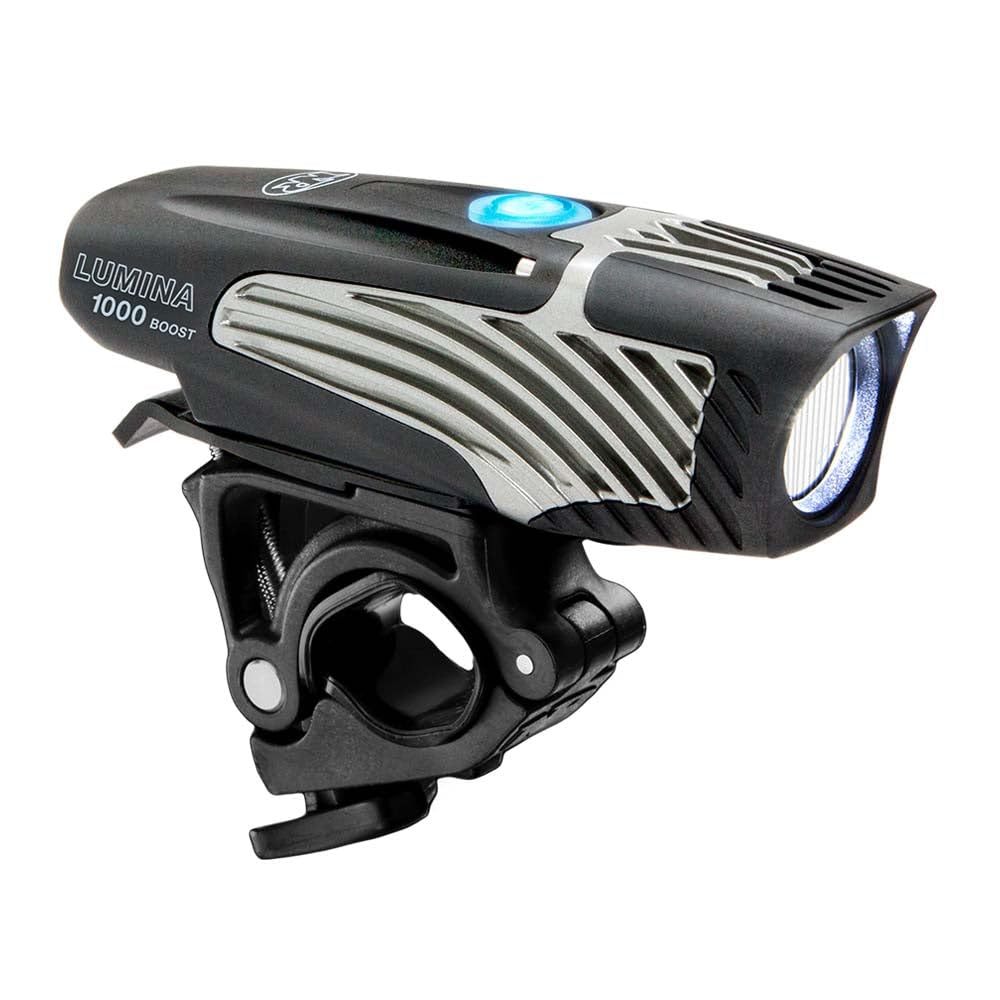
The NiteRider Lumina Boost 1000 hits the sweet spot between output, runtime, and build quality. Its custom collimator lens produces a wide, even beam with strong peripheral coverage — a meaningful advantage over cheaper lights that throw a narrow hotspot. The Boost mode delivers the full 1000 lumens on demand, while the six light modes let you dial in exactly the brightness you need for road, trail, or walking pace.
Owner feedback consistently highlights the durable fiberglass-reinforced nylon housing and integrated aluminum heat sink that prevents thermal throttling during extended use. The IP64 rating provides reliable protection against rain and dust, making this a genuine all-weather companion. Runtime spans one hour in Boost mode up to 26 hours in Walk mode, covering everything from short commutes to all-day epics. The IntelliCharge system cuts charging time to roughly three hours with a higher-amp adapter.
Some users note that the clamp may not grip oversized bars tightly without handlebar tape reinforcement, and the light can run hot enough to require gloves if handled directly after extended Boost use. The mount works perfectly for standard bars up to 35mm. For riders who want verified lumen output, dependable weather sealing, and a beam that actually illuminates the edges, this headlight delivers proven performance at a fair price.
What works
- Wide, even beam pattern with strong peripheral coverage
- Durable nylon and aluminum construction with IP64 sealing
- Fast USB-C charging and long runtime range
- Boost mode delivers full power on demand
What doesn’t
- Clamp may not grip oversized bars securely without tape
- Housing gets hot during extended Boost mode use
- Helmet mount sold separately
2. LEZYNE Macro Drive 1300XXL

The LEZYNE Macro Drive 1300XXL stands as one of the most optically refined cycling headlights available. Its Tri-Focus Optics system combines a bright center spot with a wide-angle flood beam, creating illumination that resembles a modern automotive headlight — smooth, broad, and free of harsh edges. This is the light to pick when you need to spot trail debris, wildlife, or road hazards well before they become problems.
CNC-machined aluminum construction with integrated cooling fins allows the 1300-lumen output to sustain without significant brightness drop-off. The IPX7 rating means it survives full submersion, a rare spec among handlebar lights. With seven modes including Over Drive, Blast, Enduro, and Femto, runtime stretches to an exceptional 148 hours in the lowest setting. Owners consistently report that medium output (roughly 450 lumens) suffices for paved roads and delivers genuine eight-hour endurance.
The silicone rubber strap mount is secure once properly installed, though some riders note it can shift slightly on rough terrain without additional padding. The Micro USB charging port is a step behind the USB-C standard found on newer competitors, and the overall weight of 208 grams is noticeable on ultralight road bikes. For trail riders and night adventurers who prioritize beam quality and weatherproofing above all else, the Macro Drive justifies its premium position through optical performance alone.
What works
- Tri-Focus optics deliver automotive-grade beam pattern
- CNC aluminum body with effective heat dissipation
- IPX7 waterproof rating survives full submersion
- Up to 148 hours runtime in Femto mode
What doesn’t
- Micro USB charging instead of USB-C
- Rubber strap mount can shift on rough terrain
- Heavier than many competitors at 208 grams
3. NiteRider Lumina 1100 Boost / Solas 100 Combo

The NiteRider Lumina 1100 Boost paired with the Solas 100 taillight delivers a complete front-and-rear lighting system from a single trusted manufacturer. The headlight produces 1100 lumens in Boost mode with five light levels plus a dedicated daylight flash mode, giving commuters and road riders flexible visibility options for any traffic condition. The taillight includes two steady levels and two flash modes, providing 360-degree presence that stands out in urban environments.
Owner reports emphasize the impressive battery life — the headlight can last a full week of one-hour commutes between charges. The IP64 rating protects against rain and dust for both units, making this combo suitable for year-round riding. The Boost mode delivers maximum LED output when you need to grab a driver’s attention, while the lower settings preserve battery for routine use. The included handlebar and seatpost mounts allow straightforward installation on most bikes.
Some users experienced quality control issues with the first unit and reported that the rubber mounting straps feel insecure compared to screw-type brackets. The taillight mount can slide downward on certain seatpost shapes, and the switch on the rear light requires firm pressure to activate. When the system works as designed, it offers the best lumen-per-dollar value in the premium combo category. Riders seeking a dependable front-and-rear solution should verify compatibility with their specific handlebar and seatpost diameters.
What works
- Complete front and rear lighting system in one package
- Excellent battery endurance for daily commuting
- Daylight flash mode improves daytime visibility
- IP64 weather sealing on both units
What doesn’t
- Rubber mounting straps can feel insecure
- Occasional quality control inconsistencies reported
- Taillight mount may slide on some seatposts
4. Night Eyes 2400 Lumens

The Night Eyes 2400 Lumens system takes a two-headlight approach, pairing a pair of 1200-lumen lamps with an external 8.4V 8800mAh battery pack for extended high-output riding. This setup is designed for riders who need serious trail illumination or who cover long distances after dark and don’t want to compromise on brightness. The included Y-cable powers both lights simultaneously from the single battery pack, keeping the handlebar layout clean.
Runtime figures are substantial — approximately three hours on high, six hours on medium, and 24 hours on low — making this one of the longest-lasting high-output solutions available. The IPX6 rating provides strong water resistance against heavy rain and splashes. Owners consistently praise the brightness and beam distance, noting that the narrow focused beam pattern lights up the trail far ahead effectively. The kit also includes a headband for hands-free use, a USB rechargeable taillight, and multiple mounting accessories.
The non-adjustable beam angle limits fine-tuning for riders who prefer a wider flood pattern, and the rubber mounting straps can wear over time with repeated installation and removal. Some users report that the mounting screw loosens gradually on rough terrain, causing the light to tilt downward mid-ride. For riders who prioritize maximum lumen output and battery capacity over beam adjustability, the Night Eyes system delivers exceptional endurance at a competitive price point.
What works
- Extremely high total output with dual 1200-lumen lamps
- Large 8800mAh external battery for extended runtime
- IPX6 water resistance handles heavy rain
- Includes taillight and headband for multi-use versatility
What doesn’t
- Beam angle is fixed and non-adjustable
- Rubber mounting straps may wear over time
- Screw can loosen on rough terrain requiring periodic tightening
5. BrightRoad 850 Lumens Helmet Light
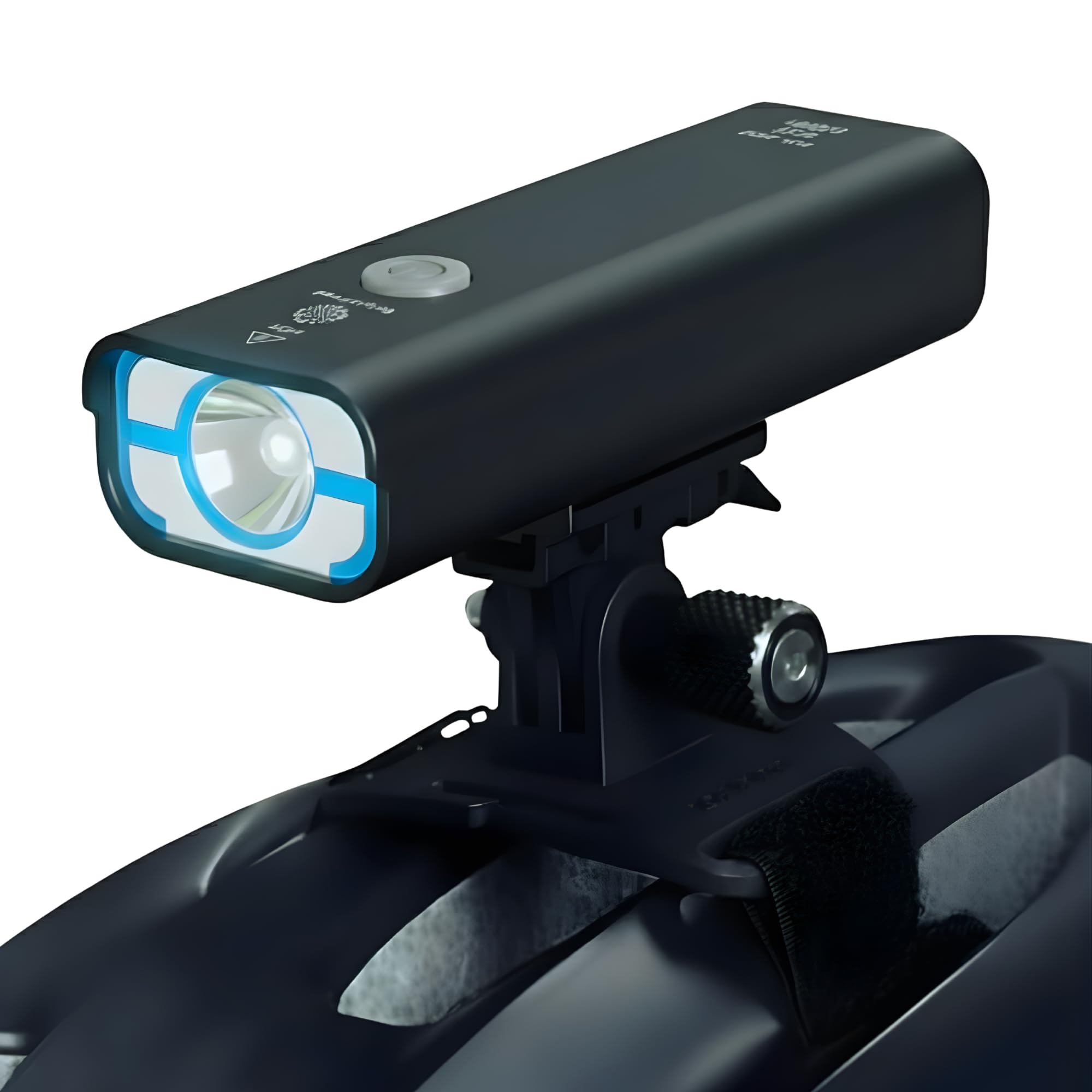
The BrightRoad 850 Lumens helmet light brings trail-ready illumination and versatile mounting in a compact aluminum package. With an 85-degree flood beam and a claimed 650-foot range, it projects enough light for tree-covered singletrack and paved paths alike. The seven modes include high, medium, low, flash, and strobe options, giving riders fine control over battery conservation and situational visibility.
Owner feedback highlights the compact size and solid metal construction as standout attributes. The adjustable 100-degree anti-slip mount keeps the light stable on helmet or handlebar configurations, and the quick-detach battery cartridge makes swapping between bikes or charging straightforward. Runtime reaches up to 20 hours in the lowest modes, while high output sustains for roughly an hour — sufficient for most after-work trail sessions. The smart battery indicator displays remaining power clearly during operation.
The Micro USB charging port is a generation behind current standards, and some owners experienced port failure after extended use. The included plastic strap may not withstand repeated daily contact with rough surfaces. BrightRoad backs the unit with a one-year warranty, though initial customer service responsiveness received mixed feedback in owner reports. For riders who want a capable helmet-mounted light without investing in premium pricing, this model delivers strong performance and useful mode variety.
What works
- Compact aluminum build with solid feel
- Seven modes provide flexible brightness control
- Helmet and handlebar mounting included
- Smart battery indicator for power awareness
What doesn’t
- Micro USB port can fail with extended use
- Plastic strap may wear with frequent contact
- Customer service responsiveness reported as inconsistent
6. OLIGHT RN 400

The OLIGHT RN 400 is a purpose-built urban commuting light that prioritizes anti-glare design over raw lumen output. Its downward-angled beam prevents blinding oncoming motorists and pedestrians — a critical feature for city riding that many higher-output lights overlook. The 400-lumen maximum is adequate for well-lit streets and paved paths, and the USB-C fast charging reduces downtime significantly compared to older Micro USB designs.
IPX7 waterproofing means this light survives submersion up to one meter, making it one of the most weather-resistant options in the budget segment. The all-aluminum body feels premium in hand, and the included mount works with handlebars, helmets, and even under-camera mounting points. The battery indicator uses green, red, and flashing red to communicate remaining power clearly at a glance. Owners consistently praise the solid build quality and ease of operation even with thick winter gloves.
The 400-lumen ceiling limits usefulness on unlit trails or rural roads where more output is necessary to spot hazards at distance. The lock-out mode requires a three-second hold to activate, which can be confusing for first-time users who don’t read the manual. Left-right beam adjustment is not possible after mounting. For urban commuters who ride under streetlights and value consideration toward other road users, the RN 400 delivers refined optics and genuine weather protection in a compact form.
What works
- Anti-glare lens prevents blinding oncoming traffic
- USB-C fast charging reduces downtime
- IPX7 waterproof survives submersion
- Compact aluminum build with premium feel
What doesn’t
- 400-lumen output insufficient for unlit trails
- No left-right beam adjustment
- Lock-out mode can confuse new users
7. Favorbrite 1400LM Set with Horn

The Favorbrite 1400LM front light kit bundles a headlight, tail light, and integrated horn into a single package aimed at riders who want maximum functionality at a minimal investment. The headlight claims 1400 lumens with three modes — 100 percent, 50 percent, and strobe — while the rear light offers steady and flashing modes. The horn provides an audible warning for emergency situations, adding a layer of safety that standalone lights cannot match.
The 1200mAh built-in battery charges via USB and delivers roughly three hours of runtime at full brightness. The mount requires no tools and fits standard handlebars, scooters, strollers, and wheelchairs. The useful battery indicator shows remaining power during charging and operation. Owner feedback notes that the headlight is genuinely bright for the price and that the horn is loud enough to alert distracted pedestrians and drivers. The total weight of the set remains portable at roughly four ounces.
Some units arrived with defective tail light batteries, and the tail light uses non-rechargeable coin cells rather than a built-in rechargeable pack, which adds ongoing cost and inconvenience. The IPX4 splash resistance covers light rain but not heavy downpours. For new cyclists building their first lighting kit on a tight budget, the Favorbrite set provides a complete solution with useful extras, though the tail light battery arrangement may prompt an upgrade to a dedicated rechargeable rear light over time.
What works
- Complete front light, tail light, and horn in one package
- Bright 1400-lumen output for the price point
- Tool-free mount fits multiple vehicle types
- Loud horn adds audible safety feature
What doesn’t
- Tail light uses non-rechargeable coin cell batteries
- IPX4 rating limits weather protection
- Some units arrive with defective tail light components
Hardware & Specs Guide
LED Emitter Types
Cycling headlights typically use Cree, Luminus, or proprietary LEDs. Cree XM-L2 and XP-L emitters dominate the mid-range and premium segment for their high efficacy and reliable color temperature. Multi-die arrays can push total lumen output higher but generate more heat and may require active cooling. Single-emitter designs with quality optics often produce a cleaner beam pattern than multi-LED arrays relying on reflectors alone.
Beam Optics Technology
Collimator lenses use total internal reflection to shape light into a controlled beam with minimal spill. Reflector-based designs scatter more light peripherally but lose intensity at distance. Tri-Focus optics combine a center spot lens with secondary flood optics to create a blended beam. Lights with a sharp cutoff — like those using anti-glare shields — prevent blinding oncoming traffic while still projecting adequate illumination for safe forward vision.
Battery Chemistry and Capacity
Lithium-ion cells power nearly all modern rechargeable cycling lights. Capacity is measured in milliamp-hours (mAh), with higher figures correlating to longer runtime. External battery packs can reach 8800mAh or more, while integrated units typically range from 1200mAh to 3400mAh. Battery management circuits protect against over-discharge and over-current, but lights that lack active temperature monitoring may throttle output prematurely when the cell heats up during high-drain use.
Charging Standards
USB-C has become the preferred charging interface due to its reversible connector and support for higher charging currents. Micro USB remains common on older designs and offers slower refueling. Some premium lights use proprietary magnetic chargers that improve weather sealing but reduce cable compatibility. Fast-charging support depends on both the light’s internal circuitry and the output capability of the USB adapter used — higher-amp adapters significantly reduce charge time when the light supports them.
FAQ
How many lumens do I need for night cycling?
Can I use a cycling headlight as a helmet light?
What does IPX rating mean for bike lights?
How do I prevent my bike light from being stolen?
What is the best mounting position for a cycling headlight?
Final Thoughts: The Verdict
For most buyers, the best cycling headlight winner is the NiteRider Lumina Boost 1000 because it blends proven beam optics, durable weather sealing, and enough output for both road and trail without demanding a premium investment. If you want the highest-quality beam pattern with exceptional weather protection, grab the LEZYNE Macro Drive 1300XXL. And for the best value in a complete front-and-rear solution, nothing beats the NiteRider Lumina 1100 Boost / Solas 100 Combo.

Certification: BSc in Mechanical Engineering
Education: Mechanical engineer
Lives In: 539 W Commerce St, Dallas, TX 75208, USA
Md Amir is an auto mechanic student and writer with over half a decade of experience in the automotive field. He has worked with top automotive brands such as Lexus, Quantum, and also owns two automotive blogs autocarneed.com and taxiwiz.com.