A quiet drivetrain that shifts effortlessly ride after ride is the payoff of choosing the right wax formulation. The wrong lubricant turns your chain into a grit magnet, accelerates wear on cassettes and rings, and forces mid-ride reapplications. Getting the chemistry right matters more than brand loyalty.
I’m Amir — the founder and writer behind Four Wheel Ask. My approach relies on cross-referencing manufacturer claims against long-term owner reports and independent friction-test data to separate genuine performance from marketing noise.
Drawing from owner feedback and lab data, this guide identifies the best cycling chain wax that balances friction reduction with extended drivetrain life.
How To Choose The Best Cycling Chain Wax
Selecting a chain wax comes down to three core variables: base chemistry, operating temperature range, and reapplication interval. Wax-based lubes use a water or solvent carrier that evaporates, leaving a dry film that resists grit buildup. Oil-based alternatives stay wet and attract abrasive particles. For riders who prioritize cleanliness and component life, a wax formulation reduces drivetrain wear substantially over time.
Wax vs. Oil: The Friction Trade-Off
Wax lubes excel in dry and dusty environments because the dry film does not hold onto debris. Independent roller-friction tests consistently show wax-based products produce lower running resistance than wet oils, translating to measurable watt savings over a long ride. The trade-off is shorter longevity in wet conditions — water can wash away the wax film faster. Look for formulations that include polymeric or synthetic modifiers to extend the service interval without sacrificing the clean-running characteristic.
Temperature and Viscosity Considerations
Cold weather stiffens many wax blends, causing poor penetration into roller pins and increased chain suck on fat bikes. Dedicated low-temperature waxes incorporate a wax modifier that keeps the film pliable below freezing. If you ride in winter conditions, a cold-weather variant or a wax with a lower pour point ensures the lubricant reaches the inner bushings rather than flaking off the outer plates.
Application Habits Drive Results
No wax performs well on a contaminated chain. Thorough degreasing and drying prior to the first application allows the wax to bond directly to the metal surface. After that, wiping the chain clean before each reapplication extends the effective life of the lubricant. Products that include a built-in cleaning solvent (self-cleaning formulas) reduce the prep burden for riders who prefer a quick refresh between longer intervals.
Quick Comparison
On smaller screens, swipe sideways to see the full table.
| Model | Category | Best For | Key Spec | Amazon |
|---|---|---|---|---|
| Purple Extreme Performance | Wax-Infused | High-mileage road & e-bike | 400+ mile reapplication interval | Amazon |
| Dumonde Tech Original | Liquid Plastic | Mountain & cyclo-cross | Polymerizing wear-resistant plating | Amazon |
| Rock N Roll Gold | Self-Cleaning | Fat bike & winter road | 2-pack value with low friction | Amazon |
| Squirt Low-Temperature | Cold-Weather Wax | Subfreezing & snow riding | Wax modifier for <32°F operation | Amazon |
| White Lightning Epic Ride | All-Conditions | Commuter & recreational | 8 oz bottle, synthetic formula | Amazon |
In‑Depth Reviews
1. Purple Extreme Performance Synthetic Chain Lubricant

Purple Extreme uses a patented lubricant formulation originally engineered for chains running in saltwater environments. The film strength far exceeds conventional bicycle-grade oils, which is why owners report 400-plus miles on road rides between reapplications. The formula resists wash-off in rain, mud, and snow without turning sticky or attracting abrasive grit. It is a wax-infused synthetic that strikes the clean-running profile of a dry lube with the longevity of a wet lube.
Long-term mountain bikers who have used this product for years note that chain and cassette wear drops noticeably compared to standard wet lubes. The thin viscosity allows deep roller penetration, and the low surface tension means overspray wipes off cleanly. Multiple reviewers with e-bikes (which place higher torque demands on the drivetrain) confirm that the lubricant holds up well beyond the 500-mile mark on a single chain.
The 4-ounce bottle is compact enough for a saddle bag, and the pinpoint applicator tip reduces waste. A small amount goes a long way — one bottle typically lasts several months of regular riding. For riders who want one lubricant that works across road, gravel, and trail without frequent re-dosing, Purple Extreme delivers the most balanced performance profile in this group.
What works
- Remarkably long reapplication interval saves time and product
- Does not turn gummy or attract debris like heavy wet oils
- Proven track record across road, MTB, and high-torque e-bike drivetrains
What doesn’t
- Small bottle size requires more frequent purchases for high-volume riders
- Thin formula can be over-applied if nozzle is not used carefully
2. Dumonde Tech Original Bicycle Chain Lubrication

Dumonde Tech Original is built around a liquid plastic technology that polymerizes on the chain surface to form a durable, long-lasting plating. Unlike conventional waxes that sit on top of the metal, this formulation creates a molecular bond that resists being squeezed out under high pedaling loads. The result is a lubricant that stays in place through challenging conditions including deep mud, abrasive sand, and repeated water crossings.
Experienced off-road riders who have tested dozens of lubes describe Dumonde Tech as the benchmark for mountain bike and cyclo-cross use. The polymerized layer dramatically reduces chain suck on dirty drivetrains and keeps shifting consistent over multi-hour rides. Owners also note that the distinct smell — often described as pleasant and unusual for a chain lube — makes application a more agreeable ritual.
One trade-off is that the polymerizing action requires a clean starting point to bond effectively. Applying over residual oil or old wax reduces the plating durability. Once properly applied, however, the lubricant outlasts most wax-only alternatives in wet, gritty environments. For riders who push hard in variable conditions and prioritize durability over the absolute lowest friction coefficient, Dumonde Tech justifies its premium positioning.
What works
- Polymerized plating resists wash-off and stays on under high torque
- Excellent performance in muddy and sandy off-road conditions
- Low debris pickup keeps the drivetrain noticeably cleaner
What doesn’t
- Requires a thoroughly degreased chain for the polymer to bond correctly
- Premium price per ounce compared to wax-emulsion alternatives
3. Rock N Roll 135816 Gold Chain Lubricant (2-Pack)

Rock N Roll Gold uses a self-cleaning formulation that combines a mild solvent with a wax-based lubricant. As you apply it, the solvent dissolves light contamination already on the chain, then evaporates to leave a clean wax film behind. This design reduces the need for separate degreasing steps between applications, making it one of the most convenient options for riders who prioritize quick maintenance.
Independent friction tests rank Rock N Roll Gold near the top for low running resistance, and the 0W viscosity rating ensures deep penetration even in cold conditions. Owners riding fat bikes through Iowa winters report 160-mile intervals between clean-and-lube cycles, with minimal buildup on pulleys and cassette sprockets. The two-pack delivers strong value per ounce compared to single-bottle alternatives.
The self-cleaning property does mean the solvent carrier shortens the absolute longevity of the wax film versus a dedicated wax emulsion. Riders who want maximum miles per application may find themselves reapplying more often than with a pure wax. However, the ease of use — apply directly over a dirty chain, let it dry, wipe off excess — makes it an excellent choice for commuters and winter riders who cannot do a full degrease indoors.
What works
- Self-cleaning solvent reduces prep time between applications
- Very low friction coefficient confirmed by independent testing
- Two-pack format offers excellent value for frequent users
What doesn’t
- Wax film longevity is shorter than dedicated wax emulsions
- Not ideal for sustained wet-weather riding without more frequent re-dosing
4. Squirt Low-Temperature Chain Lube for Bikes

Squirt Low-Temperature is a wax-and-water emulsion modified specifically for riding below 32°F. Standard waxes become brittle in the cold, leading to flaking and poor lubrication. Squirt incorporates a wax modifier that maintains consistent film pliability in subfreezing conditions, preventing the chain suck and hard shifting that plague cold-weather riders on fat bikes and winter commuters.
The formulation is free of PFAS and harsh solvents, making it one of the more environmentally conscious options on the market. Application requires minimal prep — a thorough soap-and-water rinse followed by drying is sufficient, eliminating the need for aggressive degreasing chemicals. Riders who use the regular Squirt formula in warmer months can switch seamlessly to the low-temperature variant when the frost sets in.
Owners note that the wax emulsion is thinner than expected straight out of the bottle and requires a good shake before each use. The wax film dries to a matte finish that does not attract dust or road grime. In dry, cold conditions the lubricant performs exceptionally well, though riders pushing into slushy or wet snow may find the film wears faster than the regular all-season formulation.
What works
- Wax modifier keeps the film pliable well below freezing
- PFAS- and solvent-free formulation is easier on the environment
- Simple soap-and-water prep eliminates harsh degreasers
What doesn’t
- Film longevity drops noticeably in wet or slushy conditions
- Requires thorough shaking and warm indoor storage before use
5. White Lightning Epic Ride All-Conditions Bike Chain Lube
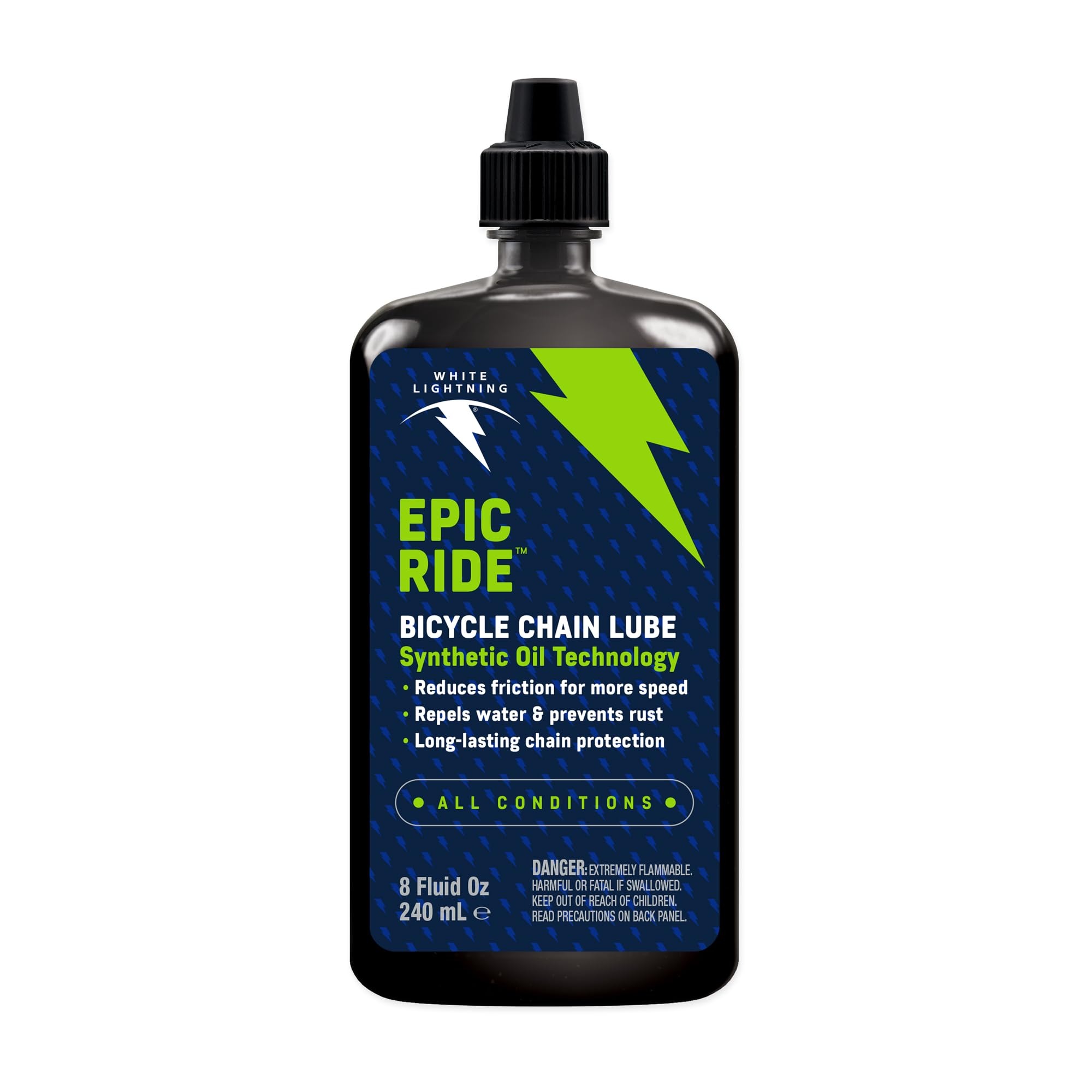
White Lightning Epic Ride is a synthetic all-weather formula built for riders who face both wet and dry conditions without wanting to switch lubricants between seasons. It uses a clean-running chemistry that does not wash away in rain, yet avoids the sticky residue that plagues traditional wet lubes in dusty environments. The 8-ounce bottle is the largest volume in this comparison, offering strong per-ride value for high-mileage commuters and recreational cyclists.
Owner reports from NorCal trail riders note that the lubricant significantly reduced chain breakage compared to cheaper lubes in dry, dusty summer conditions. The synthetic carrier evaporates quickly after application, leaving a film that holds up to high-torque pedaling. Multiple users also report using it successfully on guitar tuners and garage door tracks, highlighting the versatility of the formulation beyond cycling.
The main limitation is that Epic Ride does not last as long between reapplications as dedicated wax emulsions or polymerizing lubes. In sustained wet weather, the film degrades faster than Purple Extreme or Dumonde Tech. For the rider who simply wants a reliable, affordable, one-bottle solution for casual riding and commuting, however, White Lightning provides dependable performance without requiring meticulous application rituals.
What works
- Large 8-ounce bottle delivers excellent value per application
- Clean-running formula does not attract grit in dusty conditions
- Versatile enough for use on other household mechanisms
What doesn’t
- Reapplication interval is shorter than premium wax or polymer lubes
- Wet-weather durability lags behind higher-priced alternatives
Hardware & Specs Guide
Wax Emulsion vs. Polymerizing Lubricant
Wax emulsions (Squirt, White Lightning) use water or a solvent as a carrier that evaporates after application, leaving a dry wax film on the chain. These excel in dry conditions because they do not attract dust, but they wash off faster in rain. Polymerizing lubricants (Dumonde Tech) use a liquid plastic that cures into a bonded layer on the metal surface. This layer resists wash-off and stays intact under high torque, making it better suited for wet and muddy environments despite a slightly higher coefficient of friction.
Viscosity and Temperature Range
Viscosity rating (reported as SAE 0W for Rock N Roll Gold) indicates how well the lubricant flows in cold temperatures. Lower winter-grade ratings mean the oil or wax carrier penetrates roller pins more effectively when temperatures drop. Standard wax formulations stiffen below 32°F, causing poor lubrication and chain suck. Dedicated low-temperature waxes use a wax modifier to maintain pliability, which is essential for fat-bike and winter-commuter applications where the drivetrain operates in snow and subfreezing air.
Film Strength and Wear Protection
Film strength measures a lubricant’s ability to keep two metal surfaces separated under load. Purple Extreme highlights its extremely high film strength, which reduces metal-on-metal contact during high-torque pedaling. Higher film strength correlates with longer chain and cassette life because it minimizes abrasive wear at the roller-pin interface. Wax emulsions typically have moderate film strength, while polymerizing lubes and heavy synthetic oils achieve the highest values in independent bench tests.
Self-Cleaning vs. Standard Application
Self-cleaning lubricants (Rock N Roll Gold) incorporate a mild solvent that dissolves light contamination as you apply the fresh layer. This allows you to lubricate without a separate degreasing step, saving time between rides. Standard wax emulsions and polymerizing lubes require a clean, dry chain for optimal bonding. Applying them over old lubricant or grime reduces film adhesion and shortens the effective service interval. The trade-off is that self-cleaning formulas typically have a shorter absolute longevity per application.
FAQ
How often should I reapply a wax-based chain lubricant?
Can I switch from oil-based lube to wax without stripping the chain?
Is wax-based lube suitable for wet and muddy riding conditions?
Does chain wax reduce drivetrain friction compared to oil?
Final Thoughts: The Verdict
For most buyers, the best cycling chain wax winner is the Purple Extreme Performance Synthetic Lubricant because it delivers a class-leading balance of low friction, exceptional longevity, and weather resistance across road and trail conditions. If you prioritize polymerized durability for muddy off-road riding, grab the Dumonde Tech Original. And for winter fat-bike or subfreezing commuter use, nothing beats the cold-weather pliability of the Squirt Low-Temperature formulation.

Certification: BSc in Mechanical Engineering
Education: Mechanical engineer
Lives In: 539 W Commerce St, Dallas, TX 75208, USA
Md Amir is an auto mechanic student and writer with over half a decade of experience in the automotive field. He has worked with top automotive brands such as Lexus, Quantum, and also owns two automotive blogs autocarneed.com and taxiwiz.com.