Choosing the right 5W-30 conventional oil is the single most critical decision you make for an older engine’s longevity. The wrong viscosity or a low-quality base stock accelerates sludge buildup, leads to seal shrinkage, and turns a quiet highway cruiser into a ticking time bomb. This guide cuts through the marketing to focus on what actually protects your engine at the molecular level.
I’m Amir — the founder and writer behind Four Wheel Ask. I’ve spent years analyzing SAE viscosity grades, additive package chemistries, and real-world owner feedback on 5W-30 oils to isolate which formulations genuinely reduce wear and which are just colored base stock.
Whether your vehicle is a daily commuter or a weekend project, finding the right conventional oil 5w-30 means balancing detergent levels, thermal stability, and seal conditioning for your specific mileage range.
How To Choose The Best Conventional Oil 5W-30
Not all conventional 5W-30 oils are created equal. The additive package — the detergents, dispersants, anti-wear agents, and seal conditioners — is what separates a decent oil from one that keeps an older engine running clean for another 100,000 miles. Focus on three things: your engine’s current mileage, the API certification level, and whether the oil includes seal conditioners to combat leaks.
Mileage Matters: Standard vs. High Mileage Formulations
Engines under 75,000 miles typically don’t need seal conditioners, but engines above that threshold often develop minor seal shrinkage that leads to oil consumption and external leaks. High-mileage conventional oils include ester-based seal swellers that restore gasket flexibility. Using a standard 5W-30 in a 150,000-mile engine means you’re missing the chemistry that keeps oil inside the crankcase.
API Certification: SP vs. SN
The latest API SP certification provides better protection against low-speed pre-ignition (LSPI) in turbocharged engines and improves timing chain wear protection. If your vehicle is a 2010 or newer, look for API SP on the bottle. For older engines, API SN or SN Plus is still adequate, but SP offers a wider margin of safety in stop-and-go driving.
Additive Package Quality
Detergent levels determine how well the oil prevents sludge and varnish deposits. Oils with extra dispersants keep contaminants suspended so they drain out at the next change rather than settling on internal surfaces. Check for phrases like “extra detergents” or “advanced friction-fighting additives” in the product description — these indicate a robust additive package that extends drain intervals without increasing wear.
Quick Comparison
On smaller screens, swipe sideways to see the full table.
| Model | Category | Best For | Key Spec | Amazon |
|---|---|---|---|---|
| Valvoline MaxLife 5W-30 | Synthetic Blend | High-mileage wear prevention | ILSAC GF-7A, API SP | Amazon |
| Havoline High Mileage 5W-30 | Synthetic Blend | Fuel economy preservation | Smart Change, 6 Quarts | Amazon |
| Pennzoil High Mileage 5W-30 | Synthetic Blend | Leak reduction in worn engines | LSPI protection for turbos | Amazon |
| Mobil Super 5W-30 | Conventional | Budget-friendly routine changes | 6-Quart Pack | Amazon |
| Quaker State Advanced Durability 5W-30 | Conventional | Rust and corrosion protection | 5-Quart Jug | Amazon |
In‑Depth Reviews
1. Valvoline MaxLife High Mileage 5W-30 Synthetic Blend
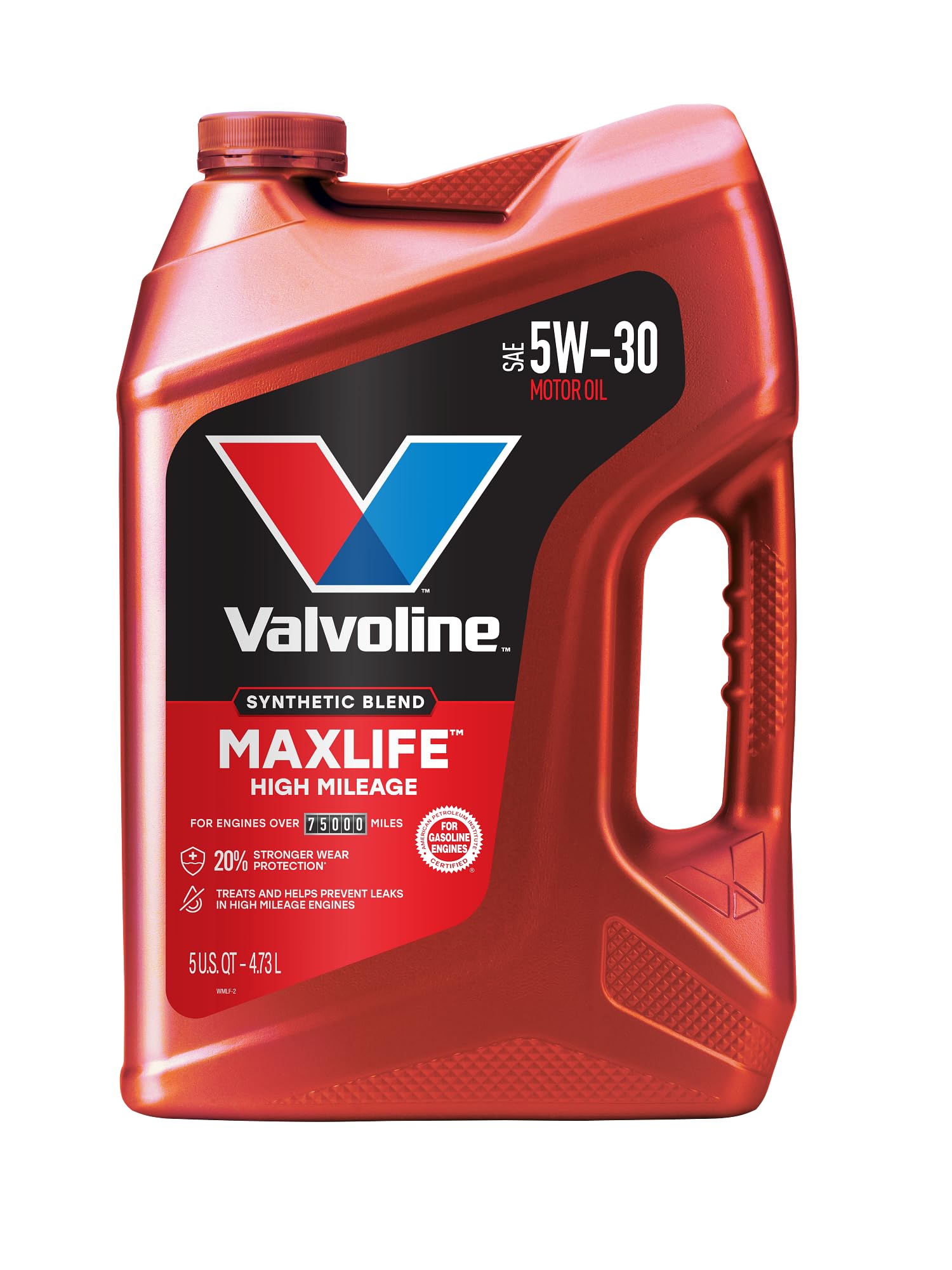
Valvoline’s MaxLife formulation stands out for its ILSAC GF-7A and API SP certification, which means it meets the newest industry standards for wear protection and sludge defense. The seal conditioners in this synthetic blend actively work to re-swell dried-out gaskets — a common issue in engines past the 75,000-mile mark. Flash point at 394°F indicates strong thermal stability under sustained highway operation.
Owner feedback consistently reports quieter valve train operation and reduced oil consumption after two to three oil changes. The extra detergent package fights the varnish deposits that accumulate from short-trip driving where the oil never fully warms up. For a 5-quart jug at a mid-range price point, the additive density is well above what you’d find in a basic conventional 5W-30.
Where this oil truly shines is in the 100,000 to 200,000-mile zone. The 20% better wear protection vs. industry standard is a meaningful buffer for engines with worn piston rings. It also meets Ford WSS-M2C971-A-1 and Chrysler MS-13340 specifications, making it a safe choice for American-made sedans and trucks.
What works
- Excellent seal conditioning reduces leaks
- Meets newest API SP and ILSAC GF-7A standards
- Strong thermal stability with 394°F flash point
What doesn’t
- Synthetic blend pricier than pure conventional
- May be overkill for engines under 50,000 miles
2. Havoline High Mileage 5W-30 Synthetic Technology
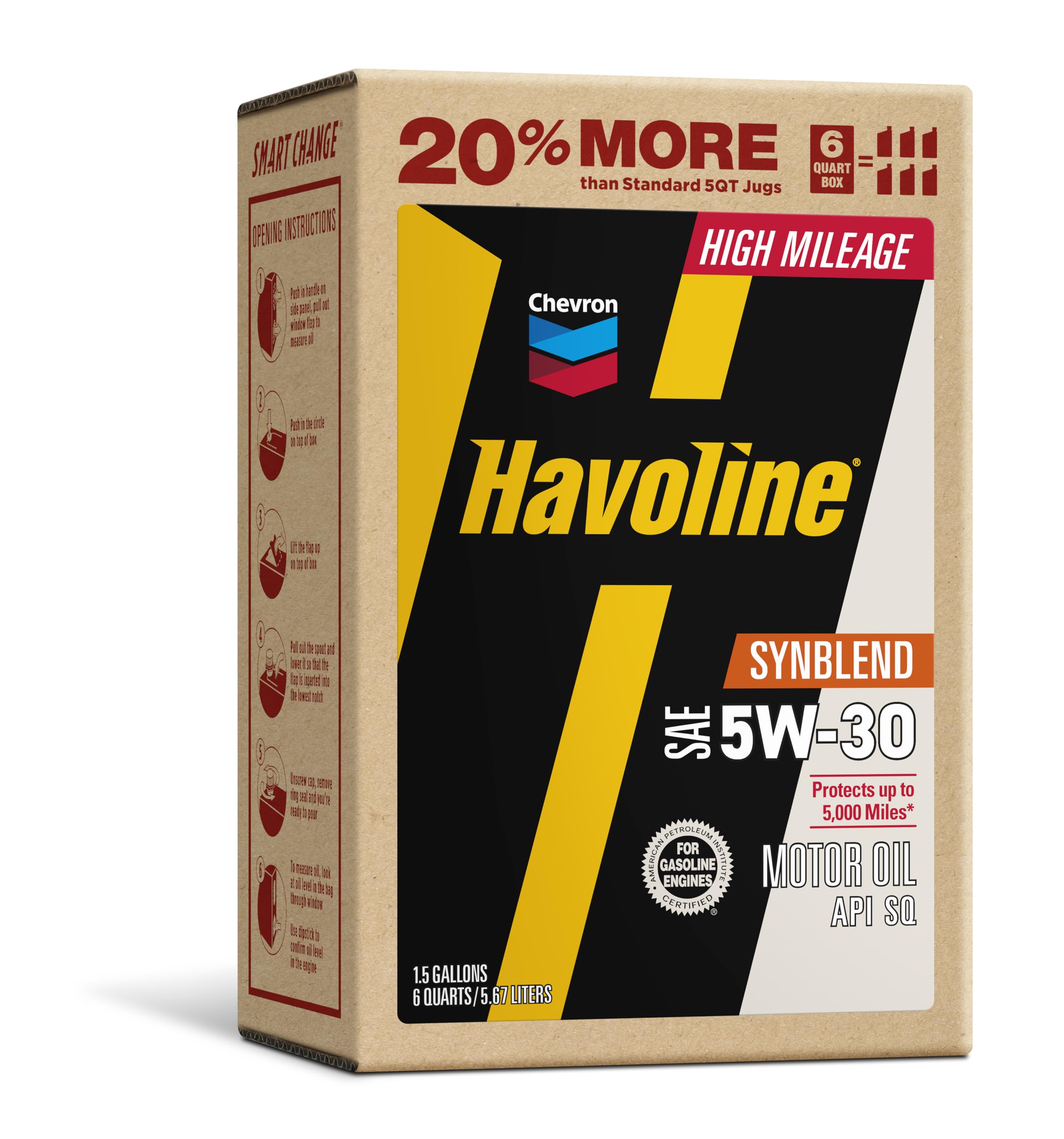
Havoline’s High Mileage 5W-30 uses a synthetic-technology base that preserves fuel economy better than standard conventional oils. The six-quart Smart Change packaging delivers exactly enough for most full-size sedans and light trucks that require a six-quart fill — eliminating the need to buy an extra bottle. The formulation targets reduced evaporative loss at high temperature, which means less oil consumption between changes.
Real-world reports from owners of 2001–2004 Chevy Tahoe and Yukon models with nearly 280,000 miles show measurable improvements in engine smoothness and temperature regulation. The additive package helps prevent sludge and deposit buildup, and the seal-conditioning chemistry reduces external oil seepage around the valve cover gaskets. Havoline meets API SP requirements, so it’s suitable for newer turbocharged engines as well.
The pouch-in-box design is unconventional — you pour from a bag inside the cardboard box rather than a traditional jug. Some users find it awkward at first, but it significantly reduces plastic waste. For anyone running a six-quart engine, this is a value-driven choice that doesn’t compromise on the high-mileage additive package.
What works
- Excellent fuel economy retention
- Precise six-quart fill for common engines
- Reduces evaporative oil loss at high temp
What doesn’t
- Unconventional pouch packaging takes getting used to
- Not available in a 5-quart jug option
3. Pennzoil High Mileage 5W-30 Motor Oil (6 Pack)
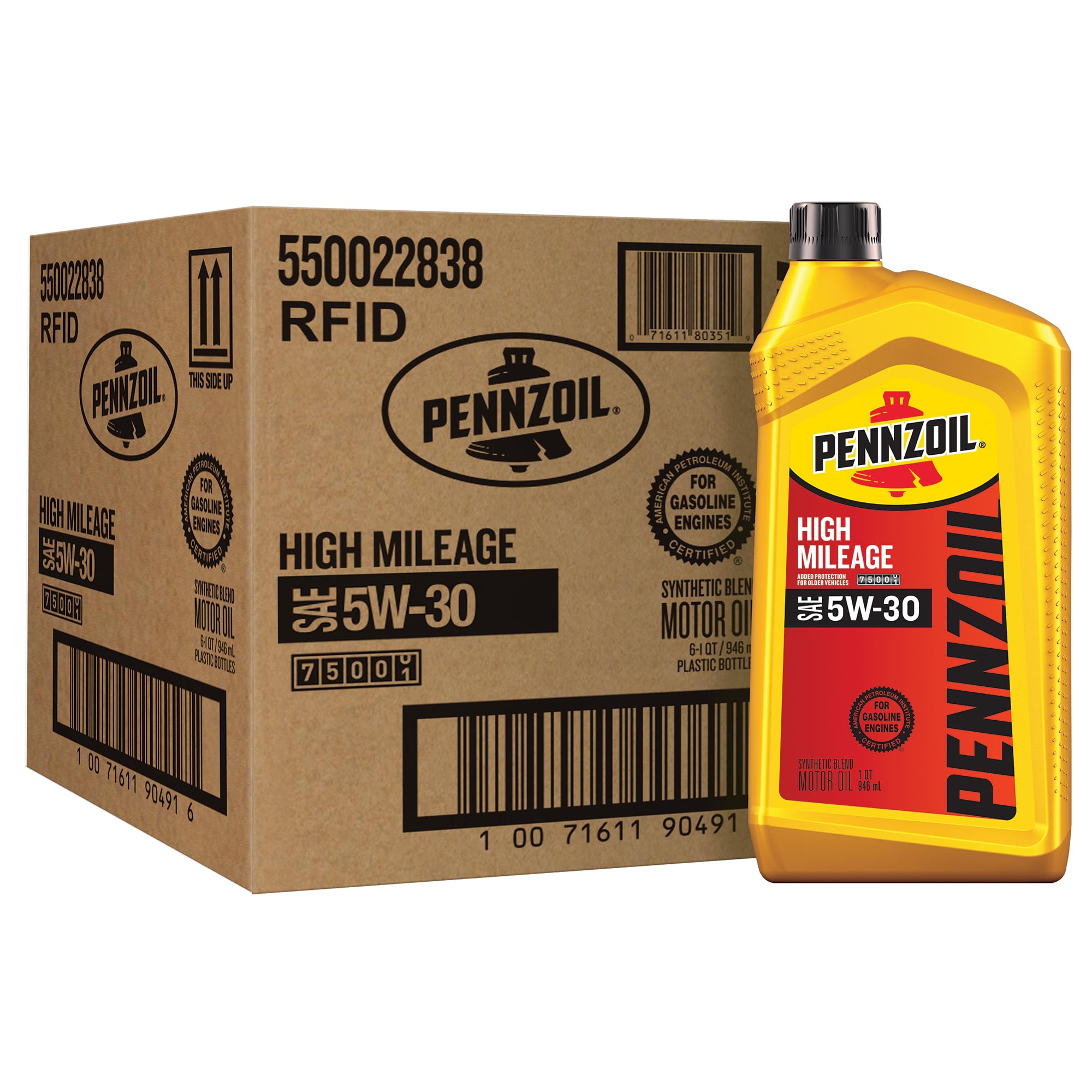
Pennzoil’s High Mileage 5W-30 is specifically engineered to stop leaks and reduce oil consumption in engines with more than 75,000 miles. It’s a synthetic blend — not a full synthetic — that strikes a balance between cost and protection. The key differentiator here is low-speed pre-ignition protection, which makes it a safe choice for modern turbocharged engines where unregulated knock events can cause catastrophic damage.
Customer feedback on older vehicles like the 2006 Chevy HHR and Lexus IS300 confirms that this oil reduces the frequency of top-offs between changes. The seal conditioners are aggressive enough to restore flexibility to dried valve stem seals, and the detergents keep the PCV system clear of carbon buildup. The six-quart case format provides flexibility for engines that require odd-volume fills.
Where this oil falls short is in extreme cold start scenarios — the high-mileage additive package increases the oil’s viscosity slightly at startup compared to a lighter conventional. But for everyday mixed driving in moderate climates, the wear protection and sludge prevention justify the price per quart.
What works
- Effective leak reduction on high-mileage engines
- LSPI protection for turbocharged applications
- Strong sludge prevention formula
What doesn’t
- Slightly thicker cold-start flow than standard 5W-30
- Premium pricing for a synthetic blend
4. Mobil Super 5W-30 Motor Oil (6 Pack)

Mobil Super is a straight conventional 5W-30 without the synthetic blend or high-mileage additives. That makes it a straightforward choice for routine oil changes on engines under 75,000 miles where specialty seal conditioners aren’t yet needed. It meets API SN requirements and provides reliable wear protection for typical daily driving.
Users report smooth idle and consistent oil pressure in Honda, Toyota, and general lawn mower applications — a testament to Mobil’s base stock quality. The six-quart pack gives you extra for top-offs or for engines that require more than five quarts. Just be aware that some Amazon listings for this product mix up conventional and synthetic descriptions, so double-check the bottle’s labeling upon arrival.
The absence of high-mileage additives means this oil isn’t ideal for engines with existing leaks or sludge. But for a driver who changes oil every 3,000 to 5,000 miles and maintains a healthy engine, Mobil Super delivers dependable lubrication at an entry-level price point.
What works
- Reliable conventional base stock for routine changes
- Good value for mid-mileage engines
- Includes wear protection at the industry standard
What doesn’t
- No high-mileage seal conditioners
- Confusing mix of conventional vs synthetic listings
5. Quaker State Advanced Durability Conventional 5W-30
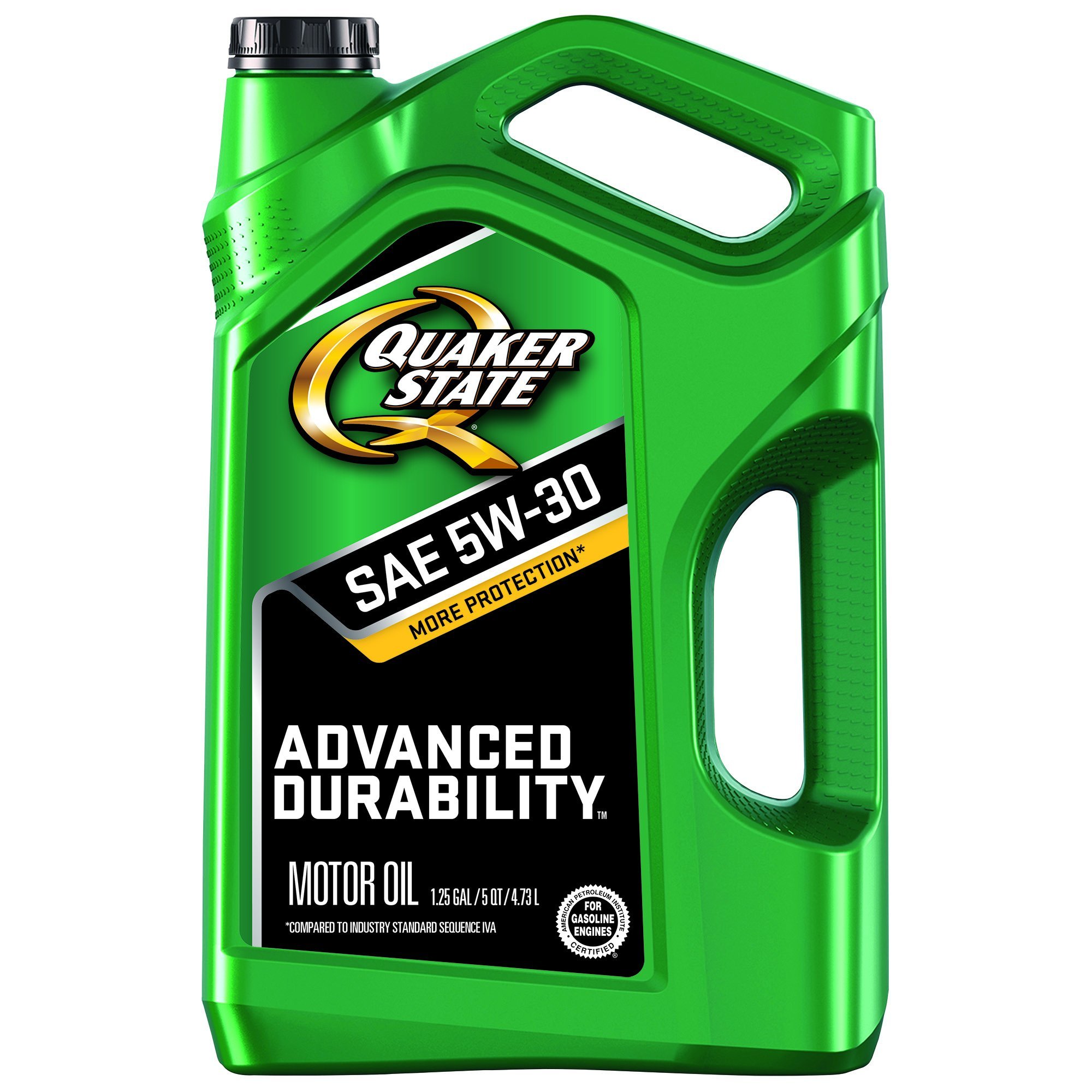
Quaker State Advanced Durability provides double the wear protection of the industry standard — a bold claim backed by the additive package’s zinc-based anti-wear chemistry. This conventional oil is formulated to protect against rust and corrosion caused by acidic combustion byproducts, making it a strong choice for vehicles that experience short-trip, stop-and-go driving where condensation can accumulate in the crankcase.
Users with older vehicles like a 2008 Chevy Silverado report that the oil maintains its viscosity well over a 5,000-mile interval, and the oil color remains clean even after 12 months of occasional driving. The anti-rust chemistry is particularly relevant for northern-climate vehicles that sit for extended periods during winter months. It meets API SP requirements, so it’s backward-compatible with older engines while offering modern protection specs.
The five-quart jug is the most practical format for the vast majority of passenger cars. The price per quart is higher than the Mobil Super conventional, but the doubled wear protection and rust-inhibiting additives justify the premium for owners who want extra margin of safety without stepping up to a synthetic blend.
What works
- 2x wear protection versus industry standard
- Rust and corrosion protection for seasonal vehicles
- Maintains viscosity over extended intervals
What doesn’t
- Higher price per quart than basic conventional options
- Not formulated specifically for high-mileage seals
Hardware & Specs Guide
SAE Viscosity: 5W-30
The “5W” indicates a cold-cranking viscosity that flows at -30°C, while “30” measures the oil’s thickness at 100°C operating temperature. A 5W-30 is the most common multi-grade for modern gasoline engines, balancing cold-start flow with high-temperature film strength. Engines with tighter clearances benefit from the thinner cold rating for immediate oil pressure on startup.
API Certification Levels
API SP is the current standard, superseding SN and SN Plus. SP provides improved protection against LSPI in turbocharged engines, better timing chain wear resistance, and enhanced sludge control. Oils marked API SN are still acceptable for older engines but lack the latest anti-wear upgrades. Always check the starburst symbol on the bottle.
FAQ
What mileage should I switch to high-mileage conventional 5W-30?
Can I use conventional 5W-30 in a modern turbocharged engine?
Is a synthetic blend conventional 5W-30 worth the extra cost?
Final Thoughts: The Verdict
For most buyers, the conventional oil 5w-30 winner is the Valvoline MaxLife High Mileage 5W-30 because it delivers proven seal conditioning, API SP protection, and strong thermal stability at a reasonable price. If you want fuel economy savings and a precise six-quart fill, grab the Havoline High Mileage 5W-30. And for budget-conscious owners of healthy engines under 75,000 miles, nothing beats the Mobil Super 5W-30 for dependable routine changes.

Certification: BSc in Mechanical Engineering
Education: Mechanical engineer
Lives In: 539 W Commerce St, Dallas, TX 75208, USA
Md Amir is an auto mechanic student and writer with over half a decade of experience in the automotive field. He has worked with top automotive brands such as Lexus, Quantum, and also owns two automotive blogs autocarneed.com and taxiwiz.com.