Choosing a commercial EV charger is a long‑term infrastructure decision that affects downtime, energy costs, and vehicle readiness. Whether you’re outfitting a workplace, fleet depot, or multi‑unit dwelling, the right unit balances raw power, smart controls, and physical durability under continuous high‑current loads.
I’m Amir — the founder and writer behind Four Wheel Ask. I study market trends, dissect technical specifications, and analyze aggregated owner feedback to separate genuine performance from marketing claims.
With hundreds of hours comparing load‑balancing algorithms, connector durability, and real‑world charging speeds, I’ve identified the models that truly deliver. This guide breaks down the best commercial ev chargers for demanding environments where reliability and smart management are non‑negotiable.
How To Choose The Best Commercial EV Chargers
Commercial EV chargers differ from home units in several critical ways: higher continuous current capacity, robust enclosures, and often network management capabilities. Understanding these factors ensures you pick a model that will serve your fleet or building for years.
Power Output and Electrical Requirements
Charging speed is determined by amperage and voltage. Most Level 2 commercial units run on 208–240 V circuits. Common options are 40 A (9.6 kW), 48 A (11.5 kW), and 80 A (19.2 kW). Higher amperage requires thicker wiring and larger breakers – confirm your facility can support the load. Units with adjustable amperage (e.g., 16–80 A) offer flexibility if you plan to expand later.
Smart Features and Load Management
For multi‑unit installations, load balancing prevents tripping breakers by distributing power across chargers. Look for units that support Wi‑Fi, Bluetooth, or Ethernet for scheduling, remote monitoring, and energy reporting. RFID access cards or app‑based authorization help control who can charge, which is vital for employee or public stations.
Durability and Certification
Outdoor or high‑traffic environments demand a sturdy enclosure – NEMA Type 3R or 4 is standard for weather resistance. UL listing (or ETL/CSA equivalent) ensures safety against overcurrent, ground faults, and overheating. Metal cases (like the Grizzl‑E) dissipate heat better than plastic in continuous‑duty cycles.
Quick Comparison
On smaller screens, swipe sideways to see the full table.
| Model | Category | Best For | Key Spec | Amazon |
|---|---|---|---|---|
| Grizzl‑E Ultimate | Premium Smart | High‑power fleets & multi‑unit | 80 A / 19.2 kW, Wi‑Fi, load balancer | Amazon |
| PRIMECOM 80A | High‑Power | Maximum charging speed | 80 A adjustable, RFID, app | Amazon |
| Enphase HCS‑50 | Commercial Grade | Durability in harsh conditions | 40 A, NEMA 4 metal case, 5‑yr warranty | Amazon |
| Emporia Pro | Smart Value | Home energy management integration | 48 A, PowerSmart load balancer, Vue monitor | Amazon |
| ChargePoint HomeFlex | Performance | Trusted brand with network access | 50 A, app‑based smart scheduling | Amazon |
| Battery Tender eCharge 48 | Design | Easy, app‑free commercial use | 48 A, RFID control, LCD display | Amazon |
| PRIMECOM 50A | Value | Budget‑friendly adjustable amperage | 50 A, 30‑ft cable, waterproof | Amazon |
| Autel Level 2 50A | Budget | Price‑conscious solid performer | 50 A, Wi‑Fi + Bluetooth, CSA certified | Amazon |
In‑Depth Reviews
1. Grizzl‑E Ultimate
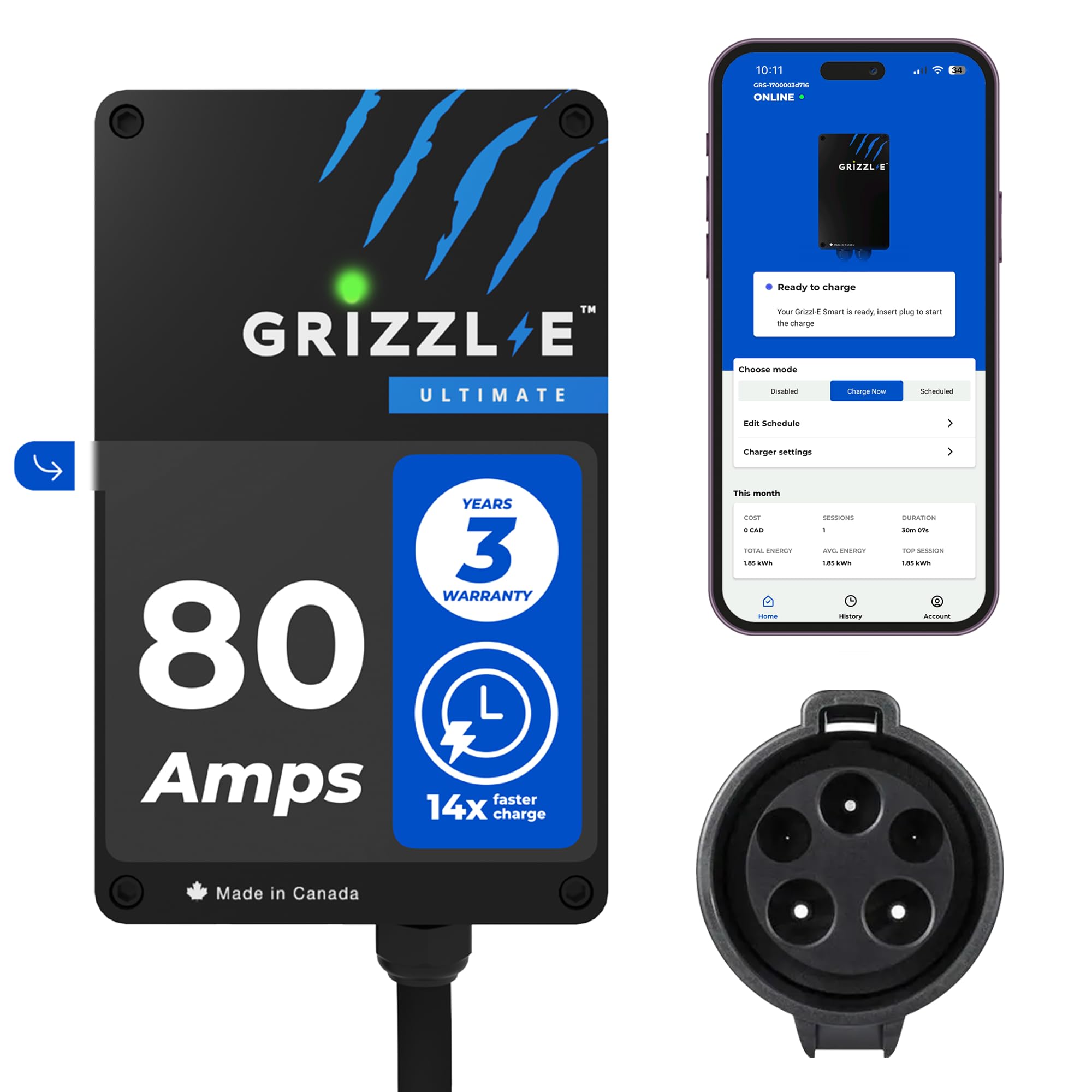
The Grizzl‑E Ultimate delivers the highest continuous output (80 A) in a rugged metal enclosure. Its smart platform, powered by Grizzl‑E Connect, supports real‑time monitoring, scheduling, and equal‑share or priority load balancing across multiple units. The hardwire‑only design is paired with a included terminal kit, and the external antenna improves Wi‑Fi reliability even in metal‑framed buildings.
Owners running Ford Lightnings and Silverado EVs report sustained 80 A charging with no thermal derating, even during summer heat. The app provides clear energy consumption stats and works regardless of internet connectivity – essential for fleet accountability. The 3‑year warranty and Canadian manufacturing add to its appeal.
A few users experienced Wi‑Fi pairing challenges with mesh networks, and the app lacks time‑based amp scheduling. Still, for pure power density and smart management, it sets the benchmark.
What works
- True 80 A continuous output
- Robust metal case, NEMA 4 rated
- Intelligent load balancing for multi‑unit
What doesn’t
- Hardwire only – no plug option
- App lacks per‑hour amp scheduling
2. PRIMECOM 80 Amp

This 80 A unit from PRIMECOM is built for speed, offering up to 22 kW on a suitable circuit. The amperage can be manually stepped down via front buttons, and the intelligent chip auto‑adjusts to the vehicle’s request. An LED display shows real‑time amps, voltage, and kWh – useful for diagnostics. The included RFID fobs enable secure access control for shared installations.
Fleet operators using Chevy Silverado EV and Ford Lightning confirm the 80 A performance is consistent. The smartphone app allows remote session start/stop and basic energy tracking. The unit also supports longer cable options (up to 50 ft), which is rare for high‑amp chargers.
Reliability reports are mixed: several owners praise excellent customer support, while a few experienced early failures. The price point is high, but for those needing maximum speed today, it delivers.
What works
- Full 80 A / 19.2 kW output
- RFID access for security
- Real‑time data display
What doesn’t
- Mixed long‑term reliability feedback
- Premium cost
3. Enphase HCS‑50

The Enphase HCS‑50 (formerly ClipperCreek) is the gold standard for “install and forget” reliability. It offers a modest 40 A output but does so without any Wi‑Fi, Bluetooth, or app – purely passive charging. The fully sealed NEMA 4 metal enclosure protects against rain, snow, and dust, and the 25‑ft rubber‑overmolded J1772 connector is exceptionally durable under frequent use.
Owner reviews consistently mention flawless operation over years of service. The 5‑year warranty is the longest in this list, reflecting Enphase’s confidence. Because there are no smart features, installation is straightforward and the unit is immune to network outages or app failures. It qualifies for many commercial rebates.
The lack of scheduling or load balancing means you cannot avoid peak‑rate charging without external timers. The cable is stiffer in extreme cold compared to some competitors. For a pure‑workhorse application, though, it is unmatched.
What works
- Proven long‑term reliability
- Industrial NEMA 4 metal case
- 5‑year warranty
What doesn’t
- No smart features or scheduling
- Cable stiff in cold weather
4. Emporia Pro
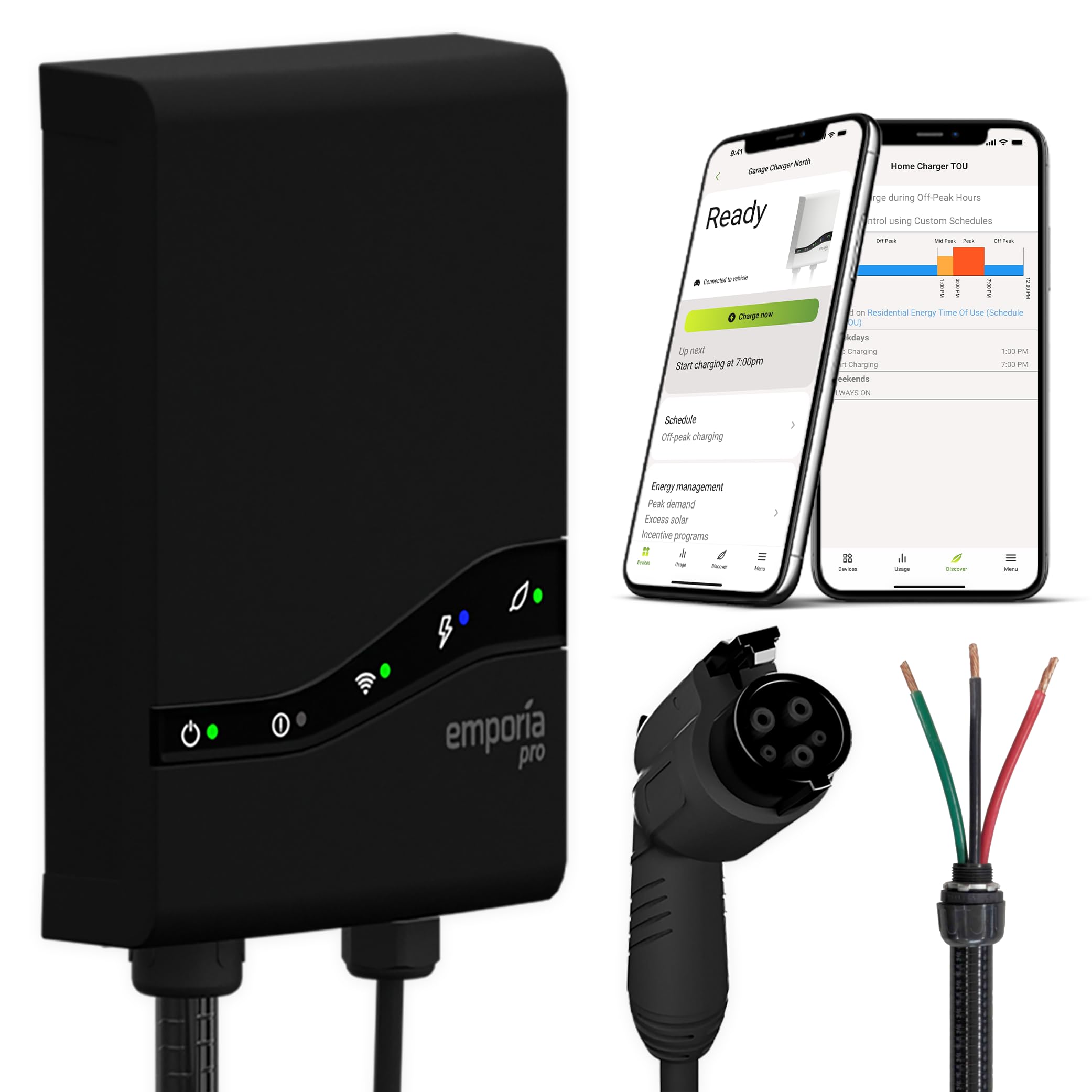
Emporia’s Pro charger combines a 48 A Level 2 EVSE with their Vue whole‑home energy monitor. The PowerSmart technology automatically balances the charger’s draw against other household loads to prevent panel overload – ideal for commercial buildings where you want to avoid an expensive panel upgrade. The included Vue monitor provides real‑time energy insights for the entire facility.
Users appreciate the seamless integration: the app manages scheduling, tracks cost per charge (when fed local electricity rates), and works with time‑of‑use plans. The unit can be hardwired or plugged via NEMA 14‑50. US‑based support in Colorado is praised for responsiveness.
The charger itself is not designed for ultra‑high 80 A output, but the load‑balancing smarts make it one of the most intelligent options for multi‑EV locations with limited electrical capacity. The 3‑year warranty is solid.
What works
- PowerSmart load management
- Includes Vue energy monitor
- Great app and US support
What doesn’t
- Max 48 A – not for ultra‑fast needs
- Requires professional install for load balancing
5. ChargePoint HomeFlex

ChargePoint is one of the largest EV charging networks in North America, and the HomeFlex brings that ecosystem to a private charging station. The unit supports up to 50 A and can be hardwired or plugged via NEMA 14‑50. Its app enables scheduled charging, reminders, and integration with smart home devices. The swiveling holster makes cable management easy.
Owners consistently report simple setup and reliable‑day performance. The ability to share the station with guests via the ChargePoint network is a unique perk for commercial locations. The 23‑ft cable is cold‑resistant, and the UL listing ensures safety.
Some units have shown premature failure (within a year), and the app requires a US phone number for registration – a limitation for international installations. The price is mid‑range but the network access is a strong differentiator.
What works
- Large public charging network integration
- Easy installation and app setup
- Swiveling holster
What doesn’t
- Occasional reliability issues reported
- Requires US phone number for app
6. Battery Tender eCharge 48
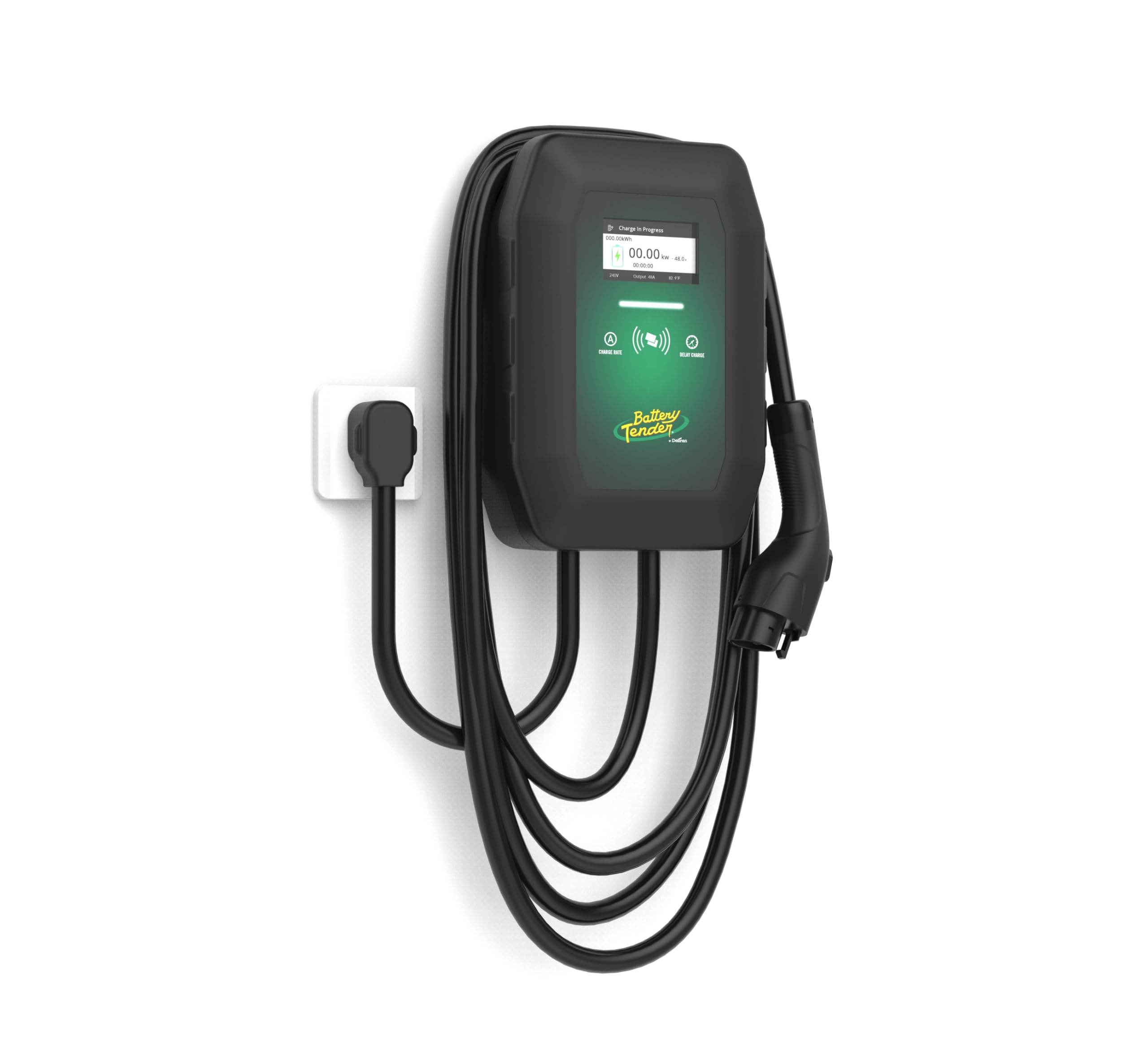
Battery Tender brings decades of battery‑care expertise to this 48 A EVSE. The eCharge 48 is refreshingly simple: no app, no Wi‑Fi – just an informative LCD display and two RFID cards for access control. The 25‑ft cable remains flexible in severe cold, and the compact enclosure saves wall space. It can be hardwired or plugged (NEMA 14‑50).
Works well with BMW i3 and other EVs that charge at moderate rates. Users report the RFID feature works reliably for shared parking areas. The build quality feels premium, and Battery Tender’s customer service reputation is excellent.
At its price point it’s slightly expensive for a non‑smart charger. The lack of scheduling means you must rely on the vehicle’s timer. Still, for organizations that want a secure, app‑free solution, it’s an outstanding choice.
What works
- RFID access without app complexity
- Clear LCD for real‑time data
- Cable stays flexible in cold
What doesn’t
- No smart scheduling
- Premium price for a non‑smart unit
7. PRIMECOM 50 Amp

This PRIMECOM 50 A charger offers adjustable amperage (12–50 A) via front buttons, making it compatible with a wide range of circuits. It is UL (ETL) and TÜV certified, with IP56 weather resistance for outdoor use. The 30‑ft cable is generous, and the unit works with all J1772 EVs and Teslas with an adapter.
Owners of Audi E‑Tron and Mustang Mach‑E praise the fast charging speeds and easy installation. Customer service is highlighted for proactive replacements in case of rare failures. The solid copper wiring inside adds to efficiency and safety.
Some units have exhibited early failure after 12–15 months, though the company shows willingness to replace. The app is basic compared to competitors. For the price, it’s a solid workhorse if you don’t need advanced smart features.
What works
- Wide amperage adjustability
- Long 30‑ft cable
- Good safety certifications
What doesn’t
- Inconsistent long‑term reliability
- Basic app functionality
8. Autel Level 2 50A
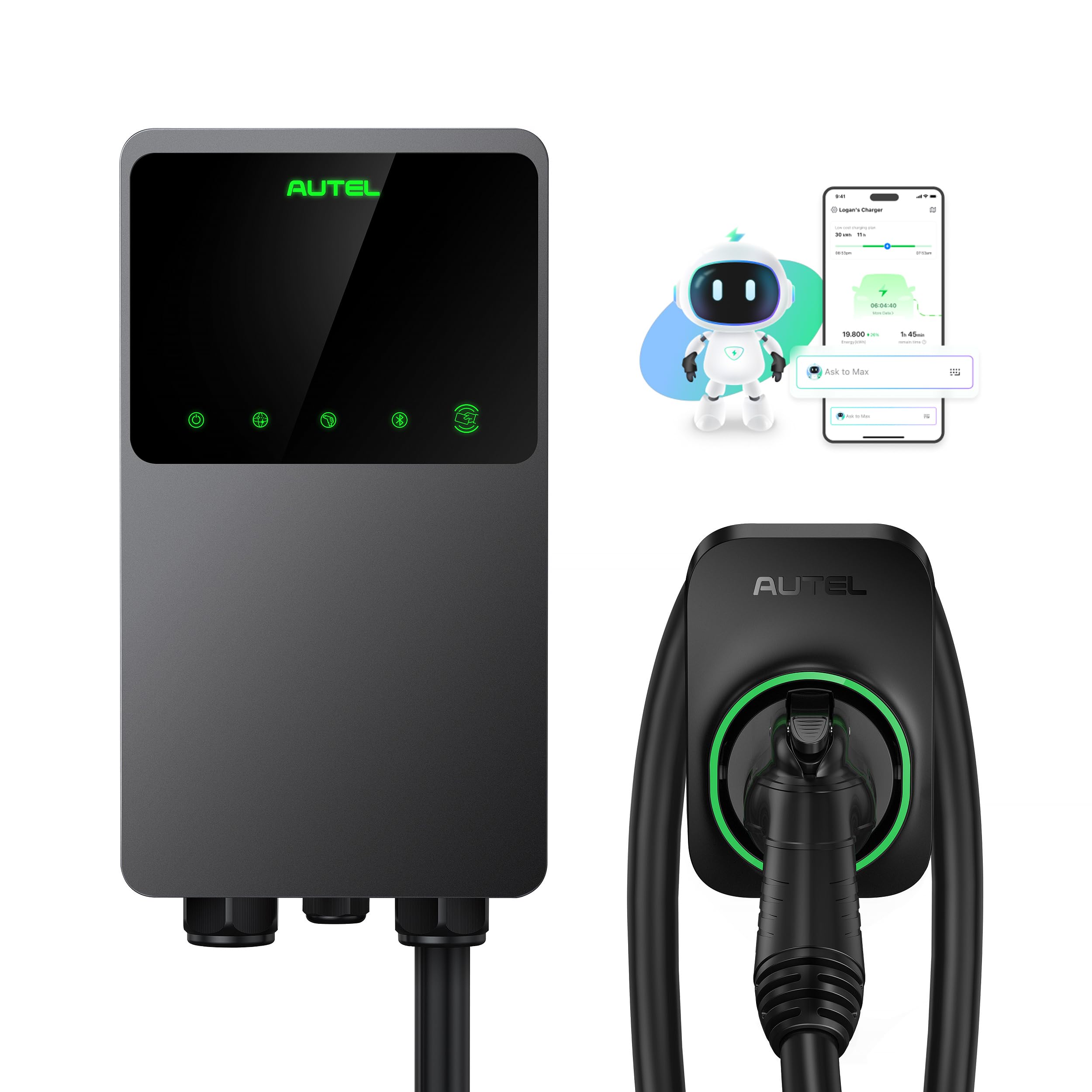
Autel’s MaxiCharger AC Home is a well‑rounded 50 A unit that brings a surprising level of sophistication at its price. It features Wi‑Fi and Bluetooth connectivity, a dedicated app (Autel Charge) for scheduling and cost tracking, and CSA certification for rebate eligibility. The NEMA Type 4 enclosure is rated for outdoor use, and the 25‑ft cable remains flexible to -40°C.
Owners of Chevy Bolt and plug‑in hybrids report easy installation and a clean, modern look. The physical amperage selector lets you dial in the exact current for your breaker. Over‑the‑air firmware updates keep the software current, and the 3‑year warranty provides peace of mind.
Some users note the app can be glitchy after updates, and the plug‑in version may not be as robust as hardwire. Still, for the price, it offers an excellent feature set – smart scheduling, energy monitoring, and reliable charging.
What works
- Great value with full smart features
- Excellent cold‑weather cable flexibility
- CSA certified for rebates
What doesn’t
- App occasionally glitchy
- Plug‑in version less rugged than hardwire
Hardware & Specs Guide
Power Stages: 40 A vs 48 A vs 80 A
A 40 A charger (9.6 kW) adds about 30–38 miles per hour. Jumping to 48 A (11.5 kW) gives 38–45 miles per hour. The 80 A class (19.2 kW) nearly doubles that to 60–75 miles per hour, but requires a 100 A circuit breaker and heavy‑gauge wiring. Most commercial installations settle on 48 A as the practical sweet spot for cost and electrical capacity.
Connector and Cable Considerations
All units here use the J1772 connector (universal for non‑Tesla EVs). Tesla owners need a supplied adapter. Cable length ranges from 23 to 30 ft in our list; longer cables reduce the need for repositioning vehicles but are heavier. Look for cables rated to -30°C or lower if your region sees extreme cold. Hardwired connections often provide better weather sealing than plug‑based.
Smart vs Dumb Chargers
Smart chargers with Wi‑Fi/app enable scheduling, energy tracking, and remote diagnostics – critical for fleet management. Dumb chargers (like the Enphase HCS‑50) are simpler, more reliable over decades, and impervious to network failures. For multi‑unit sites, RFID access (Battery Tender, PRIMECOM) adds security without app dependency.
Safety Certifications
Always seek UL 2594 or equivalent (CSA, ETL) certification. This ensures protection against ground faults, overcurrent, overheating, and surge. NEMA ratings (Type 3R, 4, 4X) indicate weather resistance – Type 4 is fully washdown‑proof. Units built in North America (Grizzl‑E, Enphase) often have stricter quality control.
FAQ
How many amps do I need for a commercial EV charger?
Can I install a commercial charger outdoors?
What is load balancing and do I need it?
Are cheaper chargers reliable enough for daily commercial use?
Final Thoughts: The Verdict
For most buyers, the best commercial ev chargers winner is the Grizzl‑E Ultimate because it delivers maximum 80 A output in a rugged, smart platform with load balancing. If you want reliable, no‑fuss operation in harsh conditions, grab the Enphase HCS‑50. And for a budget‑conscious smart charger that still handles 48 A, nothing beats the Autel Level 2 50A.

Certification: BSc in Mechanical Engineering
Education: Mechanical engineer
Lives In: 539 W Commerce St, Dallas, TX 75208, USA
Md Amir is an auto mechanic student and writer with over half a decade of experience in the automotive field. He has worked with top automotive brands such as Lexus, Quantum, and also owns two automotive blogs autocarneed.com and taxiwiz.com.