Hesitation at highway merge speeds, sluggish throttle tip-in, and transmission shift hunting are some of the most common complaints among Colorado owners who want more from their daily driver or tow rig. A purpose-built tuner addresses the specific calibration shortcomings that GM leaves on the table for emissions and fuel economy targets, restoring throttle response, shift firmness, and usable power across the RPM band.
I’m Amir — the founder and writer behind Four Wheel Ask. My approach focuses on dissecting technical specifications, comparing real-world owner feedback across forums and verified purchasers, and evaluating build quality and vehicle compatibility to identify which tuners deliver consistent results without compromising reliability.
Whether you drive a Z71, ZR2, or base WT, matching the right hardware to your engine and driving style makes the difference between a noticeable improvement and a frustrating paperweight. After reviewing market data and owner experiences, the best chevy colorado tuner balances power delivery, installation simplicity, and long-term durability for gas and diesel applications alike.
How To Choose The Best Chevy Colorado Tuner
Selecting a tuner for your Colorado requires understanding the fundamental differences between flash programmers, throttle response controllers, and inline modules. Each approach alters vehicle behavior through a distinct method, and the right choice depends on your engine type, desired outcome, and tolerance for installation complexity.
Flash Tuners vs. Throttle Controllers vs. Inline Modules
Flash tuners rewrite the ECU calibration directly, adjusting fuel maps, ignition timing, transmission shift points, and speedometer parameters. These deliver the most comprehensive changes but require careful selection to match your specific ECU generation. Throttle controllers modify only the pedal-position signal, eliminating tip-in lag without altering engine tuning — ideal for drivers who want a sharper response without touching calibration. Inline modules intercept signals between the ECU and sensors, offering on-the-fly adjustability with no permanent flash, but they typically provide fewer adjustments than a full programmer.
Compatibility With Colorado Model Years and Engines
GM updated the Colorado’s ECU architecture across generations, meaning a tuner that works on a 2015 model may not function on a 2020. Gas V6 engines (3.6L LFX/LGZ) and the 5.3L V8 require different calibration strategies than the 2.8L Duramax diesel. Always verify that the tuner explicitly lists your exact model year, engine, and transmission combination before purchasing. Units that support GM Global A or Global B architectures offer broader coverage across the 2007-2022 range.
Power Gains vs. Reliability Trade-Offs
Aggressive tuning that pushes boost pressure or ignition timing beyond safe limits can accelerate wear on head gaskets, transmissions, and cooling systems. Look for tuners that offer multiple power levels — economy, tow, performance — so you can match the calibration to your current driving conditions. Trans tuning that firms up shift pressure without causing harsh engagement is a hallmark of well-developed calibrations. Avoid any product that claims extreme gains without supporting data or verified owner feedback.
Ease of Installation and Daily Usability
Plug-and-play units that connect via the OBD-II port with no laptop required offer the lowest barrier to entry. Flash tuners that require a Windows PC for updates add complexity but provide deeper control. Consider whether you want a device that remains installed for live monitoring or one that you flash once and remove. On-the-fly adjustability — switching between economy and performance modes from the driver seat — adds real-world versatility for drivers who tow during the week and daily drive on weekends.
Quick Comparison
On smaller screens, swipe sideways to see the full table.
| Model | Category | Best For | Key Spec | Amazon |
|---|---|---|---|---|
| Pedal Commander PC07 BT | Throttle Controller | Daily response improvement | 4 modes, 36 settings, app control | Amazon |
| DiabloSport 8200 Intune i3 | Flash Tuner | Full ECU & TCM calibration | Dyno-tuned programs, 20-30 rwhp V8 | Amazon |
| POWERTEQ Edge CTS3 85400-200 | Touchscreen Tuner | Live monitoring & diesel tuning | 3rd-gen display, multi-gauge, OBD-II | Amazon |
| Superchips Flashpaq F5 2845 | Flash Tuner | GM gas/diesel calibration | 1999-2016 GM, USB updateable | Amazon |
| TOPDON RLink J2534 | Pass-Thru Programmer | OEM diagnostics & reflash | J2534/D-PDU/CAN-FD/DoIP | Amazon |
| Edge 36040 EvoHT2 | Flash Tuner | Gear/tire calibration & tuning | Rev limit, shift point, fuel economy | Amazon |
| Superchips F5 3845 | Flash Tuner | Speedo correction & shift tuning | Carb EO # D-330-21, tire/gear adjust | Amazon |
| ACCEL 49505 SuperTuner | Flash Tuner | Performance testing & towing | 0-60 & 1/4 mile, shift firmness | Amazon |
| Range Technology RA003G | AFM/DFM Disabler | AFM/DFM delete & smooth idle | OBD-II plug-in, full cylinder mode | Amazon |
| Superchips Flashcal 3571 | Calibration Tool | Tire/gear speedo correction | 26-42 in tires, 5.38 gear, idle adjust | Amazon |
| DiabloSport Pulsar 32451 | Inline Module | On-the-fly power adjustment | Cruise control button control, 8 modes | Amazon |
In‑Depth Reviews
1. Pedal Commander PC07 BT for Chevrolet Colorado

The Pedal Commander is the most targeted solution available specifically for the Colorado 2007-2022 gas lineup, covering LT, WT, Z71, and ZR2 trims with 3.6L V6 or 5.3L V8 engines. It connects between the accelerator pedal and the ECU, modifying the voltage signal to eliminate the factory lag that owners frequently report as the most irritating aspect of daily driving. With four modes — Eco, City, Sport, and Sport+ — and 36 individual settings within those modes, the level of granularity allows you to dial in exactly the response curve you want without ever altering the ECU calibration.
Installation takes roughly two minutes with no tools required, and the unit remains completely undetectable by the vehicle’s computer. Owner feedback consistently describes the difference as night-and-day, with Sport+ mode delivering enough throttle authority to break traction on the ZR2. The Bluetooth app adds an anti-theft feature that locks the pedal signal, and because no permanent changes are written to the ECU, removal leaves zero trace — a meaningful consideration for leaseholders or warranty-conscious buyers.
The trade-off is that a throttle controller does nothing for transmission tuning, speedometer correction, or actual horsepower gains. If your Colorado needs shift pressure adjustments, gear-ratio recalibration, or air-fuel ratio changes, you will need a full flash tuner. But for drivers who simply want the truck to respond immediately when they step on the gas, this remains the most effective plug-and-play upgrade available.
What works
- Instant throttle response improvement across all driving modes
- Tool-free two-minute installation with zero ECU modification
- Wide compatibility with 2007-2022 Colorado gas trims including ZR2
What doesn’t
- Does not provide ECU flash tuning for transmission or fuel maps
- Cannot correct speedometer for tire or gear changes
- Anti-theft feature requires subscription after trial period
2. DiabloSport 8200 Intune i3
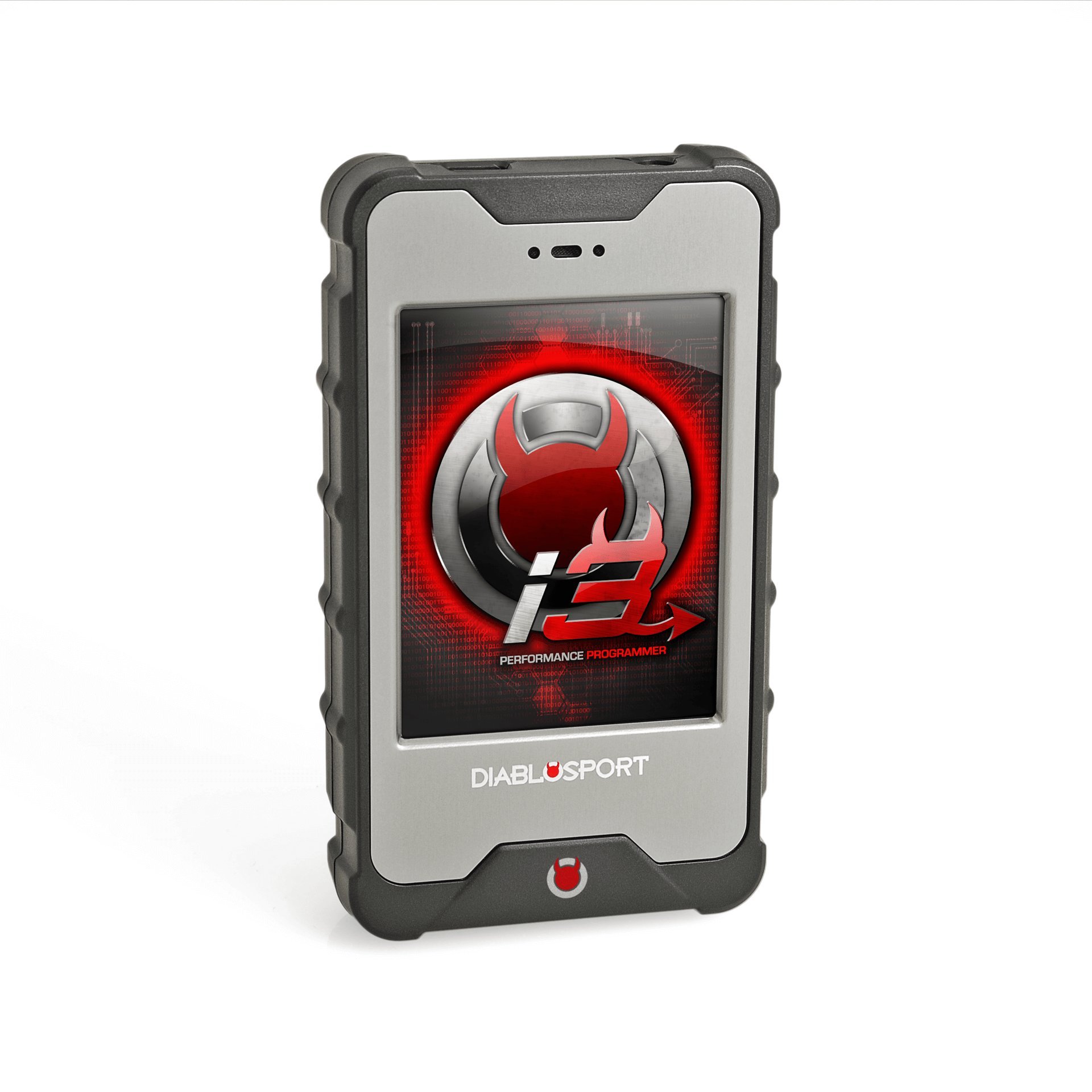
The DiabloSport Intune i3 represents the current standard for consumer-grade flash tuning, with a new Easy Tune mode that simplifies the process of selecting and loading pre-calibrated performance programs. DiabloSport’s dyno-verified claims of 20-30 rear-wheel horsepower gains on naturally aspirated V8 applications and 35-50 on forced-induction setups are supported by years of aftermarket development and widespread owner adoption. The device supports both ECU and TCM calibration, so you can adjust shift firmness, shift points, and torque converter lockup alongside fuel and ignition mapping.
One of the strongest differentiators is the TCM tuning depth. Many Colorado owners report that the transmission is the weakest link in the driving experience — the Intune i3 allows you to select firm or hard shift profiles that eliminate the lazy, fuel-economy-focused shift behavior GM programs from the factory. The device also provides data logging and real-time parameter monitoring through the touchscreen interface, giving you insight into knock retard, fuel trims, and transmission temperatures.
The main drawback reported by users involves occasional bricking events if the flashing process is interrupted, and some owners of newer ECUs have found that DiabloSport’s support for Colorado-specific model years lags behind vehicle releases. Always confirm that your exact Colorado VIN and ECU part number are supported before purchasing. The 6.4-ounce handheld format is compact but requires a Windows PC for updates and custom tune loading.
What works
- Verified power gains with dyno-developed calibration files
- Deep TCM tuning capability for shift firmness and timing
- Easy Tune mode simplifies first-time installation
What doesn’t
- Colorado-specific support may lag behind vehicle ECU updates
- Flashing interruption risk can temporarily disable the vehicle
- Requires Windows PC for updates and custom tune uploads
3. POWERTEQ Edge Products Evolution CTS3 85400-200

The Evolution CTS3 is Edge Products’ third-generation touchscreen tuner and gauge display, offering the most comprehensive monitoring and tuning package for Duramax diesel Colorado applications. The 3rd-generation hardware is noticeably faster than its predecessors, with smoother screen transitions and quicker parameter update rates. The device functions both as a full-featured flash tuner with multiple power levels — daily, tow, performance, and extreme — and as a multi-parameter gauge display capable of showing transmission temperature, boost pressure, RPM, exhaust gas temperature, and dozens of other channels simultaneously.
Installation is straightforward through the OBD-II port with no permanent wiring, and the touchscreen interface provides intuitive navigation between tuning menus and gauge layouts. Owners report that the tuning calibrations are conservative enough for reliable daily driving while still delivering meaningful gains at the track or under load. The tow tune is particularly well-regarded among Colorado diesel owners who need sustained power delivery without overheating transmission fluid.
The primary concern from user feedback involves the initial update process, which requires downloading the Edge desktop application and updating the device firmware before first use — a multi-hour process for some owners. The included windshield suction cup mount has also received criticism for poor adhesion in hot climates, and several owners recommend purchasing an aftermarket mount. At this investment level, consider whether you will actively use the monitoring features or if a simpler flash tuner would meet your needs.
What works
- Comprehensive multi-parameter gauge display and data logging
- Multiple power levels calibrated for daily, tow, and extreme use
- Fast 3rd-generation processor improves screen and update speed
What doesn’t
- Initial firmware update process can be lengthy and frustrating
- Windshield mount lacks durability in high heat conditions
- Premium investment may not justify gauge-only use cases
4. Superchips Flashpaq F5 SPC-2845

The Superchips Flashpaq F5 offers broad GM coverage spanning 1999-2016 gasoline and diesel trucks, making it a versatile option for Colorado owners with older model years or those who also maintain a second GM vehicle. The F5 platform provides access to multiple tune levels — including performance, tow, and economy calibrations — along with the ability to adjust shift points, rev limits, and idle speed. The device also enables speedometer recalibration for tire size and gear ratio changes, a critical feature for lifted or re-geared trucks.
Owner feedback highlights significant fuel economy improvements, with some diesel users reporting jumps from 14 to 19 MPG after applying the economy tune — effectively paying for the unit within weeks for high-mileage drivers. The performance tune on 91-octane fuel delivers crisper shifts and stronger mid-range pull that owners describe as waking the truck up. The USB connectivity allows for firmware updates and custom tune loading through the Superchips desktop application.
The most frequently cited negative is that the instruction manual has become outdated as Superchips migrated to a new software platform, leaving some first-time users confused about the update process. A small but notable subset of owners reports DOA units that fail to communicate with the vehicle, requiring return or exchange. Additionally, the F5 does not support the latest 2017+ Colorado ECU architectures, so verify your model year before purchasing.
What works
- Significant fuel economy gains reported by diesel owners
- Multi-tune levels for performance, tow, and economy driving
- Speedometer calibration for tire and gear changes
What doesn’t
- Outdated documentation complicates first-time setup
- Does not support 2017+ Colorado ECU architectures
- Occasional DOA units require return processing
5. TOPDON RLink J2534 Pass-Thru Programmer
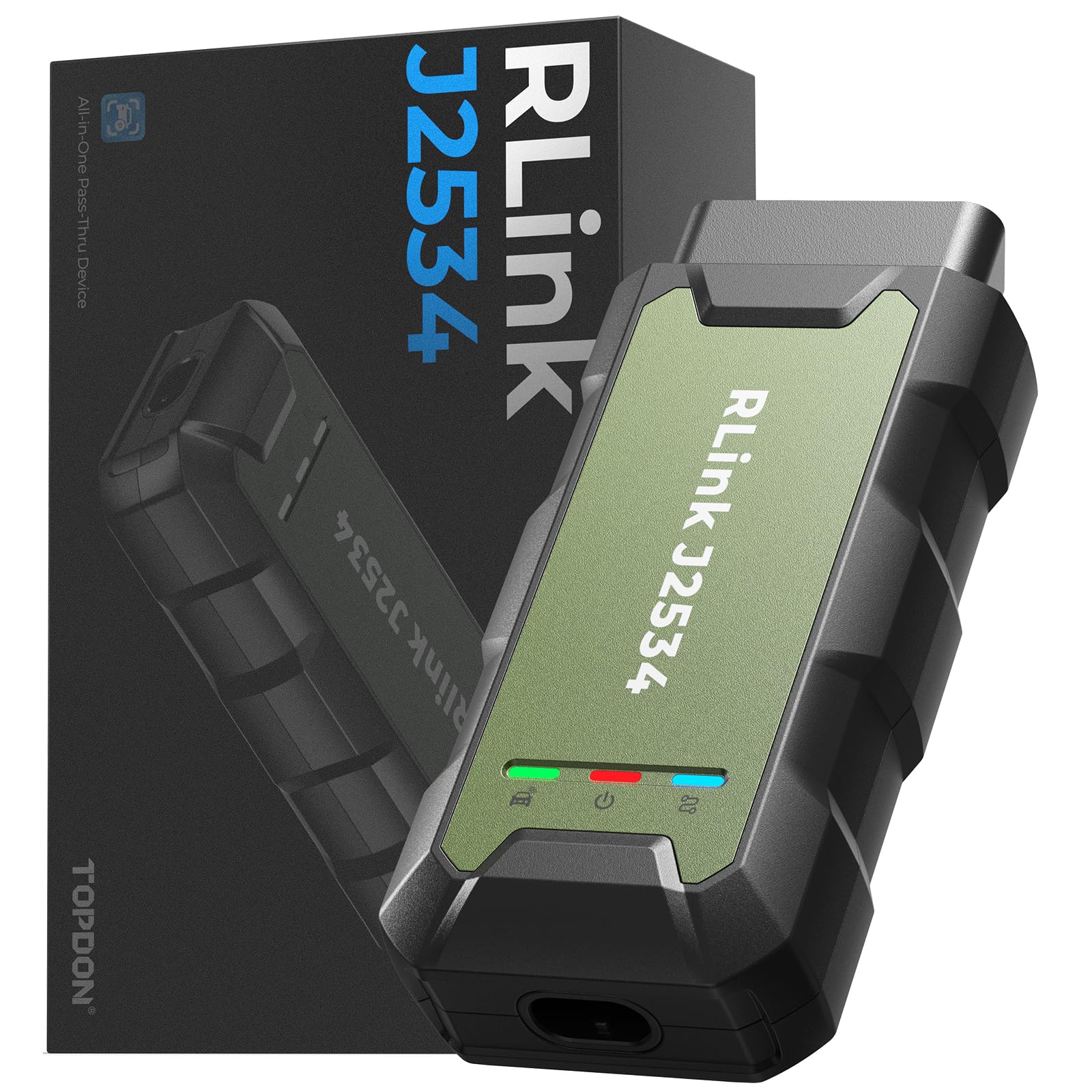
The TOPDON RLink is not a traditional handheld tuner — it is a J2534 pass-thru vehicle communication interface designed for OEM-level diagnostics, ECU reprogramming, and coding. For Colorado owners who want to use GM’s factory GDS software or third-party calibration tools like HP Tuners, the RLink provides the hardware bridge between your Windows laptop and the vehicle’s OBD-II port. It supports J2534, D-PDU, CAN-FD, and DoIP protocols, ensuring compatibility with current and future ECU architectures.
What makes the RLink compelling for the enthusiast who is also a DIY diagnostician is its dual function: it serves as a full pass-thru programmer for ECU reflashing and as a complete OEM diagnostic scanner capable of reading and clearing codes across all vehicle systems. Owners report successful PCM programming on GM vehicles, including Colorado and Silverado models, as well as transmission control module programming on Nissan and Infiniti applications. The device is powered directly through the OBD-II port and requires no external battery connection.
The learning curve is significant. This is not a plug-and-play experience — you must install the RLink Platform software, register the device, download manufacturer-specific drivers, and source your own OEM software subscriptions. Users comfortable with navigating Tech2Win, Witech2, or Ford IDS will appreciate the stability and responsiveness, but less experienced owners may find the setup process overwhelming. The RLink also does not include any tuning calibration files; it is purely a programming interface.
What works
- Broad protocol support including CAN-FD and DoIP for modern ECUs
- Reliable pass-thru performance with GM, Chrysler, and Ford software
- Dual use as OEM diagnostic scanner and ECU programmer
What doesn’t
- Steep learning curve unsuitable for novice users
- No pre-loaded tunes or calibration files included
- Requires separate OEM software subscriptions for full functionality
6. Edge 36040 EvoHT2

The Edge EvoHT2 is a straightforward flash tuner that prioritizes ease of use and essential calibration adjustments over complexity. It installs in minutes with no tools required and offers pre-loaded tuning selections that cover economy, performance, and towing applications. The device excels at speedometer recalibration for tire size and gear ratio changes — a common need for Colorado owners who lift their trucks or swap differential gears.
Performance tuning from the EvoHT2 delivers noticeable improvements in shift feel and throttle response, particularly in the transmission tuning department. Owners of trucks equipped with the 6L50 or 8L45 transmissions report that the EvoHT2 firms up shift quality and reduces the hunting behavior that GM programs for fuel economy. The ability to adjust rev limits and shift points gives the driver control over how the powertrain behaves under load, which is especially valuable when towing.
The main limitation is that the EvoHT2’s horsepower gains are modest compared to dedicated performance tuners. Some owners report minimal seat-of-the-pants difference on the economy tune, and the device’s pre-loaded calibrations cannot be customized without purchasing additional licenses. A single reported issue involves the programmer disabling the ECU during a failed flash, requiring the unit to be sent back to Edge for repair — a risk inherent to all flash tuners but worth noting for the budget-conscious buyer.
What works
- Tool-free installation with quick tire and gear calibration
- Improves transmission shift firmness and reduces hunting
- Multiple tuning selections for economy, performance, and tow
What doesn’t
- Modest horsepower gains compared to dedicated tuners
- Pre-loaded calibrations not customizable without extra license
- Failed flash can disable ECU requiring manufacturer intervention
7. Superchips F5 Flashpaq 3845

The Superchips F5 3845 brings Carb Executive Order certification, making it one of the few emissions-legal handheld tuners for those who need to pass visual inspections in regulated states. It is designed primarily for speedometer correction after tire and gear changes, but it also provides access to Superchips’ pre-loaded performance and economy calibrations. The device supports shift point and firmness adjustment, idle speed configuration, and top-speed governor removal.
Owner experiences with the 3845 are mixed but generally positive when the device is matched to the correct vehicle application. Users with older GM trucks report that the performance tune on 91-octane fuel wakes up the powertrain noticeably, with crisper shifts and improved mid-range throttle response. The speedometer calibration function is reliable and easy to navigate through the device menu. Internet updating via PC software ensures the unit can be kept current with vehicle ECU revisions.
The most significant frustration reported involves the software update process. Superchips has transitioned through multiple software platforms over the years, and the instruction manual included with the 3845 references an obsolete application. New users often spend hours searching forums for the correct download link and update procedure. This friction point, combined with reports of units that arrive with outdated firmware that requires a multi-step update before first use, means patience is required during setup.
What works
- Carb EO certified for emissions-legal use in regulated states
- Reliable speedometer correction for tire and gear changes
- Performance tune delivers noticeable throttle and shift improvement
What doesn’t
- Obsolete instruction manual complicates initial software update
- Firmware update process requires internet research and patience
- Mixed results on newer vehicle ECU compatibility
8. ACCEL 49505 SuperTuner
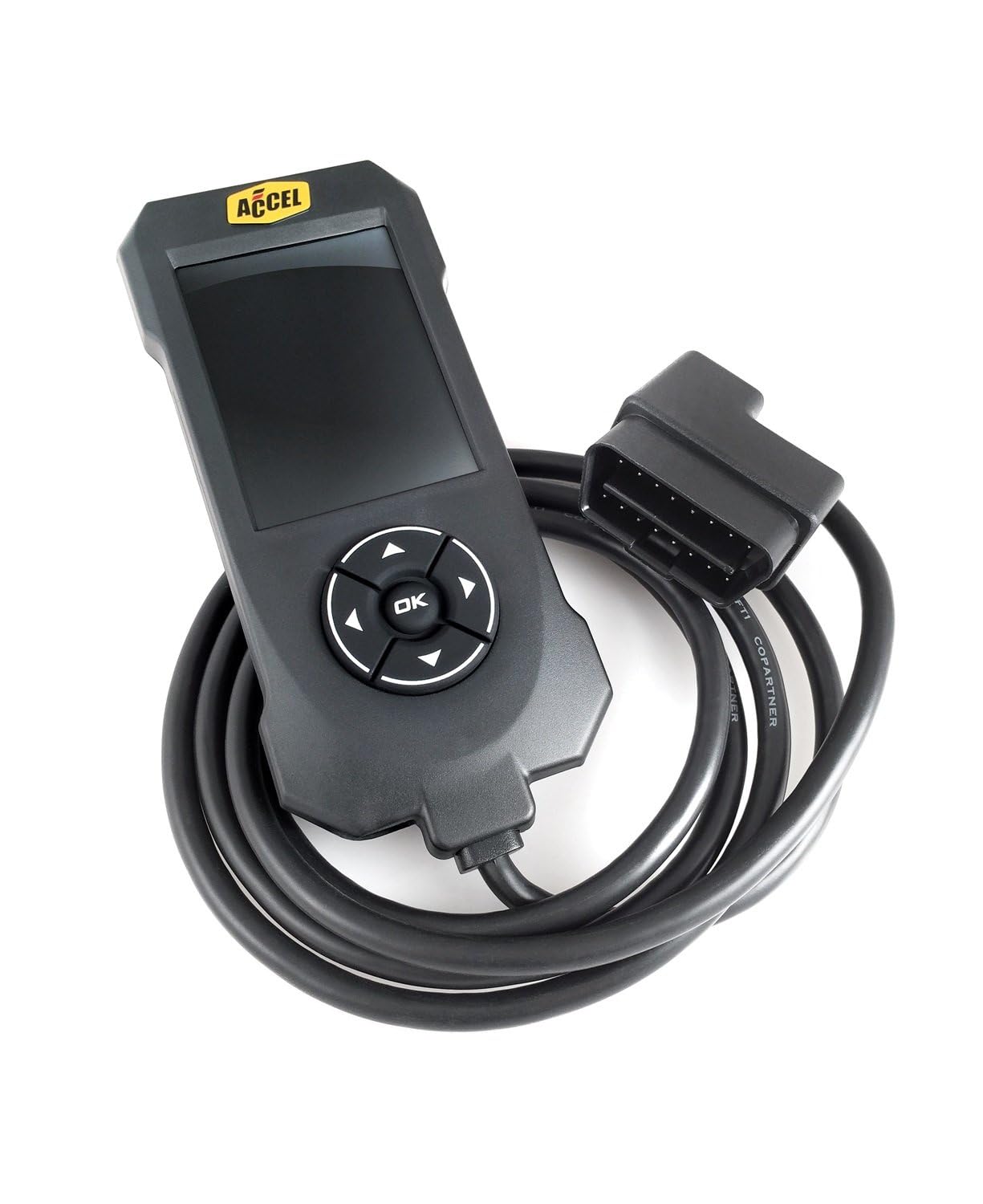
The ACCEL SuperTuner distinguishes itself from competitors by including built-in performance testing that measures 0-60 MPH and quarter-mile times directly through the device. This feature appeals to Colorado owners who want to quantify the impact of their modifications without investing in separate data-logging equipment. The unit also provides shift point and firmness adjustment, tire size and axle gear ratio recalibration, and internet updating through PC software — all within a rugged handheld package.
Towing-specific calibration is where the SuperTuner earns its reputation. Owners report that the tow tune controls transmission shifting on grades far better than the factory tow mode, holding gears longer and reducing the gear-hunting behavior that causes transmission overheating on long pulls. Fuel economy improvements of 1-2 MPG under towing conditions are commonly reported, along with a noticeable reduction in transmission temperature during sustained climbs. The Carb EO # D-745 certification adds legitimacy for smog-check compliance.
The biggest risk with the SuperTuner is inconsistent vehicle compatibility. Several owners report that after applying the performance tune, the vehicle developed idle issues — one Mustang GT owner reported the car would not idle at all after flashing. While ACCEL’s own website lists compatibility more conservatively than the product packaging, the discrepancy has led to frustration for buyers who assumed universal support. The unit is also locked to one vehicle at a time, and unlocking it for reuse requires contacting ACCEL support.
What works
- Built-in performance testing for 0-60 and quarter-mile validation
- Tow tune effectively reduces gear hunting and transmission temperature
- Carb EO certification supports emissions compliance
What doesn’t
- Inconsistent vehicle compatibility across model years and ECUs
- Flashing issues can cause idle or drivability problems
- Locked to one vehicle with cumbersome unlock process
9. Range Technology RA003G AFM/DFM Disabler

The Range RA003G is a specialized AFM and DFM disabler that plugs directly into the OBD-II port and instantly forces the engine to run on all cylinders at all times. For Colorado owners with Active Fuel Management or Dynamic Fuel Management systems, this device eliminates the cylinder deactivation that causes vibration, drone, and uneven wear. It also disables the Auto Start/Stop system, addressing a common complaint among drivers who find the restart cycle intrusive in stop-and-go traffic.
What makes the Range unit particularly appealing is its installation simplicity — you plug it in and forget it. It requires no programming, no smartphone app, and no permanent modification to the vehicle. The device improves throttle response at light pedal angles because all eight cylinders are firing, which owners report translates to smoother acceleration and more consistent power delivery during city driving and towing. The full-cylinder mode also contributes to improved fuel economy in certain driving conditions because the engine operates in its most efficient power band.
The primary limitation is that the Range disabler does nothing for actual tuning — it does not add horsepower, adjust shift points, or recalibrate the speedometer. It is best used as a complementary device alongside a flash tuner that addresses ECU calibration. Some owners of SAAB 9-7x vehicles (a GM-platform SUV) found that the device did not work on their application despite GM compatibility claims, indicating that certain niche platforms may fall outside the supported list.
What works
- Instant elimination of AFM/DFM cylinder deactivation shudder
- Zero programming required — true plug-and-play operation
- Disables Auto Start/Stop for a smoother driving experience
What doesn’t
- Does not provide ECU tuning, power gains, or transmission adjustment
- Compatibility limited to GM platforms with AFM/DFM systems
- Some niche GM-platform vehicles may not be supported
10. Superchips Flashcal 3571

The Superchips Flashcal 3571 fills a specific niche for Colorado owners who have installed larger tires or re-geared their differentials and need speedometer recalibration without the expense of a full performance tuner. It supports tire diameters from 26 to 42 inches and gear ratios up to 5.38, covering virtually any lift and tire combination that fits under a Colorado. The device also provides engine idle adjustability — useful for winching scenarios where higher idle improves alternator output — and daytime running light control.
Owner feedback is overwhelmingly positive for the Flashcal’s intended use case. Users report that the device corrects speedometer accuracy instantly, resolves the sluggish shift behavior that occurs when the transmission is confused by incorrect tire data, and improves fuel economy by restoring proper shift scheduling. The ability to upgrade the Flashcal to a full Flashpaq F5 through Superchips’ software is a valuable pathway for owners who start with basic calibration needs and later want performance tuning.
The Flashcal is limited to calibration-only functions — it does not include performance tuning, transmission shift firmness adjustment beyond what the speedometer correction provides, or AFM/DFM disable capability. Some owners find that the device requires a firmware update out of the box, and the update process requires a Windows PC and internet connection. For drivers who need genuine power tuning rather than just calibration, the Flashcal will not deliver the throttle response or horsepower improvements they are looking for.
What works
- Accurate speedometer correction for large tires and gear swaps
- Restores proper transmission shift scheduling after tire changes
- Upgradable to full Flashpaq F5 for future performance tuning
What doesn’t
- No performance tuning or horsepower gains included
- Cannot disable AFM/DFM or adjust shift firmness independently
- Requires Windows PC for initial firmware update
11. DiabloSport Edge Pulsar 32451 Inline Module
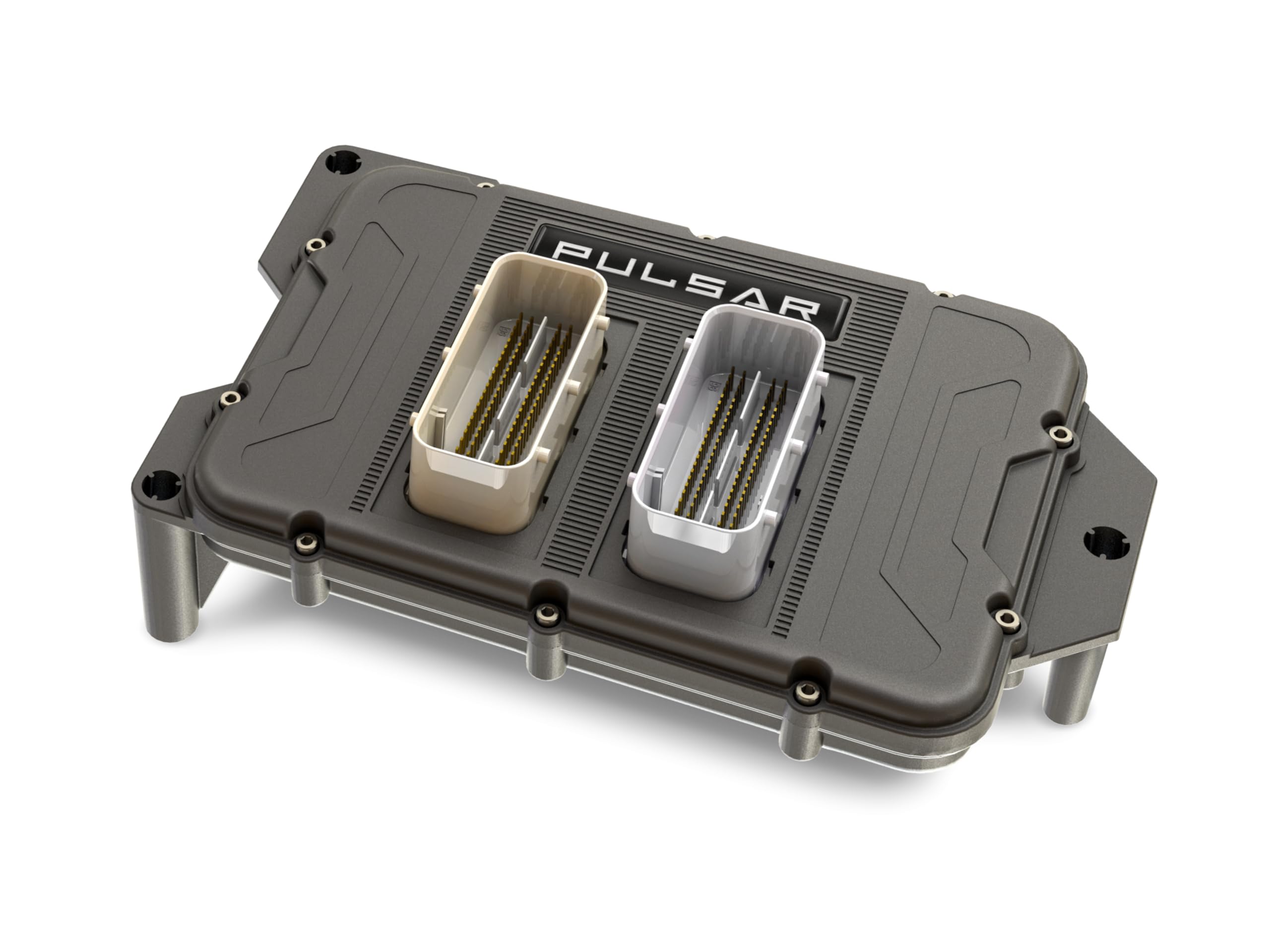
The Pulsar 32451 represents a different approach to tuning: an inline module that connects directly to the PCM without requiring a full flash. It offers eight on-the-fly modes — stock, economy, towing, performance, and each of those with MDS disabled — that you can cycle through using the cruise control buttons on the steering wheel. This makes it one of the most convenient tuners for drivers who want to switch between fuel-saving and high-power calibrations without pulling over and connecting a laptop.
Owner reports from Ram 1500 HEMI drivers — the primary target audience — describe the Pulsar as transformative, with the performance mode delivering noticeably stronger acceleration and the economy mode providing measurable fuel savings. The installation is genuinely plug-and-play: remove the PCM connector, insert the Pulsar inline, and reconnect. Tire size and gear ratio adjustments are supported through the module’s internal programming, covering diameters from 20 to 59 inches and ratios from 2.00 to 5.99.
The disconnect with Colorado ownership is that the Pulsar is primarily designed and validated for Ram trucks with HEMI engines and certain GM applications. Compatibility with Colorado-specific PCM architectures is not explicitly guaranteed, and owners should verify fitment before purchasing. The inline module format also means that the unit must remain installed in the vehicle — it is not a handheld device that you flash and remove. At this investment level, the Pulsar makes the most sense for owners who prioritize on-the-fly adjustability and want to avoid any permanent ECU modification.
What works
- Instant mode switching via cruise control buttons with no tools
- Eight distinct calibrations including MDS-disabled variants
- Genuine plug-and-play installation with no permanent flash
What doesn’t
- Colorado-specific compatibility not explicitly validated for all years
- Module must remain installed — not a remove-and-forget device
- Premium investment for a niche application outside Ram lineup
Hardware & Specs Guide
Flash Tuners vs. Inline Modules
Flash tuners overwrite the ECU and TCM calibration files stored in the vehicle’s non-volatile memory. This allows comprehensive changes to fuel maps, ignition timing, transmission shift pressure, torque converter lockup schedules, speed limiter, and cooling fan activation thresholds. Inline modules physically intercept signals between the PCM and the vehicle harness, modifying sensor inputs or outputs in real time without altering the underlying calibration. Flash tuners offer deeper control but carry the risk of a failed flash that can leave the vehicle inoperable until the ECU is recovered. Inline modules are safer and faster to install but typically provide fewer adjustment parameters and are limited to vehicles with physically accessible PCM connectors.
OBD-II Connectivity and Protocol Support
Modern Colorado ECUs communicate through the OBD-II port using CAN bus protocols. Basic tuners and disablers connect to the OBD-II port and draw power from it, requiring no additional wiring. J2534 pass-thru devices like the TOPDON RLink use the OBD-II connection to interface between the vehicle and a laptop running manufacturer-specific software. Support for CAN-FD (flexible data-rate) and DoIP (diagnostics over internet protocol) is becoming essential for 2020+ Colorado models, as GM transitions to faster communication standards. Devices limited to legacy J2534 or D-PDU protocols may not function on newer ECU architectures, so verify protocol support against your vehicle’s production date.
Display and User Interface Considerations
Handheld tuners range from basic monochrome LCD screens with button navigation to full-color touchscreen displays capable of rendering real-time gauge layouts. Touchscreen units like the Edge CTS3 provide more intuitive navigation and allow you to customize which parameters are displayed — transmission temperature, boost pressure, exhaust gas temperature, air-fuel ratio, and knock retard are among the most commonly monitored values. Devices without screens require connection to a laptop or smartphone app for configuration, which adds convenience for some users but creates a dependency on a secondary device. Consider whether you will use the monitoring features regularly or if a set-and-forget calibration tool is sufficient for your needs.
Installation Footprint and Permanence
Handheld flash tuners are temporary devices — you plug them in to load the calibration, then unplug and store them. The calibration remains in the ECU until you reflash with a different tune or return to stock. Inline modules must remain physically installed in the vehicle, occupying space near the PCM. Throttle controllers mount near the accelerator pedal or under the dash and can be removed in minutes. AFM/DFM disablers plug into the OBD-II port and protrude into the driver footwell. Each form factor has implications for theft risk, interior aesthetics, and ease of returning the vehicle to stock condition for dealer visits or resale.
FAQ
Will a tuner void my Colorado warranty?
Can I use these tuners on a diesel Colorado?
How difficult is the installation process?
What is the difference between AFM and DFM?
Do I need custom tuning or are pre-loaded tunes sufficient?
Final Thoughts: The Verdict
For most buyers, the best chevy colorado tuner winner is the Pedal Commander because it directly addresses the most common complaint among Colorado owners — throttle lag — with a two-minute installation, zero ECU risk, and 36 adjustability settings that cover everything from eco cruising to aggressive off-road response. If you want full ECU and TCM calibration for transmission tuning and verified horsepower gains, grab the DiabloSport Intune i3. And for towing and diesel applications where live monitoring of transmission temperature and boost pressure is critical, nothing beats the comprehensive gauge and tuning package of the POWERTEQ Edge CTS3.

Certification: BSc in Mechanical Engineering
Education: Mechanical engineer
Lives In: 539 W Commerce St, Dallas, TX 75208, USA
Md Amir is an auto mechanic student and writer with over half a decade of experience in the automotive field. He has worked with top automotive brands such as Lexus, Quantum, and also owns two automotive blogs autocarneed.com and taxiwiz.com.