Vapor lock, fuel starvation on a hill, or a dead pump leaving you stranded in a parking lot — these are the nightmares of any small block Chevy owner. The mechanical fuel pump is a simple, reliable component, but when it fails, your classic C10, Camaro, or Corvette becomes a very expensive lawn ornament. Choosing the right replacement isn’t about picking the shiniest part; it’s about matching the flow rate, pressure, and inlet configuration to your specific engine combo, whether you’re running a stock Quadrajet or a high-winding Holley.
I’m Amir — the founder and writer behind Four Wheel Ask. My analysis of these pumps combines cross-referencing OEM fitment data, scrutinizing flow bench specs, and synthesizing real owner reports from decades of street-driven and restored Chevys.
Reliable fuel delivery is the backbone of any vintage small block, and identifying the best chevy 350 fuel pump means understanding the critical balance between pressure, volume, and build quality that keeps your engine running cool and strong.
How To Choose The Best Chevy 350 Fuel Pump
Selecting a mechanical fuel pump for your small block Chevy isn’t a one-size-fits-all decision. The wrong pressure can overwhelm your carburetor’s needle and seat, while insufficient flow can lean out the mixture under load. Focus on these three critical factors to ensure your engine gets the fuel it demands.
Flow Rate and Pressure: The GPH and PSI Balance
Most stock and mild street 350s operate happily at 6 PSI and 80 gallons per hour (GPH). Pumps rated at 110 GPH are intended for higher-horsepower builds (over 400 hp) or engines with large mechanical secondary carbs. Exceeding 8 PSI often requires a fuel pressure regulator to avoid flooding. Match the spec to your engine’s actual output — a stock 350 doesn’t benefit from a high-volume race pump.
Housing Material and Finish: Aluminum vs. Steel
The best mechanical pumps use a heavy-duty aluminum housing for excellent heat dissipation, which helps reduce vapor lock — a common issue on small blocks with headers. Chrome plating adds corrosion resistance and visual appeal, but ensure the internal castings are clean and the check valves are securely staked. Steel stampings are cheaper but more prone to rust and internal wear over time.
Inlet and Outlet Configuration: NPT vs. Tube
The port type dictates how you connect your existing fuel lines. A 1/4-inch NPT (National Pipe Thread) port allows you to thread in a barb fitting, making it adaptable to both rubber hose and hard line. A “Tube” style inlet, like on some OEM-replacement Carter pumps, is designed for a factory steel line and requires a specific flare nut. Always verify your existing line setup — adapting from tube to NPT often requires additional fittings.
Quick Comparison
On smaller screens, swipe sideways to see the full table.
| Model | Category | Best For | Key Spec | Amazon |
|---|---|---|---|---|
| Edelbrock 1721 | Mechanical | Premium street performance | 6 PSI / 3/8 NPT ports | Amazon |
| JEGS 110 GPH | Mechanical | High-flow race applications | 110 GPH / 6.5-8 PSI | Amazon |
| Carter P4594 | Electric | Universal inline replacement | 12V / turbine tech | Amazon |
| Speedway Motors SBC | Mechanical | Rotatable body for tight fit | 80 GPH / 6 PSI | Amazon |
| A-Team Performance 12-834 | Mechanical | Budget-friendly chrome pump | 80 GPH / 6 PSI | Amazon |
| Carter M4513 | Mechanical | OE-spec replacement | Precision castings | Amazon |
| Wangtney Chrome Pump | Mechanical | Entry-level basic fix | 80 GPH / 6 PSI | Amazon |
In‑Depth Reviews
1. Edelbrock 1721 Performer Series Street Fuel Pump

The Edelbrock 1721 is the gold standard for street-driven small blocks, delivering a consistent 6 PSI without needing a separate regulator. Its unique valve design improves flow quantity and quality, and the clockable base makes routing fuel lines to a Performer or AVS carburetor much simpler. At a nominal 6 PSI, it pairs perfectly with Edelbrock and Holley carbs without overwhelming the needle and seat.
The 3/8-inch NPT ports offer a larger passage than standard 1/4-inch pumps, making it a strong match for engines with up to 450 horsepower. The aluminum construction dissipates engine bay heat effectively, reducing the likelihood of vapor lock — a common complaint on tight-fitted Camaros and Novas. Owners report immediate priming and reliable pressure from the first crank.
Some users have noted that the NPT threads can be shallow, requiring careful sealing with thread compound to prevent leaks. Compared to budget pumps, the Edelbrock costs significantly more, but its consistent output and build quality justify the investment for anyone building a serious street machine. The universal fit requires you to verify your specific engine mounts and clearance.
What works
- Consistent 6 PSI output works with most street carbs
- Larger 3/8 NPT ports support higher flow for performance builds
- Aluminum body resists heat and vapor lock
- Rotatable base simplifies line routing
What doesn’t
- Premium price over standard chrome pumps
- NPT ports may need extra thread sealant to avoid leaks
2. JEGS Mechanical Fuel Pump Small Block Chevy 265-400
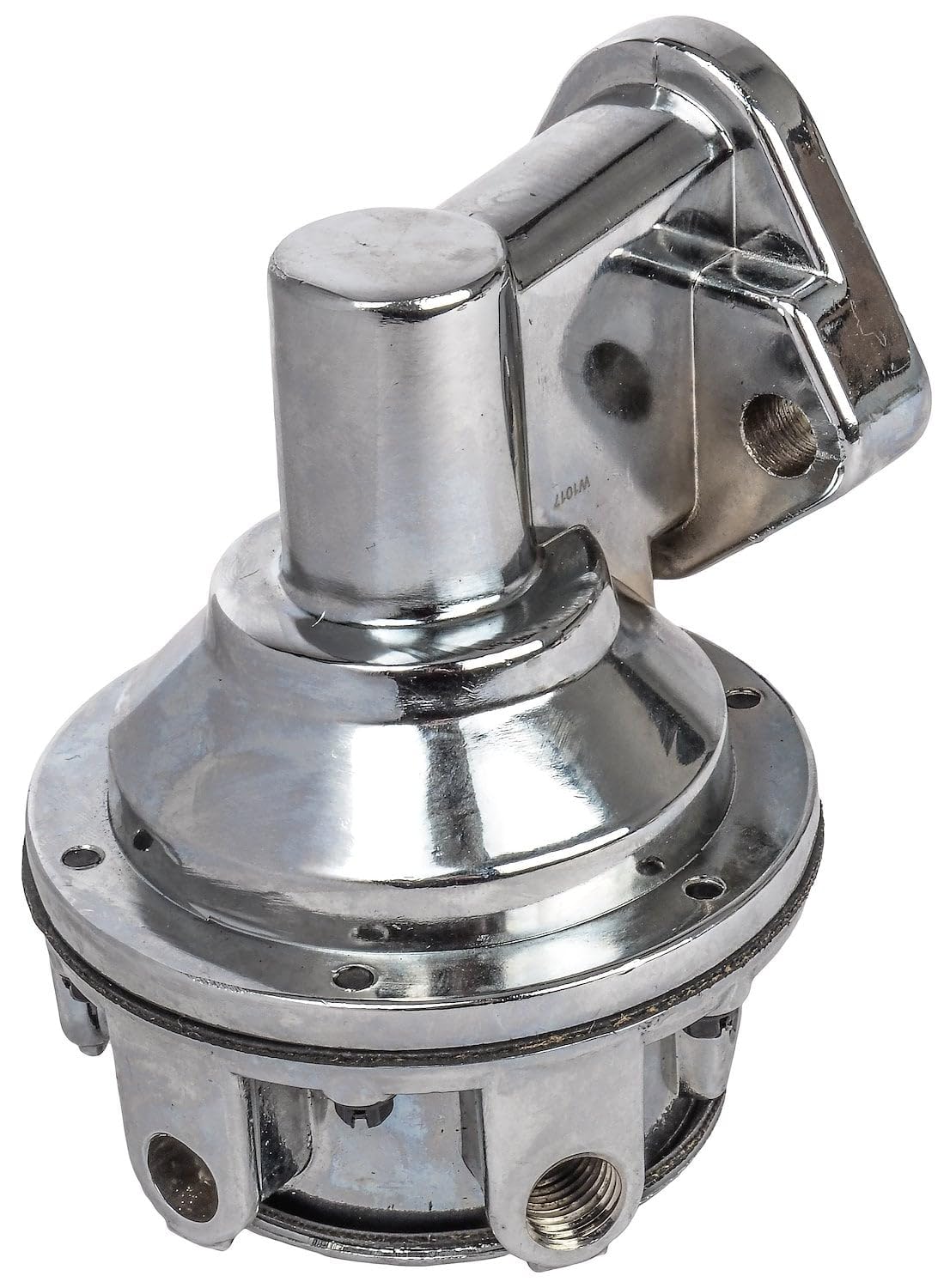
The JEGS mechanical pump steps up the volume game with a 110 GPH rating, making it a strong candidate for 383 strokers or 350s with aggressive camshafts and large mechanical-secondary carbs. The 6.5 to 8 PSI range provides extra headroom over the standard 6 PSI pumps but may necessitate a pressure regulator for applications sensitive to flooding. The chrome finish gives it the classic look that matches dress-up pulleys and valve covers.
It covers the full small block family, from the 265 all the way to the 400, including the popular 383 stroker. The 1/4-inch NPT ports are industry standard and accept common AN fittings with an adapter. Owners have reported that the pump maintains pressure even on longer pulls, eliminating the lean sag that plagued their factory-replacement units.
A few buyers noticed minor imperfections in the chrome plating, and the higher pressure ceiling means it’s not a plug-and-play drop-in for stock 350s with a Quadrajet. If you are running a more aggressive combo that demands additional volume, the JEGS pump is a solid step-up from the typical 80 GPH options without jumping to an electric setup.
What works
- 110 GPH flow supports modified and high-horsepower small blocks
- 6.5-8 PSI range covers moderate performance builds
- Chrome finish matches standard dress-up accessories
- Fits 265 through 400 including 383 stroker
What doesn’t
- May require a pressure regulator for stock carbs
- Chrome plating quality can be inconsistent
3. Carter Fuel Systems Electric Fuel Pump P4594

The Carter P4594 electric pump uses a turbine-based rotary design that runs significantly quieter than a traditional solenoid-type electric pump. It outputs a smooth, steady stream of fuel and draws less current, which reduces strain on your charging system. This inline 12V pump is housed in stainless steel for corrosion resistance and includes strainer, harness, and gaskets for a complete conversion from mechanical to electric.
The multi-layer filtration technology catches 40% more dirt than standard filters, protecting both the pump and your carburetor or throttle body from contaminants. This pump is designed for retrofit applications where a mechanical pump can’t reach or where vapor lock is chronic, such as on 350s with tight headers or low-mounted fuel tanks. Owners running electric as a backup to mechanical report peace of mind on long road trips.
While the build quality is generally praised, a small number of units have failed prematurely — sometimes within minutes — indicating a potential quality control variance. The pump does require a properly sized return line or a pressure regulator in most carbureted applications to avoid over-pressuring the needle and seat. It is not a direct bolt-on replacement for a mechanical pump; you will need to mount it near the tank.
What works
- Smooth and quiet turbine operation lowers electrical noise
- 40% more dirt-holding filtration extends pump life
- Stainless steel housing resists corrosion
- Complete installation kit included
What doesn’t
- Intermittent QA: some pumps fail very early
- Requires custom mounting and often a pressure regulator
4. Speedway Motors Small Block Chevy Mechanical Fuel Pump
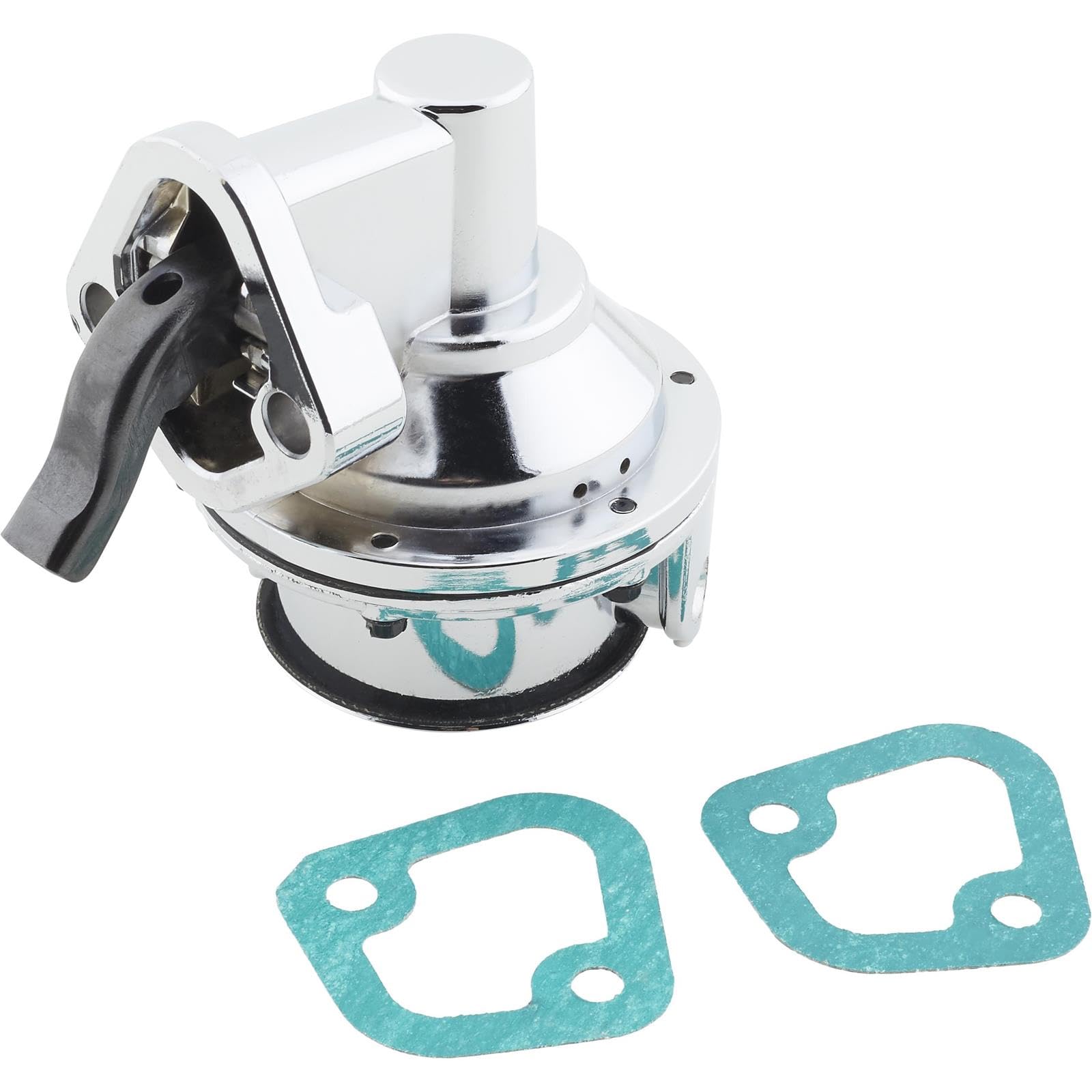
The Speedway Motors pump hits the sweet spot of 80 GPH and 6 PSI, which is exactly what most street-driven 350s need. The real differentiator is its rotatable lower body, which allows you to clock the inlet and outlet positions to match your fuel line routing without bending hard lines at awkward angles. This is a massive time-saver when installing on a first-gen Camaro or a truck with limited access.
The heavy-duty aluminum body with a chrome finish delivers a clean, professional look under the hood. The 1/4-inch NPT ports are standard and accept barbed fittings for rubber hose or AN adapters with ease. Owners repeatedly note that the pump fits small block Chevy trucks perfectly, aligning with the mounting boss on the timing cover without interference.
A small number of users reported that the pump failed after a short period, which suggests variability in the check valve assembly. The gaskets included in the box are functional but sourcing better-thickness gaskets from a parts store can improve the pushrod depth alignment. For the price, the rotatable body is a genuine feature that solves a common fitting headache.
What works
- Rotatable lower body solves line-routing conflicts
- 80 GPH / 6 PSI is ideal for most street small blocks
- Aluminum construction resists heat soak
- Matches chrome accessory theme
What doesn’t
- Some units have durability concerns
- Included gaskets may need supplemental shimming
5. A-Team Performance 12-834 Mechanical Fuel Pump

The A-Team Performance 12-834 delivers the standard 80 GPH and 6 PSI specification that covers the vast majority of daily-driven and restored 350 engines. It is constructed from heavy-duty aluminum with a chrome finish, offering the same visual appeal as more expensive options. The package includes gaskets, which simplifies a weekend swap.
It is designed to fit the entire GM small block family from 262 to 400, including the 350, making it a universal replacement for trucks, cars, and vans. Many users running this pump on open-engine bay builds like T-buckets report a very straightforward installation and immediate fuel delivery. The 1/4-inch NPT ports thread into standard fittings without any adaptation.
The primary risk is the same as with many budget chrome pumps: occasional check valve failure after sitting for weeks, causing the carburetor bowl to drain back into the tank. While most units work flawlessly out of the box, a replacement may be needed down the line if the internal valves aren’t perfectly staked. For the price, it is a strong value for a non-critical daily or project car.
What works
- 80 GPH and 6 PSI fit most stock and mild 350s
- Includes installation gaskets for a complete swap
- Chrome finish matches standard engine dress-up
- Same-day performance out of the box
What doesn’t
- Check valve durability can vary between units
- Not intended for high-horsepower or race applications
6. Carter M4513 Mechanical Fuel Pump

The Carter M4513 is an OE-replacement pump that prioritizes durability and blend compatibility. It uses advanced polymer diaphragms that hold up against modern ethanol-blended fuels, which eat standard rubber diaphragms over time. This is a critical feature if you are filling up at a pump with E10 or E15 gasoline in your classic Chevelle or C10.
The pump features precision castings and rocker arms designed for long life under the constant thermal cycling of a hot engine bay. Its fitment list is comprehensive, covering hundreds of GM vehicles from 1967 through the early 1970s, including Biscayne, Bel Air, Impala, Camaro, Nova, and GMC pickups. The tube-type inlet matches the factory hard line on most models, but this also means you may need a reducer if converting to AN fittings.
One minor issue is that the fuel fitting on the outlet side can be smaller than the original, requiring a trip to the parts store for a smaller hose or a step-up fitting. The pump is also listed for diesel compatibility in the specs, but for gasoline small blocks, it works as an exactly matched drop-in replacement. For restorations requiring a period-correct look and fuel blend resistance, the Carter is a reliable choice.
What works
- Ethanol-resistant diaphragm prevents premature failure
- OE-precision castings for a perfect factory fit
- Wide fitment across 1967-1973 GM vehicles
- Reliable name-brand performance
What doesn’t
- Outlet tube may be smaller than stock requiring adapter
- Tube-style fitting can be restrictive for performance builds
7. Wangtney Chrome Mechanical Fuel Pump

The Wangtney chrome pump covers the same fitment as the others — 265, 283, 305, 307, 327, 350, 400, and 409 — at an entry-level price. It claims twice the flow of a standard pump, but the actual spec is standard 80 GPH at 6 PSI, which is inline with most other chrome mechanical pumps. The heavy-duty aluminum body and chrome finish give a clean look for a budget restoration.
The pump body can be indexed to multiple positions, which helps with fuel line alignment, similar to the Speedway unit but at a lower price point. Owners who installed it on basic street trucks and daily drivers report that it works great as a direct replacement, with many noting the quick ease of installation. The 1/4-inch NPT inlet and outlet are standard and accept common fittings.
The biggest risk is the inconsistent quality of the internal check valves. Several owners reported failure within weeks as the loose valves allowed fuel to drain back to the tank, causing hard starts. For a trailered show car or a low-mileage weekend cruiser, it may hold up fine; for a daily driver, the risk is higher. It is the most affordable path to a running engine, but expect to monitor it closely.
What works
- Very budget-friendly entry price point
- Fits all small block Chevy and 409 big block
- Clockable pump body aids line installation
- Chrome finish matches budget build looks
What doesn’t
- Check valve failure can cause fuel drain-back
- Durability is inconsistent between units
Hardware & Specs Guide
GPH (Gallons Per Hour) Flow Rating
GPH measures the pump’s volume capacity without backpressure. A typical stock replacement SBC pump is rated at 80 GPH — sufficient for engines up to about 400 horsepower and standard 2 or 4 barrel carbs. Pumps rated at 110 GPH are designed for higher-output engines (450+ hp) with larger mechanical secondary carbs where sustained high RPM operation demands more fuel volume. Oversizing the GPH on a stock engine does not help performance and can lead to fuel overheating if the excess is returned to the tank.
PSI (Pounds per Square Inch) Pressure
The pump’s pressure rating determines how forcefully fuel is delivered to the carburetor float bowl. Most stock and mild street 350s work optimally at 5.5 to 7 PSI. Exceeding 7 PSI can overpower the carburetor’s needle and seat, causing fuel to leak past and flood the engine. Many high-performance mechanical pumps bump the pressure to 8 PSI, but this almost always requires a separate fuel pressure regulator. Always confirm your carburetor’s maximum rated inlet pressure before finalizing your pump selection.
Port Size and Type: NPT vs. Tube
The inlet and outlet ports determine how you connect your existing fuel lines. 1/4-inch NPT (National Pipe Thread) ports are threaded and accept barbed fittings, AN adapters, or directly threaded lines — this is the standard size for aftermarket chrome pumps. Tube-style ports, found on many OE Carter pumps, use a flared tube that requires a flare nut and is designed for a specific size hard line. The larger 3/8-inch NPT ports (found on premium pumps like the Edelbrock 1721) offer better flow for performance builds.
Housing Material and Thermal Management
Aluminum is the preferred housing material for mechanical SBC pumps because it dissipates engine bay heat 3-4 times faster than steel. This reduces the risk of vapor lock — when the fuel in the pump boils and causes an air pocket that stalls the engine — especially on small blocks with tubular exhaust headers. Chrome plating adds corrosion protection but does not significantly affect thermal performance. Steel stampings are cheaper but more susceptible to internal rust and generally heavier.
FAQ
What PSI does a Chevy 350 fuel pump need for a stock engine?
Can I use an electric fuel pump to replace a mechanical pump on a 350?
What does pump clocking mean and why does it matter?
How do I know if my mechanical fuel pump check valve is failing?
Final Thoughts: The Verdict
For most buyers, the best chevy 350 fuel pump winner is the Edelbrock 1721 because it delivers steady 6 PSI pressure with larger 3/8 NPT ports and excellent heat management. If you want a high-flow pump for a built 383 or 400, grab the JEGS 110 GPH. And for a reliably restored daily driver that sees ethanol fuel, nothing beats the ethanol-resistant build of the Carter M4513.

Certification: BSc in Mechanical Engineering
Education: Mechanical engineer
Lives In: 539 W Commerce St, Dallas, TX 75208, USA
Md Amir is an auto mechanic student and writer with over half a decade of experience in the automotive field. He has worked with top automotive brands such as Lexus, Quantum, and also owns two automotive blogs autocarneed.com and taxiwiz.com.