Selecting a home charger for your EV is a long-term decision that influences your daily convenience, electricity costs, and the lifespan of your vehicle’s battery. A good unit blends high output with smart features, while a poor choice can mean slow top-ups and a frustrating experience in cold weather. This guide compares eleven of the most competitive Level 2 stations on the market.
I’m Amir — the founder and writer behind Four Wheel Ask. My analysis focuses on dissecting technical specifications, build materials, and aggregated owner feedback to separate genuine performance from marketing hype.
After months of comparing charging speeds, connector standards, smart app ecosystems, and weather sealing across dozens of models, I’ve narrowed the field to the eleven units that represent the best value and reliability in the home charging space. The final ranking provides a clear verdict for anyone searching for the best charging station for electric cars in 2025.
How To Choose The Best Charging Station For Electric Cars
Home Level 2 chargers operate on a 240V circuit and offer far faster charging than a standard 120V wall outlet. Before you buy, you need to understand three core factors: your vehicle’s maximum charge rate, your home’s available circuit capacity, and the physical environment where the charger will live.
Amperage and Charging Speed
A unit rated for 48 amps on a 60-amp circuit delivers roughly 11.5 kW, adding about 36–44 miles of range per hour. A 40-amp charger on a 50-amp circuit provides 9.6 kW, which is still about 7x faster than Level 1. Many vehicles have a maximum onboard acceptance rate — a 2023 Chevy Bolt tops out at 11.5 kW, while a Prius Prime is limited to 3.3 kW. Buying a charger that exceeds your car’s acceptance capacity offers no speed benefit, so always check your EV’s specs first.
Hardwired vs. Plug-In (NEMA 14-50)
Hardwired chargers connect directly to a dedicated circuit via a whip. They are generally safer, remove a potential point of failure (the receptacle), and can deliver the full 48A/60A rating without heat issues. Plug-in units are easier to install and portable if you move, but they are often limited to 40A continuous draw (on a 50A breaker). For a permanent home station, hardwiring is the architecturally sound choice.
Smart Features and Ecosystem
WiFi-connected chargers allow scheduling, consumption tracking, and remote start/stop. Some apps are proprietary and polished, while others rely on generic platforms like Smart Life. RFID cards add theft prevention for shared driveways. If your utility offers time-of-use rates, a scheduling feature pays for itself over a few months. Ensure your chosen app connects via 2.4 GHz WiFi, as 5 GHz is less common in garage environments.
Weather Resistance and Build Quality
An outdoor installation demands at least a NEMA 3R rating, but NEMA 4 or 4X is preferred for rain, snow, and dust. IP65 or IP66 ratings guarantee water ingress protection. Metal enclosures (like the Grizzl-E’s aluminum cast) tend to manage heat better than plastic, which is important for high-amperage continuous loads. Cable flexibility at low temperatures is another critical factor — look for cold-resistant jacketing if you live in a freezing climate.
Quick Comparison
On smaller screens, swipe sideways to see the full table.
| Model | Category | Best For | Key Spec | Amazon |
|---|---|---|---|---|
| Emporia Level 2 (48A) | Smart / Hardwire | Value vs. speed | 48A, 25ft cable, J1772 | Amazon |
| Grizzl-E Ultimate 48A | Rugged / Metal | Durability in harsh weather | 48A, aluminum cast, J1772 | Amazon |
| ChargePoint HomeFlex (NACS) | Brand / Network | App ecosystem & reliability | 50A, NACS, network access | Amazon |
| Autel MaxiCharger AC Elite (50A) | Premium / Tech | High-performance smart charging | 50A, WiFi/Bluetooth, J1772 | Amazon |
| Tesla Universal Wall Connector | Universal | Multi-EV household (NACS+J1772) | 48A, dual plug, 24ft cable | Amazon |
| Enphase HCS-50 (40A) | Commercial Grade | Extreme long-term reliability | 40A, NEMA 4, 5-yr warranty | Amazon |
| Enphase HCS-40 (32A) | Budget Premium | High mileage with lower circuit | 32A, NEMA 4, 5-yr warranty | Amazon |
| WOLFBOX Level 2 (40A) | Feature Rich | Large screen & voice control | 40A, LCD, RFID, J1772 | Amazon |
| Autel Level 2 (40A Plug-In) | Best Plug-In | Easy relocation & setup | 40A, NEMA 14-50, J1772 | Amazon |
| TELGEOOT Level 2 (48A) | High Current | 48A on a plug-in budget | 48A, NEMA 14-50, J1772 | Amazon |
| EVIQO NACS Charger (48A) | Entry NACS | Native Tesla charging at low cost | 48A, hardwired, NACS | Amazon |
In‑Depth Reviews
1. Emporia Level 2 EV Charger (48A, J1772)
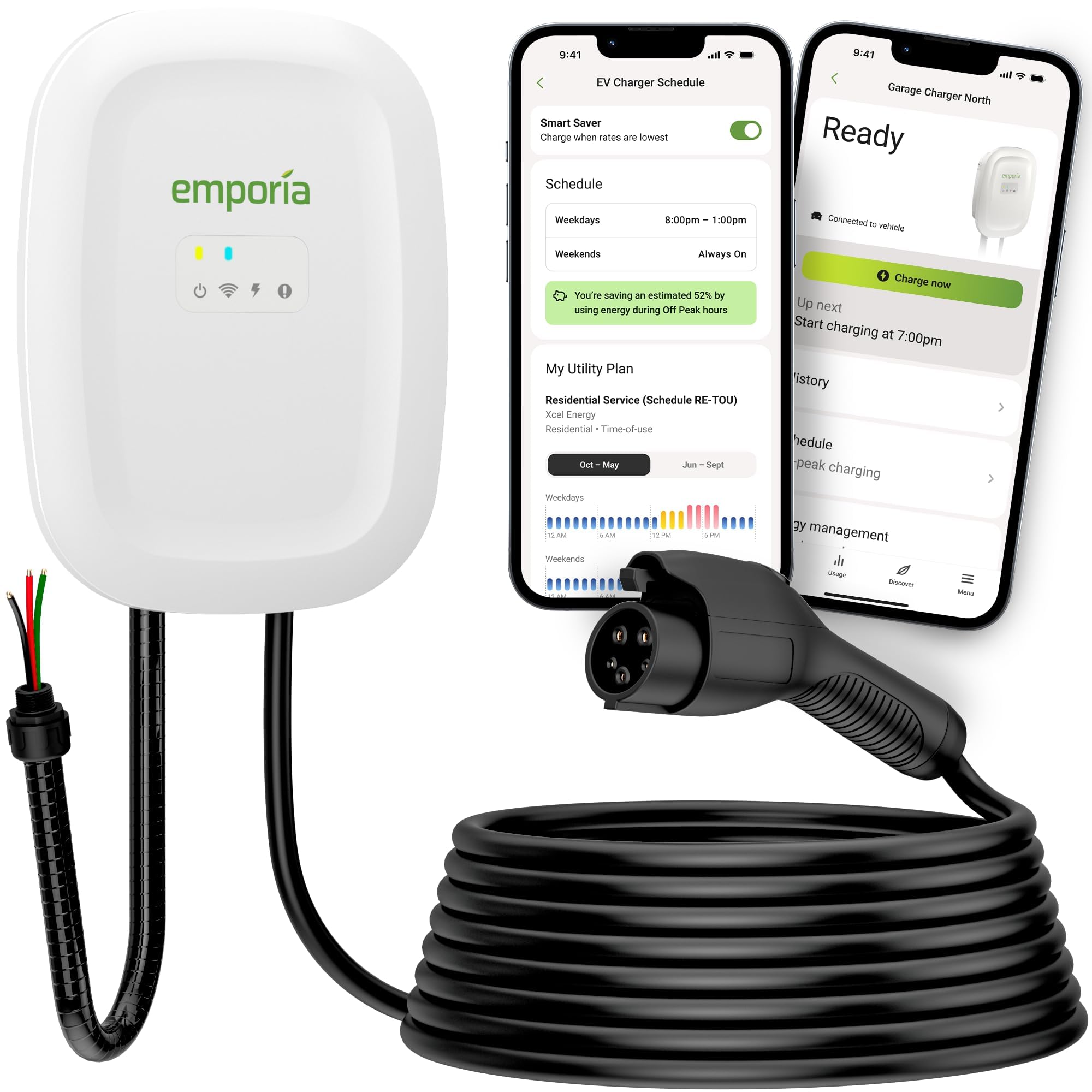
The Emporia Level 2 charger hits the perfect balance of raw power, smart integration, and cost. It delivers up to 48 amps hardwired, providing roughly 46 miles of range per hour—enough to fully recharge virtually any EV overnight. Its aesthetic is clean and understated, and the 25-foot cable offers ample reach even in larger garages.
The companion mobile app is among the best in class. It provides real-time energy data, charging session history, and cost tracking based on your utility rate. Scheduling is intuitive, allowing you to set start times that align with off-peak electricity pricing. The unit is UL listed and ENERGY STAR certified, meeting the highest safety standards.
While the app is excellent, setup requires connecting to a 2.4 GHz WiFi network, which can be a minor hurdle if your home mesh network is 5 GHz dominant. The unit is hardwired, meaning you must hire a licensed electrician for installation, but this also eliminates the thermal risks associated with plug-in connections at full current.
What works
- Excellent app interface with granular cost tracking.
- Full 48A output for fast overnight charging.
- UL and ENERGY STAR certified.
What doesn’t
- Hardwired installation is required — no plug option.
- WiFi connection can be finicky with 5 GHz networks.
- No RFID or physical access control.
2. Grizzl-E Ultimate 48A (Ultra Edition)
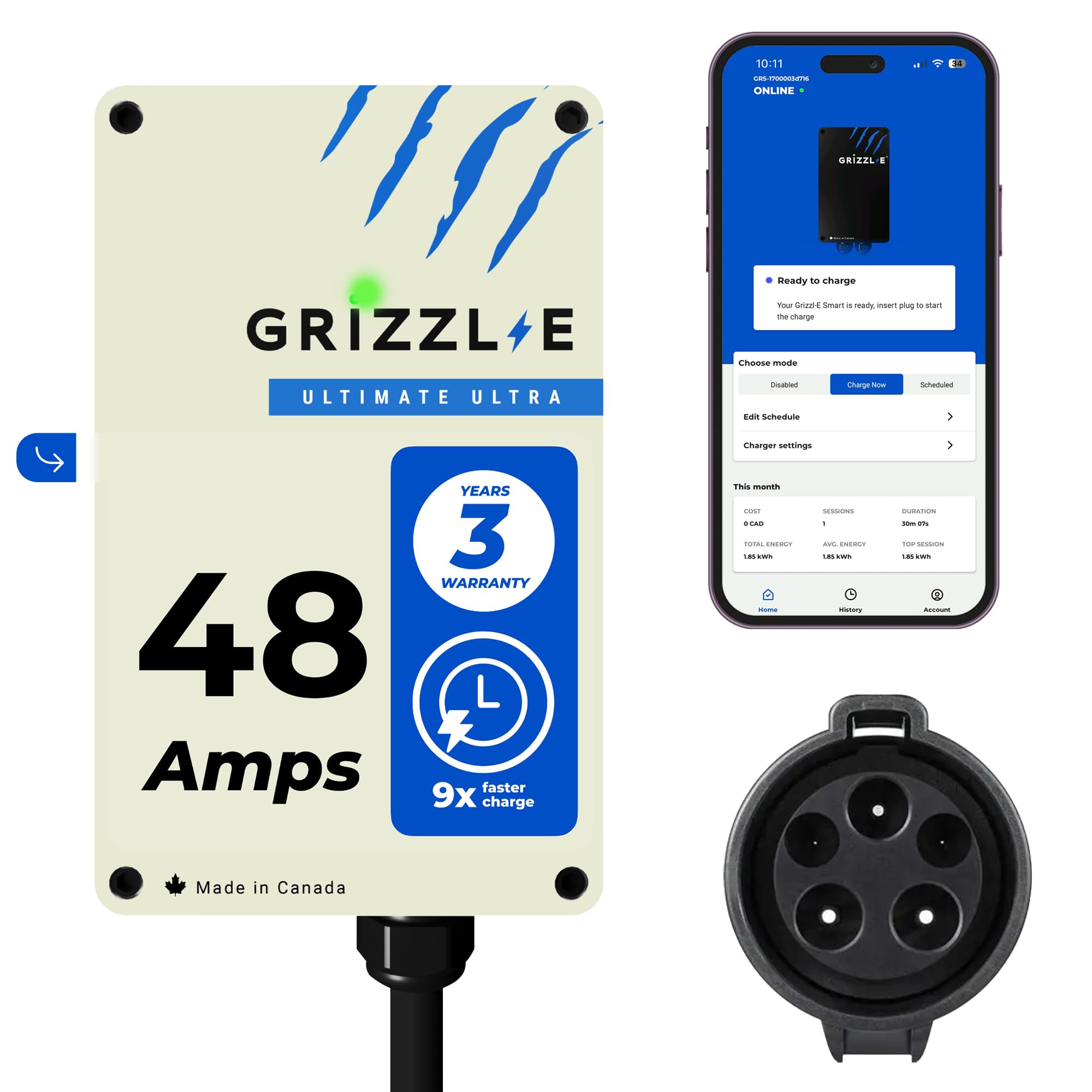
The Grizzl-E Ultimate 48A is built like a tank. Its heavy-duty aluminum cast enclosure is NEMA Type 4 rated, making it virtually impervious to rain, snow, dust, and even direct hose-downs. This unit is Canadian-made and designed for the harshest climates, making it the top choice for outdoor installations that cannot fail.
It delivers a full 11.5 kW (48A) over a durable 25-foot J1772 cable. The external antenna ensures reliable WiFi connectivity for the Grizzl-E Connect app, which provides charging schedules and energy consumption statistics. The unit also supports OCPP for advanced integration with energy management systems, though a one-time activation fee applies for that feature.
What sets the Ultimate apart is its load balancing capability. You can connect multiple units and prioritize which vehicle charges first or share power equally. The hardwired installation is straightforward with included terminal lugs. On the downside, the industrial look won’t please everyone, and the Grizzl-E Connect app, while functional, lacks the polish of ChargePoint or Emporia.
What works
- Extremely rugged aluminum construction.
- Multi-unit load balancing with priority mode.
- Reliable WiFi with external antenna.
What doesn’t
- Bulky, utilitarian design.
- App experience is basic compared to competitors.
- OCPP activation requires a separate fee.
3. ChargePoint HomeFlex (Hardwired, NACS)

ChargePoint is a giant in the public EV charging space, and the HomeFlex brings that network reliability into your garage. This unit is designed for hardwired installation and comes with a native NACS (Tesla) connector, making it a plug-and-play option for Tesla owners without needing an adapter. It charges up to 9x faster than a standard outlet, delivering up to 45 miles of range per hour.
The app is the star of the show. It offers comprehensive scheduling, reminders, and integration with smart home devices. You get access to ChargePoint’s entire network of over 274,000 public stations, making it seamless to find and pay for charging on the go. The cold-resistant cable ensures flexibility even in sub-zero temperatures.
Installation is professional-only, and the unit requires a dedicated breaker. The HomeFlex is versatile, accepting amperage settings from 20A to 80A, but the maximum output depends on the circuit you install. While the ecosystem is excellent, the unit itself is on the larger side, and the plastic housing feels less robust than the Grizzl-E’s metal case.
What works
- Superb ChargePoint network integration.
- Native NACS connector for Tesla vehicles.
- Variable amperage (20A–80A) for future flexibility.
What doesn’t
- Plastic enclosure feels less premium.
- Requires professional hardwire installation.
- Higher cost for the NACS version.
4. Autel MaxiCharger AC Elite (50A, J1772)
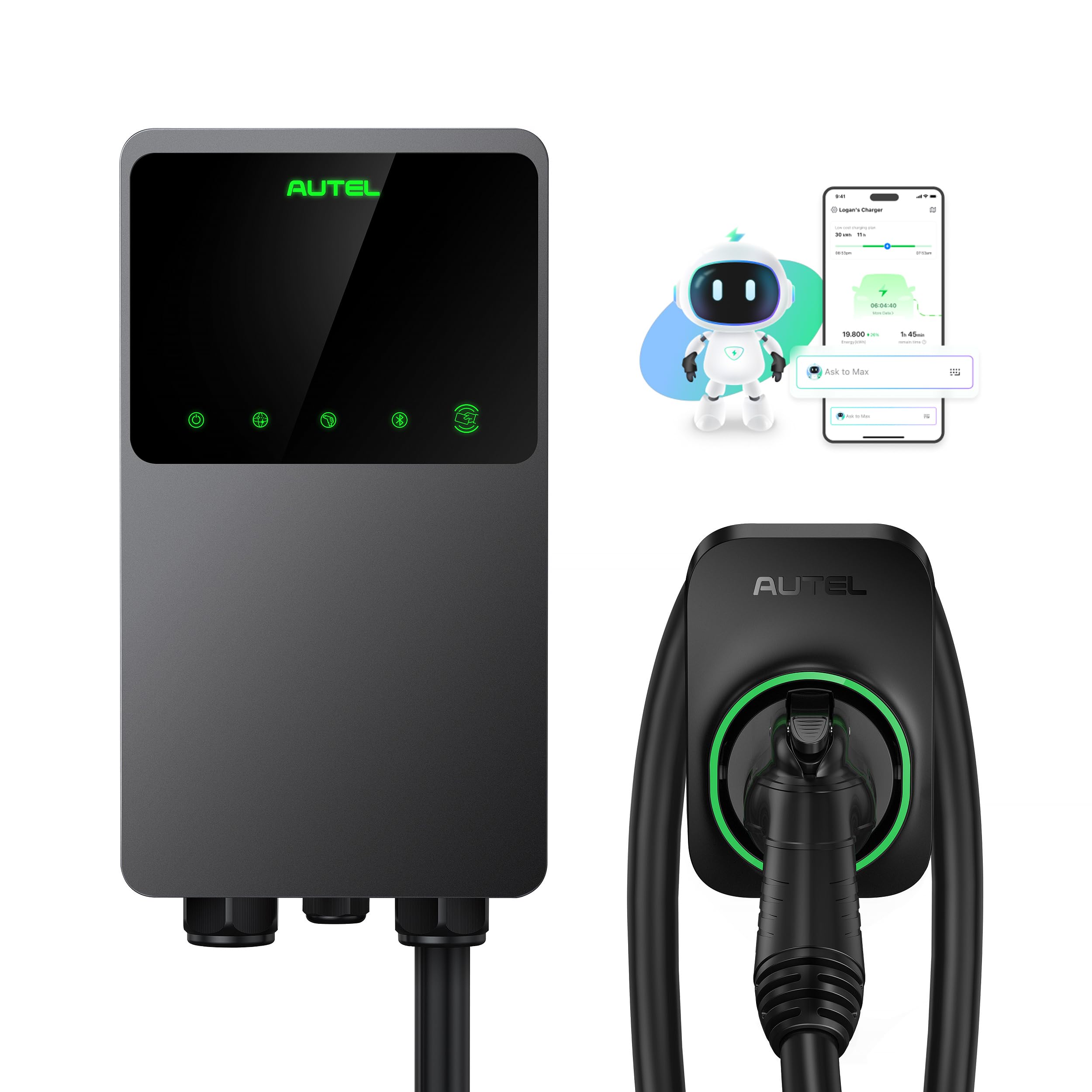
Autel’s MaxiCharger AC Elite pushes the power envelope to 50 amps (12 kW), making it one of the most powerful home chargers on the market. It adds 37 miles of range per hour and is CSA certified with a NEMA Type 4 rating for all-weather use. The hardwired installation is clean, and the cable remains flexible down to -40°C.
The Autel Charge app offers robust control, including scheduling, adjustable current (16A–50A), and OTA firmware updates. Connectivity includes WiFi, Bluetooth, and even Ethernet for the most reliable connection. The separate holster design allows flexible mounting away from the main unit.
The main consideration is that 50A charging requires a dedicated 60A or 70A circuit, depending on local electrical codes. Not all homes have that capacity available. The unit is also relatively new to the market, so long-term owner feedback is still accumulating. That said, Autel’s reputation in automotive diagnostics suggests strong engineering behind this unit.
What works
- Industry-leading 50A (12 kW) output.
- Ethernet connectivity for ultra-reliable network.
- Cold-weather cable remains flexible at -40°C.
What doesn’t
- Requires a heavy-duty 60A+ circuit.
- Higher price point than 48A alternatives.
- Less long-term owner data compared to established brands.
5. Tesla Universal Wall Connector (NACS + J1772)

Tesla’s Universal Wall Connector solves the multi-EV household problem. It includes both a NACS and a J1772 connector in one unit, automatically detecting which plug is in use. This means a Tesla and a Ford Mustang Mach-E can share the same charger without adapters or swapping cables.
It delivers up to 48 amps (11.5 kW) and adds 44 miles of range per hour. The 24-foot cable is generous, and the unit supports PowerShare for home backup during outages, though this feature is currently limited to Cybertruck. The white, low-profile design is classic Tesla and blends into most garage aesthetics.
Setup is managed through the Tesla app, which is polished but does not integrate with non-Tesla vehicles as deeply. The unit is future-proofed for the transition to NACS, but early adopters pay a premium for that flexibility. Installation is hardwired and requires a professional electrician.
What works
- Genuine dual-connector support (NACS + J1772).
- Clean design and Tesla app integration.
- PowerShare backup capability (Cybertruck only).
What doesn’t
- Premium price for the universal feature.
- App is Tesla-centric.
- PowerShare is limited to one vehicle model.
6. Enphase HCS-50 (40A, J1772)

The Enphase HCS-50, previously known as ClipperCreek, is legendary for its industrial reliability. It’s built in the USA and carries a 5-year warranty — the longest in this comparison. The fully sealed NEMA 4 enclosure is rated for extreme temperatures and high-traffic commercial use, yet it works flawlessly in a home garage.
This unit delivers 40 amps (9.6 kW) and adds up to 38 miles of range per hour. It is hardwired and ETL certified to UL 2594 standards. There is no WiFi or smart app here — this is a “dumb” charger built to last decades without failure. The rugged 25-foot cable and J1772 connector are rubber over-molded for maximum durability.
The lack of smart features will be a dealbreaker for some, but if you want a unit that will outlast your car and never crash, this is it. The price is high for a 40A charger without WiFi, reflecting the premium for commercial-grade engineering and warranty support.
What works
- Unmatched 5-year warranty.
- Commercial-grade NEMA 4 enclosure.
- Simple, reliable design with no software to fail.
What doesn’t
- No smart features or app scheduling.
- Premium price for 40A without connectivity.
- Heavy and bulky form factor.
7. Enphase HCS-40 (32A, J1772)

The Enphase HCS-40 is the 32-amp sibling of the HCS-50, offering the same legendary build quality at a lower price point. It charges at up to 31 miles per hour, which is still 7x faster than Level 1. It requires a dedicated 40-amp circuit, which is more common in older homes than a 50-amp circuit.
ETL and ENERGY STAR certified, this unit shares the same NEMA 4 sealed enclosure, extreme temperature tolerance, and 5-year warranty. It is ideal for vehicles with a 32A or lower onboard charger, like the Tesla Model 3 Standard Range or the Kia Soul EV. The integrated cable wrap and holster keep the 25-foot cable organized.
Like its bigger brother, it lacks any smart connectivity. You cannot schedule charging or track consumption. For many users, that simplicity is a virtue, but if you rely on time-of-use rates, you will need to set a timer on the vehicle itself.
What works
- Same commercial-grade reliability as the HCS-50.
- 5-year warranty provides long-term peace of mind.
- Compact size saves wall space.
What doesn’t
- 32A is slower than modern 48A units.
- No WiFi or smart features.
- High cost compared to smart competitors.
8. WOLFBOX Level 2 EV Charger (40A, J1772)

The WOLFBOX 40A charger stands out with its 4.3-inch LCD screen that displays real-time data like charging rate, time, voltage, and total kWh delivered. It also supports voice control through Alexa and Google Assistant, and includes an RFID card for secure access.
It plugs into a NEMA 14-50 outlet and is CSA certified with a NEMA 4X waterproof housing. The 25-foot cable is flexible, and the unit adds 38 miles of range per hour. The app allows scheduling, current adjustment, and device sharing among multiple users in the household.
While the feature set is extensive, the screen adds bulk to the unit, and some owners report the app interface is not as polished as a dedicated platform. The plug-in design limits it to 40A continuous draw, but that is adequate for most daily commutes.
What works
- Large, informative LCD screen.
- Voice control via Alexa and Google Assistant.
- RFID security for shared use.
What doesn’t
- Bulkier than screenless units.
- App experience is less refined.
- Plug-in only limits to 40A continuous.
9. Autel Level 2 EV Charger (40A, NEMA 14-50)
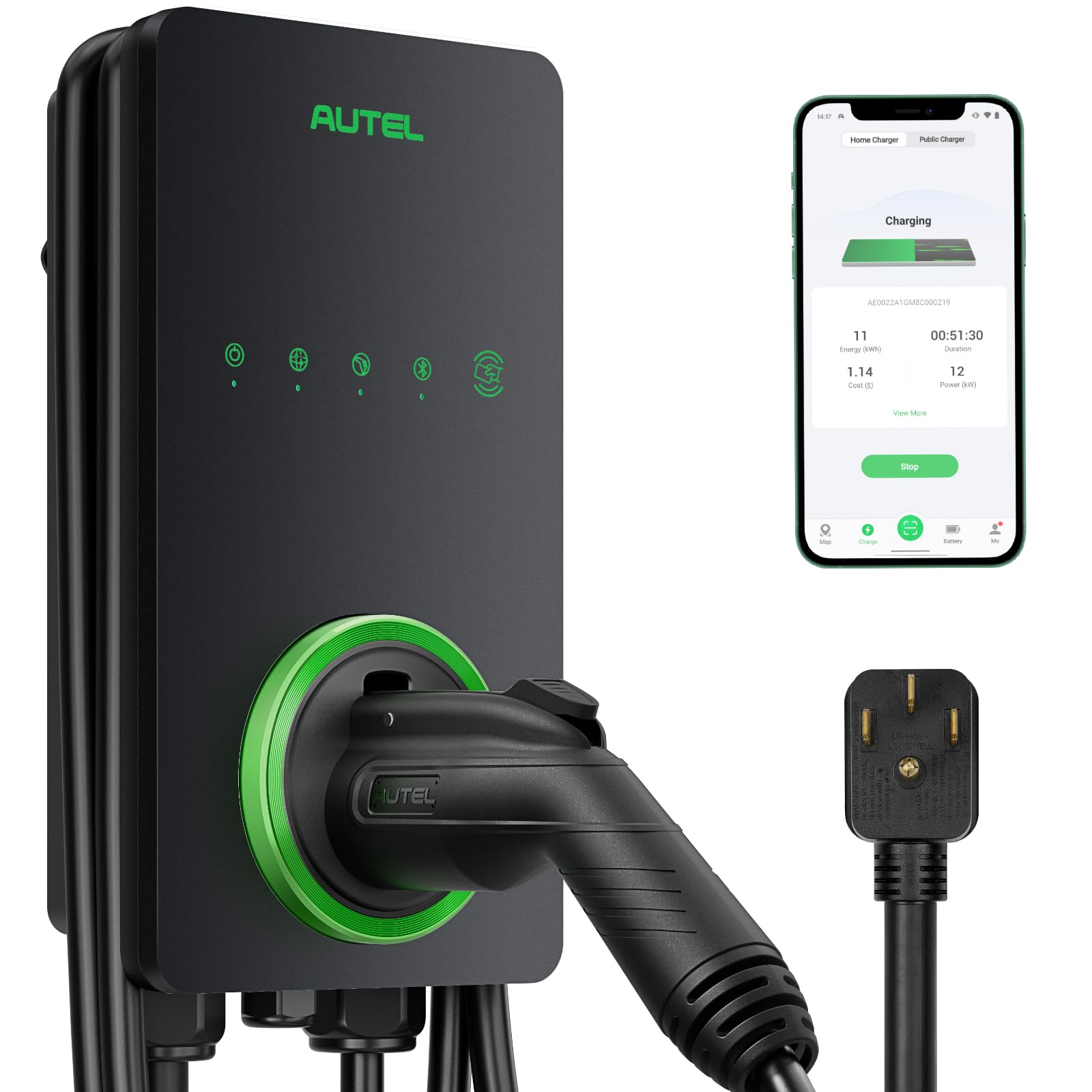
Autel’s 40A plug-in charger offers a compelling mix of simplicity and smart features. It installs in about 5 minutes by plugging into a NEMA 14-50 outlet, making it the go-to choice for renters or homeowners who do not want a permanent hardwired station. The dark gray design is sleek and compact.
The Autel Charge app provides remote management, scheduling, and current adjustment from 16A to 40A. RFID start/stop prevents unauthorized use, useful for shared driveways. The NEMA 4X weatherproof rating ensures it can live outdoors year-round.
Charging speed tops out at 9.6 kW, which is adequate for nightly top-ups. Since it is plug-in, the connector is rated for 40A continuous, so you cannot exceed that. The 3-year warranty is solid, and Autel’s 24/7 support is a genuine asset.
What works
- Extremely easy 5-minute plug-in installation.
- RFID access control for security.
- NEMA 4X rated for outdoor use.
What doesn’t
- Limited to 40A continuous draw.
- Plug-in connection adds a thermal risk.
- Not upgradeable to 48A.
10. TELGEOOT Level 2 EV Charger (48A, NEMA 14-50)

The TELGEOOT charger offers a rare combination: a 48A capable unit that connects via a NEMA 14-50 plug. It supports adjustable current from 1A to 48A, allowing you to dial it down if needed. It is IP65 rated for weather resistance and operates in temperatures from -22°F to 131°F.
Smart control is managed through the Smart Life app, which provides scheduling, energy cost tracking, and real-time status. The 25-foot cable is generous, and the silver plastic housing is functional if not flashy. CE and FCC certifications are present.
Running a 48A charger on a NEMA 14-50 plug is a concern. The NEC recommends derating a 50A receptacle to 40A continuous, so running this at 48A may cause heat buildup in the outlet. For safety, you should either hardwire it or run it at 40A. The Smart Life app is generic and less polished than dedicated apps.
What works
- 48A potential from a plug-in format.
- Very wide adjustable current range (1-48A).
- Good weather resistance with IP65 rating.
What doesn’t
- 48A on a plug is an electrical safety risk.
- Generic app with limited features.
- Plastic build quality feels less premium.
11. EVIQO NACS Charger (48A, Hardwired)
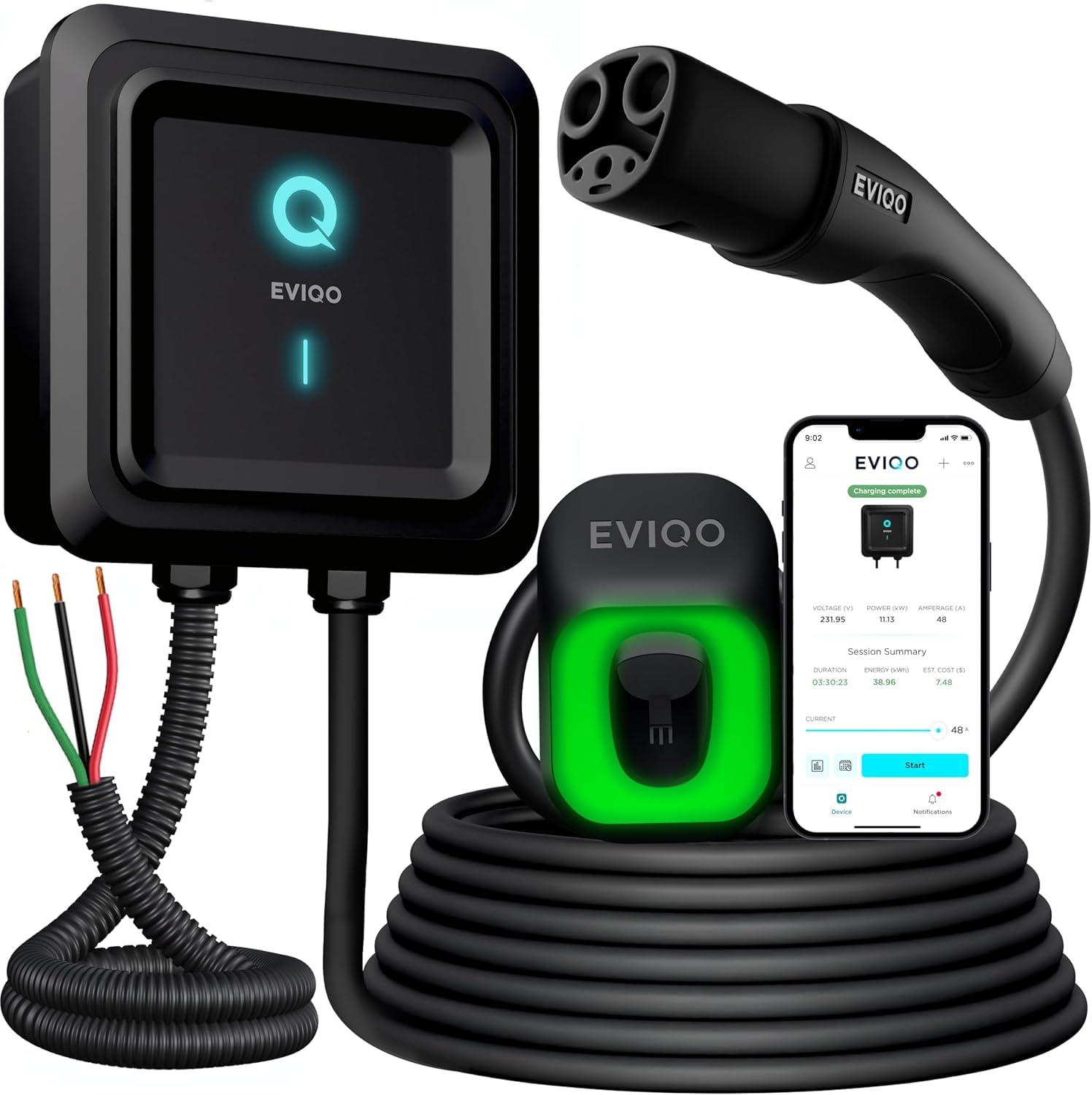
The EVIQO charger is a dedicated NACS (Tesla-native) unit at a very competitive price point. It delivers a full 48A/11.5 kW through hardwired installation and is certified UL/ETL/FCC/Energy Star. The IP66-rated enclosure is superior to most competitors, offering full dust ingress protection and powerful water jet resistance.
The smart app works over 2.4 GHz WiFi and offers scheduling, current adjustment, and consumption tracking. A unique side-mounted reset button clears faults without opening the unit. The fluorescent holster makes plugging in easy in low light, and the 25-foot cable provides generous reach.
The unit is new to the market (April 2025), so long-term reliability is unproven. The build quality appears solid, but EVIQO is a smaller brand compared to Tesla or ChargePoint. For Tesla owners who want a native connection without paying the Tesla premium, this is a compelling option.
What works
- Full 48A output with native NACS connector.
- Excellent IP66 weatherproof rating.
- Convenient side reset button.
What doesn’t
- New company with limited track record.
- App requires 2.4 GHz WiFi.
- Fluorescent holster is a niche cosmetic feature.
Hardware & Specs Guide
Understanding Amperage and Charging Speed
Amperage is the measure of electrical current flowing into your vehicle. A Level 2 charger on a 240V circuit: 16A = 3.8 kW (~14 mi/hr), 32A = 7.6 kW (~28 mi/hr), 40A = 9.6 kW (~36 mi/hr), and 48A = 11.5 kW (~44 mi/hr). Your car’s onboard charger determines the maximum rate it can accept — for example, a Nissan Leaf is limited to 6.6 kW, so a 48A unit offers no benefit over a 32A unit. Always match the charger amperage to the vehicle’s acceptance rate for optimal cost and safety.
Connector Types: J1772 vs NACS
The SAE J1772 connector is the standard for most non-Tesla EVs sold in North America. The NACS (Tesla) connector is now being adopted by other manufacturers. A J1772 charger requires an adapter for a Tesla, while a NACS charger requires an adapter for a J1772 vehicle. The Tesla Universal Wall Connector solves this with a built-in dual-head design. For multi-EV households, a dual connector is the most future-proof choice.
Hardwired vs. NEMA 14-50 Plug
Hardwired chargers connect directly to a circuit breaker via a whip, eliminating the outlet as a potential failure point. They can safely deliver 48A continuous current. Plug-in chargers use a NEMA 14-50 outlet, which is limited to 40A continuous by the NEC code to prevent overheating. Hardwired is technically safer and faster, while plug-in offers portability for renters.
Weatherproof Ratings (IP & NEMA)
IP65 means dust-tight and protected against low-pressure water jets. IP66 is dust-tight and protected against powerful water jets. NEMA 3R is basic rain protection. NEMA 4 is suitable for rain, snow, and sleet. NEMA 4X adds corrosion resistance. For outdoor installations, IP66 or NEMA 4X is the standard for longevity.
FAQ
Do I need a licensed electrician to install a Level 2 EV charger?
Can I use a Level 2 charger with any electric car?
What is the difference between 40A and 48A charging?
How long does an EV charger last?
Final Thoughts: The Verdict
For most buyers, the best charging station for electric cars winner is the Emporia Level 2 (48A) because it delivers the full 48A output with an excellent app, great value, and full safety certifications. If you want maximum durability for outdoor weather, grab the Grizzl-E Ultimate 48A. And for a multi-EV household with a Tesla and a J1772 car, nothing beats the Tesla Universal Wall Connector.

Certification: BSc in Mechanical Engineering
Education: Mechanical engineer
Lives In: 539 W Commerce St, Dallas, TX 75208, USA
Md Amir is an auto mechanic student and writer with over half a decade of experience in the automotive field. He has worked with top automotive brands such as Lexus, Quantum, and also owns two automotive blogs autocarneed.com and taxiwiz.com.