A dirt bike chain is the final mechanical link between engine power and rear-wheel traction. Every throttle input, every rut, every hard landing passes through those steel plates and pins—and when a chain stretches, binds, or snaps, the ride stops. Choosing the right chain means matching pitch, seal type, and tensile strength to your specific engine displacement and riding conditions rather than picking the shiniest listing on a shelf.
I’m Amir — the founder and writer behind Four Wheel Ask. I spend my time analyzing market data, comparing metallurgical specs across brands, and studying long-term owner reports to identify which drivetrain components hold up under real abuse and which ones introduce more problems than they solve.
Understanding chain pitch, tensile strength, and seal type helps riders choose the best chain for dirt bike that matches their riding style and terrain.
How To Choose The Best Chain For Dirt Bike
Selecting a replacement chain starts with understanding three interconnected variables: physical sizing, seal technology, and strength rating. Each factor directly affects how the chain fits, how long it lasts, and how much maintenance it demands between rides.
Pitch and Link Count
Chain pitch refers to the distance between pin centers, measured in eighths of an inch. A 420 chain has a 0.5-inch pitch, 428 uses the same pitch but wider rollers, and 520 measures 0.625-inch pitch with heavier side plates. Verify your bike’s factory spec before ordering—installing the wrong pitch damages sprockets and creates dangerous slack at full suspension travel. Link count varies by swingarm length and sprocket size; always count your old chain or consult the owner’s manual.
Sealed vs. Non-Sealed Construction
Non-sealed chains rely entirely on external lubrication and require frequent cleaning and re-oiling to resist grit intrusion. O-ring chains place small rubber rings between inner and outer plates to trap factory grease, extending service intervals three to five times longer. X-ring chains use a quad-lip seal design that reduces internal friction while maintaining the same contamination protection, which translates to slightly less parasitic drag and longer wear life in muddy or dusty conditions.
Tensile Strength and Material Quality
Tensile strength, measured in pounds-force, indicates the load at which the chain will permanently deform or separate. Light-duty 428 chains may rate around 4,500 pounds, while heavy-duty 520 variants exceed 8,500 pounds. Higher displacement engines and aggressive riding styles demand stronger chains to resist stretch under rapid acceleration and hard braking. Heat-treated alloy steel, shot-peened plates, and chromised pins all signal better fatigue resistance regardless of the brand name on the box.
Quick Comparison
On smaller screens, swipe sideways to see the full table.
| Model | Category | Best For | Key Spec | Amazon |
|---|---|---|---|---|
| DID 520DZ-120 | Non-O-Ring | Motocross Racing | 7,870 lbf tensile | Amazon |
| NICHE 520 O-Ring | O-Ring | Longevity & Dirt Riding | 8,543 lbf tensile | Amazon |
| Renthal C125 R1 | Non-O-Ring | Premium Race Build | 7,643 lbf tensile | Amazon |
| RK BP520XSO-120 | X-Ring | Extended Wear Life | 8,500 lbf tensile | Amazon |
| NICHE Gold 428 X-Ring | X-Ring | Lightweight Dual Sport | 5,665 lbf tensile | Amazon |
| RK M428H-130 | Non-O-Ring | Entry-Level Pit Bikes | 4,500 lbf tensile | Amazon |
| HILAKE 420H | Non-O-Ring | Mini Bikes & Go-Karts | 5,000 lbf tensile | Amazon |
In‑Depth Reviews
1. DID 520DZ-120 Gold 120 Link Non-O-Ring Chain

DID has a reputation that precedes itself in motocross circles, and the 520DZ2 series delivers on that pedigree without demanding the budget of a top-tier race chain. Rated at 7,870 pounds of tensile strength, this non-sealed chain uses SDH (Super Deep Hardening) treatment on the pins to resist peening and early stretch under hard acceleration. The gold outer plates and black inner links offer visual distinction, but the real value lies in the consistent pitch retention that owners report across multiple weekends of MX riding.
Owner feedback from KX450 and CRF450R riders highlights that the chain requires minimal adjustment after the initial break-in period compared to budget alternatives. The pre-stretched manufacturing process reduces the rapid slack that plagues cheaper non-sealed chains during the first few hours of use. Riders running this chain on 250cc and 450cc machines note that regular cleaning and lubrication still matter—this is a non-O-ring design, so it demands attention between sessions.
The clip-type master link simplifies installation for anyone comfortable with basic drivetrain work, though some owners recommend upgrading to a rivet link for competition use where retention confidence matters most. For riders who want a proven, race-bred chain without the cost and rotating mass of a sealed design, this is the benchmark in its category.
What works
- Consistent pitch retention reported across MX seasons
- SDH pin hardening resists stretch at high RPM
- Budget-friendly for a premium brand name
What doesn’t
- Non-sealed design requires frequent cleaning and lube
- Clip master link may not suit hardcore competition use
2. NICHE 520 O-Ring Chain 120 Links
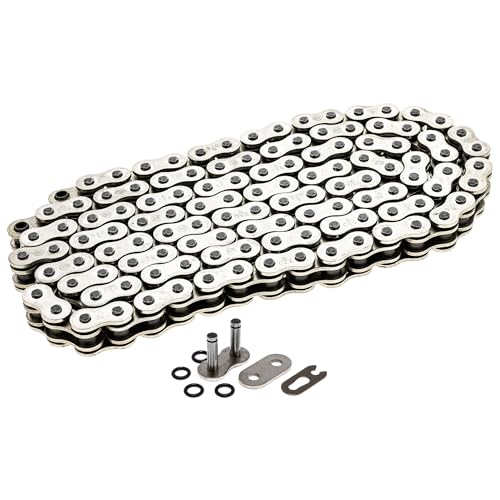
NICHE positions this 520 O-ring chain as a direct OEM replacement that delivers sealed-chain durability at a price point usually reserved for non-sealed alternatives. With an 8,543-pound tensile strength rating, it actually exceeds many competitors in the same price bracket and accommodates engines up to the 450cc class without concern. The NBR O-rings trap grease between the pins and bushings, which keeps grit out and extends service intervals well beyond what a standard non-sealed chain can offer.
Owner reports from KTM 300 XC-W and Honda CRF250F riders emphasize that the chain fits standard 520 sprocket setups without clearance issues, even on older bikes where swingarm tolerances are tighter. Several users note that after the initial break-in adjustment, the chain holds its length far better than the OEM chains they replaced. The metallic silver finish wears evenly and doesn’t flake or rust prematurely when cleaned with basic degreasers.
The clip-style master link makes installation straightforward, though some owners advise using a chain press tool for seating the side plate fully. A small subset of riders on high-output 450cc machines report needing re-tensioning around the 1,000-mile mark, which aligns with normal break-in behavior rather than a defect. For riders who want sealed-chain protection without stepping into premium pricing, this is a compelling middle-ground option.
What works
- High tensile strength for the price point
- O-ring seals extend maintenance intervals significantly
- Fits a wide range of 520-compatible bikes
What doesn’t
- Clip master link can be finicky to seat fully
- Some stretch reported after 1,000 miles on big-bore bikes
3. Renthal C125 R1 Works 520-Pitch 114-Link Chain
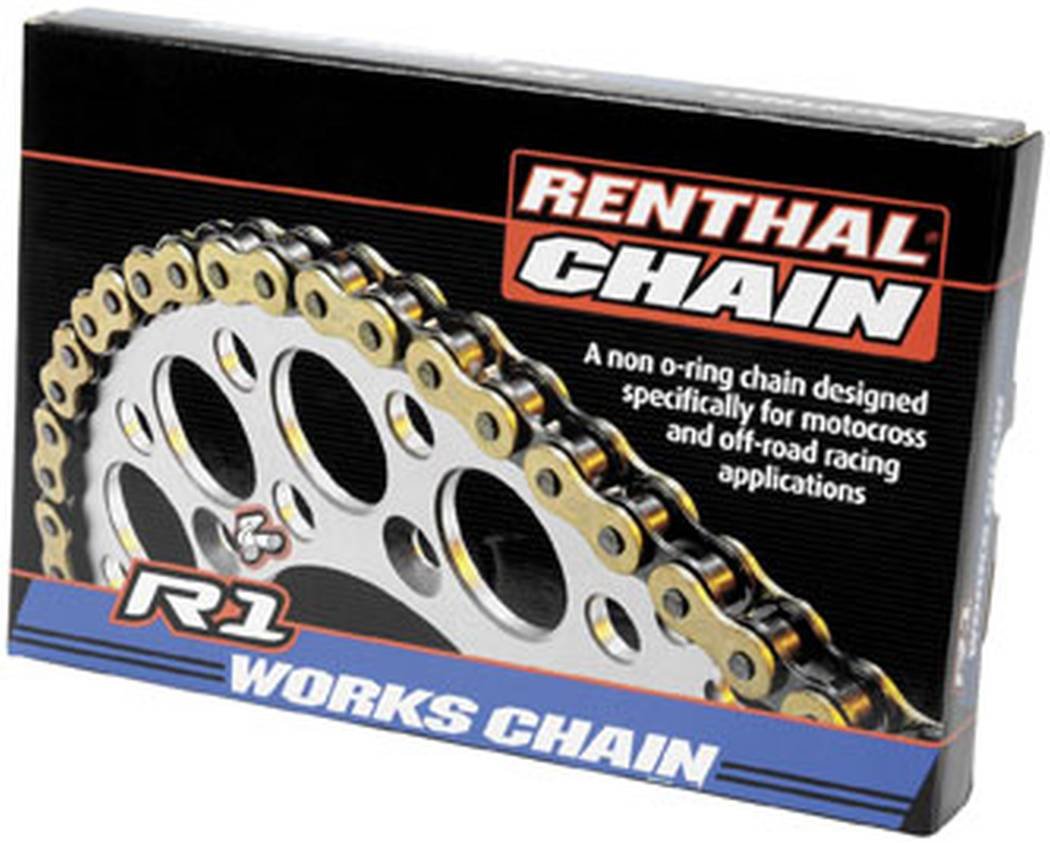
Renthal’s C125 R1 Works chain is engineered around the demands of off-road competition, with shot-peened alloy steel side plates that resist impact loads from hard landings and square-edge hits. The chamfered inner links reduce the risk of derailment when the chain whips under heavy compression, and the extended bushings lower friction between the outer and inner plates for a measurable reduction in parasitic drivetrain loss. Rated at 7,643 pounds of tensile strength, it suits 250cc and 450cc four-stroke machines equally well.
Owner feedback from KX250F and KTM 450SXF riders highlights a notable absence of measurable stretch during the first 200 miles, which suggests the pre-stressing process is effective. The gold-colored side plates resist corrosion better than standard zinc-plated finishes, and the chain arrives with a factory-applied lubricant that penetrates deep into the pins. Several owners mention that the included gloves and stickers are a thoughtful touch, but the chain’s real value is in its consistent tension retention across abrasive conditions.
The non-sealed design keeps rotating mass low, which matters for riders who prioritize snap throttle response over extended maintenance intervals. This chain demands the same regular cleaning and re-oiling routine as any non-O-ring unit, so it suits riders who don’t mind frequent drivetrain upkeep. For racers who want a proven, high-end non-sealed chain from a brand synonymous with dirt bike performance, the C125 R1 is a straightforward investment.
What works
- Exceptional resistance to initial stretch and impact loads
- Chamfered inner links reduce derailment risk
- Corrosion-resistant gold finish holds up well
What doesn’t
- Non-sealed design needs frequent lubrication
- Premium pricing limits value for casual riders
4. RK Racing Chain BP520XSO-120 Black/Steel X-Ring Chain

RK’s BP520XSO series represents the top tier of sealed-chain engineering for off-road use, combining heat-treated hi-carbon alloy steel with RK’s proprietary RX-Ring seal design. The X-ring cross-section creates two lubrication reservoirs and two sealing points per link, which reduces torsional friction compared to a standard O-ring while providing roughly 30 percent longer wear life. With an 8,500-pound tensile strength rating, it handles everything from aggressive trail riding to high-speed desert racing on bikes up to 750cc.
Owner reports from KTM 390 Duke and DR-Z400S riders note that the chain arrives well-greased and requires no initial soak before installation. The rivet-type master link provides a more secure connection than clip-style alternatives, though it does require a chain riveting tool for proper installation. Multiple users report exceeding 5,000 miles without significant adjustment, which underscores the effectiveness of the X-ring seal at retaining internal lubrication.
The black and steel finish blends cleanly with aftermarket sprockets and doesn’t show grime as readily as gold chains. Some owners note that the rivet link is softer than expected, requiring careful pressure control to avoid mushrooming the pin excessively. For riders who want a sealed chain that minimizes maintenance frequency and delivers consistent tension over thousands of miles, the BP520XSO is a strong contender.
What works
- X-ring seal provides exceptional wear life
- High tensile strength suits big-bore engines
- Secure rivet master link for competition peace of mind
What doesn’t
- Rivet tool required for installation
- Master link pins can mushroom if over-peened
5. NICHE Gold 428 X-Ring Chain 112 Links

The NICHE Gold 428 X-Ring chain brings sealed-chain technology to the 428 pitch category, which is typically found on smaller-displacement dual sports, minis, and light trail bikes. With a 5,665-pound tensile strength rating, it comfortably handles 125cc to 250cc engines while keeping the overall weight and rolling resistance lower than a larger 520 conversion would introduce. The premium X-rings use NBR rubber to lock grease around the pins, reducing friction compared to standard O-rings and extending service life in wet or dusty environments.
Owner feedback from Honda CRF250L and Kawasaki KLX230 riders highlights the gold finish as a visual upgrade that holds up well against chain lube and mud without fading or peeling. Several owners running this chain on dual-sport bikes note that the initial stretch is minimal and that tension stays consistent for hundreds of miles between adjustments. The clip-style master link simplifies installation, though some users report that the retaining clip can be stubborn to fully engage without a small pick tool.
The 112-link length suits many standard 428 applications without needing to cut links, but riders with extended swingarms or oversized rear sprockets should verify their link count before ordering. A small number of owners experienced a retaining clip that didn’t seat firmly on their first attempt, which required careful alignment rather than indicating a systemic defect. For riders who want X-ring durability in the lighter 428 format, this chain offers strong value and visual appeal.
What works
- X-ring seals reduce friction and extend life
- Gold finish holds up well in muddy conditions
- Proper 428 pitch for lighter bikes and dual sports
What doesn’t
- Master link clip can be difficult to seat
- Limited to lower-displacement applications
6. RK Racing Chain M428H-130 428 Heavy Duty Chain

RK’s M428H is a heavy-duty non-sealed chain built with Japanese steel and Malaysian manufacturing that meets standard Japanese specifications at a price that undercuts most sealed alternatives. The two-point riveted pins and curled bushings improve load distribution across the link plates, and the pre-stressed manufacturing process reduces the rapid initial stretch that cheaper unbranded chains exhibit. With a 4,500-pound tensile strength rating, it is best suited for 125cc street bikes and 80cc off-road machines rather than full-size motocross bikes.
Owner reports from Grom conversions and 125cc pit bike owners indicate that the chain holds tension better than the original equipment chains that ship on many Chinese-brand bikes. The clip master link is standard for this class, and installation requires only basic hand tools and a chain breaker for sizing. Several riders note that the factory grease is extremely sticky and recommend wearing gloves during handling to avoid a messy cleanup.
The 130-link length provides plenty of material for most 428 applications, though riders on extended swingarms should measure twice before cutting. A few owners mention normal break-in stretch over the first few rides, which is expected for a non-sealed chain and easily managed with a simple tension adjustment. For budget-conscious riders maintaining small-displacement bikes, this chain delivers reliability without the premium attached to sealed designs.
What works
- Good build quality for the price point
- Pre-stretched to minimize rapid initial adjustment
- Suitable upgrade for Chinese-made pit bikes
What doesn’t
- Non-sealed design needs frequent lubrication
- Limited to lower-displacement applications
7. HILAKE 420H Motorcycle Chain 132 Links

The HILAKE 420H chain is a heavy-duty non-sealed option designed for the small-displacement category, including mini trail bikes, go-karts, and bicycles where 420-pitch drivetrains are standard. The alloy steel construction delivers a 5,000-pound tensile strength rating that exceeds many economy chains in this size class, and the included chain breaker and connecting master link make it a near-complete kit for a weekend installation project. The 132-link length provides ample material for most 420 applications with room to cut custom lengths.
Owner feedback from riders running Phantom 85 engines and Rawrr Mantis X eBikes highlights that the chain handles power levels that destroyed cheaper 415 chains without issue. The pre-greased condition out of the box reduces the need for an initial soak, and the heavy-duty plate profile offers noticeable visual heft compared to standard 420 chains. Several owners note that the finish looks well-applied and that the links move freely without binding right out of the package.
Some users report that the master link is wider than expected and may require light grinding to clear chain guards on certain bikes. The included chain breaker is functional for occasional use but may not withstand frequent heavy-duty work. For riders maintaining mini bikes, go-karts, or small-framed trail machines who want a complete chain kit at an accessible price, this package simplifies the process considerably.
What works
- Complete kit with chain breaker and master link
- Handles higher power levels than standard 420 chains
- Pre-greased and ready for installation
What doesn’t
- Master link width may interfere with chain guards
- Included breaker tool is only for light use
Hardware & Specs Guide
Understanding Chain Pitch
Chain pitch is measured as the distance between roller centers. A 420 chain has a 0.5-inch pitch, 428 uses the same pitch with wider rollers for increased lateral strength, and 520 steps up to a 0.625-inch pitch with thicker side plates. Choosing the correct pitch is non-negotiable—a 520 chain will not fit 428 sprockets, and forcing the wrong pitch damages teeth and creates dangerous slack under load. Always confirm your bike’s spec in the owner’s manual before purchasing.
Seal Types and Maintenance
Non-sealed (standard) chains have no internal seals and rely entirely on external lubrication. They require cleaning and re-oiling every 200 to 400 miles depending on conditions. O-ring chains use rubber rings between each link to trap factory grease, extending service intervals to 1,000 miles or more. X-ring chains use a quad-lip seal that reduces internal friction while maintaining similar contamination resistance, offering slightly longer life and less rolling resistance than O-ring designs.
Tensile Strength Ratings
Tensile strength indicates the load at which a chain permanently deforms or breaks. A 428 chain rated at 4,500 pounds suits 125cc engines, while a 520 chain rated at 8,500 pounds handles 450cc machines and aggressive riding. Higher tensile strength generally comes with thicker plates and heavier weight. Matching tensile strength to your engine’s output and your riding style prevents premature stretch without adding unnecessary mass to the drivetrain.
Master Link Types
Clip-type master links use a spring clip to retain the outer plate and can be installed and removed with basic pliers, making them convenient for field repairs. Rivet-type master links require a specialty tool to flare the pin ends and provide a more secure connection that resists coming loose under vibration. Many premium chains use rivet links for competition applications, while clip links remain standard for recreational and entry-level use.
FAQ
What chain pitch do I need for my dirt bike?
Is an O-ring or X-ring chain better than a non-sealed chain?
How often should I replace my dirt bike chain?
What does tensile strength mean for a dirt bike chain?
Final Thoughts: The Verdict
For most riders, the best chain for dirt bike winner is the DID 520DZ-120 because it combines proven motocross pedigree, strong tensile rating, and consistent owner satisfaction at a price that doesn’t require a second mortgage. If you want sealed-chain longevity and minimal maintenance, grab the NICHE 520 O-Ring for its high tensile strength and value-oriented pricing. And for premium X-ring performance that stretches the interval between adjustments, nothing beats the RK BP520XSO-120 with its proprietary RX-ring seal and class-leading wear life.

Certification: BSc in Mechanical Engineering
Education: Mechanical engineer
Lives In: 539 W Commerce St, Dallas, TX 75208, USA
Md Amir is an auto mechanic student and writer with over half a decade of experience in the automotive field. He has worked with top automotive brands such as Lexus, Quantum, and also owns two automotive blogs autocarneed.com and taxiwiz.com.