Ceramic window tint has shifted from a luxury add-on to a legitimate performance upgrade for any daily driver. Unlike outdated dyed films that fade after a single summer, modern ceramic layers actively reflect infrared radiation while maintaining optical clarity that keeps side mirrors usable at night. The real challenge is separating genuine nano-ceramic construction from films that merely use the word “ceramic” as a marketing label.
I’m Amir — the founder and writer behind Four Wheel Ask. My approach focuses on cross-referencing technical data sheets, IR rejection measurements, and long-term owner reports to identify which films actually deliver on their heat-reduction promises without compromising visibility or durability.
After analyzing heat-rejection tests and owner feedback, the best ceramic tint for cars balances clarity, IR blocking, and durability better than alternatives found on retail shelves.
How To Choose The Best Ceramic Tint For Cars
Selecting the right window film requires understanding three core metrics that determine real-world performance. VLT dictates how much light passes through, IR rejection measures heat reduction, and construction type affects longevity and cost. Here is what matters most.
Understand VLT and Local Regulations
Visible Light Transmission is the percentage of visible light that passes through the film. A 5% VLT, often called limo tint, blocks 95% of visible light, while 70% VLT allows most light through while still rejecting significant heat and UV. Each state sets legal limits for front side, rear side, and windshield tint, so verify local laws before buying a roll.
Ceramic vs. Carbon vs. Dyed Construction
Dyed films use a layer of dye to absorb light, but they degrade quickly under prolonged sun exposure. Carbon films embed carbon particles for better heat absorption and a matte finish that resists fading. True ceramic films suspend nano-ceramic particles in the adhesive or substrate, reflecting rather than absorbing IR energy, which keeps the glass cooler and prevents interior off-gassing.
IR Rejection and TSER Ratings
Infrared rejection indicates how much near-infrared energy the film blocks. Higher IR rejection directly translates to less radiant heat entering the cabin. Total Solar Energy Rejection combines IR, UV, and visible light rejection into one number. Look for films with IR rejection above 85% and TSER above 45% for meaningful cabin temperature reduction.
Quick Comparison
On smaller screens, swipe sideways to see the full table.
| Model | Category | Best For | Key Spec | Amazon |
|---|---|---|---|---|
| SOLARCONTROL GAMA AUTOPARTS | Ceramic/Carbon | Balanced all-around performance | 2PLY 1.5mil, 35% VLT | Amazon |
| United Ceramic HIDNY | Nano Ceramic | Maximum IR rejection | IR-95, 5% VLT | Amazon |
| XhuangTech Blue Chameleon | Ceramic/Chameleon | Windshield and front glass | 70% VLT, Blue Reflective | Amazon |
| RockRose Carbon 20% | Carbon | Value-driven DIY installation | 35% IR Rejection, 45% TSER | Amazon |
| YIFUOK 2PLY Carbon | Carbon | Large-roll coverage with tools | 100FT, 8-Piece Tool Kit | Amazon |
| HIDNY United Universal 1Ply | Dyed PET | Deep black aesthetic on a budget | 20% VLT, 1mil Dyed | Amazon |
| KORKIE Nano Ceramic 70% | Nano Ceramic | Signal-friendly high-VLT film | 70% VLT, IR Rejection > 85% | Amazon |
In‑Depth Reviews
1. SOLARCONTROL GAMA AUTOPARTS 2PLY Ceramic Carbon
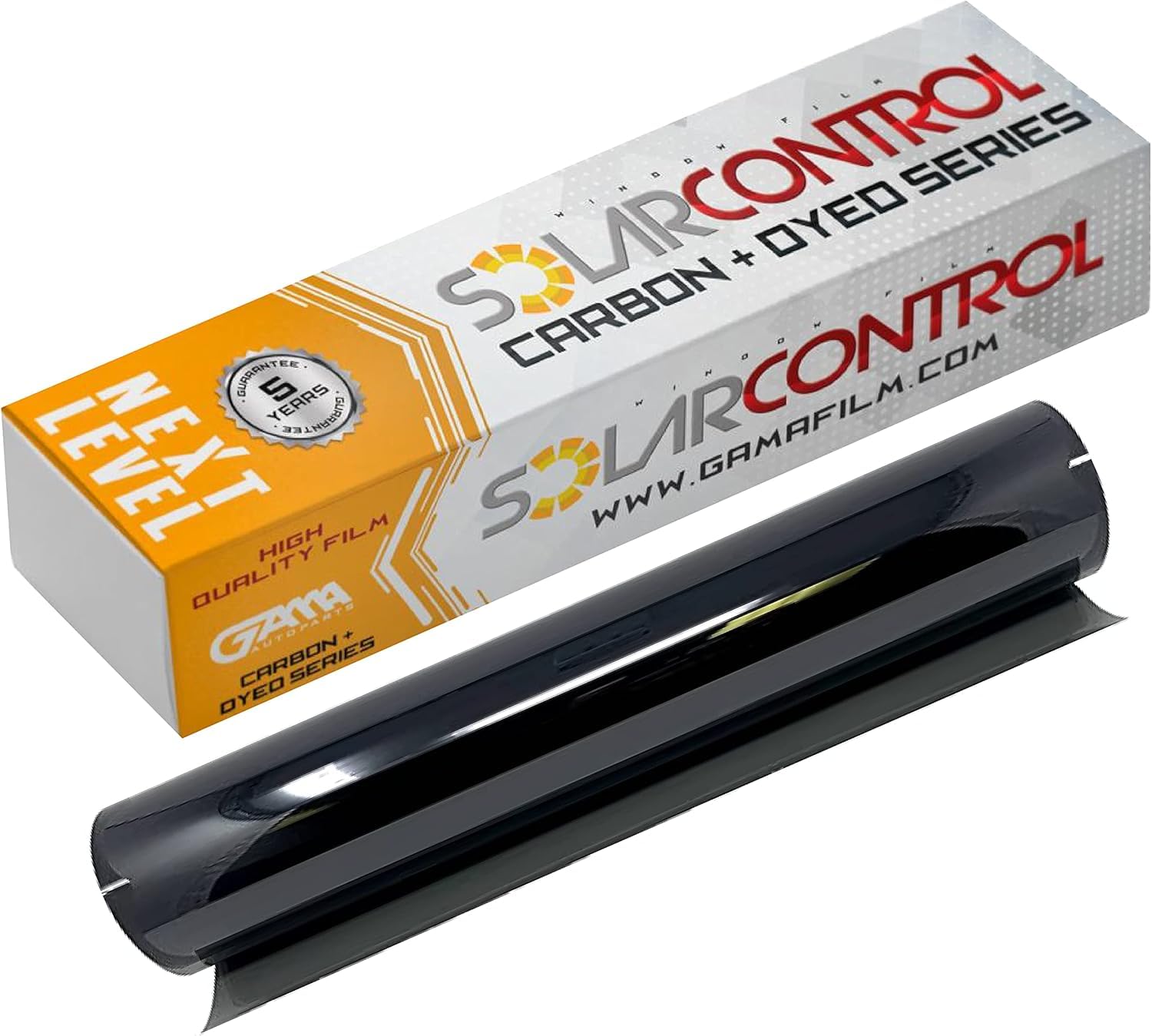
SOLARCONTROL strikes the hardest-to-find balance in the window tint market: professional-grade optical clarity with a 2PLY 1.5mil thickness that suppresses bubbles during installation. The 35% VLT strikes a middle ground that darkens the cabin without turning parking-lot maneuvers into guesswork at night. Owner feedback consistently highlights how the film lays down flat on curved rear windows, a common headache with thinner budget rolls.
Heat rejection performance sits at the top of the mid-range tier. The ceramic-carbon hybrid construction channels infrared energy away from the glass surface rather than absorbing it, which keeps the glass itself cooler to the touch. Multiple long-term users report that the adhesive holds firm through seasonal temperature swings without edge peeling, an issue that plagues cheaper dyed alternatives.
What pushes this film ahead of similarly priced options is the 40-inch width, which covers SUV rear hatches and truck extended-cab windows in a single continuous sheet. The 100-foot length provides enough material for a full sedan or a mid-size crossover with reasonable margin for trimming errors during a first-time DIY install.
What works
- Wide 40-inch roll reduces seam requirements on large glass panels
- Thick 1.5mil 2PLY construction resists creasing during heat shrinking
- Optical clarity scores well in owner reviews with no haze complaints
What doesn’t
- 35% VLT may be too dark for front-side windows in some jurisdictions
- Limited shade options compared to brands offering five or more VLT choices
2. United Ceramic HIDNY 2Ply Nano Ceramic IR-95
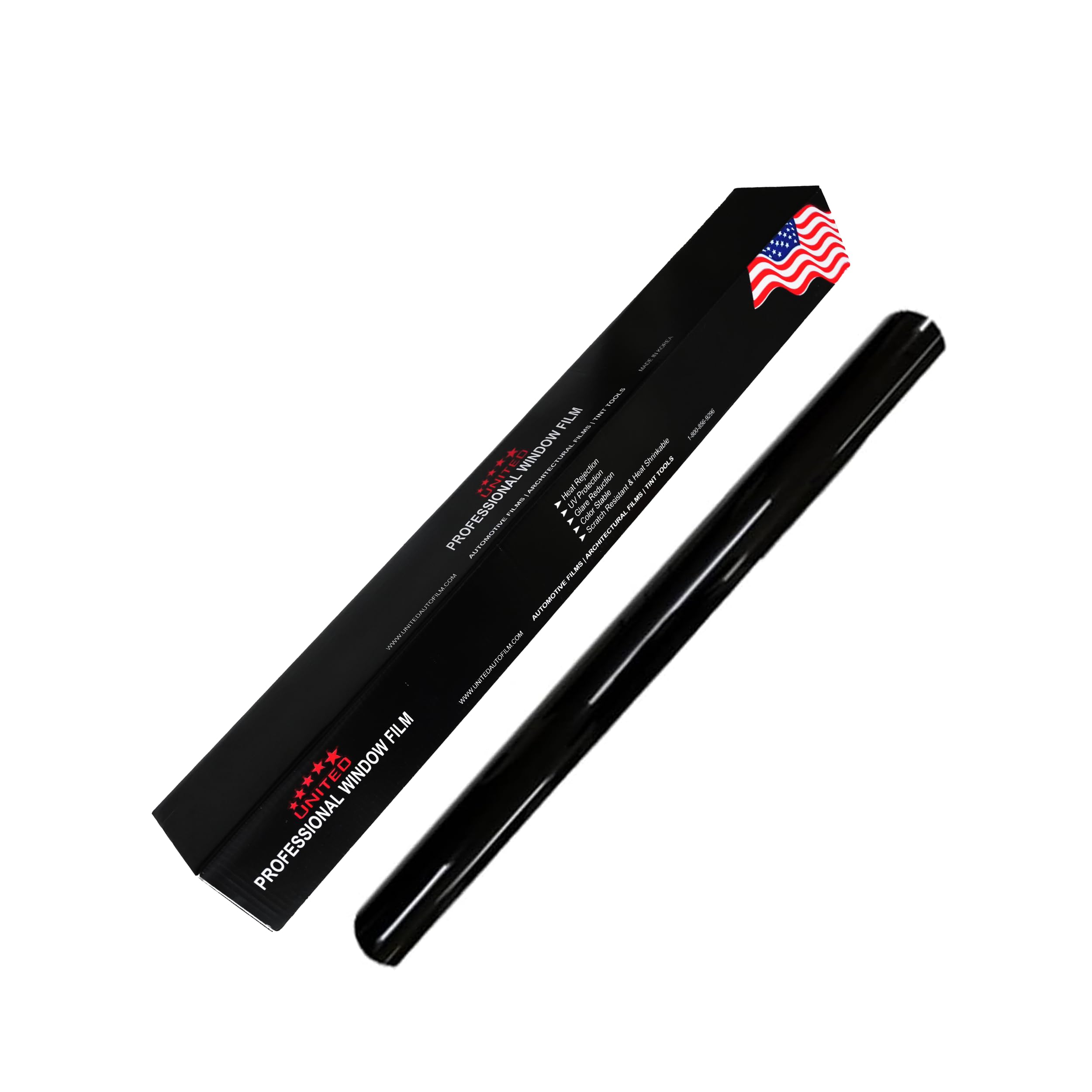
United Ceramic HIDNY sits at the premium end of the spectrum for one reason: genuine nano-ceramic particles suspended in both the adhesive layer and the hard coat, rather than merely in the tinted substrate. This dual-layer integration delivers IR rejection figures that approach 93%, meaning the film reflects the vast majority of infrared energy before it reaches the glass. The 5% VLT option is exceptionally dark, suited for rear passenger and cargo areas where maximum privacy is the primary goal.
Construction quality mirrors what you would expect from a professional shop supplier. The non-metalized formulation eliminates any risk of signal interference with GPS, satellite radio, or cellular bands, a critical detail for drivers who rely on connected navigation and streaming services. The wet/dry heat shrink compatibility gives installers flexibility to choose the method that matches their skill level and tool setup.
Owners who have used this film note that the color stability holds up well beyond the first year, with no greenish shift that some ceramic films exhibit under intense UV exposure. The 2ply polyester core adds rigidity that helps the film maintain its shape during the heat shrinking process, reducing the likelihood of fingering on complex compound curves found in modern rear quarter windows.
What works
- IR-93 rejection rating competes with professional-grade architectural films
- Non-metalized construction allows unimpeded signal pass-through
- Lifetime color stability with no greenish tint shift reported
What doesn’t
- 5% VLT is too dark for front-side windows in most states
- Premium pricing positions it as a specialty purchase rather than a budget option
3. XhuangTech Blue Chameleon Ceramic 70% VLT

XhuangTech takes a different approach with a blue chameleon reflective finish that shifts appearance based on viewing angle and ambient light. The 70% VLT rating makes this one of the few ceramic options suitable for front windshield application in regions that allow high-VLT films on the forward glass. The reflective outer layer bounces a meaningful portion of solar energy before it penetrates the glass, complementing the ceramic IR rejection embedded in the construction.
The peel-and-stick installation method reduces the learning curve for first-time applicators. The PVC substrate is more forgiving than polyester-based films during initial positioning, though it requires careful squeegee work to prevent air entrapment along edges. The one-way privacy effect functions best during daylight hours when exterior light exceeds interior brightness, creating the mirror effect that limits visibility into the cabin from outside.
Multiple application reports confirm that the film works well on home windows and office partitions in addition to automotive glass, making it a versatile option for someone who wants consistent aesthetics across a vehicle and a residence. The blue hue is pronounced enough to be a styling statement, so drivers seeking a neutral grey or black finish should look elsewhere in this guide.
What works
- 70% VLT is legal for windshield use in many jurisdictions
- Blue chameleon finish provides a distinctive exterior look
- Peel-and-stick backing simplifies installation for beginners
What doesn’t
- PVC material is less durable than PET over multi-year exposure
- Reflective finish may attract attention from law enforcement in strict areas
4. RockRose Carbon 20% VLT
RockRose delivers genuine carbon construction at a price point that undercuts most ceramic competitors while still providing meaningful heat rejection. The 20% VLT strikes a popular balance — dark enough for strong privacy during the day, light enough to maintain rearward visibility at night without straining. Owner reviews frequently mention how well the film holds its color after extended sun exposure, a direct result of carbon particles resisting UV degradation.
Infrared rejection measures around 35%, which is modest compared to high-end ceramic films, but the 45% TSER rating means the overall solar energy rejection is competitive for the price tier. The PET construction provides dimensional stability during heat shrinking, allowing DIY installers to work compound curves on rear windows without excessive creasing. The film responds predictably to a heat gun, shrinking evenly when the temperature is applied gradually.
One notable differentiator is the 24-inch by 100-foot roll format, which provides generous coverage for multiple vehicles or a single large SUV with leftover material for practice cuts. The included installation instructions are detailed enough for a motivated beginner, though the manufacturer recommends a wet application method using soapy water and a squeegee for best results.
What works
- Carbon construction resists fading better than dyed films at this price
- 45% TSER provides meaningful cabin temperature reduction
- Predictable heat-shrink behavior suits DIY installation
What doesn’t
- 35% IR rejection is significantly lower than true ceramic films
- Some users report the film feels less tacky during initial positioning
5. YIFUOK 2PLY Premium Carbon 20% VLT with Tools Kit
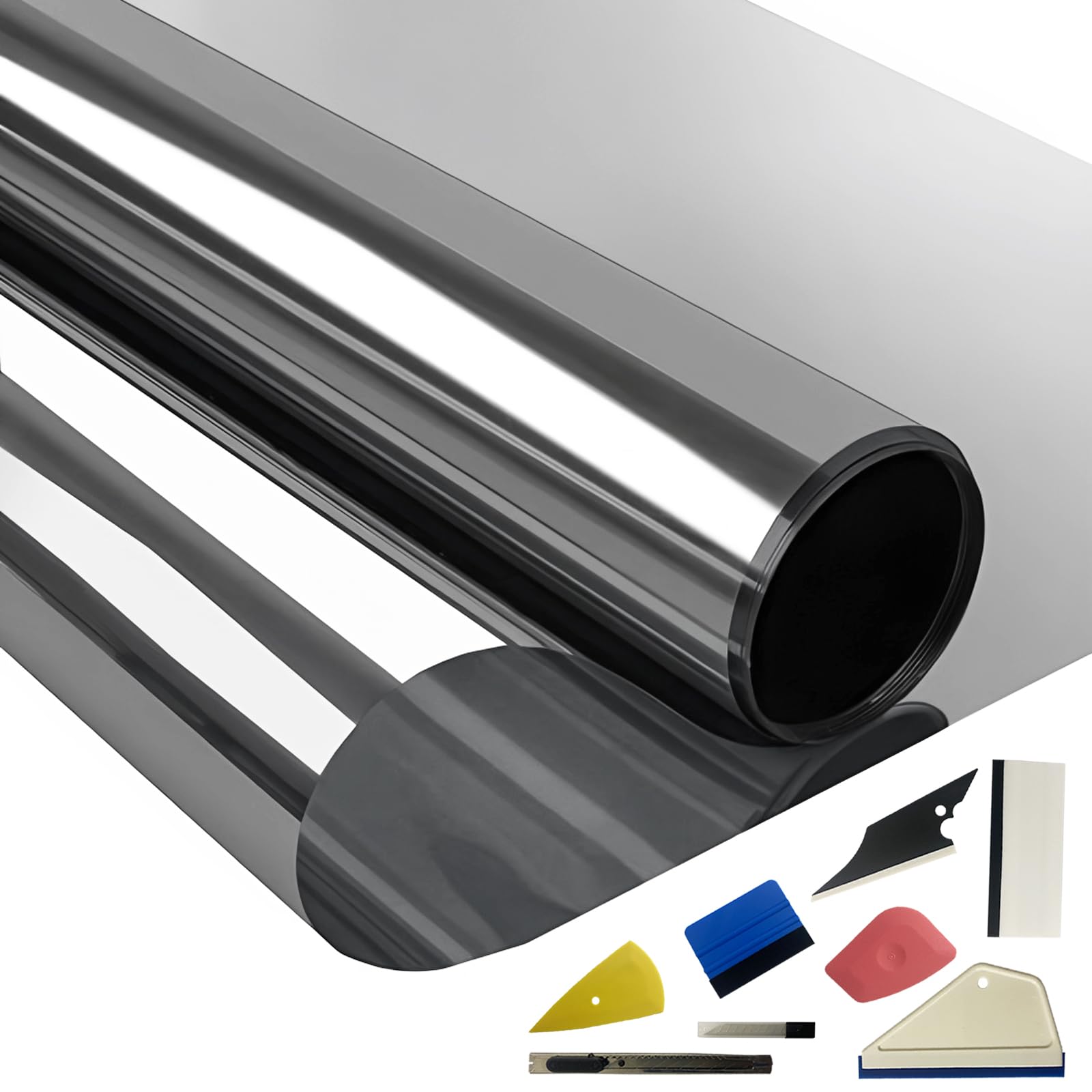
YIFUOK packages a 2PLY carbon film with an eight-piece installation tool kit, creating an all-in-one solution for someone tackling window tinting for the first time. The 1.5mil thickness mirrors professional-grade stock, giving the film enough body to resist creasing during handling while remaining pliable enough to conform to curved glass. The 20% VLT provides the privacy and heat rejection that most daily drivers need without crossing into limo-tint territory.
The carbon-based construction blocks 99% of UV rays, which protects dashboard surfaces and upholstery from fading over time. The film substrate includes a scratch-resistant coating that holds up against repeated window operation and incidental contact with seat belts or cargo. Multiple owners note that the adhesive activates cleanly with a slip solution and bonds firmly as the water cures, reducing the risk of edge lift in the first week after installation.
The included tool kit covers the essentials — a squeegee, application solution sprayer, utility knife blades, and a scraper — which eliminates the need for a separate trip to a hardware store. The 20-inch by 100-foot roll format is narrower than some competitors, which means larger windows may require seam placement, but the trade-off is a lower entry cost and more manageable handling for smaller vehicles.
What works
- Complete tool kit removes the need for separate equipment purchases
- 1.5mil 2PLY thickness matches professional-tier films
- 99% UV rejection protects interior surfaces effectively
What doesn’t
- 20-inch width requires seams on larger SUV and truck windows
- Carbon film cannot match ceramic IR rejection numbers
6. HIDNY United Universal 1Ply Dyed PET 20% VLT
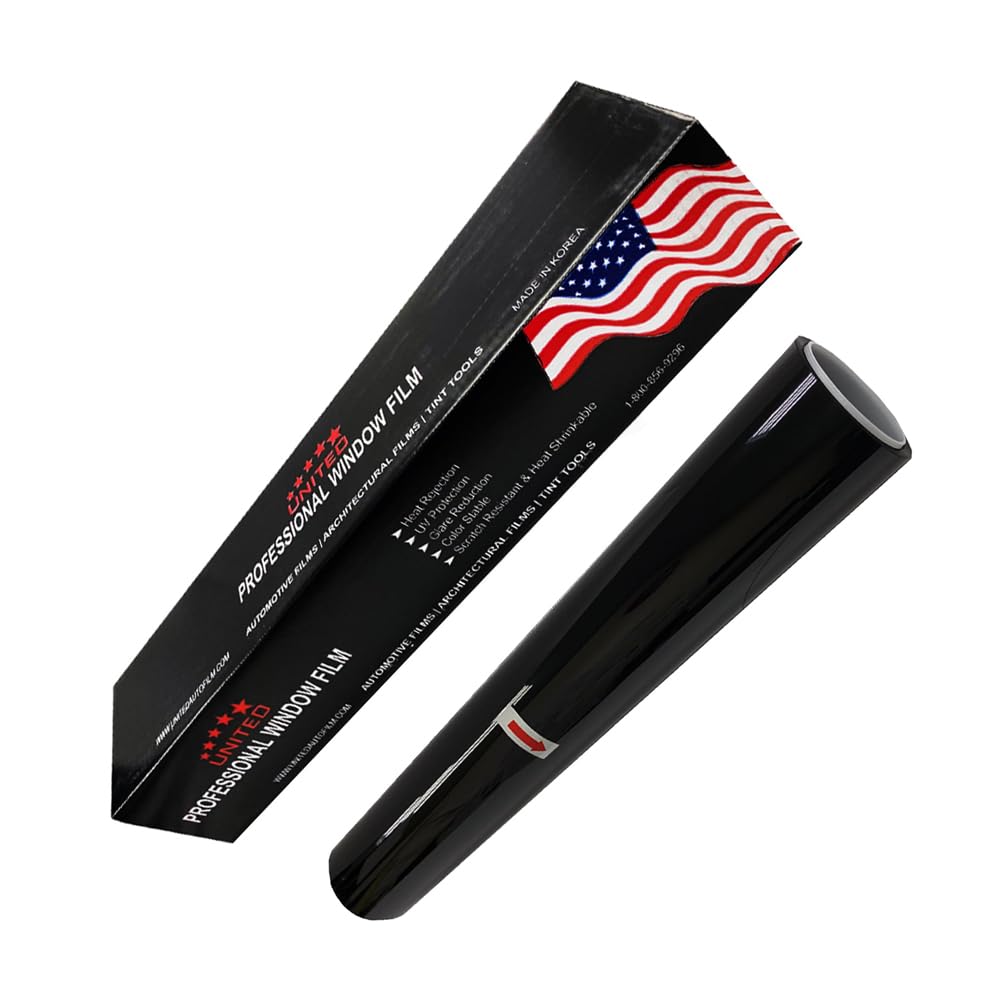
HIDNY United Universal delivers the most budget-conscious entry point in this guide without cutting corners on basic UV protection. The 1mil dyed PET construction is straightforward — a single layer of dyed polyester that absorbs light and provides a deep black finish. The 20% VLT delivers the aesthetic that most drivers associate with aftermarket tint, creating a uniform dark appearance across all side and rear windows.
UV rejection measures up to 99%, which is the standout spec at this price tier. While dyed films do not offer the IR reflection of ceramic options, they do block the UV radiation that causes interior fading and dashboard cracking. The wet/dry heat shrink capability is surprising for a dyed film at this price, allowing installers to use heat to conform the material around complex curves rather than fighting with pre-cut shapes.
The film is available in multiple roll widths from 20 to 40 inches and VLT options from 5% to 50%, giving buyers flexibility to match local tint laws without switching brands. Multiple application reports confirm that the low-reflectivity finish reduces glare effectively during bright conditions, though the film will fade faster than carbon or ceramic alternatives when exposed to years of direct sun in hotter climates.
What works
- 99% UV rejection at a very accessible price point
- Multiple VLT and width options for legal compliance
- Deep black low-reflectivity finish looks uniform across panels
What doesn’t
- 1Ply dyed construction fades faster than carbon or ceramic films
- No meaningful IR rejection, so cabin heat reduction is limited
7. KORKIE Nano Ceramic 70% VLT

KORKIE brings genuine nano-ceramic construction to a price range typically occupied by basic dyed films. The 70% VLT is nearly clear, making this the ideal choice for windshield application in regions where front-glass tinting is permitted, or for drivers who want heat rejection without altering the appearance of their windows. The ceramic particles in the adhesive layer provide IR rejection above 85% despite the high visible light transmission.
The non-metalized design eliminates any concern about signal degradation for GPS units, satellite radio receivers, or cellular antennas. This is a critical consideration for modern vehicles where the windshield area often houses sensor arrays for driver-assistance systems. The scratch-resistant outer layer adds durability against daily wear from window channels and cleaning tools.
The 30-inch by 15-foot roll is shorter than most competitors, sized specifically for SUV side and rear windows rather than full-vehicle coverage. Buyers should measure their glass area carefully before purchasing. The peel-and-stick installation is straightforward, though the narrow width means larger panels like a minivan rear hatch will require careful positioning or multiple pieces.
What works
- Nano-ceramic construction at an entry-level price point
- 85%+ IR rejection preserves cabin comfort without dark tint
- No metal content means zero signal interference
What doesn’t
- 15-foot roll length covers only two to three windows on most vehicles
- 70% VLT provides minimal privacy benefit compared to darker films
Hardware & Specs Guide
VLT and Visible Light Behavior
VLT determines how much visible light passes through the film. Lower percentages create a darker appearance and reduce glare but also decrease nighttime visibility. Ceramic films maintain optical clarity across all VLT ranges because the ceramic particles do not scatter light like the dyes used in cheaper films. Most states enforce minimum VLT requirements for front-side windows, typically between 35% and 50%, while rear windows often have no restriction. Windshield tint is generally limited to a non-reflective strip along the top edge, with a few states allowing 70% VLT across the full glass panel.
Ceramic Particle Technology
True ceramic films use nano-scale ceramic particles that are embedded in the adhesive layer, the polyester substrate, or both. These particles selectively reject infrared radiation while allowing visible light to pass through. The result is a film that blocks heat without requiring a dark appearance, which is why ceramic films are the only option for drivers who want maximum heat rejection on a clear windshield. The ceramic particles are chemically inert and do not degrade under UV exposure, giving the film a usable lifespan of five to seven years compared to two to three years for dyed alternatives.
FAQ
What is ceramic window tint and how does it differ from standard tint?
Is ceramic tint worth the extra cost over carbon or dyed film?
Does ceramic tint interfere with GPS or cell phone reception?
Final Thoughts: The Verdict
For most buyers, the best ceramic tint for cars winner is the SOLARCONTROL GAMA AUTOPARTS 2PLY Ceramic Carbon because it combines professional-grade thickness, genuine ceramic-carbon hybrid performance, and a wide 40-inch roll that simplifies installation on larger vehicles. If you want maximum IR rejection with true nano-ceramic construction, grab the United Ceramic HIDNY 2Ply Nano Ceramic IR-95. And for a windshield-friendly option that prioritizes heat rejection over darkness, nothing beats the KORKIE Nano Ceramic 70% VLT.

Certification: BSc in Mechanical Engineering
Education: Mechanical engineer
Lives In: 539 W Commerce St, Dallas, TX 75208, USA
Md Amir is an auto mechanic student and writer with over half a decade of experience in the automotive field. He has worked with top automotive brands such as Lexus, Quantum, and also owns two automotive blogs autocarneed.com and taxiwiz.com.