A brake job that leaves you with a symphony of squeaks, squeals, and groans every time you slow down is a job only half done. The missing piece is almost always a high-quality lubricant applied to the contact points where pads meet caliper hardware and slide pins. Without it, metal rubs metal, vibration travels through the chassis, and that annoying noise becomes your constant passenger.
I’m Amir — the founder and writer behind Four Wheel Ask. I’ve spent years comparing the chemical compositions, temperature tolerances, and real-world owner feedback on automotive lubricants to separate formulations that actually protect from those that just wash away after the first rain.
This guide breaks down the top-performing ceramic brake lube options to help you pick the right synthetic blend for quiet, corrosion-free braking every time.
How To Choose The Best Ceramic Brake Lube
The right brake lubricant does more than stop noise — it prevents caliper pins from seizing, protects against galvanic corrosion between dissimilar metals, and keeps your brake system operating smoothly for the life of the pads. Here are the critical factors to evaluate before buying.
Synthetic Base vs Petroleum Base
A genuine ceramic brake lube uses a 100% synthetic carrier fluid that won’t evaporate, harden, or melt at high rotor temperatures. Petroleum-based greases break down around 400-500°F, turning into sticky varnish that attracts brake dust and grit. Stick to synthetic formulas for long-term protection.
Temperature Rating
Premium ceramic blends resist flash points of 3000°F, meaning the solids (ceramic powders) stay in suspension and continue lubricating even when rotor surface temps spike during aggressive braking. Lower-rated greases liquefy at extreme heat and run off the components they’re supposed to protect.
Compatibility with Rubber Components
Brake caliper pins often ride inside rubber boots or seals. A ceramic lubricant must be safe for EPDM and Nitrile rubber — otherwise it will swell, soften, or degrade the boots, leading to moisture intrusion and seized pins. Check the label for rubber-safe compatibility.
Quick Comparison
On smaller screens, swipe sideways to see the full table.
| Model | Category | Best For | Key Spec | Amazon |
|---|---|---|---|---|
| Permatex 24125 Ceramic Extreme | Jar | Comprehensive brake hardware | 8 oz, paste form | Amazon |
| ZDBB Ceramic Brake Lubricant | Brush Top | Quick maintenance & slide pins | 8 oz, -40°F to 3000°F | Amazon |
| Keze High Temp Ceramic Grease | Brush Top | Slide pins & caliper rebuilds | 8 oz, 3000°F flash point | Amazon |
| AGS Cerami-Glyde | Tube | One-time brake jobs | 4 oz, silicone & ceramic blend | Amazon |
| Permatex 24127 Ceramic Extreme | Bottle | Small jobs & brake pad ears | 1 oz (28g), pocket-size | Amazon |
In‑Depth Reviews
1. Permatex 24125 Ceramic Extreme Brake Parts Lubricant

Permatex’s Ceramic Extreme formula stands as the benchmark for DIYers and professional mechanics alike. This 8-ounce jar delivers a thick, paste-like consistency that clings to vertical surfaces without dripping — ideal for caliper guides, pad abutment clips, and piston boots. The 100% synthetic carrier loaded with ceramic solids resists washout from pressure washers or rain exposure, maintaining lubricity through repeated heat cycles.
User feedback consistently highlights how drumming and squeal disappear after application, and the brush integrated into the lid makes slathering it onto slide pins and hardware quick and mess-free. The paste stays pliable down to freezing temperatures and refuses to liquefy even when the rotor glows after a spirited downhill run.
One minor complaint involves the cheap bristles on the applicator brush, which sometimes shed into the grease. A quick manual removal before the first use solves this, and the quality of the lubricant itself remains untouched — it’s the go-to choice for anyone rebuilding an entire brake system.
What works
- Thick paste stays put on vertical caliper surfaces
- Integrated brush in the lid simplifies application
- Resistant to water washout during wet driving
What doesn’t
- Brush bristles occasionally shed and need inspection
- 8-ounce jar is overkill for a single brake job
2. ZDBB Ceramic Brake Lubricant High Temp Caliper Pin Grease
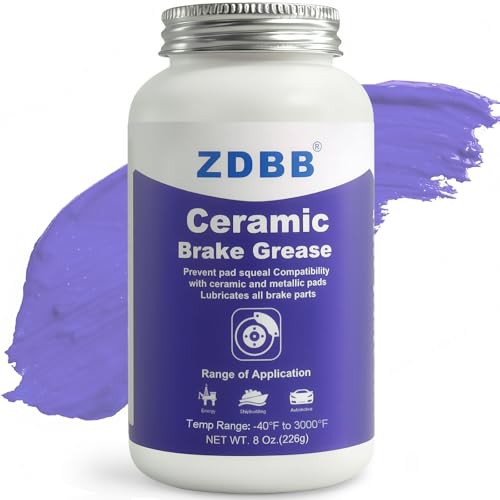
ZDBB’s entry into the ceramic brake grease segment offers a budget-friendly tub with an impressive temperature range spanning -40°F to 3000°F. The 100% synthetic carrier combined with ceramic solids creates a moisture-proof barrier that resists rust formation on steel slide pins. The purple color provides high visibility, making it easy to confirm complete coverage on all friction points.
DIYers report zero brake noise after application, and the thick, non-runny consistency holds firm on slide pins and pad backing plates. The included brush makes spreading onto narrow caliper channels straightforward, and the 8-ounce size stretches across multiple brake jobs across different vehicles in a household.
The brush itself is the weakest link — the bristles lack stiffness and tend to splay apart during use. A small fingertip or a dedicated acid brush works better for precise application, but the lubricant itself offers outstanding value for the performance delivered.
What works
- Excellent upper-temperature rating of 3000°F
- Purple dye ensures visible coverage
- Prevents rust on slide pins in wet climates
What doesn’t
- Brush bristles separate and lose shape quickly
- No rubber compatibility certification on label
3. Keze High Temp Ceramic Brake Caliper Grease and Pin Parts Lubricant
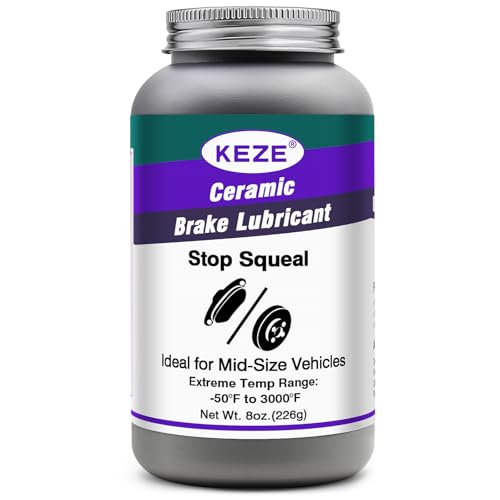
Keze formulated this grease specifically for high-friction environments where regular lube would burn off. The synthetic MCA carrier combined with ceramic powder resists melting at up to 3000°F, making it a solid choice for heavily used daily drivers or vehicles that haul trailers. The purple dye stands out clearly against black rubber boots and gray caliper housings, preventing missed spots.
Reviewers note that the thixotropic consistency stays exactly where applied — it doesn’t slump or migrate inside slide pin bores over weeks of driving. A single brush-on application on caliper pins and pad ears virtually eliminates brake squeal and ensures smooth caliper retraction after every stop.
The only real drawback is the limited volume for the price compared to tub-style offerings. The included brush works well initially but can shed fibers if pressed aggressively into tight pin channels.
What works
- Thixotropic gel won’t run off vertical surfaces
- High-vis purple confirms application coverage
- Excellent resistance to washout and melting
What doesn’t
- Brush bristles may shed with vigorous use
- Smaller quantity relative to price per ounce
4. AGS Company Automotive Solutions Cerami-Glyde Silicone Brake Lubricant

AGS takes a slightly different approach by blending ceramic solid additives into a silicone-based carrier rather than a synthetic polyurea base. This gives Cerami-Glyde a unique consistency that remains pliable without turning stringy, making it easy to squeeze from the tube directly onto pad shims and slide pins. The 4-ounce tube is perfect for a single brake job — no leftover tub to store.
Owners confirm that the lubricant effectively tames brake noise even on vehicles with sensitive metallic pads that tend to squeal when cold. The silicone formula is explicitly safe for EPDM and Nitrile rubber, so it won’t cause caliper boot swelling or cracking over time. High-temperature resilience holds up well under repeated hard stops.
The trade-off is the smaller volume, which means you’ll run out midway through a full four-corner brake job if you’re generous with application. Some tubes have been reported arriving with leaking seals, but Amazon handles replacements quickly.
What works
- Safe for rubber caliper boots and seals
- Easy-to-squeeze tube with precise nozzle
- Works well with ceramic and metallic pads
What doesn’t
- 4-ounce tube may not complete a full four-wheel job
- Occasional reports of leaking during shipping
5. Permatex Ceramic Extreme Brakes Lubricant 24127
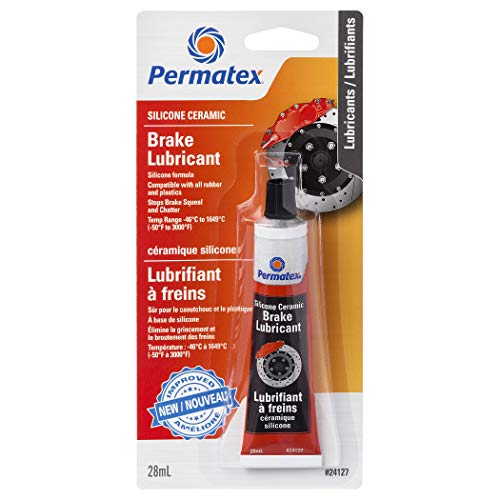
Permatex offers this compact 28-gram bottle as a portable solution for quick brake jobs or emergency repairs on the go. The same 100% synthetic ceramic blend found in the larger 8-ounce jar lives inside this small container, delivering the same heat resistance and noise-dampening performance in a pocket-friendly package. It fits easily into a road-trip emergency kit or a motorcycle tool roll.
The liquid form flows more freely than the paste version, making it a solid choice for soaking into tight pin bores or coating thin pad shims. It resists melting and won’t turn into a sticky mess when exposed to high brake temperatures. Owners praise it for eliminating the squeak in new pads within the first 20 miles of driving.
The main limitation is the tiny volume — one bottle barely covers a single axle’s worth of hardware. If you’re doing a full brake job on multiple vehicles, you’ll need several bottles, making the larger jar a far better value.
What works
- Compact size fits in glove box or tool pouch
- Same premium formula as the larger Permatex jar
- Flows well into tight pin bores
What doesn’t
- Extremely small quantity for the price
- Liquid form less suitable for vertical surfaces
Hardware & Specs Guide
Upper Temperature Rating
This is the highest temperature the lubricant can endure before the carrier oil breaks down or the solids lose their lubricating ability. Most quality ceramic blends are rated at or above 3000°F, which far exceeds any temperature a brake system will see under normal street driving (rotors typically peak around 500-800°F). A higher rating means the grease stays in place during track days or heavy towing.
Container Type & Consistency
Ceramic brake lube comes in jars with brush applicators, squeeze tubes, or bottles with nozzle tips. Jars and brush-top cans provide easy access for heavy work, while tubes allow precise application with less waste. Paste formulas cling better to vertical caliper halves, whereas thinner liquids (bottles) flow into deep pin bores more effectively. Match the consistency to how you plan to apply the product.
FAQ
Can I use ceramic brake grease on rubber caliper boots?
Will ceramic brake lube stop squealing from worn-out pads?
How often should I reapply ceramic brake grease on slide pins?
Final Thoughts: The Verdict
For most buyers, the ceramic brake lube winner is the Permatex 24125 because of its thick paste consistency, integrated brush applicator, and field-proven ability to keep brakes silent across a broad temperature range. If you want a budget-friendly tub that offers the same extreme heat rating as premium brands, grab the ZDBB Ceramic Brake Lubricant. And for a compact tube that fits in a road-trip tool kit and is safe on rubber components, nothing beats the AGS Cerami-Glyde.

Certification: BSc in Mechanical Engineering
Education: Mechanical engineer
Lives In: 539 W Commerce St, Dallas, TX 75208, USA
Md Amir is an auto mechanic student and writer with over half a decade of experience in the automotive field. He has worked with top automotive brands such as Lexus, Quantum, and also owns two automotive blogs autocarneed.com and taxiwiz.com.