Refinishing your wheels at home can completely transform the presence of any vehicle, but the difference between a paint job that lasts a season and one that holds for years comes down to choosing the right formulation. Wheel spray paints face constant abuse from road debris, brake dust, moisture, and temperature swings, so a generic rattle can simply won’t cut it.
I’m Amir — the founder and writer behind Four Wheel Ask. I’ve spent years analyzing market data, studying technical specifications, and aggregating verified owner feedback to identify which wheel coatings deliver genuine adhesion, chip resistance, and long-term color retention without requiring professional equipment.
This guide evaluates five purpose-built wheel paints based on real-world durability testing and owner-reported performance data. After analyzing dozens of formulations and hundreds of owner reports, I’ve narrowed down the best car wheel spray paint options for durability and finish.
How To Choose The Best Car Wheel Spray Paint
Wheel paint is judged by three criteria: adhesion to bare metal or existing coatings, resistance to chipping from road impact, and UV stability to prevent fading. Before picking a can, understand what each formulation type offers and how application technique influences the final result.
Paint Chemistry: Acrylic Enamel vs. Epoxy
Acrylic enamel paints, like those from EASTUP, cure by solvent evaporation and offer a hard, glossy finish with good weather resistance. They are forgiving for DIY application and allow recoating within minutes. Epoxy-based paints, like VHT’s chassis formulas, create a chemical bond that approaches powder-coat toughness. Epoxy typically requires more precise temperature control during application but delivers superior chip and chemical resistance once fully cured.
Finish Type and Visibility of Imperfections
Gloss black reveals every surface imperfection, so proper surface prep — sanding, cleaning, and degreasing — is critical. Satin and matte finishes hide minor dust nibs and orange peel texture better, making them more forgiving for first-time wheel painters. However, satin paints can show uneven sheen if applied with inconsistent overlap, so consistent spraying technique matters regardless of finish.
Nozzle Design and Coverage Rate
The spray nozzle dictates paint atomization and pattern width. A fan pattern around three inches wide at proper distance allows even coverage without heavy buildup in wheel barrel contours. Paints that come with adjustable nozzles or wide-pattern caps reduce the risk of runs on complex spoke geometries. Also check the can volume: a standard 11-ounce can typically covers one to two wheels with three light coats, so plan your project quantity accordingly.
Quick Comparison
On smaller screens, swipe sideways to see the full table.
| Model | Category | Best For | Key Spec | Amazon |
|---|---|---|---|---|
| NADAMOO Gloss Black | Acrylic | Complete wheel recoloring | 13 oz, covers 10–12 sq ft | Amazon |
| VHT SP652 Epoxy | Epoxy | Maximum durability parts | 11 oz, 550°F intermittent | Amazon |
| VHT SP671 Chassis | Epoxy Satin | Chassis and roll bar coating | 11 oz, no primer needed | Amazon |
| EASTUP Acrylic Gloss | Acrylic Enamel | Budget-friendly wheel refresh | 10 oz, high-gloss finish | Amazon |
| EASTUP Satin Black | Acrylic Enamel | Affordable satin wheel coating | 10 oz, fade-resistant | Amazon |
In‑Depth Reviews
1. NADAMOO Aluminum Wheel Spray Paint — Gloss Black
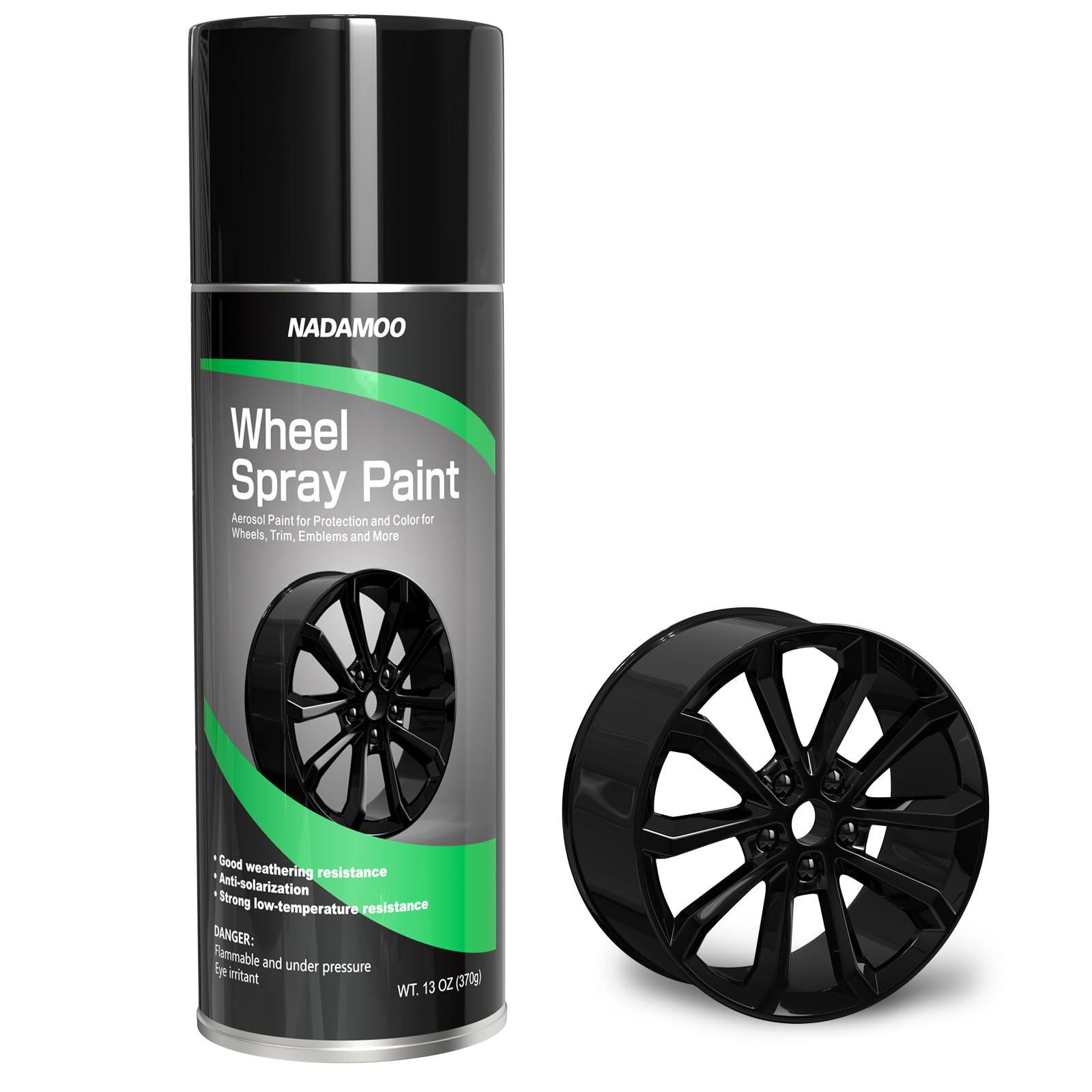
NADAMOO positions itself as a dedicated wheel refinishing aerosol with a modified acrylic formulation engineered specifically for aluminum and steel rims. At 13 ounces per can, it offers the highest volume in this comparison, with a stated coverage of 10 to 12 square feet for two light coats — enough for roughly one complete wheel per can. Owner feedback consistently highlights the thick, forgiving nature of the paint that minimizes runs even when applied by less experienced hands.
The gloss black finish delivers a deep, reflective sheen that closely approaches factory wheel appearance. Multiple reviewers note that the paint’s viscosity allows for heavier application without immediate dripping, a significant advantage on complex spoke designs where even coverage is difficult to achieve. The 30-minute drying time to touch is consistent with the claims, and owners report that four thin coats produce a uniform, durable surface.
Weathering resistance is a strong point here. The formulation resists UV fading, brake dust corrosion, and road salt exposure better than general-purpose acrylic paints. Some users also repurposed this paint on metal bumpers and trim with equal success, indicating broader utility beyond wheels alone. The nozzle design produces a consistent fan pattern that lays down paint evenly without sputtering.
What works
- Thick viscosity reduces runs on complex wheel geometries
- Deep gloss finish close to factory appearance
- Strong weather and UV resistance reported by long-term users
- Generous 13 oz can size per unit
What doesn’t
- Some owners note the nozzle can clog if not cleared after each use
- Requires thorough degreasing for proper adhesion on aluminum
- Limited color selection primarily focused on black
2. VHT SP652 Satin Black Epoxy All Weather Paint

VHT’s SP652 is an epoxy-based coating that blurs the line between aerosol paint and professional powder coating. The satin black finish produces a subtle, factory-original sheen that closely mimics the look of textured powder coat without the gloss. Owners who have used it on truck frames, motorcycle brackets, and wheel barrels consistently describe the cured hardness as approaching automotive-grade durability — far beyond standard rattle can results.
One of the defining characteristics of this paint is its temperature tolerance. Rated for intermittent exposure up to 550°F, it handles brake rotor heat radiation and engine bay environments without softening or discoloration. Application requires attention to temperature windows: reviewers note that the epoxy behaves best in a narrow range between 60°F and 80°F. Outside that band, the paint can become runny or fail to level properly. Proper surface cleaning is critical, as any residual grease causes immediate fisheye defects.
Long-term reports from users who painted wheel sets and heavy-use chassis sections indicate near powder-coat levels of chip resistance after the full 24-hour cure. The satin finish hides minor surface imperfections well, making it a strong choice for wheels that have existing pitting or machining marks. One owner successfully painted four 16-inch wheels with approximately one and a half cans, suggesting efficient coverage for the 11-ounce format.
What works
- Exceptional cured hardness approaching powder-coat durability
- Heat resistant to 550°F for wheel applications
- Satin finish mimics factory textured look
- Fast dry to touch in 30 minutes
What doesn’t
- Narrow temperature window for optimal application
- Very sensitive to surface grease contamination
- 11 oz can size may require multiple units for a full set
3. VHT SP671 Roll Bar and Chassis Paint — Satin Black

VHT SP671 is a one-step epoxy paint designed for chassis and roll bar applications, but its formulation translates directly to wheel use. The key advantage is the built-in primer — this paint adheres to clean, bare metal without a separate primer coat, reducing labor time significantly. Owners consistently praise the satin black finish for its even, non-reflective appearance that matches factory underbody coatings and wheel barrel textures.
Chemical and corrosion resistance is a standout feature. Multiple reviewers report using this paint on Jeep frames, truck chassis, and battery trays exposed to acid spills, with no lifting or softening after months of exposure. The paint resists salt spray and road grime adhesion, making it suitable for winter-driven vehicles where wheels face aggressive deicing chemicals. Dry to touch in 30 minutes and fully cured overnight without additional heat, this paint fits a weekend project schedule well.
One owner compared SP671 directly to POR-15 chassis paint and found the VHT product matched the durability at a lower per-can cost. The fan pattern from the nozzle lays down evenly, and users report minimal tip clogging between coats. For wheel painting, the satin finish works best on barrel sections and inner spokes where gloss would highlight imperfections. The 11-ounce can covers approximately one wheel with three coats.
What works
- Built-in primer eliminates separate base coat step
- Excellent chemical and salt spray resistance
- Consistent satin finish hides surface flaws well
- Fast curing without heat or special equipment
What doesn’t
- Not designed for high-gloss wheel finishes
- Can size may be insufficient for four full wheels
- Surface prep still critical for maximum adhesion
4. EASTUP Premium High Gloss Black Acrylic Enamel Wheel Paint

EASTUP’s acrylic enamel line brings automotive-grade gloss to the budget-conscious DIYer. The high-gloss black formulation (#39A) produces a reflective, wet-looking finish that rivals more expensive wheel paints when properly applied. Owner feedback highlights the paint’s ability to self-level during application, reducing orange peel texture compared to many aerosol enamels in the same price bracket.
Durability reports are mixed in the most positive sense. Users who applied the paint over properly scuffed and cleaned aluminum wheels report chip resistance that extends through multiple seasons. The acrylic enamel formulation resists UV fading well, maintaining its deep black tone even on vehicles parked outdoors. However, some users note that the actual spray color can differ noticeably from the cap color — particularly with metallic shades — so ordering a test can is advisable before committing to a full wheel set.
The 10-ounce can size is standard, and the nozzle delivers consistent atomization without sputtering. Quick drying between coats allows for multiple layers within an hour, and the paint reaches full hardness within 24 hours at room temperature. Several owners successfully used this paint on motorcycle parts and trim pieces, noting the metallic variants produce a striking sparkle effect under sunlight.
What works
- Excellent self-leveling properties reduce orange peel
- Deep glossy finish with strong UV resistance
- Quick recoat window speeds up project completion
- Wide color selection beyond standard black
What doesn’t
- Cap color may not match actual sprayed color accurately
- Coverage per can is lower than some competitors
- Gloss finish reveals all surface preparation imperfections
5. EASTUP Satin Black Wheel Paint
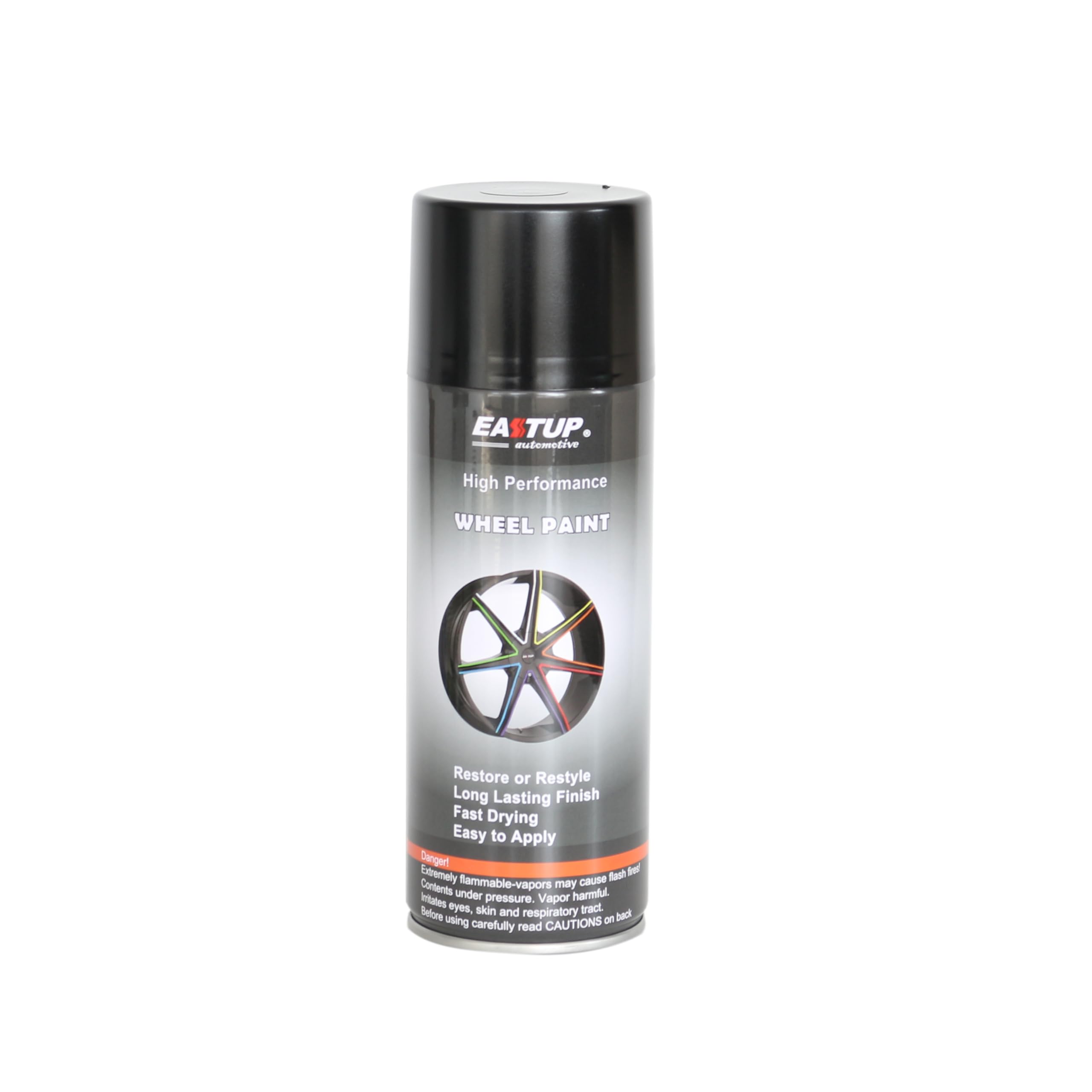
EASTUP’s satin black variant (#32) offers the same acrylic enamel chemistry as the gloss version but with a reduced-sheen finish that appeals to owners seeking a more understated, modern wheel look. The satin texture effectively masks minor surface irregularities, dust nibs, and uneven metal prep, making it the more forgiving choice for first-time wheel painters. Owner reviews consistently rate the paint’s ease of application highly, noting that runs are rare with proper technique.
The fade-resistant formulation holds up well under prolonged sun exposure, a common weak point for budget aerosol paints. Users who painted daily-driven wheels report minimal color shift after six months of outdoor parking, suggesting the UV stabilizers in the enamel are effective. The 10-ounce can provides adequate coverage for one wheel with three light coats, though some owners recommend purchasing an extra can for the fourth wheel to ensure even film build.
One notable observation from the review data is that the satin black color matches the cap more closely than the metallic variants do, reducing the guesswork when ordering. The paint works on aluminum, steel, and plastic hubcaps, broadening its utility beyond just alloy wheels. While not as chemically resistant as epoxy-based options, the acrylic enamel provides sufficient durability for standard street use and periodic washing without degradation.
What works
- Satin finish hides surface prep imperfections effectively
- Good UV resistance for long-term color retention
- Works on aluminum, steel, and plastic substrates
- Forgiving application with low run risk
What doesn’t
- Not as chip-resistant as epoxy-based paints
- Color cap mismatch reported for non-black variants
- Coverage per can requires careful planning for full sets
Hardware & Specs Guide
Acrylic Enamel vs. Epoxy Chemistry
Acrylic enamel paints, used by EASTUP and NADAMOO, cure through solvent evaporation. They offer faster recoat times and easier application but lower ultimate hardness compared to epoxy. Epoxy paints, like VHT’s SP652 and SP671, undergo a chemical cross-linking cure that produces a tougher, more solvent-resistant film. Epoxy requires more precise temperature control (60–80°F range) but delivers significantly better chip and chemical resistance once fully cured over 24 hours.
Coverage Planning per Wheel Set
A standard 11-ounce aerosol can covers approximately 8–12 square feet depending on film thickness. For four average 17-inch wheels with three light coats, plan for four to five cans total. Thicker gloss formulations may require additional paint to achieve uniform opacity. NADAMOO’s 13-ounce can provides roughly 25% more coverage per unit than the 10-ounce EASTUP cans, which can reduce total project cost if you are coating a full set.
Finish Type and Light Interaction
Gloss finishes (NADAMOO, EASTUP gloss) produce a reflective surface that amplifies wheel contours but also reveals sanding scratches, dust, and uneven metal prep. Satin finishes (VHT SP652, SP671, EASTUP satin) scatter light more diffusely, concealing minor surface flaws while still providing a refined appearance. Matte finishes are rare in wheel-specific paints because they require special flattening agents that can reduce durability against abrasion.
Temperature and Chemical Resistance
VHT’s epoxy formulations are rated for intermittent heat up to 550°F, making them suitable for wheels subjected to heavy braking heat. Acrylic enamels tolerate lower temperatures before softening — typically around 200°F continuous. Chemical resistance follows a similar hierarchy: epoxy paints withstand brake fluid, gasoline, and deicing salts better than acrylics. For winter-driven vehicles or track-day wheels, epoxy-based paints are the safer long-term choice.
FAQ
Do I need to remove the tire before spraying wheels?
How many coats of wheel spray paint are needed?
Can I spray over existing wheel paint or powder coat?
How long should I wait before driving after painting wheels?
Will wheel paint withstand automatic car washes?
Final Thoughts: The Verdict
For most buyers, the best car wheel spray paint winner is the NADAMOO Aluminum Wheel Spray Paint because it balances forgiving application, deep gloss finish, and weather resistance at a competitive price point. If you want maximum chip protection and a satin factory look, grab the VHT SP652 Epoxy. And for a budget-friendly wheel refresh that still delivers solid durability, nothing beats the EASTUP High Gloss Black.

Certification: BSc in Mechanical Engineering
Education: Mechanical engineer
Lives In: 539 W Commerce St, Dallas, TX 75208, USA
Md Amir is an auto mechanic student and writer with over half a decade of experience in the automotive field. He has worked with top automotive brands such as Lexus, Quantum, and also owns two automotive blogs autocarneed.com and taxiwiz.com.