That blinding sliver of light that sneaks past your factory visor isn’t just an annoyance—it’s a safety hazard that forces you to squint, tilt your head, and take your focus off the road. A quality sun visor extender bridges the gap between what your built-in visor covers and what the sun actually throws at your eyes.
I’m Amir — the founder and writer behind Four Wheel Ask. I’ve spent years analyzing automotive accessories, filtering through thousands of owner reports and technical specifications to find the real solutions that deliver measurable glare reduction and daily driving comfort.
After comparing polarized lens quality, mounting security, and real-world coverage across multiple designs, I’ve narrowed the field down to the most effective options for the best car sun visor extender that actually handles low-angle morning and evening glare.
How To Choose The Best Car Sun Visor Extender
A visor extender isn’t just a piece of dark plastic—it’s an optical tool that needs to handle directional glare, UV exposure, and the physical constraints of your vehicle’s interior. Choosing the right one comes down to a handful of category-specific specs.
Polarization and Lens Material
The single most important feature is a true polarized lens, not just a tinted sheet. A polarized extender filters horizontal light waves that cause blinding glare from wet roads, other car windshields, and snow. Polycarbonate (PC) lenses are the gold standard—they’re impact-resistant, optically clear, and resist yellowing far longer than acrylic or TAC (triacetate) alternatives.
Mounting System and Adjustability
The attachment method dictates whether your extender stays put or sags after a few weeks. Strap-based designs with tension sliders work well for most visors, while dual-clip systems with 540-degree swivel offer more positioning freedom—especially important if you need to swing the visor to the side window without the extender flopping. Look for a design that allows independent horizontal and vertical extension.
Coverage Area and Fit
Not all extenders cover the full gap. Measure your factory visor width and compare it to the extender’s dimensions. A good universal unit handles visors from roughly 5 to 9 inches wide. For shorter drivers who sit lower, a longer downward extension (10+ inches) is critical. Side extensions that slide out provide additional relief when the sun comes through the driver-side window during early morning or late afternoon commutes.
Quick Comparison
On smaller screens, swipe sideways to see the full table.
| Model | Category | Best For | Key Spec | Amazon |
|---|---|---|---|---|
| Veharvim Polarized Extender | Polarized PC | True polarization + side shades | PC lens, 60x stronger than glass | Amazon |
| Autiora Professional-Grade | Polarized PC | All-season glare defense | PC lens, 99% UV block | Amazon |
| Veharvim Dual-Clip | Polarized PC | 540° swivel, mirror access | 13″ x 6.6″ PC lens | Amazon |
| FULLONG Basic Extender | Tinted Plastic | Simple horizontal extension | Adjustable buckle closure | Amazon |
| ZDDGNN Polarized Extender | Polarized PC | Two mounting positions | 12.5″ x 10.4″ PC lens | Amazon |
In‑Depth Reviews
1. Veharvim Polarized Sun Visor Extender
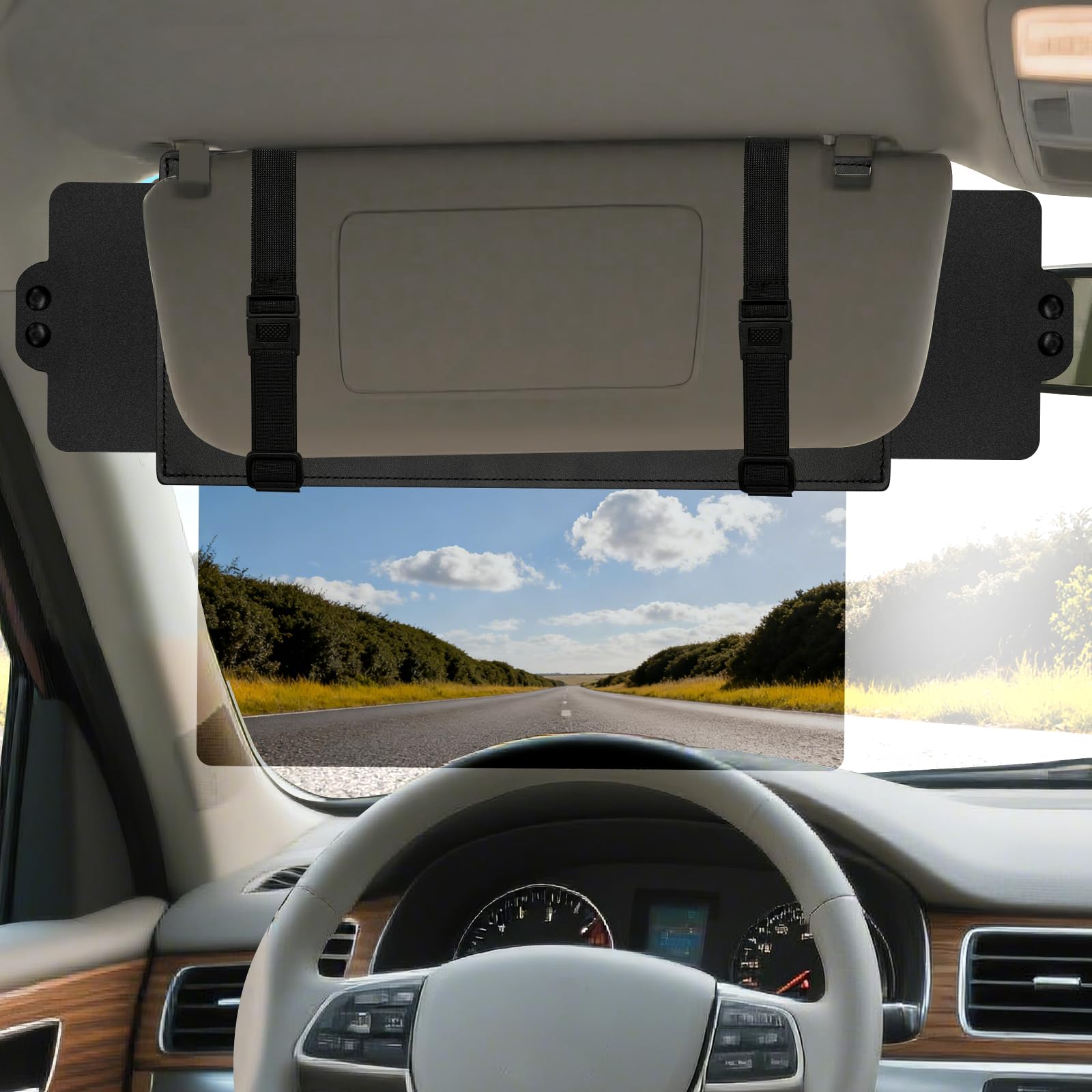
The Veharvim extender stands out because it uses a genuine polarized polycarbonate lens with NASA-derived polarizing technology—this isn’t a tinted sticker pretending to be optical gear. The lens filters horizontal glare from wet asphalt and oncoming LED headlights while maintaining clear forward vision. Owners consistently report that the side extension panels, which slide out independently, solve the problem of low-angle sun sneaking in through the driver-side window during early morning commutes.
The strap-based mounting system includes a built-in tension slider that locks the extender flush against any visor thickness from roughly 5 to 9 inches. Installation takes about thirty seconds with no tools. The foldable design means you can collapse it flat against the visor when not in use, without blocking the vanity mirror or garage door opener. The lens measures 13.5 inches long by 6.7 inches wide, providing generous downward coverage that shorter drivers particularly appreciate.
At this price point, the combination of true polarization, auxiliary side shades, and a durable PC lens that is 60 times stronger than glass delivers exceptional value. A two-year manufacturer warranty covers any defects. The only real trade-off is that the sliding mechanism feels slightly draggy when adjusting with one hand, but that tension also prevents accidental movement over bumps.
What works
- Genuine polarized PC lens eliminates road glare effectively
- Side extension panels provide extra coverage for window angles
- Two-year warranty offers above-average protection
What doesn’t
- Sliding mechanism can feel stiff during one-handed adjustment
- Strap system may leave slight pressure marks on thin visors
2. Autiora Professional-Grade Sun Visor Extender
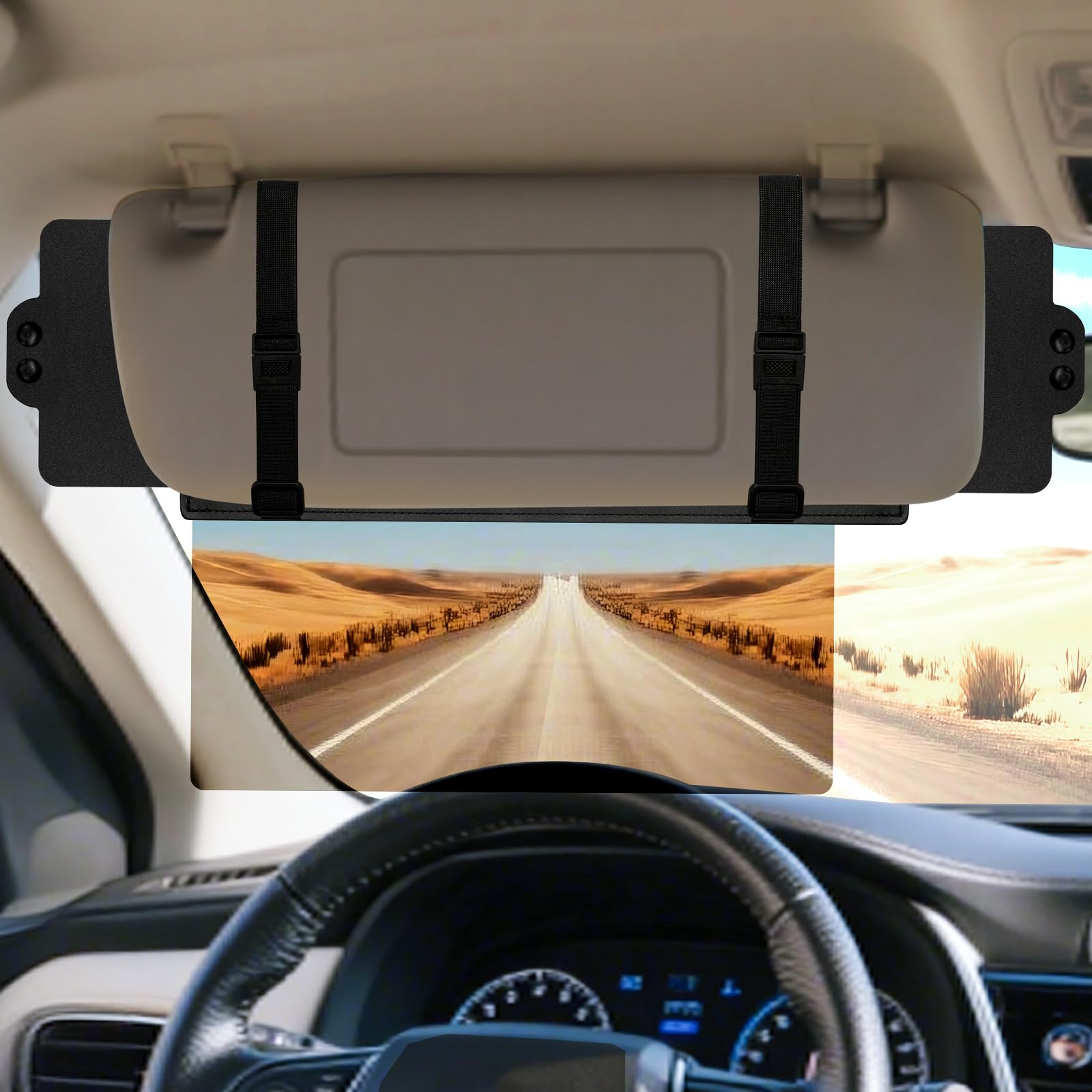
Autiora engineered this extender specifically for light-sensitive drivers—those recovering from cataract surgery, seniors dealing with photophobia, or anyone who finds standard visors inadequate in changing light conditions. The polarized PC lens blocks 99 percent of UV radiation and significantly reduces nighttime headlight bloom, which is a common complaint among owners who drive after dark. The lens measures 10.55 inches down by 4.4 inches wide, with a separate side panel that extends 4.7 inches horizontally.
The mounting system uses an upgraded slide-track mechanism combined with reinforced straps that are 40 percent longer than standard units, allowing it to wrap thicker SUV and truck visors securely. Autiora claims compatibility with over 500 vehicle models, and the adjustable buckles accommodate visor widths from 5.12 to 9.06 inches. The PC lens withstands temperature extremes from minus 30 degrees Celsius to 120 degrees Celsius without warping or discoloration, making it suitable for vehicles parked in direct sun or freezing conditions.
Owners report that the downward extension eliminates the eye strain and headaches caused by low-horizon sun during daily commutes. The scratch-resistant coating keeps the lens clear even after repeated sliding adjustments. The fit is tight enough that the extender doesn’t sag or block the rearview mirror line of sight. The included polarizer test card confirms actual polarization, not just tint.
What works
- High UV blockage ideal for light-sensitive drivers
- Extreme temperature tolerance prevents lens warping
- Slide-track mechanism offers smooth one-handed use
What doesn’t
- Side panel placement can interfere with rearview mirror position on some vehicles
- Straps require deliberate tightening to avoid slippage on thin visors
3. Veharvim Dual-Clip Sun Visor Extender
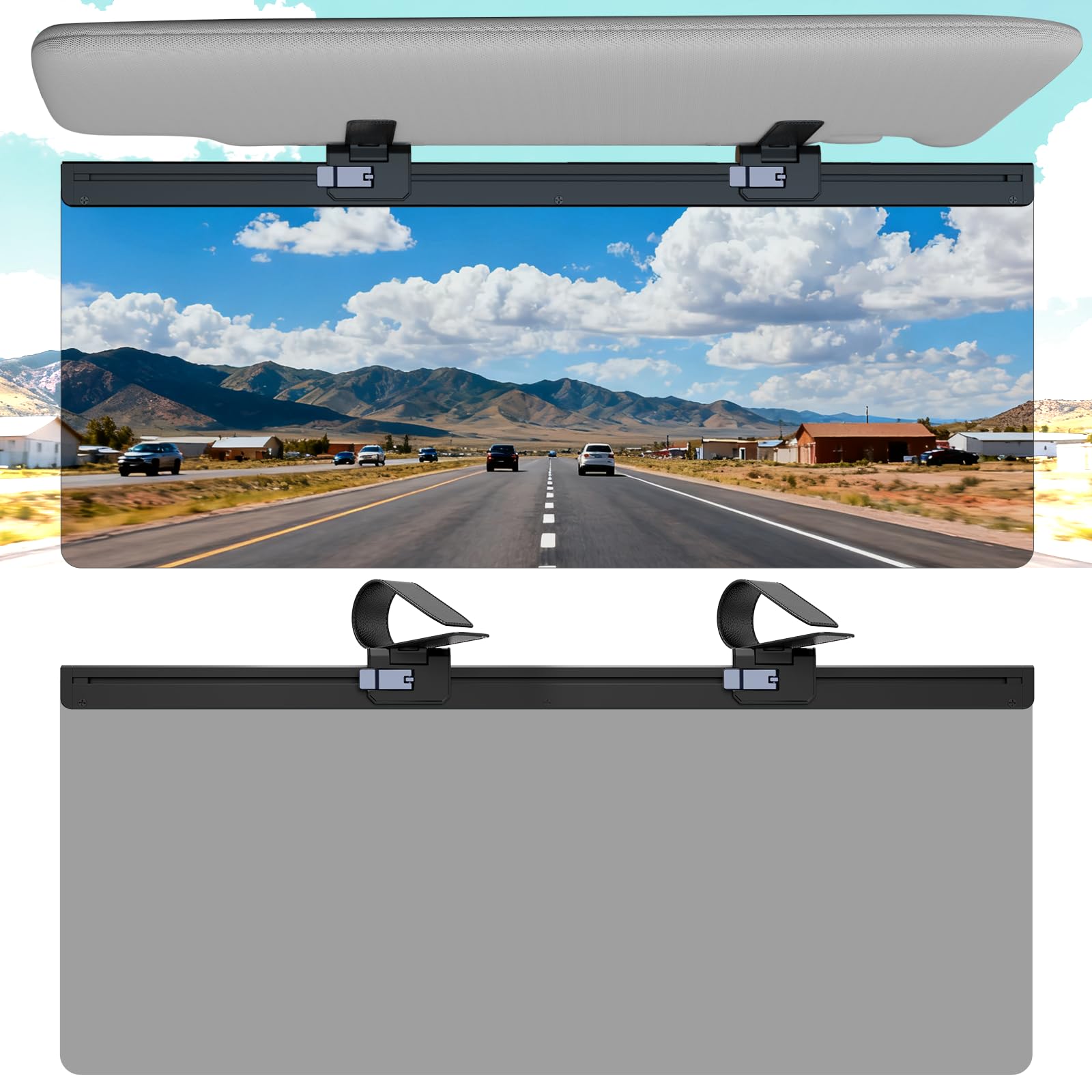
This Veharvim variant replaces the traditional strap system with dual clips that offer 540 degrees of swivel and independent slide adjustment. The key advantage is that you can position the polarized PC lens exactly where the gap is, then rotate the entire unit 180 degrees to use it on the passenger side or store it flat against the visor. The clip system also keeps the vanity mirror fully accessible—a common complaint with strap-on extenders that block mirror access entirely.
The lens measures 13 inches by 6.6 inches and is made from high-strength polycarbonate that is 60 times more impact-resistant than glass. The clips are designed with patented adjustable tension that accommodates OEM visor thicknesses from thin sedan panels to thicker SUV visors. Installation is genuinely tool-free: you snap the clips over the visor edge and tighten the screwless tension knob, taking under fifteen seconds. The matte black finish with leather trim blends well with most factory interiors.
Owners highlight the ability to swing the extender to the side window position without the unit flopping or detaching. The lens sits flush enough that it doesn’t introduce a distracting gap. A few owners noted that the clips might leave very light indentations on soft foam-core visors if left in the same position for months, but the tension is adjustable to reduce pressure. The included microfiber cloth and polarizer test card verify lens quality out of the box.
What works
- Dual-clip design allows full vanity mirror access
- 540-degree swivel handles side window and front positions equally well
- Tool-free installation with adjustable tension
What doesn’t
- May leave minor marks on soft foam-core visors with prolonged use
- Larger clip profile can interfere with some visor-mounted garage door openers
4. FULLONG Car Visor Extender

The FULLONG extender takes a simpler, no-frills approach: a tinted acrylic panel attached via a threaded buckle closure that wraps around the factory visor. It doesn’t use a polarized lens or polycarbonate material, so glare reduction comes from the tint density rather than optical filtration. This makes it a passable option for light-sensitive drivers on a strict budget who need basic horizontal extension without expecting premium optical performance.
The adjustable buckle system fits visor thicknesses from roughly half an inch to an inch, and you can slide the extender left or right to position the shade where the gap appears. The panel measures approximately 12 inches across by 5 inches down, providing modest coverage. When not in use, the unit stores flat against the visor. Owners of older Honda Fits and similar compact cars report that the extender solves the specific problem of the factory visor leaving a two-inch gap at the side window position.
Multiple owners note that the slider mechanism feels loose and the panel is somewhat flexible, which can cause it to droop slightly over time. The acrylic surface scratches more easily than PC, so care is needed during cleaning. For drivers who just need a quick, inexpensive solution to a single-axis gap and aren’t expecting optical-grade polarization, the FULLONG delivers. The one-year warranty covers basic defects, but most owners consider it a disposable accessory.
What works
- Low entry cost for basic sun blocking
- Universal buckle system fits most visor thicknesses
- Stores flat against visor when not needed
What doesn’t
- No polarization—tint-only glare reduction
- Acrylic lens scratches and fogs more easily than PC
- Loose slider mechanism may sag after extended use
5. ZDDGNN Polarized Car Sun Visor Extender
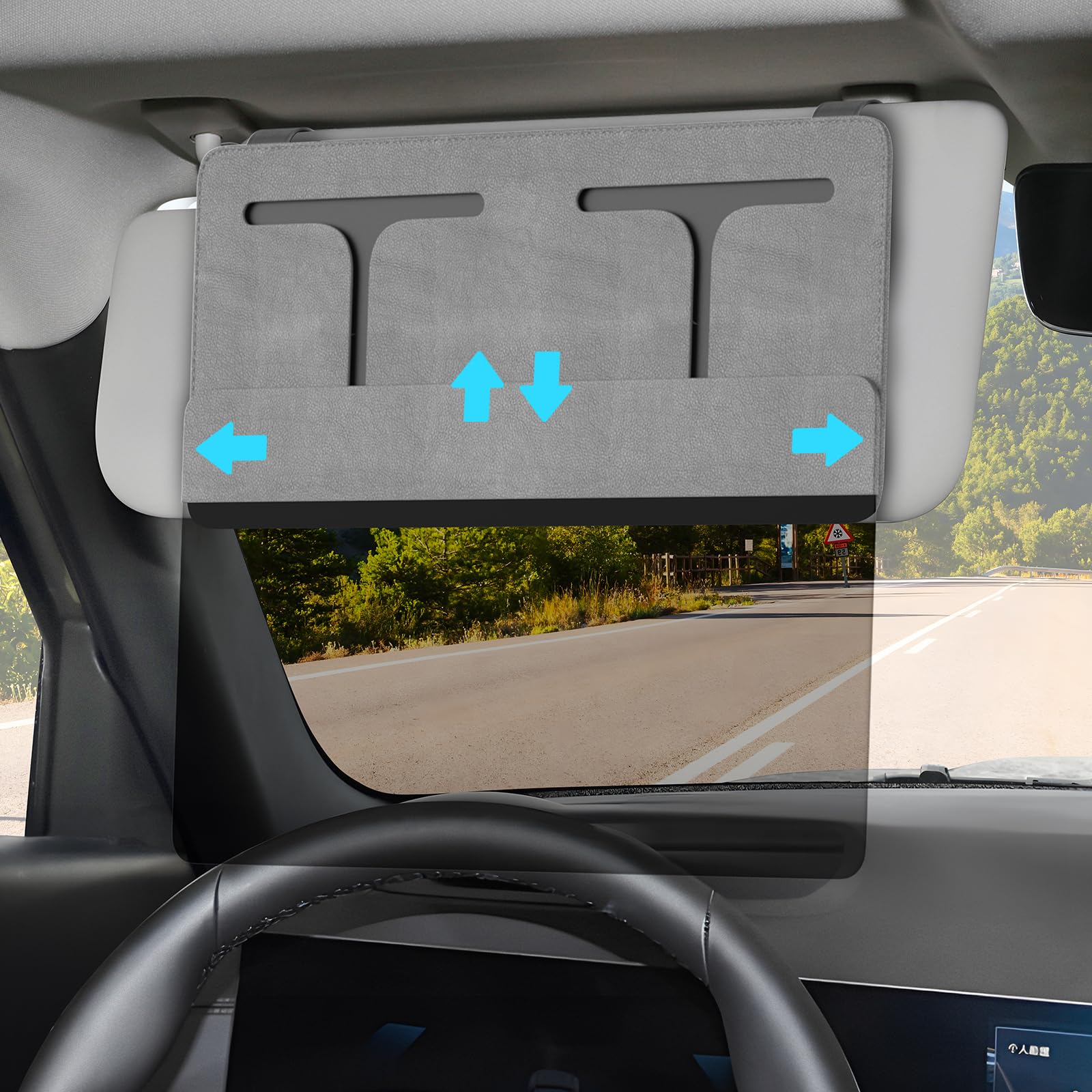
The ZDDGNN extender takes a design-first approach, wrapping its polarized PC lens in a PU leather sleeve that slides over the factory visor. The key differentiator is the mounting flexibility: you can install it from the front of the visor for standard coverage, or from the back if you need to keep the vanity mirror accessible. The long elastic straps with locking buckles secure the unit without hard plastic clips that might scratch visor edges.
The polarized lens measures 12.52 inches by 10.35 inches at its widest points, offering substantial coverage that extends lower than most competitors. The upgraded locking structure allows rotation and forward-back adjustment, so you can fine-tune the angle to match your seating position and the sun’s trajectory. The PU leather exterior resists UV degradation and maintains a clean appearance over time, unlike bare plastic that can discolor in direct sunlight.
Owners who have tested the unit in both morning direct sun and evening reflected glare report that the polarization effectively cuts through the worst of the squint-inducing light. The elastic strap system holds the extender securely enough for off-road or bumpy driving conditions. The grey-tinted lens blends naturally with the road view rather than casting a yellow or blue shift. The two-year warranty provides added confidence, though some owners wish the side-to-side sliding mechanism were smoother.
What works
- Front and back mounting options for mirror access
- PU leather cover resists sun damage and looks clean
- Large lens area covers both downward and horizontal gaps
What doesn’t
- Side-to-side sliding mechanism lacks smooth precision
- Elastic straps may loosen slightly on very thick visors
Hardware & Specs Guide
Polarized PC vs Tinted Acrylic
The lens material determines whether you get true glare reduction or just a dark filter. Polycarbonate (PC) lenses are 60 times stronger than glass and offer UV400 protection with actual polarization that filters horizontal light waves. Tinted acrylic, used in budget extenders, darkens the view but doesn’t cut the specific wavelengths that cause glare from wet roads, snow, and oncoming headlights. For daily commuters who face changing light conditions, a polarized PC lens is the difference between clear vision and persistent eye strain.
Mounting Systems Compared
Three main attachment methods exist: strap-based tension sliders, dual-clip systems with swivel articulation, and sleeve-style covers with elastic buckles. Strap systems are the most universal across visor thicknesses but can feel stiff. Dual-clip designs offer the fastest repositioning between front and side window positions. Sleeve covers provide the most stable hold for off-road use but limit quick removal. The best choice depends on how often you need to switch the extender between vehicles or fold it away completely.
FAQ
Will a visor extender block my vanity mirror or garage door opener?
Can I use a polarized visor extender at night against headlight glare?
How do I clean a polarized visor extender without scratching it?
Final Thoughts: The Verdict
For most buyers, the best car sun visor extender is the Veharvim Polarized Extender because it delivers true polarization, auxiliary side panels, and durable PC construction at a reasonable price. If you need full vanity mirror access and tool-free repositioning between front and side windows, grab the Veharvim Dual-Clip Extender. And for the most budget-conscious install where basic horizontal coverage is the only requirement, nothing beats the simplicity of the FULLONG Basic Extender.

Certification: BSc in Mechanical Engineering
Education: Mechanical engineer
Lives In: 539 W Commerce St, Dallas, TX 75208, USA
Md Amir is an auto mechanic student and writer with over half a decade of experience in the automotive field. He has worked with top automotive brands such as Lexus, Quantum, and also owns two automotive blogs autocarneed.com and taxiwiz.com.