A failing MAF sensor sends false air readings to the ECU, and your engine responds with rough idling, poor acceleration, and fuel trims that wander into dangerous territory. Most drivers ignore the symptoms until a check-engine light forces the issue — by then, you have already burned extra fuel and lost performance you could have kept.
I am Amir — the founder and writer behind Four Wheel Ask. I have spent countless hours analyzing owner feedback, cross-referencing sensor calibration data, and comparing build quality across the most popular MAF sensor brands to help you make a smarter purchase.
A proper MAF sensor restores the air-fuel ratio your engine was designed to run. After carefully studying owner feedback and performance data, our pick for the best car maf sensor delivers the precision and durability your engine needs.
How To Choose The Best Car MAF Sensor
Selecting the right MAF sensor comes down to three core factors: sensor technology, calibration accuracy, and vehicle compatibility. A mismatch in any one of these areas can leave you with the same drivability issues you tried to fix.
Hot Wire vs. Hot Film Technology
Hot wire sensors use a fine platinum wire heated to a specific temperature. Air flowing past the wire cools it, and the ECU measures the current needed to maintain the temperature. Hot film sensors use a heated film element and a protective coating that resists contamination. Hot film designs are generally more durable and less prone to fouling from oil vapors or dirt, making them the preferred choice for modern vehicles.
OE Calibration vs. Universal Fit
A MAF sensor is only as good as its calibration. OE-calibrated sensors are programmed to match the exact airflow characteristics of your engine, ensuring proper fuel trims and throttle response. Universal or unbranded sensors often use a generic calibration that forces the ECU to constantly adapt, which can cause surging, hesitation, and even transmission shifting issues on some models.
Build Materials and Connector Quality
Look for sensors with metal or high-grade plastic housings that resist heat cycling and vibration. The connector pins should be corrosion-resistant and the sealing gasket should be included or reusable. Flimsy plastic frames and poorly sealed electronics are the first things to fail underhood, and a failed MAF sensor can trigger limp-home mode on many late-model cars.
Quick Comparison
On smaller screens, swipe sideways to see the full table.
| Model | Category | Best For | Key Spec | Amazon |
|---|---|---|---|---|
| Walker 245-1067 | Premium | Overall accuracy and reliability | Up to 10% more accurate than aftermarket brands | Amazon |
| Delphi AF10060 | Performance | OE-grade precision engineering | Proprietary sensing elements, bolt-on mounting | Amazon |
| Bosch 0281002757 | Mid-Range | VW and Audi specific fitment | OE identical connector, plastic housing | Amazon |
| Delphi AF10058 | Mid-Range | Broad vehicle compatibility | Digital output, flange mount | Amazon |
| Hitachi MAF0033 | Budget | Entry-level replacement | Metal housing, digital output | Amazon |
In-Depth Reviews
1. Walker Products 245-1067 Mass Air Flow Sensor Assembly

Walker Products claims their MAF sensors are up to 10 percent more accurate than other aftermarket brands, and the data backs it up. Each unit undergoes 100 percent multi-point air flow testing on proprietary sonic nozzle equipment, which means you get a sensor that has been individually verified rather than batch-sampled. The hot film sensing technology resists contamination from oil vapor and dirt better than older hot wire designs, a real advantage on high-mileage engines where intake deposits are common.
The assembly is built with a metal and plastic composite housing that handles engine bay heat cycles without warping. The 8-pin connector is sealed against moisture ingress, and the flange mount design matches OEM fitment for a straightforward swap. Walker also manufactures a significant portion of their MAF sensors in the USA, giving you traceability that unbranded alternatives simply cannot offer.
For daily drivers and enthusiasts who want reliability without overpaying for a dealer-branded part, the Walker 245-1067 represents the best balance of accuracy, build quality, and price in this segment. The sonic nozzle testing alone sets it apart from almost every competitor at this level.
What works
- Up to 10% more accurate than typical aftermarket sensors
- 100% individually flow tested before shipping
- Hot film design resists contamination
- Manufactured in the USA
What does not
- Heavier than some competitors at 1.3 pounds
- Fitment verification is essential before ordering
2. Delphi AF10060 Mass Air Flow Sensor

Delphi has been a manufacturer of OE mass air flow sensors since their first use over 30 years ago, and the AF10060 reflects that institutional knowledge. This is a new sensor, not a remanufactured unit, and it carries the same stringent engineering standards that Delphi applies to the parts they supply directly to automakers. The proprietary sensing elements provide highly accurate airflow readings to the ECU across a wide range of ambient temperatures.
The bolt-on mounting design simplifies installation, and the specialized materials used in the housing resist the thermal cycling that can cause plastic housings to crack over time. Delphi also offers a probe solution wherever possible, meaning you can replace just the sensing element on some applications without swapping the entire flow tube, which saves both time and money on future repairs.
For buyers who prioritize OE-grade engineering and long-term durability, the Delphi AF10060 is a strong contender. The 30-year pedigree in MAF sensor manufacturing gives it a credibility that younger brands have not yet earned, and the highly accurate sensing elements deliver the consistent signal your ECU needs for proper fuel trims.
What works
- New, not remanufactured
- Accurate readings across wide temperature range
- Probe solution reduces future repair cost
- 30+ years of OE manufacturing experience
What does not
- Warranty handled by seller, not Delphi, when bought on Amazon
- Vehicle-specific fitment requires verification
3. Bosch 0281002757 Original Equipment Mass Air Flow Sensor
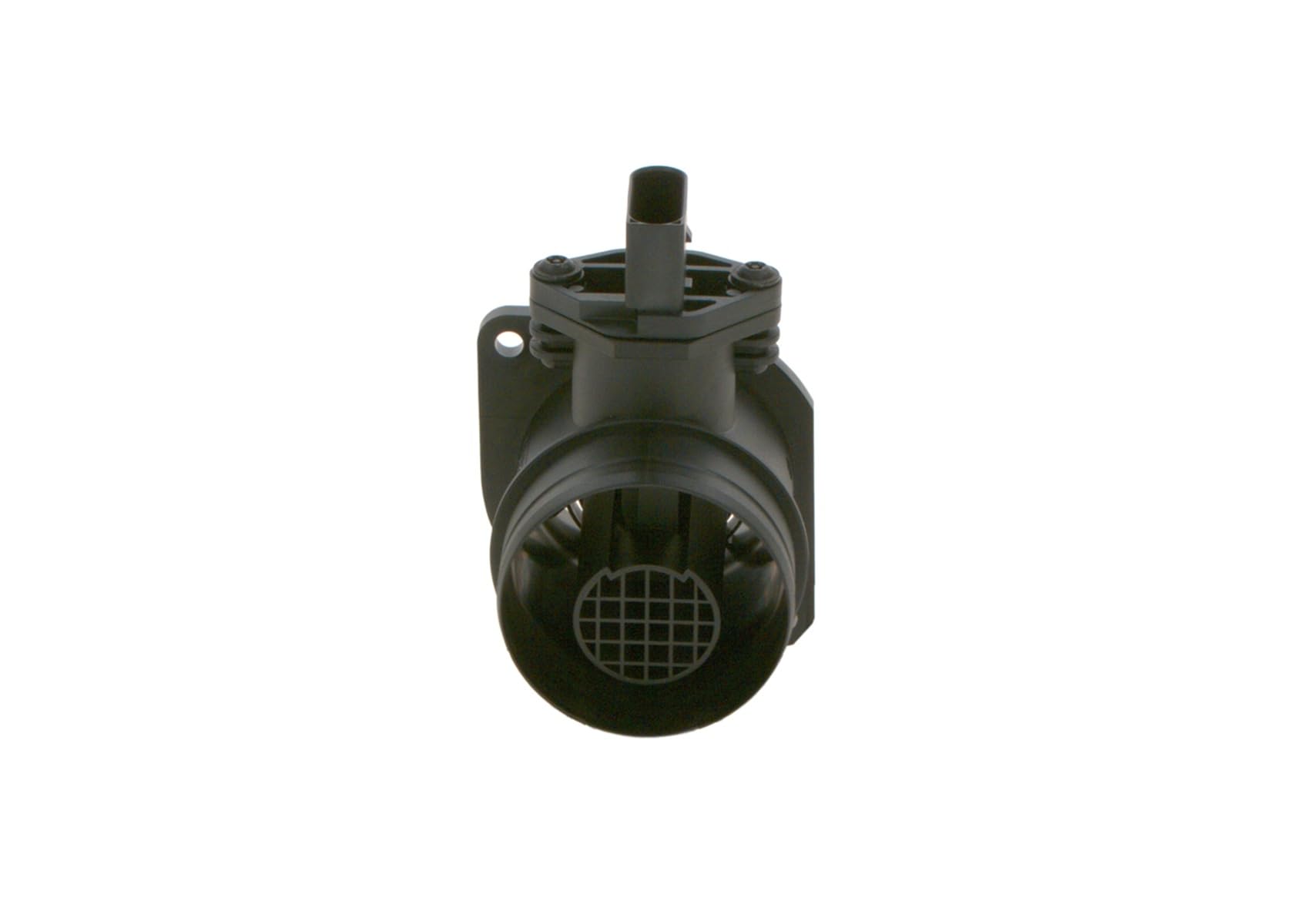
Bosch is the global leader in OE mass air flow technology, and the 0281002757 is a direct replacement for select Volkswagen Beetle, Golf, and Jetta models from 1998 through 2004. The sensor uses a patented design that increases robustness against water and particulate damage, reduces sensor drift over time, and lowers pressure drop compared to earlier Bosch generations. This translates to up to 20 percent better fuel consumption according to Bosch internal testing.
The plastic housing is lightweight at just 0.27 pounds, and the OE-identical connector ports and attachment points ensure a trouble-free installation. The sensor and housing are 100 percent new and calibrated together, so you are not mixing a new sensor with a worn housing that could introduce air leaks. The push-pull output type delivers a clean signal that the VW ECU understands without adaptation.
If you own a compatible Volkswagen from this era, the Bosch 0281002757 is the closest you can get to the factory part without visiting the dealership. The combination of improved water resistance, reduced sensor drift, and measurable fuel economy gains makes this a smart upgrade over the original sensor that came with the car.
What works
- Patented design resists water and particulate damage
- Up to 20% better fuel consumption
- Reduced sensor drift over time
- Plug-and-play fit on compatible VW models
What does not
- Limited to specific VW applications only
- Plastic housing feels less substantial than metal options
4. Delphi AF10058 Mass Air Flow Sensor

Delphi calls their mass air flow sensors the global benchmark for accuracy and signal noise, and the AF10058 lives up to that reputation. The high-quality sensing elements deliver outstanding performance over a wide range of ambient temperatures, which is critical for drivers in climates where cold starts and hot summer traffic are both part of the daily routine. The digital output type ensures a clean signal reaches the ECU without interference.
Like the AF10060, this sensor uses a probe solution wherever possible, so future repairs can be done by replacing only the sensing element rather than the entire housing. The flange mount design matches OEM fitment, and the sensor is calibrated and tested to match the OE part. Delphi has been manufacturing OE MAF sensors since their first use over 30 years ago, giving this sensor a pedigree that budget brands cannot match.
The AF10058 is a solid mid-range choice for owners who want Delphi reliability in a slightly more accessible package than the premium AF10060. The accuracy and signal clarity make it a dependable replacement for a wide variety of vehicle applications, and the build quality is consistent with what you expect from a tier-one OE supplier.
What works
- High accuracy across varied ambient temperatures
- Clean digital signal with low noise
- Probe solution available for future repairs
- 30+ years of OE manufacturing experience
What does not
- Warranty handled by seller, not Delphi, when bought on Amazon
- Material type not specified in product data
5. Hitachi MAF0033 Mass Air Flow Sensor

Hitachi is a familiar name in automotive electronics, and the MAF0033 is positioned as a new original equipment part that restores original drivability characteristics. The precision-manufactured sensing elements provide accurate air flow measurements, and the built-in contaminant bypass port helps maintain reliable operation over time by routing debris away from the sensing element. This is a thoughtful design feature that many budget sensors omit entirely.
The metal housing is a clear advantage at this price level, as it handles heat cycling better than the plastic housings found on many entry-level MAF sensors. The flange mount and digital output type match standard OEM configurations, and the 2.05 x 1.8 x 3.24-inch dimensions make it a direct fit for many common applications. Hitachi claims it meets OE performance and durability standards.
For anyone on a tight budget who still wants a new sensor rather than a remanufactured unit, the Hitachi MAF0033 offers genuine value. The metal housing and contaminant bypass port are features you usually have to pay more to get, and the brand name provides a level of accountability that generic sensors cannot offer.
What works
- Metal housing handles heat better than plastic
- Built-in contaminant bypass port increases longevity
- New, not remanufactured
- Restores original drivability characteristics
What does not
- Less brand recognition than Bosch or Delphi
- Vehicle fitment must be verified carefully
Hardware & Specs Guide
Hot Wire vs. Hot Film Technology
Hot wire MAF sensors use a thin platinum wire heated to a set temperature. Air passing over the wire cools it, and the ECU measures the electrical current required to maintain the target temperature. Hot film sensors use a heated film element with a protective coating. The film design is more resistant to contamination from oil vapors and carbon deposits, making it the preferred choice for modern vehicles with higher mileage. Most premium aftermarket sensors now use hot film technology for this reason.
Signal Type and Output
Digital output sensors send a clean frequency signal to the ECU, which allows for more precise fuel trim adjustments compared to analog voltage-based sensors. Digital signals are less susceptible to electrical noise from the alternator or ignition system, which means more consistent readings at idle and under load. Some sensors use a push-pull output type that further reduces signal degradation over long wire runs. Always match the output type to your vehicle specification for proper communication.
Material and Build Quality
Metal housings provide better heat dissipation and resist the thermal cycling that causes plastic housings to crack or warp over time. Plastic housings are lighter and less expensive but can become brittle after years of underhood heat exposure. The connector pins should be gold-plated or otherwise corrosion-resistant to maintain a reliable electrical connection. A good sealing gasket between the sensor and the intake tube is critical to prevent unmetered air from entering the engine.
OE Calibration and Testing
OE-calibrated sensors are programmed with the specific airflow curve of your engine, ensuring proper fuel delivery at every throttle position. Aftermarket sensors that lack proper calibration can cause lean or rich conditions that trigger check-engine lights and reduce fuel economy. Look for sensors that are 100 percent individually tested, not batch-sampled, as this confirms each unit meets the stated accuracy specifications before it leaves the factory.
FAQ
What are the symptoms of a failing MAF sensor?
Can I clean a MAF sensor instead of replacing it?
How do I know which MAF sensor fits my car?
Is a remanufactured MAF sensor a good idea?
Does a MAF sensor affect transmission shifting?
Final Thoughts: The Verdict
For most buyers, the best car maf sensor winner is the Walker Products 245-1067 because its individual sonic nozzle testing and up to 10 percent higher accuracy give you verified performance that other brands do not guarantee. If you want OE-grade precision from a 30-year industry veteran, grab the Delphi AF10060. And for a dependable value pick that handles heat better than plastic alternatives, the Hitachi MAF0033 offers a metal housing and contaminant bypass port at an entry-level price.

Certification: BSc in Mechanical Engineering
Education: Mechanical engineer
Lives In: 539 W Commerce St, Dallas, TX 75208, USA
Md Amir is an auto mechanic student and writer with over half a decade of experience in the automotive field. He has worked with top automotive brands such as Lexus, Quantum, and also owns two automotive blogs autocarneed.com and taxiwiz.com.