A clogged fuel injector doesn’t always announce itself with a check-engine light. More often, it creeps in as a slight stumble at idle, a hesitation when you step on the throttle, or a gradual drop in fuel economy that you start blaming on winter-blend gas. Those tiny spray orifices get coated with carbon and varnish from combustion byproducts and low-quality fuel, breaking up the precise fuel-air mixture your engine’s ECU is trying to maintain. The result is incomplete combustion, wasted fuel, and a noticeable loss of responsiveness — problems that a targeted chemical cleaner can reverse without a trip to the shop.
I’m Amir — the founder and writer behind Four Wheel Ask. I’ve spent years digging into automotive additive chemistry, analyzing solvent formulations, carrier oils, and detergent packages across dozens of injector cleaners to separate true cleaning power from marketing hype.
Whether you’re dealing with a rough idle on your daily driver or prepping a high-mileage engine for another season of reliable service, choosing the right formula matters more than most drivers realize. That’s why I’ve put together this deep-dive review of the best car injector cleaner options available now, each matched to a specific driving need and engine type.
How To Choose The Best Car Injector Cleaner
Not all injector cleaners are created equal. The active chemistry, concentration, and carrier fluid determine how aggressively a formula dissolves carbon and varnish without harming sensitive O2 sensors or catalytic converters. Understanding a few key specifications will help you avoid wasting money on diluted “maintenance” products that barely clean anything.
Polyether Amine (PEA) Concentration
PEA is the detergent molecule that most top-tier fuel additives rely on. It withstands the high heat inside a combustion chamber and actively breaks down carbon deposits on injector tips, intake valves, and piston crowns. A product with a high PEA concentration will clean faster and more thoroughly, making it the right choice for engines with visible running issues or high mileage. Lower-concentration formulas work better as periodic maintenance for newer engines.
Solvent Carrier vs. Oil-Based Carrier
Most fuel injector cleaners use a solvent carrier — mineral spirits, kerosene, or a proprietary blend like Berryman’s HEST — to dissolve deposits and carry the detergent. These work well in gasoline and are typically added to the fuel tank. Oil-based carriers, like the synthetic ester base used in the TRIAX Pro Engine Flush, are designed to be added to the crankcase before an oil change. They target sludge and deposits throughout the engine oil system, not just the fuel path. Choose a fuel-tank additive for injector cleaning and an oil-based flush for overall engine deposit removal.
Compatibility With Direct Injection and Turbo Engines
Direct-injection engines are especially prone to carbon buildup on intake valves because there is no fuel washing over the valves. Some injector cleaners are formulated specifically to address this — look for products that explicitly mention GDI or direct-injection compatibility. Turbo engines also demand a cleaner that won’t coke or leave varnish on hot turbo bearings; the TRIAX flush specifically calls out anti-coking protection for turbochargers, making it a strong choice for boosted applications.
Quick Comparison
On smaller screens, swipe sideways to see the full table.
| Model | Category | Best For | Key Spec | Amazon |
|---|---|---|---|---|
| TRIAX Pro Engine Flush | Oil-Based | Deep carbon & sludge removal | 16 oz oil additive | Amazon |
| Rislone 4732 | Fuel Additive | Rough idle and hard starts | 32 oz bottle | Amazon |
| Quicksilver Quickleen | Fuel Additive | Comprehensive fuel system cleaning | 12 oz bottle | Amazon |
| Berryman 7516 | Solvent Cleaner | High-mileage rejuvenation | 15 fl. oz metal can | Amazon |
| STP Super Concentrated | Fuel Additive | Budget maintenance dose | 12 oz bottle | Amazon |
In‑Depth Reviews
1. TRIAX Pro Engine Flush
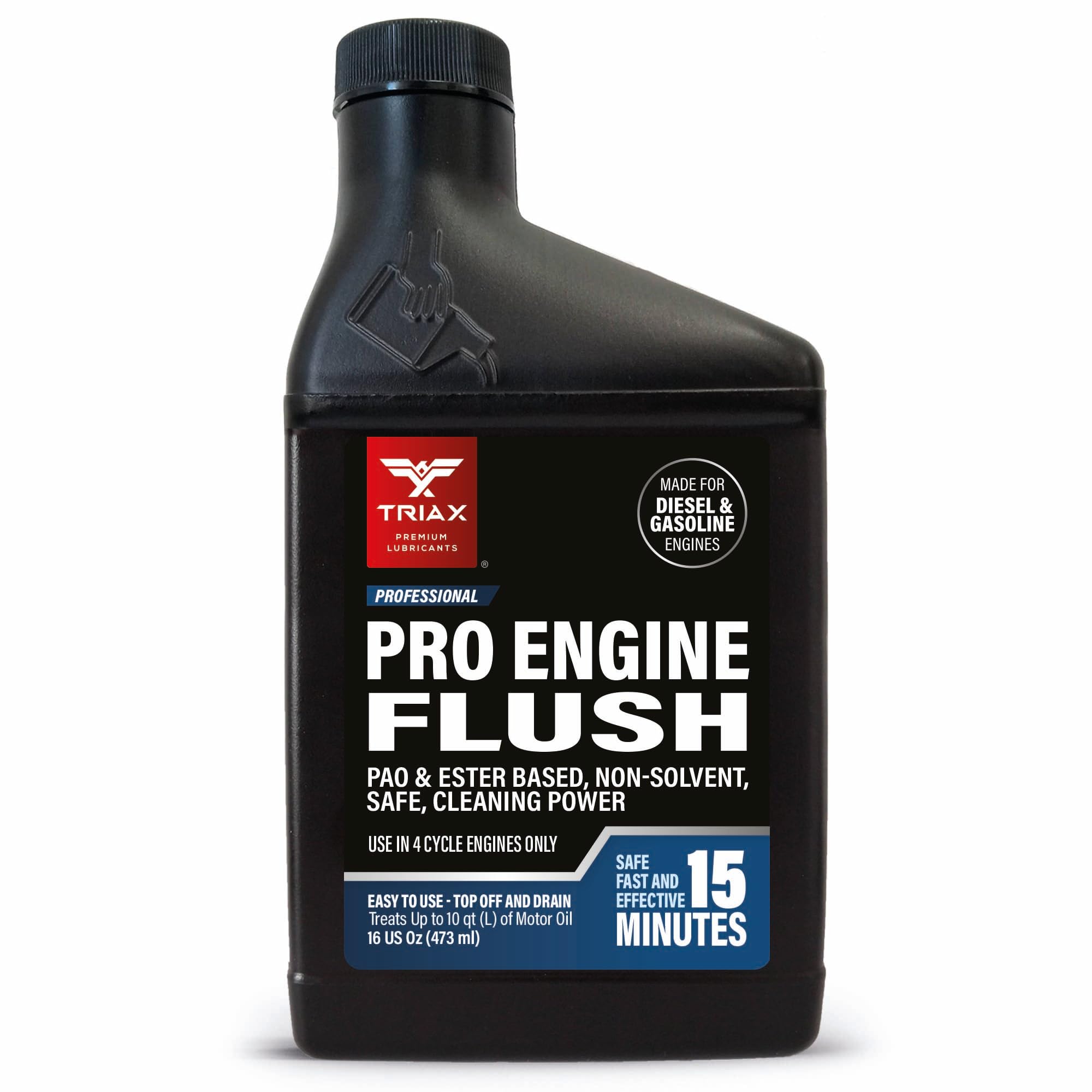
The TRIAX Pro Engine Flush takes a fundamentally different approach than tank additives — it’s a synthetic oil-based formula designed to be added to the crankcase before an oil change, not the fuel tank. The carrier fluid uses polar esters that chemically bond to deposits on piston rings, bearings, and the valve train, loosening sludge without the risk of dislodging large chunks that could block oil passages. A ten-to-fifteen-minute idle cycle is all it needs before you drain the old oil.
What sets this flush apart from cheaper alternatives is the preloaded ZDDP anti-wear additive. ZDDP forms a sacrificial layer on metal surfaces, protecting cam lobes, lifters, and turbo bearings during the flush cycle when the oil’s viscosity has been temporarily thinned by the cleaning agents. The formula also includes PIB succinimide dispersants that keep loosened debris suspended in the oil so it drains out completely rather than settling in the pan.
The 16-ounce bottle treats up to ten quarts of oil, covering most passenger cars, light trucks, and diesel engines. It’s compatible with both gasoline and diesel four-stroke oils, making it a versatile choice for households with multiple vehicles. If your engine has visible sludge buildup under the oil cap or you’re chasing a ticking noise from sticky lifters, this flush addresses the root cause rather than just masking symptoms.
What works
- Dissolves heavy sludge in the crankcase
- ZDDP protects turbo bearings during flush
- Works with gasoline and diesel engines
What doesn’t
- Does not clean fuel injectors directly
- Requires oil change immediately after use
2. Rislone 4732 Fuel Injector Cleaner
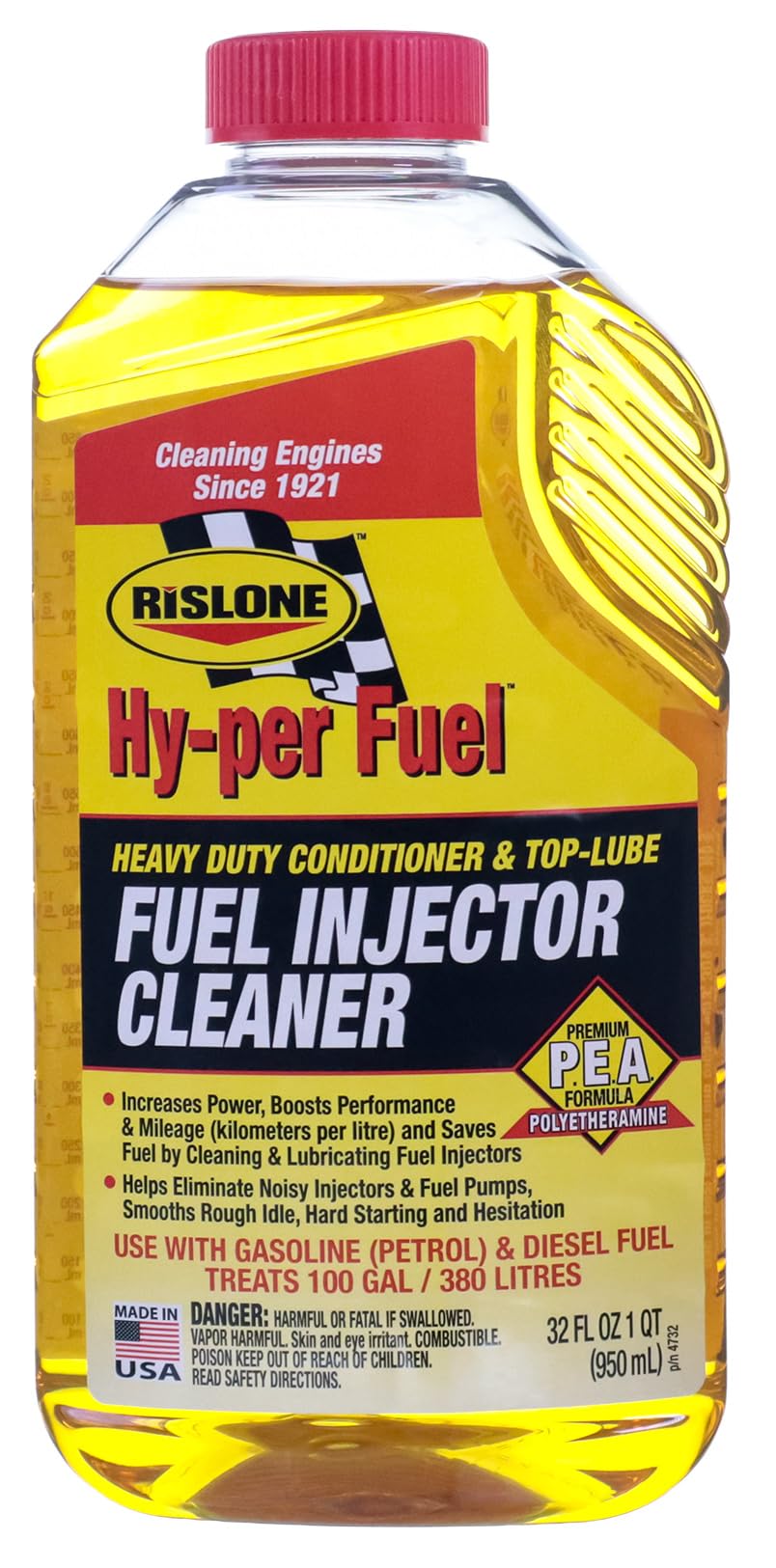
The Rislone 4732 delivers a full 32 ounces of fuel injector cleaner at a price point that undercuts many 12-ounce competitors. That extra volume matters for two reasons: you can treat multiple tanks of fuel from a single bottle, or you can run a concentrated dose through a nearly empty tank for a more aggressive cleaning session. The active detergent package targets the carbon and varnish that cause noisy injectors, rough idle, and hesitation during acceleration.
Rislone formulated this product to work across a wide fuel spectrum — it handles regular unleaded, E10, E15, E85 ethanol blends, and even ultra-low-sulfur diesel. This makes it a practical choice for households that run both gasoline and diesel vehicles, or for anyone who frequently switches between ethanol-blended and conventional fuel. The upper-cylinder lubricant component also helps protect intake valves and piston rings in direct-injection engines that don’t get fuel-wash cleaning.
In real-world driving, many owners report a noticeable smoothing of idle within a single tank after adding the Rislone 4732 to a nearly empty tank. Hard-start complaints often subside after a second treatment. The 32-ounce size also means you can split the bottle into multiple doses for regular maintenance, stretching the per-treatment cost considerably compared to smaller bottles.
What works
- Large 32-ounce bottle stretches further
- Works with gasoline, ethanol, and diesel
- Reduces injector noise and rough idle
What doesn’t
- Not a solvent-based cleaner for heavy carbon
- May require multiple treatments for severe deposits
3. Quicksilver Quickleen Engine and Fuel System Cleaner

Quicksilver is a brand most commonly associated with Mercury Marine outboards, but the Quickleen formula works equally well in automotive gasoline engines. It’s a fuel-tank additive designed to remove carbon deposits from carburetors, fuel injectors, intake valves, spark plugs, piston crowns, and cylinder heads in one treatment. The 12-ounce bottle treats up to 60 gallons of gasoline at the recommended one-ounce-per-five-gallons ratio, giving you several treatments per purchase.
The cleaning chemistry targets combustion chamber deposits that cause hot spots and pre-ignition — a condition that sounds like a metallic pinging under load. By dissolving those carbon crusts, Quickleen can restore the engine’s designed compression ratio and timing tolerance, effectively allowing the ECU to run optimal spark advance again. This knock-reduction benefit is especially noticeable in older engines that have been running on low-octane fuel for years.
For boat owners, this is a natural fit because Quicksilver products are engineered for marine cooling and fuel-system conditions. But for car drivers, the real appeal is the gentle, incremental cleaning approach — you can add it to every fill-up without worrying about overwhelming the fuel system with harsh solvents. It’s a solid maintenance cleaner for engines that aren’t severely clogged but need regular carbon control.
What works
- Prevents engine knocking from carbon deposits
- Safe for continuous use at every fill-up
- Excellent for outboard and marine engines
What doesn’t
- Smaller 12-ounce bottle for single-treatment dose
- Less aggressive on heavy varnish buildup
4. Berryman 7516 High Mileage Fuel System Rejuvenator

The Berryman 7516 leans hard into solvent power with its proprietary High Energy Solvent Technology — HEST. Unlike many injector cleaners that use weak carriers like mineral spirits or kerosene, Berryman loads the formula with strong aromatic solvents that aggressively dissolve fuel residue, gum, and hard carbon deposits. This makes it a go-to choice for high-mileage engines that have accumulated years of varnish in the fuel system.
Berryman’s metal pour can is a throwback design that hasn’t changed much in decades, but the chemistry inside is up to modern standards. The formula includes detergents that clean injector pintles and internal passages while also dispersing moisture that can accumulate in the fuel tank. For vehicles that sit for long periods or see seasonal use, the fuel stabilizer component helps keep gasoline from degrading and forming new deposits after cleaning.
One of the standout claims here is the ability to restore octane requirements. Engines with heavy carbon deposits often need higher-octane fuel to prevent knock because the deposits raise compression. By removing those deposits, the Berryman 7516 can allow an engine to run smoothly on its original octane rating again. It’s also safe for two-stroke and four-stroke small engines, making it useful for lawn equipment, generators, and outboards as well as cars.
What works
- Strong HEST solvents dissolve heavy carbon
- Restores octane tolerance in high-mileage engines
- Works on small engines and marine applications
What doesn’t
- Solvent odor is stronger than competitors
- Metal can is harder to pour accurately
5. STP Super Concentrated Fuel Injector Cleaner

The STP Super Concentrated injector cleaner is built around a high-quality carrier of active ingredients that includes a base of jet fuel — a detail STP has emphasized in its marketing for years because jet fuel has excellent solvency properties for dissolving gum and varnish. The 12-ounce bottle is a simple pour-in-and-fill-up design that requires zero measuring, making it one of the most straightforward injector cleaners to use on the market.
STP has been manufacturing this specific formula since at least 2004, and while the bottle design has changed, the chemistry remains consistent. It’s safe for all gasoline engines, including those with catalytic converters and oxygen sensors, because the cleaning agents are designed to burn cleanly without leaving residue that could foul emissions components. The active ingredients work by re-liquefying the sticky varnish that builds up on injector tips over thousands of miles.
This is not the most aggressive cleaner on the list — it’s best suited for routine maintenance rather than reviving a severely clogged system. If your engine is already running rough from major carbon buildup, you’ll want something with higher solvent strength like the Berryman 7516 or a dedicated engine flush like the TRIAX. But for keeping a healthy fuel system clean between oil changes, the STP Super Concentrated delivers reliable results at a no-fuss price point.
What works
- Jet fuel base provides strong solvency
- Simple single-bottle treatment
- Safe for all gasoline engines and emissions
What doesn’t
- Not concentrated enough for heavy carbon
- Discontinued by manufacturer in some markets
Hardware & Specs Guide
Polyether Amine (PEA) Detergents
PEA is the most effective detergent molecule for removing carbon deposits from injector nozzles, intake valves, and combustion chambers. It withstands the high temperatures inside the cylinder without breaking down, allowing it to chemically lift carbon from metal surfaces. Look for “PEA” in the ingredient list — if it’s not there, the cleaner relies on weaker amines or solvent-only action that won’t clean as thoroughly in a single treatment.
Solvent Carrier vs. Oil Carrier
Fuel-tank additives use a solvent carrier — typically mineral spirits, kerosene, or an aromatic blend — to dissolve deposits and carry the detergent into the injectors. These are added to the fuel tank and pass through the entire fuel system. Oil-based carriers, like the synthetic esters in the TRIAX flush, are added to the crankcase and target engine sludge, not fuel-path deposits. Knowing which path your cleaner takes is essential to matching the product to the problem.
Direct Injection Carbon Buildup
Gasoline direct injection (GDI) engines are prone to carbon buildup on the intake valves because fuel never washes over them — it’s injected directly into the cylinder. Standard fuel-tank injector cleaners cannot clean intake valves in GDI engines because the detergent never contacts the valves. For GDI engines, you need a cleaner specifically formulated for direct injection, or you need to use a crankcase flush to address the root cause of oil-vapor deposits on the intake tract.
Treatment Ratio and Bottle Size
Bottle size matters less than the treatment ratio — how many gallons of fuel a single bottle is designed to treat. A 12-ounce bottle that treats 12 gallons gives you one full treatment, while a 32-ounce bottle like the Rislone 4732 may treat 32 gallons at the standard ratio, but you can use a concentrated dose in a near-empty tank for a stronger clean. Always check the label instructions for the recommended ounces-per-gallon ratio before dumping the whole bottle in.
FAQ
How often should I use a fuel injector cleaner?
Can a fuel injector cleaner damage my engine?
Will injector cleaner fix a misfire or check engine light?
Final Thoughts: The Verdict
For most buyers, the best car injector cleaner winner is the TRIAX Pro Engine Flush because it tackles the root cause of engine deposits — sludge in the crankcase — while protecting turbo bearings with ZDDP anti-wear additives during the cleaning cycle. If you want a fuel-tank additive that smooths idle and protects against ethanol-related deposits, grab the Rislone 4732 for its massive 32-ounce bottle and multi-fuel compatibility. And for reviving a high-mileage engine with heavy carbon buildup, nothing beats the Berryman 7516 and its HEST solvent technology designed to dissolve years of accumulated varnish and restore octane tolerance.

Certification: BSc in Mechanical Engineering
Education: Mechanical engineer
Lives In: 539 W Commerce St, Dallas, TX 75208, USA
Md Amir is an auto mechanic student and writer with over half a decade of experience in the automotive field. He has worked with top automotive brands such as Lexus, Quantum, and also owns two automotive blogs autocarneed.com and taxiwiz.com.