Streaks, lint, and smears on your windshield or windows are not just an eyesore — they reduce visibility and create safety hazards, especially during sunrise or night driving. A dedicated glass cloth is the single most important tool in your detailing arsenal because even the best cleaner leaves residue behind if the towel wicks it back or sheds fibers.
I’m Amir — the founder and writer behind Four Wheel Ask. My approach to automotive products relies on deep market research, cross-referencing manufacturer specifications with long-term owner feedback to identify which materials and construction methods truly deliver repeatable, residue-free results.
After analyzing weave density, edge finishing, and absorbency data across dozens of microfiber formulations, the best car glass cleaning cloth is determined by its ability to trap grime without releasing fibers on the final pass.
How To Choose The Best Car Glass Cleaning Cloth
The market is flooded with microfiber towels claiming to be lint-free, but the reality is that weave construction, fiber blend, and edge treatment determine whether a cloth actually leaves glass spotless or simply pushes dirt around. Understanding three core factors will help you avoid the disappointment of a towel that sheds on the first wash.
Microfiber Blend and GSM Density
Split microfiber — typically a 70/30 or 80/20 polyester-to-polyamide ratio — creates tiny hooks that trap dust and oil. GSM (grams per square meter) indicates how dense the weave is: 300-400 GSM offers a balance of absorbency and drying speed for glass, while higher GSM cloths (500+) hold more liquid but take longer to dry between passes. For automotive glass, a 350-400 GSM towel with a 70/30 split provides the most reliable streak-free performance across a wide range of cleaners.
Weave Texture and Surface Contact
Dual-sided towels serve two distinct roles: a corduroy or waffle-weave side agitates and lifts bonded grime, while a smooth microfiber side performs the final polish. Single-sided cloths work well for maintenance wiping, but if you regularly face bug residue, road film, or smoker’s haze, a dual-texture design saves time and reduces the number of passes required to achieve clarity.
Edge Finishing and Durability
Raw-cut edges fray over time and become a source of lint on glass. Satin-stitched or suede-style edging prevents unraveling and ensures the towel remains soft even after dozens of wash cycles. Reinforced edge stitching also prevents the cloth from curling at the corners, which can leave drag marks on the glass surface. For frequent detailers, edge quality is the most overlooked durability factor.
Quick Comparison
On smaller screens, swipe sideways to see the full table.
| Model | Category | Best For | Key Spec | Amazon |
|---|---|---|---|---|
| Griot’s Garage PFM Dual Weave | Glass Towel | Streak-Free Final Finish | 9″x9″ Dual-Sided 560 GSM | Amazon |
| The Rag Company Premium Window | Glass Towel | Professional Detailing | 16″x16″ 70/30 Korean Microfiber | Amazon |
| The Rag Company FTW | Glass Towel | Crystal Clear Windows | 16″x16″ 550 GSM 3-Pack | Amazon |
| Norwex Window Cleaning Cloth | Glass Cloth | Water-Only Cleaning | 17.7″x17.7″ 2-Pack | Amazon |
| VIKING Glass Microfiber Cloth | Glass Towel | Dual-Sided Versatility | 16″x16″ 4-Pack Satin Edge | Amazon |
| Longmann Glass Cleaning Cloth | Glass Cloth | Eco-Friendly Water Clean | 16″x16″ 8-Pack Machine Washable | Amazon |
| MR.SIGA Microfiber Cloth | All-Purpose Towel | General Household Cleaning | 12.6″x12.6″ 12-Pack | Amazon |
| HOMEXCEL Microfiber Cloth | All-Purpose Towel | Bulk Multi-Surface Use | 11.5″x11.5″ 50-Pack | Amazon |
| UNIMADE Microfiber Towel | Shop Towel | 11″x9″ 100 Sheets Dispenser | Amazon | |
| SOOWASH Microfiber Roll | Towel Roll | Tear-Away Convenience | 12″x12″ 75-Pack Roll | Amazon |
| AIDEA Microfiber Cloth | All-Purpose Towel | Bulk Value Pack | 12″x12″ 100-Pack | Amazon |
In-Depth Reviews
1. Griot’s Garage PFM Dual Weave Glass Towels
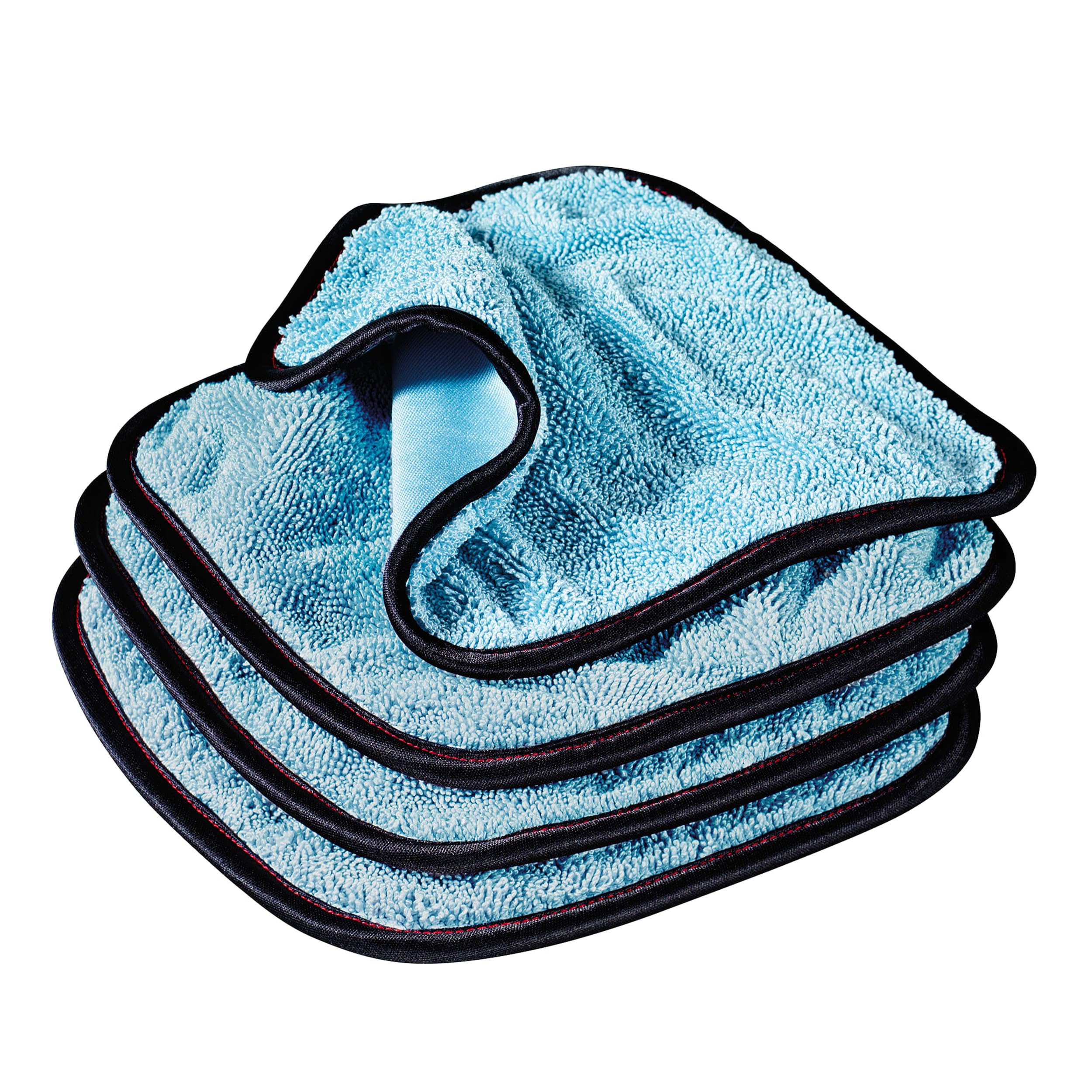
Griot’s Garage has built a reputation among professional detailers for precision-engineered consumables, and the PFM Dual Weave Glass Towels exemplify that focus. The 560 GSM construction on the terry side provides substantial absorption for a single-pass wipe of glass cleaner, while the tight microfiber reverse side acts as a finishing cloth that removes any residual haze without leaving lint behind. At 9×9 inches, these towels are compact by design — intentionally sized for gripped control rather than draped coverage — which reduces the risk of dragging the cloth across adjacent trim or paint.
The satin-trimmed edges and rounded corners prevent fraying during machine washing, and the double-sided architecture means one cloth handles both the wet and dry stages of glass cleaning. Owner feedback consistently reports that these towels maintain their absorbency even after repeated laundering, with the dual weave remaining clearly distinguishable on each side. For anyone who values a dedicated glass towel that performs at a pro-grade level without requiring a steep learning curve, this set delivers reliable, repeatable results.
Detailers who work with coated windshields or ceramic-infused glass will appreciate that the PFM towels do not strip protective layers or leave micro-marring. The 4-pack provides enough rotation for a full vehicle glass treatment without needing to stop and rinse midway. If you want one cloth that handles both the cleaning and polishing phase without switching towels, this is the benchmark.
What works
- Dual-sided design eliminates the need for separate wet and dry towels
- 560 GSM terry side absorbs cleaner in one pass without dripping
- Satin edges and rounded corners prevent fraying after repeated washes
What doesn’t
- 9×9 size feels small for large windshield sections
- Requires careful folding to avoid touching dirty edges during the finish wipe
2. The Rag Company Premium Window Detailing Towels

The Rag Company has established itself as a go-to source for professional-grade microfiber in North America, and this 5-pack of glass towels reflects that heritage. The 70/30 polyester-to-polyamide split — manufactured using South Korean Hyosung fiber — creates a split microfiber that actively traps dirt particles rather than pushing them across the glass. The corduroy-textured side provides the mechanical agitation needed to lift dried bug residue and road film, while the smooth reverse side performs a streak-free final wipe that leaves chrome and mirrors equally clear.
At 350 GSM, these towels strike a deliberate balance: they hold enough cleaner to cover a large windshield section without dripping, yet they dry quickly enough to be reused after a brief shake or fold. The 16×16 inch format offers generous coverage, and the dual-texture design means one towel can move from the initial cleaning pass to the polishing pass without requiring a swap. Detailers who work on multiple vehicles in a session will appreciate that the 5-pack provides enough inventory to rotate through an entire job before laundering.
The edge finishing is clean and resists fraying, though the tagless design is a thoughtful touch that eliminates the risk of scratching delicate glass surfaces with a dangling label. This set is a strong choice for anyone transitioning from all-purpose microfiber to a dedicated glass towel that delivers professional-grade clarity without stepping up to boutique pricing.
What works
- Korean 70/30 split microfiber traps dirt effectively without smearing
- Corduroy side provides real scrubbing power for bug residue and film
- 5-pack offers excellent rotation capacity for a full detail session
What doesn’t
- 350 GSM may require an extra pass for heavy moisture absorption
- Corduroy texture can feel rough on freshly coated glass if too much pressure is applied
3. The Rag Company FTW Microfiber Cleaning Towels
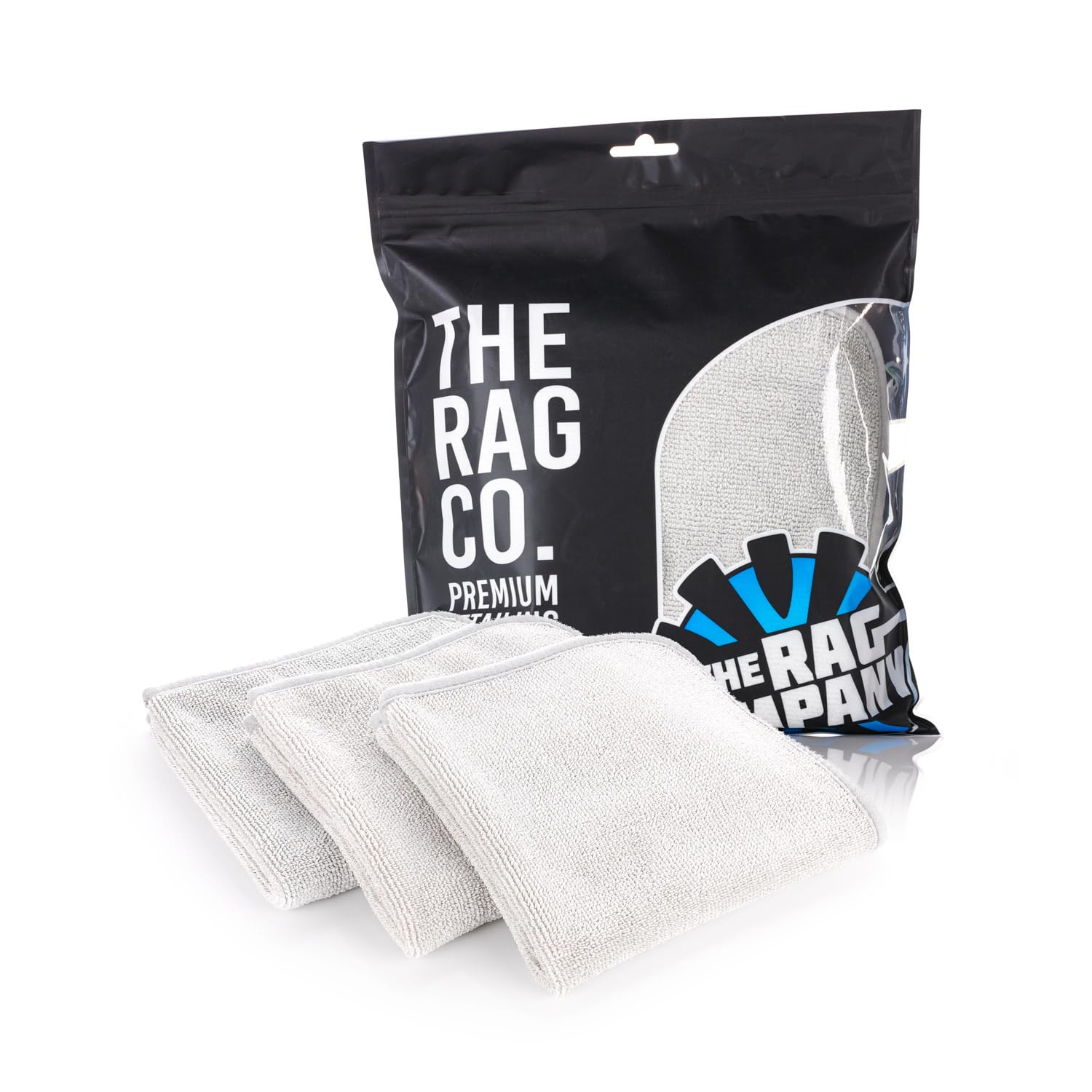
The Rag Company’s FTW (For The Window) line represents a step up in density, with the 550 GSM weave providing a plush, high-contact surface that absorbs cleaner and dissolved grime into the towel core rather than letting it sit on the surface. The Ice Grey color is a deliberate choice — it hides embedded dirt visually, so you are less tempted to overuse a soiled towel that could reintroduce grit to the glass. The trademarked ButterSoft suede edge is a standout feature: it eliminates the hard stitch line common on folded towels, preventing micro-scratches on optical surfaces.
This 3-pack is designed for detailers who prefer a thicker towel that can hold a substantial volume of cleaner without requiring mid-job wringing. The microfiber blend remains soft after multiple machine washes, and the tagless construction removes any risk of label adhesive transferring to the glass. Owners who switch from standard 300 GSM towels to this FTW variant consistently report a noticeable reduction in the number of passes needed to achieve a crystal-clear finish on large rear windows and panoramic sunroofs.
The trade-off for the high GSM is a longer drying time between uses, so having at least two towels in rotation is recommended. For enthusiasts who treat glass cleaning as a multi-step process — initial spray, wipe, buff, and inspection — this 3-pack provides the absorption reserve needed to keep moving without interruption.
What works
- 550 GSM density absorbs heavy cleaner loads without dripping
- ButterSoft suede edge prevents micro-scratching on delicate glass
- Tagless design eliminates adhesive residue and scratch risks
What doesn’t
- High GSM means slower drying between passes
- 3-pack is minimal for multiple-vehicle detail sessions
4. Norwex Window Cleaning Cloth

Norwex takes a distinct approach by engineering a cloth that requires only water to achieve streak-free results, eliminating the need for chemical glass cleaners altogether. The microfiber construction uses ultra-fine filaments designed to mechanically lift and trap oils, fingerprints, and road film without relying on surfactant action. The 17.7×17.7 inch dimensions provide ample surface area for large windshield passes, reducing the number of folds and contact points that can drag contaminants across the glass.
For owners who prefer a chemical-free cleaning routine — whether for environmental reasons, indoor air quality concerns, or simply to reduce product waste — this cloth delivers on its promise when used correctly. The key is to wet the cloth thoroughly, wring it to dampness, wipe the glass, then flip to the dry side for a final buff. Owner reports indicate that the cloth remains effective for hundreds of washes, though harder water deposits may require occasional deeper rinsing to restore full absorbency.
It is important to note that the water-only approach works best on glass that is not heavily soiled with dried bugs or tree sap; for those cases, a pre-rinse or a drop of mild detergent helps the cloth perform optimally. The purple color is distinct, making it easy to designate this towel for glass-only use and avoid cross-contamination with grease or wax from other surfaces.
What works
- Works with plain water — no chemicals or sprays needed
- Large 17.7×17.7 size covers wide windshield sections efficiently
- Ultra-fine fibers trap oil and fingerprints without surfactant residue
What doesn’t
- Less effective on heavy bug residue or tree sap without pre-rinse
- Requires a specific wet-wring-dry technique for best results
5. VIKING Glass Microfiber Cleaning Cloth
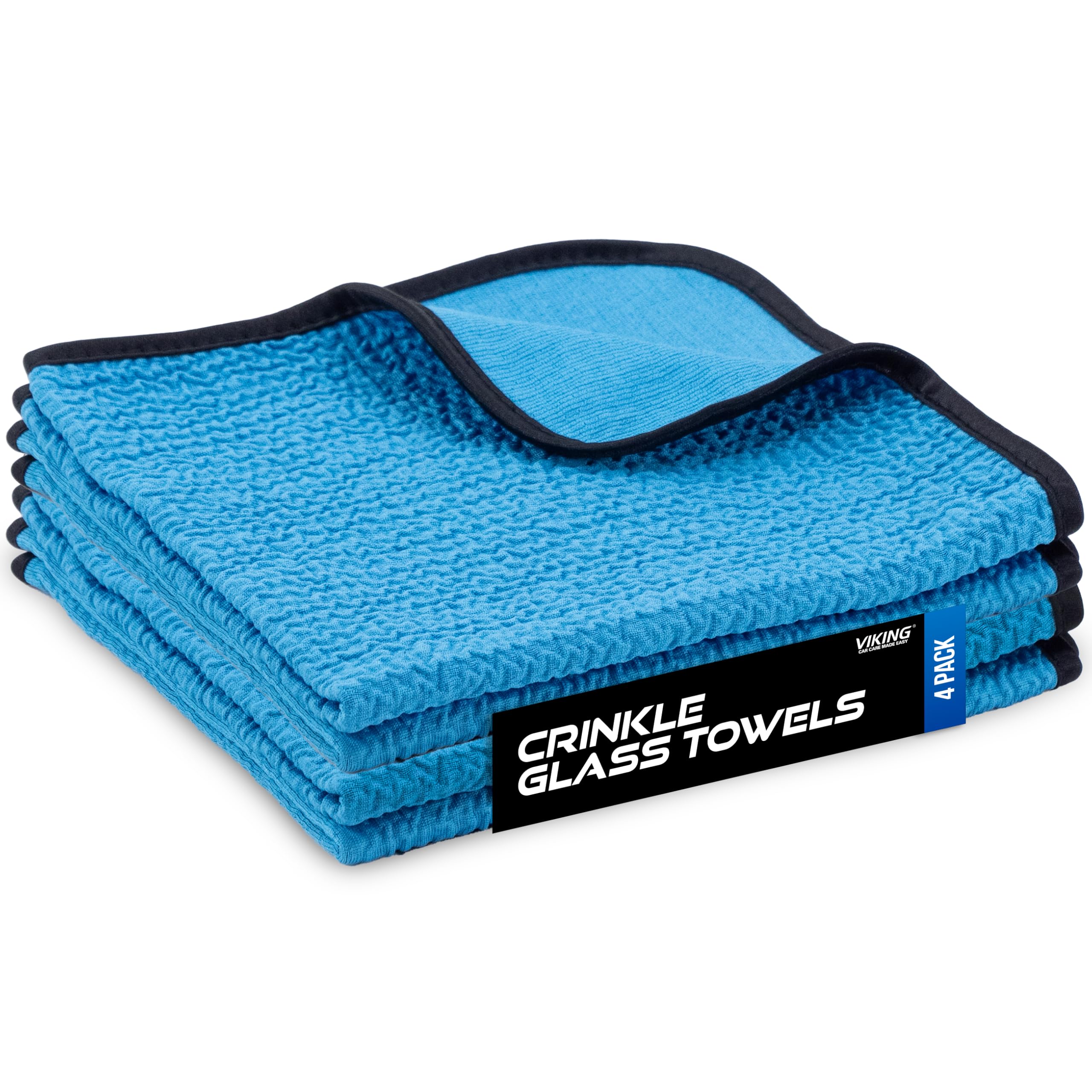
VIKING’s glass cleaning cloth brings a familiar dual-sided design to a mid-range price point, with one side featuring a ridged texture for cutting through smoker’s haze, fingerprints, and road grime, and the opposite side finished smooth for a streak-free polish. The 16×16 inch size offers a comfortable middle ground between compact maneuverability and broad coverage, making it suitable for both automotive windows and household mirrors or picture frames. The satin-trimmed edges are a welcome inclusion at this tier, as they reduce the fraying that plagues raw-cut towels after repeated washing.
The ridged side is particularly effective at breaking up the thin film of oils that accumulates on interior glass surfaces over time, which common all-purpose towels often just redistribute. When paired with a quality glass cleaner, these cloths produce a clarity that satisfies casual detailers and weekend enthusiasts alike. The 4-pack provides enough inventory to keep one set designated for automotive use and another for home glass surfaces without needing to reorder frequently.
Some owners note that the smooth side requires a light touch to avoid linting on the first few uses before the fibers fully loosen, but after a single wash cycle this issue resolves. For the price per towel, this pack delivers strong value for anyone who wants dedicated glass cloths without investing in the premium-tier options.
What works
- Ridged side cuts through haze and fingerprints effectively
- Satin trim prevents edge fraying through multiple wash cycles
- 4-pack provides good value for both car and home use
What doesn’t
- Smooth side may show minimal lint on the very first use
- Not as plush as higher-GSM towels for heavy moisture absorption
6. Longmann Microfiber Glass Cleaning Cloths
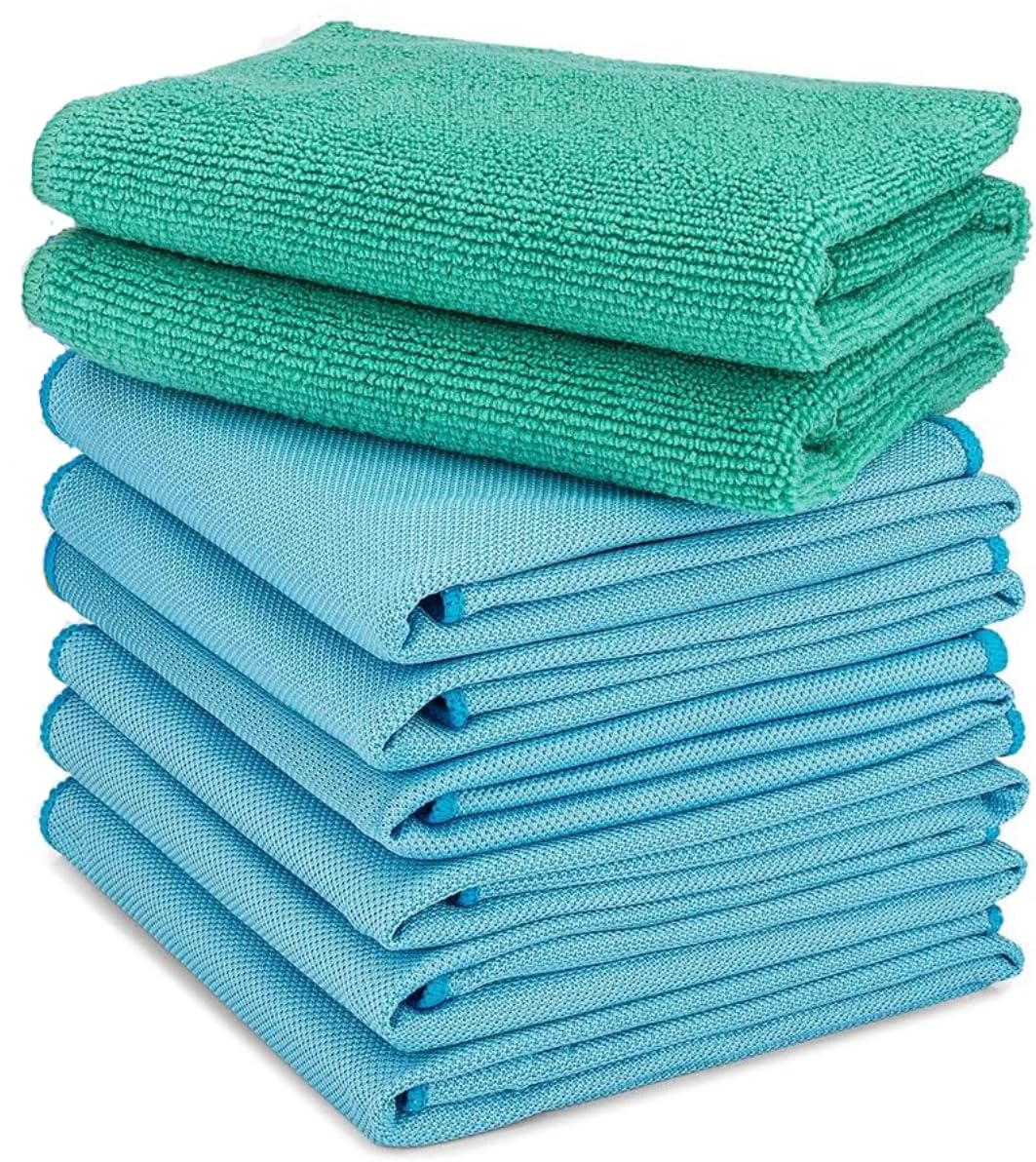
Longmann positions these cloths as a water-only cleaning solution similar to the Norwex approach, but at a more accessible price point with an 8-pack count. The microfiber construction is designed to trap dirt and oil without chemical assistance, and the 16×16 inch size provides generous coverage for both automotive glass and household mirrors. The cloths come in a two-color pack — green and blue — allowing users to designate one color for initial cleaning passes and the other for final buffing, which is a practical workflow hack that reduces cross-contamination.
Owner reports indicate that these cloths perform best when used damp rather than dry, as the moisture activates the microfiber’s ability to lift grime. The non-fading fabric holds up well to machine washing, and the edges resist fraying better than budget-oriented alternatives. For households that prefer a single product to handle both car windows and home glass surfaces, this 8-pack offers enough volume to keep a fresh cloth ready for each task without daily laundering.
It is worth noting that the water-only effectiveness diminishes on glass that has heavy wax residue or silicone-based coatings, where a small amount of diluted cleaner improves results. For routine maintenance cleaning of lightly soiled windows and mirrors, however, these cloths deliver on their promise of a streak-free finish with no chemical footprint.
What works
- Works effectively with just water for routine glass cleaning
- 8-pack provides excellent volume for multi-surface households
- Two-color set enables separate wet/dry or car/home designations
What doesn’t
- Heavy wax or silicone residue may require a mild cleaner boost
- Damp technique takes practice to avoid water spotting on mirrors
7. MR.SIGA Microfiber Cleaning Cloth

MR.SIGA offers a 12-pack of 12.6×12.6 inch microfiber cloths that serve as a versatile starting point for anyone building a cleaning kit without a large upfront investment. The material is soft and non-abrasive, making it safe for glass, painted surfaces, and chrome trim when used with an appropriate cleaner. The reinforced edge stitching is a notable feature at this price tier, as it extends the usable life of each cloth significantly compared to towels with simple hemmed edges that unravel after a few washes.
These cloths are not specifically engineered for glass in the way that dual-sided or high-GSM towels are, but they perform adequately for windshield maintenance when paired with a quality streak-free spray. The 12-pack count means you can afford to designate several towels exclusively for glass use while using the rest for interior dusting, dashboard wiping, and general garage tasks. The grey color hides dirt well, which is practical for users who prefer to reuse a cloth multiple times before washing.
The primary limitation is that the single-texture surface lacks a dedicated polishing side, so achieving a completely haze-free finish may require a second dry towel for buffing. For casual users who do not require concours-level clarity and want a budget-friendly multi-purpose option, this pack provides reliable utility across a range of surfaces.
What works
- 12-pack offers strong value for a multi-surface cleaning kit
- Reinforced edges improve durability compared to budget alternatives
- Soft material is safe for glass, paint, and chrome when used correctly
What doesn’t
- Single-texture weave lacks a dedicated polishing side for glass
- May require a secondary dry towel for complete haze removal
8. HOMEXCEL Grey Microfiber Cleaning Cloth
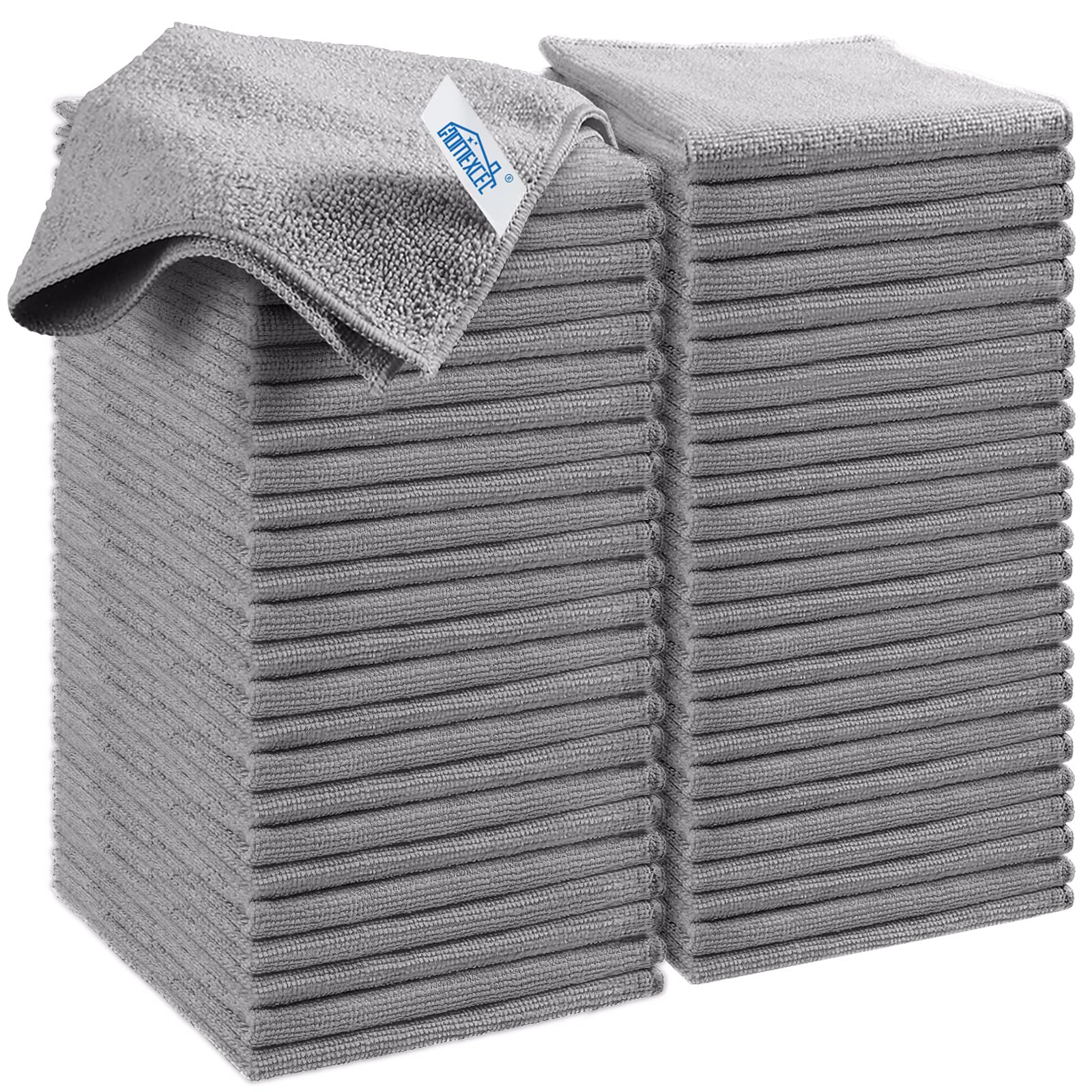
HOMEXCEL delivers a 50-pack of 11.5×11.5 inch microfiber cloths that are among the most popular all-purpose cleaning towels on the market, frequently ranking as a top seller in reusable cloths. The material composition — 87% polyester and 13% polyamide — provides a balanced microfiber that is soft enough for glass and paint but durable enough for countertops and kitchen grease. The sheer quantity makes this pack a practical choice for households or small shops that go through towels quickly and prefer not to launder after every use.
When used for car glass, these cloths perform best with a dedicated glass cleaner rather than a water-only approach, as the fiber split ratio is not optimized for mechanical oil lifting. The reinforced edges hold up well across multiple wash cycles, and the grey color maintains a presentable appearance even after absorbing dirt and grime. For the price per unit, this pack offers an exceptionally low cost per cloth, making it easy to keep a stack in the garage, another in the kitchen, and a few in the glovebox.
The trade-off for the high count and low per-unit cost is that the cloths lack the refined weave structure of premium glass-specific towels. Users who demand a perfectly lint-free, single-pass finish on optical surfaces may need to use two cloths — one for cleaning and one for buffing — to achieve the clarity they want.
What works
- Exceptionally low cost per cloth with 50-pack quantity
- Soft material is safe for glass, paint, and delicate surfaces
- Reinforced edges hold up well to repeated machine washing
What doesn’t
- Not optimized for water-only glass cleaning
- Single-texture weave may leave haze without a secondary buffing towel
9. UNIMADE Microfiber Cleaning Cloth
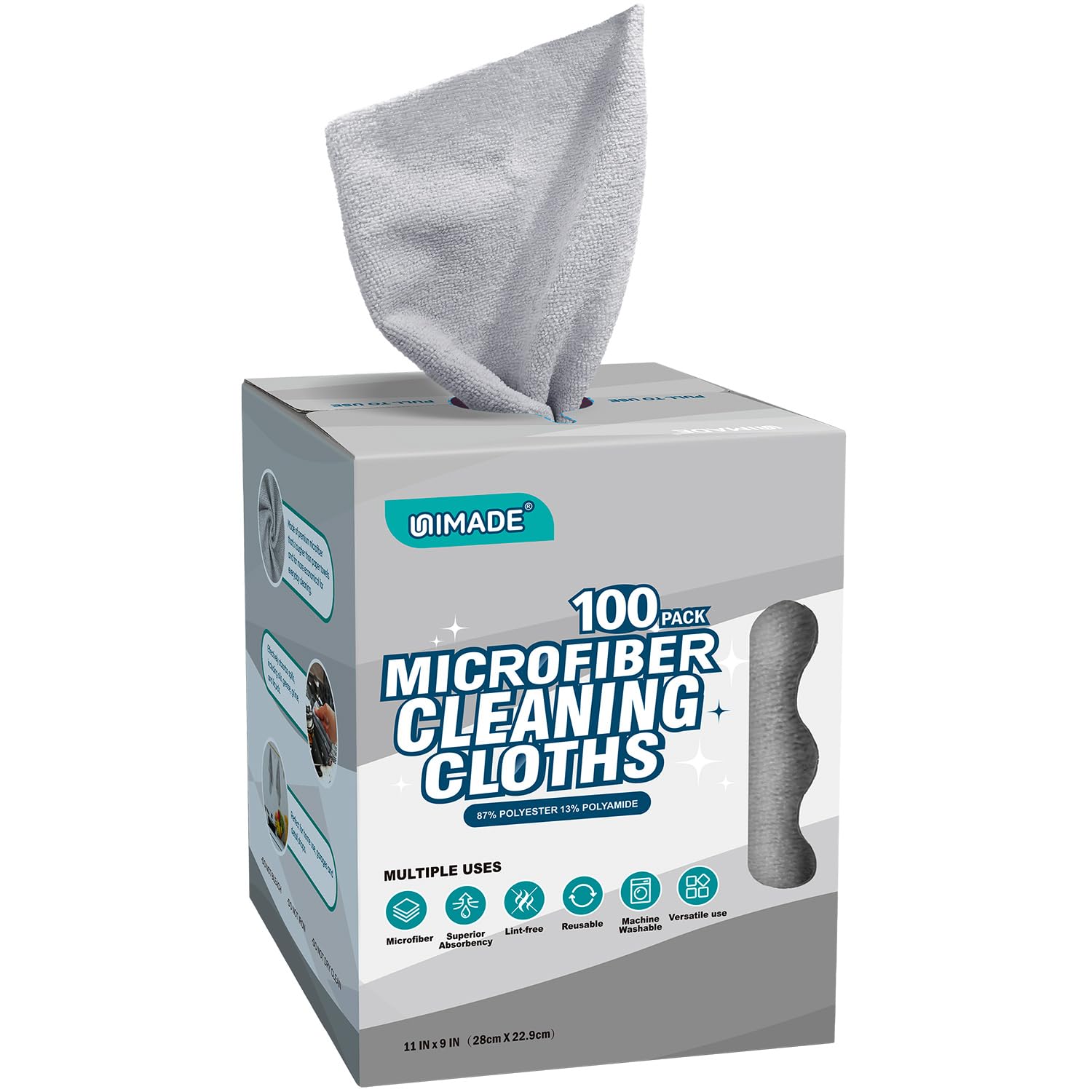
UNIMADE takes a different approach with a 100-sheet dispenser box of 11×9 inch microfiber towels designed for commercial-grade use in automotive shops, garages, and industrial settings. The pull-out opening allows for quick, one-handed access — a practical feature when you are mid-job with dirty hands and need a fresh cloth without fumbling with a bag or stack. The material is engineered to be lint-free and scratch-free, making it suitable for final wipe-downs on glass and painted surfaces in a shop environment.
The absorbency is notably strong for a sheet-style cloth, wicking up oil, grease, and water quickly without leaving fiber residue. For glass cleaning, these work well with spray cleaners and are particularly useful for wiping down windshields during a full-service detail where multiple vehicles are processed in sequence. The disposable format appeals to shops that prefer to avoid laundering soiled towels contaminated with heavy grease or aggressive chemicals.
The smaller 11×9 size is better suited for controlled, targeted wiping rather than large window passes, and the thinness of each sheet means they are less effective for heavy moisture absorption without using multiple sheets. For a home user, the value proposition hinges on whether the dispenser convenience outweighs the per-sheet cost compared to reusable towels.
What works
- Dispenser box provides quick, one-handed access during jobs
- Lint-free and scratch-free design suitable for final glass wipe-down
- 100-sheet count offers strong volume for high-traffic shop use
What doesn’t
- 11×9 size is small for large windshield passes
- Thinner construction requires multiple sheets for heavy moisture jobs
10. SOOWASH Microfiber Cleaning Cloths Roll
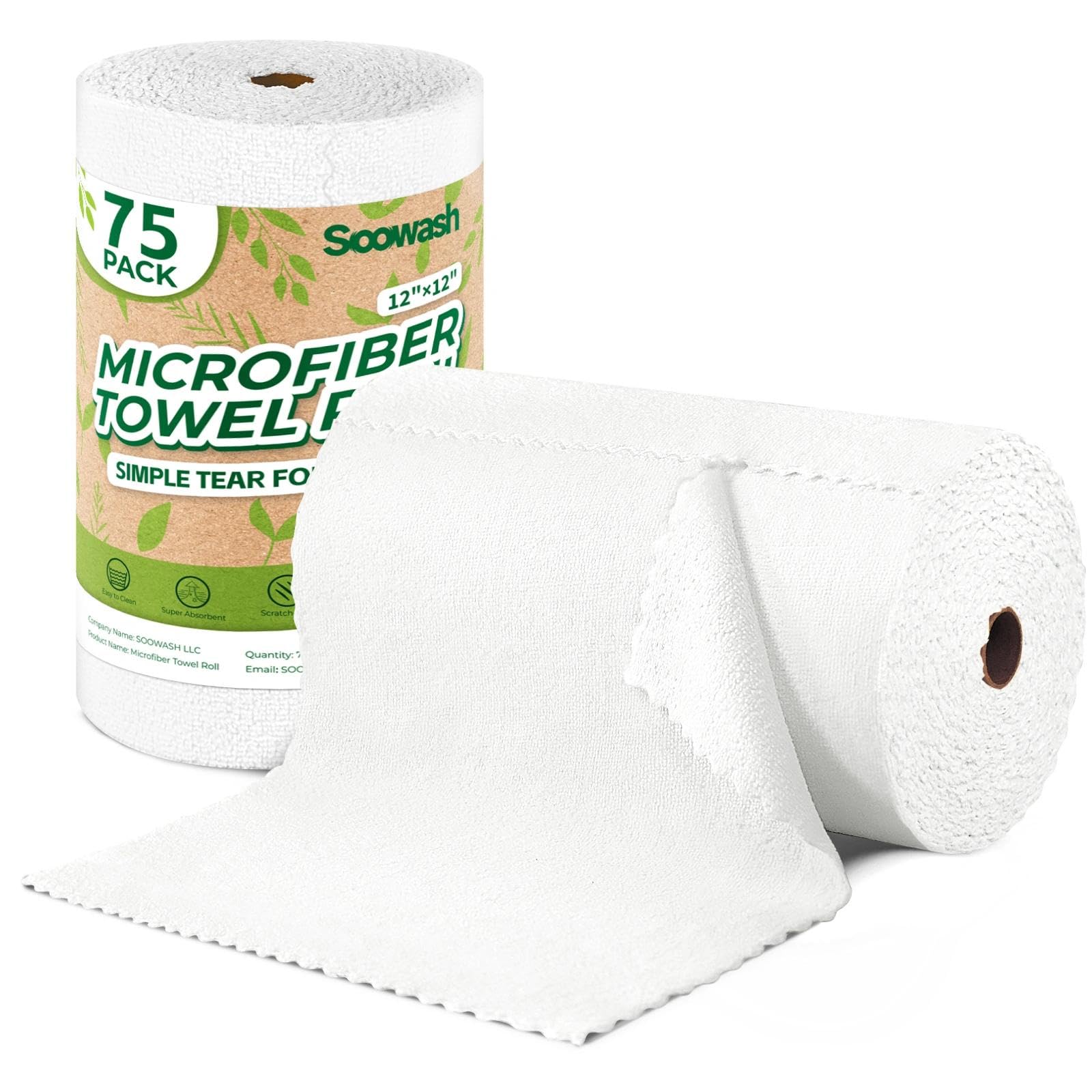
SOOWASH’s microfiber cloth roll is designed as a direct reusable alternative to paper towels, with 75 pre-cut 12×12 inch sheets on a continuous roll that dispenses from a standard paper towel holder. The convenience factor is significant: you get the absorbency and lint-free performance of microfiber with the tear-and-go workflow that paper towel users are accustomed to. The material absorbs up to 7 times its weight in water, which means a single sheet can handle a windshield spray-down without immediate saturation.
For glass cleaning, these cloths are most effective when paired with a spray cleaner, as the 12×12 size provides ample coverage for side windows and rear glass. The perforated tear points are clean and do not leave ragged edges that could shed fibers. Owner feedback highlights the reusability — each sheet can be washed and reused dozens of times, making the roll format a genuinely sustainable alternative to disposable paper towels for automotive and household use.
The roll format does mean the cloths are thinner than premium folded towels, so they lack the plush feel that some detailers prefer for applying or buffing wax. For users who prioritize convenience and want to reduce paper towel waste without sacrificing microfiber performance, this roll offers a practical middle ground.
What works
- Tear-away roll format fits standard paper towel holders for easy access
- Absorbs up to 7x its weight in water for efficient glass drying
- Reusable and machine washable — a sustainable paper towel alternative
What doesn’t
- Thinner construction lacks the plush feel of premium folded towels
- Perforation edges may show minimal lint on the very first tear
11. AIDEA Microfiber Cleaning Cloth

AIDEA’s 100-pack of 12×12 inch microfiber cloths is a volume leader, offering one of the highest cloth counts in the category at a competitive per-unit cost. The cloths come in a mix of blue, green, and grey colors, which is a practical advantage for users who want to color-code by task — blue for glass, green for paint, grey for interior dusting, for example. The material is ultra-soft and non-abrasive, making it safe for glass, coated surfaces, and stainless steel when used with an appropriate cleaner.
For automotive glass, these cloths deliver reliable streak-free results when used with a dedicated glass spray, though they lack the specialized dual-texture weave that premium glass towels offer. The absorbency is solid for a general-purpose towel, wicking up moisture and dissolved dirt effectively. The fade-resistant fabric holds its color through multiple washes, and the edges resist fraying better than some competitors at this price point. The 100-pack essentially provides a year’s supply for most households, reducing the frequency of repurchasing.
The primary consideration is that these are not glass-specific towels — they are all-purpose cloths that happen to work well on glass when used correctly. Users who want a dedicated, optimized glass-cleaning tool may find the single-texture weave less efficient than a dual-sided or high-GSM alternative. For those who need a massive volume of soft, lint-free towels that can handle glass alongside dozens of other tasks, this pack delivers exceptional capacity.
What works
- 100-pack provides a long-lasting supply for multi-surface cleaning
- Three-color assortment enables effective task-based color coding
- Fade-resistant fabric holds color and softness through many washes
What doesn’t
- Single-texture weave is not optimized specifically for glass polishing
- May require a secondary dry towel for complete haze-free finish
Hardware & Specs Guide
GSM (Grams per Square Meter)
GSM measures the density of the microfiber weave. Towels in the 300-400 GSM range offer a balance of absorbency and drying speed, making them suitable for routine glass cleaning. High-GSM towels (500+) hold more cleaner and dissolved grime but take longer to dry between passes, making them ideal for multi-step detailing rather than quick maintenance wipes.
Microfiber Split Ratio
The ratio of polyester to polyamide determines how effectively the cloth traps particles. A 70/30 split (70% polyester, 30% polyamide) is the industry standard for glass towels, as the polyamide filaments create microscopic hooks that pull dirt and oil into the fabric rather than pushing them across the surface. Split microfiber requires the fibers to be physically split during manufacturing, exposing more surface area for entrapment.
Edge Finishing Types
Raw-cut edges are the most common on budget towels but fray quickly and can shed lint onto glass. Satin-stitched edges use a machine border that resists unraveling and curling. Suede-style or ButterSoft edges are a premium treatment that eliminates the hard stitch line entirely, reducing the risk of micro-scratches on optical surfaces during the final buffing pass.
Weave Texture and Surface Design
Single-texture towels provide uniform contact across the cloth, suitable for general wiping and polishing. Dual-sided towels combine a corduroy or ridged side for mechanical agitation of bonded grime with a smooth side for final polishing. Waffle-weave towels excel at absorbing moisture but can leave a texture pattern on glass if not used with a dry follow-up pass.
FAQ
Can I use any microfiber cloth on car glass?
How often should I wash my glass cleaning cloths?
What is the best way to dry car windows without streaks?
Why does my glass cloth leave lint on the first use?
Final Thoughts: The Verdict
For most buyers, the best car glass cleaning cloth winner is the Griot’s Garage PFM Dual Weave Glass Towels because it combines professional-grade 560 GSM density with a dual-sided design that handles both the cleaning and finishing phase without requiring a cloth swap. If you want a dedicated glass towel with proven professional pedigree, grab the The Rag Company Premium Window Detailing Towels. And for water-only eco-friendly cleaning with ample surface area, nothing beats the Norwex Window Cleaning Cloth.

Certification: BSc in Mechanical Engineering
Education: Mechanical engineer
Lives In: 539 W Commerce St, Dallas, TX 75208, USA
Md Amir is an auto mechanic student and writer with over half a decade of experience in the automotive field. He has worked with top automotive brands such as Lexus, Quantum, and also owns two automotive blogs autocarneed.com and taxiwiz.com.