Brake light bulbs are the single most critical safety communication tool your vehicle has with the driver behind you. A dim, slow-to-illuminate bulb increases reaction time and rear-end collision risk every time you tap the pedal, making the upgrade from stock halogen to modern LED one of the highest-ROI safety modifications available.
I’m Amir — the founder and writer behind Four Wheel Ask. I specialize in analyzing automotive lighting specifications, studying owner-reported durability data, and comparing thermal management and optical design across dozens of aftermarket bulb manufacturers to identify what actually holds up on the road.
After researching the market, the top-rated option for the best car brake light bulb combines superior illumination with long-lasting dependability.
How To Choose The Best Car Brake Light Bulb
Selecting the right brake light bulb means balancing brightness, thermal design, socket compatibility, and legal compliance. The wrong choice can mean error codes, poor light output, or a bulb that rattles loose inside the housing.
Brightness and Beam Pattern
Lumen output matters, but so does how the light is distributed. A bulb that fires LED chips only from the sides may create hot spots and dark zones inside a reflector housing designed for omnidirectional halogen light. Look for bulbs that use multiple SMD chips arranged in a 360-degree pattern or mimic the filament position of the original bulb to ensure the reflector works as intended.
Thermal Management and Longevity
LED bulbs generate concentrated heat at the circuit board. Without proper heat sinking — usually an aluminum housing or heat sink fins — the driver IC and LEDs will degrade rapidly, causing flickering or early failure. Aircraft-grade aluminum bodies and smart IC drivers with constant-current regulation are strong indicators of a durable design that will exceed the 30,000-hour mark.
Strobe and Flashing Brake Light Features
Some LED brake bulbs include a brief strobe pattern — typically three to five rapid flashes — before transitioning to a steady red light. This feature is legally compliant in most regions and has been shown to reduce rear-end collisions by drawing attention faster than a steady light. If you ride a motorcycle or drive in heavy traffic, a strobe bulb can be a meaningful safety adder.
Socket Fitment and Vehicle Compatibility
Brake light sockets vary widely by vehicle. Common base types include 1157 (BAY15D), 7440/7443 (T20 wedge), and 2057/2357. Always check your owner’s manual or pull the existing bulb to confirm the number. Some vehicles with sensitive canbus systems may require load resistors to prevent hyper-flash or dash error warnings, especially on turn-signal circuits shared with brake lights.
Quick Comparison
On smaller screens, swipe sideways to see the full table.
| Model | Category | Best For | Key Spec | Amazon |
|---|---|---|---|---|
| SYLVANIA 7443 ZEVO | Premium LED | OEM-equivalent reliability | Dual-intensity tail/brake LEDs; backward-firing reflector design | Amazon |
| AUXLIGHT 2057/1157 Strobe | Strobe LED | Attention-grabbing safety | 5x strobe then solid; 60x 4014-SMD chips; 360° red output | Amazon |
| Alla Lighting 7440/7443 Strobe | High-Lumen LED | Maximum brightness output | 1400 lm per bulb; 33x 5730 chips; IP67 waterproof; strobe function | Amazon |
| Syneticusa 7440/7443 LED | Halogen-Shape LED | Direct-fit replacement | 30x 2835-SMD chips; non-polarity; small OEM-like footprint | Amazon |
| FANTELI 1157 Flashing | Budget Strobe | Value-focused upgrade | 3x strobe then solid; 21x 2835-SMD chips; 1100 lm per bulb | Amazon |
In‑Depth Reviews
1. SYLVANIA 7443 T20 ZEVO LED Red Bulb
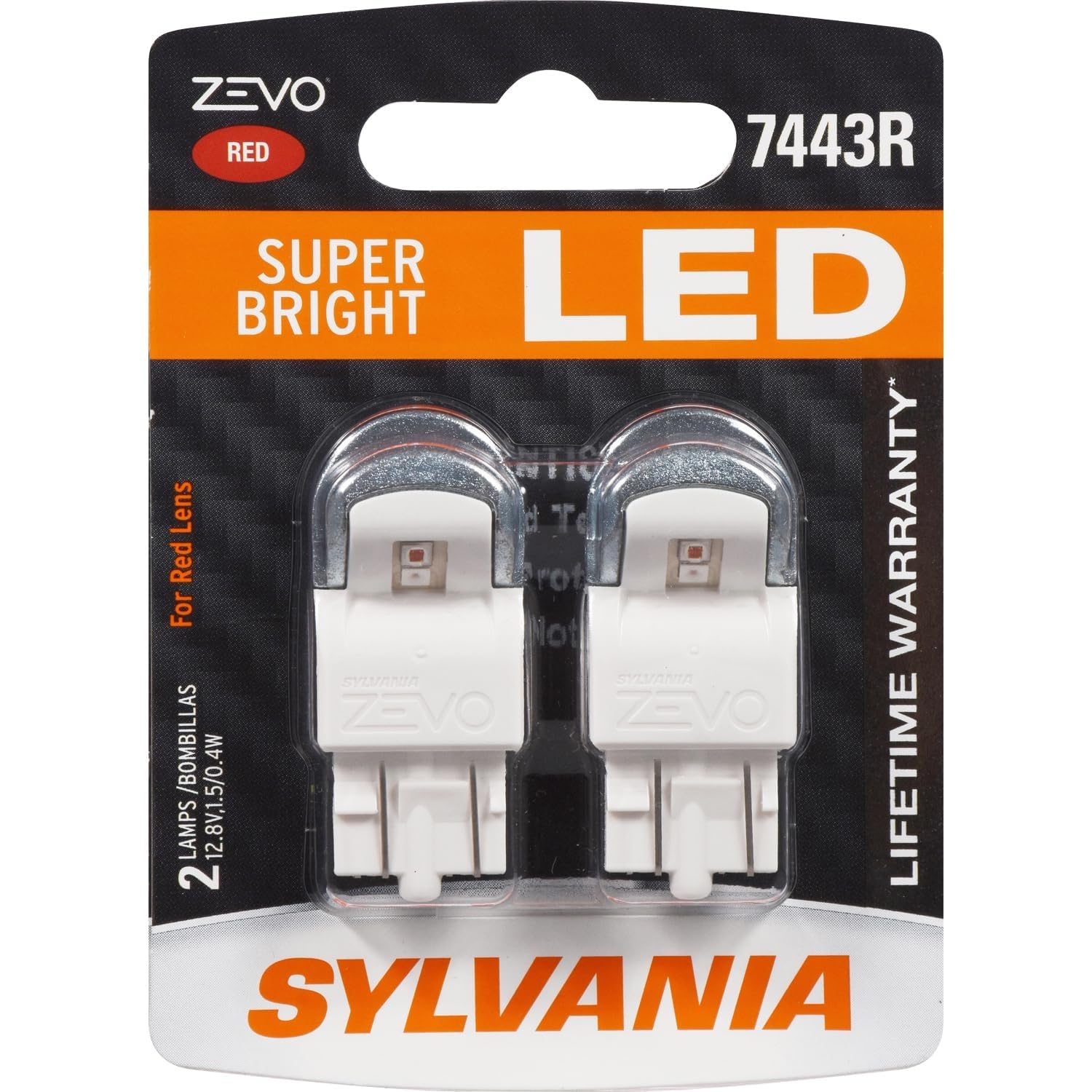
The SYLVANIA ZEVO line represents over a century of OEM and aftermarket lighting expertise, and the 7443 T20 bulb in red is engineered for vehicles that use separate running and brake light circuits within a single socket. Its dual-intensity LED array — lower brightness for the tail/parking function and significantly higher output for braking — solves a problem that plagues many single-color LED replacements: a brake light that looks the same as the running light. Owners of 2018 Silverado and 2016 Mazda models report that the backward-firing LED arrangement works harmoniously with factory reflector housings, producing even illumination without the hot spots or dark zones common to poorly designed bulbs.
Customer feedback across multiple vehicle platforms — including the 2004 4Runner, 2020 Tacoma, and 2018 Silverado — consistently highlights the crisp, instant-on response and the distinctly red output that matches OEM LED lighting. Several users note that load resistors are required on turn-signal circuits to prevent hyper-flash, but for dedicated brake and tail light applications the bulb is plug-and-play with no flickering or error codes. The aluminum heat sink chassis is notably robust, and the lifetime limited warranty from Sylvania provides long-term peace of mind that generic brands cannot match.
Where the ZEVO bulbs command a higher investment than budget alternatives, the precision optical design and rigorous quality control justify the premium for drivers who want a set-and-forget upgrade. The bulb does not include a strobe or flashing pattern — it is a pure, steady-state LED replacement — so buyers seeking an attention-getting flash effect will need to look elsewhere. For those who prioritize clean optics, OEM-grade build, and reliable daily performance, this is the benchmark against which other 7443 red LEDs should be measured.
What works
- Genuine dual-intensity tail and brake output that matches OEM LED performance
- Premium heat sink construction with excellent thermal management
- Lifetime limited warranty from a trusted automotive lighting brand
What doesn’t
- Higher cost per bulb compared to generic LED alternatives
- No strobe or flash pattern for added attention during braking
- May require external load resistors on vehicles with sensitive canbus turn-signal circuits
2. AUXLIGHT 2057 1157 LED Strobe Brake Tail Light Bulbs
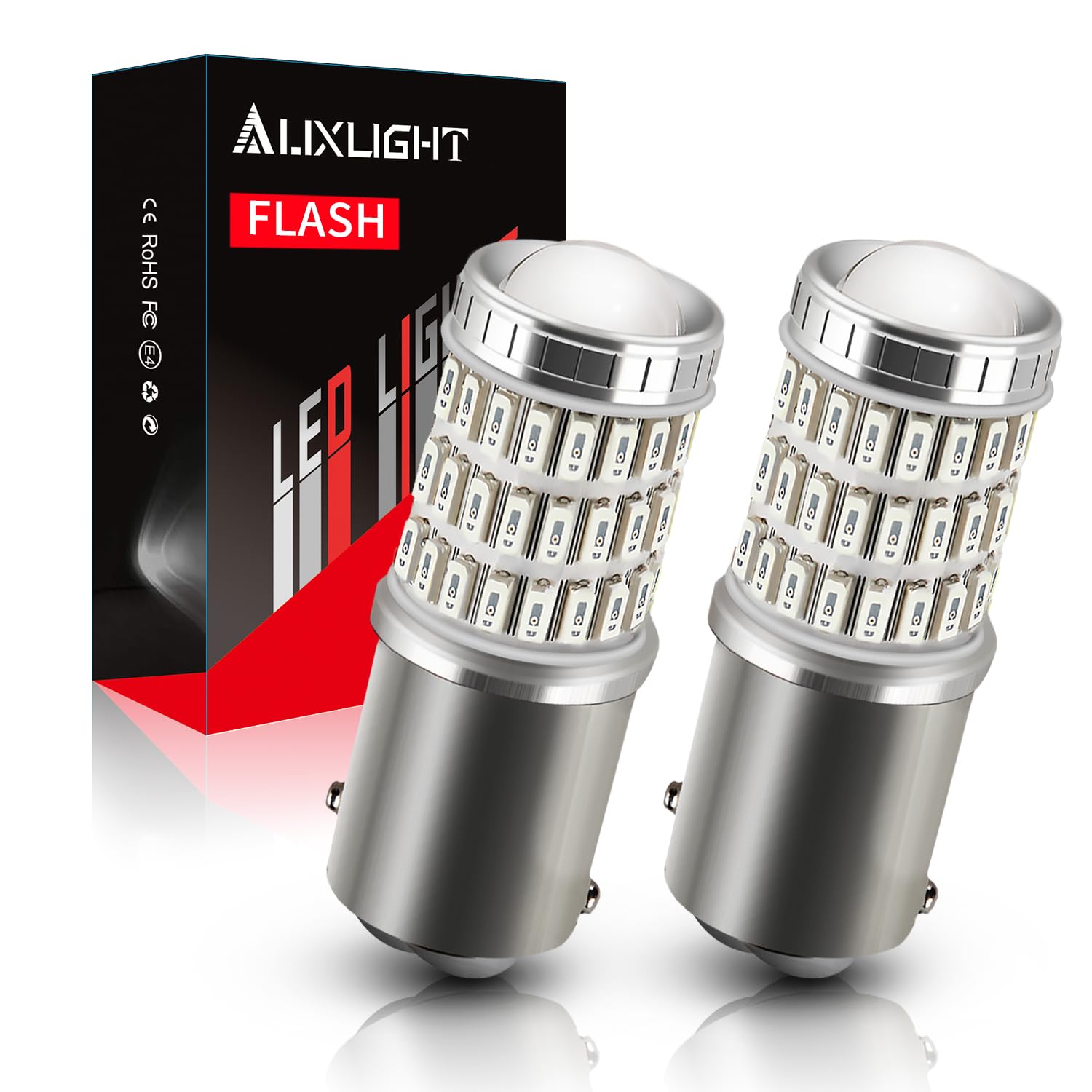
The AUXLIGHT 2057/1157 strobe bulb is engineered specifically for drivers who want the maximum legal attention-getting effect when they hit the brakes. Upon application, the bulb delivers five rapid strobe flashes before transitioning to a steady red glow — a pattern that is compliant in most states and has proven effective at reducing rear-end collisions in motorcycle and heavy-traffic applications. The 60-piece 4014-SMD chip layout arranged in a halogen-like cylindrical pattern produces 360-degree light output that fills reflector housings evenly, addressing the common complaint of directional LED bulbs that leave dark spots.
Reviews from motorcycle owners — particularly those on older bikes with separate running and brake light circuits — praise the plug-and-play simplicity and the dramatic increase in daytime visibility. One owner noted that the five-second strobe duration is particularly valuable for heavier vehicles with longer stopping distances, as it gives trailing drivers an extra cue to pay attention. The aircraft-grade aluminum housing and smart IC driver eliminate radio interference and provide consistent current regulation, which translates to steady performance across voltage fluctuations common in automotive electrical systems.
A small number of users reported that the bulb does not visually differentiate between tail light and brake light brightness — it operates at full intensity during both modes, with the strobe being the only indication of braking. This is a trade-off of the single-intensity design approach. Additionally, while the bulb fits 1157, 2057, 2357, and 7528 sockets, a few sensitive European vehicles may require load resistors to prevent dash errors. For the majority of American and Asian vehicles, this is a straightforward upgrade that adds a meaningful safety layer.
What works
- Five-strobe flash pattern provides excellent rear-end collision deterrence
- 60 LED chips deliver wide, even 360-degree illumination
- Rugged aluminum housing with effective heat dissipation
What doesn’t
- Single-intensity output offers no brightness difference between tail and brake modes
- Some vehicles may require external load resistors for error-free operation
- Strobe function may be too brief for drivers who prefer a longer flash sequence
3. Alla Lighting 7440 7443 Strobe LED Brake Lights Bulbs

The Alla Lighting 7440/7443 strobe bulb targets drivers who prioritize raw luminous output above all else. Each bulb produces 1400 lumens — totaling 2800 lumens per pair — using 33 high-intensity 5730 SMD chips arranged around a 6063 aviation-grade aluminum core. This is among the highest lumen-per-bulb ratings in the T20 wedge category, and the IP67 waterproof rating means the bulb is sealed against moisture ingress, a common failure point for lesser-sealed LED bulbs exposed to rain or car washes.
Owner reports spanning five years of real-world use on vehicles like the 2014 Honda CR-V confirm the longevity of the design — one user reported the same set still functioning after half a decade with no degradation in brightness. The built-in strobe function activates at the beginning of braking before settling to a steady light, and users with LED trailer hitch adapters noted that the strobe signal passes through cleanly, syncing auxiliary lights for a coordinated rear-end warning display. The wide voltage compatibility (12V to 24V) also makes this bulb suitable for trucks, RVs, and heavy-duty applications.
The physical length of the bulb is slightly greater than a standard 7443 halogen, which can create fitment issues in shallow housings — a few owners noted that the bulb sat loosely or required a small shim to stay seated. The higher weight of the aluminum heat sink can also cause vibration loosening over time, particularly on vehicles with stiff suspension or rough road exposure. For housings with adequate depth and drivers who want the brightest possible red LED with strobe capability, the Alla bulb delivers on its lumen promise with proven durability.
What works
- Industry-leading 1400 lumens per bulb for maximum rear visibility
- IP67 waterproof rating provides excellent environmental sealing
- Proven five-year reliability from multiple long-term owner reports
What doesn’t
- Longer physical profile may not fit shallow or tight bulb housings
- Heavier construction can vibrate loose in rough driving conditions
- Strobe function may require load resistors on certain canbus-equipped vehicles
4. Syneticusa 7440 7443 LED Bulb Red for Tail Lights Brake Lights
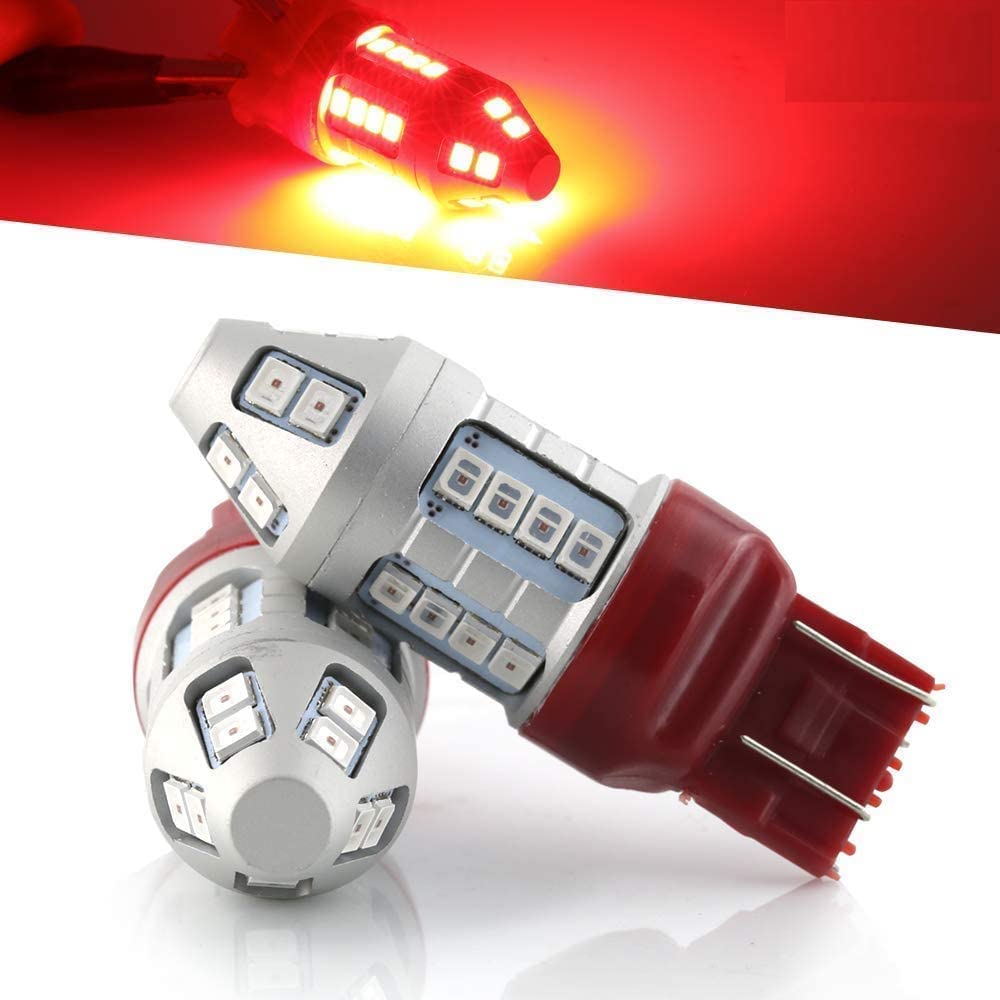
The Syneticusa 7440/7443 LED bulb takes a deliberately conservative approach to the LED upgrade: it mimics the exact shape and light distribution of a halogen bulb. By arranging 30 pieces of 2835-SMD chips in a cylindrical pattern around the body, the bulb produces 360-degree light that behaves optically like the incandescent it replaces, making it an ideal choice for vehicles with reflective housings designed around a filament light source. The non-polarity design eliminates the common frustration of having to flip the bulb 180 degrees when it doesn’t light the first time.
Customer feedback from a 2008 Honda Civic EX sedan and a 2003 Chevrolet Avalanche confirms that the bulb is noticeably brighter than OEM halogen without being obtrusive. One particularly detailed owner review noted that the bulb dimly illuminates as a running light and then becomes three times brighter as a brake light with a very brief initial strobe effect — a feature that appears to be a characteristic of the dual-intensity circuit rather than a programmed flash. The electroplated aluminum housing resists oxidation better than raw metal housings, reducing the risk of corrosion in wet climates.
The bulb’s conservative approach means it lacks the aggressive strobe patterns that some safety-conscious drivers seek. Additionally, owners of vehicles with canbus-based monitoring systems may encounter flickering or bulb-out warnings, as the lower power draw of the LED can trigger error detection on some platforms. A separate load resistor or flasher relay is the standard fix for these cases. For drivers who want a drop-in LED replacement that preserves the original light behavior while adding brightness and longevity, this bulb delivers reliable performance at a very accessible entry point.
What works
- Halogen-like shape ensures proper light distribution in stock reflector housings
- Non-polarity design simplifies installation with no wrong-way orientation
- Electroplated housing offers improved corrosion resistance over bare aluminum
What doesn’t
- No strobe or flash function for added braking attention
- Canbus-sensitive vehicles may require external load resistors
- Lower overall lumen output compared to premium high-chip-count bulbs
5. FANTELI 1157 LED Bulb Flashing Brake Lights

The FANTELI 1157 LED brake light bulb packs a strobe-flash function and 2200 lumens of combined output into a compact, budget-friendly package that appeals to cost-conscious drivers who still want modern safety features. The bulb flashes three times upon brake application before transitioning to a steady red light — a pattern that owner reviews on motorcycles and passenger cars alike confirm is highly effective at getting trailing drivers to slow down quickly. The 21-piece 2835-SMD array produces 1100 lumens per bulb with a power draw of just 4.5 watts, representing a 70 percent reduction in energy consumption compared to a 16-watt halogen.
Motorcycle owners, including a user with a KLR 650 and another with a 2002 Kawasaki, consistently rate the visibility improvement as transformational, with multiple comments about being noticed from significantly greater distances. The Pontiac GTO owner who installed these noted that they worked plug-and-play with no errors, no adapters, and no hyper-flash — a strong indicator that the bulb’s non-polarity design and built-in IC driver handle canbus resistance well on many platforms. The five-year warranty from FANTELI is also unusually generous at this price tier, signaling confidence in the product’s durability.
The compact dimensions — 1.57 inches long with a 0.59-inch wide body — help the bulb fit into housings that might reject longer premium alternatives, but the trade-off is a smaller heat sink surface area. In sustained stop-and-go traffic, the bulb may run warmer than larger aluminum-bodied units, though no owner reports have flagged thermal failure. The three-flash pattern is also shorter than the five-flash sequence of some competitors, which may be less noticeable during quick brake taps. For value-minded buyers, the FANTELI offers an impressive feature-to-cost ratio.
What works
- Compact size fits tight bulb housings rejected by longer LED bulbs
- Three-flash strobe pattern improves braking visibility without being excessive
- Five-year warranty provides exceptional long-term value protection
What doesn’t
- Smaller heat sink may run warmer during extended idling in traffic
- Three-flash sequence is shorter than some competing strobe designs
- Lumen output per bulb is lower than premium high-chip-count alternatives
Hardware & Specs Guide
LED Chip Types and Brightness
The number and type of LED chips directly affect brightness and beam quality. 2835 and 4014 SMD chips are common in mid-range bulbs, offering good efficiency and compact size. 5730 chips, used in higher-output bulbs like the Alla Lighting, deliver more lumens per chip but generate more heat. A 360-degree chip arrangement is critical for proper reflector fill — bulbs that place all LEDs on one side create directional hot spots that reduce usable light output from the brake lamp housing.
Canbus Compatibility and Load Resistors
Many modern vehicles monitor bulb current draw to detect burned-out lamps. LED bulbs draw significantly less power than halogen equivalents, which can trigger error warnings or cause rapid flashing. Some LED bulbs include built-in resistors or intelligent IC drivers that simulate the load of a halogen bulb. For vehicles that still detect the mismatch, external 50W 6-ohm load resistors must be wired across the circuit. This is particularly common on turn-signal circuits shared with brake light functions.
Heat Sink Design and Thermal Performance
LED bulbs convert excess energy to heat concentrated at the driver IC and chip substrate. Without effective heat sinking, junction temperatures rise, causing lumen degradation and early failure. Aluminum housing with fins or a smooth extruded body acts as a heat sink. Aircraft-grade 6063 aluminum, used in premium bulbs, offers the best thermal conductivity-to-weight ratio. Bulbs with passive cooling designs can reach case temperatures of 150°F during continuous operation — well below the 1000°F of a halogen filament, but still requiring ventilation in the housing.
Socket Base Types and Polarity
The two most common brake light socket bases are the 1157 (BAY15D) with offset pins and the 7440/7443 (T20 wedge) with a rectangular blade base. The 1157 design has two contact points at the bottom to support separate tail and brake circuits. The 7443 variant adds a second intensity circuit compared to the single-intensity 7440. Non-polarity LED bulbs simplify installation by working in either orientation, while polarity-sensitive bulbs will only light when inserted correctly. Always verify the base type by pulling the old bulb before ordering.
FAQ
Are LED brake light bulbs legal on the road?
Do I need load resistors for LED brake light bulbs?
How do I know which bulb base type my car uses?
Will LED brake light bulbs melt my tail light housing?
Can I mix LED and halogen bulbs in the same vehicle?
Final Thoughts: The Verdict
For most buyers, the best car brake light bulb winner is the SYLVANIA 7443 ZEVO because it combines precise optical engineering, genuine dual-intensity tail and brake output, and the assured reliability of a brand with over a century of automotive lighting experience. If you want the added safety of a strobe pattern to grab trailing drivers’ attention, the AUXLIGHT 2057/1157 Strobe delivers a legally compliant five-flash sequence with excellent 360-degree light coverage. And for maximum brightness in a compact strobe package at a very accessible price, the Alla Lighting 7440/7443 Strobe offers the highest lumen output with proven long-term durability from owner reports stretching back five years.

Certification: BSc in Mechanical Engineering
Education: Mechanical engineer
Lives In: 539 W Commerce St, Dallas, TX 75208, USA
Md Amir is an auto mechanic student and writer with over half a decade of experience in the automotive field. He has worked with top automotive brands such as Lexus, Quantum, and also owns two automotive blogs autocarneed.com and taxiwiz.com.