A dented panel or rusted-out hole can ruin an otherwise solid vehicle, but the right filler makes restoring factory-smooth sheet metal straightforward. Choosing the wrong formula, however, leads to sagging, pinholes, or poor adhesion that wastes hours of sanding and priming.
I’m Amir — the founder and writer behind Four Wheel Ask. I’ve spent years dissecting automotive repair product specifications, analyzing owner-reported performance data, and comparing build quality across dozens of filler brands to separate genuine durability from marketing noise.
Whether you are patching a classic car floorpan or smoothing a daily driver door, the chemistry and working time of the compound determine the final result. After analyzing dozens of filler formulas and thousands of owner reports, this comprehensive guide simplifies choosing the ideal best car bodywork filler for professional-level dent repair.
How To Choose The Best Car Bodywork Filler
Selecting a body filler involves balancing workability, adhesion, and sanding ease. The wrong choice can add hours of rework, while the right formula delivers a flat, paintable surface in one session. Focus on a few key factors before opening the can.
Weight and Sag Resistance
Lightweight fillers contain microspheres that reduce density, making them easier to sand and less prone to sagging on vertical panels. Standard fillers are denser and stronger for large fills but require careful application to avoid drips. For door skins or fenders, a lightweight, non-sag formula saves significant sanding time.
Cure Time and Workability
Faster curing formulas harden in 20 to 30 minutes, allowing same-day sanding and priming. Slower-curing fillers extend pot life for larger jobs but delay the workflow. A 20-minute cure is ideal for most at-home repairs, while longer pot life suits sculpting or multiple-panel sessions.
Substrate Compatibility
Not all fillers bond equally to every surface. Standard polyester fillers stick well to steel and fiberglass but may struggle with aluminum or SMC (sheet molded composite). Check the label for aluminum or galvanized steel compatibility if you are repairing modern lightweight body panels.
Glazing Putty vs. Body Filler
Glazing putty is a finer, paste-like compound used to fill pinholes, scratches, and sanding marks after the primary filler has been shaped. It shrinks less and sands to a glass-smooth finish, but it is not meant for building up deep dents. Use glazing putty as the final skim coat before primer.
Quick Comparison
On smaller screens, swipe sideways to see the full table.
| Model | Category | Best For | Key Spec | Amazon |
|---|---|---|---|---|
| Evercoat Z-Grip | Lightweight | Large panel repairs on steel or aluminum | Clog-free, easy sanding with 80 grit | Amazon |
| J-B Weld Body Filler | All-Purpose | Rust repair on metal, wood, and fiberglass | Waterproof, dries in 30 minutes | Amazon |
| Bondo Original Formula | Standard | Classic dent and hole repair on vehicles | Non-shrinking, cures in 20 minutes | Amazon |
| USC Special Lite | Lightweight | Sculpting and mold-making | Creamy texture, smooth sanding | Amazon |
| 3M Bondo Glazing Putty | Spot Putty | Filling pinholes and scratches before primer | Dries in 30 minutes, non-staining | Amazon |
In‑Depth Reviews
1. Evercoat Z-Grip Lightweight Body Filler

Evercoat Z-Grip stands out in the lightweight filler category thanks to its Hattonite additive, which reduces heat and friction during sanding. Owner reports consistently note that 80-grit paper stays sharp longer, cutting down on material waste and elbow grease. The formula is engineered for superior adhesion to galvanized steel and aluminum, making it a versatile choice for modern mixed-metal body panels.
With a creamy consistency that resists sagging on vertical surfaces, Z-Grip spreads smoothly without air pockets. It cures to a hard, non-porous finish that accepts primer without ghosting or solvent pop. The 128-ounce volume covers large repair areas like quarter panels and truck beds without forcing you to buy multiple cans.
Some users mention that the can lacks a resealable lid clip, so transferring leftover filler to an airtight container is advisable for long-term storage. The cream-colored paste blends well with most paint systems, and the clog-free formula means fewer interruptions to clear the sandpaper.
What works
- Sands easily with minimal paper loading
- Strong adhesion to aluminum and galvanized steel
- Non-sag consistency for vertical panels
What doesn’t
- Large can is bulky for small patch jobs
- No lid clip for airtight resealing
2. J-B Weld Body Filler

J-B Weld brings its reputation for durable epoxy repair into a polyester-based body filler that cures fully waterproof. Owner feedback highlights its ability to bridge rusted-out holes on metal panels as well as bond to wood, fiberglass, and SMC without delamination. The two-part system includes a blue hardener that, while less visible than red, still indicates proper mixing when the color is uniform.
Application reports describe a smooth, buttery spread that feathers easily at the edges, reducing the need for excessive sanding. The 30-minute dry time is fast enough for same-day priming but leaves a generous pot life of around 10 minutes for working larger areas. After curing, the filler sands to a fine dust and accepts both solvent-based and waterborne primers without issue.
On the downside, several buyers noted that Amazon shipments sometimes arrive without padding, causing the can lid to dent or leak during transit. The filler itself performs consistently, but inspecting the packaging upon delivery and filing a claim for damaged goods is recommended. For indoor repairs like furniture or countertops, the waterproof property adds versatility beyond automotive use.
What works
- Genuinely waterproof after full cure
- Bonds to metal, wood, fiberglass, and SMC
- Smooth spread with easy feathering
What doesn’t
- Blue hardener makes mixing visibility harder
- Shipping packaging often lacks protection
3. Bondo Original Formula Body Filler

Bondo Original Formula is the benchmark that many other fillers are measured against. Owner reports spanning decades confirm its consistent non-shrinking behavior, even when applied in thick layers over large dents. The salmon-pink tint helps identify skim-coat coverage, which is especially useful when sanding down to bare metal in spots.
The two-part compound mixes to a stiff but spreadable putty that cures in roughly 20 minutes, depending on ambient temperature. This fast cure enables the same-day repair cycle that hobbyists and professionals rely on. User feedback from woodworking applications shows it bonds tenaciously to exterior wood trim, making it a crossover choice for house painting repairs as well.
A common note among gallon purchasers is that the actual product shipped may be Dynatron Dynalite rather than the branded Bondo, which feels misleading even if the performance is comparable. Additionally, the can is often filled only three-quarters full by volume, so the usable material is less than the container suggests. Despite these quirks, the formula itself delivers reliable, repeatable results across metal, fiberglass, and concrete substrates.
What works
- Proven non-shrink formula trusted for decades
- Fast 20-minute cure for same-day work
- Pink color aids even skim-coat application
What doesn’t
- Gallon size may be a different brand than labeled
- Can often arrives only partially filled
4. U. S. Chemical & Plastics Special Lite Lightweight Filler
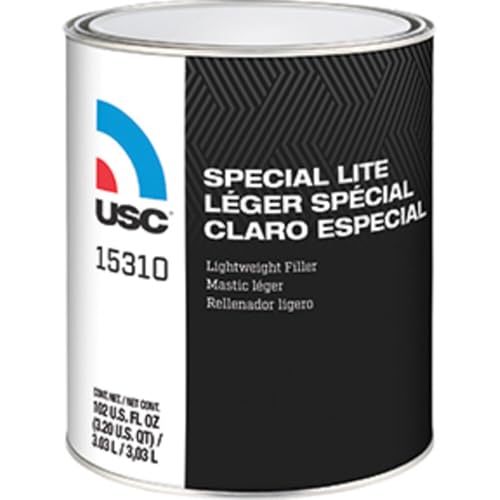
USC Special Lite earns a strong reputation among body shop owners and hobbyist sculptors for its exceptionally creamy texture that spreads like butter. The lightweight formula contains microballoons that reduce weight and make sanding effortless, yet it cures hard enough to hold an edge for mold making. Owner reviews frequently compare it favorably to 3M Bondo, noting that it mixes more easily and feathers with less effort.
The pot life hovers around 10 minutes, with full cure in two to four hours depending on layer thickness. Some users report that the filler can sag on steep vertical surfaces if applied too thick, so multiple thin passes are advisable. For sculpting custom shapes or building up support shells with fiberglass resin, the creamy consistency allows precise shaping before gelation.
The primary drawback reported is poor packaging: Amazon ships the gallon can without lid clips or protective padding, leading to dented rims and spilled product. Several buyers had to request refunds for damaged cans, so inspecting the seal before accepting delivery is wise. Despite shipping frustrations, the filler itself delivers professional-grade results at a per-volume cost that undercuts many premium competitors.
What works
- Extremely smooth consistency for easy spreading
- Excellent for sculpting and mold-making
- Sands to a fine finish with minimal effort
What doesn’t
- May sag on vertical panels if applied thickly
- Can often arrives damaged due to poor packing
5. 3M Bondo 907 Glazing and Spot Putty

This glazing putty fills a specific finishing role that standard body fillers cannot: sealing pinholes, sanding scratches, and minor rock chips before primer. Owner reviews from both automotive and 3D printing communities confirm that the two-part formula dries in roughly 30 minutes and sands to a glass-smooth surface with 220-grit paper. The black color contrasts well on light primers, making skipped spots easy to identify.
Application requires a thin skim coat, not a thick build. Users who apply it over lacquer-based systems report excellent intercoat adhesion and no bleed-through, though it is not recommended for water-based topcoats. The tube delivery system allows precise, low-waste application on small repairs, and the four-pack provides plenty of material for multiple touch-ups.
Some owners note that the pink dust generated during sanding can be messy, and the tube tip may leak if not capped tightly after use. Because the putty cures extremely fast (as quick as 15 seconds in warm conditions), you must work efficiently. For the final step before primer, this spot putty eliminates the micro-imperfections that ruin a professional finish.
What works
- Fills pinholes and fine scratches effectively
- Sands smooth and accepts primer well
- Tube format reduces waste on small jobs
What doesn’t
- Not suitable for deep dent filling
- Tube can leak if cap is not secured
Hardware & Specs Guide
Lightweight vs. Standard Fillers
Lightweight fillers like Evercoat Z-Grip and USC Special Lite use hollow microspheres to reduce density. They sand faster and resist sagging, making them ideal for vertical panels and large repairs. Standard fillers such as Bondo Original Formula are denser and stronger for structural fills but require more sanding effort.
Cure Time and Workability
Faster-curing products (20 to 30 minutes) allow same-day sanding and priming, which is critical for production body shops. Slower-curing fillers extend pot life for sculpting or large-area coverage. The ideal pot life for most DIY repairs is 8 to 12 minutes, giving enough time to spread the filler without rushing.
Glazing Putty vs. Body Filler
Body filler is the primary building compound for dents and holes, applied in layers up to 1/4 inch thick. Glazing putty (e.g., 3M Bondo 907) is a fine-paste finishing compound used after the main filler has been sanded. It fills pinholes and sanding scratches but cannot bridge gaps larger than a hairline crack.
Substrate Adhesion
Polyester fillers bond tenaciously to steel and fiberglass but require mechanical abrasion on aluminum and SMC. Look for products specifically labeled for aluminum or galvanized steel (like Evercoat Z-Grip) to avoid adhesion failures. Priming with an etching primer before filler application improves long-term bond on difficult substrates.
FAQ
What is the difference between body filler and glazing putty?
Can I apply body filler over paint or rust?
How long should I wait before sanding body filler?
Final Thoughts: The Verdict
For most buyers, the best car bodywork filler winner is the Evercoat Z-Grip because it combines lightweight sanding with strong adhesion to aluminum and steel, covering large repairs without sag. If you need a waterproof filler for rust repair on mixed surfaces, grab the J-B Weld Body Filler. And for the final finishing touch that eliminates pinholes before primer, nothing beats the 3M Bondo 907 Glazing Putty.

Certification: BSc in Mechanical Engineering
Education: Mechanical engineer
Lives In: 539 W Commerce St, Dallas, TX 75208, USA
Md Amir is an auto mechanic student and writer with over half a decade of experience in the automotive field. He has worked with top automotive brands such as Lexus, Quantum, and also owns two automotive blogs autocarneed.com and taxiwiz.com.