Few car problems are as frustrating as a warm breeze from the vents when the AC should be ice-cold. Refrigerant leaks not only kill comfort but also drain your wallet through repeated recharges and pricey shop diagnostics. The right sealant can stop that leak and restore performance without a compressor replacement or a full system teardown — if you know what to look for.
I’m Amir — the founder and writer behind Four Wheel Ask. My research focuses on analyzing manufacturer specifications, formula chemistry, and long-term owner feedback to separate reliable sealers from those that cause more harm than good.
The goal is to cut through the marketing noise and find the best car ac leak sealer for your specific situation — whether that’s a slow evaporator weep, a cracked condenser, or a stubborn O-ring drip.
How To Choose The Best Car AC Leak Sealer
Choosing the wrong sealer can gum up your AC system or waste money on a short-lived fix. Focus on these factors to make a smart call.
Formula Type — Polymer vs. Non‑Polymer
Polymer‑based sealants work by forming a gel that hardens at the leak site, but they can also coat internal components like TXVs and compressors, leading to restricted flow or failure. Non‑polymer formulas (such as those using synthetic esters or silicones) chemically bond with the metal or rubber at the leak without creating solid particles. They are safer for recovery equipment and less likely to clog.
Application Method — Injector vs. Pressurized Can
Pressurized cans that screw onto a low‑side port are convenient but often over‑charge the system and dump sealer into the compressor. Injector‑style sealers (like direct‑inject cartridges or syringes) let you meter the correct amount into the high or low side, preventing contamination and ensuring even distribution. For best results, an injector is preferred.
Compatibility with Oils and Refrigerants
Your AC system likely uses PAG, POE, or mineral oil depending on the refrigerant (R134a, R1234yf, R12). A sealer must be compatible with your specific oil and refrigerant blend. Look for explicit statements like “works with all PAG oils” or “safe for R134a and R1234yf.”
Additional Features — UV Dye and Moisture Removal
UV dye helps you verify the seal after treatment and spot larger leaks that need mechanical repair. Some advanced sealers also include moisture removers that react with water in the system, which is especially useful if the system was left open to the atmosphere. These “3‑in‑1” products save time and ensure a thorough fix.
Quick Comparison
On smaller screens, swipe sideways to see the full table.
| Model | Category | Best For | Key Spec | Amazon |
|---|---|---|---|---|
| Orion Motor Tech Quick Couplers | Adapter Set | Connecting gauges to service ports | R134a HP/LP, 1/4″ flare, brass/aluminum | Amazon |
| HERCHR Extreme Ultra Stop Leak | Universal Sealer | Budget‑conscious quick fix | R134a compatible, 0.05 kg | Amazon |
| ComStar A/C Zero Leak | Permanent Sealer | Evaporator & gasket leaks | Non‑polymer, fluorescent yellow, 4 oz | Amazon |
| Enviro‑Safe ProSeal XL4 Inject | Professional Grade | HVAC & automotive, one‑time use | Concentrated, injector style, no tools needed | Amazon |
| TSI Supercool Total Leak Stop + UV Dye | All‑in‑One | Slow weep leaks in seals & hoses | HFC‑free aerosol, patented formula | Amazon |
| RED TEK ProSeal22 | Lubricant/Sealer | Future leak prevention, low toxicity | Liquid, stays in system, 4 oz | Amazon |
| Xantus Max Seal XL4 Inject + UV Dye | Direct Inject | Permanent repair, professional use | Patent‑pending injector, 20‑year formula | Amazon |
| ATP Automotive AT‑205 Re‑Seal (2‑Pack) | Rubber Conditioner | Rubber seal rejuvenation | 8 oz each, re‑seals engine & PS systems too | Amazon |
| BlueDevil Red Angel A/C Stop Leak | Permanent Chemical Weld | Metal & rubber leaks in R12/R134a | No particles, forms chemical bond | Amazon |
| A/C Pro Super Seal Stop Leak Kit | DIY Recharge Kit | Home mechanic recharge & seal | R134a + additives, reusable hose | Amazon |
| Leak Saver Direct Inject Ultimate 3‑in‑1 | Best Overall | All systems, permanent seal + moisture removal | UV dye, moisture remover, 4M+ units sold | Amazon |
In‑Depth Reviews
1. Orion Motor Tech R134a Quick Coupler Adapters

While not a sealant itself, this set of two R134a quick couplers is an essential tool for applying many injector‑based sealers. The adapters convert standard 1/4″ male flare fittings to high‑ and low‑pressure R134a service ports, making it easy to connect a manifold gauge set or direct‑inject cartridge without adapter hunting. The snap‑lock and knurled grip design simplifies installation and removal.
The construction uses aluminum bodies with nickel‑plated bronze internals, providing good corrosion resistance and a reliable seal. A 5‑ball low‑side and 6‑ball high‑side design minimizes refrigerant leakage during service. The included O‑rings are replaceable, extending the life of the couplers beyond a single use.
For anyone planning to use professional‑grade sealers that require injection through service ports, these adapters are a worthwhile addition. They eliminate the guesswork of finding the right fitting and ensure a leak‑free connection. The only downside is the 1‑year warranty, which is shorter than some heavy‑duty alternatives.
What works
- Dual‑ball design reduces refrigerant loss
- Replaceable O‑rings extend service life
What doesn’t
- Limited warranty compared to industrial brands
- Not a sealant — must be paired with a sealer
2. HERCHR Extreme Ultra Car A/C Stop Leak (R134a)
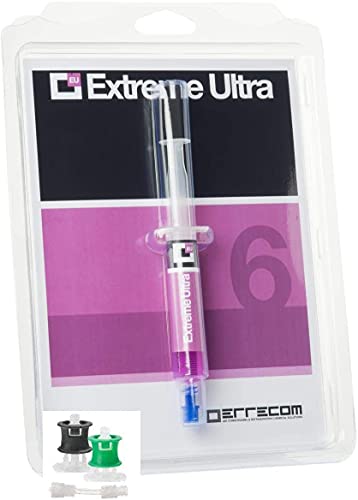
HERCHR’s Extreme Ultra sealer is positioned as an entry‑level solution for R134a systems. The formula comes in a compact 0.05 kg bottle and is marketed as a latch‑type install. Owner feedback on Amazon (3.8 stars from 352 ratings) indicates mixed results — some users seal small evaporator leaks, while others report no change or clogging issues.
The product lacks detailed technical data about its chemical composition, making it hard to verify whether it is polymer‑free. Without independent lab testing or a professional endorsement, the sealer’s reliability is uncertain. The simple “latch” installation suggests a low‑pressure can design that may not meter the sealer precisely.
For a very tight budget or as a temporary band‑aid, this might work on a minor weep. However, given the risk of system contamination and the availability of better‑vetted options, most owners will find better value in a mid‑range sealer with transparent specs.
What works
- Attractively low entry cost
- Simple latch‑type application
What doesn’t
- Vague chemical composition raises clogging concerns
- Owner satisfaction inconsistent
3. ComStar A/C Zero Leak (Fluorescent Yellow, 4 oz)

ComStar’s Zero Leak stands out for its non‑polymer, non‑hardening formula that remains liquid in the system, ready to seal future small leaks. The fluorescent yellow dye immediately reveals the leak location under UV light — a huge diagnostic bonus. It is compatible with POE, PAG, and mineral oils, covering virtually all mobile AC systems.
The 4‑ounce bottle treats a typical car AC system and can be left in for preventive maintenance. The silicone‑based chemistry does not clog expansion valves or recovery machines, a major advantage over polymer sealers. ComStar is a well‑known name in HVAC chemicals, lending credibility to the formulation.
On the downside, the product is less effective on large leaks (over about 0.050″) and may require two treatments for stubborn condensers. The plastic container can be difficult to pierce cleanly, and the included instructions could be more detailed for first‑time users.
What works
- Non‑polymer, safe for TXVs and recovery gear
- Integrated UV dye simplifies leak detection
What doesn’t
- Less effective on large or high‑pressure leaks
- Container design could be improved
4. Enviro‑Safe ProSeal XL4 Inject
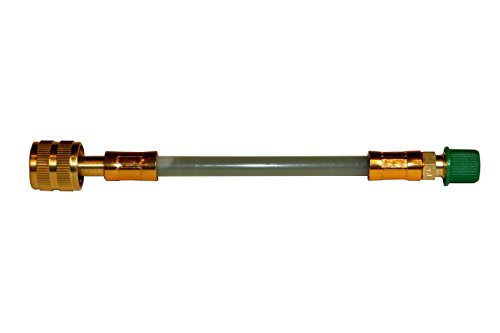
Enviro‑Safe brings over 29 years of refrigerant sealant experience to this injector‑style product. The ProSeal XL4 uses a concentrated formula that travels with the gas to reach leaks in condensers, evaporators, line sets, and Schrader valves. The injector design eliminates the need for hoses or caulk guns — simply connect to a service port and dispense.
The brass injector body feels robust and reusable, and the sealant is compatible with both residential and automotive AC systems, including mini‑splits and heat pumps. The non‑clogging formulation is safe for manifold gauges and recovery equipment. Owner feedback highlights its effectiveness on slow leaks in microchannel coils and brazed joints.
Potential drawbacks: the injector is single‑use after opening (though the brass fitting can be cleaned), and the sealant works best on leaks up to about 0.040″. It may take 24‑48 hours for the seal to fully set. Also, the product does not include UV dye, so leak verification requires a separate dye tool.
What works
- Simple injector application, no extra tools
- Works on HVAC and automotive systems
What doesn’t
- No UV dye included
- Seal requires up to 2 days to fully cure
5. TSI Supercool Total Leak Stop + U/V Dye

TSI Supercool is a respected name in automotive HVAC, and this Total Leak Stop uses a patented HFC‑free aerosol delivery (US Patent 8,047,009). The formula is polymer‑free and designed not to clog system components or recovery machines. The integrated UV dye lets you pinpoint the leak after treatment — a major convenience for DIYers.
The 1‑ounce can treats one vehicle and is designed for small leaks in evaporators, condensers, hoses, gaskets, and seals. The non‑polymer chemistry forms a chemical bond with the leak site without leaving solid particles. Owner reviews mention success on slow evaporator weeps and loose O‑rings.
Limitations include the small can size, which may be insufficient for multiple leak points, and the aerosol delivery that requires a manifold gauge set or a recharge hose. The product is not recommended for large or high‑side leaks. Additionally, some users noted the dye is hard to see without a high‑power UV flashlight.
What works
- Patented HFC‑free aerosol, safe for recovery
- UV dye aids leak detection
What doesn’t
- Small capacity limits coverage
- Dye visibility requires good UV light
6. RED TEK ProSeal22 A/C Seal Treatment (4 oz)
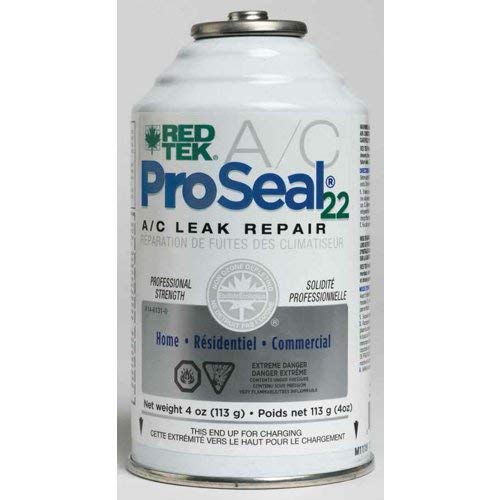
RED TEK ProSeal22 is unique because it remains in the system as a liquid lubricant, ready to seal future leaks whenever they occur. It is compatible with R22, R134a, mineral and synthetic (PAG/POE) oils, and most common system materials. The manufacturer emphasises low toxicity compared to methanol‑based sealers.
The 4‑ounce can installs in minutes using a standard service port. Because it stays liquid, it does not create solid deposits that could block TXVs or cap tubes. This makes it a good preventive maintenance additive for older systems. Owner feedback highlights its effectiveness on small evaporator and gasket leaks.
The main drawback is that it is not a quick fix for larger leaks — it works best for weeps and seeps over time. Also, the non‑returnable policy (hazardous material) means you cannot test it risk‑free. The lack of UV dye is another shortcoming for leak verification.
What works
- Remains liquid, acts as lubricant and sealer
- Low toxicity compared to methanol alternatives
What doesn’t
- Ineffective on large or rapidly leaking holes
- No UV dye; non‑returnable
7. Xantus Max Seal XL4 Inject + UV Dye

Xantus Products brings a patent‑pending direct‑inject method to the Max Seal XL4, enabling a mess‑free installation without pumping down the system. The formula has over 20 years of field‑proven success and is reported not to clog manifold gauges, TXVs, cap tubes, or pistons. The included UV dye helps locate remaining large leaks.
The injector cartridge is designed for use with a basic manifold gauge set, and the sealant works with all oils and refrigerants except ammonia. The metal construction feels premium, and the entire unit is built for one‑time use. Owner feedback consistently praises its ability to seal stubborn condenser and evaporator leaks permanently.
The higher upfront investment is offset by the chance of a single‑shot fix. The only real complaint is that the UV dye is somewhat weak and may require a high‑powered light to be visible. Also, the injector is not reusable, so you pay for a new one each treatment.
What works
- Proven 20‑year formula, permanent seal
- Direct inject prevents mess and contamination
What doesn’t
- UV dye could be brighter
- Injector is single‑use
8. ATP Automotive AT‑205 Re‑Seal (2 Pack, 8 oz each)

ATP’s AT‑205 is a professional‑strength rubber seal conditioner that stops leaks by rejuvenating dried‑out seals and gaskets. While primarily designed for engines, transmissions, and power steering, it is also effective on AC system rubber seals and O‑rings. The 2‑pack gives you 16 total ounces — enough for multiple systems.
The formula contains no petroleum distillates and will not over‑swell or break down seals. It is compatible with conventional and synthetic oils, ATF, gear oil, and power steering fluid, but it is not a dedicated AC sealer per se. For AC use, it must be introduced via the oil circuit or a service port.
Owners report success on weeping AC compressor seals and hose connections when added to the PAG oil. The main limitation is that it only conditions rubber — it will not seal metal cracks or large holes. Also, using it in an AC system requires extra steps to ensure it mixes with the compressor oil.
What works
- Rejuvenates dried rubber seals effectively
- Versatile for other automotive systems
What doesn’t
- Not a dedicated AC sealer; limited to rubber
- Requires careful integration into AC oil
9. BlueDevil Red Angel A/C Stop Leak (2 oz)

BlueDevil’s Red Angel uses a chemical‑welding process that bonds directly to metal or rubber at the leak site without any solid particles. This means it won’t clog TXVs, compressors, or recovery equipment. It is safe for both R12 and R134a systems, making it a versatile option for older vehicles.
The 2‑ounce bottle treats a single system, and the manufacturer guarantees it will seal leaks in condensers, evaporators, hoses, gaskets, and O‑rings. Owner feedback is largely positive, with many reporting a permanent fix on slow evaporator leaks. The lack of UV dye is a minor inconvenience, but the permanent chemical bond is a strong selling point.
The main drawback is the price point relative to the small volume. Some users also note it can take a day or two of system operation to fully cure. For large leaks where refrigerant is lost quickly, the sealer may not have time to react.
What works
- Chemical weld — no particles to cause clogs
- Effective on both R12 and R134a systems
What doesn’t
- No UV dye for leak verification
- Slow cure time; needs system to run
10. A/C Pro Super Seal AC Stop Leak Kit (3 oz)

This kit from InterDynamics pairs R134a (1.5 oz) with sealant additives (1.5 oz) in a single can, plus a reusable dispensing hose. It is designed for the DIYer who wants to recharge and seal in one step. The sealant targets leaks in evaporators, condensers, compressors, accumulators, receiver dryers, rubber hoses, gaskets, and O‑rings. Red dye is included for leak detection.
The kit simplifies the process: just attach the hose to the low‑side service port and follow the pressure gauge on the can. Owners report success on small to moderate leaks, especially in rubber components. The reusable hose is a nice bonus, allowing multiple uses with standard R134a self‑sealing cans.
Limitations include a maximum leak size — large leaks will not seal and the dye may not be visible without a good UV light. Also, the kit cannot be shipped to California or Washington due to restricted chemicals, which limits availability. Some users noted the can empties quickly, leaving little margin for error.
What works
- All‑in‑one recharge and seal for DIYers
- Reusable dispensing hose adds value
What doesn’t
- Restricted shipments to CA and WA
- Not effective on leaks larger than small weeps
11. Leak Saver Direct Inject Ultimate 3‑in‑1

Leak Saver’s Ultimate 3‑in‑1 combines a proven leak sealant with moisture remover and UV dye in a single injector cartridge. It works with all refrigerants (except ammonia) and all system types — automotive, residential, mini‑split, and commercial. The formula permanently seals leaks where the refrigerant charge is not lost within 7 days, reacting with air and moisture at the leak site.
Over 4,000,000 units sold since 2015 speak to widespread professional and DIY trust. The direct‑inject method requires a manifold gauge set (or the optional Leak Shot injection kit), and adapters for mini‑splits or automotive service ports are available separately. The cartridge is safe for all tools and parts, including TXVs and cap tubes.
The biggest advantage is the 3‑in‑1 functionality: you seal, remove moisture, and get a dye for verifying the fix. The only real downsides are the need for a manifold gauge (not included) and the higher price point. For a guaranteed permanent fix on most AC leaks, this is the most complete solution.
What works
- All‑in‑one sealer, moisture remover, UV dye
- Massive field validation with millions of units sold
What doesn’t
- Requires manifold gauge or injection kit
- Higher initial investment
Hardware & Specs Guide
Polymer vs. Non‑Polymer Formulations
Polymer sealants use suspended solids that agglomerate at leak sites, but they can also accumulate in expansion valves and accumulators, leading to system failure. Non‑polymer sealants — like those based on silicones, esters, or synthetic rubbers — form a chemical bond without solid particles, preserving flow characteristics and recovery equipment compatibility.
Injector vs. Pressurized Canister
Pressurized cans are easy but often deliver too much sealant and force it through the compressor, risking damage. Injector‑style sealers (syringe, cartridge, or brass injector) allow precise dosing into the high or low side, reducing contamination and ensuring the sealer reaches all components. For any repair beyond a minor top‑off, an injector is the professional choice.
Oil and Refrigerant Compatibility
Modern AC systems use PAG, POE, or mineral oil depending on the refrigerant (R134a, R1234yf, R12). A sealer must be explicitly rated for your oil type to avoid chemical incompatibility. Many universal sealers now work with all common oils, but always verify the label — especially for R1234yf systems, which require specific formulations.
UV Dye and Moisture Removal
UV dye helps confirm the seal location and identify leaks too large for the sealer to handle. Moisture removers (desiccants or chemical reactants) absorb water that entered the system during repairs, preventing ice formation and acid buildup. A 3‑in‑1 product combining sealer, dye, and moisture remover offers the most streamlined approach.
FAQ
Can I use an AC leak sealer if my system has already been contaminated with stop‑leak?
How long does an AC leak sealer take to work?
Will an AC leak sealer damage my compressor or expansion valve?
Can I drive immediately after adding AC leak sealer?
Final Thoughts: The Verdict
For most buyers, the best car ac leak sealer winner is the Leak Saver Direct Inject Ultimate 3‑in‑1 because it combines a permanent, non‑clogging sealant with moisture removal and UV dye in a single easy‑to‑use injector, backed by millions of satisfied users. If you prefer a dedicated non‑polymer formula with integrated dye, the ComStar A/C Zero Leak offers excellent value. And if you need a simple DIY recharge‑and‑seal kit, the A/C Pro Super Seal Stop Leak Kit is a solid choice for minor leaks.

Certification: BSc in Mechanical Engineering
Education: Mechanical engineer
Lives In: 539 W Commerce St, Dallas, TX 75208, USA
Md Amir is an auto mechanic student and writer with over half a decade of experience in the automotive field. He has worked with top automotive brands such as Lexus, Quantum, and also owns two automotive blogs autocarneed.com and taxiwiz.com.