Selecting a cooling unit for your camper isn’t about grabbing the highest BTU number—it’s about matching real-world power draw, physical fit, and noise tolerance to how you actually camp. A unit that works brilliantly on shore power can drain batteries in hours off-grid, and a whisper-quiet rooftop model might not fit your vent opening or ceiling thickness. The wrong choice means sweaty nights, tripped breakers, or a unit that cycles constantly without ever truly chilling the space.
I’m Amir — the founder and writer behind Four Wheel Ask. My approach to product analysis focuses on scrutinizing technical specifications, cross-referencing owner-reported performance across various climates and power setups, and identifying build-quality patterns that separate units that last from those that fail after a single season.
This guide cuts through marketing claims to help you identify the right configuration for your rig, whether you’re boondocking in the desert or plugged in at a full-hookup site. After weeks of evaluating specs, reading hundreds of owner reports, and analyzing power-consumption data, I’ve settled on the best camper ac unit options that deliver real-world cooling without hidden compromises.
How To Choose The Best Camper AC Unit
Selecting the right air conditioner for your camper involves balancing cooling capacity with power availability, physical dimensions, and installation complexity. A mismatch in any of these areas can render an otherwise capable unit unusable in your specific setup. Here are the critical factors to evaluate before making a purchase.
Power Source and Consumption
Not all campers have the same electrical infrastructure. Rooftop units typically require 115V AC shore power or a generator, while 12V DC units let you run off battery banks for hours. Pay close attention to startup surge current—many units draw 2-3x their running wattage for the first few seconds, which can trip inverters or small generators even if the running load seems manageable. Inverter-driven compressors eliminate this startup spike and maintain steady, efficient operation.
Physical Fit and Installation
Rooftop units must match your camper’s vent opening (typically 14.25 x 14.25 inches) and accommodate your ceiling thickness. Low-profile designs reduce wind resistance and improve fuel economy but may have different clearance requirements. Portable units need window access for the exhaust hose and floor space inside the camper. Measure twice—a unit that’s 0.5 inches too tall won’t fit under a storage cover or through a low garage door.
Noise Levels and Comfort Features
Camper interiors are small, so noise matters more than in a house. Units rated below 50 dB are noticeably quieter and won’t disrupt sleep or conversation. Modern inverter units run the compressor continuously at variable speed, which maintains stable temperatures and reduces the on-off cycling that wakes light sleepers. Heat pump functionality adds year-round value, providing efficient heating down to around 20°F without needing a separate furnace.
Quick Comparison
On smaller screens, swipe sideways to see the full table.
| Model | Category | Best For | Key Spec | Amazon |
|---|---|---|---|---|
| TOSOT 16000 BTU Go Cool | Rooftop Inverter | All-season comfort with WiFi control | 16K BTU cool / 12.5K BTU heat, 43 dB | Amazon |
| TURBRO Inverter 13.5K BTU | Rooftop Inverter | Ultra-low profile & energy savings | 13.5K BTU, 10.0″ tall, WiFi, heat pump | Amazon |
| Furrion Chill Cube 18K BTU | Rooftop Variable Speed | High-capacity cooling with battery saver mode | 18K BTU, variable compressor, 72.4 lbs | Amazon |
| RecPro 15K RV AC | Rooftop All-in-One | Ducted/non-ducted flexibility with heat pump | 15K BTU, 55.4 dB, low amp draw | Amazon |
| Dometic FreshJet 3 Series 13.5K | Rooftop Lightweight | Quiet upgrade for existing Dometic systems | 13.5K BTU, 14% lighter, 58.5 dB | Amazon |
| Coleman-Mach 15 48204 Series | Rooftop High Output | Proven reliability in hot climates | 15K BTU, 5.6K BTU heat strip, R-410A | Amazon |
| Midea 24,000 BTU Smart Inverter | Window Unit | Large trailers or cabins needing max cooling | 24K BTU, 230V, smart app, 48.5 dB | Amazon |
| Outequip 12V 10000 BTU | 12V Rooftop | Off-grid battery-powered cooling | 10K BTU, 12V, 40 dB, 6.3″ low profile | Amazon |
| ASA Electronics Advent Air 13.5K | Rooftop Direct Replacement | Budget-friendly Dometic replacement | 13.5K BTU, 3 fan speeds, metal base pan | Amazon |
| BAYKUL 5000 BTU Portable | Portable Tent AC | Tent camping or small truck bed use | 5K BTU, 30.8 lbs, 46 dB, 400W draw | Amazon |
| DOMANKI 14,000 BTU Portable | Portable Room AC | Large campervans or temporary spaces | 14K BTU ASHRAE, 10K SACC, 48 dB | Amazon |
In-Depth Reviews
1. TOSOT 16000 BTU GO Cool RV Air Conditioner

The TOSOT Go Cool series delivers a compelling combination of cooling and heating capacity in a rooftop inverter package designed for RVs from 16 to 24 feet. With 16,000 BTU cooling and 12,500 BTU heating, this unit handles temperature extremes from 23°F up to 115°F, making it a genuine four-season solution. The built-in inverter compressor provides a soft start that eliminates the high inrush current that often trips smaller generators or inverters, and the variable-speed operation maintains steady temperatures without the abrupt cycling of traditional units.
Owner feedback consistently highlights the remarkably quiet operation, with many reporting noise levels around 48 dB on low setting, which is barely noticeable inside a camper. The WiFi control via the Gree+ app allows users to pre-cool the RV before arrival or adjust settings without leaving the campsite. Installation is straightforward for DIYers with basic tools, though the unit ships in multiple boxes which can arrive separately—a logistical detail worth planning around.
The sleek black finish and low-profile 12.2-inch height reduce wind drag compared to bulkier rooftop units, contributing to better fuel economy during travel. The built-in soft start is a significant advantage for those running on generator or inverter power, as it avoids the momentary power spike that can cause nuisance tripping. For campers who want one unit that handles both sweltering summer heat and chilly shoulder-season nights, this is the most versatile option on the market.
What works
- Quiet operation at 43 dB—barely audible inside the camper
- Integrated heat pump provides efficient warmth without propane
- WiFi app control for pre-cooling and remote adjustment
- Built-in soft start prevents generator and inverter tripping
What doesn’t
- Ships in two boxes that may arrive at different times
- Mounting screw alignment can be finicky during installation
- Filter sealing could be more robust for dusty environments
2. TURBRO Inverter 13.5K BTU RV Air Conditioner
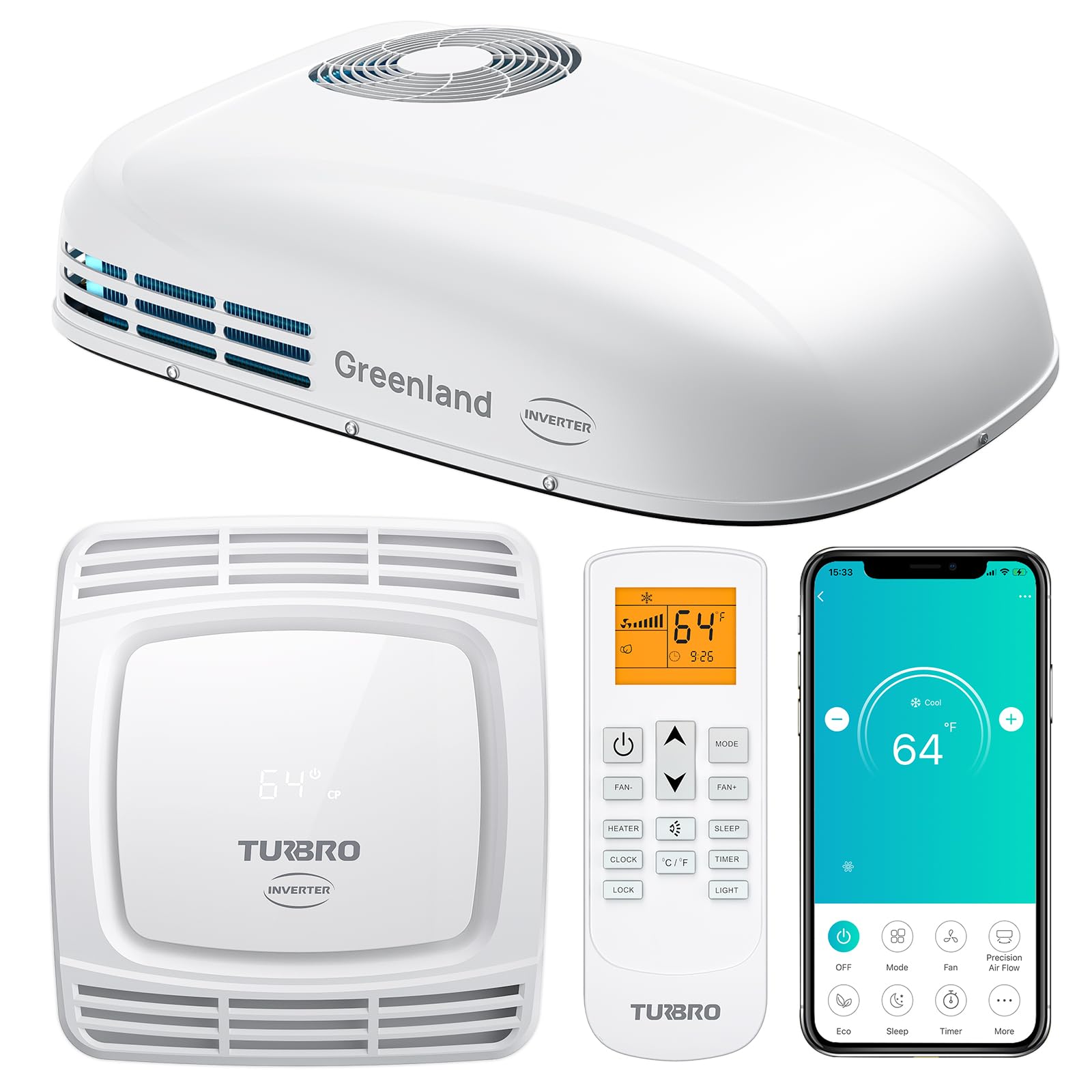
The TURBRO Inverter 13.5K BTU unit stands out for its exceptionally slim 10-inch rooftop profile, which is up to 35% thinner than most competing rooftop units. This low-profile design reduces aerodynamic drag and improves fuel efficiency, while the inverter compressor delivers up to 30% greater energy efficiency compared to non-inverter systems. The smooth startup of the inverter eliminates the need for an external soft starter, simplifying installation and reducing total system cost.
Owner reports indicate the heat pump keeps living quarters comfortable in temperatures as low as the upper 20s Fahrenheit, making it a viable year-round solution for many campers. The WiFi and remote control offer flexible operation, and the LED atmosphere light adds a touch of interior ambiance that owners appreciate. Cooling performance is solid, with one owner reporting a temperature drop from 100°F to 80°F within 30 minutes in a truck camper.
However, some owners have noted that the thermostat sensor is located near the cold air outlet, which can cause it to read 10-15°F cooler than the actual room temperature. This leads to the unit running longer than necessary and can impact efficiency. While the Tuya app integration offers some workaround potential via external sensors, this thermostat placement issue is a notable design flaw that buyers should understand before purchasing.
What works
- Ultra-low 10-inch profile improves aerodynamics and fuel economy
- Inverter compressor with soft start eliminates breaker tripping
- Heat pump provides efficient heating down to about 20°F
- WiFi control via smart app for convenient remote operation
What doesn’t
- Thermostat placement near outlet causes inaccurate room temperature readings
- Reported to be louder than some competing inverter units
- Dry mode functionality is less effective at humidity removal
- Plastic interior clip can break during installation
3. Furrion Chill Cube 18K BTU Variable Speed RV Rooftop Air Conditioner

The Furrion Chill Cube represents a significant leap in RV air conditioning technology with its variable-speed inverter compressor that delivers over one ton of cooling capacity. The 18,000 BTU output is ideal for larger campers and fifth wheels, while the variable-speed operation eliminates the abrupt start-stop cycling that characterizes traditional RV AC units. This continuous operation maintains more stable temperatures and dramatically reduces the amp draw spikes that can stress electrical systems.
Owner reports from Arizona desert users confirm the unit maintains comfortable temperatures even in extreme heat, with one owner running it on a EcoFlow Delta Pro 3 battery system in a 40-foot fifth wheel. The power draw ramps from around 1,100 watts max down to approximately 300 watts once the space reaches temperature, enabling extended boondocking on battery power. At 72.4 pounds, it’s about 10% lighter than many comparable units, and the aerodynamic shroud reduces wind resistance during travel.
The built-in Battery Saver Mode is a standout feature for off-grid campers, automatically adjusting compressor speed to minimize power consumption while maintaining comfort. However, the fan continues to run when the cooling setpoint is reached, requiring manual shutdown via the remote if you prefer complete silence. The unit requires a separate air distribution box (sold separately), which adds to the total investment but provides flexibility for ducted or non-ducted installations.
What works
- Variable-speed compressor maintains steady temps with minimal cycling
- Extremely efficient at low speed—draws around 300W at maintenance
- Battery Saver Mode enables extended off-grid operation
- Lighter than many 15K BTU units despite higher capacity
What doesn’t
- Fan does not auto-shut off when cooling setpoint is reached
- Air distribution box sold separately adds to total cost
- Some units have arrived with missing internal components
- Customer support responsiveness has been inconsistent
4. RecPro RV Air Conditioner 15K with Heat Pump
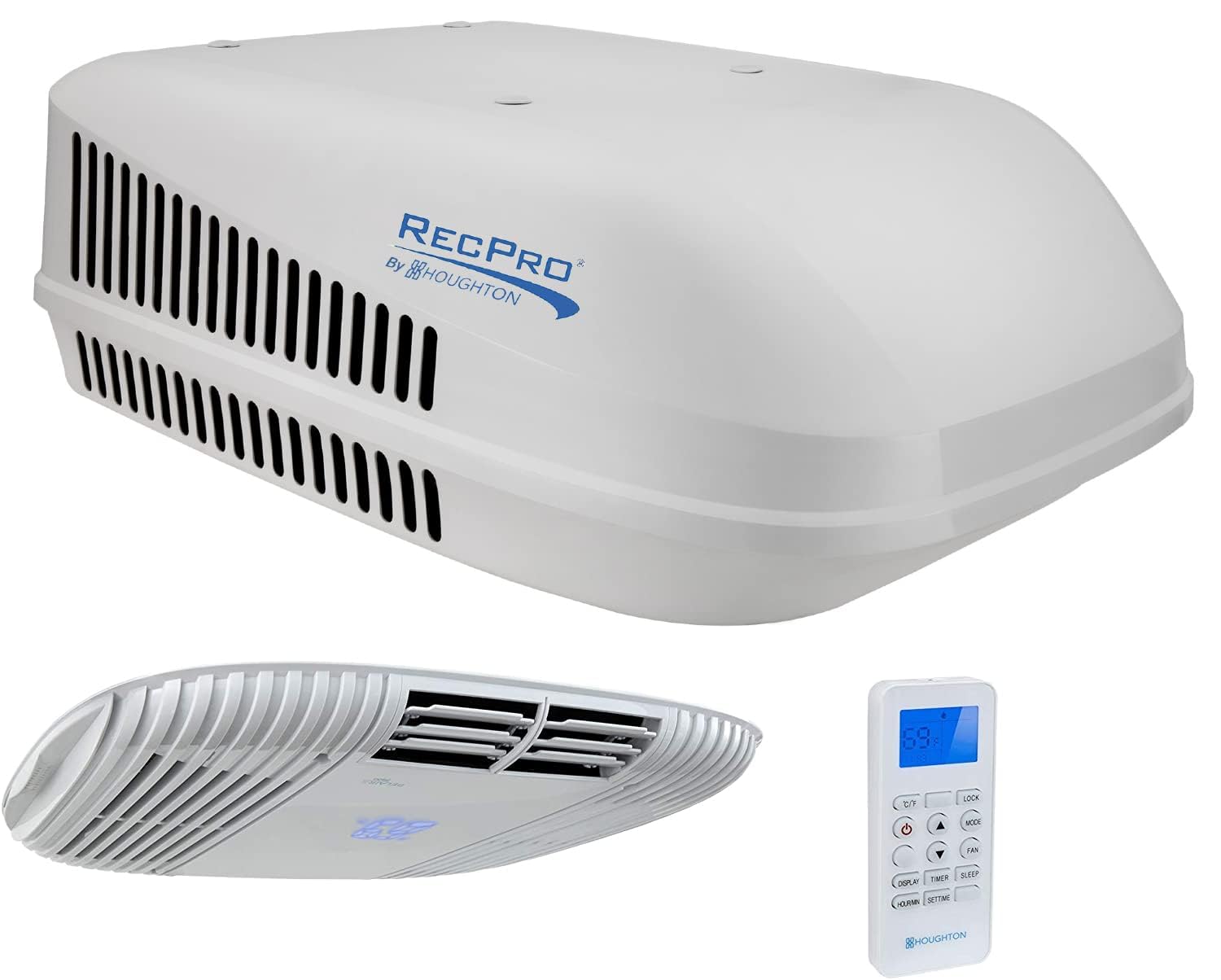
The RecPro 15K BTU unit is engineered as a comprehensive all-in-one solution that works with both ducted and non-ducted RV systems, giving owners maximum installation flexibility. The low amp draw design makes it feasible to run alongside other appliances without overloading a 30-amp service, and the integrated heat pump provides supplemental warmth that owners consistently praise as a game-changer compared to traditional electric heat strips. The UV-resistant plastic housing is built to withstand prolonged sun exposure without significant degradation.
Owner feedback emphasizes the quiet operation—rated at 55.4 dB, which is comparable to gentle rainfall and noticeably quieter than the Dometic units many are replacing. The remote control and LED touch display provide intuitive control over cool, dry, fan, sleep, and timer modes without requiring thermostat wiring. Australian-made construction and sturdy build quality are frequently mentioned, with one owner noting the superior pipe layout prevents the vibration wear issues common on other brands.
Some owners in smaller RVs have noted that the noise level, while improved over older units, can still be noticeable in tight spaces, particularly if the unit is mounted directly above the sleeping area. The fan runs continuously when the heat pump is active, which may be a consideration for light sleepers. Additionally, a few reports mention minor cosmetic cracking in the plastic top shell, though this does not appear to affect performance or longevity.
What works
- Compatible with both ducted and non-ducted RV systems
- Low amp draw allows multi-appliance operation on 30A service
- Heat pump provides efficient warmth without propane consumption
- Sturdy build quality with attention to vibration-prone components
What doesn’t
- Noise level around 55-65 dB may be noticeable in small campers
- Fan runs continuously during heat pump operation
- Minor plastic shell cracking reported by some owners
- Canadian buyers face significant price markups on Amazon
5. Dometic FreshJet 3 Series 13.5K BTU Rooftop Air Conditioner

The Dometic FreshJet 3 Series is designed as a direct upgrade path for owners of older Dometic units, offering plug-and-play compatibility with existing air distribution boxes while delivering higher cooling capacity and airflow than competitive rooftop units. At 14% lighter than the Dometic Brisk II, the FreshJet reduces roof load and makes installation more manageable for solo DIYers. The unit operates 4 dB quieter than select competing rooftop models, which translates to a noticeably more peaceful interior environment.
Owner reports confirm the FreshJet provides superior cooling compared to the units it replaces, with one owner measuring a temperature drop from 80°F to 64°F in 30-45 minutes. The startup draw is approximately 2,000 watts, settling to a steady 1,600-1,700 watts running and just 450 watts for the fan alone. This makes it compatible with many portable generators in eco mode, though the startup surge requires adequate inverter capacity for battery-based systems.
The primary concern reported across multiple owner reviews is packaging damage during shipping. Several units arrived with broken mounting tabs or damaged shrouds, requiring returns or partial refunds. While Dometic’s customer service has been responsive in some cases, the packaging issue appears systemic, and buyers are advised to inspect the unit thoroughly upon delivery or consider purchasing from a local dealer where they can verify condition before taking possession.
What works
- Plug-and-play compatibility with existing Dometic distribution boxes
- 14% lighter than Brisk II for easier rooftop installation
- Higher airflow and cooling capacity than many competing units
- Quieter operation than older Dometic models
What doesn’t
- Packaging frequently insufficient—units arrive with damage
- No new control box or trim included (must reuse existing)
- Startup surge around 2,000W may challenge smaller inverters
6. Coleman-Mach 15 48204 Series Air Conditioner Upper Unit

The Coleman-Mach 15 is a proven workhorse in the RV cooling world, known for its robust construction and reliable performance in demanding climates. This upper unit delivers 15,000 BTU of cooling capacity along with 5,600 BTU of heating output via an optional electric heat strip, making it suitable for year-round use in moderate conditions. The 1/3 HP fan motor moves substantial air volume, and the two-piece shroud design simplifies removal for maintenance compared to older Mach 3 units.
Owner feedback consistently highlights the dramatic cooling improvement over older or undersized units, with one owner reporting a temperature drop of 15-20°F compared to only 4-5°F with their previous unit. The installation is straightforward for those comfortable working on an RV roof, though the unit is heavy and requires two people to lift into position safely. The R-410A refrigerant is environmentally preferable to older R-22 systems and provides efficient heat transfer.
It’s critical to understand that this listing is for the upper unit only—the lower control panel and mounting hardware must be purchased separately if you don’t already have compatible components. This is clearly stated in the product details but has caught some buyers off guard. A small number of owners have reported units that blow air but fail to cool, which may indicate a compressor issue or refrigerant leak that requires warranty service.
What works
- Proven reliability with strong cooling output in hot climates
- Two-piece shroud design is easier to service than older models
- Dramatic temperature drop of 15-20°F compared to underpowered units
- R-410A refrigerant with eco-friendly profile
What doesn’t
- Upper unit only—control panel and hardware sold separately
- Heavy unit requires two people for safe rooftop installation
- Small number of units arrive with non-functional compressors
7. Midea 24,000 BTU Smart Inverter Window Air Conditioner

The Midea 24,000 BTU Smart Inverter unit brings residential-grade cooling power to large campers, park models, and tiny homes where window installation is feasible. This is not a rooftop unit—it requires a window opening and 230V electrical service, which is a different power requirement than typical 115V RV systems. The variable-speed inverter technology delivers over 40% energy savings compared to standard units, and the 48.5 dB noise level is remarkably quiet for a unit of this capacity.
Owner feedback emphasizes the impressive cooling capability, with several reports noting it can effectively cool an entire house. The FLASHCOOL feature rapidly drops the temperature before settling into efficient eco mode, and the smart home integration via the SmartHome App allows control from anywhere. The unit includes four operating modes, three fan speeds, and a 24-hour timer for customized comfort scheduling.
The most significant consideration for camper use is the 230V power requirement. Most RVs and campers operate on 115V or 12V DC, so this unit typically requires either a dedicated 230V hookup at a park or a substantial step-up transformer/inverter setup. The 23.62-inch depth also requires a large window opening, which may not be feasible in many camper layouts. This unit is best suited for park models, large fifth wheels with 50-amp service, or cabin-style campers with residential electrical systems.
What works
- Massive 24,000 BTU cooling capacity for large spaces
- Inverter technology provides significant energy savings
- Very quiet operation at 48.5 dB for the output level
- Smart app and voice control for convenient operation
What doesn’t
- Requires 230V electrical service—not compatible with standard RV power
- Large physical dimensions require substantial window opening
- Not a rooftop unit; limited to window installation
- Some units arrive with incorrect window installation kit components
8. Outequip RV Air Conditioner 12V 10000 BTU Rooftop Unit
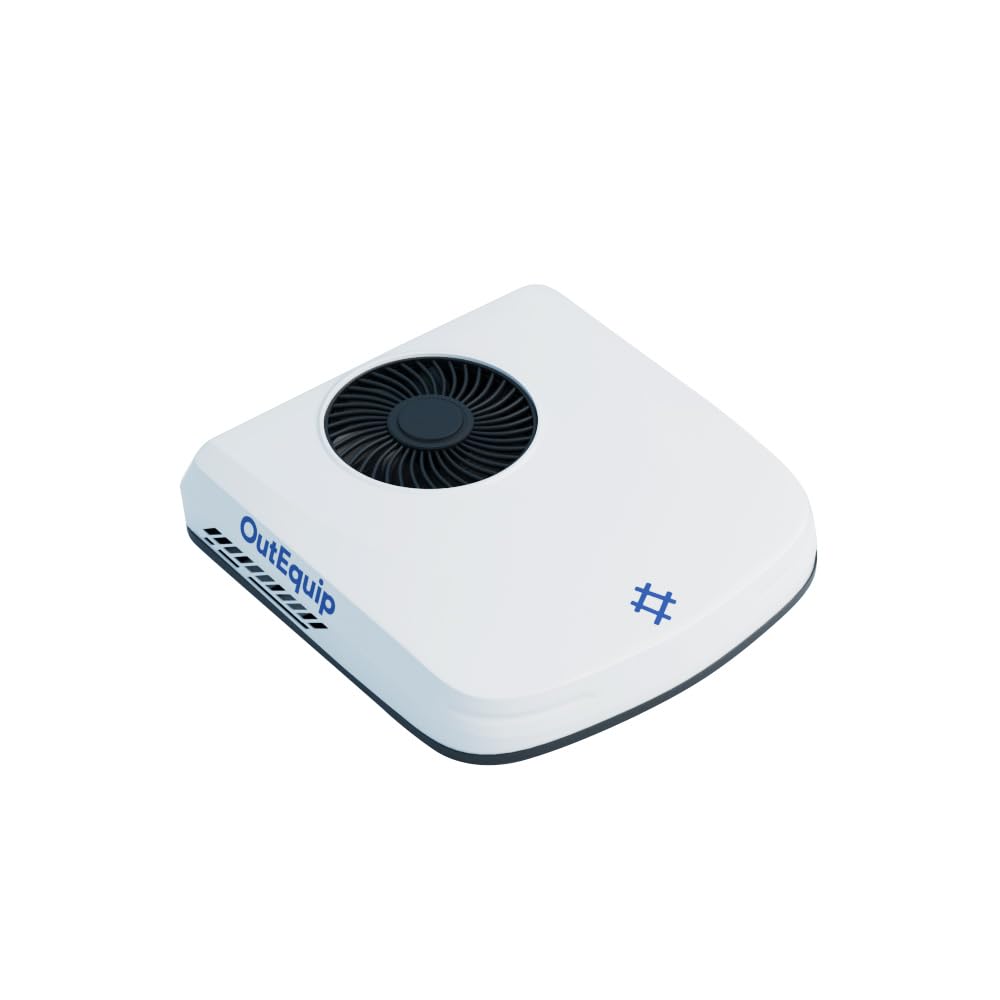
The Outequip 12V rooftop air conditioner is a specialized solution for off-grid campers who need cooling without shore power or a generator. Operating entirely on 12V DC, it draws approximately 50 amps max startup and settles to around 30 amps while maintaining temperature, with eco mode consuming significantly less. Owner reports indicate approximately 6-7 hours of runtime on a 360Ah battery bank and up to 10 hours on a 600Ah setup, making extended boondocking in hot weather achievable with adequate battery capacity.
Installation fits the standard 14×14-inch roof vent opening, and the low 6.3-inch profile minimizes wind resistance and aerodynamic drag. The brushless DC motor fans contribute to the exceptionally quiet 40 dB operation, which is among the quietest of any camper AC unit available. Owners of Class B vans and truck campers particularly appreciate the ability to run the AC from the vehicle’s existing battery bank without the complexity of a separate generator or inverter system.
The 10,000 BTU capacity is appropriate for small to medium campers, with one VW Bus owner reporting it keeps the interior very comfortable even during summer camping. The unit includes eco, sleep, and turbo modes, plus remote control for convenient adjustment. Some owners note that proper sealing around the condenser area is essential to prevent rain ingress, and the 4 AWG copper wire recommended for the power run requires careful routing through the return air vent to avoid creating new leak paths.
What works
- Runs directly on 12V battery power—no inverter or generator needed
- Exceptionally quiet at 40 dB
- Low 6.3-inch profile reduces wind drag
- Fits standard 14×14-inch roof vent opening
What doesn’t
- Requires substantial battery bank (360Ah+) for extended runtime
- 10,000 BTU limits effective cooling to smaller campers
- Proper sealing around condenser is critical to prevent water ingress
- Power cable routing through return air vent requires careful installation
9. ASA Electronics Advent Air 13.5K BTU Roof Top AC

The ASA Electronics Advent Air 13.5K BTU unit is positioned as a direct replacement option for older Dometic rooftop units, offering compatibility with existing mounting openings and control systems. The rigid metal-constructed base pan provides a solid foundation that resists warping and contributes to the unit’s overall durability. The included watertight vent opening gasket with six dense foam support pads ensures a proper seal against roof leaks, a critical consideration for any rooftop installation.
Owner feedback indicates this unit provides reliable cooling performance at a competitive price point, with several users reporting successful direct replacement of failed Dometic units. The three-speed fan allows users to balance airflow against noise preference, and the optional plug-in heat strip provides supplemental warmth for shoulder-season camping. One owner noted the unit cools their van comfortably even in intense summer heat, with airflow and noise levels that are reasonable for a non-inverter unit.
The most significant concern reported is durability, with one unit failing after only two weeks of operation due to a compressor issue. While this appears to be an isolated case rather than a systemic problem, it’s worth noting that the Advent Air does not include the inverter technology or advanced features found on more expensive units. Some installers have reported that the included mounting screws are too short for thicker roof constructions, requiring a trip to the hardware store for longer fasteners.
What works
- Direct replacement for many older Dometic rooftop units
- Rigid metal base pan resists warping and adds durability
- Watertight gasket with foam support pads prevents roof leaks
- Three-speed fan provides airflow flexibility
What doesn’t
- Some units have failed prematurely due to compressor issues
- Mounting screws may be too short for thicker roof constructions
- No inverter technology—standard fixed-speed compressor operation
- Limited feature set compared to premium-priced competitors
10. BAYKUL 5000 BTU Portable Tent Air Conditioner
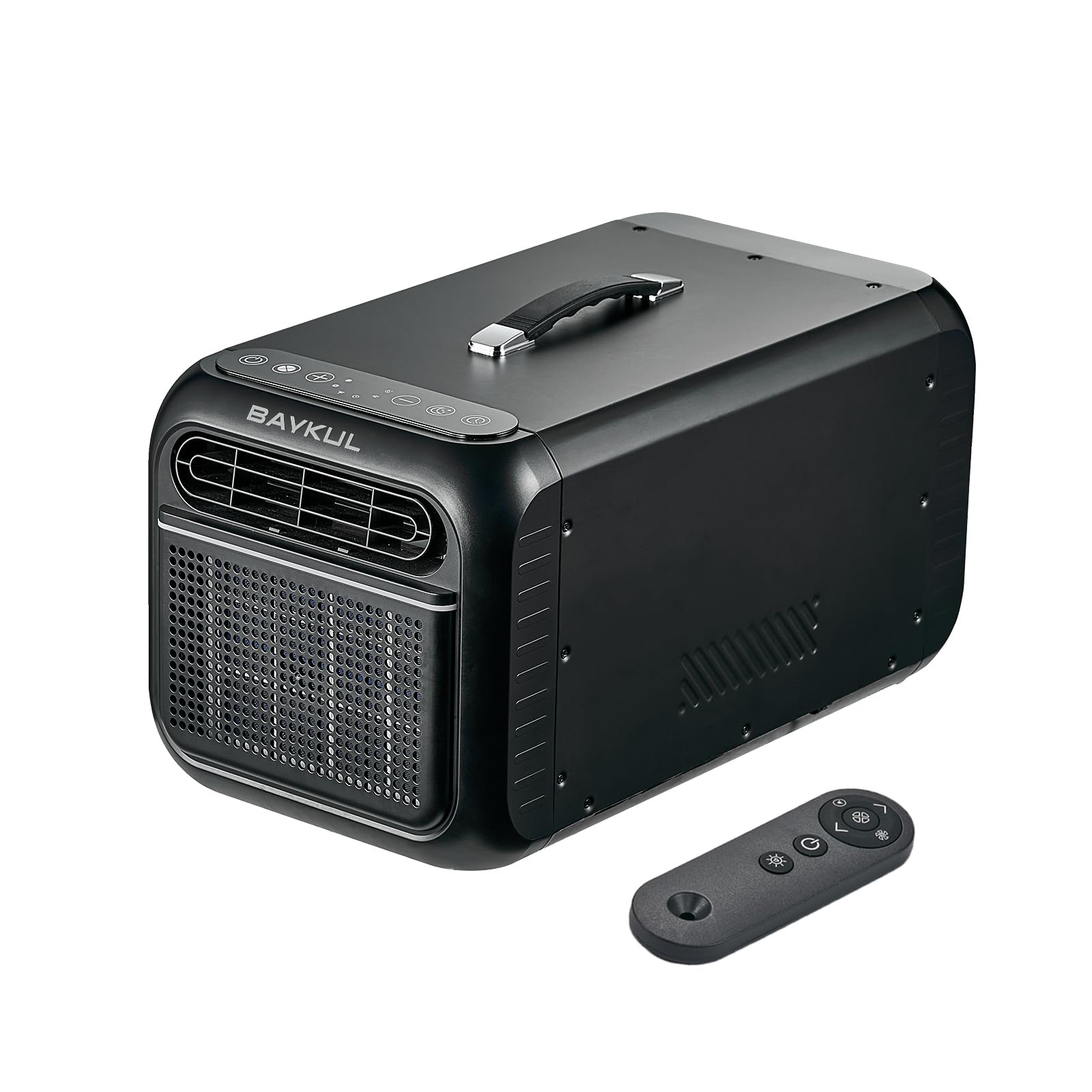
The BAYKUL 5000 BTU portable air conditioner is designed for the lightweight camper, tent camper, or truck sleeper who needs spot cooling without the commitment of a rooftop installation. This compact unit measures just 21.1 x 11.2 x 11.8 inches and weighs 30.8 pounds, with a built-in handle for easy transport. The 5000 BTU compressor can drop the temperature by 18°F in approximately five minutes, consuming less than 400 watts per hour for energy-efficient operation.
Owner reports confirm this unit handles extreme conditions, with one reviewer in Mississippi reporting a temperature drop from 97°F to 79°F in 30 minutes inside a tent. The four operating modes—Cool, Dry, Sleep, and Fan—provide versatility for different conditions, and the 24-hour timer allows automated shutdown. Sleep mode noise is rated at 46-50 dB, which is quieter than many portable units and acceptable for overnight use.
The primary limitation is the 5000 BTU capacity, which is suitable for small spaces like tents, truck cabs, or small rooms but will struggle in larger campers or when ambient temperatures are extreme. The portable design requires venting the exhaust hose through a window or tent opening, and the dual-hose system improves efficiency but adds setup complexity. At 30.8 pounds, it’s portable but not truly lightweight, and the handle design helps but doesn’t eliminate the awkwardness of moving it repeatedly.
What works
- Compact and portable with built-in handle for easy transport
- Fast 18°F temperature drop in about 5 minutes
- Low power consumption under 400W ideal for solar/generator setups
- Multiple modes including Sleep mode with quiet 46 dB operation
What doesn’t
- 5000 BTU limits effective cooling to small spaces only
- At 30.8 pounds, it’s portable but not lightweight
- Requires window/tent opening for exhaust hose venting
- Dual-hose setup adds complexity for some users
11. DOMANKI 14,000 BTU Portable Air Conditioner

The DOMANKI 14,000 BTU portable air conditioner offers substantial cooling capacity suitable for large campervans, temporary spaces, and even whole rooms up to 700 square feet. The unit features a 3-in-1 design with cooling, dehumidification, and fan modes, plus an auto-swing function for broader air distribution. The self-evaporating system eliminates the need for daily manual drainage in most conditions, which is a significant convenience for camper use where managing condensate can be a hassle.
Owner feedback emphasizes the straightforward setup and intuitive controls, with most users reporting installation in under 15 minutes. The built-in casters make it easy to move the unit between locations, and the included window seal kit accommodates both vertical and horizontal sliding windows. The noise level is reasonable at 52 dB standard and below 48 dB in sleep mode, making it acceptable for overnight use in a camper or RV.
The 14,000 BTU rating is measured at the ASHRAE standard; the SACC (Seasonally Adjusted Cooling Capacity) rating is 10,000 BTU, which is a more realistic measure of sustained cooling performance. The R-32 refrigerant is more environmentally friendly with lower global warming potential than older refrigerants. However, the unit requires a window opening for the exhaust hose, which can be problematic in some camper layouts, and the 27-inch height takes up floor space that may be at a premium in smaller rigs.
What works
- Powerful 14,000 BTU ASHRAE cooling for large spaces
- Self-evaporating system eliminates daily condensate drainage
- Easy roll-around mobility with built-in casters
- Simple 15-minute setup with included window kit
What doesn’t
- SACC rating of 10,000 BTU is lower than ASHRAE number suggests
- Requires window access for exhaust hose venting
- 27-inch height consumes valuable floor space in campers
- Some units have arrived with non-functional remote controls
Hardware & Specs Guide
BTU Ratings Explained
British Thermal Units measure cooling capacity, but the number alone doesn’t tell the whole story. ASHRAE ratings (used by most portable units) test at higher indoor temperatures than SACC ratings (the DOE standard), so a 14,000 BTU ASHRAE unit may only deliver 10,000 BTU SACC in real-world conditions. For rooftop units, BTU ratings are generally more consistent, but actual performance depends on insulation quality, ceiling height, window exposure, and ambient temperature. As a rule of thumb, you need about 20 BTU per square foot of well-insulated camper space, with more required for units installed in direct sun or high-altitude locations where air density is lower.
Inverter vs. Fixed-Speed Compressors
Inverter compressors vary their speed to match cooling demand, running continuously at low speed once the setpoint is reached. This eliminates the start-stop cycling of fixed-speed units, maintains more stable temperatures, and dramatically reduces startup current draw. Fixed-speed compressors run at full power until the thermostat is satisfied, then shut off completely, restarting at full power when the temperature rises again. The restart surge can be 2-3 times the running wattage, which challenges small generators and inverters. Inverter units cost more upfront but offer better efficiency, quieter operation, and greater compatibility with limited electrical systems.
Power Requirements for Campers
Standard RV rooftop units require 115V AC power at 15-20 amps, typically supplied by shore power or a generator. Startup surge is the critical factor—a unit that draws 1,600 watts running may need 3,000+ watts for the first few seconds. Inverter-based units like the TOSOT and Furrion Chill Cube eliminate this surge with soft-start technology. For off-grid operation, 12V DC units like the Outequip bypass the inverter entirely, running directly from battery banks. A typical 100Ah lithium battery can run a 12V AC unit for approximately 2-3 hours, depending on the temperature differential and unit efficiency.
Installation Considerations
Rooftop units require a standard 14.25 x 14.25-inch roof opening and adequate ceiling thickness clearance—typically 1.0 to 4.0 inches depending on the unit. Low-profile units like the TURBRO at 10 inches tall may not fit under some RV covers or through garage doors. Portable units need window access for the exhaust hose, and the window kit must match your window type (vertical or horizontal sliding). Weight is a major factor for rooftop installation; units over 70 pounds should be installed by two people to prevent roof damage. Always verify that your roof structure can support the weight of the unit plus the dynamic loads of travel.
FAQ
Can I run a camper AC unit on battery power alone?
What size camper AC unit do I need for my RV?
Are inverter AC units worth the higher price for campers?
How noisy are rooftop camper AC units compared to portable units?
Can I install a camper AC unit myself or do I need a professional?
Final Thoughts: The Verdict
For most buyers seeking the best camper ac unit, the TOSOT 16000 BTU Go Cool delivers the strongest combination of quiet operation, heating and cooling versatility, and inverter efficiency at a competitive price point. If you need a lower profile for aerodynamics or storage clearance, the TURBRO Inverter 13.5K is the thinnest option available while still providing excellent performance. For off-grid campers who want battery-powered cooling without a generator, the Outequip 12V 10000 BTU is the best choice for silent, efficient operation from your existing battery bank. And for those on a tighter budget who still want reliable rooftop cooling, the ASA Electronics Advent Air 13.5K provides dependable performance at an entry-level price point.

Certification: BSc in Mechanical Engineering
Education: Mechanical engineer
Lives In: 539 W Commerce St, Dallas, TX 75208, USA
Md Amir is an auto mechanic student and writer with over half a decade of experience in the automotive field. He has worked with top automotive brands such as Lexus, Quantum, and also owns two automotive blogs autocarneed.com and taxiwiz.com.