The moment you fire up a freshly built engine, every component depends on the film left behind during assembly. A camshaft and its lifters see the highest pressures and sliding speeds inside the block, so the lubricant coating those lobes and faces determines whether that first start-up ends in a healthy idle or a catastrophic scuff. Assembly lubes are not a convenience item — they are a non-negotiable layer of protection against metal-to-metal contact before the oil pump primes the system.
I’m Amir — the founder and writer behind Four Wheel Ask. I have spent years studying formulation chemistry, additive packages, and viscosity characteristics across dozens of assembly lubricants, and I regularly cross-reference real-world feedback from professional engine builders to separate marketing claims from genuine protection.
Assembly lube prevents cam scuffing during startup. We analyzed top formulas to find the best cam assembly lube for any build.
How To Choose The Best Cam Assembly Lube
Selecting the right assembly lubricant requires understanding how the product behaves under the extreme pressures and sliding velocities that a camshaft experiences during the first few minutes of operation. The wrong choice can lead to wiped lobes, failed lifters, and a complete teardown. Focus on the following criteria to match the lubricant to your specific build.
Viscosity and Cling Characteristics
Thicker formulations generally stay in place longer, which is critical for cam lobes that sit dry until oil pressure builds. Grease-based products offer maximum cling and are ideal for engines that may sit for weeks before first fire. Oil-based lubes flow more readily and coat tight clearance areas like rod and main bearings, but they can drip off vertical cam lobes if the assembly period is prolonged. Look for a product that matches your anticipated time between assembly and start-up.
Additive Package Quality
Zinc dialkyldithiophosphate and phosphorus compounds form a sacrificial boundary layer on metal surfaces, and molybdenum disulfide provides additional low-friction protection under extreme loads. Flat-tappet camshafts demand higher levels of these anti-wear additives because the lifter face slides across the lobe at an angle that generates enormous localized pressure. Roller cam setups are more forgiving but still benefit from a robust additive package to protect against micro-welding during the initial heat cycle.
Oil Solubility and Filter Compatibility
After the engine fires, the assembly lube must dissolve into the circulating oil without clogging the filter or forming sludge. Some heavy grease-based products can break into large chunks that block oil passages or saturate the filter element prematurely. A fully oil-soluble formula transitions smoothly into the lubrication system and allows the oil filter to capture break-in debris rather than becoming a barrier itself. Check the manufacturer’s note on solubility before committing to a high-viscosity grease.
Quick Comparison
On smaller screens, swipe sideways to see the full table.
| Model | Category | Best For | Key Spec | Amazon |
|---|---|---|---|---|
| COMP Cams 153 | Assembly Lube | Cam & Lifter Break-In | 8 oz Bottle | Amazon |
| Lucas Oil 10153 | Assembly Lube | General Assembly | 8 oz Bottle | Amazon |
| LUBRIPLATE C105 | Assembly Grease | Long-Term Protection | 10 oz Tube | Amazon |
| VP Racing 2251 | Assembly Oil | High-Wear Protection | 12 oz Bottle | Amazon |
| Red Line 80319 | Synthetic Lube | High Film Strength | 12 oz Bottle | Amazon |
| Maxima Racing 69-02916 | Assembly Grease | High-Performance Engines | 16 oz Tube | Amazon |
| Torco MPZ | Assembly Lube | Friction Reduction | 12 oz Bottle | Amazon |
| Earl’s 184004ERL | Assembly Lube | Racing Applications | 8 oz Bottle | Amazon |
| Manley Performance 40177 | Pressure Lube | Extreme Pressure Protection | 4 oz Bottle | Amazon |
| Driven Racing Oil 00728 | Assembly Grease | Professional Builds | 16 oz Tub | Amazon |
| ARP 100-9911 | Assembly Lubricant | Bolt & Fastener Assembly | 20 oz Container | Amazon |
In‑Depth Reviews
1. COMP Cams 153 Cam and Lifter Installation Lube

COMP Cams 153 is formulated specifically for camshaft and lifter installation, which makes it a natural first choice for anyone building a performance engine. The product uses a heavy-bodied carrier that clings aggressively to vertical lobe surfaces, reducing the risk of dry start-up scuffing common with thinner lubricants. At 8 ounces, one bottle provides enough coverage for a standard V8 cam and lifter set with some left over for distributor gear and timing chain assembly.
The additive package is calibrated for the extreme sliding friction that flat-tappet lifters generate. COMP Cams has decades of camshaft manufacturing experience, and their assembly lube reflects the specific boundary-layer requirements needed to protect lobe crowns and lifter faces during the first critical minutes of operation. Mechanics and engine builders consistently report successful break-in cycles with no lobe wear when this product is applied per the manufacturer’s instructions.
The bottle design features a narrow nozzle tip that allows precise application to individual cam lobes and lifter bases without waste. The lubricant remains semi-solid at room temperature, so it does not run off components left to sit overnight. For builders who want a dedicated cam lube from a brand that engineers camshafts for a living, this is the benchmark.
What works
- Formulated specifically for cam and lifter applications
- Heavy cling prevents runoff on vertical surfaces
- Trusted by professional engine builders
What doesn’t
- Higher viscosity may not suit tight bearing clearances
- Limited to 8-ounce size for larger builds
- Grease-like consistency can be difficult to spread thinly
2. Lucas Oil 10153 Assembly Lube
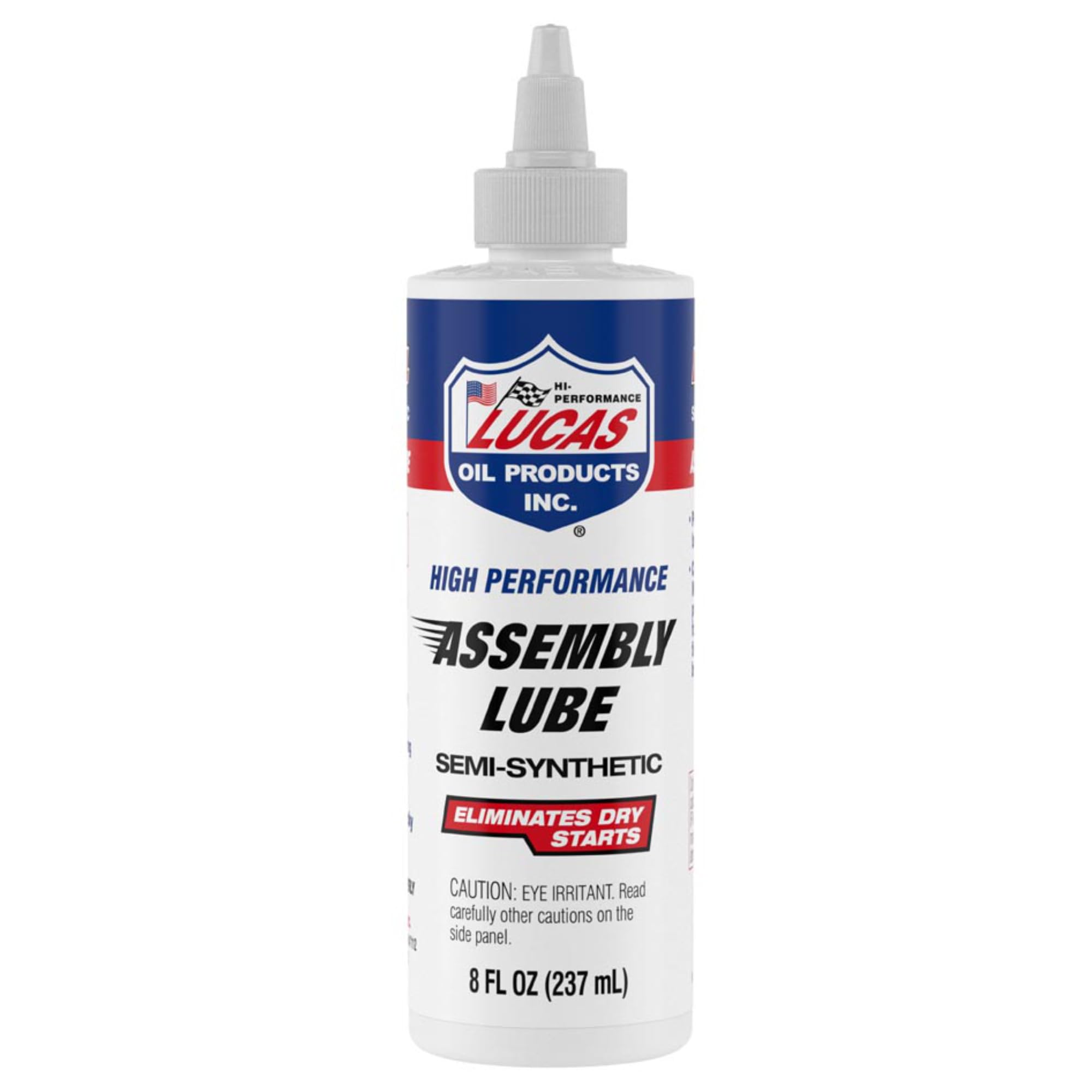
Lucas Oil 10153 delivers a familiar, trusted formulation that has been on shop shelves for years. It uses a rich blend of zinc and phosphorus anti-wear additives in a medium-viscosity oil base that coats cam lobes, lifter faces, and bearing surfaces without excessive drag. The 8-ounce bottle fits easily into a toolbox and provides enough volume for a single engine assembly cycle.
The product pours freely at room temperature, which simplifies application to hard-to-reach areas like cam bearing journals and timing chain guides. Builders who work with both flat-tappet and roller cam setups appreciate the versatility. The oil-based formula dissolves cleanly into conventional and synthetic engine oils, so there is minimal risk of filter clogging during initial start-up.
Customer feedback consistently highlights the reliable performance and consistent quality across multiple builds. Lucas Oil maintains tight quality control, and each bottle delivers the same additive concentration batch after batch. For a builder who wants proven protection without paying for specialized branding, this is a solid mid-range choice that does not sacrifice chemistry.
What works
- Excellent oil solubility for clean start-up
- Consistent additive package across batches
- Easy-pour bottle design for precise application
What doesn’t
- Thinner viscosity may drip off vertical cam lobes
- Not specifically formulated for extreme-pressure racing builds
- Lacks the heavy cling of grease-based products
3. LUBRIPLATE Engine Assembly Grease C105

LUBRIPLATE C105 is a calcium-based grease engineered specifically for engine assembly, and it sets the standard for long-term corrosion protection. The mineral oil and calcium thickener system creates a stable, semi-solid film that does not migrate or drip, even when components sit for months before initial fire-up. The 10-ounce tube provides generous coverage for cam lobes, lifter bases, and timing gear teeth with a single squeeze.
The product’s adhesion properties are exceptional. Builders who work on restoration engines that may not be started for weeks or months choose LUBRIPLATE because the grease film remains intact and prevents rust formation on machined surfaces. The calcium chemistry is fully compatible with conventional and synthetic engine oils, and it breaks down gradually as the engine warms without leaving hard deposits.
Rust prevention is a standout feature. The thick coating acts as a vapor barrier that protects against humidity and condensation inside the engine bay. For anyone building an engine that will be stored or transported before start-up, this grease provides peace of mind that other oil-based lubes simply cannot match.
What works
- Superior cling for long-term corrosion protection
- Calcium thickener prevents migration
- Large 10-ounce tube offers good value
What doesn’t
- Thick grease can be messy to apply precisely
- May require warming for cold-weather application
- Not ideal for tight bearing clearance areas
4. VP Racing Fuels 2251 Engine Assembly Oil

VP Racing 2251 is a no-drip, no-run assembly oil formulated with a tacky base that clings aggressively to cam lobes, piston skirts, and bearing surfaces. The additive package includes zinc, phosphorus, and molybdenum disulfide, three compounds that work synergistically to prevent metal-to-metal contact under the extreme pressures of initial engine start-up. The 12-ounce bottle is larger than most competitors and covers a complete engine assembly with ease.
The standout feature is the rust and corrosion protection built into the formula. During engine assembly, machined surfaces are exposed to moisture in the air, and a standard oil film may not prevent flash rust over several days. VP Racing’s blend leaves a persistent barrier that protects components during both assembly and any subsequent storage period before the engine is fired.
The product mixes readily with synthetic and conventional oils, so it integrates smoothly into the lubrication system without clogging oil ports or saturating the filter. Builders who work on performance engines report that the tacky consistency stays on cam lobes during shim adjustments and lifter installations, reducing the need for reapplication.
What works
- Tacky no-drip formula for vertical surfaces
- Strong anti-wear additive package
- Excellent rust and corrosion protection
What doesn’t
- Thick consistency can be hard to spread on bearings
- Bottle design lacks precision nozzle
- May leave residue that requires extra cleaning
5. Red Line 80319 Liquid Synthetic Assembly Lube

Red Line 80319 uses a synthetic liquid chemistry derived from the same technology found in their well-known paste assembly lubricants, but in a more convenient liquid form. The product delivers three times the film strength of conventional molybdenum disulfide greases, which translates directly to better protection during that critical window before oil pressure reaches every component. The 12-ounce bottle is suitable for medium to large engines.
A major advantage of this lubricant is that it will not plug oil filters after initial engine start-up. Some heavy greases break into large particles that overwhelm the filter element, but Red Line’s synthetic blend disperses evenly into the circulating oil and allows the filter to capture actual break-in debris. This is a meaningful engineering detail for builders who prefer an extra layer of filtration during the first oil change interval.
The liquid format flows easily into tight spaces, making it ideal for builders who want to pre-lube cam bearing journals and lifter bores before assembly. The synthetic base also provides a wider temperature operating window, so the film remains stable whether the engine sits in a cold shop or is fired up in warmer conditions.
What works
- Three times the film strength of conventional moly grease
- Will not clog oil filters
- Excellent thermal stability across temperatures
What doesn’t
- Liquid consistency may drip from cam lobes
- Premium chemistry commands a higher price point
- Not as thick as grease for long-term storage
6. Maxima Racing USA 69-02916 Assembly Grease

Maxima Racing USA 69-02916 is formulated to handle the demanding environment of high-performance engines, where cam lobe pressures and sliding velocities exceed standard street engine parameters. The synthetic paste base provides extreme-pressure performance that remains stable even under high heat, and it resists water washout that can occur if the engine bay is exposed to moisture during installation. The 16-ounce tube is the largest grease-style option in this lineup, making it suitable for multiple builds or large-displacement engines.
The product is fully soluble in all mineral and synthetic engine oils, which means it integrates into the lubrication system without leaving deposits. Maxima specifically engineers this grease to avoid clogging oil filters, a concern with some thicker assembly pastes. The tenacious adhesion keeps the lubricant on cam lobes and lifter faces during extended assembly periods, reducing the need for reapplication between shimming and final torque sequences.
Versatility is another strong point. While designed primarily for cam and lifter assembly, the grease also works for light-duty chassis applications and other mechanical assemblies where a high-film-strength lubricant is beneficial. Builders who maintain multiple vehicles appreciate having a single product that covers both engine assembly and general mechanical work.
What works
- High thermal stability for performance engines
- Resists water washout
- Generous 16-ounce tube value
What doesn’t
- Thick paste is difficult to apply precisely
- May be overkill for stock rebuilds
- Tube packaging can leave residue on threads
7. Torco MPZ Engine Assembly Lube

Torco MPZ Engine Assembly Lube features the company’s proprietary MPZ (Moly, Phosphorus, Zinc) friction-reducing chemistry, which is engineered to reduce frictional values and increase protection during break-in. The bright red color provides a visual indicator during assembly, making it easy to confirm coverage on cam lobes, lifter bases, and distributor gears. The 12-ounce bottle is appropriate for most passenger car and truck engine builds.
The product is completely oil soluble, which addresses a common concern with assembly lubes that leave deposits or clog filters after start-up. Torco engineers the formulation to provide excellent adhesion properties, keeping the lubricant in place on vertical surfaces without running off. The red tint also helps builders spot any missed areas during final inspection before installing the timing cover.
Customer feedback among performance enthusiasts highlights the noticeable reduction in initial start-up noise when using MPZ compared to standard assembly oils. The additive package seems to cushion the first few rotations of the camshaft, reducing the clicking and rattling that can alarm builders during that first fire-up. For anyone building a high-compression or forced-induction engine, the extra boundary-layer protection is a worthwhile upgrade.
What works
- Proprietary MPZ chemistry reduces friction measurably
- Bright red color aids coverage inspection
- Fully oil soluble with no filter clogging
What doesn’t
- Higher cost for the advanced additive package
- Limited availability in brick-and-mortar stores
- May be too specialized for basic stock rebuilds
8. Earl’s 184004ERL Assembly Lube
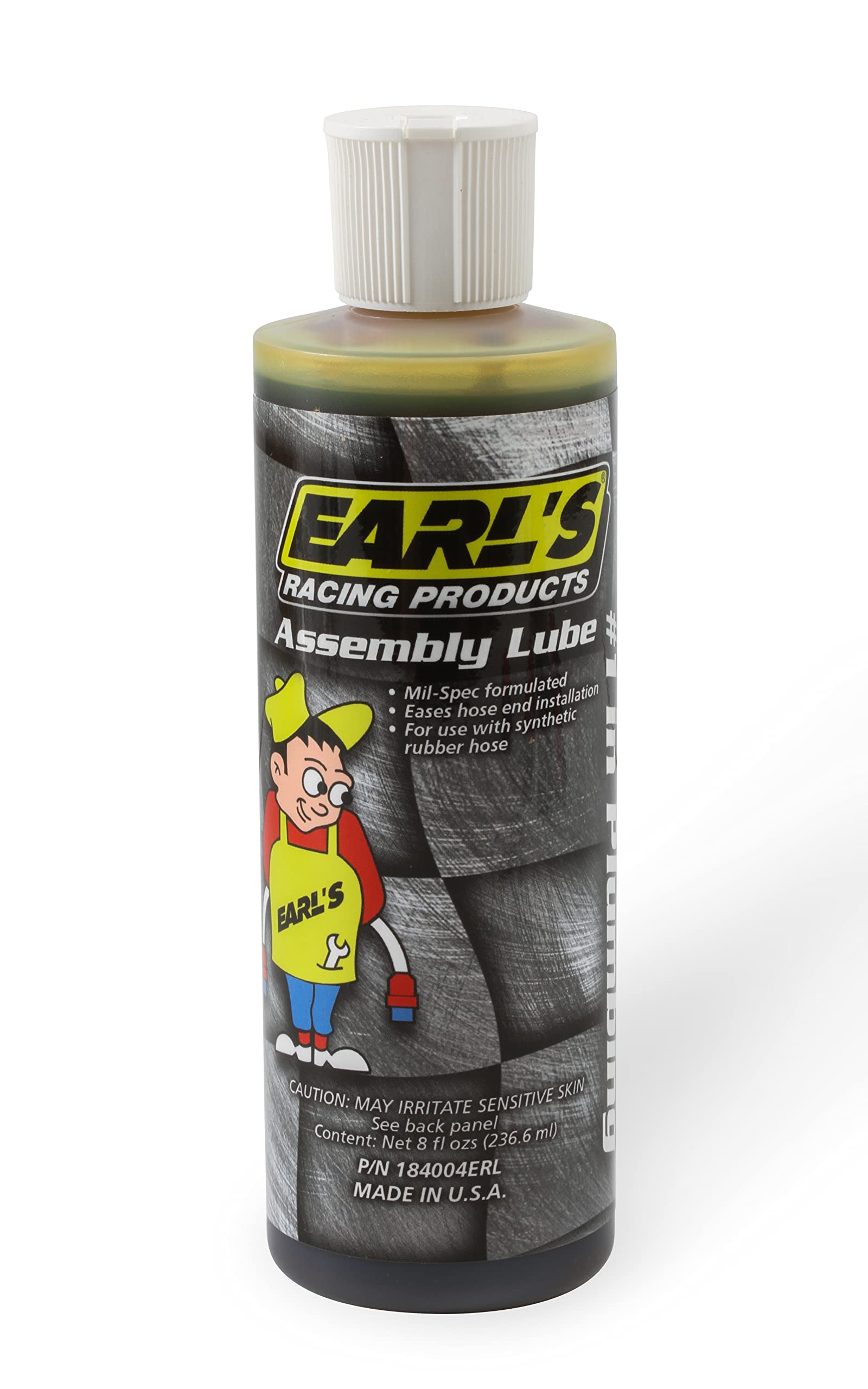
Earl’s 184004ERL is a Mil-Spec formulated assembly lube that brings aerospace-grade quality standards into the automotive engine bay. The 8-ounce squeeze bottle delivers controlled application, allowing builders to place the lubricant exactly where it is needed without waste. The product is designed for auto racing applications, which implies a higher performance threshold than general consumer lubes.
The manufacturing pedigree behind Earl’s is well established in racing circles, and this assembly lube carries the same quality control as the company’s AN fittings and plumbing products. The lubricant eases installation of press-fit components and provides a consistent film thickness that protects during initial rotation. For a builder working on a competition engine where every detail matters, the Mil-Spec certification adds confidence.
Made in the USA, the product supports domestic manufacturing standards. While the 8-ounce size is adequate for a single engine build, the squeeze-bottle design allows for precise bead application along cam lobes and lifter bases. Builders who prefer a controlled, no-mess application method will appreciate the packaging over standard pour-top bottles.
What works
- Mil-Spec formulation for high reliability
- Squeeze bottle allows precise application
- Trusted racing brand heritage
What doesn’t
- Small 8-ounce size limits coverage on large engines
- Not specifically optimized for flat-tappet cams
- Higher price for the brand premium
9. Manley Performance 40177 Extreme Pressure Lube

Manley Performance 40177 is an extreme-pressure lubricant designed for the highest-stress areas of an engine assembly, including cam lobes, lifter bases, and connecting rod bolts. The 4-ounce bottle is compact but concentrated, intended for targeted application rather than general assembly coverage. Manley is a respected name in performance engine components, and this lube reflects that engineering focus.
The extreme-pressure additives in this formula are calibrated for the kind of loads seen in race engines, where cam lobe pressures can exceed standard hydraulic lifter applications by a significant margin. The liquid format allows easy application to individual lobes, and the film remains stable during extended assembly periods. Builders working on high-RPM engines with aggressive cam profiles will find the protection levels appropriate for their needs.
The small bottle size is intentional — this is a specialty product meant to supplement a broader assembly lubricant rather than replace it. Use it on cam lobes and lifter faces that see the highest loads, then use a standard assembly oil for bearings and cylinder walls. This targeted approach maximizes protection where it matters most without over-applying expensive chemistry to lower-stress areas.
What works
- Extreme-pressure formula for high-load applications
- Trusted brand in performance engine building
- Excellent film stability under pressure
What doesn’t
- Small 4-ounce bottle limits total coverage
- Not intended as a standalone assembly lube
- Specialized chemistry overkill for street engines
10. Driven Racing Oil Engine Assembly Grease

Driven Racing Oil Engine Assembly Grease comes in a 1-pound tub, providing a bulk quantity that professional builders and high-volume shops will appreciate. The grease is formulated with race-proven additive chemistry developed through Driven’s involvement in competitive motorsports. The thick, tacky consistency stays in place on cam lobes and lifter faces during assembly, even when the engine is rotated to verify clearance and timing marks.
The tub packaging allows builders to use their own applicators — a finger, brush, or small spatula — for maximum control over placement and thickness. This is particularly useful when applying lubricant to lifter bores and cam bearing journals where precise coverage is critical. The grease base provides corrosion protection during storage, making it a strong choice for engines that will sit before installation.
Driven’s formulation team focuses on the specific needs of racing and high-performance engines, which means the additive package is optimized for the higher zinc and phosphorus levels that flat-tappet cams require. The grease dissolves into the engine oil during warm-up without leaving hard deposits, so there is no risk of clogging oil passages or restricting flow to critical components.
What works
- Bulk tub format ideal for multiple builds
- Race-proven additive chemistry
- Thick grease stays in place during assembly
What doesn’t
- Tub packaging less convenient for precise application
- Grease can be messy to handle
- Higher cost for the premium motorsport branding
11. ARP 100-9911 Ultra Torque Assembly Lubricant

ARP 100-9911 Ultra Torque Assembly Lubricant is designed primarily for bolt and fastener assembly, but its advanced chemistry makes it a versatile addition to any engine builder’s toolbox. The 20-ounce brush-top container allows direct application to stud threads, main cap bolts, and connecting rod fasteners, ensuring consistent torque readings and preventing galling. ARP is the industry standard for high-performance fasteners, and this lubricant is calibrated for their specific thread requirements.
While not a dedicated cam assembly lube, the product’s extreme-pressure properties make it useful for lubricating camshaft bolt threads, timing chain tensioner fasteners, and other critical hardware during engine assembly. The brush-top applicator is particularly useful for getting lubricant into tight spaces without over-applying. The large 20-ounce container provides enough volume for multiple builds.
The lubricant is made in the USA and carries ARP’s reputation for precision engineering. Builders who already use ARP fasteners will appreciate having the matching assembly lubricant to ensure correct torque specifications. The product also prevents corrosion on stored fasteners, which is useful for builders who disassemble and inventory hardware before a rebuild.
What works
- Brush-top applicator for precise placement
- Ideal for fastener and thread assembly
- Large 20-ounce container with long service life
What doesn’t
- Not formulated specifically for cam lobe protection
- Thinner consistency than dedicated cam lubes
- May require a secondary cam assembly lube
Hardware & Specs Guide
Base Oil vs. Grease Formulations
Assembly lubricants fall into two broad categories: oil-based liquids and grease-based pastes. Oil-based formulations flow more freely and are easier to apply to bearings and tight-clearance areas, but they can run off vertical cam lobes if the engine sits for extended periods. Grease-based products use a thickener system — typically calcium or lithium soap — that holds the lubricant in place on vertical surfaces and provides superior long-term corrosion protection. For a camshaft application, grease is generally preferred when the engine may sit unstarted for days or weeks, while oil is sufficient for immediate fire-up. Many professional builders apply grease to lobes and lifter bases and use an oil-based lube for main and rod bearings.
Extreme Pressure Additives
Zinc dialkyldithiophosphate (ZDDP), phosphorus, and molybdenum disulfide are the three most critical anti-wear additives in any assembly lube. ZDDP forms a sacrificial phosphate glass layer on metal surfaces that prevents micro-welding under high contact pressure. Molybdenum disulfide provides low-friction boundary lubrication in the absence of a fluid oil film. Flat-tappet camshafts are particularly sensitive to ZDDP levels because the lifter face slides across the lobe at an angle that generates extreme localized pressure. Roller cams are less demanding but still benefit from a robust additive package. Always verify the additive levels in the product you choose — some modern low-zinc formulations intended for catalytic converter protection are inadequate for cam break-in.
FAQ
Can I use engine oil as cam assembly lube?
How much assembly lube should I apply to cam lobes?
Does the color of assembly lube matter?
Can I use assembly lube on roller camshafts?
Will assembly lube clog my oil filter?
Final Thoughts: The Verdict
For most buyers, the cam assembly lube winner is the COMP Cams 153 because it is purpose-built for cam and lifter protection with the additive chemistry that flat-tappet and roller setups both require. If you want maximum long-term corrosion protection and storage stability, grab the LUBRIPLATE C105. And for a versatile, high-film-strength synthetic option that will not clog your filter, nothing beats the Red Line 80319.

Certification: BSc in Mechanical Engineering
Education: Mechanical engineer
Lives In: 539 W Commerce St, Dallas, TX 75208, USA
Md Amir is an auto mechanic student and writer with over half a decade of experience in the automotive field. He has worked with top automotive brands such as Lexus, Quantum, and also owns two automotive blogs autocarneed.com and taxiwiz.com.