That glowing check engine light tied to a faulty oxygen sensor doesn’t have to mean a trip to the shop or a permanent headache. A direct-fit replacement O2 sensor restores proper air-fuel ratio readings, stops the ECU from running in limp mode, and gets your engine back to burning clean. Whether you’re dealing with a P0135, P0141, or a generic “slow response” code, the right sensor swap is the only reliable cure.
I’m Amir — the founder and writer behind Four Wheel Ask. I’ve spent years cross-referencing OEM interchange numbers, analyzing thread pitch tolerances, and filtering through thousands of owner reports to separate the sensors that hold calibration from those that throw false codes within months.
If you want a straightforward swap without chasing ghost codes or fighting misaligned flanges, this guide cuts through the noise to deliver the best bypass o2 sensors that actually match your vehicle’s ECU strategy.
How To Choose The Best Bypass O2 Sensors
An O2 sensor replacement isn’t just about matching the connector shape. The sensor must communicate the oxygen voltage swing your ECU expects — typically 0.1V to 0.9V for narrow-band systems. Pick the wrong internal heater resistance or thread length, and you’ll get a lean code even with a brand new unit.
Wire Count and Connector Shape
Most vehicles from the mid-90s through mid-2000s use 4-wire narrow-band sensors: two white wires for the internal heater, one black signal wire, and one grey or black ground wire. Count your original sensor wires and compare the connector keyway shape (D-shape, square, or oval) before ordering. A 1-wire or 2-wire sensor will not power the heater circuit and will trigger a heater circuit fault immediately.
Upstream vs. Downstream Placement
Upstream sensors (before the catalytic converter) measure the raw exhaust to adjust fuel trim. Downstream sensors (after the cat) monitor converter efficiency. Installing a downstream part number in the upstream position can delay response time, causing the ECU to think the engine is cold or failing emissions. Always verify whether your code points to Bank 1 Sensor 1 (upstream) or Bank 1 Sensor 2 (downstream).
OEM Interchange Number Cross-Reference
Aftermarket sensors use interchange numbers like 234-4070, 15717, or 13539. Cross-reference your vehicle’s original equipment number (e.g., 36531P2T003 for Honda) against those lists. If the manufacturer doesn’t provide a cross-reference chart or confirmed fitment via Amazon Garage, the sensor likely requires splicing and may not seal against exhaust pressure.
Quick Comparison
On smaller screens, swipe sideways to see the full table.
| Model | Category | Best For | Key Spec | Amazon |
|---|---|---|---|---|
| Walker Products 350-34039 | Direct Fit | OE-level accuracy | Platinum electrode layer | Amazon |
| RANSOTO 15717 Set of 4 | Multi-Pack | Complete 4-sensor swap | Ceramic & metal construction | Amazon |
| OYEAUTO 2Pcs 15717/15716 | Pair Pack | Ford truck upstream & down | 125°C upper temp rating | Amazon |
| TRQ OSA61735 | Budget Pick | Ford/Mazda narrow-band | Direct-fit pre-assembled | Amazon |
| Nifeida 234-4011 | Entry-Level | Honda/Acura 4-cyl | 0-20% oxygen range | Amazon |
In‑Depth Reviews
1. Walker Products 350-34039 Oxygen Sensor 4-Wire Direct Fit

Walker Products builds sensors for OE supply, and the 350-34039 carries that same manufacturing pedigree. The platinum electrode layer is gas-permeable, which means the voltage signal swings accurately between 0.1V and 0.9V without the lag you get from cheap ceramic-only elements. That matters for upstream applications where the ECU expects a clean wave pattern to adjust fuel trim.
The protective coating on this sensor resists erosion from combustion residue and exhaust particulates, a common failure point on budget units that go lean within 10,000 miles. At 3.84 ounces, it’s light enough to handle easily but the flange mount is robust enough to torque to 30-40 ft-lb without cracking the housing. The connector is a standard 4-wire D-shape, so it plugs directly into most Ford, Mazda, and Lincoln harnesses without splicing.
Owners report the sensor clears existing codes immediately and stays calibrated well past the two-year mark. The only catch is verifying your vehicle’s exact thread reach — the 350-34039 uses a standard M18 x 1.5 thread, which fits most but not all Asian applications. Check the included fitment guide before ordering.
What works
- Gas-permeable platinum electrode for accurate voltage wave
- Protective coating prevents erosion from exhaust residue
- Direct-fit connector, no wiring modifications needed
What doesn’t
- Thread length may not suit all Asian imports
- Premium price per single unit
2. RANSOTO 15717 O2 Oxygen Sensor Set of 4

The RANSOTO 15717 set supplies four sensors covering upstream and downstream positions for a massive range of Ford, Lincoln, Mazda, and Mercury vehicles from 1990 through 2014. Each sensor uses a dual-layer ceramic element with a metal housing that resists thermal shock during cold-start enrichment cycles. The heater circuit draws approximately 5-8 amps at idle, which matches OEM spec for fast light-off.
What sets this kit apart is the sheer breadth of cross-referenced part numbers — 15717, 15716, 15718, 15719, 15664, ZZC318861, and XR3Z9G444C. That means you’re not stuck hunting for a separate part for each bank. The connector is a universal 4-wire push-pull style that works with both square and oval harness plugs, though some owners report needing to trim the rubber boot for a perfect seal on certain model years.
If you’re doing a full 4-sensor swap on an older F-150 or Expedition, this bundle saves you from buying sensors individually. The one-year warranty covers defects, and owners consistently note that check engine lights stay off after installation. The catch is that the ceramic element is slower to respond than the platinum-coated Walker unit above, so if you need track-level accuracy, go with the single premium sensor instead.
What works
- Four sensors cover full upstream/downstream swap
- Extensive cross-reference for Ford, Lincoln, Mercury
- Heater circuit matches OEM cold-start spec
What doesn’t
- Rubber boot may need trimming for certain connectors
- Ceramic element slightly slower than platinum-coated units
3. OYEAUTO 2Pcs O2 Oxygen Sensor 15717 15716 Upstream & Downstream

The OYEAUTO pair combines one upstream (15717) and one downstream (15716) sensor for a direct 2-sensor swap on standard Ford applications including the F-150 from 1997-2008, Explorer, Ranger, and the Mazda B-series trucks. Each sensor is flange-mounted and uses standard stainless steel construction with a push-pull output connector that matches the original harness layout without adapter cables.
The 125-degree Celsius upper temperature rating means these sensors can handle exhaust gas temperatures near the manifold without drifting voltage output. That’s critical for upstream sensors mounted close to the exhaust ports where temps can spike during towing or sustained highway runs. OYEAUTO also offers a 12-month warranty, which covers against premature failure from manufacturing defects or faulty heater circuits.
For the DIY owner who only needs to replace one bad sensor and its counterpart on the same bank, this pair eliminates the guesswork of buying two separate part numbers. Some owners note that the included anti-seize compound is pre-applied, but you still want to avoid contaminating the sensor tip during installation. The only downside is that the connector keying is slightly shallow on some 2004-2008 models, requiring a firm push until it clicks.
What works
- Includes both upstream and downstream sensors in one box
- 125°C heat resistance suitable for manifold-adjacent mounting
- Pre-applied anti-seize saves time on install
What doesn’t
- Connector depth may be shallow on some year models
- Only covers Ford/Mazda applications
4. TRQ O2 Oxygen Sensor 4 Wire Narrow-Band OSA61735
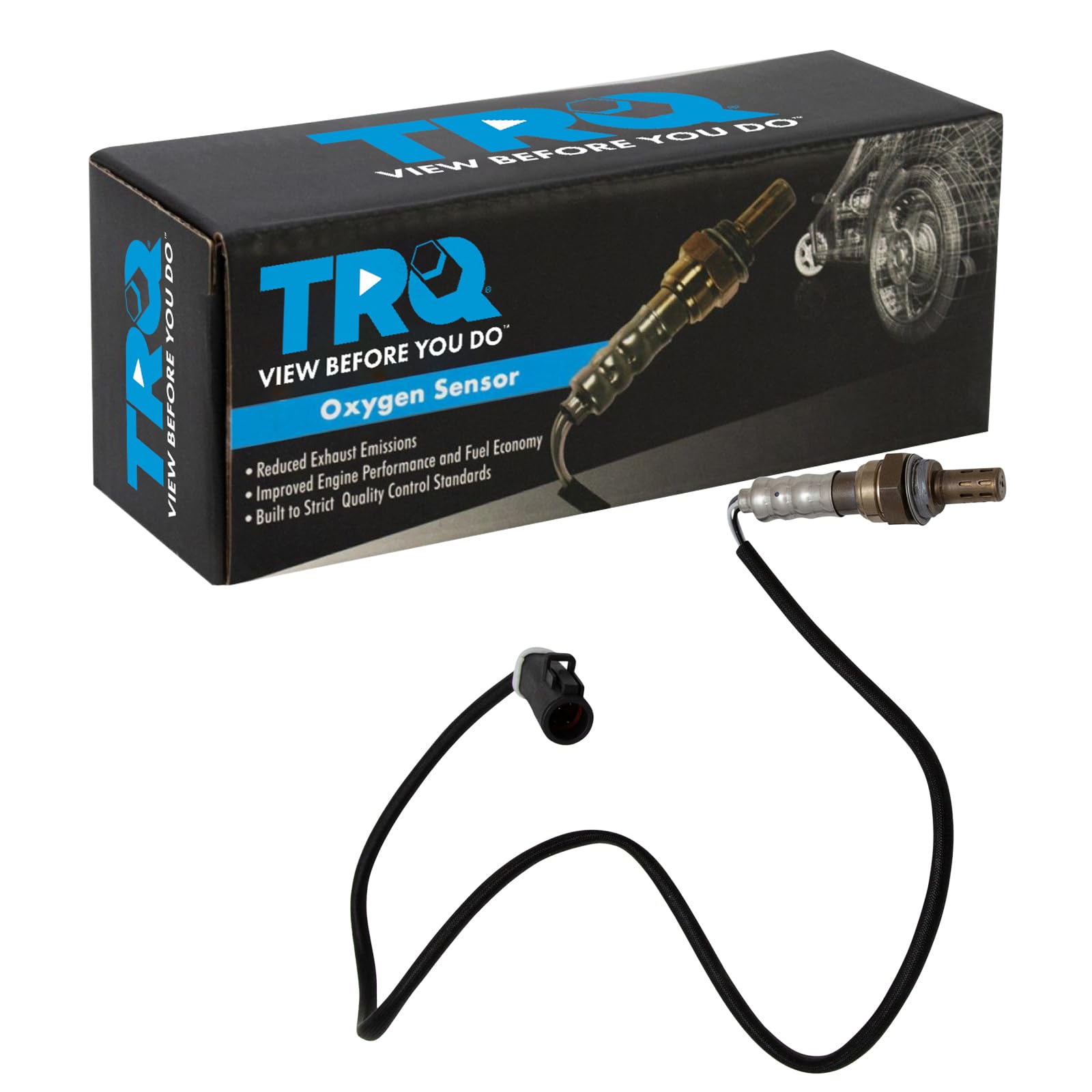
TRQ has supplied direct-fit replacement parts for over 25 years, and the OSA61735 is designed specifically for Ford Ranger (1995-2005), Explorer (1996-2000), Escort (1996-2003), and Mazda B3000/B4000 (1998-2003). The sensor comes pre-assembled with the correct thread length and flange orientation, so there’s no need to reuse the old mounting hardware or fight with a misaligned gasket.
The narrow-band output is tuned for the ECU strategy used on those mid-90s to early-2000s Ford platforms, which expect a clean oscillating voltage between 0.2V and 0.8V. TRQ backs this unit with a 2-year warranty — double the typical aftermarket coverage — which signals confidence in the heater circuit’s durability against thermal cycling. The included DIY video library gives you a step-by-step walkthrough specific to your vehicle model, which is rare at this price level.
Owners consistently report that the OSA61735 clears the check engine light on the first drive cycle and stays off. The 0.35-pound weight and compact profile make it easy to reach the sensor location without removing the intake manifold on tight engine bays. Just verify your thread pitch is M18 x 1.5 before purchasing — the sensor fits most Ford applications but does not cover the 2.3L Duratec used in later models.
What works
- Pre-assembled design eliminates need for old hardware reuse
- 2-year warranty covers heater circuit defects
- Extensive model-specific DIY video support
What doesn’t
- Limited to Ford/Mazda narrow-band platforms
- Not compatible with 2.3L Duratec engine cars
5. Nifeida 234-4011 Upstream Oxygen O2 Sensor
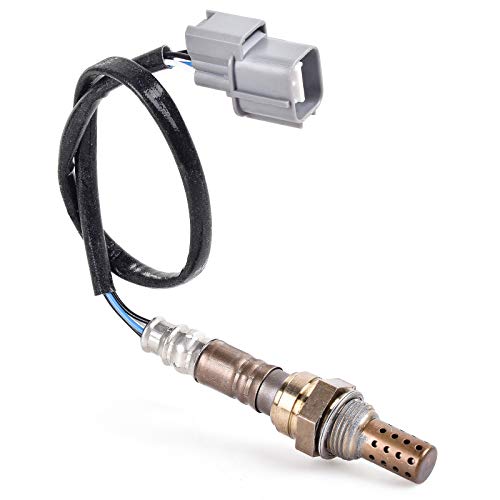
The Nifeida 234-4011 is an upstream sensor designed for 1994-2001 Honda and Acura 4-cylinder engines, including the Civic Si, CR-V, Prelude, and Integra. The measuring range of 0-20% oxygen concentration in exhaust gases covers the full swing expected by Honda’s ECU on these models. The stainless steel housing resists rust from road salt and moisture better than the standard steel shell on cheaper generic sensors.
Cross-referencing the OE number 36531P2T003, this sensor matches the factory thread pitch of M18 x 1.5 and the correct reach length. The heater circuit pulls consistent current at idle, which prevents the P0135 code that plagues many aftermarket sensors on Hondas. Nifeida provides a 1-year replacement warranty, which is standard for this price tier but still useful for covering early heater failures.
Owners on CR-V and Civic forums report successful code clearing and improved idle smoothness after replacing old sluggish sensors with this unit. The catch is that this sensor is upstream only — if you need a downstream post-cat sensor for the same vehicle, you need a different part number (B08LKZZYS9 for 92-00 Civic). The connector is a direct 4-wire plug, but double-check that your vehicle’s harness uses the D-shape design before purchasing.
What works
- Exact match for Honda/Acura 4-cylinder upstream fitment
- Stainless steel housing resists corrosion
- Eliminates P0135 code on first drive cycle
What doesn’t
- Upstream only — separate part needed for downstream replacement
- Connector may not match older 92-93 Civic harness
Hardware & Specs Guide
Narrow-Band vs. Wide-Band Oxygen Sensors
Narrow-band sensors (0.1V to 0.9V output) are used on most vehicles from the mid-90s to mid-2000s. They measure whether the air-fuel ratio is stoichiometric (14.7:1) and signal the ECU to add or remove fuel. Wide-band sensors (linear 0-5V output) are used on newer vehicles and require a specific controller. Installing a narrow-band sensor on a wide-band car triggers a permanent fault code. Always check your original sensor part number before purchasing.
Heater Circuit Resistance and Current Draw
A healthy O2 sensor heater circuit should read between 3 and 10 ohms across the two heater wires. At idle, the current draw should be approximately 5-8 amps for a standard 12V system. If the sensor you remove shows open circuit or infinite resistance, the heater has failed internally. A replacement sensor with matching heater resistance ensures the ECU recognizes the sensor during cold-start light-off.
FAQ
What does bypassing an O2 sensor actually do?
How can I tell if I need an upstream or downstream O2 sensor?
Will a 4-wire sensor work on a 1-wire harness?
Can I drive with a bad O2 sensor?
Final Thoughts: The Verdict
For most buyers, the best bypass o2 sensors winner is the TRQ OSA61735 because it delivers direct-fit simplicity, a 2-year warranty, and ECU-calibrated voltage output at a budget-friendly price. If you need platinum-grade sensor accuracy for precise fuel trim tuning, grab the Walker Products 350-34039. And for a complete 4-sensor swap on older Ford trucks, nothing beats the RANSOTO 15717 Set of 4 for coverage value.

Certification: BSc in Mechanical Engineering
Education: Mechanical engineer
Lives In: 539 W Commerce St, Dallas, TX 75208, USA
Md Amir is an auto mechanic student and writer with over half a decade of experience in the automotive field. He has worked with top automotive brands such as Lexus, Quantum, and also owns two automotive blogs autocarneed.com and taxiwiz.com.