Nothing ruins a quiet commute or a road trip faster than spotting ants marching across the dashboard or a spider dropping from the sun visor. Car interiors create warm, sheltered environments that attract a wide range of pests, from roaches and ants to flies and even rodents seeking shelter. Using the wrong product can leave behind sticky films, overpowering chemical odors, or even damage sensitive upholstery and electronics.
I’m Amir — the founder and writer behind Four Wheel Ask. My approach to automotive products relies on cross-referencing manufacturer specifications with verified owner feedback and independent testing data to separate marketing claims from real-world performance.
Understanding which formula works without staining fabric or leaving harmful residues is critical. Choosing a formula that targets specific pests while remaining safe for your car’s materials is the real test of the best bug spray for car interior.
How To Choose The Best Bug Spray For Car Interior
Selecting a bug spray for your vehicle cabin is different from picking a household insecticide. Cars have sensitive electronics, porous fabrics, and limited ventilation. A poor choice can cause lingering odors, sticky residue on dashboards, or even damage to leather and vinyl surfaces. Here are the main factors to weigh before buying.
Spray Type and Application Method
Aerosol sprays offer fast knockdown and can reach tight crevices under seats and between panels. Trigger sprays give you more control over where the product goes and are less likely to overspray onto sensitive electronics. Some products use a battery-powered continuous sprayer that reduces hand fatigue, which is convenient for larger vehicles like SUVs and vans.
Pet and Family Safety Profile
If you frequently transport pets or children, the toxicity of the active ingredients and the presence of volatile organic compounds matter. Essential oil based sprays using peppermint, rosemary, or lemongrass are generally safer for enclosed spaces, but they may require more frequent reapplication than synthetic options like cyfluthrin or bifenthrin, which offer longer residual protection.
Odor, Residue, and Fabric Compatibility
A strong chemical smell can make a car interior unbearable, especially for daily commuters. Look for low-odor or naturally scented formulas that dissipate within minutes. Check that the product is non-staining on upholstery, carpets, and plastics. Water-based or dry formulas tend to leave less visible residue compared to oil-based concentrates.
Quick Comparison
On smaller screens, swipe sideways to see the full table.
| Model | Category | Best For | Key Spec | Amazon |
|---|---|---|---|---|
| Ortho Home Defense Max | Barrier Spray | Long-term prevention in non-porous areas | 1.5 L, 365-day residual, battery sprayer | Amazon |
| BugMD Multi-Insect Repellent | Natural RTU | Pet-safe contact kill and rodent deterrent | Peppermint oil, indoor/outdoor, 2-pack | Amazon |
| Wondercide Ant & Roach Aerosol | Natural Aerosol | Quick knockdown with essential oils | 10 oz, lemongrass, 2-pack, pet safe | Amazon |
| Lazy Cat Peppermint Oil Spray | Rodent Repellent | Protecting car engines and cabins from mice | 2x strength, 2-pack, non-staining | Amazon |
| Tempo Dust Insecticide | Professional Dust | Hard-to-reach crevices and void treatments | 1% Cyfluthrin, 1 lb, covers 1000 sq ft | Amazon |
In‑Depth Reviews
1. Ortho Home Defense Max Indoor Insect Barrier

The Ortho Home Defense Max is designed as a comprehensive indoor barrier treatment that kills and prevents ants, roaches, spiders, fleas, and ticks for up to a full year on non-porous surfaces. The included battery-powered sprayer delivers a continuous, hands-free application that is a notable advantage for treating multiple areas like floor mats, under-seat tracks, and door sills in a single pass.
With a 1.5-liter liquid volume, this product provides substantial coverage for a full-size sedan or SUV interior. The formulation targets a broad spectrum of common household insects, which makes it a practical one-bottle solution for drivers dealing with multiple pest species. Owner commentary regularly highlights the effectiveness of the residual barrier on hard plastics and rubber trim, though porous fabric seats require careful use to avoid staining.
Analysis of spec sheets and user discussions positions this as a mid-range powerhouse for those who want a set-and-forget approach. The 365-day claim is based on controlled indoor tests on non-porous surfaces; real-world conditions in a vehicle may require touch-ups after deep cleaning or heavy rain exposure if doors are left open.
What works
- Impressive 365-day residual on non-porous surfaces
- Battery sprayer eliminates pumping fatigue
- Broad pest spectrum coverage
What doesn’t
- Chemical odor may linger in poorly ventilated cabins
- Not designed for use on fabric upholstery
- Batteries not included with the sprayer
2. Wondercide Ant & Roach Aerosol Spray

Wondercide positions this aerosol as a plant-powered alternative that kills over 20 common household bugs on contact, including ants, roaches, spiders, fleas, and stink bugs. The active ingredients are derived from lemongrass and geraniol, which gives the spray a noticeably pleasant botanical scent compared to synthetic pyrethroid products.
For car interiors, the 10-ounce 2-pack format provides a compact size that stores easily in a glove box or door pocket. The quick-knockdown capability is ideal for immediate elimination of visible pests, and the formula is designed to be safe around pets and family when used as directed. Owner reports consistently note zero staining on fabric seats and carpets, which is a critical advantage over oil-based or solvent-heavy sprays.
Cross-referencing the technical specifications with user feedback reveals a trade-off: the natural formulation does not provide long-lasting residual protection. Most owners reapply every few days during active infestations. This is a premium choice for those who prioritize low toxicity and a pleasant application experience over extended durability.
What works
- Pleasant natural scent without harsh chemical odors
- No staining on fabric or carpet in owner accounts
- Effective immediate contact kill for visible bugs
What doesn’t
- Short residual window requires frequent reapplication
- Aerosol can may be restricted for carry-on travel
- Higher cost per ounce compared to synthetic options
3. BugMD Pet Safe Multi-Insect Killer & Repellent
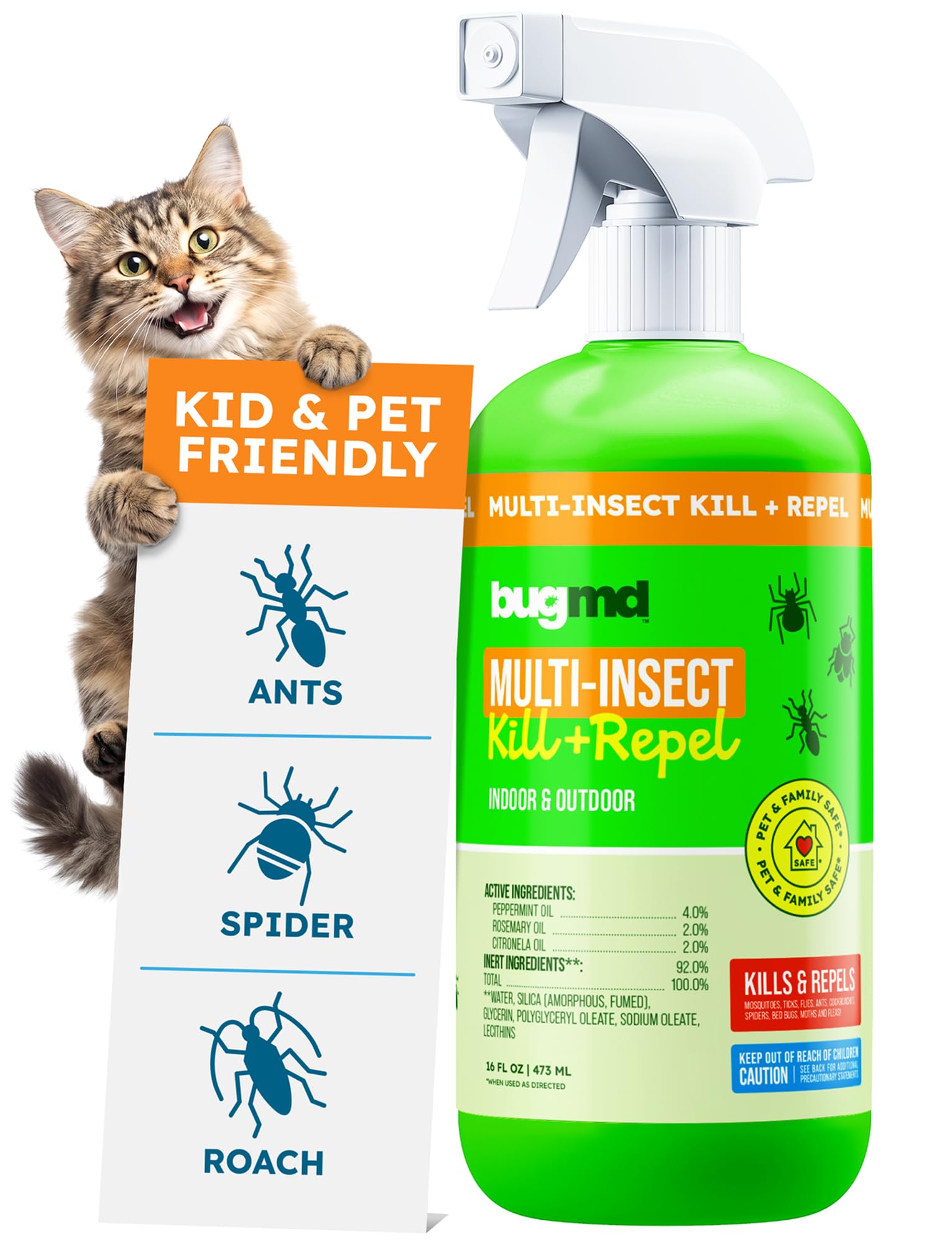
BugMD markets this ready-to-use spray as an all-in-one solution that kills ants, spiders, and roaches on contact while also deterring rodents through a concentrated peppermint and rosemary oil formula. The dual-action claim is unique among sprays geared toward car interiors, as rodent damage to wiring and nesting in engine bays is a related concern for many vehicle owners.
The product is designed for application on non-porous surfaces such as baseboards, windowsills, and dashboards, and the manufacturer recommends reapplication every three to five days to maintain a repellent barrier. Owner discussions frequently mention the strong but pleasant mint scent that fades within an hour, making it tolerable for enclosed spaces. The 2-pack format ensures back-up supply for treating both the cabin and the trunk or engine compartment.
Reviewing the ingredient profile and owner feedback positions this as a budget-friendly natural option that covers both insect and rodent concerns in one bottle. The trade-off is that very heavy infestations may require a synthetic booster product for immediate knockdown, as the essential oil base relies more on repellency than rapid kill.
What works
- Dual function kills bugs and repels rodents
- Pleasant mint aroma that dissipates quickly
- Packaged in a practical 2-pack for multi-zone use
What doesn’t
- Requires frequent reapplication for active infestations
- Not intended for deep fabric penetration
- Rodent repellency may vary in high-pressure environments
4. Lazy Cat Peppermint Oil Rodent Repellent Spray

Lazy Cat focuses specifically on rodent repellency with a double-strength essential oil blend of peppermint and cinnamon. While not marketed as a general insecticide, this product is commonly used by vehicle owners to protect engine bays, cabins, and storage areas from mice and rats that chew wiring and nest in ventilation ducts.
The 2-pack includes two 8-ounce bottles with premium sprayers that can reach up to 24 feet on the stream setting, making it practical for treating undercarriage areas and hard-to-reach engine compartments. The manufacturer explicitly states the formula is safe around pets and people, and owner feedback confirms the non-staining property on painted surfaces and plastic trim. The double-strength concentration means fewer applications compared to standard peppermint sprays.
Spec analysis shows that this is a niche tool rather than a broad-spectrum insect killer. It is most effective as a preventative treatment for vehicles stored in garages or rural areas where rodent pressure is high. Owners should pair it with a contact insecticide if crawling insects are the primary concern inside the cabin.
What works
- Double-strength formula extends application intervals
- Long-range stream reaches engine bay crevices
- Non-staining and safe around family and pets
What doesn’t
- Not formulated for general insect control
- Frequent rain or car washes may wash away residue
- Scent may be strong for sensitive users
5. Tempo Dust Insecticide Powder
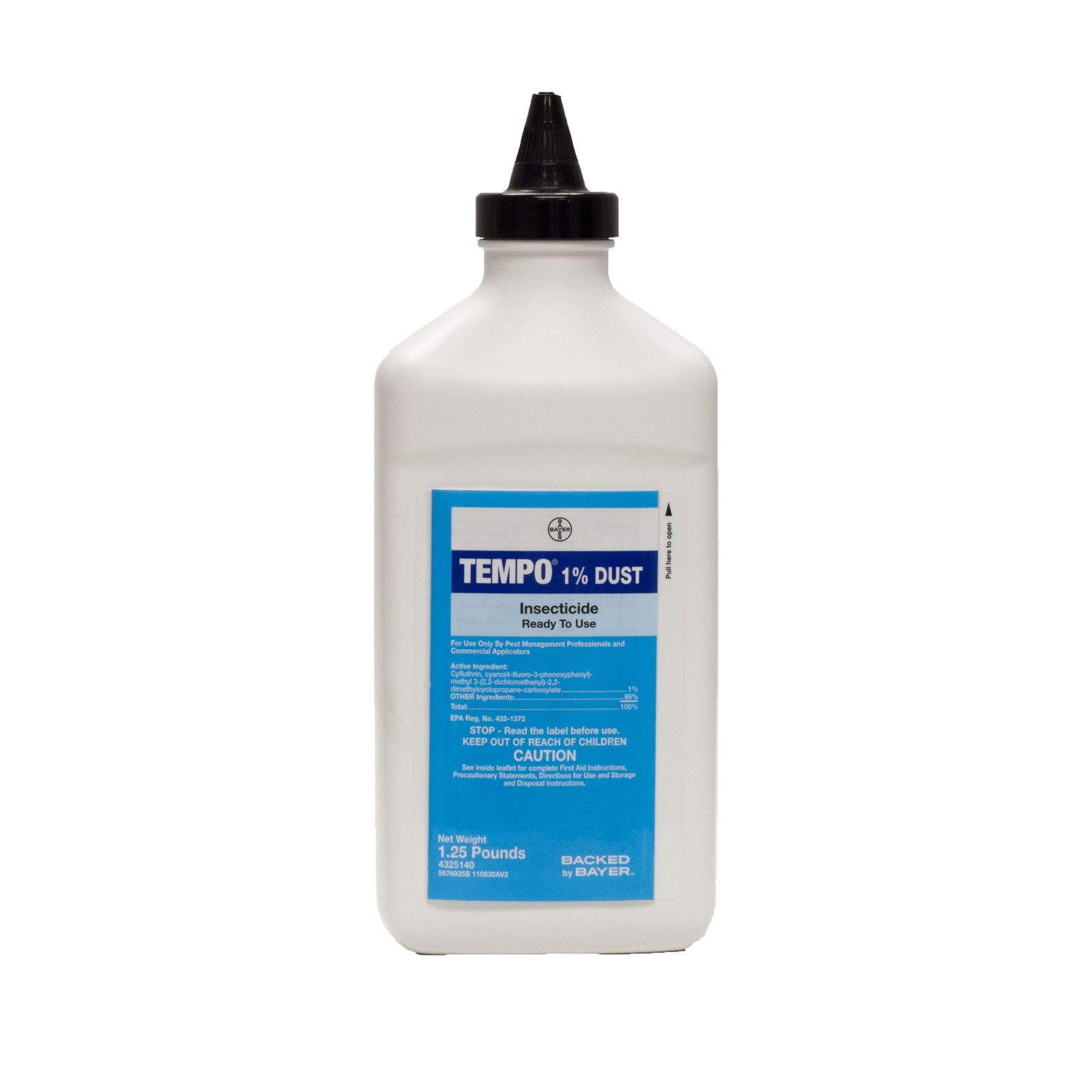
Tempo Dust is a professional-grade insecticide powder containing 1% Cyfluthrin, a synthetic pyrethroid that provides long-lasting residual protection when applied to dry, undisturbed areas. Unlike liquid sprays, the dust formulation is specifically designed for voids, wall cavities, and hard-to-reach spaces where insects travel and hide.
For automotive use, this product is best applied in small amounts under seats, inside door panels, and in trunk crevices using a hand duster or bellows. Each pound covers approximately 1000 square feet, and the dust remains active as long as it stays dry. Owner accounts from the pest control community emphasize that dusting is far more effective than spraying for roaches and silverfish that navigate through tight channels.
This is a niche choice that requires careful handling and proper application equipment. It is not suitable for visible surfaces where dust might be kicked up or disturbed, and it is not legal for sale in California, New York, South Carolina, or Connecticut without appropriate licensing. For the DIY owner willing to learn proper technique, it offers unmatched residual performance in hidden areas.
What works
- Exceptional residual activity in dry, undisturbed voids
- Excellent for targeting roaches and hidden insects
- High coverage rate per pound
What doesn’t
- Requires a duster for proper application
- Not for use on visible surfaces inside the cabin
- Restricted sale in several states
Hardware & Specs Guide
Spray Type: Aerosol vs. Trigger vs. Dust
Aerosol sprays provide a fine mist that penetrates crevices and delivers quick knockdown, but they can overspray onto sensitive electronics if not aimed carefully. Trigger sprays offer better control and are less likely to drift, but they require manual pumping. Dust formulations like Tempo are best for voids and sealed areas where a dry residual is needed, but they require a duster tool and should never be applied to visible surfaces where occupants breathe the particles.
Active Ingredients: Synthetic vs. Natural
Synthetic pyrethroids such as Cyfluthrin and Bifenthrin offer long residual activity, often lasting weeks or months on non-porous surfaces. Essential oil formulas based on peppermint, lemongrass, or rosemary provide contact kill and repellency but degrade faster. The choice depends on whether you prioritize duration or a lower chemical load in the enclosed vehicle cabin. Always verify the formula is labeled for indoor use and compatible with automotive plastics and fabrics.
FAQ
Is bug spray safe for car upholstery and dashboard plastics?
How often should I reapply bug spray inside my car?
Final Thoughts: The Verdict
For most buyers, the best bug spray for car interior winner is the Ortho Home Defense Max because of its long residual protection and easy battery-powered application that covers the full cabin. If you want a natural formula that is safe around pets and has a pleasant scent, grab the Wondercide Ant & Roach Aerosol. And for protecting your engine bay and cabin from rodent damage, nothing beats the Lazy Cat Peppermint Oil Spray.

Certification: BSc in Mechanical Engineering
Education: Mechanical engineer
Lives In: 539 W Commerce St, Dallas, TX 75208, USA
Md Amir is an auto mechanic student and writer with over half a decade of experience in the automotive field. He has worked with top automotive brands such as Lexus, Quantum, and also owns two automotive blogs autocarneed.com and taxiwiz.com.