Finding a motorcycle jacket that offers real protection without depleting your wallet is the single hardest challenge a new rider faces. The market is flooded with fashion-weight leather that shreds on asphalt and mesh shells that offer zero impact absorption. A true budget-friendly riding jacket must balance abrasion resistance, impact armor, and ventilation—three elements that are often stripped out to hit a lower price point.
I’m Amir — the founder and writer behind Four Wheel Ask. I’ve spent years analyzing motorcycle gear specifications, from denier counts and stitch densities to CE impact test ratings and armor thickness tolerances, aggregating thousands of verified owner experiences to separate genuine safety value from marketing fluff.
After evaluating fabric construction, armor certification, seam reinforcement, and real-world rider feedback, I’ve narrowed the field to the nine best contenders for any rider looking for a budget motorcycle jacket that delivers credible protection without exceeding a sensible spending ceiling.
How To Choose The Best Budget Motorcycle Jacket
The temptation to buy based on looks alone is strong, but a jacket that fails in a slide is a waste of money regardless of the price tag. Focus on these four areas to ensure your budget buy actually protects you.
Armor Certification Matters — Not Just Padding
Look for CE Level 1 or Level 2 armor in the shoulders and elbows. Many inexpensive jackets include foam pads that provide zero impact absorption once they exceed 20 mph. CE-certified armor (EN1621-1) is tested for force transmission and stays flexible during riding. If the listing doesn’t explicitly say “CE” or “EN1621,” assume the pads are for show, not protection.
Fabric and Abrasion Resistance
For textile jackets, 600D Oxford polyester is the minimum for street riding; 1200D is better. Denim jackets with Kevlar (aramid) fibers offer a casual look with genuine slide resistance. Leather options at the budget end are usually 1.0mm to 1.3mm cowhide or buffalo hide — anything thinner than 1.0mm is fashion-grade and won’t survive a single slide. Mesh jackets trade abrasion resistance for airflow; they’re fine for hot climates but expect less slide time than textile or leather.
Fit and Sizing Realities
Motorcycle jackets are cut for the riding position — longer sleeves, shorter front hem, longer back tail. Most budget jackets run slim when armor is installed. The rule of thumb: order one size up from your regular street shirt size, especially if you plan to wear a base layer or hoodie underneath. Always measure your chest and arms against the brand’s size chart rather than relying on your usual alphabetical size.
Quick Comparison
On smaller screens, swipe sideways to see the full table.
| Model | Category | Best For | Key Spec | Amazon |
|---|---|---|---|---|
| COMMUTER Buffalo Leather | Leather | All-weather street riding | 1.2–1.3mm buffalo hide | Amazon |
| Vance Leather Advanced Mesh | Mesh/Textile | Warm-weather commuters | CE armor + removable liner | Amazon |
| Milwaukee Performance Denim | Denim/Aramid | Casual style with real protection | 14.5oz cotton + Kevlar fiber | Amazon |
| IRON JIA’S 3-in-1 Hoodie | Textile/Hybrid | Year-round layering system | CE Class A + detachable liner | Amazon |
| Milwaukee Leather Solid Shirt | Denim/Aramid | Understated daily wear | CE armor in shoulders/elbows | Amazon |
| ILM JAM1 Mesh | Mesh/Textile | Dual-sport & hot climates | CE armor + detachable thermal | Amazon |
| IRON JIA’S Mesh Summer | Mesh | Maximum airflow riding | 600D Oxford + CE armor | Amazon |
| REVOLT Buffalo Leather | Leather | Classic cruiser style | 1.2–1.3mm buffalo + action back | Amazon |
| Alpinestars Bionic Action V2 | Protection Vest | Motocross & extreme heat | High-impact plastic armor shell | Amazon |
In‑Depth Reviews
1. COMMUTER Men’s Buffalo Leather Motorcycle Jacket
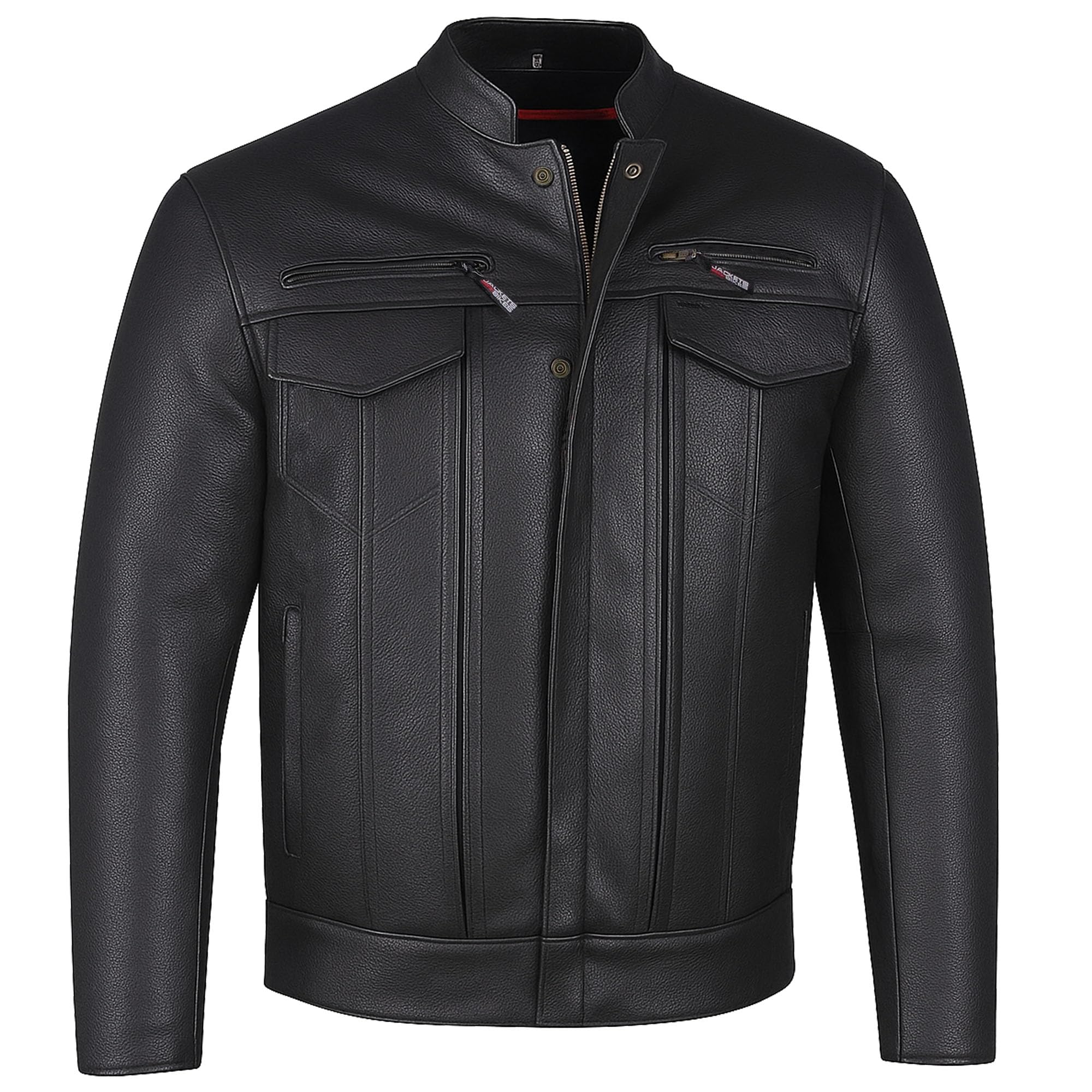
The COMMUTER jacket from Jackets 4 Bikes proves that genuine buffalo leather with CE-rated armor is obtainable without stepping into premium-tier pricing. The 1.2–1.3mm hide is thick enough to offer serious slide protection, yet remains surprisingly supple after a short break-in period. Owners consistently praise the YKK metal zippers and the full-sleeve zip-out thermal liner, which transforms this from a summer-weight layer into a cold-weather contender with minimal bulk.
Ventilation is handled by four zippered vents — two on the chest and two on the rear — that channel airflow effectively once you’re moving. The five-piece CE armor set covers shoulders, elbows, and back, and the armor pockets allow easy removal for washing or upgrading to Level 2 inserts. The large single back panel is ideal for club patches or custom embroidery, a detail cruiser riders will appreciate.
The only real trade-off for this price point is the fit: many riders report the arms run a touch long and the torso is cut fairly straight, which may feel boxy on slimmer frames. Sizing up one from your street shirt is recommended if you intend to layer. For the rider who wants genuine leather protection with modern armor and all-season versatility, this is the strongest value proposition on the list.
What works
- Genuine 1.2–1.3mm buffalo hide offers real abrasion resistance
- Five-piece CE armor included and removable
- Four zippered vents provide meaningful airflow
- Removable thermal liner extends usability into colder months
What doesn’t
- Straight torso cut fits boxy on lean body types
- Arm length runs long for some riders
- Leather requires a brief break-in period for full flexibility
2. REVOLT Men’s Buffalo Leather Motorcycle Jacket

The REVOLT jacket shares its DNA with the COMMUTER but leans harder into classic cruiser styling with an action back panel that improves reach to the handlebars. The 1.2–1.3mm buffalo leather is identical in thickness, providing the same level of abrasion resistance. Where this jacket differentiates itself is the ventilation layout — two chest zippers, two sleeve zippers, and two back zippers offer more granular control over airflow than the COMMUTER’s four-vent setup.
Owner feedback consistently highlights the thick, heavy-weight leather construction and the quality of the YKK zippers. The five-piece CE armor is pre-installed and removable, and the quilted thermal liner zips out for warmer months. Several reviewers note that the leather smells like a proper hide from the first wear, a small detail that indicates genuine material rather than bonded leather.
The fit is where opinions diverge. The action back adds mobility, but the shoulders and upper arms are cut generously — riders with athletic shoulders love it, while slimmer builds report excess material in the upper body. Sizing is true to chest measurement according to the brand’s chart, but ordering up one size is still a safe bet for layering. If you prioritize mobility and ventilation control in a traditional leather jacket, the REVOLT justifies its positioning.
What works
- Action back panel improves reach and comfort in riding position
- Six ventilation zippers offer precise airflow management
- Thick buffalo leather provides confidence-inspiring protection
- Five-piece CE armor included and removable
What doesn’t
- Generous shoulder and arm cut may feel oversized on slim frames
- Leather is heavy — not ideal for packing or short trips
- Chest vents can catch wind and balloon at higher speeds if left open
3. Milwaukee Performance Denim Biker Shirt

For riders who refuse to look like a power ranger at the coffee stop, the Milwaukee Performance Denim Biker Shirt delivers the aesthetic of a classic flannel with the safety architecture of a proper riding jacket. The outer shell uses 14.5oz premium cotton denim reinforced with genuine DuPont Kevlar aramid fibers in high-impact zones — not a Kevlar lining, but fibers woven directly into the denim. This construction provides genuine slide resistance while maintaining the look and feel of a regular long-sleeve shirt.
The jacket ships with CE-approved armor in both shoulders and elbows, tested to EN1621-1 and EN1621-2 standards. A lower back hook-and-loop strap attaches to your belt to prevent the shirt from riding up in a slide, a detail most budget denim jackets omit. Under-arm ventilation zippers help manage heat, and the mesh liner breathes well in warm weather. The two outside chest pockets and dual interior conceal-carry pockets add practical utility beyond riding.
The main compromise is weight — this is a heavy shirt, not a lightweight summer layer. The denim and aramid combination is stiff out of the box and requires a few wears to break in. Sizing is consistent with regular shirt sizing, but if you add the armor, the fit becomes snug. Riders between sizes should size up. For the rider who values low-profile style and real protection in a single package, this is hard to beat at this price tier.
What works
- Genuine Kevlar aramid fibers woven into denim for slide resistance
- CE-approved armor tested to EN1621-1 and EN1621-2
- Belt-attachment strap prevents ride-up during a fall
- Under-arm vents and mesh liner improve breathability
What doesn’t
- Heavy 14.5oz denim is stiff and requires break-in
- Armor pockets make the shirt fit snug — size up recommended
- Back protector sold separately, not included
4. Vance Leather Advanced All-Season Mesh Jacket

The Vance Leather Advanced jacket bridges the gap between a dedicated summer mesh jacket and a three-season textile option. The outer shell combines mesh panels for airflow with textile sections for abrasion resistance, and the removable thermal liner adds enough warmth for spring and fall riding. CE armor is included at the shoulders and elbows, and the jacket features reflective panels for night visibility — a safety detail often cut from budget mesh options.
Riders who have worn this in 90-degree heat report that the mesh breathes well enough to stay comfortable at speed, while the textile panels provide more structure than a full-mesh jacket. The liner zips out easily and the jacket retains a relatively slim profile without the armor installed. The multiple zippered pockets offer secure storage for a phone and wallet without bulging.
The jacket’s weakest point is the fit around the neck — the mandarin-style collar sits higher than some riders prefer, and the hook-and-loop closure can feel restrictive if you wear a snood or gaiter underneath. Sizing is generally true to street size but the cut is European-lean; riders with broader shoulders should order up. At this price point, you get genuine all-season versatility without sacrificing the core safety features.
What works
- Mesh/textile hybrid balances airflow with abrasion resistance
- Removable thermal liner extends usability to three seasons
- Included CE armor at shoulders and elbows
- Reflective panels improve low-light visibility
What doesn’t
- Mandarin collar sits high and may rub with neck gaiters
- European-lean cut runs narrow in the shoulders
- Liner adds noticeable weight when installed
5. IRON JIA’S 3-in-1 Windproof Riding Hoodie

The IRON JIA’S 3-in-1 jacket is a pullover-style hybrid that merges a windproof outer shell with a removable insulated liner and CE-certified armor. The outer layer is constructed from water-repellent polyester with diamond-mesh shoulder panels, and the inner liner is a soft, skin-friendly insulating fabric that can be worn alone. This three-layer system — shell, liner, armor — allows the rider to configure the jacket for summer, fall, or winter conditions from a single purchase.
CE Class A certification (0598/PPE/25/5881) confirms the armor meets European impact standards, and the jacket includes reflective striping on the back for night rides. The detachable hood adds casual versatility, though it should be removed at highway speeds to reduce flapping. Owner reviews consistently note that the jacket blocks wind effectively at 90 mph and handles light rain without soaking through, making it a legitimate cold-weather option when the liner is installed.
The most significant complaint centers on the pullover design — there is no full-front zipper, which makes the jacket difficult to put on and take off, especially with armor and layers underneath. A side zipper provides some adjustment, but it’s not a substitute for a traditional front-opening jacket. Sizing is slim-fit; most owners advise ordering one size up from your usual size. If you can accept the pullover format, this jacket delivers exceptional thermal versatility and certified protection for the price.
What works
- CE Class A certification ensures legitimate impact protection
- Three-layer system covers summer through winter riding
- Water-repellent shell resists light rain and blocks wind at highway speeds
- Reflective striping improves rear visibility
What doesn’t
- Pullover design makes on/off difficult with armor installed
- Slim fit runs small — almost always need to size up
- Hood creates drag at speed and should be removed for highway use
6. IRON JIA’S Mesh CE Armor Summer Jacket
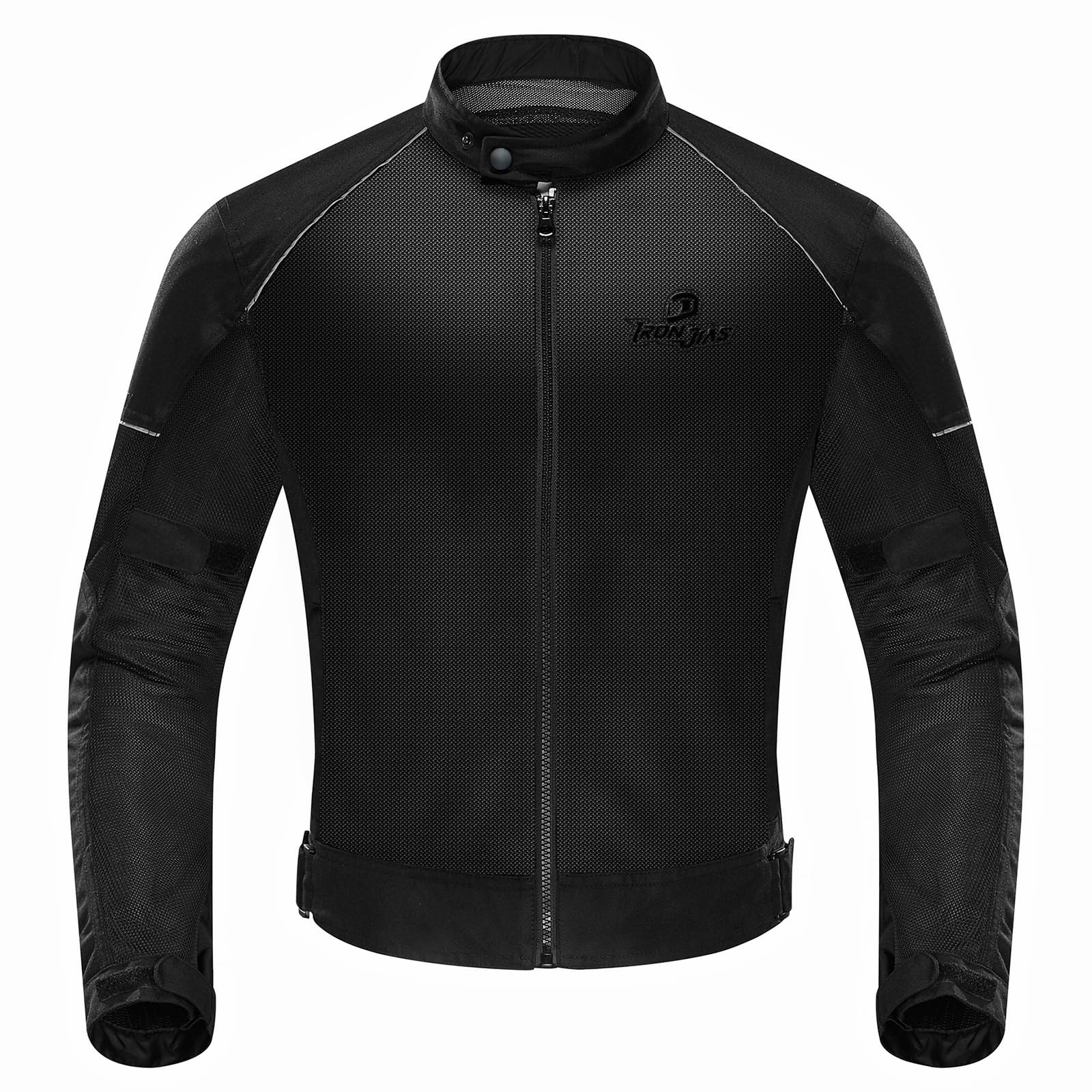
If your riding season is defined by triple-digit heat, the IRON JIA’S mesh jacket prioritizes airflow above all else. The shell is built from 600D Oxford fabric with full-mesh panels, creating a literal wind tunnel effect that owners describe as “insane” airflow. CE-certified armor lives in the shoulders and elbows, and an EVA back protector covers the spine. The armor is removable but the padding is slim enough that the jacket remains packable.
Reflective strips on the shoulders enhance night visibility, and the adjustable hook-and-loop fasteners at the cuffs, collar, and hem allow some customization of the fit. The jacket has a clean, understated look that doesn’t scream “rider” off the bike, making it suitable for dual-purpose use as a casual layer. Owners praise the build quality relative to the price, noting that the stitching and zippers feel more robust than the sub-premium price point suggests.
The compromise is cold-weather capability — there is no liner and no windproofing. Below 60°F, this jacket lets all the air through and offers zero insulation. The 600D Oxford fabric is adequate for urban speeds but less confidence-inspiring at highway pace compared to 1200D textile or leather. Sizing is slim-fit per the brand’s own advice; most owners order one size up, especially if they plan to wear the armor. For pure hot-weather riding where breathability is the number one concern, this jacket excels.
What works
- Exceptional airflow — ideal for summer and desert climates
- CE-certified shoulder and elbow armor included
- EVA back protector provides coverage without bulk
- Reflective strips improve safety in low light
What doesn’t
- No thermal liner — strictly a warm-weather jacket
- 600D Oxford offers less abrasion resistance than heavier textiles
- Slim cut requires sizing up for armor clearance
7. Milwaukee Leather Solid Biker Shirt

The Milwaukee Leather Solid Biker Shirt is the solid-color counterpart to the brand’s flannel option, offering a more minimalist look while retaining the same aramid-reinforced construction. The shell is 100% cotton with Dupont Kevlar fibers integrated into high-impact zones, and CE-approved armor ships pre-installed at the shoulders and elbows. The solid black, grey, and navy options make this a viable everyday shirt that doesn’t broadcast its protective purpose.
The shirt includes the same belt-attachment strap as the flannel version to prevent riding up during a fall, as well as dual interior pockets sized for concealed carry or smartphone storage. The under-arm ventilation zippers and mesh liner provide airflow, though the heavy denim cotton retains more heat than the flannel variant due to the solid fabric’s denser weave. Riders who prefer a uniform appearance over a pattern will appreciate the clean lines.
Sizing mirrors the flannel version — it fits like a regular long-sleeve shirt but tightens noticeably when armor is inserted. The collar snaps are functional but some owners report the top button area pulls slightly if the shirt is worn without an undershirt. The back protector pocket is empty from the factory; you will need to purchase the optional back pad separately. For riders who want the proven Milwaukee Leather protection formula in a quieter, more versatile colorway, this is a smart choice.
What works
- Solid colors blend into daily wear without looking like gear
- Aramid fiber reinforcement in impact zones
- CE armor included in shoulders and elbows
- Belt-attachment strap prevents ride-up in a slide
What doesn’t
- Denser solid weave runs warmer than the flannel version
- Back protector not included — must buy separately
- Fit tightens when armor is inserted; size up for layering
8. ILM JAM1 All-Season Mesh Jacket

The ILM JAM1 is a dual-sport-oriented mesh jacket designed for riders who split time between pavement and light off-road use. The full-mesh chassis maximizes airflow while the detachable thermal liner provides a buffer for cooler mornings. CE armor is included at the shoulders and elbows, and the jacket features multiple adjustment points at the waist, bicep, and forearm to dial in the fit. The sport-oriented cut accommodates the forward lean of a dual-sport or adventure bike.
Riders who use this on adventure bikes appreciate the long tail that stays tucked at speed and the generous pocket layout. The jacket comes with a rain liner pocket that stores the thermal layer when not in use. Visibility is enhanced by reflective piping on the rear and shoulders. The mesh fabric is robust enough for highway cruising but, like all mesh jackets, trade-offs in abrasion resistance are inherent to the design.
Fit is where the JAM1 requires the most attention. The jacket runs European-slim, and the arms are cut long to accommodate the riding position. Owners with shorter torsos may find the tail hangs lower than expected. Sizing up at least one step is the general recommendation. If you need a dedicated hot-weather jacket that can accept a thermal layer for variable conditions and fits the adventure riding posture, the ILM JAM1 is a strong contender.
What works
- Full-mesh construction offers excellent ventilation
- Detachable thermal liner adds versatility for variable weather
- Multiple fit adjustments at waist, bicep, and forearm
- Long tail stays tucked in forward riding position
What doesn’t
- European-slim fit runs small — size up recommended
- Mesh chassis compromises abrasion resistance versus textile or leather
- Arms cut long for sport posture; may bunch for upright riders
9. Alpinestars Bionic Action V2 Protection Jacket

The Alpinestars Bionic Action V2 is not a traditional jacket — it is a dedicated impact protection vest designed for motocross and aggressive enduro riding. The chassis is a lightweight mesh that breathes aggressively, while the protection comes from hard plastic shells at the shoulders, elbows, chest, and back. This is the highest level of impact protection on this list, designed to absorb repeated, high-energy impacts from crashes and roost debris.
Riders who wear this on street bikes in extreme heat report that it ventilates better than any textile or mesh jacket they have owned. The mesh stretches to accommodate movement and the plastic armor panels are shaped to articulate with the body. The overall weight is around 4 pounds, which is lighter than a full leather jacket and significantly cooler. Alpinestars’ reputation for durability and crash survivability is well-established in the motocross community.
The trade-off is that this offers zero abrasion resistance — it is a protection vest, not a sliding jacket. You cannot slide down asphalt in this; the mesh will tear immediately upon contact with pavement. It is also a dedicated warm-weather piece; there is no liner or windproofing. The fit is race-tight by design to keep armor in place, and many riders report needing to size up one or even two sizes from their street jacket size. For off-road or extreme heat street use where impact protection is the priority and sliding is not a factor, this is the specialist choice.
What works
- Highest impact protection — hard plastic shells cover shoulders, elbows, chest, and back
- Extreme ventilation ideal for motocross and hot climates
- Lightweight mesh chassis reduces fatigue during long rides
- Reputable Alpinestars build quality and crash durability
What doesn’t
- No abrasion resistance — not suitable for asphalt sliding
- Race-tight fit requires sizing up one or two sizes
- No thermal liner or weather protection — strictly warm weather
Hardware & Specs Guide
CE Armor Levels Explained
CE Level 1 armor transmits a maximum average force of 18 kN through the padding. CE Level 2 is stricter at 9 kN. For budget jackets, Level 1 is the standard and is adequate for street riding at legal speeds. Level 2 is preferred for track days or high-speed touring. Armor marked “CE” without a level number meets EN1621-1 but may not specify the kN threshold — treat it as Level 1 equivalent. Foam pads without CE marking offer negligible impact absorption and should be replaced immediately.
Fabric Weight and Abrasion Resistance
600D Oxford polyester is the entry point for textile jackets and is suitable for urban commutes up to 45 mph. 1200D offers roughly double the abrasion resistance for highway use. Denim with aramid reinforcement (Kevlar) typically tests to around 2-3 seconds of slide time at 60 mph before exposing skin. 1.2mm buffalo leather provides approximately 4-6 seconds of slide time under the same conditions. Mesh fabrics have the lowest abrasion resistance — they slide through in under 1 second at speed and should not be relied upon for asphalt abrasion.
FAQ
Should I size up for a budget motorcycle jacket that includes armor?
Can I replace the foam pads in a budget jacket with real CE armor?
Is a mesh budget motorcycle jacket safe for highway riding?
Final Thoughts: The Verdict
For most buyers, the budget motorcycle jacket winner is the COMMUTER Buffalo Leather Jacket because it delivers genuine 1.2mm buffalo hide, five-piece CE armor, and a removable thermal liner at a price that undercuts premium brands by a wide margin. If you want a casual denim look with real aramid reinforcement, grab the Milwaukee Performance Denim Biker Shirt. And for extreme heat or off-road impact protection, nothing beats the Alpinestars Bionic Action V2.

Certification: BSc in Mechanical Engineering
Education: Mechanical engineer
Lives In: 539 W Commerce St, Dallas, TX 75208, USA
Md Amir is an auto mechanic student and writer with over half a decade of experience in the automotive field. He has worked with top automotive brands such as Lexus, Quantum, and also owns two automotive blogs autocarneed.com and taxiwiz.com.