Selecting a road tire is a balance of rolling resistance, puncture protection, grip, and durability — and a misstep in any one of these areas can turn a smooth century ride into a frustrating day of roadside repairs. The market is flooded with options that prioritize speed at the cost of flat protection or emphasize toughness with a ride quality that feels sluggish. Understanding the construction trade-offs between casing thread count, rubber compound, bead type, and puncture layers is what separates a well-informed purchase from a regretful one.
I’m Amir — the founder and writer behind Four Wheel Ask. My approach to evaluating road tires relies on aggregating owner feedback across thousands of miles, cross-referencing spec sheets for casing TPI and compound formulations, and analyzing failure points reported in long-term use to determine which models truly deliver on their claims.
This comprehensive guide breaks down the top-performing models currently on the market to help you confidently select the best bike tires for road.
How To Choose The Best Bike Tires For Road
Road tire selection hinges on understanding four key variables: casing construction, rubber compound, puncture protection, and bead type. Each factor directly affects how the tire performs in terms of rolling resistance, grip, durability, and ease of installation. Matching these characteristics to your riding style — whether that’s training, commuting, racing, or endurance touring — is essential for a satisfying experience.
Casing TPI and Ride Quality
Threads Per Inch (TPI) measures the density of the casing threads. Higher TPI casings (120-330) use finer threads, resulting in a more supple tire that conforms to the road surface for better grip and lower rolling resistance. Lower TPI casings (22-60) use thicker threads, prioritizing durability and puncture resistance over ride quality. Training tires typically use 60-120 TPI, while race-oriented tires push toward 200+ TPI. A supple casing also absorbs vibration better, reducing fatigue on long rides without sacrificing speed.
Rubber Compound and Grip
The tread compound determines how the tire interacts with pavement, especially in wet conditions. Softer compounds like graphene-infused or silica-based blends offer superior grip and lower rolling resistance but wear faster. Harder compounds extend mileage at the cost of traction and comfort. Many modern tires use dual-compound designs — a harder, faster center for rolling efficiency with softer shoulder rubber for cornering confidence. Understanding the compound technology (such as Vittoria’s Graphene, Continental’s PureGrip, or Pirelli’s SmartEVO) helps predict real-world performance.
Puncture Protection Layers
Puncture protection sits between the tread rubber and the casing. Common materials include nylon, Kevlar, and proprietary blends like Schwalbe’s V-Guard or Continental’s PolyX Breaker. A thicker protection layer improves flat resistance but adds weight and reduces suppleness, increasing rolling resistance. The right balance depends on road conditions — urban riders dealing with glass and debris need more robust protection, while riders on smooth pavement can prioritize a lighter, faster casing with minimal protection.
Bead Type and Installation
Wire beads are heavier, harder to install, and cheaper to produce. Kevlar or aramid folding beads are lighter, easier to pack for spares, and generally simpler to mount on rims. Folding beads also allow the tire to be compacted for storage. For tubeless setups, a tight bead fit is critical for proper sealing, and many modern tires feature a specifically engineered bead profile to ensure compatibility with hookless rims.
Quick Comparison
On smaller screens, swipe sideways to see the full table.
| Model | Category | Best For | Key Spec | Amazon |
|---|---|---|---|---|
| Pirelli Cinturato Velo | Tubeless Premium | Endurance & All-Weather | 700x32c TLR, SmartEVO compound | Amazon |
| Schwalbe Pro One TLE | Tubeless Performance | Racing & Speed | 700x30c, ADDIX Race, 127 EPI | Amazon |
| Continental Grand Prix | Clincher Premium | All-Round Performance | 700x25c, PolyX Breaker | Amazon |
| Pirelli P7 Sport | Clincher Mid-Range | Everyday Training | 700x26c, TechBELT protection | Amazon |
| WTB Byway | Tubeless Mixed-Terrain | Gravel & Road | 700x40c, SG2 puncture protection | Amazon |
| Vittoria Zaffiro Pro G2.0 | Clincher Training | Performance Training | 700x32c, Graphene compound | Amazon |
| Continental Ultra Sport III | Clincher Budget | Entry-Level Training | 700x32c, PureGrip, 180 TPI | Amazon |
| Fincci Conna 700x23c | Clincher Value | Racing & Touring | 700x23c pair, 60 TPI, 1mm protection | Amazon |
| Fincci Pair Kevlar 700x25c | Clincher Value | Racing & Training | 700x25c pair, 120 TPI, Kevlar bead | Amazon |
| YUNSCM 700x28C | Clincher Budget | Urban Commuting | 700x28c pair, nylon cord, 80-100 PSI | Amazon |
| Michelin Protek | Clincher Commuter | Commuting & E-Bike | 700x28c, 1mm anti-puncture, reflective | Amazon |
In-Depth Reviews
1. Pirelli Cinturato Velo

The Pirelli Cinturato Velo represents a carefully engineered balance between durability and speed, utilizing SmartEVO compound technology that delivers consistent grip across varying pavement conditions. Owner feedback indicates impressive longevity, with rear tires averaging around 2,500 miles before replacement, while the tubeless-ready TLR casing simplifies setup and maintains air retention effectively with standard rim tape and a compressor. The X-Puncture protection layer provides reassurance without the excessive weight penalty seen in heavier touring-focused tires.
Data from long-term users highlights the tire’s ability to handle both dry pavement and wet conditions with predictable cornering behavior, though some riders note that braking traction doesn’t match the grip levels of softer-compound racing tires. The 32mm width offers a noticeable improvement in ride comfort over narrower options, absorbing road vibration without sacrificing rolling efficiency, making it a capable choice for endurance riders and daily commuters alike. Installation reports are consistently positive, with the tire mounting easily on DT Swiss and Ultegra rims using a Tyre Glider or similar tool, and air retention holding strong without sealant weeping.
The Cinturato Velo excels as a do-everything road tire that prioritizes real-world versatility over pure weight savings, appealing to riders who value puncture resistance and all-weather capability over marginal aero gains. Its construction quality and compound formulation place it firmly in the premium tier, and the mileage figures reported by owners confirm that the upfront investment translates into lower cost per mile over the tire’s lifespan.
What works
- Excellent balance of durability and rolling speed
- Easy tubeless installation with reliable air retention
- Strong puncture protection for real-world road debris
What doesn’t
- Brak ing traction lags behind dedicated racing compounds
- Slightly heavier than pure race-oriented alternatives
2. Schwalbe Pro One TLE
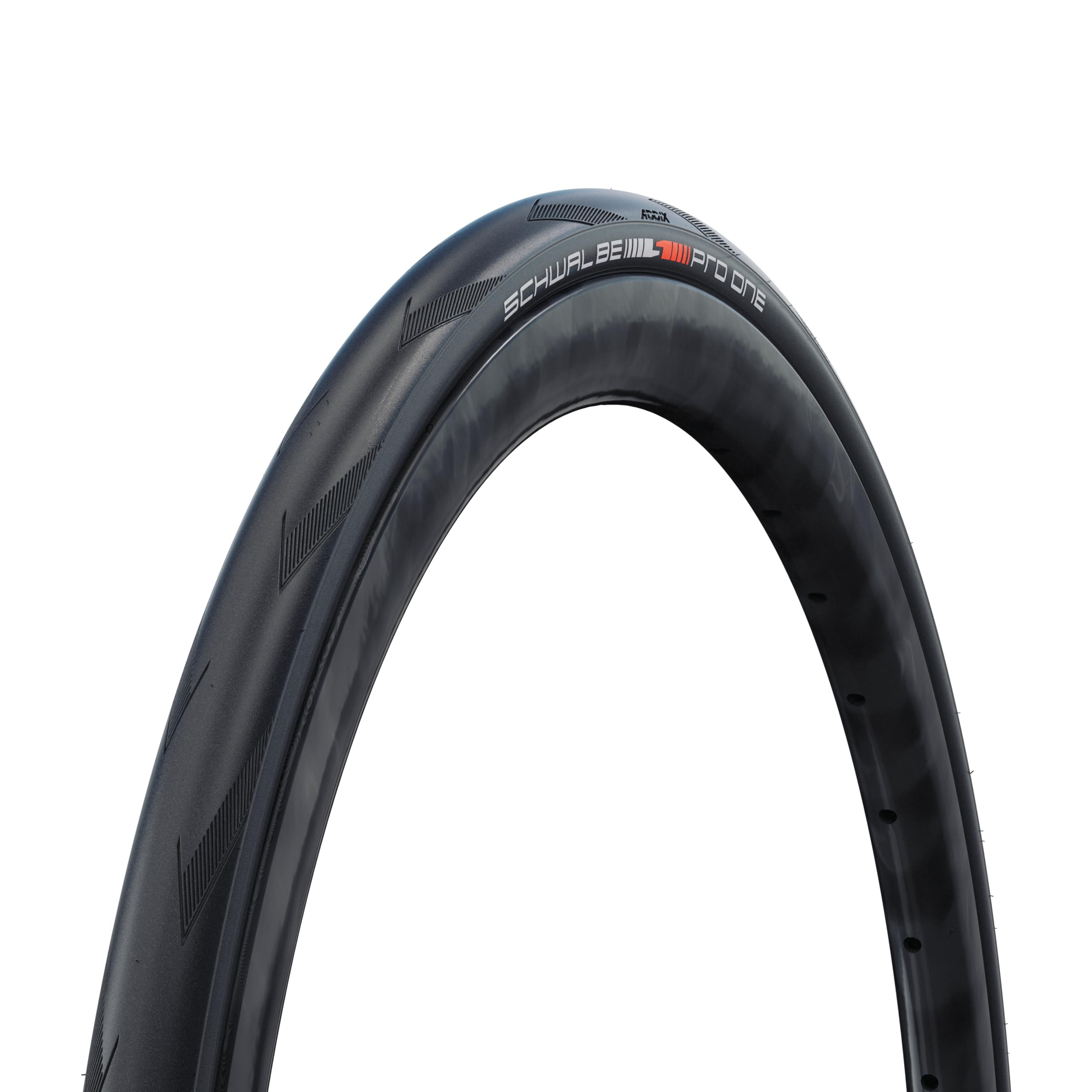
The Schwalbe Pro One TLE is engineered as a high-performance tubeless tire that prioritizes low rolling resistance and a supple ride feel, utilizing the ADDIX Race compound and a 127 EPI Super Race carcass. Owner reports consistently emphasize its smooth, fast-rolling behavior on asphalt, with many noting that the tire feels closer to a tubular in terms of road feedback and cornering confidence. The V-Guard puncture protection layer adds a meaningful safety margin without the harsh ride penalty associated with thicker shields, making it a strong option for riders who want race-day speed with training-day reliability.
Long-term feedback from riders covering centuries and multi-day events confirms that the Pro One TLE holds air pressure exceptionally well, with some users reporting weeks of stable pressure without sealant top-ups after initial setup. The tire mounts smoothly on hookless rims like Zipp 303 S, requiring only a standard floor pump or compressor to seat the beads, and the 30mm width provides a noticeable comfort improvement over narrower race tires while maintaining aerodynamic efficiency. Several owners noted surviving impacts that would have punctured previous racing tires, including a 3-inch step at 20 mph that bottomed out the rim without causing a snakebite.
The overall construction quality reflects Schwalbe’s reputation for precision manufacturing, though the soft compound does wear faster than harder training-oriented tires, with some riders reporting visible wear after 1,500 to 2,000 miles depending on road surface and rider weight. For cyclists who prioritize speed and ride quality above all else and are willing to accept a shorter service life, the Pro One TLE delivers one of the most engaging riding experiences available in a tubeless format.
What works
- Exceptionally low rolling resistance and supple ride
- Excellent wet and dry cornering grip
- Reliable tubeless sealing and air retention
What doesn’t
- Soft compound wears faster than training tires
- Sidewall durability questioned on rough roads
3. Continental Grand Prix
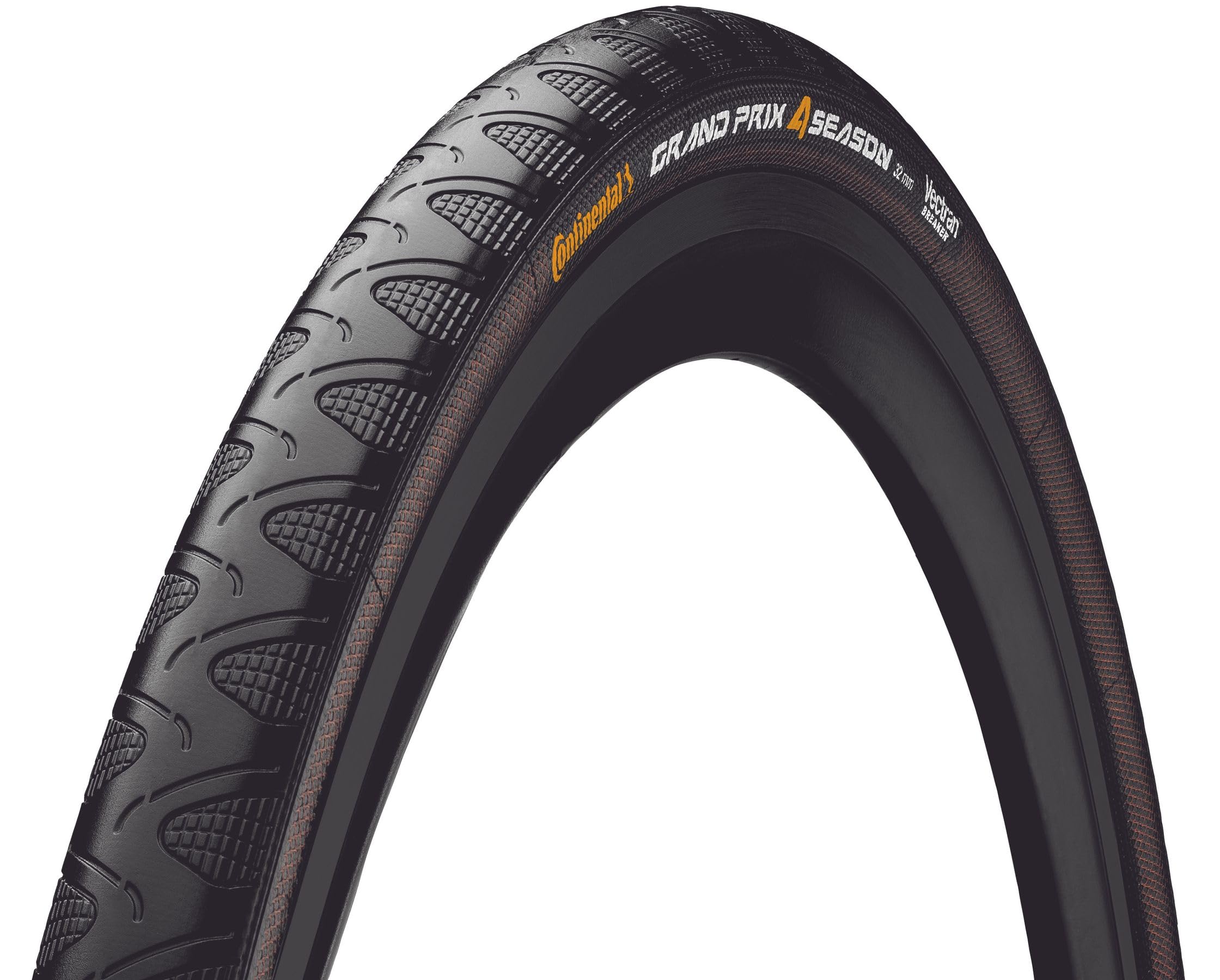
The Continental Grand Prix has long been regarded as a benchmark in the road tire category, offering a balanced package of speed, protection, and durability that appeals to both recreational riders and seasoned commuters. Owner data reveals a wide range of experiences, with some riders reporting thousands of miles without a single flat thanks to the PolyX Breaker puncture layer, while others on particularly debris-heavy routes experienced sidewall gashes that required patching or replacement. The 180 TPI casing provides a noticeably smoother ride than entry-level tires, and the BlackChili compound delivers consistent grip in both dry and wet conditions.
Installation feedback is generally positive, with the tire mounting easily on standard rims without requiring excessive force, though some owners noted that the tire runs slightly narrow for its labeled width. Commuters in urban environments have reported a significant reduction in flat frequency after switching from stock tires, with one owner documenting zero flats over several months of city riding that previously resulted in weekly punctures. The Grand Prix strikes a sensible compromise between the ultra-supple feel of race tires and the heavy-duty protection of training tires, making it a versatile choice for riders who do a mix of recreational riding and commuting.
Some long-term users have pointed out that the sidewall is less reinforced than thicker touring tires, which can be a concern on roads with sharp debris or pothole edges, and the tire’s performance in wet conditions is competent but not class-leading. The Grand Prix remains a strong contender for riders who want a single tire that handles a wide range of scenarios without excelling in any one extreme.
What works
- Balanced rolling resistance and puncture protection
- Smooth, comfortable ride for a clincher
- Versatile across training, commuting, and fast group rides
What doesn’t
- Sidewall less durable than heavier touring tires
- Wet grip adequate but not class-leading
4. Pirelli P7 Sport

The Pirelli P7 Sport is positioned as an all-round training tire that brings Pirelli’s EVO compound technology to a more accessible price point, delivering reliable grip and durability for daily riding without the premium cost of the brand’s race-oriented models. Owner feedback consistently highlights the tire’s fast rolling feel and excellent puncture resistance on debris-laden urban roads, with multiple riders reporting thousands of miles without a single flat. The 26mm width offers a practical middle ground — narrower than comfort-oriented 28-32mm tires but wide enough to provide a smoother ride than 23-25mm options, especially on imperfect pavement.
Comparisons to the Continental GP5000 and Gatorskin appear frequently in owner reviews, with many users finding the P7 Sport to be a strong competitor in terms of speed and durability while costing less than those established benchmarks. Installation is straightforward, requiring no special tools, and the tire fits true to size on standard rims without the runout issues sometimes seen in budget alternatives. Riders using the tire on Pinarello and Trek Madone frames reported achieving personal best times on familiar routes, suggesting the rolling resistance is genuinely competitive for a training-focused tire.
Some owners noted that the tire runs slightly narrower than labeled, with a 26mm tire measuring closer to 25mm on certain rim widths, which may affect fit on frames with tight clearances. The EVO compound provides confident grip in dry conditions, though aggressive cornering in wet weather reveals the limits of its silica formulation compared to softer wet-weather compounds. For the rider seeking a dependable, fast-rolling training tire that won’t break the budget, the P7 Sport represents a thoroughly engineered option.
What works
- Fast rolling with excellent puncture resistance
- Competitive performance at a reasonable investment
- Easy installation with no special tools needed
What doesn’t
- Wet weather grip not as strong as dry performance
- Runs slightly narrow for labeled width
5. WTB Byway
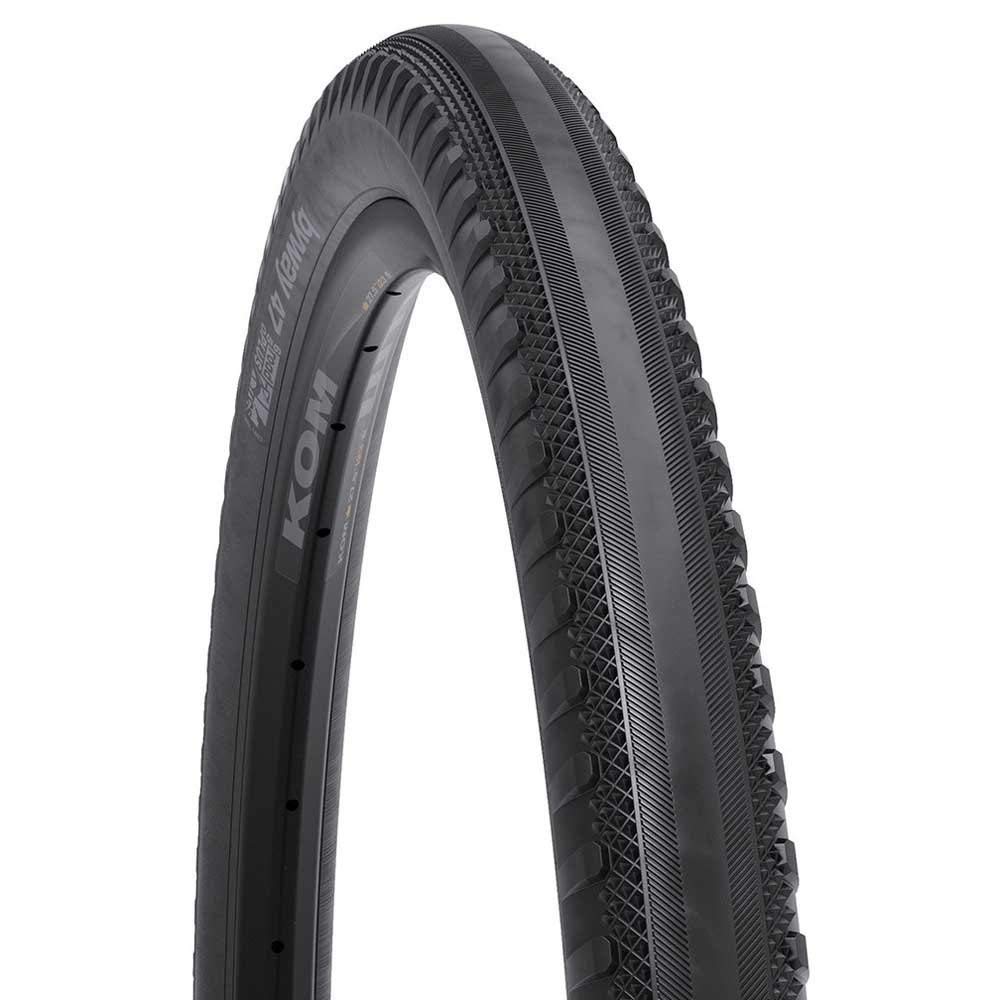
The WTB Byway is a unique entry in the road tire space, designed with a smooth centerline for pavement efficiency and diamond-shaped outer knobs for off-road grip, making it a genuine mixed-terrain option rather than a pure road tire. Owner data shows that the tire rolls impressively fast on tarmac, with one rider measuring only 0.25 mph slower over 50 miles compared to a 28mm road tire, while offering significantly more confidence on compacted dirt and light gravel. The high-volume 40mm casing provides exceptional ride comfort, absorbing road imperfections that would be jarring on narrower tires.
Installation feedback is generally positive for tubeless setups, with the tire sealing easily on standard rims and holding air well after an initial break-in period where some sealant seepage through the sidewalls is common. The SG2 puncture protection layer adds a meaningful safety margin for gravel riding, though some owners have noted that the sidewalls are relatively thin and can weep sealant for several days before fully sealing. The Dual DNA rubber compound uses a faster, harder center for rolling efficiency and softer side knobs for cornering traction, a design that works well in dry conditions but has been reported as less predictable in wet or loose terrain.
Long-term durability has received mixed feedback, with some riders experiencing fast tread wear on the center stripe after several hundred miles of pavement riding, while others report the tire lasting well over 1,000 miles on mixed surfaces. The Byway is best suited for riders who frequently transition between pavement and light gravel and want a single tire that handles both environments without severe compromises in either domain, rather than those seeking pure road performance.
What works
- Fast rolling on pavement for a high-volume tire
- Excellent ride comfort and vibration damping
- Confident grip on compacted dirt and light gravel
What doesn’t
- Tread wears relatively fast on pavement
- Wet traction and loose terrain grip can be unpredictable
6. Vittoria Zaffiro Pro G2.0
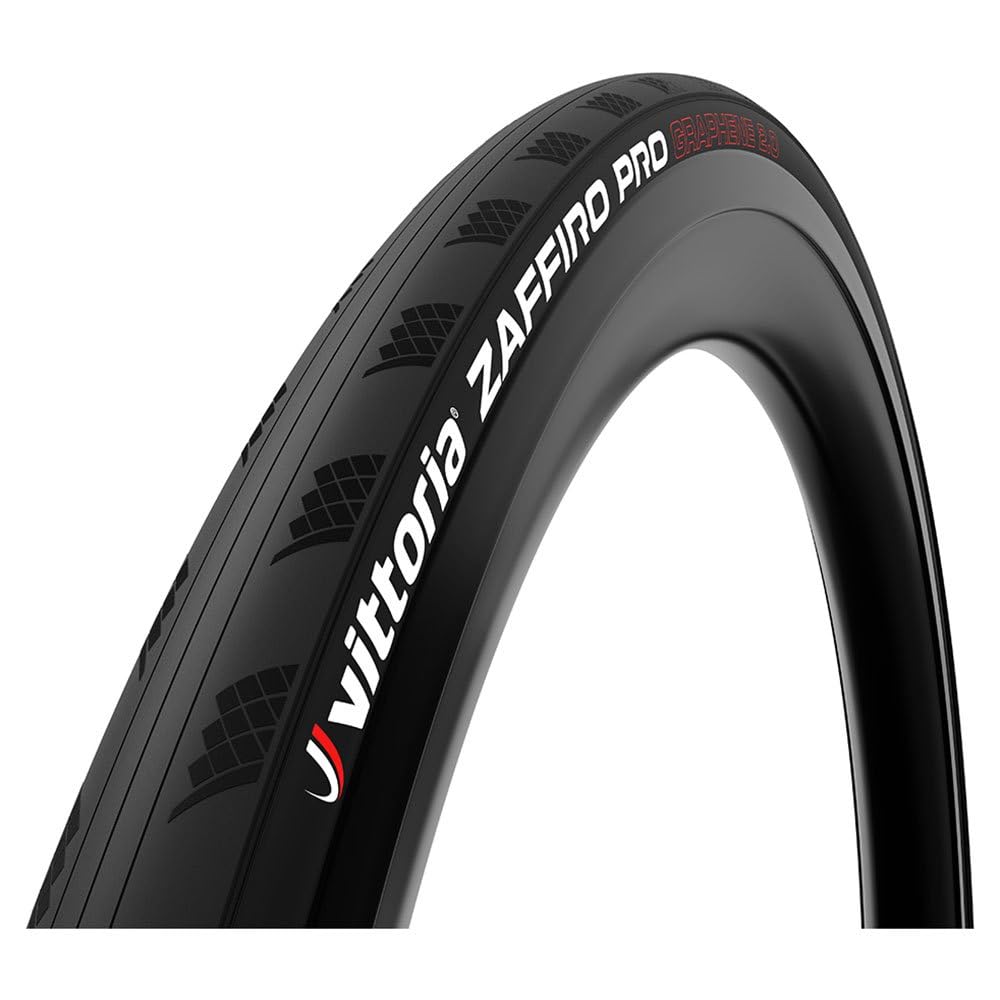
The Vittoria Zaffiro Pro G2.0 has established itself as the industry standard for performance training tires, offering a Graphene-infused compound that mimics the ride feel of higher-end siblings while prioritizing durability and puncture resistance at a more approachable cost. Owner feedback is overwhelmingly positive, with multiple riders reporting over 2,000 miles without a single flat, and one owner documenting 2,000 miles of trouble-free use on a single tire before replacing it as a precaution. The alternating slick profile and subtle center grooves provide predictable handling in both dry and wet conditions, and the 32mm width option offers a noticeably more comfortable ride than narrower training tires without a significant speed penalty.
Installation is consistently described as straightforward, with the folding bead making mounting easy on most rims without requiring tire levers, though some owners noted that the tire measures slightly narrower than its labeled width — a 30mm tire fitting closer to 29mm on 25mm internal rims. The casing provides high puncture protection and extended mileage, and several riders have directly compared the Zaffiro Pro to the Continental Gatorskin, finding comparable flat resistance at roughly half the price. The tire runs quietly on pavement and delivers a confidence-inspiring grip that allows for spirited cornering during training rides.
Some owners have noted a strong chemical odor from the rubber compound that persists for several days after installation, which, while not affecting performance, may be noticeable in enclosed storage spaces. The Graphene compound provides good rolling efficiency for a training tire, though riders accustomed to high-end race tires will notice a modest speed difference of approximately 2-3 mph compared to premium GP5000-level options. For the rider who prioritizes reliability and longevity over marginal speed gains, the Zaffiro Pro G2.0 delivers outstanding value.
What works
- Outstanding puncture resistance and mileage
- Smooth, quiet ride with predictable grip
- Exceptional value for a performance training tire
What doesn’t
- Measures slightly narrow for labeled width
- Initial chemical odor from rubber compound
7. Continental Ultra Sport III
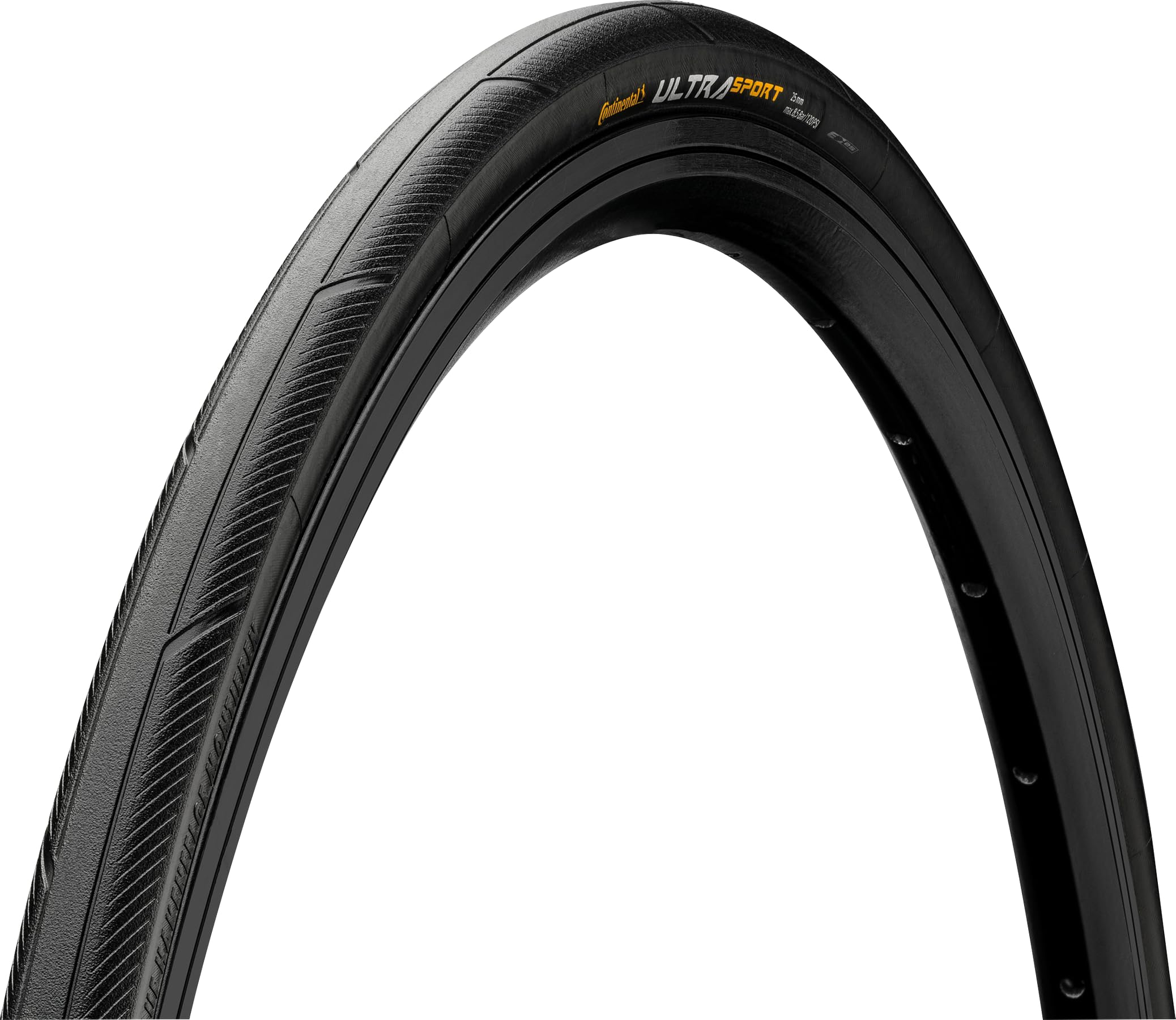
The Continental Ultra Sport III is designed as a high-performance entry-level training tire that leverages PureGrip silica compound technology to deliver impressive grip and rolling efficiency at a wire-bead price point. Owner data from riders on Colorado’s rocky, debris-strewn roads confirms that the tire holds up well against cuts and punctures, with several users reporting hundreds of miles without issues and minimal tread wear. The 180 TPI casing is unusually supple for a budget-oriented tire, providing a ride quality that approaches mid-range options at a significantly lower investment, and the dynamic tread pattern adds a small but measurable improvement in wet traction compared to completely slick alternatives.
Installation feedback is mixed regarding the wire bead — some riders found it stiff and challenging to mount without plastic levers, while others with more experience or wider rim profiles reported straightforward installation. Owners upgrading from older or heavier tires consistently noted a meaningful improvement in rolling speed and ride comfort, with one rider describing the Ultra Sport III as smoother, faster, and more cost-effective than their previous Kenda tires. The E25 e-bike rating confirms compatibility with standard-speed electric bikes, adding versatility for riders who share a bike between pedal and electric use.
Some owners have pointed out that the wire bead construction makes the tire heavier than folding bead alternatives, which may be noticeable for riders who frequently carry spare tires or prioritize rotational weight savings. The PureGrip compound provides confident dry grip, though aggressive wet-weather cornering reveals the limitations of the budget-oriented silica formulation. For the rider seeking a dependable, fast-rolling training tire or commuter option without spending premium money, the Ultra Sport III offers a compelling balance of performance and affordability.
What works
- Impressive rolling resistance and grip for the price
- Supple 180 TPI casing for budget tire class
- Durable construction suited for training and commuting
What doesn’t
- Wire bead heavier and harder to install than folding bead
- Wet weather cornering grip limited by budget compound
8. Fincci Conna 700x23c Pair
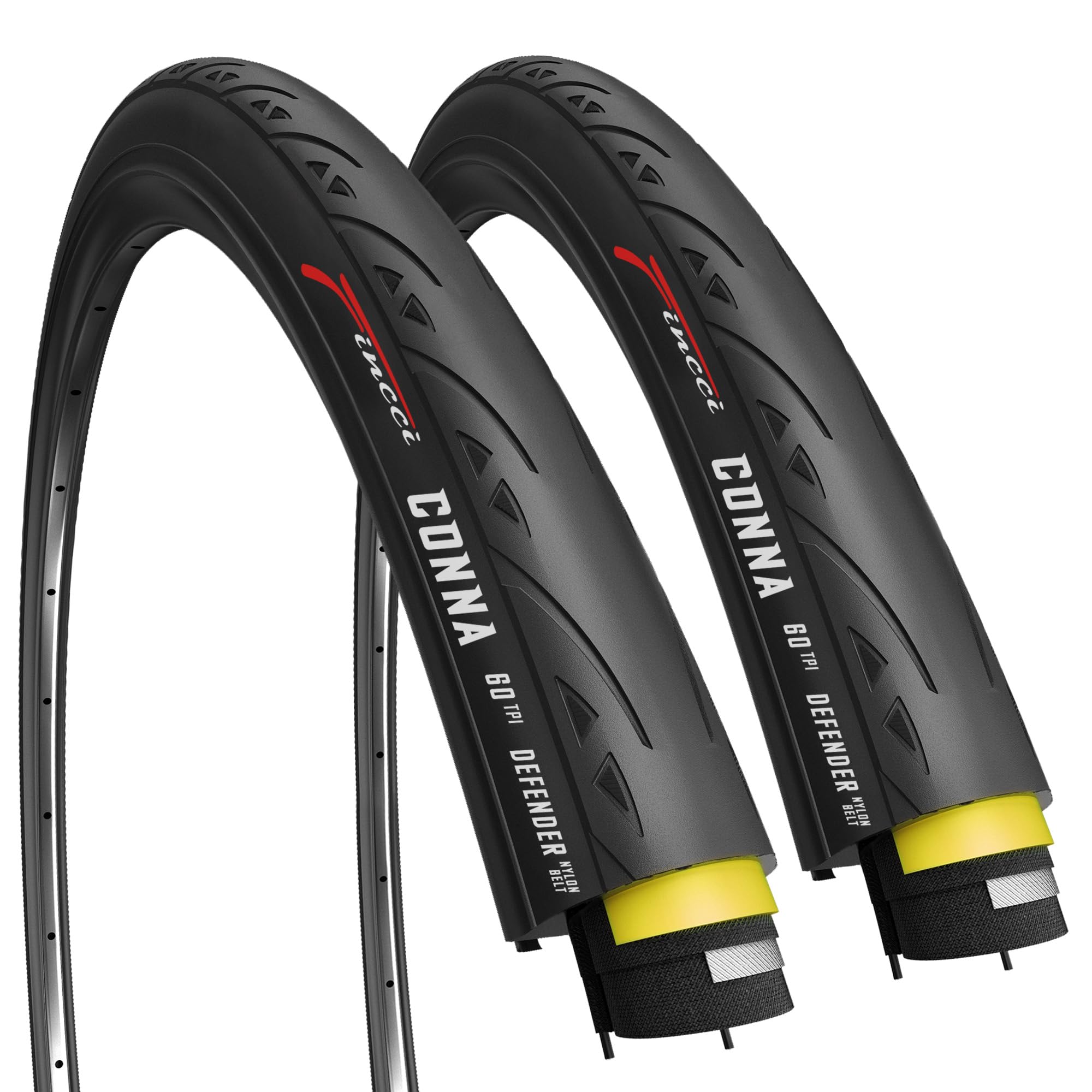
The Fincci Conna 700x23c tires are a budget-friendly pair option that delivers surprisingly competitive performance for riders seeking a lightweight, fast-rolling clincher without spending premium money. Owner feedback reveals that several riders have directly compared these tires to the Continental Grand Prix 5000 and found comparable rolling resistance, with one user confirming the similarity using a power meter. The 60 TPI casing and Kevlar wire cord bead provide a durable structure that maintains its shape well on the rim, and the 1mm antipuncture protection layer adds a meaningful safety margin for road use without making the tire feel excessively stiff or dead.
Installation is generally described as straightforward, with the tire fitting snugly on standard rims and seating evenly without bulges or runout. Some owners have reported exceptional customer service from the UK-based seller, with one rider receiving a replacement tire the next day after an initial shipment issue. The 23mm width is ideal for riders with tight frame clearances or those who prefer the traditional narrow profile for aerodynamic purposes, though it offers less comfort and impact absorption than wider options. The high-traction tread pattern provides consistent grip on tarmac and pavement in dry conditions, with predictable handling through corners.
A few owners have reported quality control issues, including one instance of a sidewall failure within the first 10 miles, though the seller promptly resolved the issue with a replacement. The 60 TPI casing is less supple than higher-thread-count alternatives, meaning the tire transmits more road vibration to the rider, which may be noticeable on longer rides or rough pavement. For riders on a tight budget who need a pair of dependable road tires for racing or touring, the Fincci Conna offers solid performance at a fraction of the cost of premium brands.
What works
- Surprisingly competitive rolling resistance for the price
- Solid antipuncture protection for a thin casing
- Reliable customer service and fast replacement support
What doesn’t
- 60 TPI casing transmits road vibration noticeably
- Occasional quality control concerns on initial batch
9. Fincci Pair Kevlar 700x25c
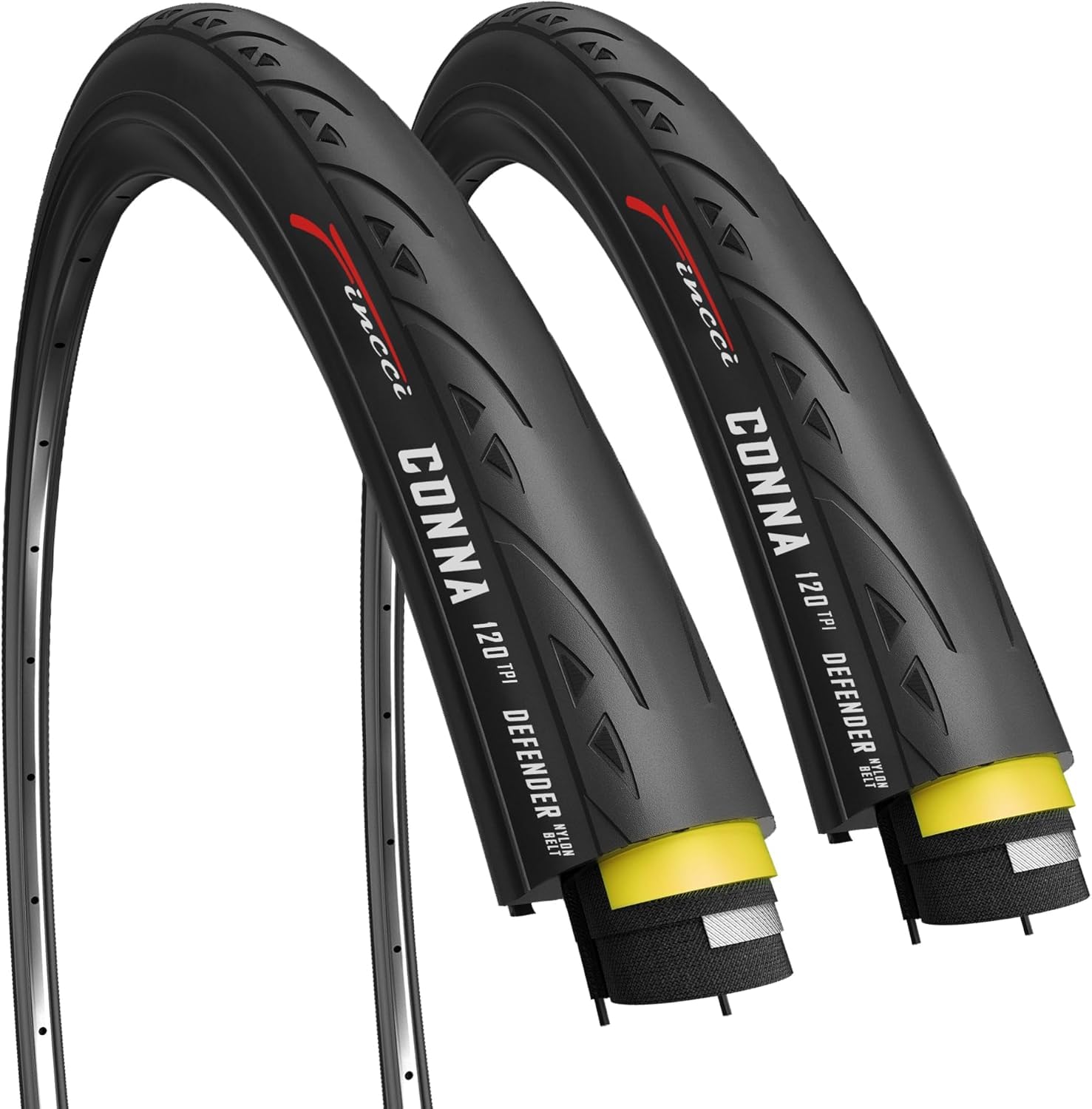
The Fincci Pair Kevlar 700x25c tires represent a step up in casing quality within the budget segment, featuring a 120 TPI carcass and Kevlar-reinforced folding bead that keeps weight down to approximately 210g per tire while maintaining structural integrity. Owner data shows impressive real-world performance, with one rider documenting 1,200 miles of use without significant wear and praising the tire’s ability to withstand sharp rocks that had previously gashed the sidewalls of Continental GP5000 and Vittoria Zaffiro tires. The Kevlar bead provides a snug fit on the rim and simplifies installation, with multiple owners reporting that mounting required no tire levers whatsoever.
Rider feedback consistently highlights the fast-rolling feel and predictable handling characteristics, with the tire measuring a true 27-28mm width on standard rims despite being labeled as 25mm — an advantage for riders seeking a slightly wider contact patch for improved comfort and grip. The 1mm nylon puncture protection layer adds a defense against glass and debris that has proven effective for most users, though a small number of owners have reported experiencing punctures more frequently than expected. The tire runs quietly on pavement and delivers a smooth ride at pressures up to 110 PSI, with some riders noting that the rubber compound becomes quieter and grippier after a brief warm-up period.
The main area of concern reported by owners is variability in puncture resistance, with most riders experiencing zero flats over hundreds of miles while a minority report frequent punctures, suggesting possible batch-to-batch consistency issues. The folding bead design makes these tires easy to pack as spares for touring or racing, and the 120 TPI casing offers a noticeably more supple ride than the 60 TPI alternatives at a similar price point. For riders seeking a lightweight, Kevlar-bead training tire with competitive rolling resistance, the Fincci Kevlar pair delivers strong value, particularly for lighter riders who prioritize speed over maximum puncture protection.
What works
- Lightweight 120 TPI folding bead design
- Fast rolling with predictable handling
- Easy installation without tire levers
What doesn’t
- Puncture resistance inconsistent between batches
- Runs wider than labeled 25mm specification
10. YUNSCM 2-PCS 700x28C
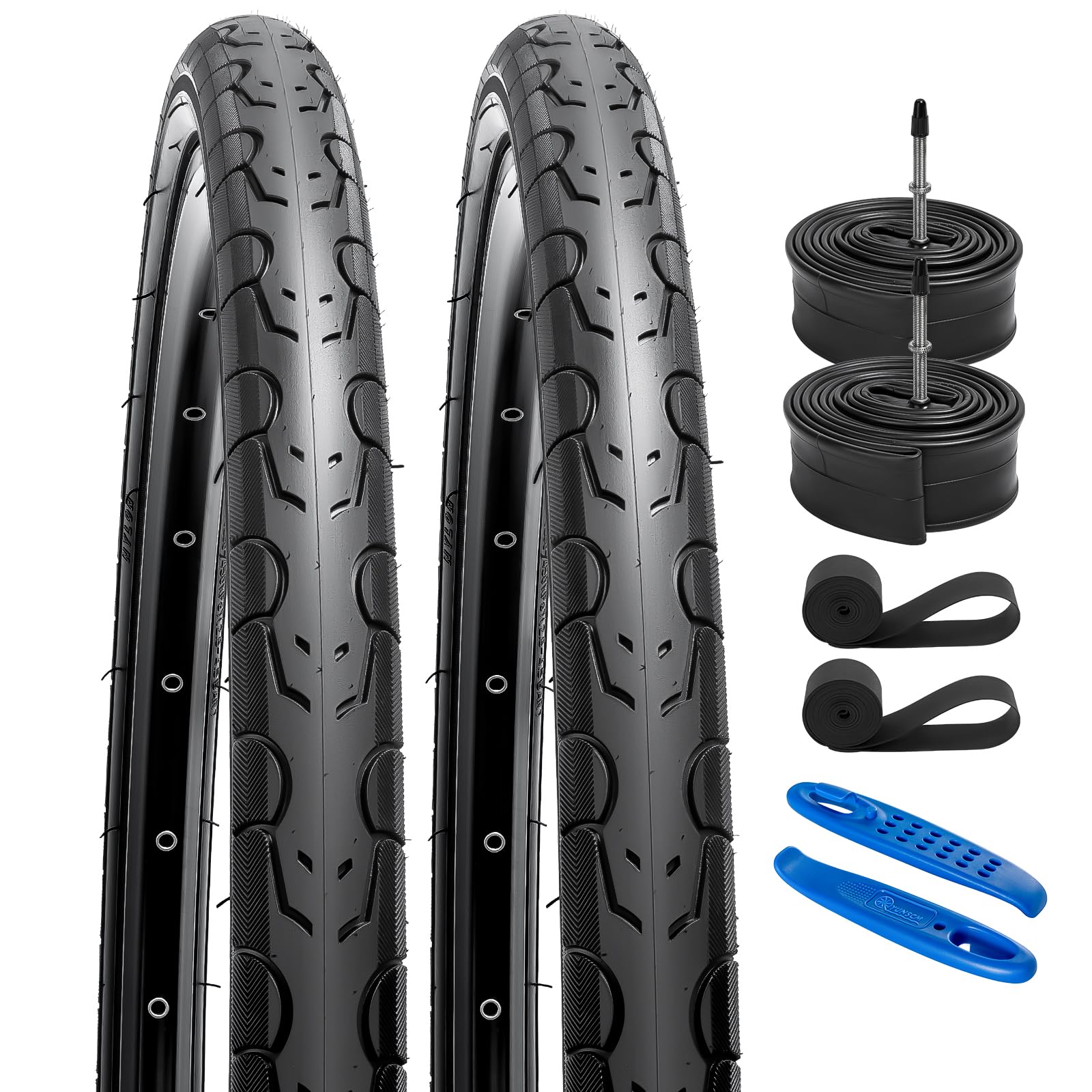
The YUNSCM 2-PCS kit is an all-in-one budget solution that includes two 700x28c tires, two Presta valve tubes, rim strips, and tire levers, making it a practical choice for riders who need a complete wheel refresh without sourcing components individually. Owner feedback highlights the kit’s excellent value for money, with the tires featuring a smooth tread pattern with side stripes that provide decent traction on urban roads and flat surfaces. The 28mm width offers a comfortable ride profile that absorbs road vibration better than narrower tires, making it suitable for commuting, fitness riding, and recreational use on paved surfaces.
Installation is straightforward thanks to the folding bead construction, which is notably easier to mount than traditional wire bead tires of similar price, and the included tools are functional for basic installation needs. Several owners appreciated the complete kit approach, noting that having all necessary components in one package simplified the replacement process. The tires are constructed with nylon cord technology and rubber compound that delivers adequate grip for casual riding, though the maximum pressure rating is 75 PSI rather than the 80-100 PSI listed in some specifications, which may affect performance for heavier riders or those accustomed to higher pressures.
Some owners have reported that the tires are best suited for regular road riding and may not hold up well under extreme conditions such as off-road use, overloading, or racing. The included tubes have non-removable Presta valve cores, which limits the ability to add sealant or use certain pump heads. For budget-conscious riders who need a complete tire and tube setup for a city bike, hybrid, or entry-level road bike, the YUNSCM kit provides a practical turnkey solution that delivers acceptable performance for its price point.
What works
- Complete kit with tubes, rim strips, and levers
- Folding bead for easy installation
- Good value for budget-conscious riders
What doesn’t
- Max pressure lower than advertised specification
- Tubes have non-removable valve cores
11. Michelin Protek

The Michelin Protek is a purpose-built commuting tire that prioritizes puncture resistance and visibility over weight savings or rolling speed, featuring a 1mm thick anti-puncture layer utilizing Michelin’s Protek technology and a reflective sidewall for enhanced nighttime visibility. Owner feedback from long-term users is exceptionally positive regarding durability, with one rider documenting 5,000 miles of use with excellent tread remaining and another reporting 8 years of service from a previous set of Michelin City Protek tires without a single flat. The 22 TPI casing is robust and built to withstand urban hazards like glass, potholes, and curb strikes, making it a favorite among daily commuters and e-bike riders who demand reliability above all else.
Installation is straightforward on standard 700c rims, and the wire bead construction provides a secure fit that stays seated during hard cornering and braking. The reflective sidewall is a practical safety feature that significantly improves visibility to motorists at night, and several owners have noted that the tire runs true with minimal balancing issues. The 28mm width provides a comfortable ride that absorbs road imperfections effectively, and the road tread pattern delivers good traction in both dry and wet conditions, with the Protek technology effectively preventing flats from all but the most severe punctures. Classic touring bike owners have also reported that these tires install easily and perform well on older 700c rims.
The main trade-off for this level of protection is weight and rolling resistance — the Protek is noticeably heavier and slower than performance-oriented tires, which may be frustrating for riders who prioritize speed. Some owners have noted that the 28mm tire measures 4mm wider and higher profile than standard 28-622 tires, which could cause clearance issues on frames with tight fork or chainstay gaps. For the commuter or touring rider who values flat prevention and safety above all else, the Michelin Protek is a proven, long-lasting choice that has earned a loyal following through years of reliable service.
What works
- Exceptional puncture resistance and long tread life
- Reflective sidewall enhances nighttime visibility
- Proven durability for commuting and touring use
What doesn’t
- Heavy and slower rolling than performance tires
- Runs wider and taller than standard sizing suggests
Hardware & Specs Guide
Casing TPI and Ride Smoothness
Threads Per Inch (TPI) directly influences how a tire absorbs road vibration and transfers power. Higher TPI casings (120-330) use finer threads that flex more easily, providing a suppler ride that conforms to pavement irregularities for better grip and lower rolling resistance. Lower TPI casings (22-60) use thicker threads that prioritize puncture resistance and durability at the cost of ride comfort and speed. Training tires typically use 60-120 TPI, while race-oriented tires push toward 200+ TPI. The casing TPI also affects how the tire handles at different pressures — higher TPI tires can run lower pressures for comfort without sacrificing rolling efficiency, while low TPI tires require higher pressures to avoid excessive deformation.
Tubeless vs. Clincher Construction
Tubeless tires eliminate the inner tube, reducing rotational weight and allowing lower pressures without pinch flats. They seal punctures up to a certain size with sealant, offering a significant reliability advantage on debris-strewn roads. Clincher tires require an inner tube and are generally easier to install and repair on the roadside, but they are heavier and more prone to pinch flats at low pressures. Tubeless conversion requires compatible rims, rim tape, and valves, adding initial setup complexity. For riders who prioritize speed and flat prevention, tubeless is the superior system; for those who value simplicity and universal compatibility, clinchers remain a practical choice.
Rubber Compound and Grip Characteristics
The tread compound determines how the tire interacts with the road surface across different temperatures and moisture levels. Softer compounds like graphene-infused or silica-based blends deform more readily to conform to road texture, generating higher grip and lower rolling resistance at the cost of faster tread wear. Harder compounds extend mileage at the expense of traction and comfort. Dual-compound designs use a harder center for rolling efficiency and softer shoulders for cornering grip, offering a compromise that works well for general-purpose use. Understanding the compound technology — such as Vittoria’s Graphene+ or Continental’s BlackChili — helps predict how a tire will perform in your specific conditions.
Puncture Protection Technologies
Puncture protection layers are placed between the tread rubber and the casing to resist penetration from glass, thorns, and sharp debris. Common materials include nylon, Kevlar, and proprietary blends such as Schwalbe’s V-Guard, Continental’s PolyX Breaker, or Pirelli’s TechBELT. Thicker protection improves flat resistance but adds weight and reduces suppleness, increasing rolling resistance. The best approach depends on your riding environment: urban commuters benefit from robust protection, while riders on smooth pavement can opt for lighter casings with minimal puncture layers. Some tires use a full belt of protection across the tread, while others place it only under the center where punctures are most common.
FAQ
What is the ideal tire width for road cycling?
How often should road bike tires be replaced?
Is tubeless worth the extra cost for road riding?
What does TPI mean in a bike tire specification?
Can I use road bike tires on a gravel or touring bike?
Final Thoughts: The Verdict
For most buyers, the best bike tires for road winner is the Pirelli Cinturato Velo because it delivers the most balanced combination of puncture protection, all-weather grip, and tubeless convenience for the widest range of riding styles. If you want maximum speed and a race-oriented ride feel, grab the Schwalbe Pro One TLE. And for the best value in a dependable training tire that punches above its price point, nothing beats the Vittoria Zaffiro Pro G2.0.

Certification: BSc in Mechanical Engineering
Education: Mechanical engineer
Lives In: 539 W Commerce St, Dallas, TX 75208, USA
Md Amir is an auto mechanic student and writer with over half a decade of experience in the automotive field. He has worked with top automotive brands such as Lexus, Quantum, and also owns two automotive blogs autocarneed.com and taxiwiz.com.