A flat tire miles from home tests every cyclist’s patience. The difference between a ruined afternoon and a minor inconvenience comes down to the quality of the repair kit stashed under your seat or in your pack — and most kits sold today cut corners on the patches or skimp on the tools that actually do the work when you are trailside with a hissing tube.
I’m Amir — the founder and writer behind Four Wheel Ask. I have spent years studying owner reports, comparing adhesive bond data, and stress-testing patch compounds across dozens of repair kits to understand which designs actually hold air under real riding conditions.
No cyclist wants a flat to end a ride, which is why finding the best bicycle tube repair kit means you get back on the trail without losing momentum.
How To Choose The Best Bicycle Tube Repair Kit
A repair kit is only as good as its weakest component. Before you buy, understand the three factors that separate a kit that saves your ride from one that leaves you stranded.
Patch Type: Self-Adhesive vs. Vulcanizing
Self-adhesive patches use a pre-applied pressure-sensitive adhesive that bonds on contact — no glue, no drying time. They are fast and convenient for trailside emergencies but are considered temporary and may peel after repeated inflation cycles. Vulcanizing patches use separate rubber cement that chemically bonds with the tube; they require a few minutes of drying time but create a permanent seal that outlasts the tube itself. For daily commuters, self-adhesive works. For long-distance or loaded touring, vulcanizing is the correct choice.
Kit Completeness: Tools That Actually Help
A true all-in-one kit includes tire levers (plastic or metal), a rasp or sandpaper for surface preparation, and a multi-tool with the hex sizes your bike uses. Many budget kits throw in a folding tool with loose-fit sockets that frustrate rather than help. Look for levers that match your rim contour without scratching, and a rasp that actually roughs the tube surface rather than polishing it. The difference between a five-minute repair and a fifteen-minute struggle is the quality of these supporting tools.
Portability and Storage
Kits stuffed into a saddlebag or jersey pocket need to survive vibration, heat cycles, and moisture. A rigid plastic case protects patches from creasing and glue tubes from bursting. Soft pouches save space but risk crushing patches or puncturing glue tubes. Consider the volume of the kit relative to your carry setup — a box the size of a deck of cards fits anywhere; a full tool roll with 16 pieces may require a bag upgrade.
Quick Comparison
On smaller screens, swipe sideways to see the full table.
| Model | Category | Best For | Key Spec | Amazon |
|---|---|---|---|---|
| Park Tool Patch Kit | Self-Adhesive | Emergency trail repairs | 12 patches, 3M adhesive, 2 packs | Amazon |
| PAX 48 Pcs Repair Kit | Vulcanizing | Permanent tube repairs | 48 patches, 20 ml cement | Amazon |
| DAWAY Bike Repair Kit | Multi-Tool | All-in-one roadside fix | 16 tools, 8 glueless patches | Amazon |
| Smelish 80pcs Kit | Value Pack | High-volume patch supply | 66 patches, 2 levers, valve tool | Amazon |
| Zhengmy 60 Pieces Kit | Multi-Size | Large puncture coverage | 3 sizes, stitcher roller tool | Amazon |
In‑Depth Reviews
1. Park Tool Patch Kit, 2 x Packs

Park Tool is the benchmark brand in the cycling service industry, and their patch kit carries the same engineering philosophy that shop mechanics trust. Each waterproof box contains six self-adhesive patches developed in collaboration with 3M, resulting in a flexible bond that moves with the tube rather than cracking under pressure. The two-pack format delivers twelve total patches, enough for multiple emergencies or to share with a riding partner.
Owner feedback consistently highlights the convenience of the pre-glued design — no messy cement, no waiting for adhesive to tack. The sandpaper included for surface preparation is coarse enough to create a proper mechanical bond without damaging the tube. Several users note that these patches are temporary by nature; they hold long enough to finish a ride but replacement with a vulcanized patch is recommended for permanent service.
At roughly the weight of a granola bar per pack, the Park Tool kit disappears into a jersey pocket or saddlebag. The rigid plastic case prevents the patches from creasing or the sandpaper from tearing inside a crowded bag. For riders who want a no-fuss emergency solution from a brand that sponsors professional race mechanics, this is the kit that sets the standard.
What works
- Industry-leading 3M adhesive formula creates durable temporary seals
- Compact waterproof cases survive vibration and moisture in a saddlebag
- Two-pack format provides excellent backup supply without buying in bulk
What doesn’t
- Self-adhesive design is intended as a temporary fix, not a permanent repair
- Backing film can be tricky to peel off without touching the adhesive surface
2. PAX 48 Pcs Inner Tube Tire Repair Patches with Cement
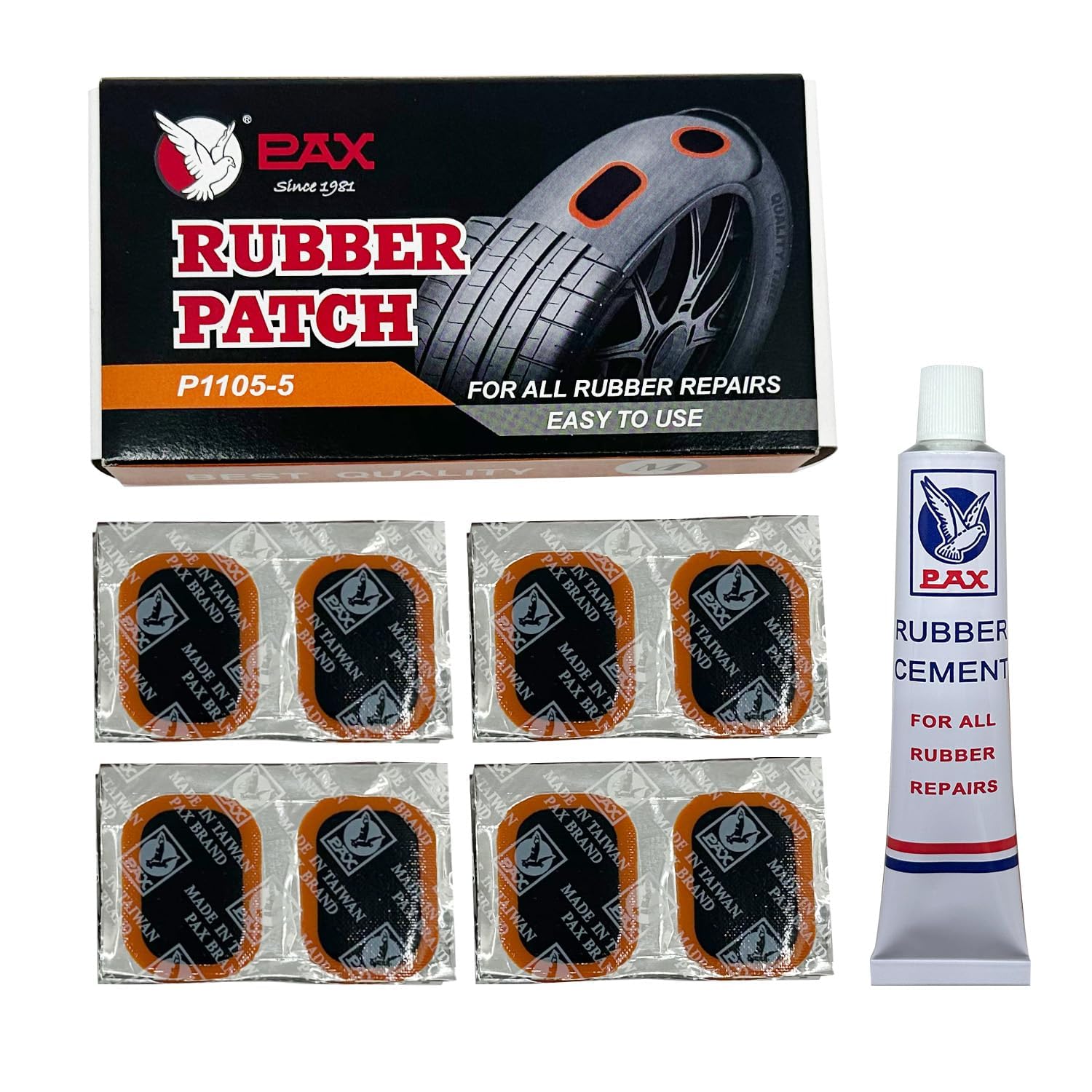
PAX delivers a vulcanizing patch kit built around 48 oval patches made from 100 percent natural rubber, each measuring 24 by 35 millimeters. The included 20-milliliter tube of rubber cement creates a chemical bond that fuses the patch into the tube wall, producing a repair that outlasts the surrounding rubber when applied correctly. This is the same principle used in commercial tire repair shops, adapted for home and trail use.
Users report excellent adhesion results across a variety of tube types, including road bike, mountain bike, and even motorcycle inner tubes. The cold-patch vulcanizing process requires the user to buff the tube surface, apply a thin layer of cement, wait for it to become tacky, then press the patch firmly. This extra step yields a permanent seal that self-adhesive patches cannot match. Some owners note that the kit does not include tire levers or sandpaper, so those must be purchased separately.
The compact box measures roughly the size of a smartphone and slides easily into a pack or frame bag. Forty-eight patches represent years of repair capacity for most cyclists, making this kit a buy-once solution for riders who maintain multiple bikes or group ride kits. For anyone who values a permanent repair over a quick trailside bandage, the PAX kit offers the best adhesive performance in this lineup.
What works
- Natural rubber patches with vulcanizing cement create permanent, long-term seals
- High patch count delivers excellent per-unit value for multi-bike households
- Compact packaging fits easily into any bag or pack without bulk
What doesn’t
- No tire levers, sandpaper, or rasp included — requires separate purchase
- Vulcanizing process demands patience for glue to dry before applying patch
3. DAWAY Bike Repair Tool Kits with 16-in-1 Multitool
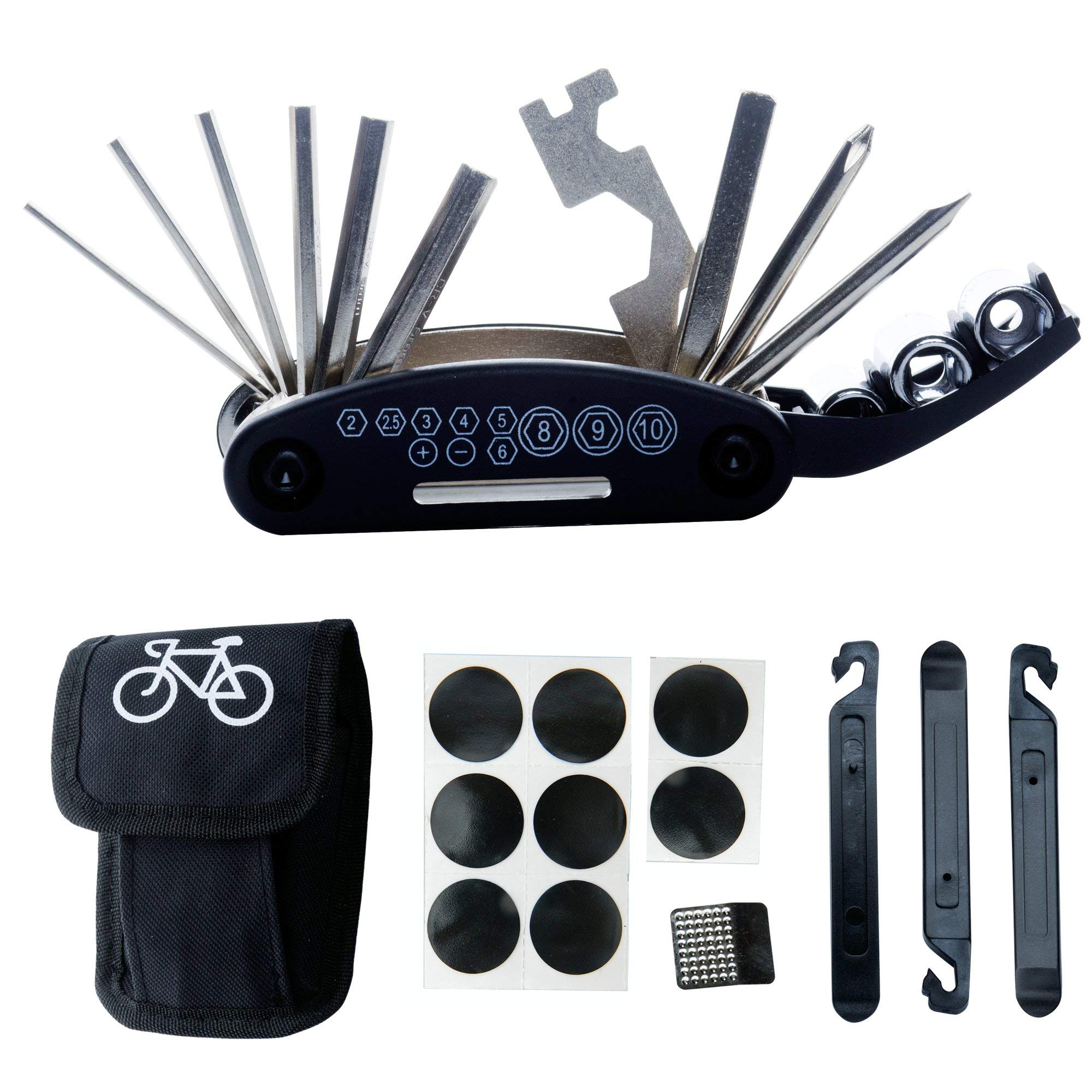
DAWAY bundles a 16-in-1 multitool, three plastic tire levers, eight glueless patches, a metal rasp, and a nylon storage pouch into a single kit weighing just over half a pound. The multitool includes six hex wrenches, three socket spanners, three flat wrenches, two screwdrivers, and a spoke wrench — coverage for nearly every fastener found on a modern bicycle. For the rider who wants one package that handles both trailside patching and mechanical adjustments, this is the most complete solution here.
Customer reports indicate the carbon steel multitool exceeds expectations for its price tier, with several users noting it removed stubborn bolts without bending the tool body. The glueless patches are straightforward: roughen the tube, peel, stick, and wait 15 to 20 minutes for the bond to set. The socket spanners have been noted to fit somewhat loosely on the drive peg, occasionally falling off during use, which requires a bit of patience when working on tight hardware.
The included black tool bag organizes everything in one place, eliminating the need to rummage through a pack for separate tools. At 10 ounces, it adds minimal weight while delivering the utility of a full shop multi-tool and a patch kit combined. This is the ideal choice for new bike owners who want a single purchase that covers basic maintenance and emergency repairs without chasing multiple products.
What works
- Comprehensive 16-tool set covers hex, socket, flat, screwdriver, and spoke tasks
- Glueless patches eliminate the need to carry messy cement on rides
- Included storage bag keeps everything organized and ready to grab
What doesn’t
- Socket spanners fit loosely on the square peg and may fall off during use
- Glueless patches are best treated as temporary repairs, not permanent fixes
4. Smelish 80pcs Bike Tire Repair Kit with Storage Box
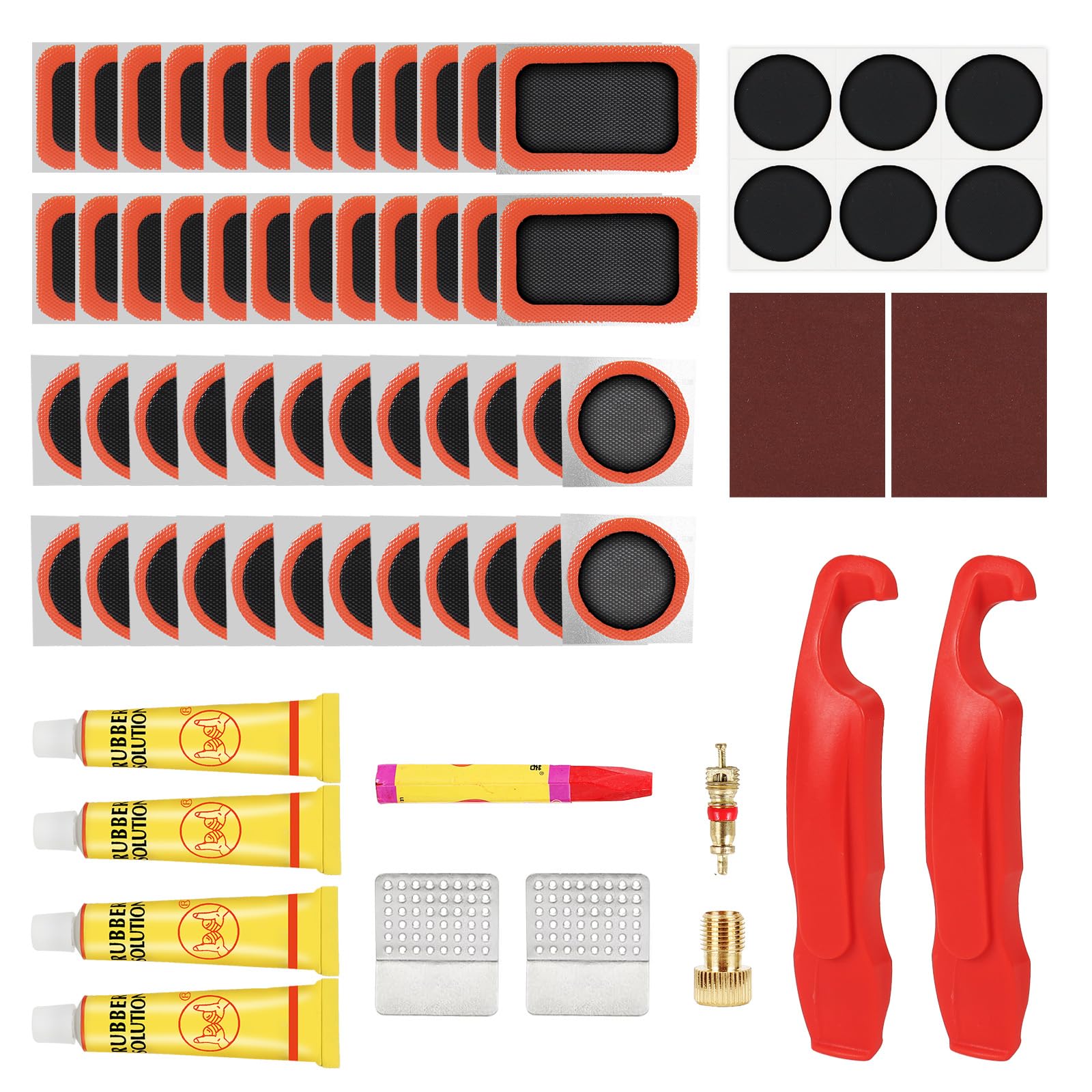
Smelish packs 66 patches — 24 square, 36 round, and six pre-applied self-adhesive — along with two tire levers, two valve cores, four tubes of glue, two tire files, two sandpapers, and a French-to-American valve converter into a rigid black case. This is a volume play for riders who repair flats frequently or maintain a fleet of bikes for family members. The inclusion of both glue-on and self-adhesive patches gives the user flexibility depending on whether they are at home with time for a proper cure or trailside needing speed.
Buyer feedback emphasizes the military-grade plastic tire levers, which fit the rim contour tightly and resist breaking during stubborn tire bead removal. The valve converter extends compatibility to Presta stems, a thoughtful addition for road cyclists. Some users note that the self-adhesive patches benefit from the recommended 15-to-20-minute wait after application to achieve maximum bond strength, which aligns with the manufacturer’s instructions.
At just under half a pound, the kit is light enough for a pack but the rigid case adds some bulk compared to a soft pouch. The four glue tubes provide ample cement for dozens of permanent repairs, making this a strong option for the home workshop as well as the trail. For riders who want options — quick self-adhesive on the go and vulcanizing glue at home — this kit delivers both in one organized box.
What works
- Combines both self-adhesive and glue-on patches for flexible repair options
- Military-grade tire levers resist bending and grip rim contours securely
- Includes valve converter and extra valve cores for comprehensive roadside utility
What doesn’t
- Self-adhesive patches require 15-20 minute hold time for optimum bond
- Rigid storage box is more bulky than soft pouch alternatives
5. Zhengmy 60 Pieces Tire Patches Kit with Stitcher Tool

Zhengmy offers 60 natural rubber patches in three graduated sizes — 32, 42, and 58 millimeters — along with a professional-grade stitcher roller tool. The three-size approach is rare at this price tier and allows the user to match the patch to the puncture rather than forcing an oversized patch onto a small hole or a tiny patch onto a large gash. The stitcher tool uses bearing-like gear teeth to roll out trapped air and ensure full adhesion across the entire patch surface.
Reports from owners confirm the kit works on applications far beyond bicycle tubes, including tractor tires, motorcycle inner tubes, and inflatable rubber products. The thickened rubber layer lies flat after rolling, reducing the risk of a bump at the repair site that could cause a slow leak. Users note that the kit does not include a carrying case or glue, so those must be supplied separately — the stitcher tool itself requires some practice to use effectively without pinching the tube.
The 58-millimeter patches are especially useful for sidewall punctures or larger damage that standard patch kits cannot cover. For the rider who maintains multiple types of vehicles or wants the capability to handle serious cuts rather than just pinprick holes, this kit provides the broadest size coverage in this review. The stitcher tool elevates the repair quality from a simple patch-apply to a properly rolled professional-grade fix.
What works
- Three patch sizes cover everything from small pinpricks to large sidewall cuts
- Stitcher roller tool removes trapped air for stronger, longer-lasting adhesion
- Natural rubber compound conforms well to tube contours for reliable sealing
What doesn’t
- No glue or cement included — requires separate purchase before first use
- No carrying case or storage pouch for organized transport in a bag
Hardware & Specs Guide
Patch Material & Adhesion Chemistry
The bond between patch and tube is the single most important performance metric in any repair kit. Self-adhesive patches use a pre-applied pressure-sensitive acrylic adhesive that forms a peel-resistant seal immediately upon contact — no cure time, no extra glue. These are ideal for trailside speed but the bond degrades over repeated inflation cycles and temperature swings. Vulcanizing patches rely on a separate rubber cement containing heptane or toluene that dissolves the surface layer of the tube, creating a molecular cross-link with the patch. This chemical weld requires a dry time of roughly three to five minutes before pressing, and the resulting bond is permanent — the rubber will tear before the adhesive joint fails. Natural rubber patches offer better flexibility and thermal cycling performance than synthetic alternatives, which is why premium kits like PAX specify 100 percent natural rubber. Patch thickness also matters: thicker rubber layers resist re-puncture better but require more aggressive rolling to eliminate trapped air.
Tool Quality & Ergonomics
Tire levers are the most commonly used tool in any kit, and their design directly impacts repair speed. Quality levers use glass-reinforced nylon or composite plastic that resists bending under the high leverage required to unseat a tight bead, especially on tubeless-ready rims. The lever tip should be thin enough to slide between bead and rim without pinching the tube, and the back end should curve to hook the spoke for the final bead lift. Multi-tools vary wildly in hex key fit tolerance — budget tools often use stamped steel with loose tolerances that round bolt heads. Look for tools with chamfered hex ends and a solid locking mechanism if the kit includes a folding design. The metal rasp or sandpaper included should be aggressive enough to visibly texture the tube surface; a too-fine grit polishes rather than abrades, preventing the adhesive from mechanically keying into the rubber. The stitcher roller, found in the Zhengmy kit, uses geared teeth to concentrate pressure and force air bubbles out of the patch interface — a detail that separates hobby-grade tools from professional-grade repair equipment.
FAQ
How do I use a bicycle tube repair kit correctly?
Are self-adhesive patches as reliable as glue-on patches?
How long does a properly applied tube patch last?
Final Thoughts: The Verdict
For most buyers, the best bicycle tube repair kit winner is the Park Tool Patch Kit because it combines the industry’s best adhesive engineering with a compact, pack-friendly format and the brand confidence that comes from decades of professional shop use. If you want permanent, shop-grade repairs that last the life of the tube, grab the PAX 48 Pcs Vulcanizing Kit. And for the rider who needs one bag that covers tools, patches, and adjustments without compromise, nothing beats the all-in-one utility of the DAWAY 16-in-1 Kit.

Certification: BSc in Mechanical Engineering
Education: Mechanical engineer
Lives In: 539 W Commerce St, Dallas, TX 75208, USA
Md Amir is an auto mechanic student and writer with over half a decade of experience in the automotive field. He has worked with top automotive brands such as Lexus, Quantum, and also owns two automotive blogs autocarneed.com and taxiwiz.com.