A misaligned vehicle doesn’t just wear tires unevenly—it compromises handling, steering response, and suspension component life. For serious DIYers and shop owners alike, proper alignment equipment is the difference between a guess and a precise fix. The market is crowded with everything from simple bubble gauges to fully automated laser systems, and choosing wrong wastes both cash and calibration time.
I’m Amir — the founder and writer behind Four Wheel Ask. I’ve analyzed hundreds of alignment tools across pricing tiers, comparing measurement accuracy, build materials, clamping mechanisms, and user-reported consistency to find the gear that delivers repeatable results without needless complexity.
After wading through specs and user feedback, these picks represent the strongest contenders for the best automotive wheel alignment equipment available now for home garages and professional shops.
How To Choose The Best Automotive Wheel Alignment Equipment
Choosing alignment gear starts with understanding your real workload. A weekend DIYer correcting camber on a single car needs a fundamentally different toolkit than a shop mounting and balancing twenty tires a day. The key differentiators are measurement resolution, clamping versatility, and whether you need a full tire changer or just an alignment system.
Measurement Accuracy and Repeatability
The most critical spec is the documented measurement accuracy. Entry-level bubble gauges might be within 0.5 degrees on a good day, while digital inclinometers and dedicated alignment systems claim 0.1-degree precision. But accuracy alone isn’t enough — repeatability matters even more. A tool that reads the same value after re-mounting it on the wheel is far more useful than one that hits 0.1 degrees once but drifts on the second measurement. Look for systems that lock securely to the wheel rim and use a stable reference surface.
Clamping Range and Versatility
Alignment equipment and tire changers must physically fit the wheels you service. For alignment tools, check the wheel diameter range and whether the system accommodates both steel and alloy rims without scratching. For tire changers, the clamping range is the single most important fitment spec — internal and external clamping capacities determine whether you can handle low-profile performance tires or oversized truck rubber. A machine that clamps 14-inch to 26-inch rims covers far more vehicle classes than a unit limited to 20-inch max.
Integrated Combo vs. Standalone Systems
A tire changer with an integrated wheel balancer (combo unit) saves floor space and workflow time in a busy shop, but it also means a single point of failure — if the balancer electronics go down, the whole station is offline. Standalone alignment kits like dedicated camber/caster/gauges plus separate turn plates offer more portability and redundancy. For a home garage, a standalone alignment tool paired with a manual tire changer is often the smarter spend. For a professional shop, a combo unit with a bead blaster and a 2.0 HP motor justifies the higher upfront cost through throughput gains.
Build Quality and Materials
Alignment tools take physical abuse — dropped wrenches, weight of the vehicle, repeated mounting cycles. Steel construction is mandatory for turn plates and heavy-duty changers. Look for powder-coated finishes that resist rust, stainless steel mounting heads on changers (these prevent rust contamination on wheel surfaces), and aluminum components where weight savings matter for portable kits. Motors should have pure copper windings, not aluminum, for thermal efficiency and longevity. The difference between a machine lasting three years and ten years is almost entirely in the bearings, motor windings, and clamping mechanism materials.
Quick Comparison
On smaller screens, swipe sideways to see the full table.
| Model | Category | Best For | Key Spec | Amazon |
|---|---|---|---|---|
| XK 988-690 Combo | Combo Changer & Balancer | High-volume professional shops | 2.0 HP motor, bead blaster, 0.1g balancing accuracy | Amazon |
| KATOOL KT810 | Tire Changer | Heavy-duty farm & fleet tire service | 2.0 HP motor, bead blaster, 13–26.5 inch clamp | Amazon |
| KATOOL MET500 | Tire Changer | Entry-level shop or serious home garage | 1.5 HP motor, 12–24 inch clamping, stainless head | Amazon |
| QuickTrick 4th Gen Slider | Portable Alignment Kit | DIY alignment without a level floor | 0.1-degree accuracy, no level surface required | Amazon |
| Tenhulzen 3300 All-in-One | Manual Alignment Tool | Budget DIY camber/caster/toe measurement | 0.1-degree camber accuracy, no turn plates needed | Amazon |
| QuickTrick Roll-On Turnplates | Turn Plates | Adding turn plates to any alignment system | 1500 lb per plate, magnetic degree decals | Amazon |
| RebarTech Pneumatic Tire Lifter | Ergonomic Lift | Reducing back strain in tire service | 75 kg capacity, 145 PSI working pressure | Amazon |
In‑Depth Reviews
1. XK New Model 988 Tire Changer with 690 Balancer Combo
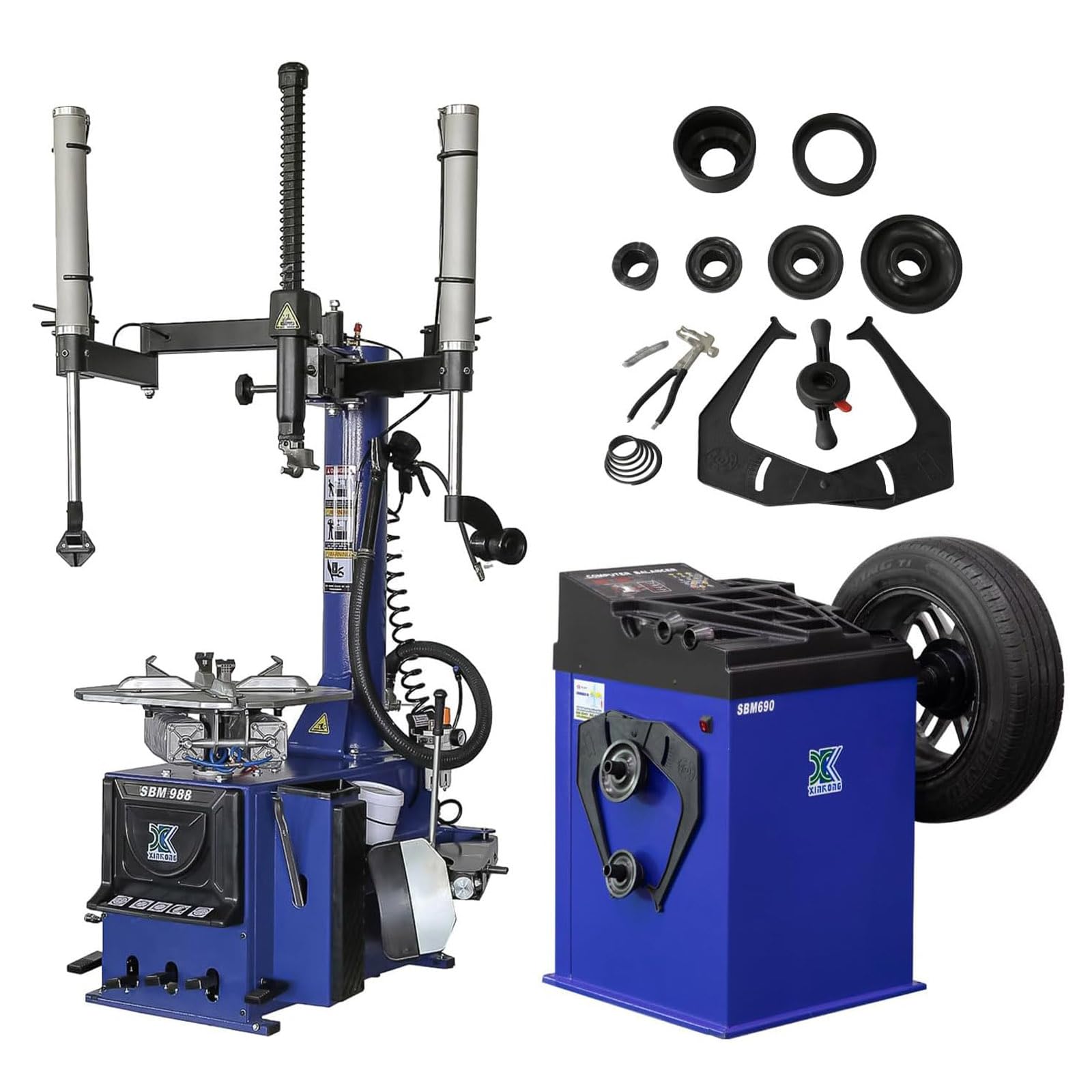
The XK 988-690 combo is the heaviest hitter in this lineup, pairing a 2.0 HP tire changer with an integrated 690 wheel balancer. The changer delivers a 2500 kgf bead breaker force and includes an air bead blaster to assist seating stubborn tires — a feature the KATOOL MET500 lacks. The 690 balancer offers 0.1-gram balancing accuracy with dynamic, static, and multiple aluminum rim modes, plus a motorcycle mode for specialty work.
Clamping range covers 12 to 24 inches internally and externally, with a max wheel width of 12.5 inches and a 41-inch tire diameter capacity. The entire unit weighs 840 pounds shipped, so shop floor prep and a method for unloading are non-negotiable. Users report excellent results on low-profile and reverse-lip chrome wheels that manual changers destroy, though a few note the included instructions are poor and require online videos to complete setup.
Customer feedback is polarized: most owners praise the machine as a game-changer for home shops that previously struggled with tire irons, while one reviewer strongly advises buying American-made equipment instead after frustrations. The 36-month parts replacement policy offers some peace of mind for a machine at this investment level. For a busy shop changing mixed tire sizes daily, this combo delivers speed and accuracy that separate it from lesser changers.
What works
- Bead blaster and 2.0 HP motor clear even tough truck tires
- Integrated balancer saves floor space and workflow steps
- Handles low-profile and wide off-road tires without damage
What doesn’t
- Assembly instructions are nearly useless without supplemental video
- Extremely heavy — delivery logistics are challenging
- Some units arrive with minor shipping damage or loose fittings
2. KATOOL 2.0HP Bead Blaster KT810 Tire Changer

The KATOOL KT810 is a dedicated tire changer focused on heavy-duty service for larger wheels, with a bead blaster that rapidly seats beads on oversized truck and tractor tires. The 2.0 HP motor with pure copper windings drives strong spindle torque, and the clamping system handles rims from 13 to 24 inches externally and 14 to 26.5 inches internally — the widest internal range among the changers here.
It includes a non-marring spade cover and a fully enclosed protective body to shield internals from dust and debris common in farm or construction shop environments. The four aluminum pedals give the operator precise control over clamping, rotation, and bead-breaking functions. Weighing roughly 450 pounds, it is significantly easier to position than the XK combo but still requires a freight truck delivery and a plan for unloading.
User reviews consistently highlight that the machine handles 10-ply and 16-ply trailer tires with ease, though one user reported needing to replace the air slide valve with a ball valve for faster bead inflation. The assembly is straightforward compared to the XK unit, but a few air line fittings can arrive loose, requiring a basic wrench check before first use. For a shop that services large pickup, tractor, and trailer tires without needing an integrated balancer, this machine offers focused capability at a mid-premium investment.
What works
- Wide 26.5-inch internal clamping handles oversize rims easily
- Bead blaster and 2.0 HP motor handle multi-ply tires effectively
- Enclosed body reduces dust contamination in rough shop conditions
What doesn’t
- Air line fittings may arrive slightly loose, requiring post-delivery inspection
- Bead blaster air release is slower than some users prefer
- No wheel balancer included, so a separate unit is needed
3. KATOOL ME 2.0 HP 24″ Tire Changer MET500
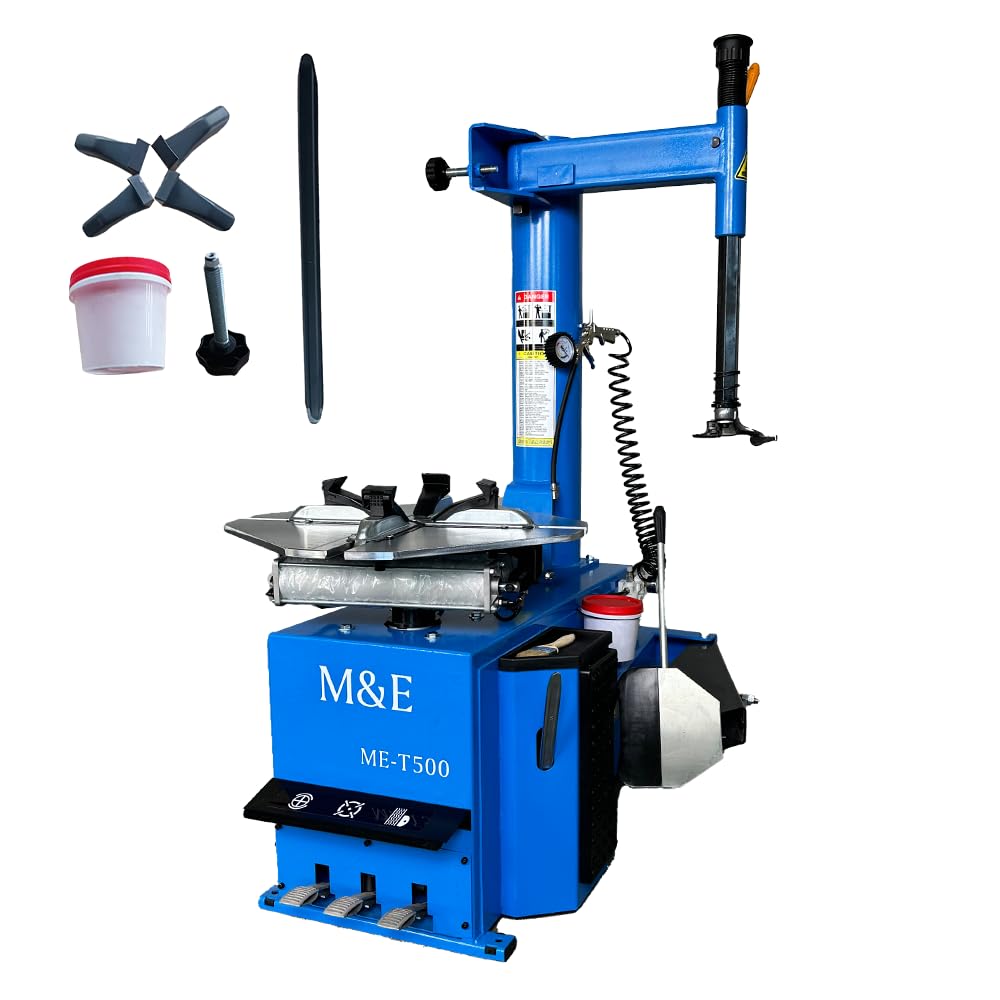
The KATOOL MET500 enters as the most affordable tire changer in this review, designed for the serious home garage or small shop that needs machine-assisted tire changes without the full professional cost. Its 1.5 HP 120V motor runs on standard household current, eliminating the need for a 220V line. The stainless steel mounting head with a plastic rim protector prevents scratches, and the clamping system works with outside (12–22 inch) and inside (14–24 inch) configurations.
Unlike the premium KATOOL KT810 and XK 988, the MET500 does not include a bead blaster — seating beads on stiff sidewall tires will require a separate bead seater or manual effort. The motor’s 1.5 HP rating is sufficient for passenger car and light truck tires, but heavy 10-ply or foam-filled tires push its limits. Users report excellent results on farm implement tires, ATV tires, and standard highway tires, with one owner noting it replaced an older Coats machine that couldn’t handle 18-inch and larger wheels.
Customer feedback is overwhelmingly positive, with multiple users calling it a great addition to farm and ranch operations. The main downsides are the lack of a bead blaster and the weight — about 450 pounds — which still requires a lift gate or loading dock. For the home user stepping up from manual tire irons, this machine offers a genuine leap in capability without the financial commitment of a full commercial rig.
What works
- Runs on standard 120V shop power, no electrical upgrade needed
- Stainless steel mounting head resists rust and protects rims
- Handles ATV, farm, and light truck tires without strain
What doesn’t
- No bead blaster, so stiff sidewalls require extra effort
- 1.5 HP struggles with extremely heavy multi-ply truck tires
- Heavy unit requires careful planning for delivery and placement
4. QuickTrick 4th Gen Slider Wheel Alignment Kit
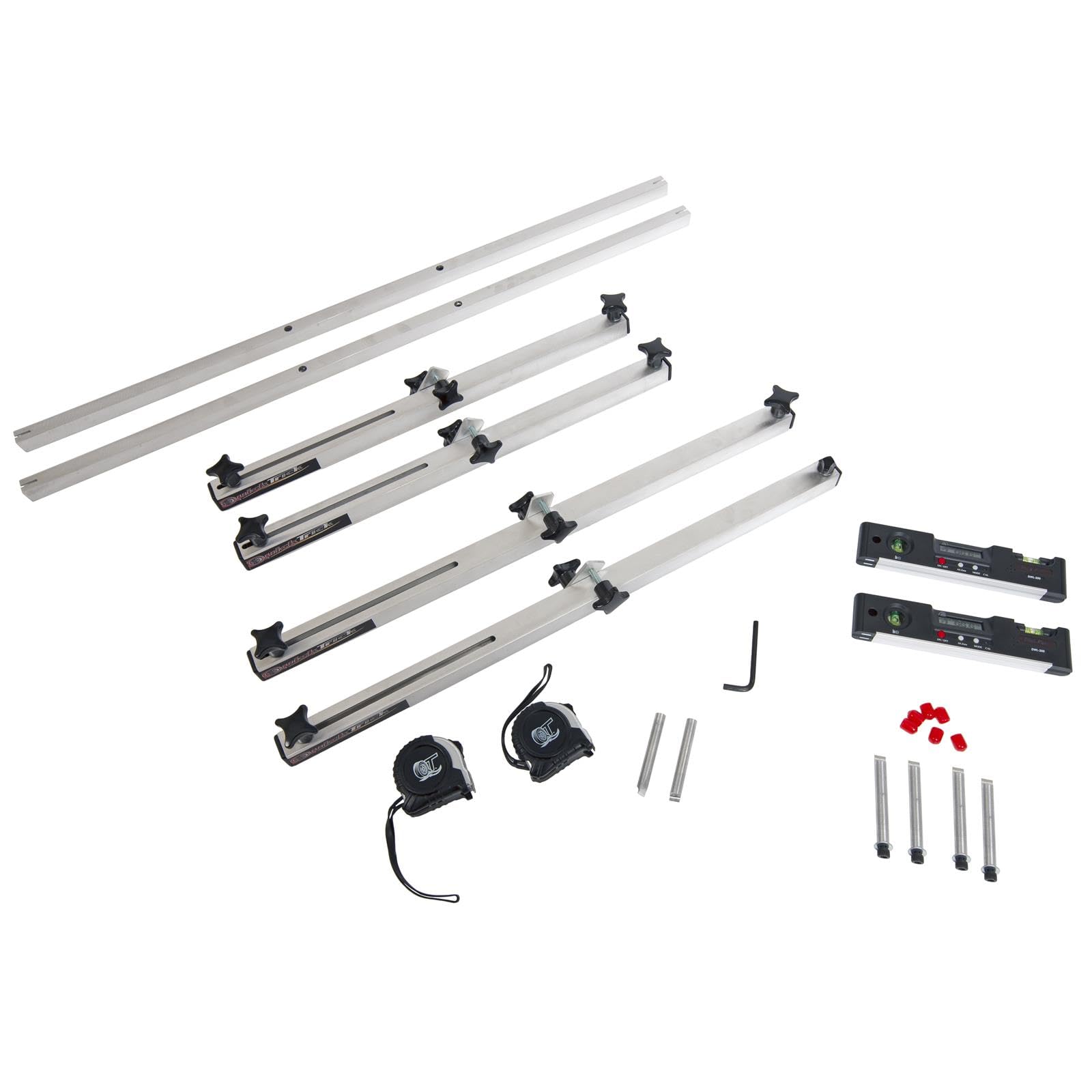
The QuickTrick 4th Gen Slider Kit is a portable alignment system engineered to work without a perfectly level shop floor — a huge practical advantage for home garages with sloped driveways or uneven concrete. The system claims accuracy within 0.1 degrees, matching digital gauges, and is manufactured in the USA. It fits wheels from 13 to 22 inches, covering virtually all passenger cars, light trucks, and SUVs.
Unlike the Tenhulzen manual tool, the QuickTrick uses a sliding reference frame that compensates for floor slope by taking differential measurements between left and right sides. This eliminates the need for expensive turn plates (though adding them, like the QuickTrick Roll-On plates reviewed below, improves caster measurements). The kit includes magnetic brackets that attach to the wheel hub or rim edge, depending on vehicle type. Users note the included instructions are sparse, with important caster sign conventions hidden in fine print, but once the technique is learned, the system delivers dealer-serviceable results.
One reviewer checked measurements against a professional laser alignment machine and found the QuickTrick fell short by a few tenths on some readings, so it may not match a shop-grade rack for absolute precision. However, for DIYers who adjust their own suspension and want repeatable, verifiable numbers, this kit dramatically reduces the need for alignment shop visits. The aluminum construction keeps weight under 10 pounds, making it easy to store between uses.
What works
- Compensates for unlevel floors, works in typical home garages
- Portable and lightweight — easy to store and transport
- US-made build quality with solid aluminum components
What doesn’t
- Instructions are poorly organized, require online research to master
- Not a true substitute for a professional alignment rack under 0.1-degree tolerance
- Castor sign convention (negative vs. positive) is confusing in the manual
5. Tenhulzen 3300 All-in-One Alignment Tool

The Tenhulzen 3300 is a manual all-in-one alignment gauge that measures camber, caster, and toe without requiring expensive turn plates. This is the most budget-friendly alignment tool in the review and a direct alternative to bubble gauges. The patent-pending wheel stand-offs attach to the rim lip and use a digital inclinometer powered by an included 9V battery to measure camber to 0.1 degrees — a meaningful improvement over the 0.5-degree uncertainty of bubble levels.
The tool measures caster through a two-angle method that requires turning the steering wheel lock-to-lock and taking readings at 20 degrees left and right. It does not require physical turn plates because it calculates caster from the camber change across the steering sweep, but this method assumes the suspension geometry is sound and the wheel doesn’t bind. For toe measurement, the kit includes toe plates that reference the wheel rim flange, similar to classic toe bars. Users report that accuracy depends heavily on finding a flat surface: a sloped driveway introduces measurement offset that the QuickTrick system eliminates by design.
Customer reviews are strong, with many owners saying the tool paid for itself after two or three DIY alignments. The main complaint is that the system requires patience and careful setup — it’s not a quick check tool but rather a deliberate measurement process. For the home mechanic who already has a good floor jack and jack stands and wants to avoid shop fees, the Tenhulzen 3300 offers impressive value and precision at its price tier.
What works
- Digital inclinometer delivers 0.1-degree camber accuracy
- No turn plates required, lowering total system cost
- Step-by-step video instructions guide new users effectively
What doesn’t
- Accuracy is directly tied to how flat and level the work surface is
- Setup and measurement process is slower than QuickTrick or a rack
- Castor measurement method requires precise steering lock angles
6. QuickTrick Roll-On Turnplates Set

QuickTrick’s Roll-On Turnplates are heavy-duty steel plates rated for 1500 pounds each, designed to sit under the front wheels during alignment to eliminate tire scrub during caster and SAI measurements. They are a direct upgrade to any manual alignment system, including the Tenhulzen tool and the QuickTrick Slider Kit. The drive-on design means no jacking is needed — the user simply rolls the vehicle onto the plates after positioning them.
The plates include magnetic degree decals that adhere to the outer edge, allowing the technician to read steering angle while turning the wheel. The construction is US-made powder-coated steel, not aluminum, which adds weight but ensures the plates lie flat without bending under vehicle load. The overall thickness is just 0.65 inches, keeping the ride height increase minimal so suspension geometry isn’t artificially altered.
User feedback is divided: many buyers report excellent results improving alignment accuracy, but one reviewer received a unit with a counter-sunk bolt that was ground too short, causing the assembly to separate in transit. The product seems well-made when properly assembled, but quality control on the fastener mating can be inconsistent. For anyone serious about getting accurate caster readings at home, these turn plates are a logical addition that transforms a static alignment tool into a dynamic measurement setup.
What works
- 1500 lb per plate capacity handles trucks and SUVs
- Drive-on design eliminates the need to jack the vehicle
- Magnetic decals make steering angle reading intuitive
What doesn’t
- Occasional QC issues with fastener assembly out of the box
- Steel construction adds weight for portability compared to aluminum alternatives
- Some users report the degree decals are not precisely calibrated
7. RebarTech Pneumatic Tire Lifter

The RebarTech Pneumatic Tire Lifter is a shop accessory, not a direct alignment or changing tool, but it deserves attention because it drastically reduces physical strain when loading heavy tire assemblies onto a balancer or tire changer. It operates on shop air at 8-10 bar (about 145 PSI) and lifts up to 75 kg (165 pounds), covering everything from passenger car wheels to large light truck tires. The minimum ground clearance is 110 mm, allowing it to slide under most tires without the need for a dedicated pit.
The unit dimensions are 800×510×870 mm, and it weighs 50 kg (110 pounds) by itself. It includes the lifter, accessories, and a user manual. Users who handle heavy tires daily — such as those servicing trucks or large equipment — report significant back strain reduction, with one commenter saying they “should have bought one years ago.” The pneumatic design uses no electricity, making it safe for wet shop environments and eliminating electrical failure points.
However, reports of shipping damage are notable: one unit arrived with broken cone holders, a damaged air regulator bracket, and a punctured air line, even though the packaging appeared intact. Another buyer experienced broken plastic parts in transit but received responsive support for replacements. The inconsistency in packaging and the presence of plastic components on a pneumatically stressed tool are legitimate concerns. For shop owners with a reliable compressor and a tolerance for occasional QC issues, this lifter provides genuine ergonomic benefit at a modest investment.
What works
- Pneumatic operation eliminates electrical hazards in wet garages
- 165-pound capacity covers almost all light truck and passenger tires
- Compact footprint fits next to most balancers without floor modification
What doesn’t
- Shipping damage is common — fragile plastic parts break in transit
- Minimum height of 110 mm means very low-profile tires may need a spacer
- Pneumatic hoses and regulators feel cheaper than the steel frame suggests
Hardware & Specs Guide
Measurement Accuracy and Digital Inclinometers
The core spec separating amateur-grade alignment tools from professional equipment is measurement accuracy. Digital inclinometers—like the one built into the Tenhulzen 3300—use a MEMS accelerometer to measure angle relative to gravity. High-quality units achieve 0.1-degree resolution, while cheap bubble gauges drift up to 0.5 degrees. For camber adjustments, 0.1-degree resolution is mandatory because a 0.2-degree error shifts tire shoulder wear patterns noticeably over 10,000 miles. Systems like the QuickTrick Slider use differential measurement to cancel out floor slope, achieving similar accuracy without requiring a calibrated flat surface.
Tire Changer Motor Power and Clamping Systems
Professional tire changers are defined by their motor horsepower and clamping range. The KATOOL MET500 uses a 1.5 HP motor running on standard 120V, suitable for passenger and light truck tires up to 24 inches. The KATOOL KT810 and XK 988 both step up to 2.0 HP motors with bead blasters, handling heavy multi-ply truck tires more consistently. Clamping systems come in two types: external clamps (grab the outer rim lip) and internal clamps (expand inside the rim barrel). Internal clamping is generally preferred for low-profile tires because it doesn’t stress the outer lip bead area. The XK 988’s 2500 kgf bead breaker force is the highest in this review, essential for rusted or run-flat tires that resist the initial break.
FAQ
Can I perform a full four-wheel alignment with a DIY kit like the Tenhulzen 3300 or QuickTrick Slider?
Do I really need turn plates for DIY alignment, or can I just turn the steering wheel on the ground?
Final Thoughts: The Verdict
For most buyers, the best automotive wheel alignment equipment winner is the XK 988-690 Combo because it integrates a 2.0 HP tire changer and a precision balancer into one floor-standing machine, making it a true shop-in-one solution for high-volume work. If your priority is portable DIY alignment without requiring a flat floor, grab the QuickTrick 4th Gen Slider Kit. And for the budget-focused home mechanic who wants to measure camber and toe without investing in a full machine, nothing beats the Tenhulzen 3300 All-in-One Tool for sheer value per measurement dollar.

Certification: BSc in Mechanical Engineering
Education: Mechanical engineer
Lives In: 539 W Commerce St, Dallas, TX 75208, USA
Md Amir is an auto mechanic student and writer with over half a decade of experience in the automotive field. He has worked with top automotive brands such as Lexus, Quantum, and also owns two automotive blogs autocarneed.com and taxiwiz.com.