An engine that runs too hot or too cold shortens component life, wastes fuel, and triggers driveability issues that are hard to diagnose. The temperature sensor is the single data point the ECU relies on for fuel trim, timing, and cooling fan control. Choose the wrong one, and you chase false codes for months.
I’m Amir — the founder and writer behind Four Wheel Ask. My research focuses on analyzing sensor response accuracy, build materials, and long-term reliability data from owner communities across multiple vehicle platforms.
Whether you drive a daily commuter or a high-performance build, selecting the right best automotive temperature sensor ensures your engine operates within its optimal thermal range.
How To Choose The Best Automotive Temperature Sensor
Selecting the right temperature sensor goes beyond matching the thread size. Response curve, housing material, and electrical interface all determine whether the ECU receives accurate data at every operating condition. A mismatch can cause cold-start flooding, persistent lean codes, or fan cycling issues that mask deeper problems.
Material & Environmental Resistance
Stainless steel and aluminum housings resist corrosion from electrolysis and coolant breakdown far better than plastic or potted designs. Sensors exposed to direct immersion in coolant benefit from sealed terminals and plated contacts that prevent oxidation over multiple heat cycles. Ceramic elements offer faster thermal response but require careful handling during installation.
Output Type & ECU Compatibility
Digital sensors communicate a direct temperature reading via PWM or LIN bus protocols, while resistive sensors vary voltage as resistance changes with temperature. Older ECUs expect a specific resistance curve — installing a sensor with a mismatched curve throws fuel trims off across the entire range. Always verify that the sensor’s output type matches the factory calibration for your engine management system.
Quick Comparison
On smaller screens, swipe sideways to see the full table.
| Model | Category | Best For | Key Spec | Amazon |
|---|---|---|---|---|
| ACDelco Gold 213-4663 | Intake Manifold | LS swaps & daily drivers | Digital, aluminum housing | Amazon |
| GM Genuine Parts 213-4333 | Coolant Temp | OE-grade coolant replacement | Ceramic/polymer, 1ms response | Amazon |
| Auto Meter 2385 | Gauge Sender | Custom gauge installations | 12V, includes adapter fittings | Amazon |
| ACDelco Gold G1852 | Coolant Temp | Wide temp range monitoring | Aluminum, 100–220°F range | Amazon |
| Beck/Arnley 158-0629 | Coolant Temp | Budget-friendly replacements | Stainless steel, digital output | Amazon |
In‑Depth Reviews
1. ACDelco Gold 213-4663 Intake Manifold Temperature Sensor

The ACDelco Gold 213-4663 earns the top spot because it delivers verified OE-level accuracy at a fraction of dealer pricing. Constructed with an aluminum body and digital output, this sensor resists vibration fatigue and thermal cycling better than budget plastic alternatives. Owner reports from LS swap builds confirm that fuel trims snap into spec immediately after installation.
Fitment is straightforward for any intake manifold that accepts a flange-mounted sensor. The digital signal provides clean data to the ECU without the signal noise that older resistive sensors can introduce. Across verified reviews, users consistently report correct metric readings and noticeable improvement in part-throttle response after swapping out worn factory units.
For daily drivers and weekend builds alike, this sensor offers the best balance of build quality, compatibility, and long-term reliability. The aluminum construction and sealed terminals mean it stands up to underhood moisture and heat without the corrosion issues that plague lesser units.
What works
- Match-fit for LS and GM intake platforms without adapter hacks
- Digital output eliminates signal drift over time
- Backed by ACDelco’s manufacturing quality standards
What doesn’t
- Flange mount limits placement options on aftermarket manifolds
- Not designed for direct coolant immersion applications
2. GM Genuine Parts 213-4333 Engine Coolant Temperature Sensor

The GM Genuine Parts 213-4333 is the same component found in dealer parts bins, manufactured to the exact OE specification for fit, form, and function. The ceramic-polymer element offers rapid thermal response — rated at 1 millisecond — which means the ECU receives real-time coolant temperature data during transient load changes. This speed matters for accurate fan control and cold-start enrichment.
Immersion mount design places the sensing tip directly in the coolant stream, providing immediate temperature feedback rather than measuring residual block heat. The housing resists electrolytic corrosion better than older brass or steel designs, extending service life beyond typical aftermarket sensors. GM’s own validation testing ensures the resistance curve matches factory ECUs across the full operating range.
For owners who want absolute peace of mind with a factory-engineered component, this sensor eliminates the guesswork of cross-referencing aftermarket parts. It is the correct choice when retaining OEM calibration accuracy is the priority over cost savings.
What works
- Factory-correct resistance curve for GM engine management systems
- Ultra-fast 1ms response time for accurate transient readings
- Corrosion-resistant housing outlasts budget alternatives
What doesn’t
- Premium pricing compared to aftermarket equivalents
- Limited application fitment outside GM platforms
3. Auto Meter 2385 Autogage Electric Temperature Sender

The Auto Meter 2385 is purpose-built for custom gauge installations where the factory sensor cannot interface with aftermarket instrumentation. It includes two adapter fittings that cover the most common thread sizes found in older engines and custom builds, eliminating the need for additional plumbing adapters. Verified installations range from a 1949 Willys with an 800-horsepower LSA to a 1957 Dodge D100 flathead six.
The sender operates on a standard 12-volt system and is calibrated to the resistance curve used by Auto Meter gauges. This ensures the needle reads accurately without the signal conditioning that generic senders require. Plastic housing keeps weight low and prevents galvanic corrosion when mounted in aluminum intake manifolds or cylinder heads.
For hot-rodders and restomod builders who rely on aftermarket gauge clusters, this sender provides a direct plug-and-play solution. The included adapters save a trip to the hardware store, and the compact profile fits in tight engine bay locations where larger senders won’t clear.
What works
- Comes with two adapter fittings for thread compatibility
- Calibrated for Auto Meter gauge resistance curves
- Compact design fits tight engine bay locations
What doesn’t
- Plastic housing feels less durable than metal alternatives
- Not compatible with factory ECU coolant temp inputs
4. ACDelco Gold G1852 Engine Coolant Temperature Sensor

The ACDelco Gold G1852 covers the widest thermal range of any sensor in this lineup, rated from 100 degrees Fahrenheit to 220 degrees Fahrenheit. This makes it suitable for engines that operate outside the typical street-driving window, including high-performance builds that generate elevated underhood temperatures or vehicles used in extreme cold climates where accurate low-temp readings are critical for cold-start calibration.
The aluminum body provides excellent heat transfer to the sensing element, reducing thermal lag compared to sensors with plastic housings. The 0.840-inch thread diameter is a common size found across multiple GM, Chrysler, and industrial engine families, improving the chance of a direct fit without adapter sleeves. Electrical signal output communicates directly with ECUs that expect a resistive temperature input.
For users who need a sensor that can handle both arctic mornings and track-day heat without losing accuracy, the G1852 delivers the broadest safety margin. ACDelco’s Gold series manufacturing standards mean each unit is tested for resistance accuracy before leaving the factory.
What works
- Wide temperature range covers extreme operating conditions
- Aluminum housing improves thermal response time
- Common thread size fits multiple engine families
What doesn’t
- No included gasket or thread sealant in the package
- Resistive output may require calibration check on some ECUs
5. Beck/Arnley 158-0629 Engine Coolant Temperature Sensor
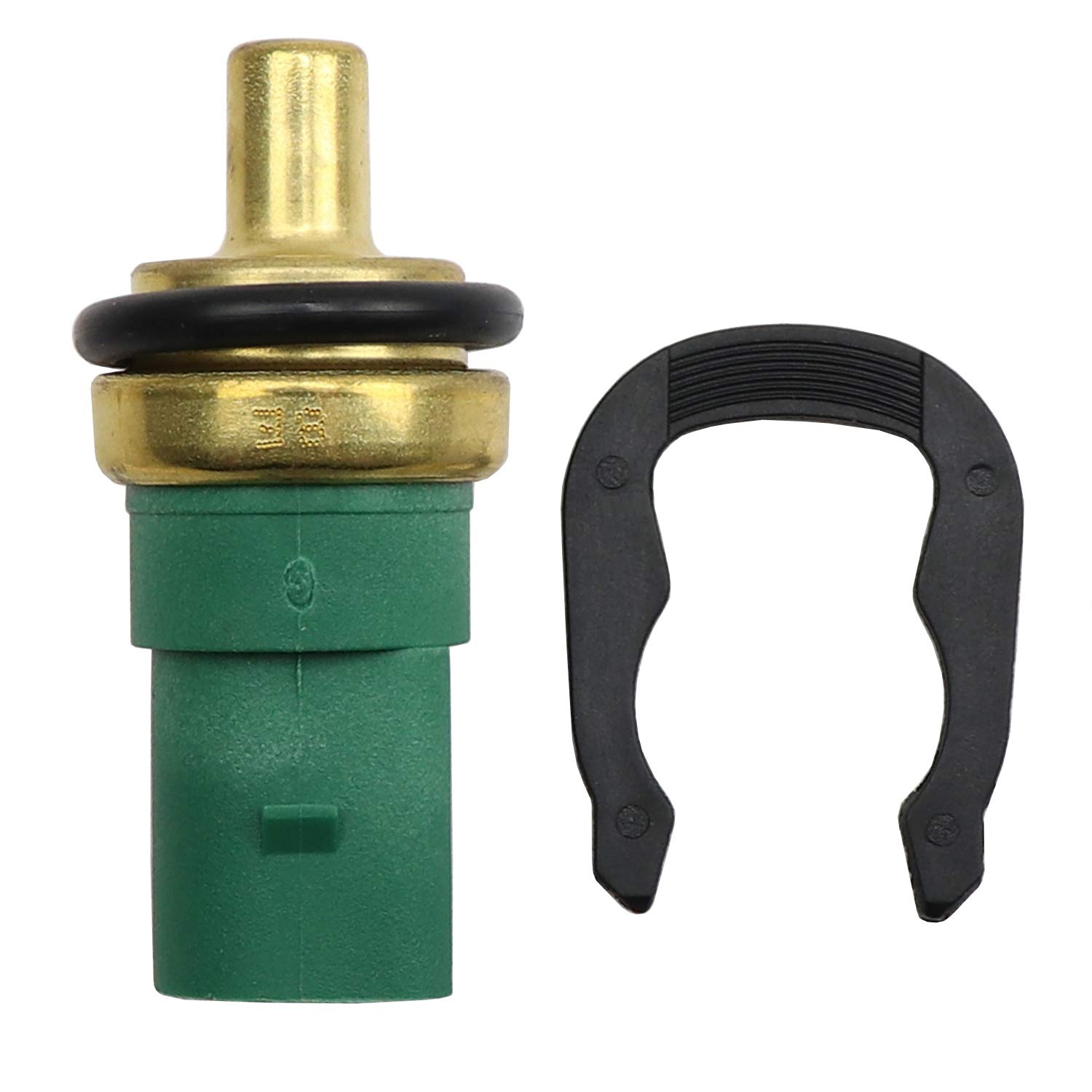
The Beck/Arnley 158-0629 proves that a budget-friendly temperature sensor does not have to sacrifice build quality. The stainless steel housing resists the corrosive effects of modern extended-life coolants better than aluminum or brass, which can develop pitting over multiple drain intervals. Corrosion-resistant terminals and internal coatings protect the electrical connection from moisture ingress that causes intermittent faults.
Digital output provides clean data to the ECU without the voltage drift that occurs as resistive sensors age. The flange mount design simplifies installation on applications that use a bolt-on sensor rather than a threaded unit. At a weight of only 0.02 pounds, it places negligible stress on the mounting boss or wiring harness.
For owners working with a limited budget who still want a sensor that meets OE form, fit, and function requirements, the Beck/Arnley delivers reliable performance without compromise. It is a solid choice for secondary vehicles, project cars, or any situation where cost per mile matters more than brand prestige.
What works
- Stainless steel construction resists coolant corrosion
- Digital output maintains accuracy over sensor lifespan
- Extremely lightweight and compact design
What doesn’t
- Application-specific fitment limits cross-platform use
- Flange mount may require adapter bracket for some installations
Hardware & Specs Guide
Sensor Material & Build Quality
Stainless steel offers the highest corrosion resistance in direct coolant contact, while aluminum provides faster thermal transfer at a lower weight. Ceramic-polymer elements respond fastest to temperature changes but are more brittle during installation. Plastic housings reduce cost and weight but degrade faster under continuous thermal cycling. The terminal plating type determines long-term signal integrity — gold or tin plating resists oxidation better than uncoated brass contacts.
Output Signal & ECU Calibration
Digital sensors (PWM or LIN bus) send a direct temperature reading that the ECU interprets without conversion, eliminating resistance-curve mismatches. Resistive sensors rely on a thermistor that changes resistance with temperature — the ECU reads the voltage drop and calculates temperature. Swapping a sensor with a different resistance curve shifts fuel and timing values across the entire operating range. Always cross-reference the sensor’s resistance table against your ECU’s calibration before purchasing.
Thread Pitch & Mounting Style
Flange-mount sensors bolt directly to the manifold or housing with a gasket seal, common on modern intake manifolds. Immersion sensors thread into the coolant passage using standard pipe threads (1/2 NPT, 3/8 NPT, or M10 x 1.0). Using the wrong thread pitch can strip the mounting boss or fail to seal, causing coolant leaks. Adapter fittings are available for converting between thread standards, but each adapter adds a potential leak path.
Voltage & Operating Range
Most automotive temperature sensors operate on a 5-volt reference signal from the ECU, though some gauge senders use 12-volt systems. The operating temperature range should exceed your engine’s expected extremes — typical coolant sensors cover -40°F to 300°F, while intake air temperature sensors see -40°F to 250°F. Exceeding the sensor’s rated temperature range can cause permanent damage to the thermistor element and produce false readings.
FAQ
What does an automotive temperature sensor actually measure?
How do I know if my temperature sensor is failing?
Can I replace a temperature sensor myself?
Final Thoughts: The Verdict
For most buyers, the best automotive temperature sensor is the ACDelco Gold 213-4663 because it combines proven OE-level accuracy, robust aluminum construction, and verified owner satisfaction across LS swaps and daily drivers alike. If your priority is factory-correct calibration for a GM platform, the GM Genuine Parts 213-4333 offers the fastest response time with a ceramic-polymer element. And for custom gauge builds where aftermarket instrumentation replaces the factory cluster, the Auto Meter 2385 includes the adapters you need to get it wired correctly the first time.

Certification: BSc in Mechanical Engineering
Education: Mechanical engineer
Lives In: 539 W Commerce St, Dallas, TX 75208, USA
Md Amir is an auto mechanic student and writer with over half a decade of experience in the automotive field. He has worked with top automotive brands such as Lexus, Quantum, and also owns two automotive blogs autocarneed.com and taxiwiz.com.