A flawless paint finish transforms a neglected panel into a showpiece, but the gap between hobby-grade rattle cans and professional spray-gun results has always felt impossibly wide. Modern 2K aerosol technology and high-solids urethane formulations have closed that gap, putting durable, chemical-resistant finishes within reach of anyone with a clean workspace and patience for proper prep.
I’m Amir — the founder and writer behind Four Wheel Ask. My recommendations come from analyzing product specifications, studying formulation chemistry, and aggregating thousands of verified owner experiences across multiple paint categories.
After thoroughly evaluating dozens of formulations across multiple price tiers, this guide simplifies your search for the best automotive paint for diy.
How To Choose The Best Automotive Paint For DIY
Selecting the right paint system for a home project depends on understanding the chemistry behind the can, the scope of your job, and the equipment you already own. The wrong choice leads to poor adhesion, premature fading, or an orange-peel texture that no amount of sanding can fix. Focus on these four factors.
1K vs 2K Paint Systems
Single-component (1K) paint dries by solvent evaporation — it remains somewhat soft and vulnerable to fuel, UV, and road chemicals. Two-component (2K) paint contains a separate hardener that chemically crosslinks during curing, producing a much tougher, more durable film. For exterior automotive panels, 2K is the standard unless you are painting low-stress interior parts. Most premium aerosol clear coats and urethane kits in this guide use 2K technology.
Surface Preparation Is Non-Negotiable
Paint adhesion depends entirely on surface condition. Bare metal requires etching and epoxy primer. Existing paint needs thorough sanding with 400–600 grit and a clean, wax-free surface. Every 2K product reviewed here demands proper degreasing and scuffing — skipping these steps guarantees delamination regardless of the paint quality.
Clear Coat Chemistry and UV Protection
The clear coat is the sacrificial layer that shields your base color from UV radiation, stone chips, and environmental fallout. High-quality 2K urethane clears resist yellowing and maintain gloss for years, while budget 1K clears often degrade within months in direct sunlight. Look for formulations that explicitly state UV resistance and chemical resistance.
Spray Equipment and Technique
Aerosol cans with adjustable fan nozzles offer the best control for DIY users who lack a compressor and spray gun. Products that include HVLP-style nozzles or dual-chamber activation systems reduce the learning curve significantly. Regardless of the tool, multiple light coats with proper flash times between them yield far better results than a single heavy coat.
Quick Comparison
On smaller screens, swipe sideways to see the full table.
| Model | Category | Best For | Key Spec | Amazon |
|---|---|---|---|---|
| Restoration Shop 2K Clear Kit | Urethane Kit | Full panels & custom builds | 4:1 mix ratio, 1.25 qt | Amazon |
| Eastwood 2K Clear Aerosol | 2K Aerosol | Spot repairs & small areas | High-gloss, 5.4–8.1 sq ft | Amazon |
| LiME LiNE 2K Clear Spray (2-Pack) | 2K Aerosol | Hobbyist & professional touch-ups | Dual-chamber, HVLP nozzle | Amazon |
| ERA Paints 2K Clear Coat | 2K Aerosol | Budget-friendly glossy finish | Catalyst-activated, 11.8 oz | Amazon |
| SprayMax 2K Epoxy Primer | Epoxy Primer | Metal adhesion & corrosion protection | 2K epoxy, sandable in hours | Amazon |
| LiME LiNE Clear Basecoat | Intercoat Binder | Metallic flake & pearl layering | Transparent, 1 qt liquid | Amazon |
| SprayMax 2K Matte Clear | 2K Aerosol | Matte finish projects | Low gloss, 10–12 sq ft | Amazon |
In‑Depth Reviews
1. Restoration Shop 2K Clear Coat Kit
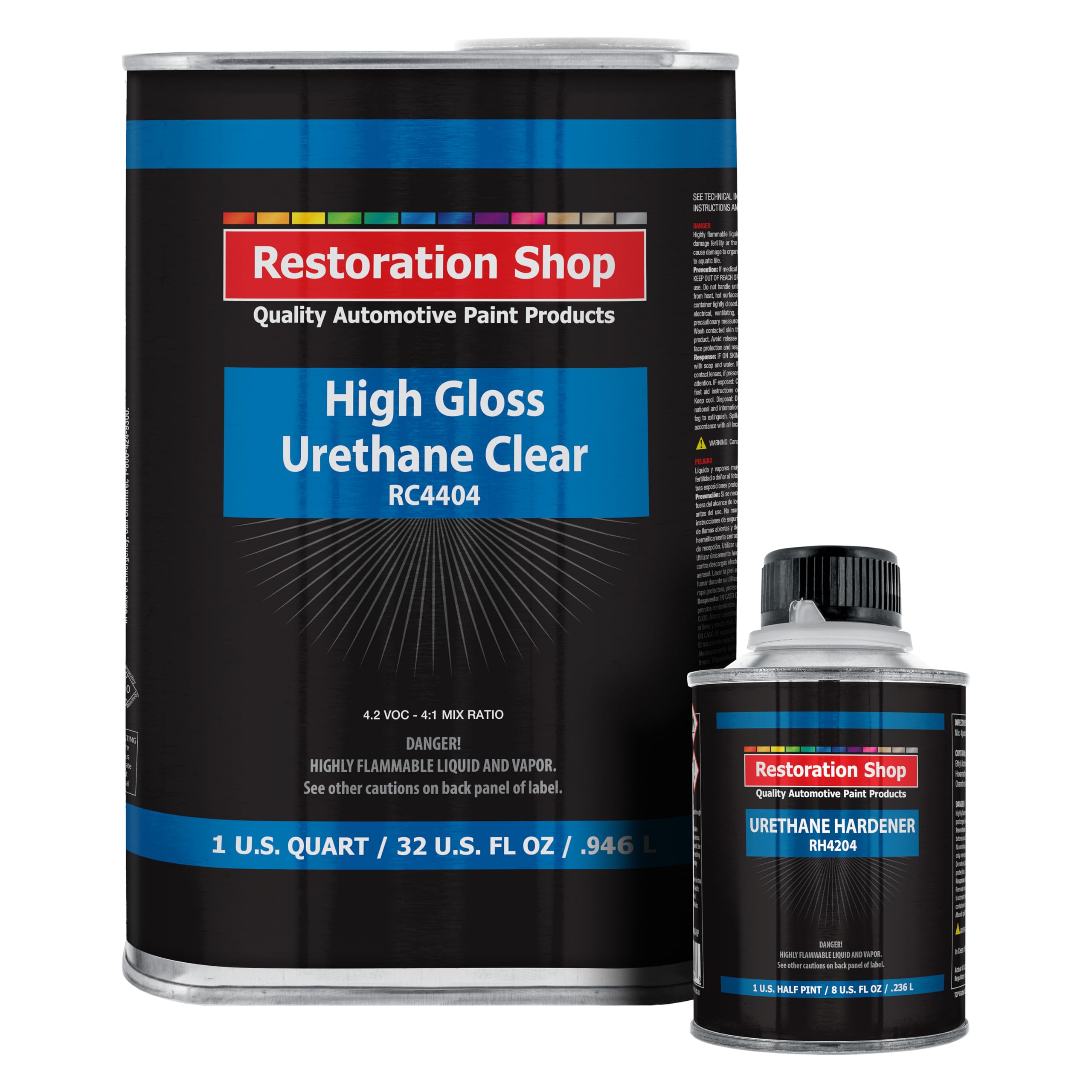
The Restoration Shop kit delivers a full 1.25 quarts of sprayable urethane clear coat using a 4:1 mix ratio with the included hardener — enough volume to cover an entire car panel or a full motorcycle set without running short. The low-viscosity, high-solids resin formulation prioritizes clarity and distinctness of image (DOI), which translates directly to a deeper, wetter-looking gloss that competitive aerosol cans struggle to match at this volume point.
Owner feedback consistently highlights the exceptionally smooth application and crystal-clear finish with no fogging or milky haze, even for first-time urethane users. Several reviewers mention that the dry time is predictable enough to allow multi-coat workflows within a single day, and the 4.2 VOC compliance means it can be sprayed in open-air environments without triggering regulatory issues. The separate hardener and quart format require a basic mixing cup and stir stick, adding a slight step versus a self-contained aerosol, but the trade-off is substantially more paint per purchase.
Finish quality reports note a near-professional gloss straight from the gun, with owners describing results that rival shop-applied clear coats costing multiples more. Durability feedback is early but promising, with initial reports indicating good resistance to chipping and UV yellowing. For anyone tackling a full respray or large-area refinish, this kit offers the best balance of volume, performance, and cost in the current market.
What works
- Excellent gloss depth and DOI for the price
- Generous 1.25-quart volume covers large surfaces
- Predictable flash and cure times streamline workflow
What doesn’t
- Requires external mixing — not a self-contained aerosol
- Long-term durability data still emerging from early adopters
2. Eastwood 2K Aerosol Clear Coat

Eastwood has a strong reputation among restoration enthusiasts, and this 2K aerosol clear coat carries that pedigree into a self-contained can format. The activated 2K chemistry produces a high-gloss finish that reviewers consistently describe as comparable to OEM clear coat, with one owner noting that after a year and a half of Texas sun exposure the finish showed no yellowing or degradation — a problem common with 1K clears in harsh UV environments.
Application reports indicate the spray pattern is even and predictable, producing approximately 1.2 mils per pass with a 50-percent overlap technique. Some orange peel is expected, but multiple owners confirm that a light wet sand with 2000 grit followed by buffing levels it to a mirror finish. The 48-hour pot life after activation provides ample time for multiple coats, and full cure at room temperature happens within 12 hours — fast enough for same-day handling if IR drying is available.
Coverage of 5.4 to 8.1 square feet per can makes it best suited for spot repairs, single panels, or small components rather than full vehicle jobs. A few reviewers noted that Dupli-Color alternatives failed to match the gloss depth they achieved with Eastwood. Proper respirator use is mandatory due to the isocyanate content in activated 2K paint, which every satisfied owner emphasizes in their feedback.
What works
- Excellent UV resistance with no yellowing over long-term use
- Self-leveling spray pattern reduces orange peel
- Short 12-hour cure time at room temperature
What doesn’t
- Coverage limited to small panels or spot repairs
- Requires respirator and proper ventilation during application
3. LiME LiNE 2K High Gloss Clearcoat Spray (2-Pack)
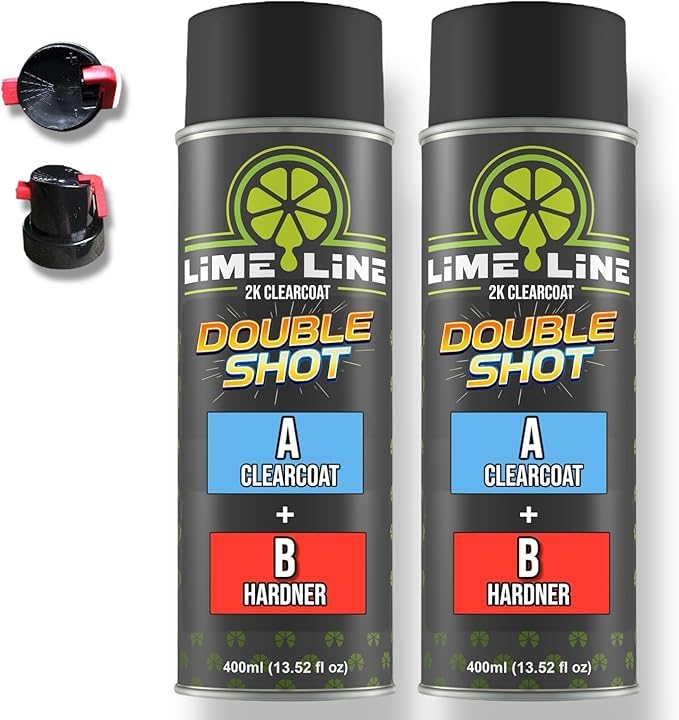
LiME LiNE incorporates dual-chamber technology that keeps the clear resin and activator completely separate until the user pulls a plunger, twists the activation ring, and shakes the can — a design that eliminates the guesswork of mixing ratios and guarantees fresh chemistry every time. The included HVLP-style adjustable nozzle switches between a circular pattern for detailed work and a wide oval for broader coverage, giving the DIY user spray-gun-like control from an aerosol platform.
Owner reports consistently praise the fine, even atomization that produces a deep gloss with minimal orange peel. One professional car painter confirmed the finish quality is durable enough for hockey-impact applications after curing, suggesting toughness beyond typical aerosol clears. Multiple users applied four to seven coats with 15–20 minute flash times and achieved a sandable, buffable surface that polished to a show-quality shine. The 24-hour full cure time is competitive for 2K aerosol systems.
The two-pack format provides enough volume for larger projects like a full hood, a set of bumpers, or a motorcycle fairing. Some reviewers note the price feels elevated compared to single-can alternatives, but they also acknowledge that the results rival spray-gun application. Proper surface prep and ventilation remain critical — every positive review emphasizes that the product performs exceptionally when applied over correctly scuffed and cleaned surfaces.
What works
- Dual-chamber design guarantees fresh 2K activation every time
- Adjustable HVLP nozzle provides spray-gun-like control
- Excellent gloss and durability, even under harsh conditions
What doesn’t
- Premium pricing per can compared to standard 2K aerosols
- Limited availability in some regional markets
4. ERA Paints 2K High Gloss Clear Coat
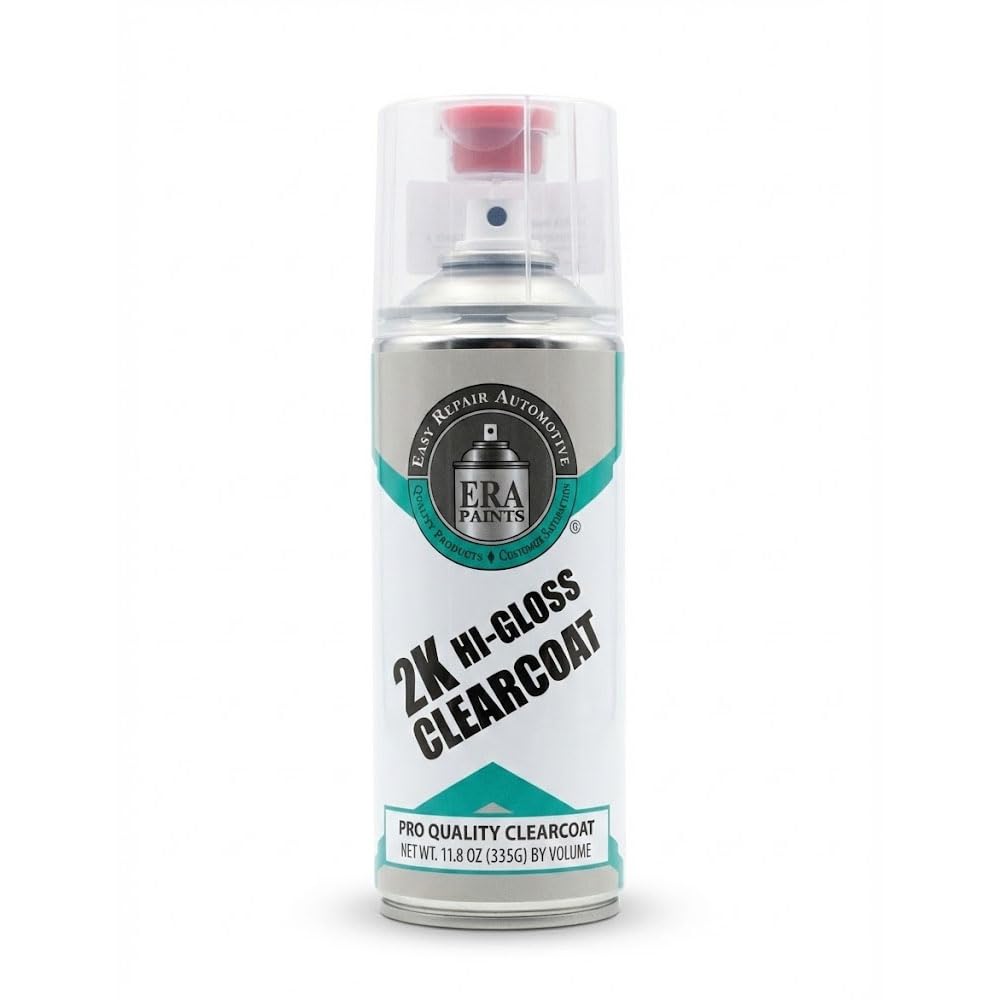
ERA Paints positions this 2K clear coat as a value-driven entry point into catalyzed clear coats, and the owner feedback largely confirms that it delivers professional-level gloss without the professional-level price. The built-in hardener activates when the user depresses the button on the bottom of the can, initiating the 2K chemical crosslinking that produces a durable, UV-resistant finish. The fan nozzle produces a wide, even pattern that minimizes runs even for novice applicators.
Multiple reviewers report that three light coats from a single can provided sufficient coverage for small repairs, with one owner saving an estimated dealership cost by matching an original bumper finish perfectly. The 30-minute flash time between coats and a 24-hour full cure window is standard for 2K aerosols, but owners emphasize that waiting a full 48 hours before polishing is essential for best results. The gloss depth is consistently described as impressive for the price tier, with several users calling it the best high-gloss option for 3D printing and model work as well.
Coverage is rated at approximately 3.5 square feet per can, which makes this product ideal for spot repairs, mirror caps, trim pieces, or small panels rather than full-vehicle applications. A few users noted the seller replaced damaged cans promptly, suggesting good customer support. The clear coat is formulated and packaged in Oregon using domestic resins, which may appeal to buyers prioritizing US-sourced materials.
What works
- Strong gloss depth that rivals more expensive 2K clears
- Wide fan nozzle reduces runs for beginners
- Made in the USA with premium resin formulations
What doesn’t
- Limited coverage per can restricts use to small areas
- Some cans showed nozzle sputtering near the end of content
5. SprayMax 2K Epoxy Primer Black
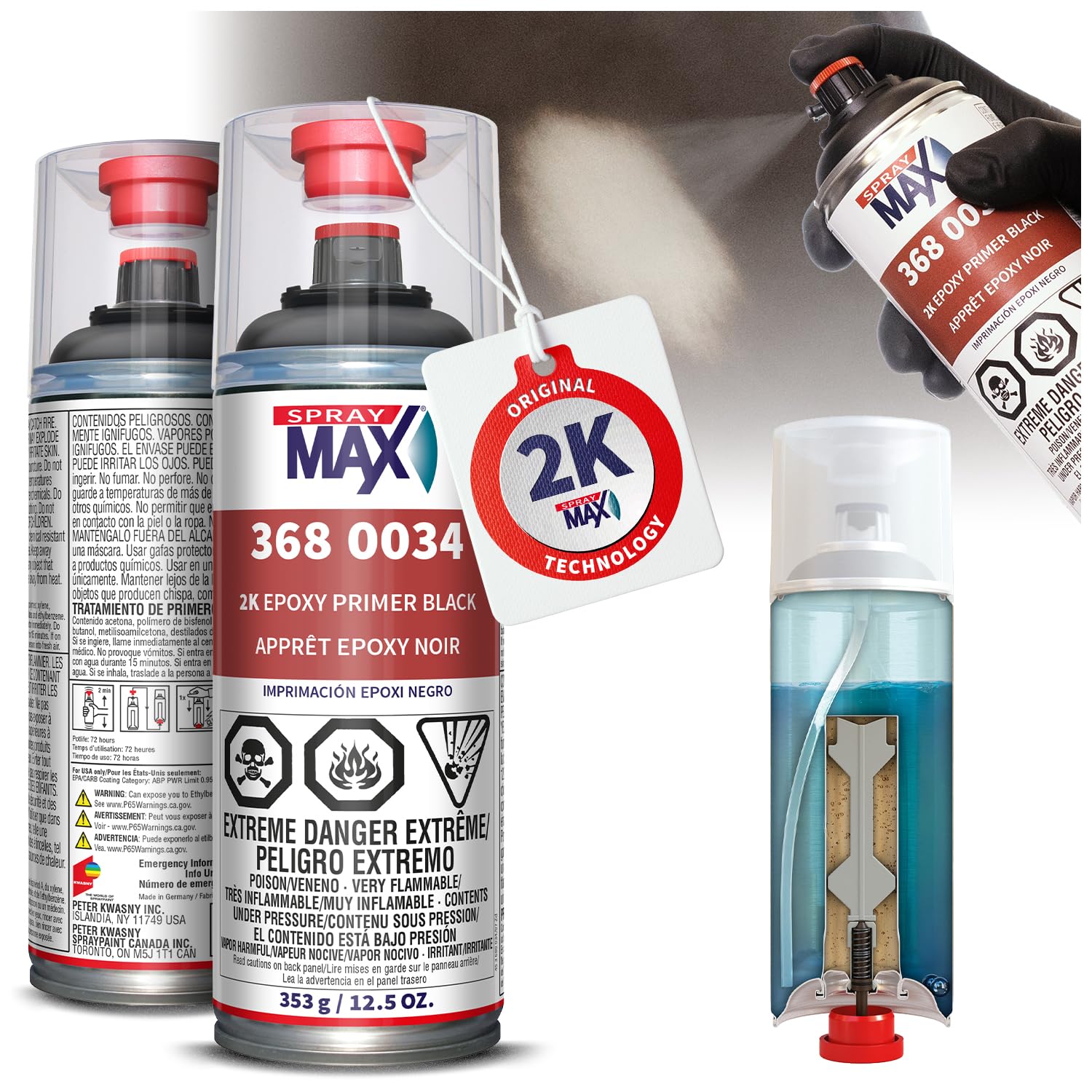
Paint systems are only as strong as their foundation, and the SprayMax 2K Epoxy Primer is engineered specifically to provide that foundation with superior adhesion to steel, aluminum, and galvanized metal surfaces. The 2K epoxy chemistry creates a corrosion-resistant barrier that seals bare metal and provides a uniform surface for filler, primer surfacer, or topcoat. The adjustable fan nozzle allows the user to dial in the spray pattern for the specific geometry of the part being coated.
Owner feedback from automotive restorers highlights the even atomization and strong mechanical adhesion to sanded steel and body filler, with one professional user confirming that the epoxy sands smoothly at 400–600 grit without clogging paper. Flash times per the manufacturer specifications are reliable, and the dust-dry window of 15 minutes enables efficient multi-coat workflows. Multiple reviewers used this primer successfully on motorcycle tanks and fenders, noting that it sealed bare metal effectively and prevented corrosion bleed-through even in high-moisture environments.
Some users observed that the can sputters slightly near the end of its life, but no clogging or drips were reported during normal use. The limited pot life after activation is standard for 2K epoxy — users must plan their application window accordingly. Proper PPE, including a respirator rated for isocyanates, is essential. For anyone starting a restoration project on bare metal, this epoxy primer provides the adhesion and corrosion resistance that cheaper aerosol primers simply cannot match.
What works
- Exceptional adhesion to bare metal and body filler
- Fast dust-dry time enables efficient layering
- Corrosion-resistant formula protects against moisture
What doesn’t
- Limited pot life after activation requires careful planning
- Can sputters slightly when nearing empty
6. LiME LiNE Clear Automotive Basecoat Paint
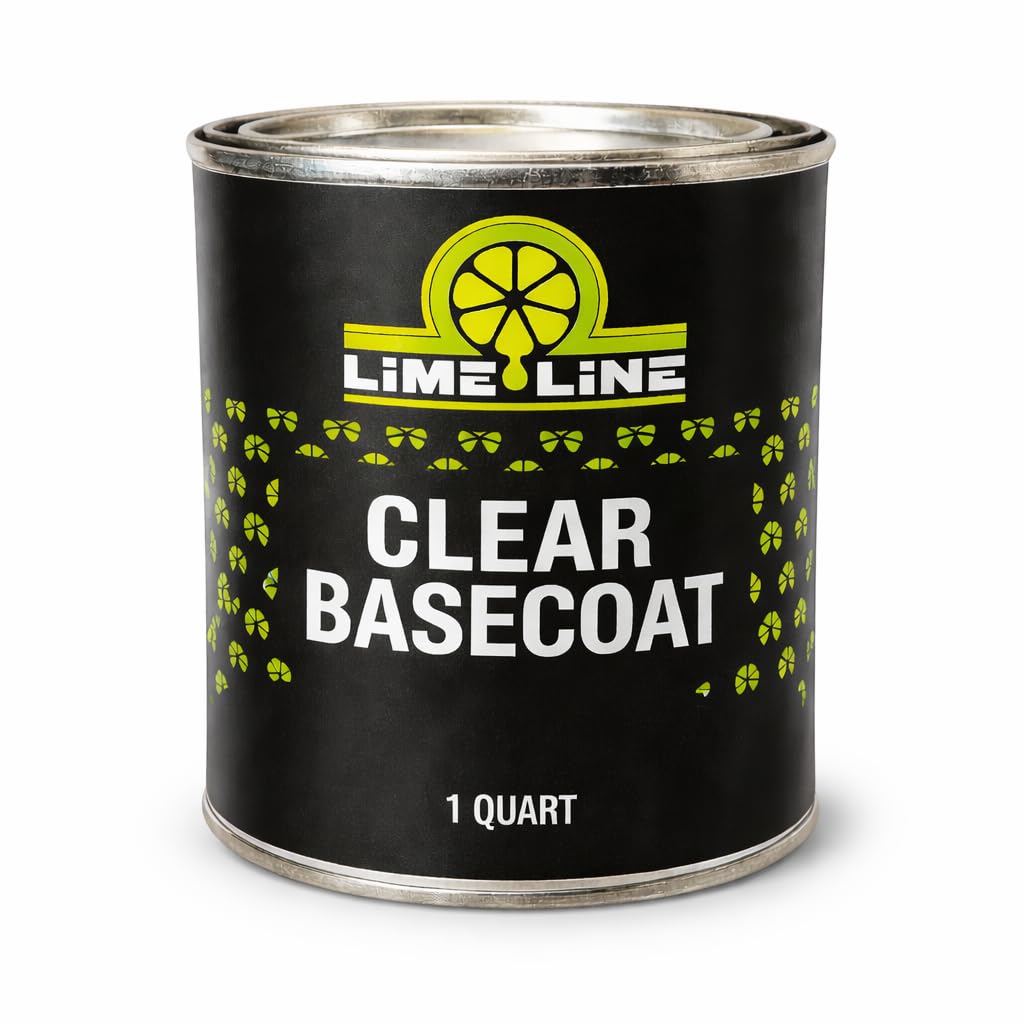
This LiME LiNE product serves a specific but critical role in the custom paint stack — it is an intercoat binder designed to lock in metallic flakes, pearls, and candy pigments before the final clear coat is applied. Unlike standard clear coat, this transparent basecoat acts as a carrier that suspends pigment particles evenly and prevents them from shifting or clumping during subsequent layers. The quart format provides enough volume for multiple custom-mix batches or several panels of flake work.
Owners who work with metal flake and pearl finishes report that this intercoat dries fast and does not promote the runs or sagging that can occur when using regular clear as a binder. One user combined it with LiME LiNE pigment for a custom lime green finish and described the spray behavior as smooth and predictable. The enamel-based formulation is compatible with most multi-stage topcoat systems and can be sprayed through conventional equipment or aerosol reducers if needed.
The transparent finish requires accurate mixing documentation because the lack of color makes it difficult to track coverage by eye alone. Some users noted that the included sticker is a nice touch but wished for more detailed technical guidance on recommended mix ratios for specific flake sizes. This is not a stand-alone clear coat — it is a tool for custom finishers who layer metallic or pearl effects. For that niche application, feedback indicates it performs admirably at a reasonable price point.
What works
- Dries fast without runs or sagging during flake layering
- Compatible with multiple topcoat and pigment systems
- Good value compared to proprietary intercoat binders
What doesn’t
- Not a standalone clear coat — requires final clear application
- Limited application guidance for different flake sizes
7. SprayMax 2K Matte Clear Coat
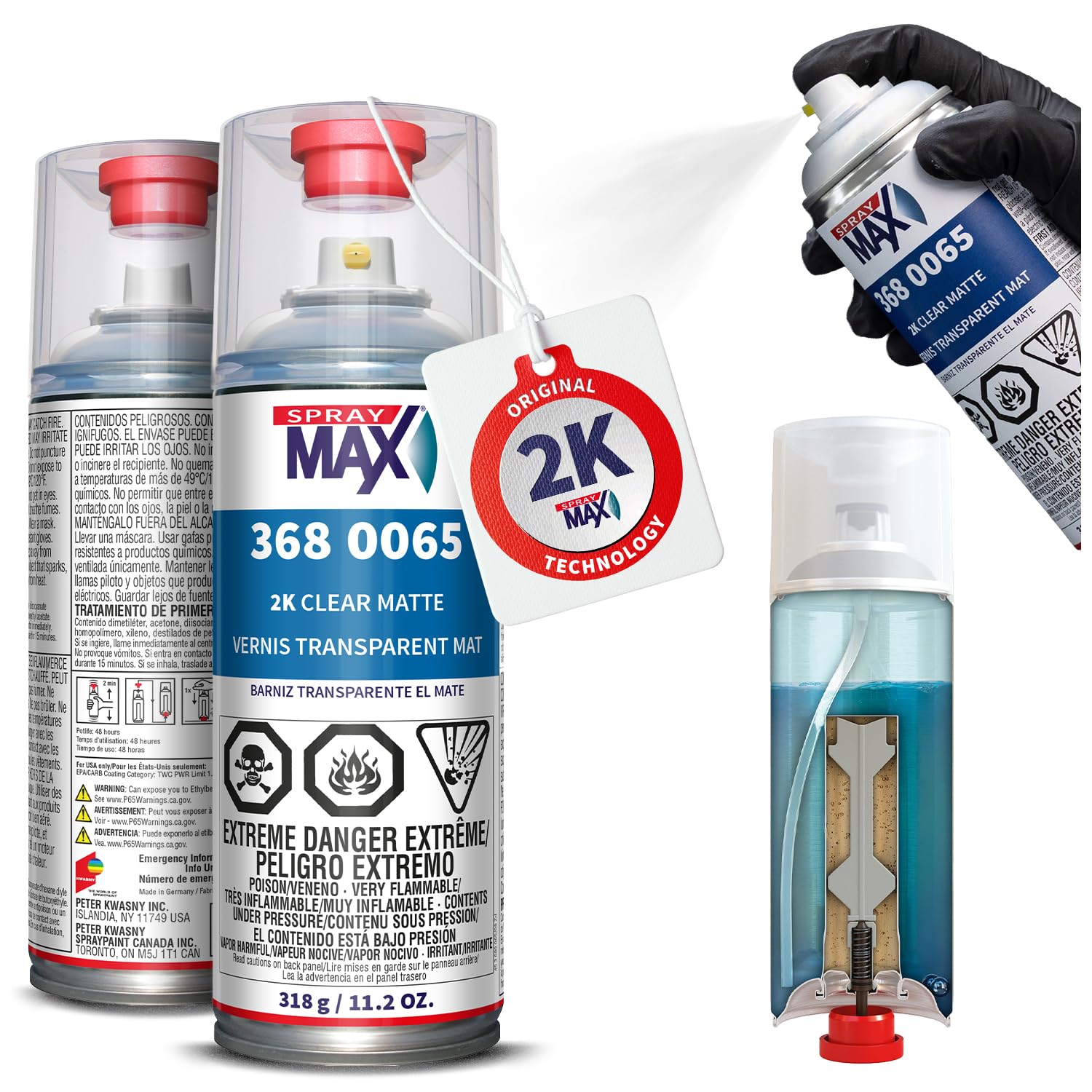
Matte finishes present a unique challenge — any inconsistency in gloss level becomes immediately visible, and most single-component matte clears lack the chemical resistance to hold their appearance over time. SprayMax solves this with a 2K matte clear coat that uses the same catalyzed technology as its gloss counterparts but formulated with flatting agents that produce a consistent, low-gloss sheen. The 2K crosslinking ensures the matte finish remains durable and chemically resistant, unlike 1K matte sprays that can burnish to a shine with contact or solvent exposure.
Owner feedback from hydrographics applicators and custom painters indicates that this clear maintains a true matte appearance even when applied over high-contrast base colors, with no patchy gloss-up or fisheye issues when proper surface prep is followed. One reviewer noted that the pot life extends significantly — over three weeks — when stored in a refrigerator, making it possible to use a single can across multiple projects. The 10–12 square foot coverage per can is generous for an aerosol, and the black-and-white usability across most paint types is a practical advantage.
Some users mention that the can lacks explicit application instructions printed on the label, so first-time users should research recommended spray distances and ambient temperature ranges before starting. Proper ventilation and a respirator are critical, as with all 2K urethane products. For anyone building a custom matte finish — whether on a motorcycle, automotive trim, or interior component — this SprayMax offering provides the durability and consistent sheen that budget matte clears cannot achieve.
What works
- Consistent matte sheen without patchy gloss-up
- Extended pot life when refrigerated
- Durable 2K chemistry resists chemicals and weather
What doesn’t
- No application instructions printed on the can
- Requires careful temperature control for best results
Hardware & Specs Guide
1K vs 2K Paint Systems
Single-component (1K) paint relies solely on solvent evaporation to dry, leaving a film that remains relatively soft and vulnerable to fuel, UV radiation, and road chemicals. Two-component (2K) paint incorporates a separate hardener that initiates a chemical crosslinking reaction during cure, producing a much denser, more durable coating with superior adhesion and chemical resistance. For exterior automotive panels exposed to weather and debris, 2K is the recommended standard. Most products in this guide use 2K technology delivered either as a self-contained aerosol with an internal activator or as a separate urethane kit requiring manual mixing.
Surface Preparation Essentials
Paint adhesion depends entirely on the condition of the substrate. Bare metal surfaces must be cleaned of oil and grease, then etched and sealed with an epoxy primer to prevent corrosion. Existing paint requires thorough sanding with 400 to 600 grit abrasive to create a mechanical key for the new coating, followed by a wax and grease remover. Every 2K formulation reviewed here demands degreasing and scuffing — skipping these steps guarantees delamination regardless of the paint quality. Temperature and humidity also affect curing; most formulations specify an ideal application range between 60 and 80 degrees Fahrenheit.
Clear Coat Chemistry and Durability
The clear coat functions as a sacrificial barrier that protects the base color from UV radiation, stone chips, bird droppings, and environmental fallout. High-quality 2K urethane clears contain UV absorbers and stabilizers that resist yellowing and maintain gloss for years, while budget 1K clears often degrade visibly within months in direct sunlight. The distinctness of image (DOI) rating indicates how sharply the clear reflects light — higher solids resins generally produce better DOI. Full cure times range from 12 to 48 hours depending on temperature and film thickness, and premature polishing can compromise long-term durability.
Spray Equipment and Application Technique
Aerosol cans with adjustable fan nozzles offer the best control for DIY users who lack a compressor and spray gun. HVLP-style nozzles that switch between circular and oval patterns reduce the learning curve and improve transfer efficiency. Regardless of the platform, multiple light coats with proper flash times between them yield far better results than a single heavy coat that promotes runs and orange peel. The ideal film thickness per pass is approximately 1.2 to 1.5 mils. Proper PPE — including a respirator rated for isocyanates — is mandatory when spraying any 2K paint, as the activated hardener contains sensitizing chemicals.
FAQ
What is the difference between 1K and 2K automotive paint?
Can I spray 2K paint without a respirator?
How long does 2K paint take to fully cure?
Do I need to sand between clear coat coats?
Can I use a primer under any topcoat?
Final Thoughts: The Verdict
For most buyers, the best automotive paint for diy winner is the Restoration Shop 2K Clear Coat Kit because it delivers professional-grade gloss depth and coverage volume at a price that undercuts shop-applied alternatives. If you need a self-contained aerosol with no mixing required, grab the Eastwood 2K Aerosol Clear Coat for its proven UV resistance and reliable spray pattern. And for custom metallic flake or pearl work where an intercoat binder is essential, nothing beats the LiME LiNE Clear Automotive Basecoat Paint for its fast-drying, run-free layering performance.

Certification: BSc in Mechanical Engineering
Education: Mechanical engineer
Lives In: 539 W Commerce St, Dallas, TX 75208, USA
Md Amir is an auto mechanic student and writer with over half a decade of experience in the automotive field. He has worked with top automotive brands such as Lexus, Quantum, and also owns two automotive blogs autocarneed.com and taxiwiz.com.