Oxidized chrome trim, dull bumpers, and water-spotted exhaust tips are the kind of details that make a well-maintained vehicle look neglected. A dedicated metal polish removes corrosion, heat discoloration, and embedded brake dust without damaging the delicate chrome plating underneath — but the sheer number of pastes, liquids, and wax blends on the market makes it difficult to separate true restorers from temporary cover-ups.
I’m Amir — the founder and writer behind Four Wheel Ask. My approach to evaluating metal polishes focuses on abrasive particle consistency, carrier solvent chemistry, and the real-world owner feedback that reveals how each formula behaves on different substrates and age levels of chrome.
From budget-friendly single-stage pastes to heavy-duty marine-grade wax blends, this guide breaks down five of the most effective products available today to help you find the right best auto chrome cleaner for your specific restoration needs.
How To Choose The Best Auto Chrome Cleaner
Selecting the right chrome polish comes down to understanding the specific alloy, the severity of oxidation, and whether you need a purely abrasive cleaner or a combined clean-and-protect solution. The wrong abrasive can strip thin chrome plating, while an overly mild formula may require excessive effort on heavy corrosion. Here are the core factors to evaluate.
Abrasive Grit and Particle Type
Chrome is a hard but thin plating — typically only a few microns thick on automotive trim. Products with fine aluminum oxide or very fine ceramic abrasives (around 50–120 grit rating) provide enough cutting action to remove oxidation without breaking through the chrome layer. Coarser abrasives meant for bare stainless steel or aluminum can permanently damage plated surfaces, so matching grit size to the base metal is critical.
Single-Stage Polish vs. Protectant-Infused Wax
Pure polishing pastes rely entirely on mechanical abrasion and require a separate sealant or wax afterward. All-in-one metal waxes incorporate marine-grade polymers that leave a protective barrier, reducing future oxidation and water spotting. The trade-off is that wax-embedded formulas may have slightly less cutting power on deep corrosion, making them better suited for routine maintenance than heavy restoration.
Carrier Solvent and Residue Behavior
The solvent system determines how the polish spreads, how long it stays wet during application, and how easily it wipes off. Mineral-spirit-based carriers offer longer working time but may leave a oily residue on porous metals. Water-based or emulsion formulas dry faster but require more frequent reapplication. Products that turn black during buffing indicate active oxidation removal — this is normal and signals the polish is working.
Quick Comparison
On smaller screens, swipe sideways to see the full table.
| Model | Category | Best For | Key Spec | Amazon |
|---|---|---|---|---|
| Collinite 850 Metal Wax | All-in-One Wax & Polish | Long-term protection on chrome & stainless | 16 fl oz liquid; marine-grade polymers | Amazon |
| Wenol Metal Polish | Fine Paste Polish | Gentle cleaning on precious metal trim | 100 ml tube; fine aluminum oxide grit | Amazon |
| Tri-Peek Peek Polish | Multi-Metal Polish | Versatile use on chrome, aluminum & brass | 100 ml tube; 120-grit medium abrasive | Amazon |
| Wizards Metal Polish | Infused Cloth Polish | Fast oxidation removal on alloy wheels | 3 oz roll; surgical-grade cotton carrier | Amazon |
| Rohl SIMICHROME | Ultra-Fine Paste Polish | Light restoration on delicate chrome | 1.76 oz tube; 50-grit very fine aluminum oxide | Amazon |
In‑Depth Reviews
1. Collinite 850 Metal Wax & Polish

Collinite 850 Metal Wax bridges the gap between an abrasive polish and a protective wax sealant — a combination that makes it uniquely effective for chrome that needs both restoration and ongoing defense. The heavy-duty formula uses marine-grade polymers originally developed for saltwater environments, which translates directly to automotive trim exposed to road salt, moisture, and UV radiation. Owner feedback consistently highlights how the product removes light oxidation, mild rust spotting, and heat discoloration in a single application while leaving behind a water-repellent barrier that lasts through multiple wash cycles.
Unlike pure pastes that require a separate wax step, the Collinite blend cuts and seals simultaneously, saving significant time on large surfaces like side trim, grille surrounds, and exhaust tips. The liquid consistency spreads evenly and wipes off cleanly without the chalky residue common to some all-in-one compounds. Multiple marine detailing professionals cited in reviews confirm that the 850 formulation outperforms many dedicated metal polishes on stainless steel and chrome while requiring less physical effort to achieve a uniform gloss.
The primary limitation is that the wax content reduces raw cutting power on deeply pitted or heavily corroded chrome compared to straight abrasive pastes. For everyday oxidation and maintenance, however, the combination of restoration speed and long-term protection makes this the most well-rounded option in the group.
What works
- Truly one-step clean-and-protect action saves time
- Excellent water beading and UV resistance after curing
- Large 16 oz bottle provides exceptional per-use value
What doesn’t
- Wax content reduces cutting power on deep pitting
- Not ideal for heavily neglected chrome needing aggressive abrasion
2. Wenol Metal Polish

Wenol Metal Polish has earned a dedicated following among classic car restorers and vintage enthusiasts who need a gentle but effective cleaner for plated surfaces that cannot tolerate aggressive abrasion. The fine aluminum oxide compound is engineered to remove oxidation and tarnish without stripping thin chrome layers, making it a go-to choice for delicate trim pieces, badges, and jewelry-grade metal accents. Reviews consistently note that it produces a deep, reflective shine on brass, silver, gold, stainless steel, and chrome with minimal risk of hazing or micro-scratching.
The water-resistant layer left behind by the special ingredient blend provides temporary corrosion protection, though not as durable as a dedicated wax or sealant. Application feedback emphasizes that the paste requires consistent, moderate pressure to activate the abrasives fully — lighter applications may not yield the same cut on stubborn discoloration. The German-origin formulation has remained largely unchanged for decades, and owner reports cite successful use on items ranging from pewter candlesticks to ceremonial swords, confirming its versatility across non-automotive metal as well.
The key trade-off is that Wenol is explicitly not recommended for painted surfaces, plated metals with compromised clear coats, or anodized aluminum, where the abrasives can damage the finish irregularly. For intact chrome and solid metals, however, it delivers one of the finest final finishes available without the harsh chemical smell common to many competitors.
What works
- Very fine abrasive safe for thin chrome and precious metals
- Leaves a water-resistant protective barrier after buffing
- Versatile beyond automotive — works on silver, brass, gold
What doesn’t
- Not suitable for painted, plated, or anodized surfaces
- Requires firm pressure for effective oxidation removal
3. Tri-Peek Peek Polish
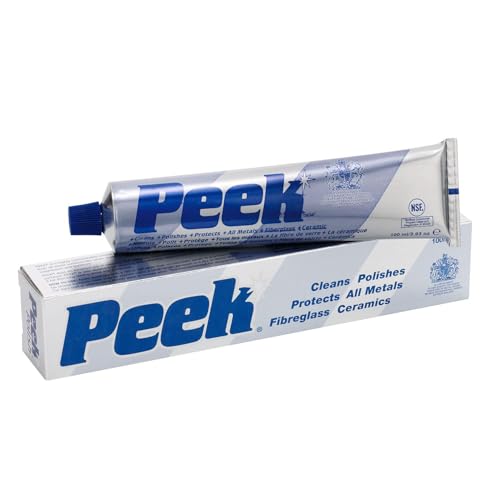
Tri-Peek Peek Polish carries a Royal Warrant as an official purveyor of metal polish to Windsor and Balmoral Castle — a distinction that speaks to the formula’s long-standing reputation for consistent results on high-value metals. The 120-grit medium abrasives strike a deliberate balance between cutting power and finish quality, making the product effective on oxidation, heat discoloration, and corrosion without requiring extreme pressure or multiple passes. Owner reviews from automotive enthusiasts highlight excellent performance on chrome bumpers, aluminum intake manifolds, and even foggy headlight lenses as a secondary use case.
One of the most frequently cited advantages is the anti-oxidant protective barrier that remains on the surface after buffing. This barrier slows the re-oxidation process significantly compared to pure pastes that leave the bare metal exposed. The 100 ml tube provides enough product for multiple full-vehicle trim detail sessions, and the medium abrasive profile allows it to handle both light surface tarnish and moderately embedded corrosion without switching to a separate aggressive compound.
The most common criticism involves the packaging — the tube opening can make it difficult to dispense controlled amounts without waste, and the medium grit may feel overly aggressive for those accustomed to ultra-fine polishes on show-car chrome. For general restoration on daily-driver chrome and mixed-metal surfaces, though, the Peek formula offers a very favorable balance of speed, finish quality, and residual protection.
What works
- Medium abrasives handle moderate oxidation in fewer passes
- Anti-oxidant barrier slows future tarnish formation
- Works on a wide range of metals including titanium and magnesium
What doesn’t
- Tube design makes controlled dispensing awkward
- Medium grit may feel harsh for ultra-delicate chrome
4. Wizards Metal Polish

Wizards Metal Polish differentiates itself with a unique delivery system — the polish is pre-infused into a roll of surgical-grade cotton that stays moist and ready to use without drying out or separating. This format eliminates the need for separate applicator pads and reduces the mess associated with tube-dispensed pastes, making it especially convenient for quick spot treatments on bumper corners, mirror caps, and trim strips. The formula uses a fast-cutting compound that breaks down during application, transitioning from active oxidation removal to a fine scratch-removal phase that produces a high-gloss finish.
Owner feedback from motorcycle enthusiasts is notably positive, with multiple reports of Wizards restoring chrome engine covers and exhaust components on bikes that had sat for years. The infused cloth allows for precise application on curved or complex surfaces where a paste might drip or run. The product works on brass, copper, silver, pewter, magnesium, and aluminum, though the manufacturer explicitly warns against using it on show chrome or gold-plated wheels where the cutting action could be too aggressive.
The compact 3 oz roll provides a relatively small amount of material compared to tube-based competitors, and users with large surfaces like full-length side trim or truck bumpers may find it runs out quickly. For targeted restoration and detail work, however, the no-mess cloth delivery and the dual-phase abrasive behavior make it a smart choice that punches above its size.
What works
- Infused cloth eliminates need for separate applicators
- Dual-phase formula transitions from cutting to polishing
- Excellent for precise application on complex curved surfaces
What doesn’t
- Small 3 oz roll may not cover large surfaces adequately
- Not intended for show chrome or gold-plated wheels
5. Rohl SIMICHROME Polishing Paste

SIMICHROME has been a household name in metal polishing for decades, and the current Rohl-branded formulation maintains the same very fine aluminum oxide composition that earned the product near-iconic status among vintage restorers and DIY enthusiasts. The 50-grit ultra-fine abrasive is specifically designed for chrome and polished nickel finishes, providing gentle cleaning that removes tarnish and light oxidation without any risk of cutting through thin plating. Owner reviews repeatedly emphasize that a small amount covers a surprising area — the phrase a little goes a long way appears consistently across verified feedback.
The paste requires hand buffing with soft rags and a moderate amount of elbow grease, which is typical for non-wax-embedded polishes. Users who follow the manufacturer’s recommendation to wear gloves report the best results, as natural skin oils can interfere with the polishing action on certain substrates. The product excels on silver plate, brass, and copper alongside chrome, making it a versatile option for households with mixed-metal fixtures and decorative items beyond just automotive trim.
The primary drawback is the small tube size — at 1.76 ounces, users tackling large chrome bumpers or full side trim may find themselves reaching for a second tube before the job is finished. The paste also offers no built-in UV or corrosion protection after buffing, so a separate sealant or wax is required for long-term preservation. For light restoration and periodic touch-ups on already well-maintained chrome, SIMICHROME remains a reliable, time-tested choice.
What works
- Ultra-fine abrasives are safe for thin chrome plating
- Exceptional value per application — very little needed
- Proven formula with decades of positive owner feedback
What doesn’t
- Small tube size requires multiple units for large jobs
- No built-in corrosion protection or wax sealant
Hardware & Specs Guide
Abrasive Grit and Composition
The grit number indicates particle coarseness — lower numbers are finer, higher numbers are coarser. Chrome-safe polishes typically use aluminum oxide or ceramic abrasives in the 50–120 grit range. Ultra-fine pastes like SIMICHROME (50 grit) are safest for thin plating, while medium grits like Peek (120 grit) offer faster cutting on heavier oxidation but require more care on delicate surfaces. The abrasive material itself matters: aluminum oxide is the standard for chrome, while silica or diamond compounds may be too aggressive.
Carrier Base and Working Time
Mineral-spirit-based carriers keep the compound wet longer, extending working time but leaving an oily residue that requires thorough buffing. Water-based or solvent-blend carriers dry faster and wipe off cleaner but demand quicker application. Wax-infused polishes like Collinite 850 use a petroleum-distillate carrier that suspends both the abrasive particles and the polymer protectants, allowing them to deposit evenly during the buffing process. Residue color during application — typically black or dark gray — indicates active oxidation removal and is a normal indicator of the polish working.
Protectant Additives and Longevity
Pure metal polishes contain only abrasives and a carrier solvent, leaving the bare metal exposed to the elements. All-in-one wax formulas incorporate carnauba, synthetic polymers, or UV inhibitors that form a sacrificial barrier after buffing. Marine-grade formulations use cross-linked polymers originally designed for saltwater resistance, providing the longest protection intervals — typically 6–12 weeks on exterior chrome versus immediate re-oxidation with unsealed pastes. The trade-off is that protectant additives slightly reduce the abrasive’s cutting efficiency.
Application Method and Efficiency
Traditional paste and liquid compounds require a separate applicator — typically a microfiber cloth or foam pad — and the user controls pressure and motion. Infused cloth products like Wizards integrate the abrasive into the applicator, eliminating one variable but also limiting the total abrasive volume available. Tube-dispensed pastes allow precise dosing but can waste product through over-application. Larger liquid bottles provide the best per-application value for large surfaces, while small tubes suit detail work and occasional touch-ups.
FAQ
Can I use any metal polish on automotive chrome?
How do I know if my chrome is too far gone for polishing?
Do I need to apply a wax or sealant after polishing chrome?
How often should I polish chrome trim on a daily driver?
Final Thoughts: The Verdict
For most buyers, the best auto chrome cleaner winner is the Collinite 850 Metal Wax because it combines effective oxidation removal with long-lasting marine-grade protection in a single step, saving time and delivering consistent results on chrome, stainless steel, and aluminum trim. If you want a gentle formula safe for delicate plated surfaces and heirloom metal pieces, grab the Wenol Metal Polish. And for a versatile medium-abrasive product that handles moderate corrosion across a wide range of metals without breaking the bank, nothing beats the Tri-Peek Peek Polish.

Certification: BSc in Mechanical Engineering
Education: Mechanical engineer
Lives In: 539 W Commerce St, Dallas, TX 75208, USA
Md Amir is an auto mechanic student and writer with over half a decade of experience in the automotive field. He has worked with top automotive brands such as Lexus, Quantum, and also owns two automotive blogs autocarneed.com and taxiwiz.com.