Every road trip leaves its mark: a crusted layer of baked-on bug guts across the grille, hood, and windshield that no basic car wash can touch. Standard soap dissolves dirt but barely softens dried insect residue, which means you end up scrubbing hard enough to worry about clear coat damage. That is where a dedicated formula designed to chemically break down protein-based grime becomes essential rather than optional.
I’m Amir — the founder and writer behind Four Wheel Ask. My approach to automotive detailing products relies on cross-referencing chemical composition data with real-world owner reports to identify which formulas deliver consistent results without harming factory finishes.
After analyzing dozens of bug remover formulas and owner reports, best auto bug remover combines powerful solvents with safe surfactants for streak-free results.
How To Choose The Best Auto Bug Remover
Picking the right bug remover comes down to understanding the chemistry behind the product and how it interacts with your specific surfaces. Not all formulas handle baked-on residue the same way, and the wrong choice can leave streaks or require excessive scrubbing that risks micro-marring your paint.
Foaming vs Spray Formulas
Foaming products cling to vertical panels like the grille and hood longer than thin sprays, giving the active solvents more dwell time to soften dried bug residue. Spray formulas are easier to apply over large areas but may run off before doing their full job. For heavy bug accumulation on the front fascia, foam delivers a clear advantage.
Citrus-Based vs Solvent-Based Cleaners
Citrus-derived solvents (d-limonene) effectively break down bug proteins and tree sap without the harsh odor or paint-stripping risk of petroleum distillates. Solvent-based formulas are stronger on tar but require careful rinsing to avoid residue that can dull clear coat. Paint-safe ratings should guide your choice if you plan regular use.
Surface Compatibility
Most bug removers claim to work on glass, plastic, chrome, and painted metal, but the pH balance and abrasiveness vary. Products labeled safe for clear coat and factory paint are essential for modern automotive finishes. Avoid formulas that rely on micro-abrasives, which can create swirl marks over repeated applications.
Quick Comparison
On smaller screens, swipe sideways to see the full table.
| Model | Category | Best For | Key Spec | Amazon |
|---|---|---|---|---|
| Meguiar’s G180515EU | Foaming Spray | Best Overall | Professional Strength Foam | Amazon |
| STAR BRITE Bug-Off | Spray | Top Performer | 22 oz, Multi-Surface | Amazon |
| Bugz Out Car Bug Cleaner | Spray | Premium Choice | Biodegradable, 24 oz + Cloth | Amazon |
| Lifter-1 Bug and Tar Remover | Citrus Spray | Best Value | Pack of 2, Citrus Formula | Amazon |
| Goo Gone Automotive | Multi-Purpose | Versatile Pick | 16 oz, Multi-Use | Amazon |
In‑Depth Reviews
1. Meguiar’s G180515EU Heavy Duty Foaming Bug Remover

Meguiar’s positions this as a professional-strength foam that clings to vertical surfaces, giving the active solvents time to rehydrate and loosen baked-on bugs without manual scrubbing. The thick foam consistency is engineered to stay put on angled panels like hoods and front fascias where thin sprays simply run off before doing their job. Owner reports consistently highlight how the foam transforms rock-hard bug residue into something that rinses away with a standard pressure wash.
The formula is designed for use before a regular shampoo wash or as a spot treatment between washes, which adds flexibility for both weekly maintenance and deep cleans. Multiple verified buyers mention that the product excels on long-haul road trips where insects accumulate over several hundred miles. The foaming action provides even coverage across the entire front end without requiring separate applications for each panel.
Some owners note that extremely thick layers of tar or tree sap may need a second application, and a small number of reviews report minimal effect on very old, sun-baked residue that has been left for weeks. The product requires a brief dwell time of a few minutes for optimal performance, which is standard for this category but worth factoring into your routine.
What works
- Thick foam clings to vertical panels without runoff
- Rehydrates baked-on bugs for easy rinse-away
- Professional-strength formula trusted in detailing circles
What doesn’t
- Heavy tar or sap may need a second application
- Very old, sun-baked residue can still require light scrubbing
2. STAR BRITE Bug-Off Bug Bit & Road Grime Remover
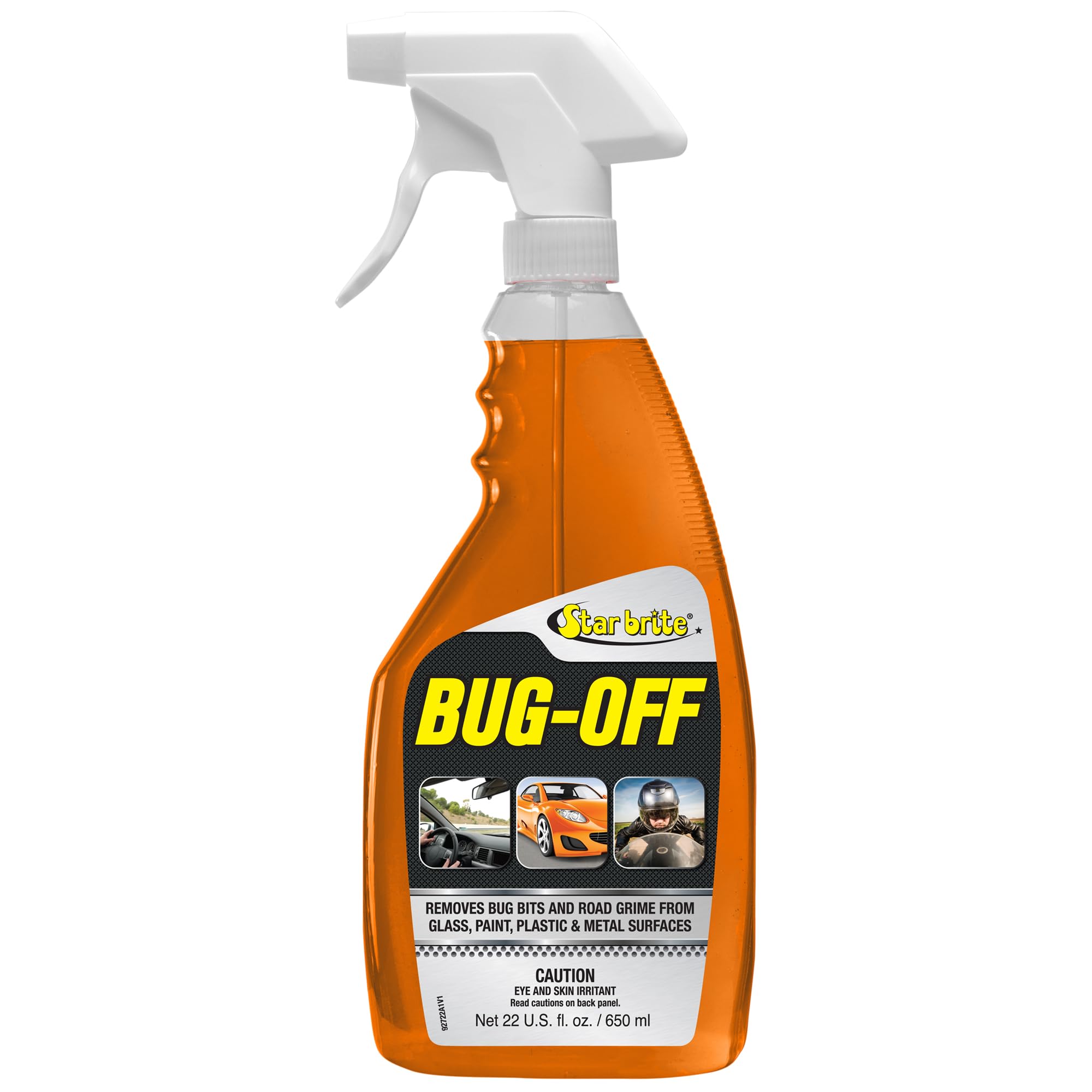
STAR BRITE Bug-Off uses a fast-acting spray formula designed to lift bug residue, road grime, and embedded debris from painted surfaces, glass, plastic, and metal without requiring aggressive scrubbing. The 22-ounce bottle provides ample coverage for multiple applications, and the spray nozzle delivers a targeted stream that prevents over-spray on areas that do not need treatment. Owner feedback emphasizes that a 30-second soak is sufficient for fresh bug splatter, while tougher deposits benefit from a longer dwell period.
The product is explicitly labeled for use on cars, trucks, motorcycles, RVs, and trailers, making it one of the more versatile options in this comparison. Multiple reviewers with large vehicles like Ford F-250 trucks and RVs report that the solution effectively melts off thick bug accumulations that standard car soap could not touch. The streak-free claim holds up in most cases, though some owners recommend a follow-up polish wipe to eliminate any faint residue on dark paint finishes.
Several verified buyers mention that the spray can leak during shipping due to loose nozzle packaging, which is a recurring packaging complaint rather than a formula issue. Users also note that the product works best when applied to a cool surface in the shade, as direct sun causes the spray to evaporate before the dwell time completes. This is standard for water-based bug removers but worth planning around.
What works
- Works on glass, paint, plastic, and metal without damage
- Quick 30-second dwell time for most bug residue
- Streak-free finish when used as directed
What doesn’t
- Shipment packaging allows nozzle leaks
- Requires shade application to prevent premature evaporation
3. Bugz Out Car Bug Cleaner, Remover & Wash

Bugz Out differentiates itself with a biodegradable, non-abrasive, and non-corrosive formula that is safe for painted surfaces, clear coats, glass, wheels, and even interior materials like seats and carpet. The 24-ounce bottle comes bundled with a microfiber cloth, which adds immediate value for buyers who want a complete kit rather than hunting for the right wiping material separately. Owner reports emphasize how well the spray handles bird droppings and tree sap in addition to bugs, making it a genuine multi-surface cleaner rather than a single-purpose product.
The formula is described as skin-friendly and environmentally safe, which appeals to users who are cautious about harsh chemical exposure during routine detailing. Multiple verified buyers note that the citrus-based scent is much milder than traditional solvent-based bug removers, making garage use more pleasant. The spray works best when applied promptly after a trip, as letting bugs bake on for days reduces the effectiveness of even the strongest enzymatic cleaners.
Some owners mention that heavily caked-on bug residue from days-old road trips still requires light rubbing with the microfiber cloth rather than simply rinsing away. A small number of reviews also note that the spray nozzle can be inconsistent on the first few pumps, though this appears to be a minor manufacturing variance rather than a design flaw. Overall, the biodegradable angle and included cloth make this a smart choice for environmentally conscious detailers.
What works
- Biodegradable formula with minimal chemical odor
- Includes microfiber cloth for immediate use
- Works on interior and exterior surfaces
What doesn’t
- Less effective on bugs left to bake for multiple days
- Spray nozzle quality varies between bottles
4. Lifter-1 Bug and Tar Remover for Cars, Trucks, RVs, and SUVs

Lifter-1 delivers a citrus-based spray that targets stuck-on bugs, tree sap, and road tar without relying on kerosene or petroleum distillates that can strip wax and damage clear coat. The two-pack configuration makes this one of the most cost-efficient options for owners who go through bug remover quickly during peak insect seasons. Owner feedback confirms that the fresh citrus scent is a welcome departure from the harsh chemical smell of traditional tar removers, which makes indoor garage application more tolerable.
The product is designed to work on bumpers, front grilles, chrome wheels, headlights, glass, and windows, covering all the common exterior surfaces that collect bug residue. Multiple verified buyers report that a 30-second dwell time followed by a soft cloth wipe is sufficient for most bug splatter, with tar requiring slightly longer soak periods. The absence of harsh solvents means you can use it on factory paint and clear coat finishes without worrying about etching or discoloration over repeated applications.
Some owners note that the formula struggles with heavy tree sap spots that have been baked on for extended periods, requiring multiple applications for complete removal. A few reviews also mention that the spray nozzle can be less precise than they would like, leading to some product waste on non-target areas. These are minor trade-offs given the per-bottle value and the paint-safe chemistry.
What works
- Citrus formula is safe on paint and clear coat
- Two-pack provides excellent per-application value
- Pleasant citrus smell compared to solvent-based alternatives
What doesn’t
- Heavy tree sap requires multiple applications
- Spray nozzle accuracy could be better
5. Goo Gone Automotive, Bug & Sticker Remover

Goo Gone Automotive is the most versatile product in this lineup, formulated to remove not just bugs but also bumper stickers, decals, gum, bird droppings, tree sap, spray paint, brake dust, and asphalt from automotive surfaces. The 16-ounce bottle is smaller than the competition but the multi-purpose chemistry means it replaces several specialty cleaners in your detailing kit. Owner reports consistently highlight its effectiveness on adhesive residue left behind by decals and parking stickers, a task that most dedicated bug removers cannot handle.
The product is safe for use on metals, plastics, and glass, which covers the vast majority of exterior surfaces on modern vehicles. Multiple verified buyers with premium vehicles like Audi report successful removal of old tar spots from rims without damaging the factory finish. The formula requires a bit of elbow grease for heavy buildup, but users appreciate that it does not streak or leave a greasy film when wiped clean with a microfiber cloth.
Some owners note that the product requires more physical effort compared to dedicated bug removers, especially on baked-on residue that has been sitting for weeks. A few reviews also mention that the citrus scent is noticeably stronger than Lifter-1 or Bugz Out, which may be less pleasant for sensitive users. These factors make it a better choice for multi-purpose use rather than as a pure bug-and-tar specialist.
What works
- Removes stickers, decals, and adhesive residue
- Safe on metals, plastics, and glass
- Effective on brake dust and asphalt spots
What doesn’t
- Needs more scrubbing for heavy bug buildup
- Smaller bottle size for the price point
Hardware & Specs Guide
Foaming vs Spray Delivery
Foaming formulas like Meguiar’s use a surfactant-rich aerosol that expands on contact, creating a thick blanket that clings to vertical panels and allows solvents to penetrate dried bug proteins over several minutes. Standard spray formulas atomize into finer droplets that spread quickly but drain off vertical surfaces faster, which reduces effective dwell time. For front-end bug removal where the grille and hood are angled, foam provides a measurable performance advantage.
Citrus Chemistry and Paint Safety
Citrus-based cleaners use d-limonene derived from orange peels to dissolve organic bug residue without the aggressive pH levels found in solvent-heavy degreasers. The Lifter-1 and Bugz Out products rely on this chemistry, which is gentler on clear coat and wax layers. Solvent-based formulas dissolve tar faster but can strip protective coatings over repeated use, making citrus the safer choice for frequent applications.
Surface Compatibility Range
All five products in this guide are labeled safe for painted metal, but compatibility with plastics, chrome, and untreated aluminum varies. STAR BRITE and Goo Gone explicitly list the widest material compatibility, including headlight lenses and plastic bumpers. Products with biodegradable or citrus bases generally have fewer restrictions on plastic and rubber trim compared to petroleum-based options.
Dwell Time and Temperature Effects
Bug remover effectiveness drops sharply when applied to hot surfaces or under direct sunlight because the solvents evaporate before fully breaking down the residue. The optimal application window is in the shade with surface temperatures below room temperature. Dwell times range from 30 seconds for light splatter up to five minutes for thick, baked-on layers. Pressure washing after the dwell period delivers the cleanest results with the least physical effort.
FAQ
Can auto bug remover damage my car’s paint?
How long should I let bug remover soak before washing?
Is bug remover safe for windshields and headlights?
Can I use bug remover on waxed or ceramic-coated paint?
Final Thoughts: The Verdict
For most buyers, the best auto bug remover winner is the Meguiar’s G180515EU Heavy Duty Foaming Bug Remover because its thick foam clings to vertical surfaces and rehydrates even baked-on bugs with minimal effort. If you want a biodegradable formula with a pleasant citrus scent and an included microfiber cloth, grab the Bugz Out Car Bug Cleaner. And for value-conscious owners who need a two-pack for frequent use across multiple vehicles, nothing beats the Lifter-1 Bug and Tar Remover.

Certification: BSc in Mechanical Engineering
Education: Mechanical engineer
Lives In: 539 W Commerce St, Dallas, TX 75208, USA
Md Amir is an auto mechanic student and writer with over half a decade of experience in the automotive field. He has worked with top automotive brands such as Lexus, Quantum, and also owns two automotive blogs autocarneed.com and taxiwiz.com.