Nothing ruins a summer drive faster than a dashboard blowing warm, humid air. When your vehicle’s air conditioning starts to falter, the root cause often traces back to a failed component—a leaking evaporator core, a clogged condenser, or a seized compressor. The market is flooded with look-alike parts, but the difference between a system that cools for a decade and one that dies in a year comes down to core construction, sealing integrity, and thermal transfer design.
I’m Amir — the founder and writer behind Four Wheel Ask. I’ve spent years analyzing automotive HVAC specifications, comparing OEM versus aftermarket aluminum alloys, and cross-referencing owner reports on condenser fin density and compressor clutch engagement reliability.
Choosing the right replacement requires filtering through dozens of options to find the ones that match your vehicle’s exact pressures and port configurations. That’s where this breakdown of the best auto ac parts on the market provides the clarity needed to get your cabin cold again without guesswork.
How To Choose The Best Auto AC Parts
Selecting the correct AC component for your vehicle goes beyond just matching the model year. The system’s operating pressure, refrigerant type (R134a vs. R1234yf), and the physical dimensions of the heat exchanger or compressor all determine whether the part will fit and function correctly. Below are the three most critical areas to verify before purchasing.
Condenser Core Design and Flow Path
The condenser is a heat exchanger that rejects heat from the refrigerant. Modern vehicles use parallel-flow condensers with multiple micro-channel tubes rather than older serpentine designs. Parallel-flow units offer superior heat rejection and lower internal pressure drop, reducing compressor load. Check the fin count per inch (typically 16 to 20) and whether the unit includes a built-in receiver dryer or a separate one.
Compressor Displacement and Clutch Engagement
Compressors are sized by swept volume (displacement in cubic centimeters per revolution) and clutch coil resistance. Using a compressor with incorrect displacement will either short-cycle the system or fail to build sufficient high-side pressure. Piston- and scroll-type compressors behave differently; swash plate units (common in Denso and Sanden designs) require precise oil charge levels. Always confirm the clutch diameter and pulley alignment match your serpentine belt routing.
Evaporator Material and Sealing Gaskets
Evaporator cores operate under lower pressure and are prone to corrosion from moisture and debris that bypasses the receiver dryer. Look for units constructed from full aluminum with brazed plate-fin (plate-fin) construction rather than stamped tube-and-fin, which has more potential leak paths. Verify that the inlet and outlet fittings use O-ring seals that match your vehicle’s specific connection type: block-style versus threaded MFNPT.
Quick Comparison
On smaller screens, swipe sideways to see the full table.
| Model | Category | Best For | Key Spec | Amazon |
|---|---|---|---|---|
| Denso 471-1630 Compressor | Compressor | OEM-level performance | 5.3 L displacement | Amazon |
| ACDelco Gold 15-63889 Condenser | Condenser | Transmission oil cooling | AT oil cooler integrated | Amazon |
| TRQ A/C Condenser | Condenser | Direct-fit replacement | 8.33 lb weight | Amazon |
| Orion Motor Tech Vacuum Pump | Vacuum Pump | System evacuation | 4 CFM / 37.5 micron | Amazon |
| UAC EV 939604PFXC Evaporator | Evaporator | Model-specific fit | Plate fin design | Amazon |
| A-Premium Condenser (Escape) | Condenser | Budget Ford/Mazda fix | Bolt-on OE replacement | Amazon |
| A-Premium Condenser (Civic) | Condenser | Budget Honda sedan fix | Inlet 0.61 IN, outlet 0.4 IN | Amazon |
In‑Depth Reviews
1. Denso 471-1630 Compressor with Clutch

This Denso unit is the gold standard for compressor replacements, delivering 5.3 liters of displacement with PTFE surface-treated pistons that reduce friction and extend service life. The lightweight aluminum alloy swash plate handles extreme heat conditions without warping, a common failure point in budget compressors. Snap rings on the mounting lugs provide a secure engagement that prevents clutch slippage under high-load summer operation.
User feedback across Honda Ridgeline, Odyssey, and Acura MDX applications confirms the near-perfect OEM fitment. Buyers report the compressor includes 2 ounces of initial oil, requiring an additional 3 ounces to match factory spec, so verify your system’s total oil capacity before installation. The clutch engagement is noticeably smoother compared to remanufactured units, eliminating the harsh kick-in sound reported with cheaper alternatives.
For vehicles originally equipped with a Denso compressor (common across Toyota, Honda, and Acura models), this part maintains the original pressure-versus-displacement curve, ensuring the expansion valve and condenser operate within design parameters. The trade-off is the premium price point, but the reliability record justifies it for owners planning to keep their vehicle for several more years.
What works
- PTFE-coated pistons reduce internal wear
- Snap ring clutch engagement prevents slipping
- Direct OEM replacement for multiple Honda/Toyota platforms
What doesn’t
- Comes under-filled with oil; requires manual top-off
- Higher upfront investment than reman units
2. ACDelco Gold 15-63889 Condenser
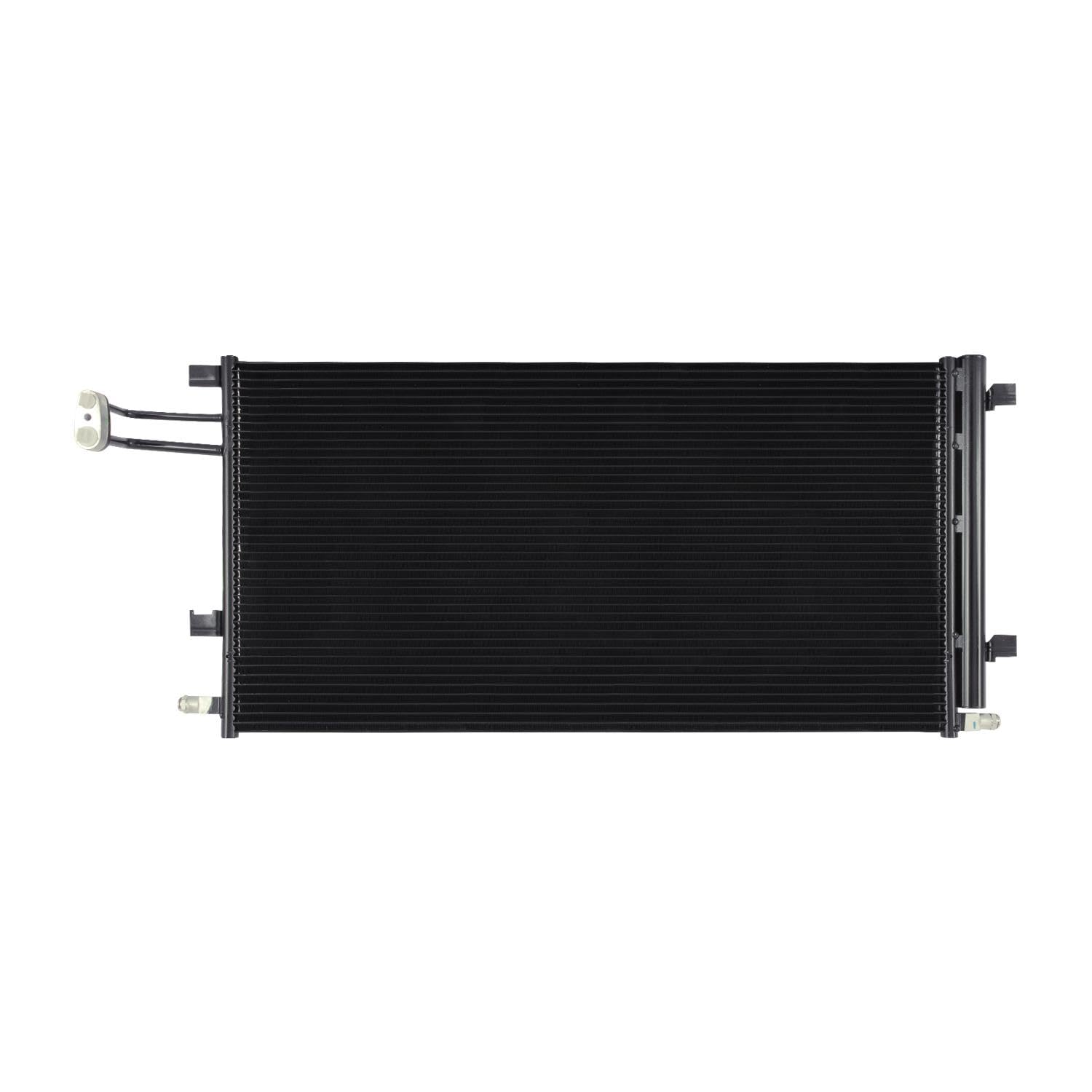
What separates this ACDelco Gold condenser from standard aftermarket units is the integrated automatic transmission oil cooler (ATOC). The rectangular aluminum body houses a secondary circuit that cools transmission fluid as it passes through the condenser, reducing overall thermal load on the radiator. This design is critical for vehicles that tow or operate in high-ambient-temperature regions where transmission temperatures spike.
The bolt-on mounting system uses factory-style brackets, and the aluminum core resists corrosion from road salt and moisture. With a weight of under 5 pounds, it is lighter than many competitors while maintaining 1-inch tube spacing that maximizes surface area for heat rejection. The parallel-flow micro-channel design keeps refrigerant pressure drop to a minimum, which helps the compressor operate more efficiently.
Fitment is vehicle-specific (GM truck and SUV platforms), so confirm your model’s receiver dryer configuration before purchase. Some users noted the included O-rings are standard nitrile; upgrading to green HNBR O-rings is recommended if you are switching to R1234yf refrigerant in the future.
What works
- Integrated transmission fluid cooler reduces heat load
- Lightweight aluminum construction resists corrosion
- Factory bracket alignment simplifies bolt-on installation
What doesn’t
- Only fits specific GM chassis configurations
- Included O-rings are basic nitrile grade
3. TRQ A/C Condenser

TRQ has built a reputation for combining OE-level fitment with accessible pricing, and this condenser for full-size GM and Ford trucks is a prime example. At 8.33 pounds, the core has a noticeably denser fin pack than ultra-budget units, which translates to better heat dissipation during stop-and-go traffic. The parallel-flow design uses 20 fins per inch, matching or exceeding the thermal performance of the original factory condenser.
Amazon Garage fitment verification is essential here, as this unit covers multiple body styles including models without dual climate control and without rear air conditioning. The machined exterior finish resists minor stone impacts, and the pre-assembled mounting brackets eliminate the need to transfer hardware from your old condenser. DIY video resources are available directly from TRQ, detailing the step-by-step removal and installation process.
Owner reports across Subaru Outback, Jeep Liberty, and Lincoln MKT applications confirm the bolt pattern alignment is accurate. Some users noted the dryer desiccant bag inside the receiver is pre-charged, so avoid exposing the open ports to humid air for more than 15 minutes during installation.
What works
- Dense fin pack improves heat rejection in traffic
- Pre-assembled brackets reduce install time
- Access to manufacturer DIY video guides
What doesn’t
- Does not fit dual-zone or rear AC variants
- Dryer pre-charge is time-sensitive on exposure
4. Orion Motor Tech Vacuum Pump

Before any AC component replacement can be tested, the system must be evacuated to remove moisture and non-condensable gases. This Orion Motor Tech single-stage pump delivers 4 CFM of displacement and draws down to 37.5 microns, which is sufficient for standard automotive R134a systems. The 1/3 hp all-copper motor drives a rotary vane mechanism that maintains consistent vacuum without overheating during 20-minute evacuation cycles.
The reinforced aluminum alloy casing doubles as a heat sink, keeping oil temperatures stable during extended operation. A sight glass on the oil reservoir allows you to monitor oil level and detect contamination as the fluid darkens. The pump comes with 0.26 quarts of vacuum oil (enough to fill the reservoir), but some users found the bottle insufficient for a full fill—plan to purchase an additional quart for future oil changes.
It supports 1/4-inch, 1/2-inch, and 3/8-inch hose connections via the included adapter, making it compatible with standard HVAC manifold gauges. The inlet filter trap effectively blocks oil mist from contaminating the manifold, which prolongs gauge accuracy. For occasional weekend AC work, this pump provides reliable performance without the weight (under 11 pounds) of industrial-grade units.
What works
- All-copper motor handles continuous cycling
- Aluminum casing dissipates heat efficiently
- Multiple hose size adapter included
What doesn’t
- Comes under-filled with oil from factory
- Single-stage pump slower than 2-stage units for deep vacuum
5. UAC EV 939604PFXC Evaporator Core
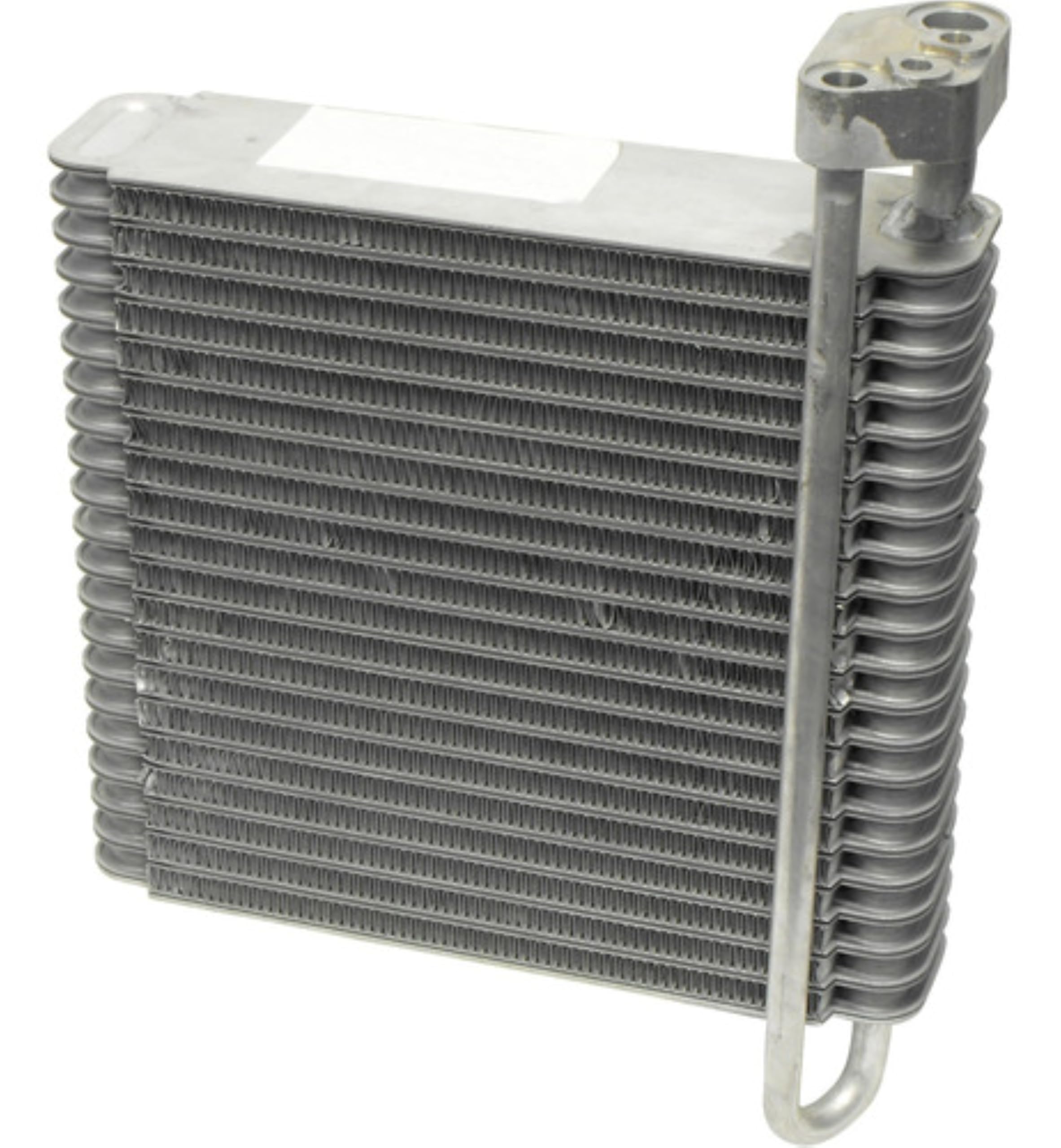
UAC is a trusted OE-tier supplier, and this evaporator core carries ISO/TS 16949 certification, which means it meets the same production quality standards as parts used on the assembly line. The plate-fin design uses multiple layers of stamped aluminum brazed together, creating more surface contact between refrigerant and fins than tube-and-fin designs. This geometry improves heat absorption inside the HVAC box, producing colder vent temperatures at lower blower speeds.
The inlet and outlet fittings use MFNPT (male female national pipe taper) connections, which are common on import and domestic vehicles from the mid-2000s. Weighing just 1 pound, the core is lightweight but the brazing is robust enough to handle the fluctuating pressure differential between the expansion valve and accumulator. The metal construction eliminates the swelling issues seen with some composite end-tank evaporators under high humidity.
One important note is the form factor: at 15.3 x 6.5 x 13.5 inches, you should measure the available space inside your HVAC case before ordering, as the stack height must clear the blend door actuators. The unit ships as a bare core without expansion valve or gaskets, so you will need to purchase those separately for your specific vehicle.
What works
- ISO/TS 16949 factory quality certification
- Plate-fin design maximizes cold air output
- Lightweight but durable brazed construction
What doesn’t
- No gaskets or expansion valve included
- Large case dimensions may not fit all HVAC boxes
6. A-Premium Condenser (2009–2012 Ford Escape)

This A-Premium condenser targets owners of the 2009–2012 Ford Escape and its platform twins (Mazda Tribute, Mercury Mariner) who need a direct bolt-on replacement without paying for a brand-name markup. The aluminum core uses a straight-through parallel-flow design with a built-in receiver dryer, and the bracket alignment mirrors the factory unit precisely. At 7.24 pounds, it offers a solid feel without being overly heavy, suggesting adequate tube wall thickness for the 200–300 psi operating range.
The core dimensions (38 x 21.5 x 3.5 inches) match the factory condenser location, and the inlet/outlet ports are positioned to clear the front grille support structure. The included receiver dryer is pre-charged with desiccant, reducing the installation steps by one—you don’t need to buy a separate dryer cartridge. However, because the dryer is integrated, you must avoid opening the system for long periods to prevent moisture saturation.
A-Premium backs this unit with a one-year unlimited-mileage warranty, which provides basic protection against manufacturing defects such as pinhole leaks or fin separation. The lack of customer reviews makes it harder to assess long-term durability, but the price point makes it a low-risk entry for DIYers tackling their first condenser swap on these popular crossover models.
What works
- Integrated receiver dryer saves parts cost
- One-year unlimited-mileage warranty
- Direct fit for Ford Escape platform triplets
What doesn’t
- Limited long-term owner feedback available
- Pre-charged dryer loses effectiveness if system left open
7. A-Premium Condenser (2006–2011 Honda Civic)

Honda Civic owners from the 2006–2011 generation (including the Acura CSX) have a budget-friendly option with this A-Premium condenser. The core dimensions—26.5 inches long, 14.96 inches tall, and 0.63 inches thick—are sized specifically for the sedan body, so double-check fitment if you own a coupe. The block-style inlet (0.61 inches) and outlet (0.4 inches) fittings match the factory hard-line connections used on R40 and K-series engine bays.
Unlike some budget condensers that skimp on core thickness, this unit retains a 0.63-inch core, which provides sufficient thermal mass to handle 100°F+ ambient temperatures. The built-in bracket includes mounting tabs that align with the radiator support frame, simplifying bolt alignment. Owner reports highlight a straightforward installation that took under two hours, with the system holding vacuum after 30 minutes.
One user noted a minor hardware difference: the first unit they purchased required 7mm bolts to mount, while a replacement unit (purchased after the first was damaged during removal) accepted standard 10mm bolts. This suggests some manufacturing variability in bracket hole sizing, so keep both metric socket sizes handy during installation. The condenser works with both manual and automatic transmission Civic models from this era.
What works
- Exact fit for 8th-gen Civic sedan
- Block-style fittings match factory hard lines
- Proven holding vacuum in owner reports
What doesn’t
- Possible bracket hole size inconsistency
- Does not fit Civic coupe body style
Hardware & Specs Guide
Parallel-Flow vs. Serpentine Condenser
Parallel-flow condensers use multiple micro-channel tubes stacked between two headers. Refrigerant passes through these tubes simultaneously (in parallel), which reduces internal pressure drop by up to 40% compared to older serpentine designs. This means the compressor sees less back pressure, leading to lower discharge temperatures and longer compressor life. Most modern vehicles use parallel-flow cores; if your vehicle originally had one, never replace it with a serpentine unit or cooling efficiency will suffer.
Compressor Displacement and Clutch Voltage
Compressor displacement is measured in cubic centimeters (cc) per revolution. A typical passenger car compressor might have 150–200 cc displacement. Installing a compressor with significantly different displacement alters the system’s high-side pressure, potentially causing the pressure switch to cycle the clutch on and off rapidly (short cycling). Also check the clutch coil voltage (usually 12V DC) and resistance (typically 3–5 ohms); a coil outside this range may cause intermittent engagement or burn out prematurely.
FAQ
Can I replace just the condenser or must I replace the receiver dryer too?
How do I know if my compressor clutch gap is correct?
What does the oil cooler integrated into the condenser do?
Final Thoughts: The Verdict
For most buyers, the best auto ac parts winner is the Denso 471-1630 Compressor because its swash plate design, PTFE pistons, and OEM-level fitment deliver consistent cooling performance across multiple Honda and Toyota platforms. If you need a condenser that also helps cool your transmission, grab the ACDelco Gold 15-63889. And for a budget-friendly direct-fit solution on a full-size truck or SUV, nothing beats the TRQ A/C Condenser.

Certification: BSc in Mechanical Engineering
Education: Mechanical engineer
Lives In: 539 W Commerce St, Dallas, TX 75208, USA
Md Amir is an auto mechanic student and writer with over half a decade of experience in the automotive field. He has worked with top automotive brands such as Lexus, Quantum, and also owns two automotive blogs autocarneed.com and taxiwiz.com.