Choosing an asset tracker often feels like a gamble between flimsy Bluetooth tags that vanish outside a room and expensive cellular units that drain your wallet with monthly fees. The reality is the industry has fractured into three distinct tiers—budget cloud-based pucks, rugged long-life GPS units, and integrated OBD solutions—each designed for a completely different use case. Misjudging which tier you actually need leads to dead batteries, lost gear, or tracking gaps at the worst possible moment.
I’m Amir — the founder and writer behind Four Wheel Ask. For years I’ve analyzed product specifications, parsed owner feedback across forums, and dissected the build quality trade-offs between sealed commercial trackers and consumer-friendly Bluetooth alternatives to separate marketing spin from real-world reliability.
This breakdown isolates the signal from the noise, giving you a clear guide to the best asset tracking devices based on how they actually perform under real driving and logistical conditions.
How To Choose The Best Asset Tracking Devices
Selecting the right asset tracker depends on three core variables: coverage area, power delivery, and installation method. A device that excels for a stationary trailer in a yard may fail entirely on a commercial fleet crossing state lines. Understanding these trade-offs prevents expensive mistakes.
Coverage & Connectivity
Bluetooth trackers like the Life360 Tile rely on a crowd-sourced network of phones to report a lost item’s location. They are compact and require no subscription, but coverage is limited to populated areas and can be delayed by minutes or hours. Cellular GPS trackers use 4G LTE or 5G networks to provide near-real-time updates anywhere with signal coverage, making them essential for vehicles or high-value assets that move between cities or rural zones.
Power & Battery Life
Battery life directly impacts maintenance. Hardwired OBD trackers run on the vehicle’s electrical system, offering indefinite operation without charging but requiring installation. Battery-powered magnetic trackers offer placement flexibility, but their battery life varies widely—from several weeks at aggressive update intervals to multiple years in power-saving modes. User-replaceable batteries in devices like the LoneStar Tracking Barra prevent the device from becoming e-waste when the power runs dry.
Installation & Discretion
Magnetic enclosures allow slap-and-track convenience without wiring, ideal for temporary monitoring or rental fleets. OBD plug-in units are truly plug-and-play but leave a visible port occupied, and some drivers unplug them. Hardwired units like the Moto Watchdog variant offer the most covert installation, connecting directly to the vehicle’s battery, making them nearly invisible to a thief or unauthorized user.
Quick Comparison
On smaller screens, swipe sideways to see the full table.
| Model | Category | Best For | Key Spec | Amazon |
|---|---|---|---|---|
| Bouncie | OBD Tracker | Real-Time OBD Tracking | 4G LTE, No Battery Needed | Amazon |
| Life360 Tile Starter Pack | Bluetooth | Wallet & Key Finding | Up to 3 Yr Battery, IP68 | Amazon |
| Cube Pro GPS | Magnetic | Covert Vehicle Tracking | 1 Yr Rechargeable, IP67 | Amazon |
| GPS7000 G1 | Hidden GPS | Budget Fleet Monitoring | 90 Days Service Incl, IP65 | Amazon |
| Brickhouse Spark Nano 7 | Extended Battery | Long-Term Asset Tracking | 140 Day Battery, 4G LTE | Amazon |
| LoneStar Barra GPS | Rugged | Harsh Environment Tracking | IP68, Up to 8 Yr Battery | Amazon |
| QuadTrack Pro | Commercial | Professional Fleet Use | 3 Yr Battery, 12 Mo Data Plan | Amazon |
| Moto Watchdog OBD | No Subscription | Zero Monthly Fees | 4G, 170+ Countries | Amazon |
| Moto Watchdog Hardwire | Concealed | Permanent Covert Install | No Battery, 140+ Countries | Amazon |
| KIUP Air Tags | Cloud | General Item Locating | 2 Yr Battery, IP65, UWB | Amazon |
| Garmin eTrex SE | Handheld | Remote Outdoor Navigation | 168 Hr Battery, Multi-GNSS | Amazon |
In-Depth Reviews
1. Bouncie GPS Tracker

The Bouncie device stands apart because it combines real-time location with detailed driving behavior and vehicle health monitoring through a simple OBD2 port connection. Its 4G LTE CAT M1 modem ensures reliable coverage across North America while pulling power directly from the vehicle’s OBD port, meaning there is no battery to charge or replace. The monthly subscription is straightforward and includes unlimited trip history, speed monitoring, and accident detection alerts.
Owner reports consistently note the installation is genuinely plug-and-play — it works on virtually any vehicle from 1996 onward — and the companion app provides a clear split between trip playback, diagnostic engine codes, and geo-fence notifications. The hardware is compact enough to remain unobtrusive, and the lack of an internal battery eliminates the most common failure point in tracking devices. Critics argue that the subscription creates recurring costs, but the data depth and reliability justify the expense for families monitoring teen drivers or fleet managers tracking field vehicles.
For users who demand granular driving insights alongside location, this unit delivers the best balance of simplicity, data richness, and dependable connectivity. It is not designed for covert or no-subscription scenarios, but as an all-in-one OBD tracker it sets the standard.
What works
- Plug-and-play OBD2 installation on any vehicle from 1996 onward
- Combines GPS tracking with engine diagnostics and driving behavior monitoring
- Unlimited trip history stored in the app for review
What doesn’t
- Requires a recurring monthly subscription
- Not usable on motorcycles or vehicles without OBD2 port
- Device cannot be hidden inside the vehicle’s body panels
2. Life360 Tile Starter Pack
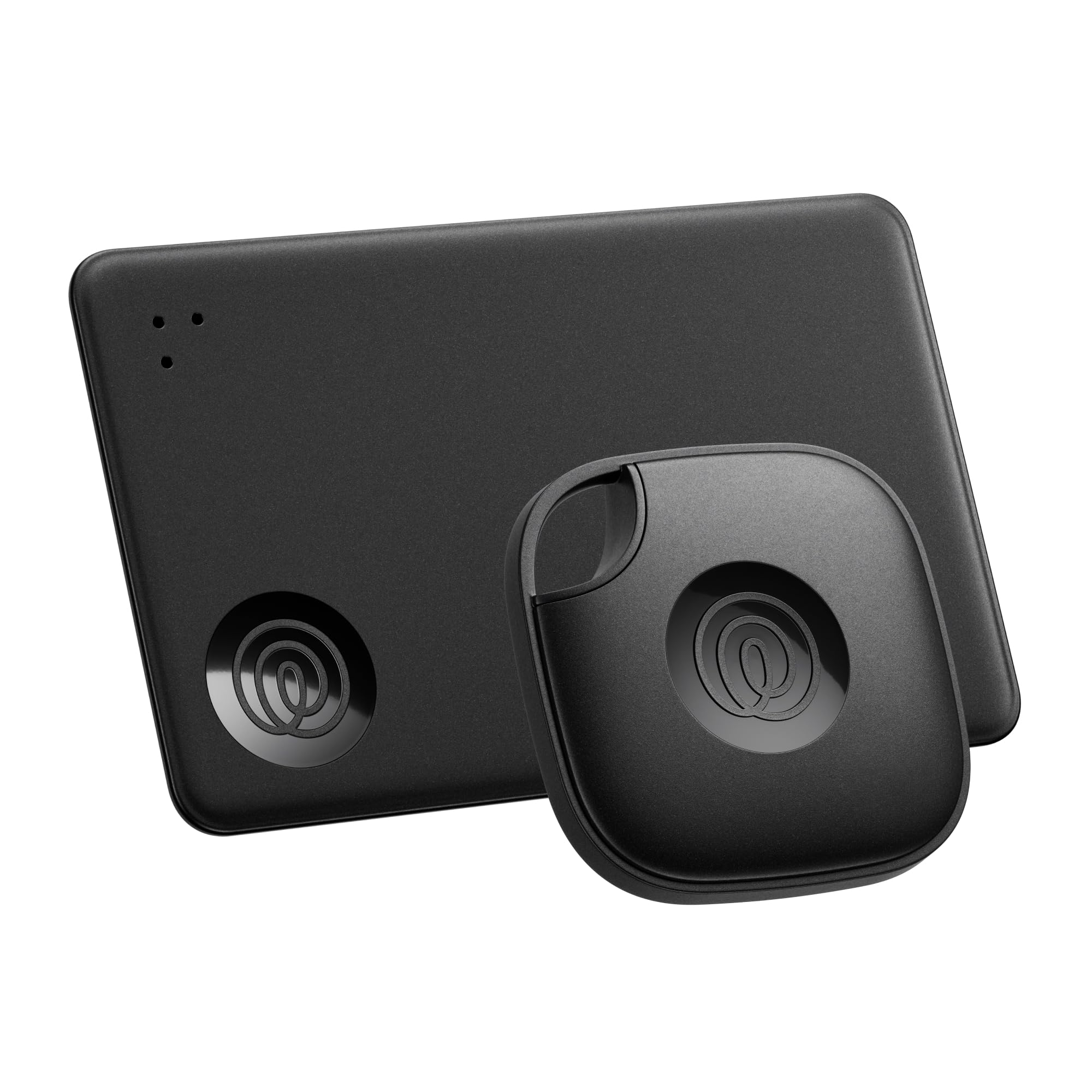
The Tile Starter Pack offers the thinnest form factor for wallets alongside a standard keychain mate, making it the most unobtrusive dual-purpose tracking kit on the market. The Slim card fits inside a credit card slot and includes a button that double-rings a paired phone, while the Mate attaches to keys or luggage. Both use the crowd-sourced Life360 network to report lost items outside of Bluetooth range, relying on millions of phones to ping the tracker’s location.
Reviews highlight that the Slim card’s credit-card thinness is a genuine breakthrough for wallet tracking — it slides into a back pocket without noticeable bulk and the button is recessed enough to avoid accidental presses. The IP68 rating means it survives submersion, and the three-year battery life removes the anxiety of frequent charging. The trade-off is that without a cellular modem, location updates depend entirely on nearby Life360 app users, which can be slow or fail in rural or low-traffic areas.
This set is the clear choice for everyday items like keys, wallets, and bags where you need a reliable final-location ping rather than continuous real-time tracking. The paid subscription adds location history, but the free tier still covers the essential find-my-stuff functionality.
What works
- Slim wallet card is genuinely credit-card thin and fits most wallets
- Three-year battery and IP68 water resistance
- Uses crowd-sourced network for extended range finding
What doesn’t
- Relies on Bluetooth and crowd network, not real-time cellular GPS
- Requires phone app with location permissions always on
- Signal-blocking wallets render the Slim card useless
3. Cube Pro GPS Tracker
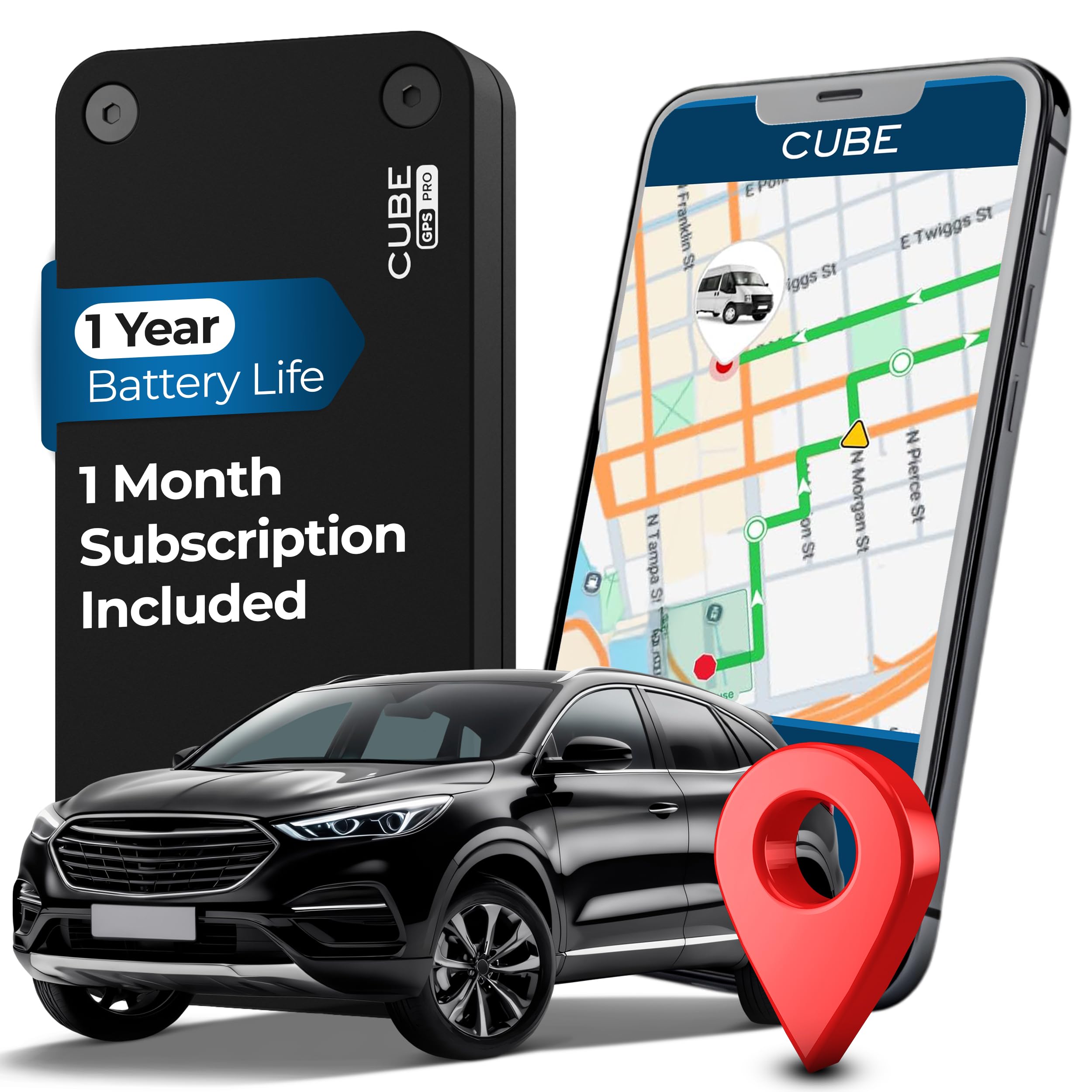
The Cube Pro delivers a compelling mid-range option with a rechargeable battery lasting up to a full year on a single charge, combined with a strong magnetic housing that attaches securely to any metal surface. It uses 4G LTE cellular connectivity for real-time tracking, and the accompanying Cube Tracker app handles geofence alerts, speed monitoring, and route history. The built-in SIM card works in most countries, making it a versatile choice for personal vehicles, trailers, and equipment.
Owner feedback is overwhelmingly positive regarding battery performance — multiple users report the device still showing 94-100% charge after a month of use with five-minute update intervals. The magnetic mount is described as extremely strong, holding the unit securely even on rough roads. The waterproof IP67 enclosure provides real weather resistance. The main drawbacks are the subscription requirement and the fact that the battery is not user-replaceable once it eventually degrades.
For anyone needing a covert, installation-free tracker that delivers consistent battery life measured in months rather than weeks, the Cube Pro represents an excellent value proposition. The flexible monthly or annual subscription plans provide an accessible entry point into professional-grade tracking.
What works
- Rechargeable battery lasts up to one year on a single charge
- Very strong magnetic mount holds securely to vehicle underbodies
- IP67 waterproof construction for outdoor durability
What doesn’t
- Requires a monthly subscription for cellular service
- Battery is not user-replaceable
- Subscription pricing per unit with no volume discount
4. GPS7000 G1 Hidden GPS Tracker
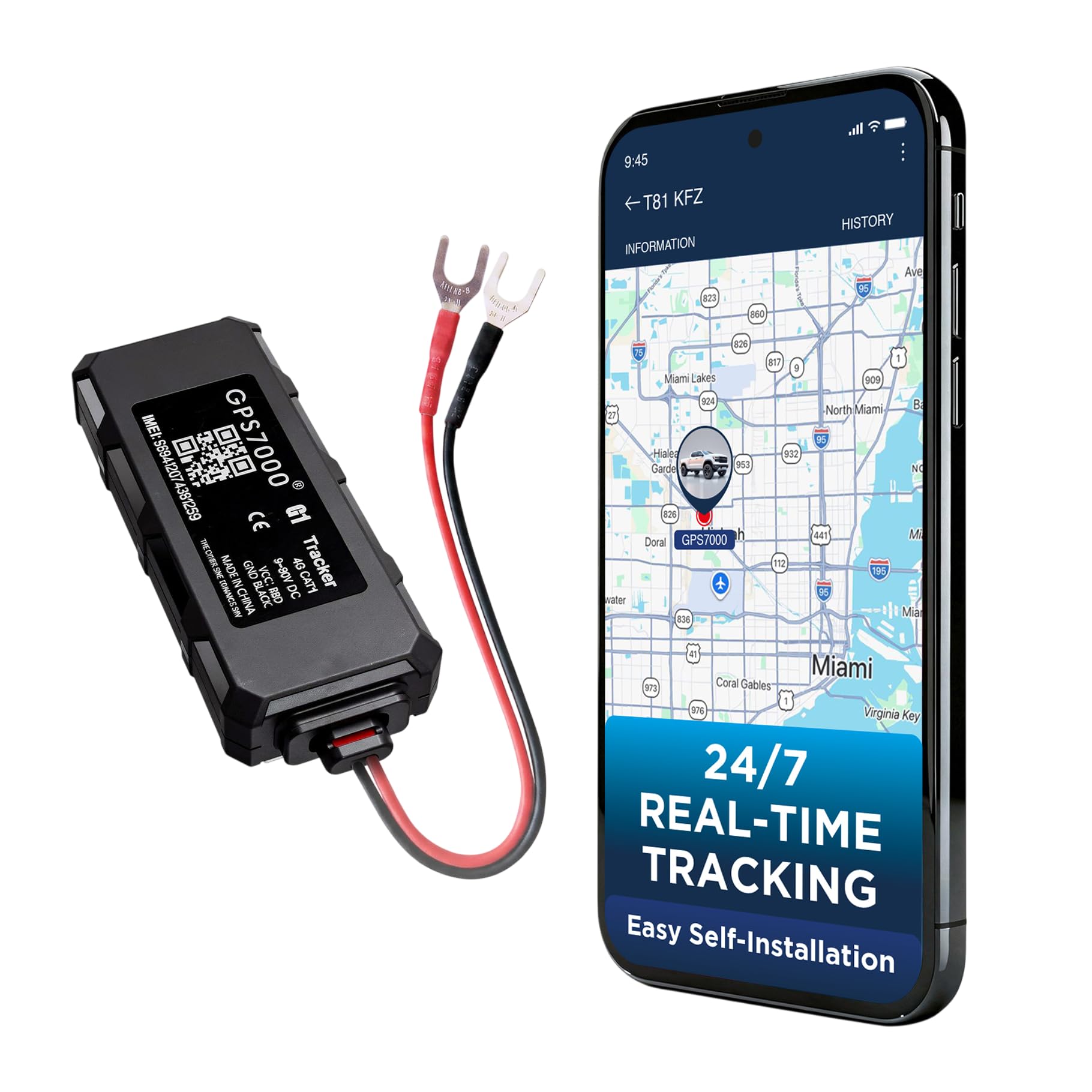
The GPS7000 G1 chooses a wired approach over magnetic convenience, connecting directly to a vehicle’s 9-30V battery via two simple wires. This makes it a genuinely hidden tracker that can be tucked inside dash panels or engine compartments without the risk of magnetic detachment. It ships with the first 90 days of cellular service already activated, giving buyers a trial period before committing to the optional subscription. The platform works across iOS, Android, Windows, and Mac browsers.
Customer reports indicate that the IP65 waterproof rating and internal backup battery add a layer of resilience, and the geofence alerts are responsive. The 90-day included service is a smart incentive for users wary of paying upfront for a subscription they may not like. On the downside, the hardwire installation, while simple, still requires basic wiring tools and knowledge, and the internal backup battery is relatively small. The service gap after 90 days catches some users off guard.
This unit is a strong candidate for fleet managers or vehicle owners who want a covert, non-magnetic solution with a low-risk trial period. The optional subscription price is competitive, and the multi-platform viewing makes it suitable for commercial oversight.
What works
- Hardwired installation allows for truly hidden placement
- Includes 90 days of cellular service for risk-free evaluation
- Works with iOS, Android, Windows, and Mac browsers
What doesn’t
- Requires basic wiring knowledge for installation
- Internal backup battery is only for short-term use
- Subscription needed after initial 90 days
5. Brickhouse Security Spark Nano 7
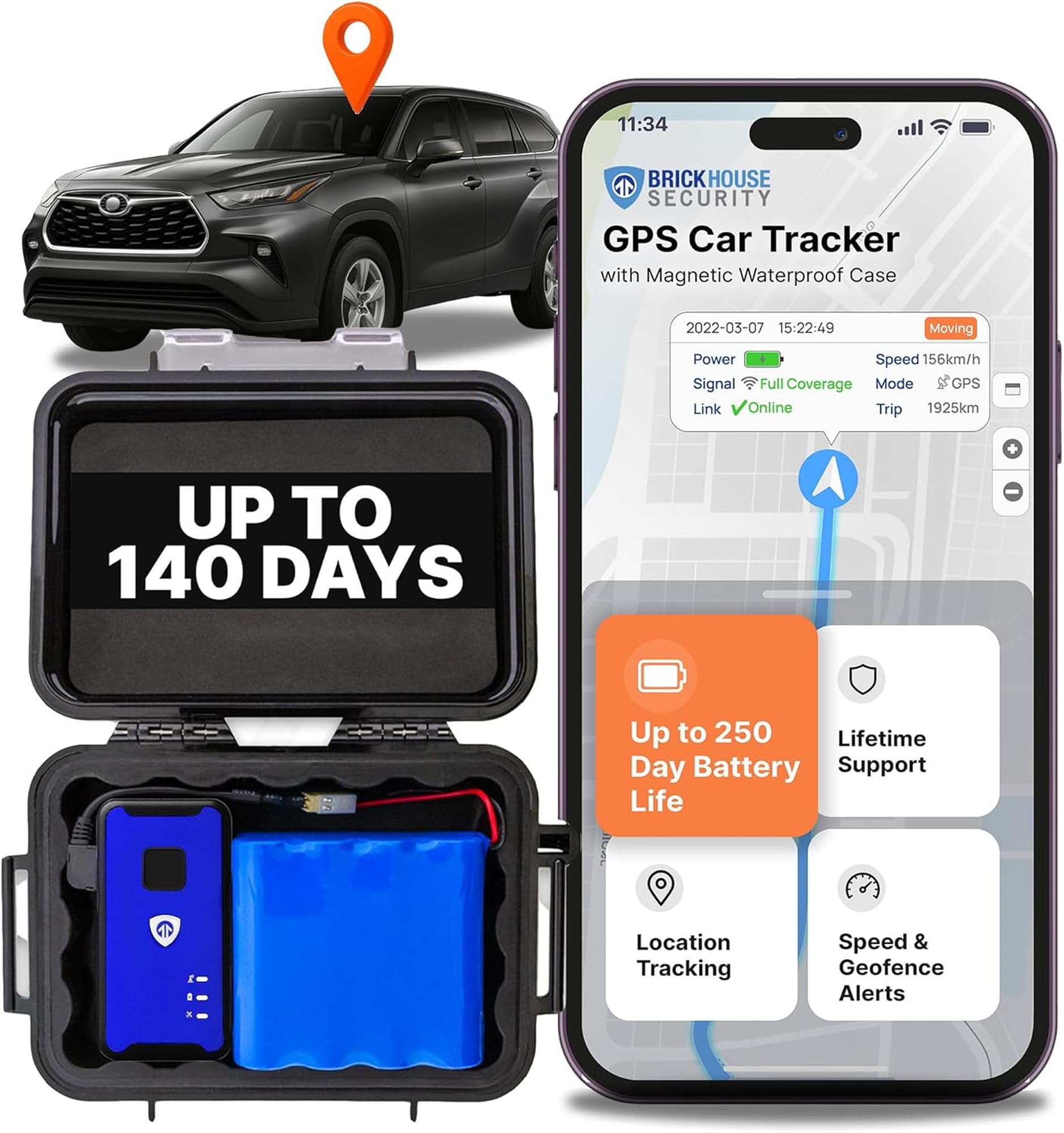
The Spark Nano 7 is designed for long-duration asset monitoring, shipping with an extended battery pack that claims 140 days of operation in standard standby mode. The magnetic case allows slap-and-track convenience, while the 4G LTE modem offers international roaming capabilities. Brickhouse Security provides three tiers of subscription plans — Basic, Plus, and Premium — giving users flexibility depending on how many location updates and alerts they need per day.
Buyers appreciate the easy attachment and the fact that the device can be moved between vehicles without any tools or wiring. The extended battery pack is indeed large, which is the trade-off for that multi-month runtime. The robust case is water-resistant and designed to survive the elements underneath a vehicle. The subscription cost is higher than some competitors, and the battery life claim depends heavily on the update interval selected in the settings.
For users who need to track assets over long periods without access to recharge or vehicle power, the Spark Nano 7’s extended battery capacity makes it a unique offering in this category. Just be prepared for the ongoing subscription expense and plan the update frequency carefully to match the battery life to your needs.
What works
- Extended battery pack provides up to 140 days of standby operation
- Magnetic case allows instant attachment to any metal surface
- International 4G LTE coverage for cross-border tracking
What doesn’t
- Battery life decreases significantly with frequent update pings
- Subscription plans are priced higher than some alternatives
- Extended battery adds noticeable bulk to the unit
6. LoneStar Tracking Barra GPS
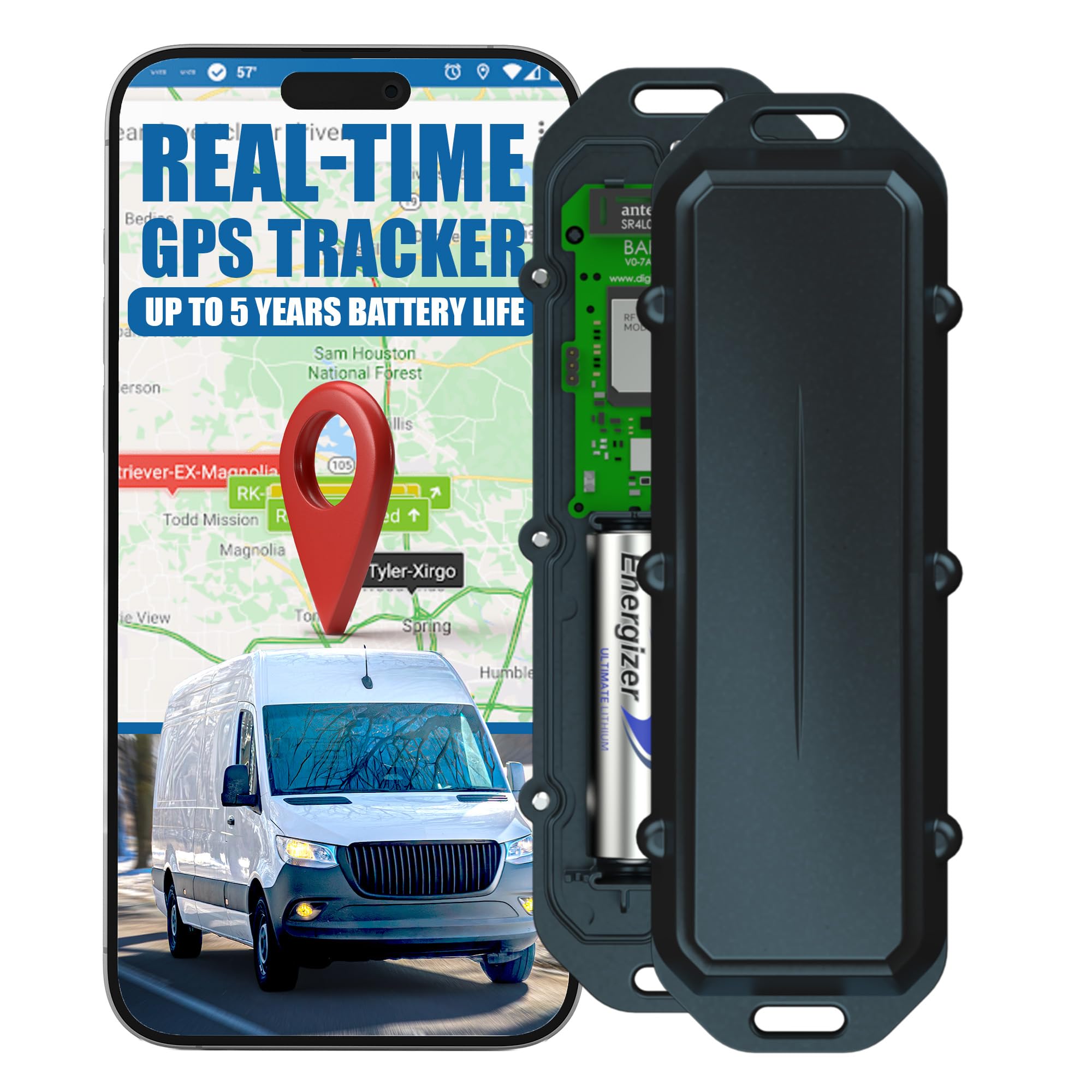
The LoneStar Barra GPS is a ruggedized tracking solution built for extreme environments, featuring IP68 and IK07 certification for dust, impact, and submersion resistance. It uses standard user-replaceable batteries — with two included — that provide up to eight years of operation with daily updates. The device supports multi-GNSS satellites (GPS, GLONASS, Galileo, BeiDou) and includes a backup cell tower location system for when satellite signals are obstructed.
Reviews highlight the excellent battery longevity, with users noting they’ve run the device for over a month with the battery gauge barely moving. Installation is flexible thanks to the included magnet and tamper-proof housing, and the five-minute update interval in motion strikes a good balance between freshness and power conservation. The subscription cost is reasonable, though the device is larger than many competitors. Some users found the magnet to be weaker than expected for mounting to trucks with thick metal frames.
This tracker is purpose-built for industrial assets, trailers, and containers that sit in exposed locations for long periods. The replaceable battery design is a major advantage over sealed units that must be replaced after the battery degrades.
What works
- User-replaceable batteries extend device lifespan indefinitely
- IP68 waterproof and IK07 impact resistant housing
- Multi-GNSS support ensures strong location lock in challenging areas
What doesn’t
- Device is larger than many hidden trackers
- Included magnet may not be strong enough for all mounting surfaces
- Requires an active subscription plan
7. QuadTrack Pro GPS Tracker
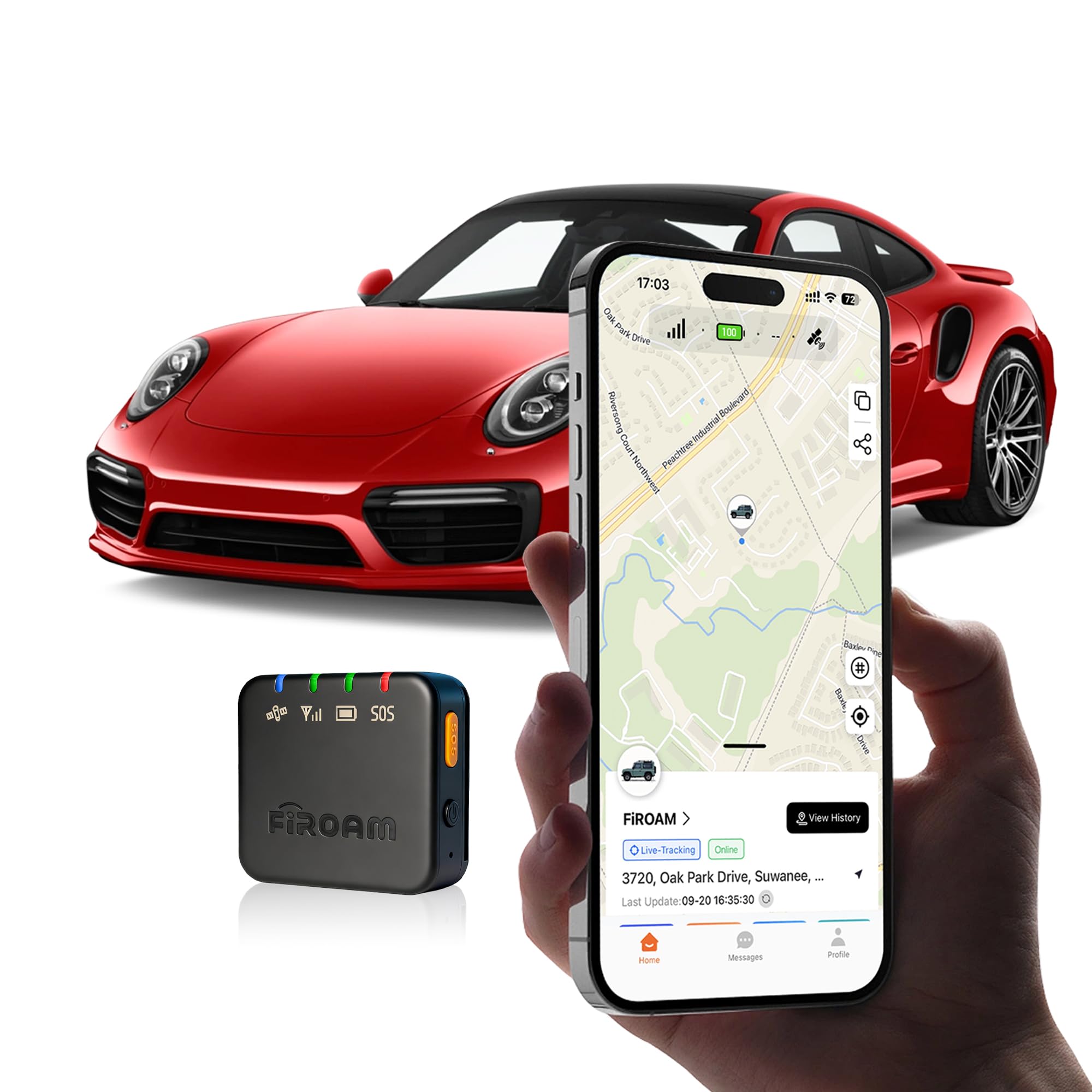
The QuadTrack Pro is a commercial-grade magnetic tracker that includes a full 12-month data plan out of the box, with real-time updates every five seconds in active mode and up to three years of battery life in power-saving mode. It supports global coverage across over 200 countries and offers AI-powered analytics for fleet managers, including route replay, idle time analysis, and driver behavior scoring. The platform works on iOS, Android, and PC web browsers.
Owner reports confirm the device is accurate to within about five feet and that setup takes roughly five minutes thanks to the magnetic mount. The motion-based power optimization is effective, with users noting six to eleven days of battery life in live tracking mode. The annual renewal cost after the first year is competitive. Complaints focus on the somewhat flimsy belt clip, inconsistent geo-fence alerts, and the unit’s lack of waterproofing—there is no USB port cover, so it is not submersible.
This tracker is best suited for commercial fleets and business users who need detailed analytics and don’t want to worry about a monthly payment for the first year. The power-saving mode makes it viable for assets that move infrequently.
What works
- Includes 12 months of data with no extra setup fees
- Power-saving mode delivers up to 3 years of battery life
- AI-powered analytics with 3-year trip history playback
What doesn’t
- No USB port cover, so the unit is not waterproof
- Geo-fence alerts can be inconsistent
- Belt clip attachment is not very secure
8. Moto Watchdog OBD No Subscription
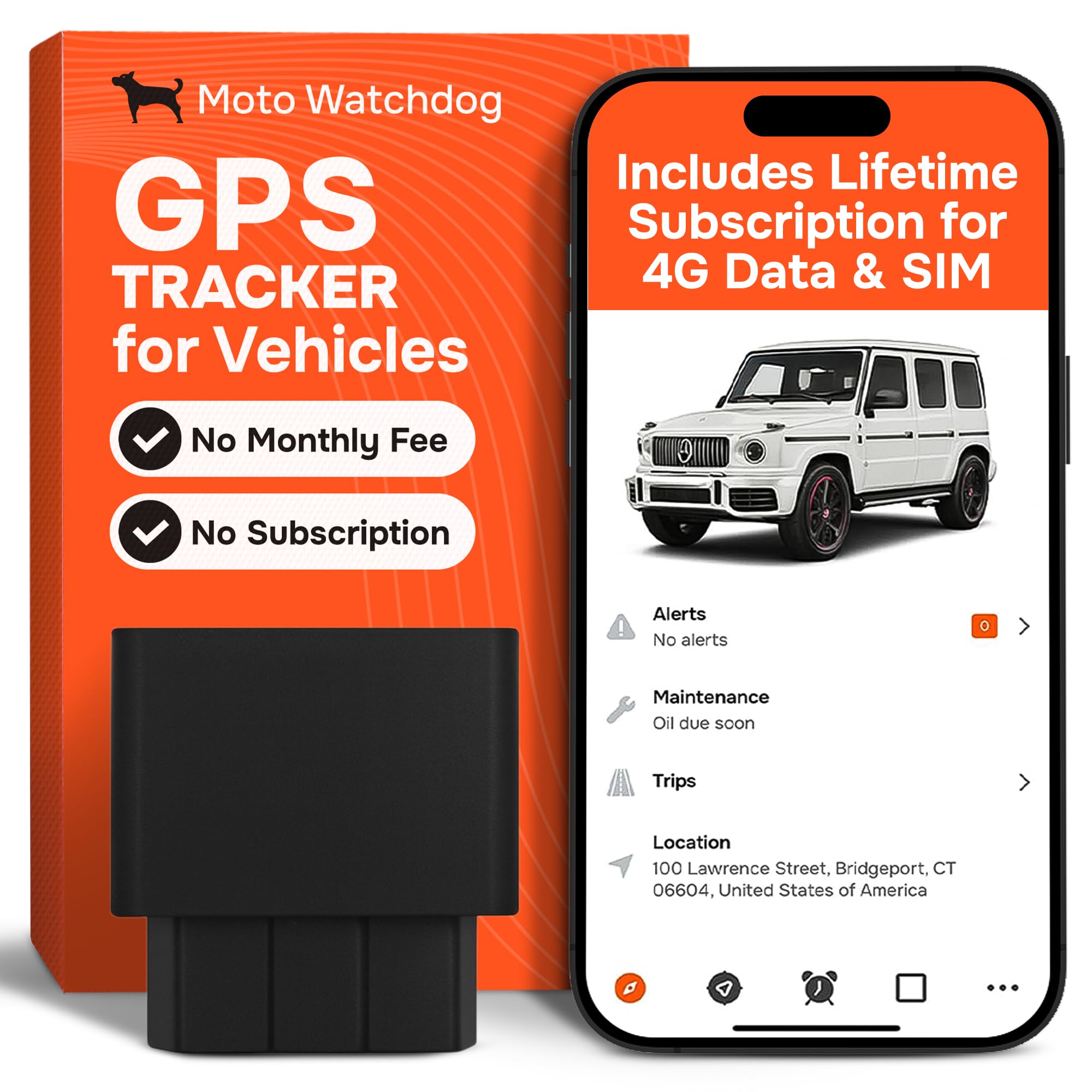
This OBD tracker from Moto Watchdog is one of the few devices in this category that requires zero subscription fees, no activation costs, and no hidden recurring charges. It plugs into the OBD2 port of any vehicle from 1998 onward, draws power from the vehicle’s battery, and comes with a mobile app for real-time tracking, speed monitoring, and geo-fence alerts. Coverage extends to over 170 countries, including the US, Canada, and Mexico.
Users emphasize the relief of knowing there is no monthly bill to budget for, and the plug-and-play installation takes literally minutes. The device goes into sleep mode after the ignition is off, so it won’t drain the car battery. The trade-off is that it doesn’t read diagnostic trouble codes or monitor fuel level, and the device is not truly hidden since it occupies the OBD port. Some users have reported that the plastic housing can feel a bit fragile compared to hardier commercial units.
For anyone seeking a permanent no-strings-attached tracking solution for a personal vehicle or small fleet, this is the most cost-effective option. The lack of a subscription dramatically lowers the total cost of ownership over multiple years.
What works
- No monthly subscription, activation, or hidden fees ever
- Plug-and-play OBD2 installation on vehicles from 1998
- Works in over 170 countries with global cellular coverage
What doesn’t
- Does not read engine diagnostic trouble codes
- OBD port is an exposed location, not suitable for covert tracking
- Plastic enclosure may not withstand extreme physical abuse
9. Moto Watchdog Hardwire No Subscription
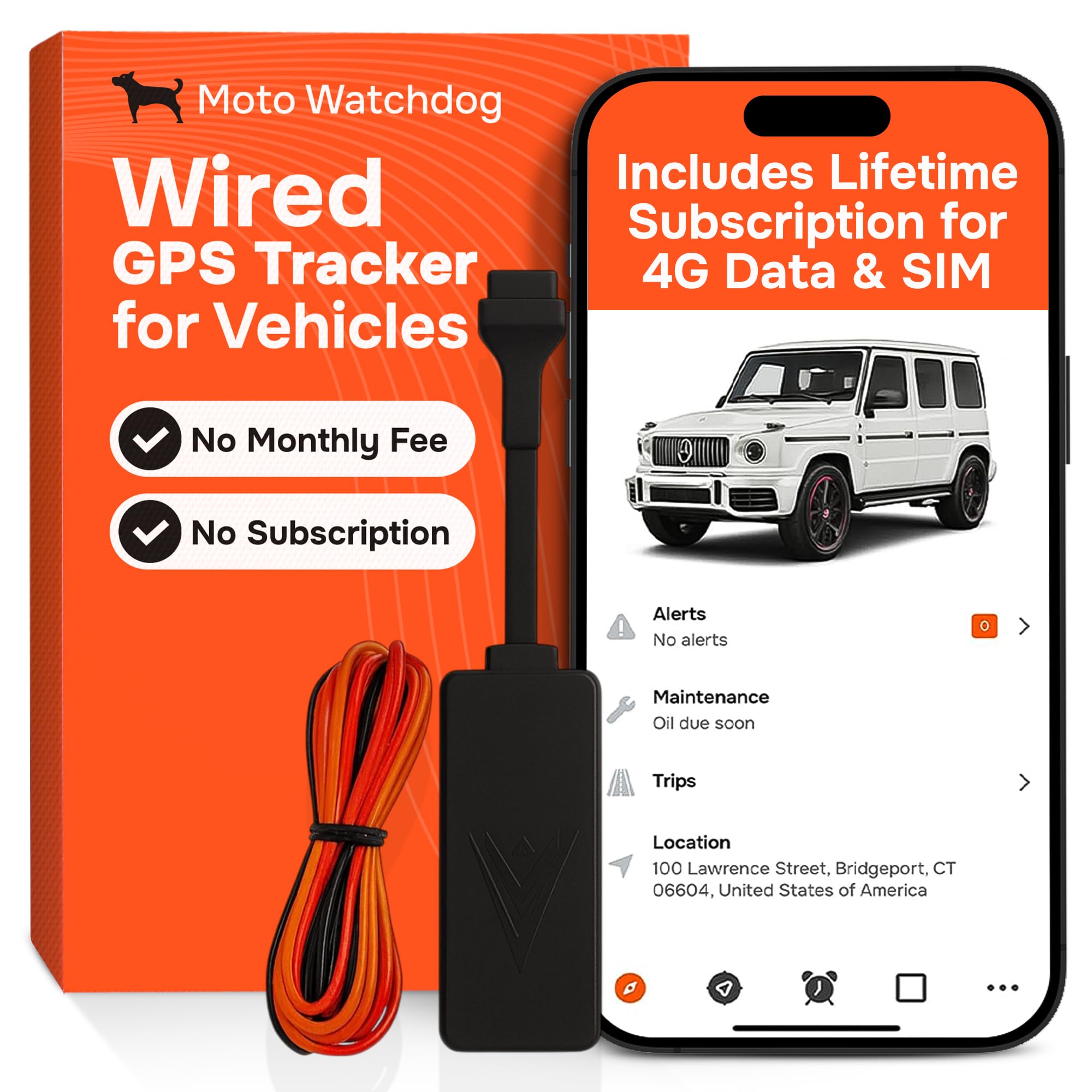
The hardwired variant of Moto Watchdog’s tracker is designed for permanent, covert installation directly into a vehicle’s electrical system. It connects to the battery via two wires (red positive, black negative), with an optional orange wire for ignition detection. Like its OBD sibling, it requires no subscription fees, making it a lifetime purchase. The device supports geo-fencing, speed alerts, and route history, and works in over 140 countries.
Customer feedback indicates that the device is highly accurate, even in areas with poor cell reception, logging data and uploading it when signal returns. The hardwire approach means it can be hidden deep inside the engine compartment or behind the dashboard, invisible to anyone who might tamper with it. Users note that the app is straightforward and that the ignition-on alerts are very responsive. The installation requires a fuse tap or direct-to-battery connection and some basic wiring comfort, which may deter non-mechanically inclined buyers.
This is the definitive solution for owners who want a tracker that is completely hidden, runs indefinitely on vehicle power, and incurs zero ongoing fees. It is a true set-and-forget device for fleets or high-value personal cars.
What works
- No subscription fees, lifetime service included with purchase
- Covert hardwired installation makes device invisible to thieves
- Accurate GPS with strong signal retention in fringe coverage areas
What doesn’t
- Requires wiring knowledge for proper installation
- Speeding alerts can be hit-or-miss in initial usage
- Coverage limited to 140 countries versus 170 on the OBD model
10. KIUP Air Tags for Android
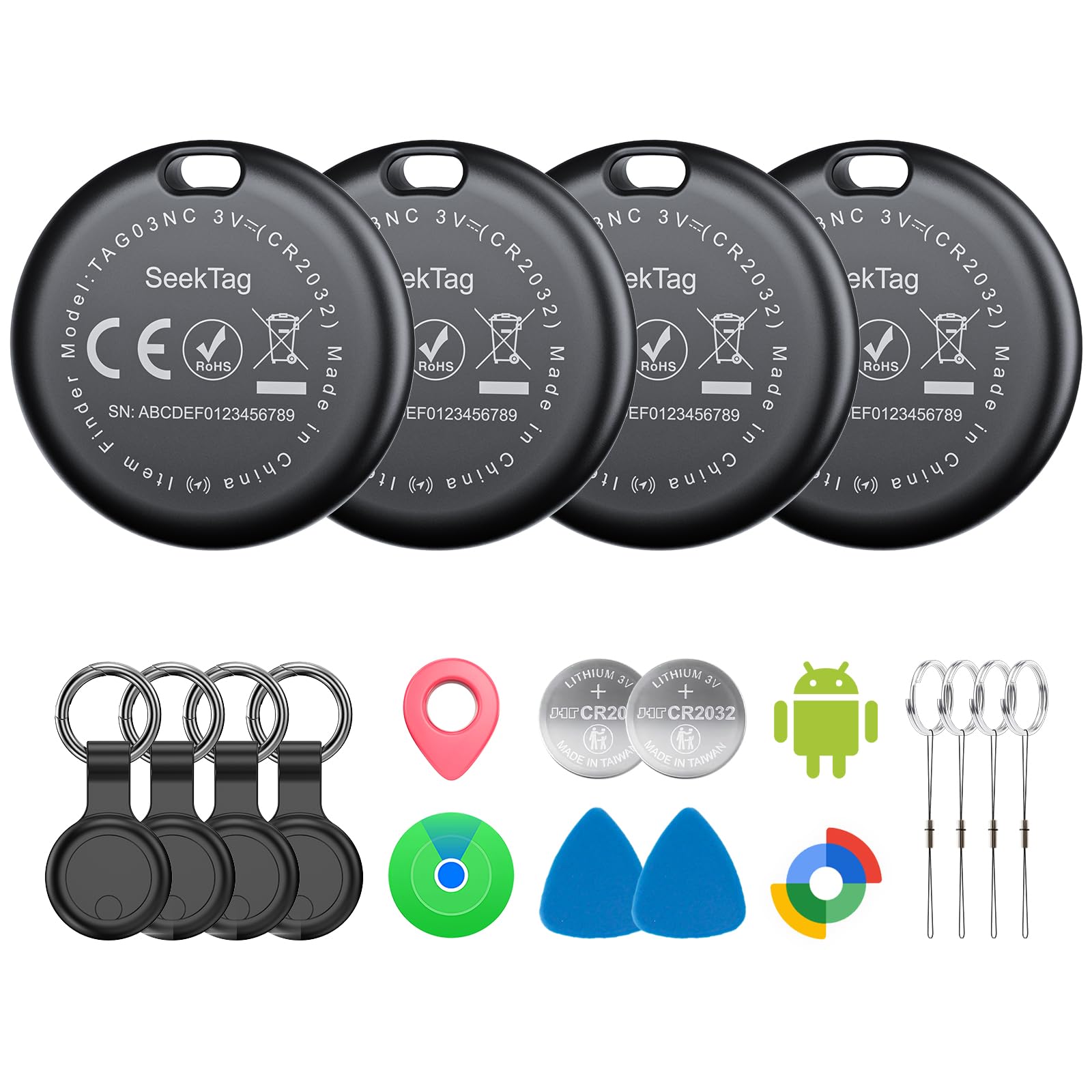
KIUP’s four-pack of Bluetooth tags is designed to work with both Google Find Hub and Apple Find My networks, bridging the gap between Android and iOS ecosystems out of the box. Each tag uses a user-replaceable CR2032 battery that lasts up to two years and supports Ultra-Wideband (UWB) for precise distance visualization within Bluetooth range. The IP65 rating protects against splashes and rain, and the tags can be shared with family or friends for collaborative tracking.
Buyers note that the four-pack price point is remarkably low for the functionality offered, and the inclusion of four protective cases in the package is a nice bonus. The key limitation is that these are standard Bluetooth tags — they lack cellular connectivity, so their “global cloud positioning” relies entirely on the crowd-sourced network of nearby phones. This works well in urban areas but fails in garages or remote locations with no phone traffic nearby. They are also incompatible with GPS and Huawei devices.
This pack is the entry-level champion for tracking everyday items like backpacks, keys, and luggage. The UWB support provides a step up in precision compared to older Bluetooth-only tags, making it a smart choice for budget-conscious shoppers who want multi-platform compatibility.
What works
- Works with both Google Find Hub and Apple Find My networks
- Ultra-Wideband (UWB) for precise distance visualization
- Four-pack includes cases and offers great overall value
What doesn’t
- No cellular GPS, relies entirely on crowd-sourced Bluetooth network
- Not compatible with GPS or Huawei devices
- Limited functionality outside of populated areas
11. Garmin eTrex SE Handheld

The Garmin eTrex SE is a rugged, handheld GPS navigator designed for hikers, geocachers, and outdoor professionals who need to track their position in the backcountry rather than their parked vehicle. It features a high-resolution 2.2-inch sunlight-readable display, multi-GNSS support for GPS, GLONASS, Galileo, BeiDou, and QZSS satellites, and an exceptionally long battery life of up to 168 hours in standard mode or 1,800 hours in expedition mode using two AA batteries.
Users report fast satellite acquisition and stable tracking even in dense tree cover or deep canyons. The device pairs with the Garmin Explore app for wireless trip planning, smart notifications, and geocaching integration. The digital compass provides accurate heading information when stationary. However, the menu navigation can be initially unintuitive, and the device lacks the preloaded topographic maps found on Garmin’s more expensive models. Some customers also experienced units failing after a few months of use.
This is not a vehicle asset tracker — it is a personal navigation tool for people who need to know exactly where they are when there is no phone signal and no vehicle to plug into. For that use case, it remains one of the most reliable and battery-efficient handheld GPS units on the market.
What works
- Sunlight-readable 2.2-inch display with excellent visibility
- Multi-GNSS support ensures strong signal in challenging terrain
- Up to 168 hours of battery life on two AA batteries
What doesn’t
- Menu navigation can be unintuitive and requires a learning curve
- No preloaded topographic maps — mapping is basic
- Some reports of units failing after a few months of use
Hardware & Specs Guide
GPS vs. Bluetooth Tracking
GPS trackers use satellite constellations (GPS, GLONASS, Galileo, BeiDou) to calculate precise coordinates anywhere on the planet. They require a clear view of the sky for best accuracy but work in remote areas with no phone coverage. Bluetooth trackers like Tile and KIUP rely on a short-range radio that connects to your phone when close, then uses the internet connection of nearby phones running the same app to report a location. This works well in cities but fails in garages, storage units, or rural areas with few app users.
Subscription Models Explained
Most cellular GPS trackers require a monthly or annual service plan to pay for the data SIM card inside the device. Plans typically range from to per month depending on update frequency and included features. Some devices like the Moto Watchdog models offer a one-time purchase with no ongoing fees by using a different roaming agreement. The trade-off is that subscription trackers generally provide faster update intervals and more detailed analytics, while no-subscription trackers offer lower long-term costs but often have less polished software platforms.
Battery Life Factors
Battery life in tracking devices is determined by update frequency, cellular signal strength, and whether the device is wired to vehicle power. A device pinging its location every 5 minutes will drain its battery far faster than one pinging every hour. Power-saving modes that keep the device in deep sleep until movement is detected can extend battery life from weeks to multiple years. User-replaceable batteries allow the device to outlast its power source, while sealed rechargeable batteries will eventually degrade and require full device replacement. Hardwired trackers bypass this issue entirely by running on the vehicle’s electrical system indefinitely.
Waterproof Ratings
An IP65 rating means the device is dust-tight and protected against low-pressure water jets from any direction — suitable for rain and splashes but not full immersion. IP67 and IP68 ratings provide protection against temporary submersion, with IP68 typically rated for depths of 1 meter or more for 30 minutes. For a tracker mounted under a vehicle or on outdoor equipment, IP67 or higher is strongly recommended to survive puddles, pressure washes, and heavy rain. Devices without any IP rating are only safe for interior use, such as under a car seat or in a glovebox.
FAQ
Why do some GPS trackers require a subscription while others do not?
What is the difference between an OBD tracker and a hardwired tracker?
Are Bluetooth trackers like Tile or KIUP useless outside of cities?
Final Thoughts: The Verdict
For most buyers, the best asset tracking devices winner is the Bouncie GPS Tracker because it delivers the richest blend of real-time location, driving analytics, and vehicle health monitoring through a simple OBD2 plug-in that works on virtually any modern vehicle. If you want zero recurring fees forever, grab the Moto Watchdog OBD — it is the only true buy-once, use-forever tracker that still offers geo-fencing and speed alerts. And for maximum installation flexibility and battery life, nothing beats the Cube Pro GPS with its magnetic mount and year-long rechargeable battery.

Certification: BSc in Mechanical Engineering
Education: Mechanical engineer
Lives In: 539 W Commerce St, Dallas, TX 75208, USA
Md Amir is an auto mechanic student and writer with over half a decade of experience in the automotive field. He has worked with top automotive brands such as Lexus, Quantum, and also owns two automotive blogs autocarneed.com and taxiwiz.com.