That sour, musty blast when you first turn on the car air conditioner isn’t just unpleasant — it signals bacterial growth deep inside the evaporator housing. Standard cabin sprays mask the smell temporarily, but eliminating the source requires a formulation that penetrates the coil fins and kills the biofilm responsible for the odor.
I’m Amir — the founder and writer behind Four Wheel Ask. My research methodology involves cross-referencing technical data sheets, aggregating verified owner experiences, and evaluating chemical formulations for real-world effectiveness in automotive HVAC systems.
Not all products labeled for AC use can actually reach the microbial colonies embedded in the evaporator core. The right approach means choosing a dedicated best antibacterial spray for car air conditioner that penetrates deep to neutralize odors at the source.
How To Choose The Best Antibacterial Spray For Car Air Conditioner
Selecting the right product starts with understanding how AC odors form. Moisture condensation on the evaporator creates a breeding ground for bacteria, mold, and mildew. A spray that merely scents the air won’t solve the problem — the formulation must reach the coil surface and disrupt microbial growth without damaging sensitive aluminum components.
Foam vs. Aerosol: Penetration Depth Matters
Foam-based cleaners expand after application, allowing the active solution to fill the evaporator cavity and dwell on the coil surface long enough to break down biofilm. Standard aerosol sprays often evaporate before reaching deep fins, making them more suited for surface disinfection of vents rather than internal coil treatment.
Active Ingredients and Material Safety
Look for non-acid formulations that specify compatibility with aluminum, copper, and plastic HVAC components. Enzymatic or alcohol-based cleaners can effectively kill bacteria without corroding the evaporator core. Avoid products with harsh acids or bleach that may accelerate oxidation of coil fins.
Application Access and Dwell Time
The best product means little if it cannot reach the target area. Some cans include extended straws or directional nozzles for aiming into the cowl intake or blower motor access. Dwell time — the period the cleaner remains wet on the surface — directly correlates with its ability to kill embedded microbes.
Quick Comparison
On smaller screens, swipe sideways to see the full table.
| Model | Category | Best For | Key Spec | Amazon |
|---|---|---|---|---|
| BG Frigi-Fresh | Car AC Treatment | Eliminating AC vent odors | 5.5 oz aerosol; spray into intake vent | Amazon |
| QwikProducts Coil Cleaner | Coil Cleaner | Deep evaporator coil cleaning | Self-rinsing foam; industrial strength | Amazon |
| KEFPO Foaming Cleaner | Foam Cleaner | DIY HVAC maintenance | Low-odor formula; no-rinse option | Amazon |
| Rectorseal Clean-N-Safe | HVAC Cleaner | Eco-friendly coil cleaning | Biodegradable; non-acid; safe on metals | Amazon |
| Lysol Disinfectant Spray | Disinfectant Spray | Quick vent surface disinfection | Kills 99.9% of viruses and bacteria | Amazon |
In-Depth Reviews
1. BG Frigi-Fresh 5.5 oz

BG Frigi-Fresh was formulated specifically for automotive AC systems, which sets it apart from general household disinfectants repurposed for car use. The spray is designed to be introduced through the air intake vent, allowing the mist to travel through the entire evaporator housing and reach the microbial colonies that cause musty smells.
Owner feedback consistently highlights its ability to eliminate sour odors after a single application when the instructions are followed precisely. The product creates a thin, penetrating mist rather than heavy foam, making it suitable for vehicles where accessing the evaporator directly is difficult. Users in humid climates report it resolves the vinegar-like smell that recurs seasonally with moisture buildup.
The manufacturer recommends a 4-6 second spray into the intake vent followed by a brief waiting period before restarting the AC. Some owners note the odor during application is strong and requires several minutes of exterior ventilation before the cabin is comfortable again. For severe cases of mold buildup, a second treatment may be necessary to fully eliminate the biofilm.
What works
- Specifically formulated for automotive AC evaporator treatment
- Penetrates deep into the HVAC housing without disassembly
- One treatment resolves most musty odors for months
What doesn’t
- Strong fragrance during application requires ventilation time
- Heavy mold infestations may need multiple applications
2. QwikProducts Foaming Coil Cleaner

QwikProducts delivers an industrial-strength foaming cleaner that tackles heavy dirt, grease, and biofilm on evaporator and condenser coils. The self-rinsing alkaline formula expands on contact, pushing into tight fin spacing where bacterial colonies hide, then breaks down and flushes away contaminants without requiring manual scrubbing.
This product is designed for a broad range of applications — central AC units, window units, refrigerators, and automotive radiators — making it a versatile choice for owners who want one cleaner for multiple systems. The foam consistency allows it to cling to vertical coil surfaces, increasing dwell time compared to liquid sprays that run off quickly.
Users report visible improvement in cooling performance after cleaning heavily clogged coils, and the lemon scent leaves a fresh finish without chemical harshness. For vehicle owners looking to clean the external condenser as well as the internal evaporator, this product handles both effectively. Some users note that one can may not be enough for large condenser units, so sizing up for bigger jobs is worth considering.
What works
- Self-rinsing foam clings to vertical surfaces for extended dwell time
- Effective on both evaporator and condenser coils
- Pleasant lemon scent; no harsh chemical residue
What doesn’t
- More focused on coil cleaning than targeted AC odor treatment
- One can may not suffice for larger condenser units
3. KEFPO Foaming AC Coil Cleaner
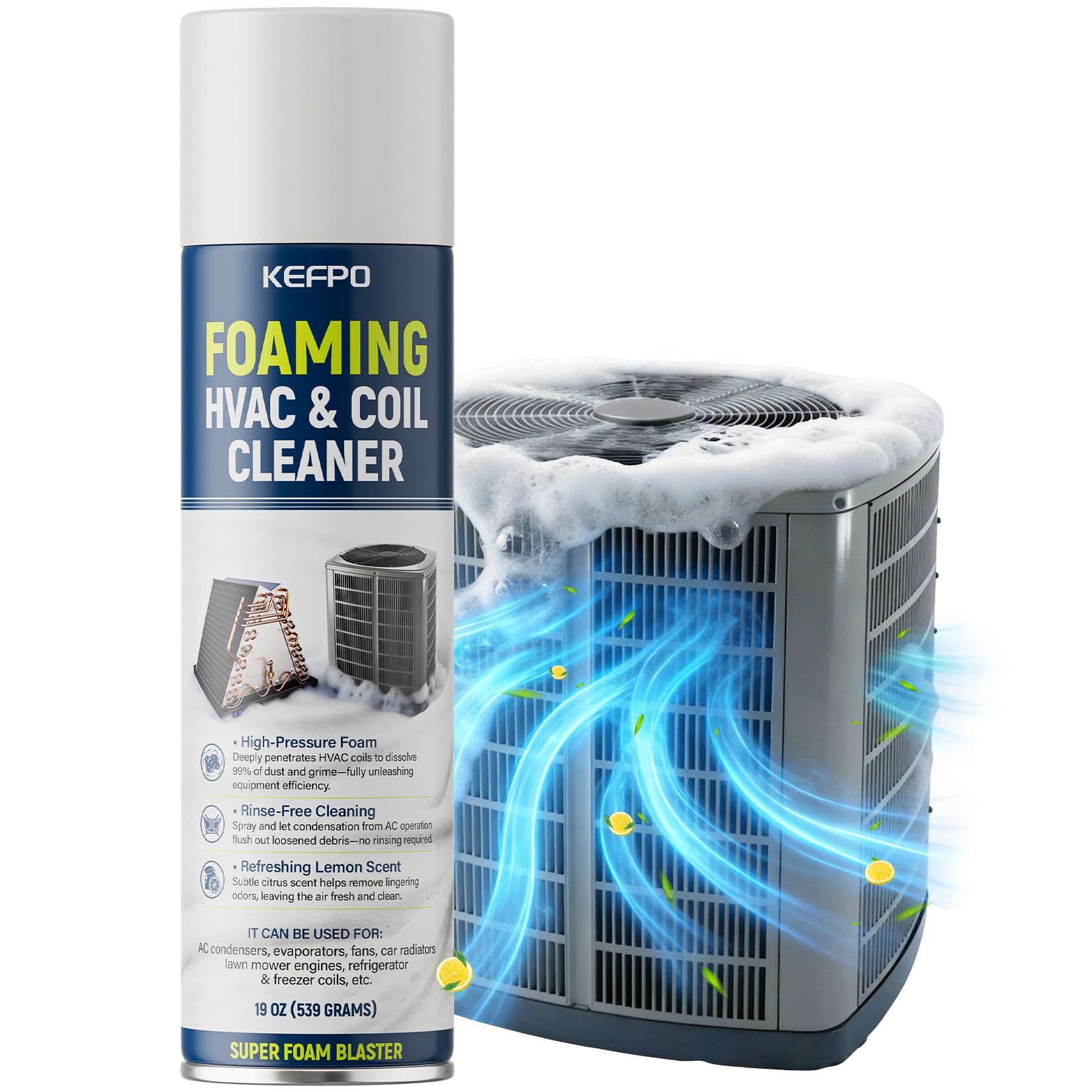
KEFPO brings a professional-grade foaming coil cleaner to the DIY market at a price point that undercuts many contractor-branded alternatives. The low-odor formula is designed for indoor use without overwhelming the workspace, making it practical for homeowners treating window units or split-system evaporators without specialized ventilation.
The foam expands into tight fin channels to loosen dust, grease, and microbial buildup, and offers both no-rinse and rinse-with-water options depending on the level of contamination. This flexibility lets users tailor the cleaning method to the specific condition of their coils. The bamboo-scented formula is noticeably milder than traditional citrus or chemical-based cleaners.
Owner reports indicate significant improvement in cooling output after treating window and central AC units, with several noting the product restored airflow in older systems. Keep in mind that recent production changes mean the extension straw is no longer included, so you may need to provide your own applicator for hard-to-reach vents or evaporator access points.
What works
- Low-odor formula suitable for indoor use during cleaning
- Flexible no-rinse or rinse option for different coil conditions
- Competitive price for a professional-grade foaming cleaner
What doesn’t
- Extension straw not included in current production units
- Some retailer listings have mixed product reviews from unrelated categories
4. Rectorseal Clean-N-Safe 83780 Coil Cleaner

Rectorseal Clean-N-Safe is a non-acid, biodegradable aerosol coil cleaner that prioritizes environmental safety without sacrificing cleaning power. The formulation is designed to present minimal hazard to people, animals, aquatic life, and plants, making it a responsible choice for users who want to avoid harsh chemicals in their maintenance routine.
The cleaner is safe for use on copper, aluminum, and steel surfaces, which covers the vast majority of automotive and home AC coils. It foams upon application to lift dirt and grime from fin surfaces, and it is recommended for microchannel coils where acid-based cleaners could cause damage. The unscented formula means no lingering fragrance — a benefit for those sensitive to strong chemical or perfume smells.
Users report that it effectively cuts through heavy grime on outdoor condenser units, with several noting noticeable improvements in cooling performance after treatment. The biodegradable profile is a genuine differentiator in this category. Some owners mention that larger AC units may require more than one can for complete coverage, so plan accordingly for bigger systems.
What works
- Biodegradable formula with low environmental impact
- Safe on aluminum, copper, and steel coils including microchannel
- Non-acid design eliminates corrosion risk on sensitive components
What doesn’t
- Targeted at HVAC coil cleaning rather than automotive vent odor treatment
- Single can may not cover large condenser units
5. Lysol Disinfectant Spray, Crisp Linen (Pack of 2)

Lysol Disinfectant Spray is the most widely recognized household disinfectant on the market, proven to kill 99.9% of viruses and bacteria on hard, non-porous surfaces. While it was not specifically engineered for automotive AC systems, many owners use it to disinfect visible vent surfaces and reduce airborne microbial loads inside the cabin.
The Crisp Linen scent is consistently praised for leaving a clean, fresh fragrance that lingers without being overpowering. The spray works well on upholstery, floor mats, and dashboard surfaces, making it a versatile cabin refresher in addition to a surface disinfectant. For high-touch areas like steering wheels and door handles, it provides rapid antibacterial action between deep cleanings.
Where this product falls short for AC-specific use is penetration. The aerosol mist evaporates quickly and does not foam or expand to reach deep into evaporator coils where bacterial biofilm forms. It is best treated as a surface-level sanitizer for vents and cabin trim rather than a dedicated evaporator treatment. Owners dealing with persistent musty smells from the AC system will need a foaming or deep-penetrating product for the root cause.
What works
- Broad-spectrum disinfection against viruses and bacteria
- Fresh Crisp Linen scent leaves cabin smelling clean
- Versatile for use on multiple interior surfaces
What doesn’t
- Not designed for deep evaporator coil penetration
- Aerosol format evaporates too quickly for biofilm treatment
- Does not address mold and bacteria embedded in the HVAC housing
Hardware & Specs Guide
Chemical Composition and Coil Safety
Effective antibacterial sprays for car AC systems rely on either alcohol-based, enzymatic, or alkaline surfactant chemistries to break down biofilm without corroding aluminum evaporator fins. Alcohol-based formulas evaporate quickly and work well for surface disinfection, while alkaline foaming agents provide longer dwell time for deep coil penetration. Non-acid formulations are critical because acidic cleaners can accelerate oxidation of aluminum and copper components, leading to pitting and reduced heat transfer efficiency over repeated use.
Application Methods and Dwell Time
The two primary formats are aerosol mist and expanding foam. Aerosol mist is typically sprayed into the cowl intake or blower motor access and relies on air movement to carry the solution through the evaporator core. Foam cleaners are applied directly to the coil surface and expand to fill fin gaps, holding the active chemistry in contact with the biofilm for longer periods. Dwell time — the duration the solution stays wet on the surface — directly determines kill rate for bacteria and mold spores. Products with self-rinsing or no-rinse options simplify the process by eliminating the need for manual flushing.
FAQ
How does antibacterial spray for car AC actually work?
Can I use a household disinfectant spray in my car AC vents?
How often should I treat my car AC system with antibacterial spray?
Final Thoughts: The Verdict
For most buyers, the best antibacterial spray for car air conditioner winner is the BG Frigi-Fresh because it was purpose-engineered for automotive AC systems and reliably eliminates musty odors at the source without requiring disassembly. If you want a versatile coil cleaner that handles both evaporator and condenser maintenance, grab the QwikProducts Foaming Coil Cleaner. And for budget-conscious DIYers treating window or split units, nothing beats the value of the KEFPO Foaming AC Coil Cleaner.

Certification: BSc in Mechanical Engineering
Education: Mechanical engineer
Lives In: 539 W Commerce St, Dallas, TX 75208, USA
Md Amir is an auto mechanic student and writer with over half a decade of experience in the automotive field. He has worked with top automotive brands such as Lexus, Quantum, and also owns two automotive blogs autocarneed.com and taxiwiz.com.