Opening your hood to find crusty, white, powdery buildup around your battery terminals is more than just an eyesore — it’s a direct drain on your car’s electrical system. That corrosion acts as an insulator, blocking the flow of current from your battery to your starter, which can lead to slow cranks, dim lights, and a no-start condition right when you need to leave. The fix isn’t scraping anymore; it’s a targeted chemical treatment that neutralizes existing buildup and prevents it from returning.
I’m Amir — the founder and writer behind Four Wheel Ask. I’ve spent years analyzing automotive maintenance chemistry, studying how different anti-corrosion formulas interact with lead terminals, copper cables, and the acidic environment inside a battery bay to separate effective barrier protection from temporary fixes.
The right treatment stops the electrochemical reaction before it starts. This guide breaks down the top-rated formulas to help you pick the best anti corrosion spray for car battery that matches your driving conditions and maintenance habits.
How To Choose The Best Anti Corrosion Spray For Car Battery
The vast majority of battery corrosion is caused by hydrogen gas venting from the battery cells mixing with the moisture and metal compounds under your hood. The result is a conductive crust that slowly drains your battery. The solution involves two distinct steps: cleaning off the existing buildup and then applying a long-term protectant. Focus on these factors when selecting your spray.
Cleaning vs. Protecting: You Need Both
Many sprays are dedicated cleaners designed to neutralize and dissolve the acidic corrosion on the spot. Others are protectants that leave behind a dielectric film to prevent future reactions. The best maintenance routine uses a dedicated cleaner first, dries the terminals, and then applies a protectant. A combined formula may save time but can leave residual moisture.
The Chemistry of the Barrier
Look for a formula that contains a corrosion inhibitor — typically a reactive polymer or a water-displacing oil. The ideal protectant creates a semi-dry or waxy film that physically seals the terminal from oxygen and moisture. Sprays that remain liquid may attract dirt and grime, building up a conductive path over time. A waxy finish that stays in place is preferred for long-term protection.
Application and Reach
Battery terminals are often located in tight spaces between the radiator, fender, and other underhood components. A spray with a precision nozzle or a straw applicator is essential to direct the product exactly where it’s needed — onto the terminal posts and cable clamps — without overspray onto your paint, hoses, or alternator.
Quick Comparison
On smaller screens, swipe sideways to see the full table.
| Model | Category | Best For | Key Spec | Amazon |
|---|---|---|---|---|
| ACF-50 Anti-Corrosion Compound | Premium Protectant | Long-term corrosion prevention | 13 oz aerosol, dielectric barrier | Amazon |
| CorrosionX Rust Inhibitor | Premium Cleaner | Heavy duty rust & corrosion removal | 6 oz aerosol, 39kV dielectric strength | Amazon |
| JENOLITE Waxoil Rust Prevention | Heavy Duty | Underhood & body panel corrosion | 16.9 oz, waxy self-sealing film | Amazon |
| Johnsen’s Terminal Protector | Protectant Spray | Budget-friendly post-cleaning seal | 7.5 oz, lead-free coating | Amazon |
| NOCO Remove E403S Cleaner | Cleaner Spray | Rapid corrosion removal & rinse | 14 oz, neutralizes & dissolves | Amazon |
In‑Depth Reviews
1. ACF-50 Anti-Corrosion Lubricant Compound
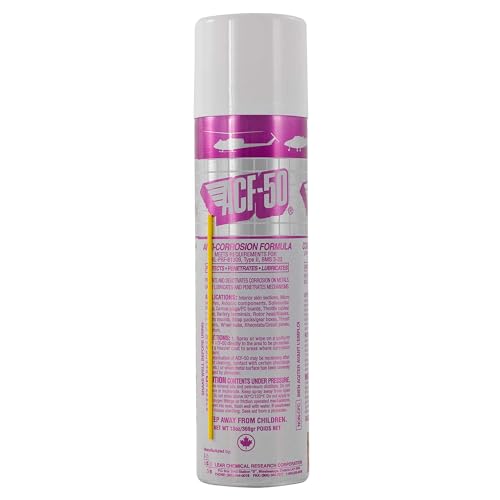
ACF-50 has earned a cult following in the aviation and marine worlds for a good reason — it chemically stops corrosion in its tracks. The formula is a dielectric compound that displaces moisture and micro-coats metal surfaces with a non-flammable, non-toxic barrier. For battery terminals, this means you spray it on and the corrosion process halts immediately. The 13 oz can provides enough coverage for multiple applications on terminals, cable ends, and battery hold-downs.
One of the standout features is its ability to soak into existing microscopic crevices and stop sub-surface corrosion from spreading. This is critical for older battery cables where corrosion may have already started traveling up the wire strand. The spray is safe on plastics, rubber, and paint, so you don’t have to mask off surrounding components. Users often report that one application lasts through a full winter season without reapplication.
The trade-off is that ACF-50 is a dedicated protectant, not a cleaner. You must clean your terminals thoroughly before application, or you’ll simply seal corrosion under the coating. The aerosol can also requires a steady hand to avoid over-spraying onto the battery case where it could make future removal slippery. For those seeking maximum long-term protection with minimal reapplication, this is the gold standard.
What works
- Stops active corrosion immediately upon application
- Safe on electronics, wiring, and all underhood materials
- Excellent long-term durability through weather cycles
What doesn’t
- Must ground ship due to aerosol regulations
- Does not clean existing corrosion — prep work required
- Premium price point for the size
2. CorrosionX Rust Inhibitor
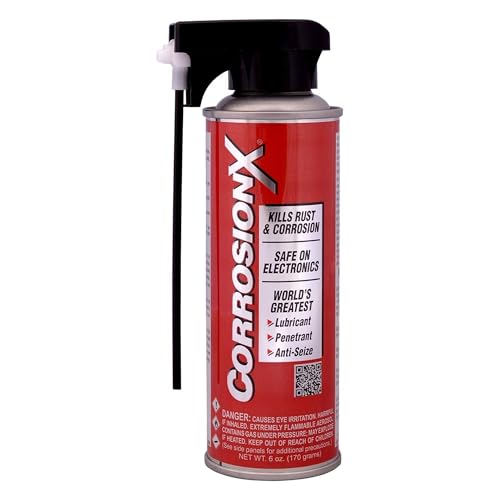
CorrosionX is an industrial-grade formula that is qualified by the U.S. Navy for advanced corrosion protection, which gives you a good sense of its effectiveness. It penetrates deep into metal surfaces, displaces moisture, and leaves a dielectric film rated over 39,000 volts. This makes it especially effective for battery terminals where high current and moisture create a perfect environment for galvanic corrosion between the lead post and copper clamp.
The spray works as both a cleaner and a protectant. The penetrating action helps break loose light surface rust and corrosion, while the film prevents new growth. For battery maintenance, you can spray it directly onto terminals to free up stuck clamps and then leave the film for ongoing protection. It also works exceptionally well on other underhood electrical connectors and sensors that are prone to moisture ingress.
At 6 oz, the can is smaller than some competitors, which means you may need to reorder sooner if you are treating multiple vehicles. The liquid also tends to stay slightly wetter than a waxy protectant, which can attract dust in high-dirt environments. For coastal or high-humidity areas where corrosion is relentless, this formula’s penetrating power makes it a reliable choice.
What works
- Deep penetration frees rusted and seized battery clamps
- High dielectric rating ensures no short circuits
- Military-qualified for harsh environmental protection
What doesn’t
- Smaller can size for the price
- Remains slightly wet, may attract grime over time
- Overspray can be messy on painted surfaces
3. JENOLITE Waxoil Rust Prevention Aerosol

JENOLITE Waxoil is primarily marketed as an underbody and chassis protectant, but its formula is extremely effective for battery terminal protection due to its thick waxy consistency. When sprayed onto clean terminals, the wax dries to a semi-hard film that physically seals out oxygen and moisture. This is precisely the kind of barrier that stops the chemical reaction causing battery corrosion. The 16.9 oz can provides generous coverage for multiple applications.
The self-sealing property is a major advantage — if the coating gets scratched during a battery swap or cable adjustment, the wax will flow back into the damaged area and reseal itself. This makes it ideal for daily-driven cars where terminals are periodically checked or tightened. The formula also drives out moisture on contact, so you can apply it even if the terminals are slightly damp without trapping water underneath.
The main drawback is that Waxoil is not specifically formulated for electrical contacts. The waxy build can be thick enough to make future terminal disconnection slightly sticky, requiring a bit of effort to break the seal. Also, the spray nozzle is designed for broad coverage on underbody panels, making precision application on small terminal posts trickier without a straw attachment.
What works
- Thick waxy film provides excellent moisture seal
- Self-healing property repairs minor scratches
- Large can offers great value per ounce
What doesn’t
- Not specifically engineered for electronics
- Thick coating can make terminal removal sticky
- Broad spray pattern requires precise handling
4. Johnsen’s 4605 Battery Terminal Protector

Johnsen’s Terminal Protector is a straightforward, no-fuss product designed specifically for the task at hand: providing a protective coating on battery terminals. It is a lead-free formula that you spray onto clean, dry terminals to form a barrier that resists the corrosive fumes venting from the battery. At 7.5 oz, it’s a compact can that fits easily into a glovebox or tool bag for on-the-go maintenance.
The product is formulated to improve starting by maintaining clean electrical contact points. When applied after a proper cleaning, it prevents the formation of the white crust that causes voltage drop. Many users report that a single application lasts through the life of the battery without needing a re-spray. The spray nozzle delivers a targeted stream, making it easy to apply only to the terminal posts without coating the battery case or surrounding wiring.
Where Johnsen’s falls short is its lack of cleaning ability. It is purely a protectant, so you cannot use it to remove existing corrosion. Additionally, the protective film is thinner than a waxy option like Waxoil, which means it may not hold up as well in extremely wet or high-temperature underhood environments. For basic terminal protection at an accessible price, it is a reliable workhorse.
What works
- Purpose-built for battery terminal protection
- Lead-free and safe for the environment
- Precise nozzle prevents messy overspray
What doesn’t
- Does not clean existing corrosion
- Thinner film may require reapplication in harsh climates
- Smaller bottle size limits coverage
5. NOCO Remove E403S Battery Terminal Cleaner Spray

NOCO is a well-respected name in battery maintenance, and the Remove E403S is their dedicated terminal cleaner. Unlike protectants, this spray is designed to dissolve and neutralize the acidic corrosion on your terminals, cables, and hold-downs. Simply spray it on the crusty buildup, let it work for a moment, and rinse with water. The 14 oz can provides enough capacity for multiple deep cleans on severely corroded batteries.
The chemistry is formulated to instantly neutralize the battery acid salts, making the cleanup process much safer than scraping. The spray also helps restore maximum current flow by ensuring a clean metal-to-metal connection between the terminal post and the cable clamp. This is especially important after a battery leak or in older vehicles where corrosion has built up over years. NOCO recommends using it as the first step before applying their protectant spray.
The limitation is clear — this is not a protectant. If you clean your terminals with NOCO Remove but do not follow up with a barrier spray, the corrosion will return within weeks. The formula also requires a water rinse, which means you need to thoroughly dry the terminals afterward to avoid leaving moisture that could restart the corrosion cycle. For anyone performing a full battery service, this is an essential first step.
What works
- Instantly neutralizes and dissolves heavy corrosion
- Safe on cables, hold-downs, and battery cases
- Large 14 oz can provides excellent cleaning power
What doesn’t
- Requires water rinse and thorough drying after use
- Does not provide any ongoing corrosion protection
- Best results require a second protectant product
Hardware & Specs Guide
Dielectric Strength
This is the voltage rating a protectant can insulate against without conducting electricity. For battery terminals operating at 12 volts, any rating above 1,000 volts is overkill but safe. Products like CorrosionX with a 39,000-volt rating ensure that even in wet conditions, the coating will not short-circuit across the terminals. A high dielectric strength also protects against galvanic corrosion between dissimilar metals.
Viscosity and Film Type
Sprays come in two main film types — wet oil-based or semi-dry waxy. Wet films, like those from CorrosionX, penetrate deep into crevices and free rusted parts but can attract dust. Waxy films, like JENOLITE Waxoil, cure to a hard shell that physically blocks oxygen and moisture. For battery terminals, a semi-dry or waxy film typically provides longer-lasting protection in high-heat underhood environments.
pH and Neutralizing Ability
Battery corrosion is acidic due to sulfuric acid vapor. Cleaners that contain a neutralizing agent shift the pH of the residue to neutral, stopping the corrosive process instantly. NOCO Remove E403S is formulated specifically for this. Protectants generally do not neutralize acid; they rely on sealing the surface. Using a neutralizer before sealing ensures no active acid is trapped under the coating.
Aerosol Propellant and Application Method
Most anti-corrosion sprays use liquid hydrocarbon or compressed gas propellants. Products like ACF-50 require ground shipping because their propellant is classified as hazardous for air transport. The nozzle design matters — a standard spray can is fine for broad coverage, but a precision nozzle or included straw is necessary for accurately coating battery terminals without getting product on nearby electronics or paint.
FAQ
Can I use anti-corrosion spray on a battery with existing white crust?
Will anti-corrosion spray damage my car’s paint or plastic components?
How often should I reapply battery terminal protectant spray?
Final Thoughts: The Verdict
For most buyers, the best anti corrosion spray for car battery winner is the ACF-50 Anti-Corrosion Compound because it provides unmatched long-term protection with a single application and is safe on all underhood materials. If you want a product that both cleans and protects with deep penetrating power, grab the CorrosionX Rust Inhibitor. And for an entry-level maintainer who needs a dedicated cleaner before applying a sealant, nothing beats the NOCO Remove E403S for neutralizing heavy corrosion.

Certification: BSc in Mechanical Engineering
Education: Mechanical engineer
Lives In: 539 W Commerce St, Dallas, TX 75208, USA
Md Amir is an auto mechanic student and writer with over half a decade of experience in the automotive field. He has worked with top automotive brands such as Lexus, Quantum, and also owns two automotive blogs autocarneed.com and taxiwiz.com.