An alternator that fails on the highway leaves you stranded with a dead battery and a growing tow bill. Matching output, clock position, and pulley class to your specific vehicle is what separates a smooth replacement from a return headache.
I’m Amir — the founder and writer behind Four Wheel Ask. I have spent years analyzing automotive electrical system specifications and comparing aftermarket alternator designs to separate quality components from premature failures.
After reviewing build data, fitment guides, and long-term owner feedback across multiple platforms, I narrowed the field to seven models that deliver consistent charging performance. I have analyzed technical specifications and owner feedback across dozens of models to present the seven most reliable and practical units in this best alternator replacement kit guide.
How To Choose The Best Alternator Replacement Kit
Selecting the right alternator kit requires more than matching the part number on your old unit. Amperage demands, regulator architecture, and physical fitment specs all play a role in whether your new alternator works reliably for years or causes voltage issues from day one.
Amperage Requirements
Every vehicle has a baseline current draw from the ignition system, fuel pump, lights, and sensors. Adding aftermarket accessories such as high-output audio, auxiliary lighting, or winches increases that demand. A 120A unit covers most stock and lightly modified setups, while 160A and above suits vehicles with heavy electrical loads. Oversizing too much can undercharge the battery at idle if the alternator never reaches its efficiency band.
Voltage Regulator Type
Internal regulators are built into the alternator housing and simplify wiring, making them the standard on modern vehicles and popular in conversion kits for classics. External regulators require a separate module mounted elsewhere in the engine bay, which adds complexity but allows easier servicing on older designs. The 1-wire self-exciting alternators eliminate the need for a separate excitation wire, ideal for vintage restorations where you want a clean, minimalist harness.
Fitment Specifications
Clock position determines how the rear housing aligns with your bracket and wiring. Pulley class (V1, S6, etc.) must match your belt profile. Rotation direction is typically clockwise for most domestic and Asian vehicles, but some European applications use counterclockwise. Ignoring any of these three dimensions leads to belt misalignment, wiring strain, or a housing that contacts the engine block.
Build Quality Indicators
Newly manufactured units with 100% fresh internal components generally outperform remanufactured alternators, which reuse old cores with replaced wear items. Look for voltage stability testing at the factory, greased key components for corrosion resistance, and a warranty that covers manufacturing defects. Brands that specify their testing procedures on the packaging or listing tend to have fewer early failures.
Quick Comparison
On smaller screens, swipe sideways to see the full table.
| Model | Category | Best For | Key Spec | Amazon |
|---|---|---|---|---|
| ACDelco Gold 335-1023 | OE Replacement | OEM-grade reliability | 100% new components | Amazon |
| A-Premium 160A | High Output | Chrysler/Dodge/VW 3.6L | 160A, 6-groove pulley | Amazon |
| IAP Performance AC903900EC | Conversion Kit | VW Beetle generator upgrade | 60A, internal regulator | Amazon |
| ACDelco GM Genuine 20881337 | OE Spec | GM direct factory replacement | GM engineered and validated | Amazon |
| GM Genuine Parts 84143543 | Factory Match | Late model GM vehicles | 100% newly manufactured | Amazon |
| E EZEXPREZE 120A 1-Wire | 1-Wire Setup | Classic GM and Chevy builds | 120A, self-exciting design | Amazon |
| Complete Tractor Conversion Kit | Tractor Conversion | Ford 8N, 2N, and 9N tractors | 63A, 12V, CW rotation | Amazon |
In-Depth Reviews
1. ACDelco Gold 335-1023 Alternator

The ACDelco Gold 335-1023 is engineered with all-new internal components rather than remanufactured cores, which gives it a reliability advantage over rebuilt alternatives. Every unit undergoes computer testing for voltage stability, terminal function, and electronic circuit board integrity before leaving the factory. Key components receive grease treatment to resist corrosion in harsh underhood conditions, extending service life in high-humidity or salt-belt environments.
This alternator replaces OEM part number 88877233 and fits a broad range of GM applications requiring a compact, mid-output unit. The machining on the housing and the precision of the mounting ears align well with factory brackets, reducing installation hassle. Owner reports consistently mention that the Gold series matches the performance and longevity of the factory original without the premium dealer price.
For someone who wants a drop-in replacement with no core exchange and genuine AC Delco engineering backing it, this kit delivers peace of mind that aftermarket no-name units often lack.
What works
- 100% new internal components, not remanufactured
- Computer tested for voltage and circuit integrity
- Greased internal parts resist corrosion
What doesn’t
- Output amperage may be too low for heavily modified vehicles
- Higher upfront cost than budget-oriented alternatives
2. A-Premium Alternator 160A
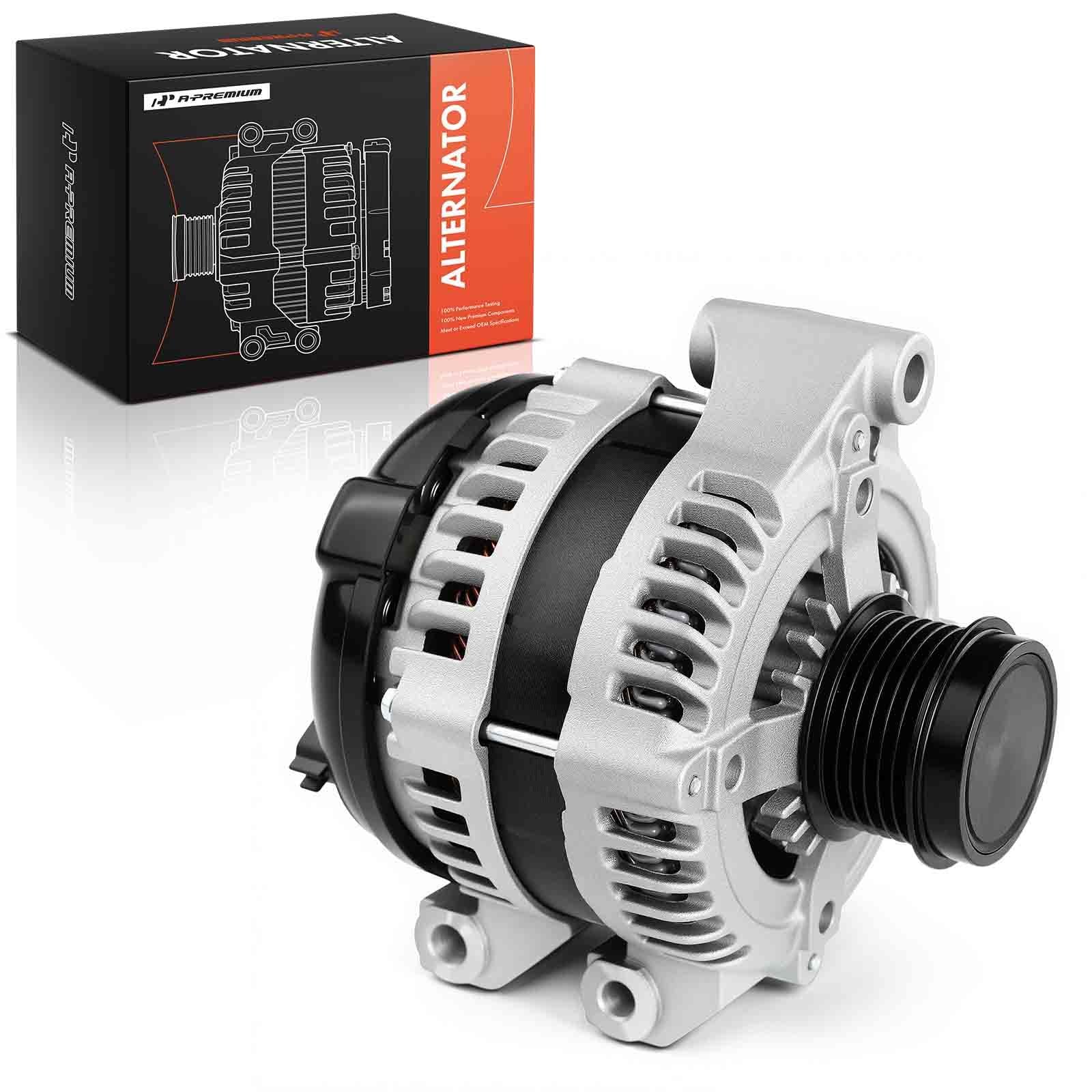
This A-Premium alternator delivers 160 amps of output, making it a solid choice for Chrysler, Dodge, Ram, and VW models equipped with the 3.6L V6 engine. The six-groove S6 pulley matches the serpentine belt systems found on these platforms, and clockwise rotation aligns with the standard configuration across the fitment list. Reference numbers including 04801624AD and 68272108AD confirm direct cross-referencing to Mopar and VW OE parts.
The housing is fully new construction with a machined exterior finish that resists surface corrosion. At 12 volts with 160 amps of capacity, it handles the electrical load of modern climate control, infotainment, and lighting systems without voltage sag during idle. The weight of the unit suggests robust copper windings rather than lightweight cost-reduced internals.
Owners report consistent charging voltages across the RPM range and straightforward installation when following the included fitment notes. It stands out as a high-output option for daily drivers that need extra electrical headroom without switching to a completely different alternator platform.
What works
- High 160A output supports accessory-heavy vehicles
- OE cross-reference numbers match multiple platforms
- New construction with machined housing
What doesn’t
- Limited to 3.6L V6 engine applications
- Brand has shorter track record than established OE suppliers
3. IAP Performance AC903900EC Alternator Kit

The IAP Performance AC903900EC is purpose-built for the VW Beetle, converting the stock generator setup to a modern internal-regulator alternator. It is 100% new, not rebuilt, and delivers 60 amps — significantly higher than the original generator output, which struggled to keep up with halogen headlights and aftermarket accessories. The internal voltage regulator simplifies wiring and eliminates the external regulator box that often fails on older Bugs.
Installation is a direct bolt-on for the Beetle engine bay, meaning no bracket fabrication or wiring harness surgery is required. The machining on the housing matches the stock generator stand perfectly, and the pulley alignment keeps belt tracking straight. The 15.47-pound weight reflects the heavier-duty stator and rotor windings compared to the lightweight generator it replaces.
VW enthusiasts consistently report that this kit resolves dimming headlights at idle and provides stable charging at low RPM around town. It is a well-engineered upgrade that preserves the original appearance while bringing electrical reliability into the modern era.
What works
- Higher output than stock generator by a wide margin
- Internal regulator eliminates external failure point
- Direct bolt-on with no bracket modifications
What doesn’t
- Only fits VW Beetle and closely related air-cooled platforms
- 60A output is limited for extreme accessory loads
4. ACDelco GM Genuine Parts 20881337 Alternator
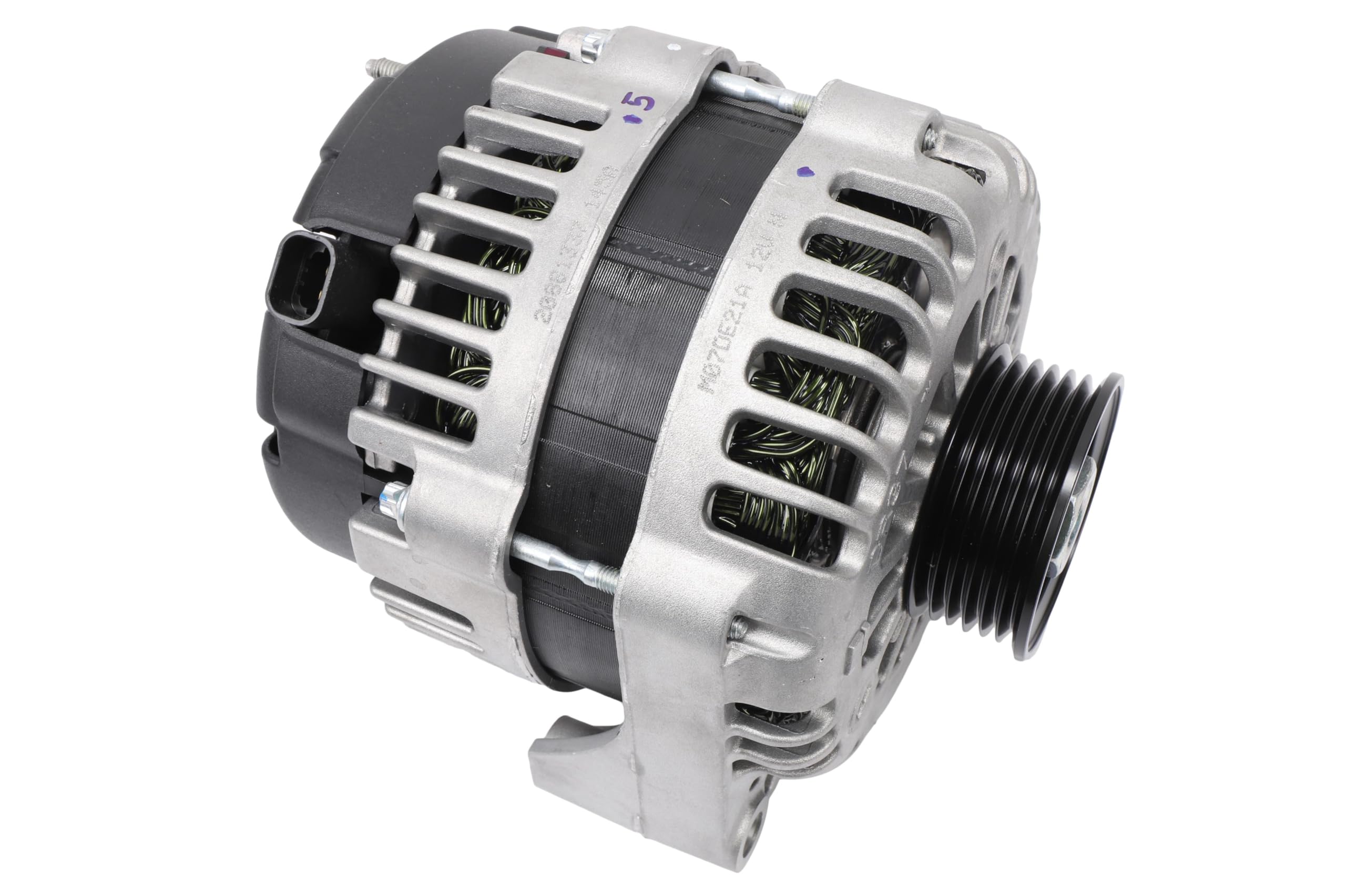
The ACDelco GM Genuine Parts 20881337 is a factory-spec alternator designed, engineered, and validated by General Motors for Chevrolet, Buick, GMC, and Cadillac vehicles. It is newly manufactured as an exact replacement for the original unit, meaning every bracket hole, electrical connector, and mounting surface matches the factory blueprint. GM engineers validate OE parts to rigorous standards that aftermarket brands rarely replicate.
The machined exterior finish and precise rotor balance contribute to quiet operation and consistent voltage output across the RPM band. At 14.55 pounds, the construction uses full-density materials without the weight-saving compromises found in some budget alternatives. Testing data from the supplier confirms voltage stability within OEM specifications at both cold start and full operating temperature.
For owners who want a replacement that behaves identically to the part that came off the assembly line, this alternator eliminates the guesswork. It is ideal for late-model GM vehicles where aftermarket units may cause charging system warnings or reduced alternator life.
What works
- Factory-spec engineering and validation by GM
- Precise fitment for multiple GM nameplates
- Quiet operation with stable voltage output
What doesn’t
- Premium price point compared to aftermarket alternatives
- Discontinued status may limit future warranty support
5. GM Genuine Parts 84143543 Alternator
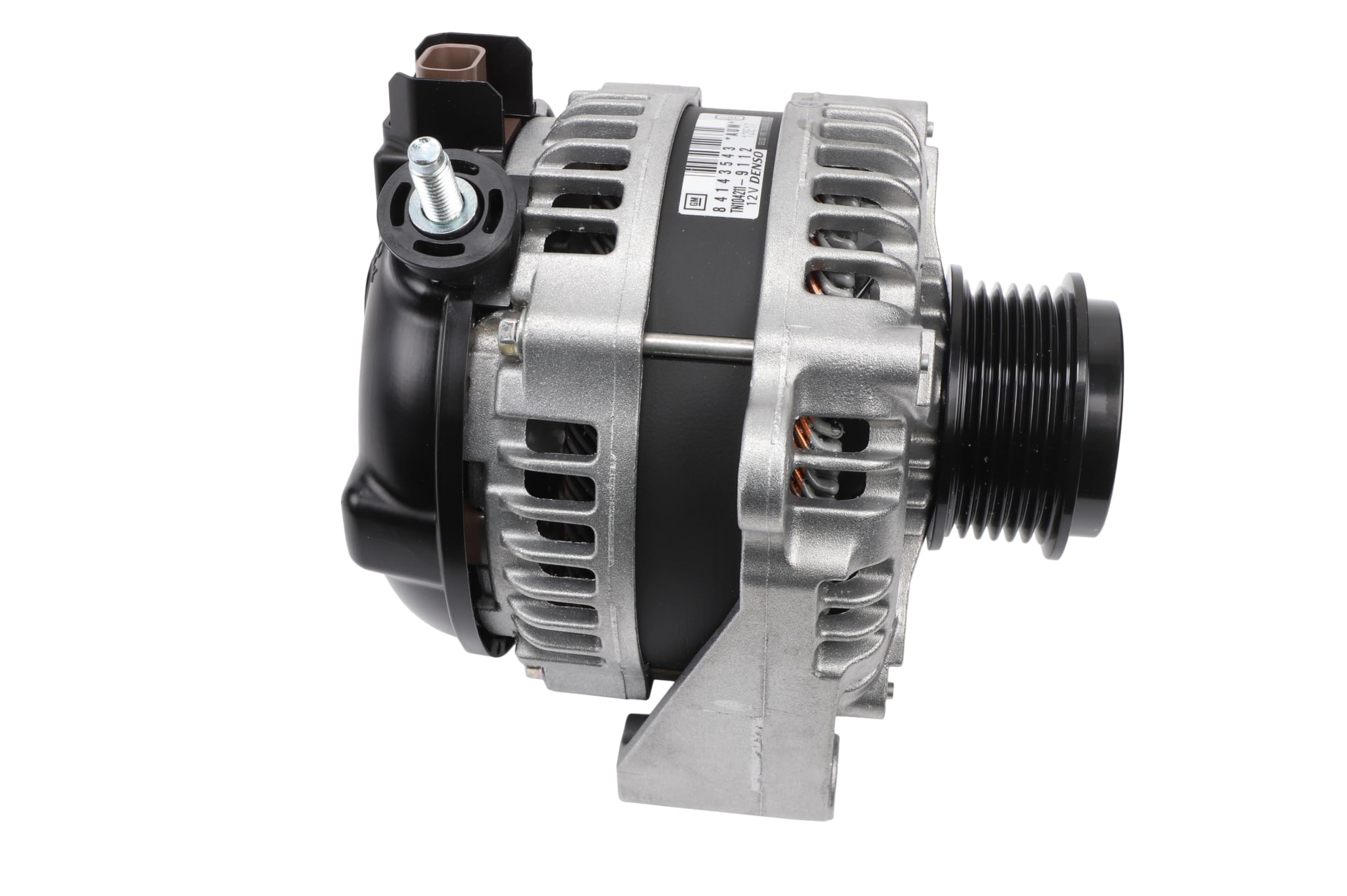
The GM Genuine Parts 84143543 is 100% newly manufactured and designed as an exact replacement for the original factory component on compatible GM vehicles. Every component is tested to meet original specification requirements, ensuring that voltage output, ripple control, and thermal performance align with what the vehicle’s electrical system expects. The painted exterior finish provides corrosion resistance while matching the appearance of factory-installed units.
This alternator carries the weight and build density of a true OE part at 13.01 pounds, indicating substantial copper windings and a robust rectifier assembly. It is the recommended replacement for GM vehicles that originally used this part number, so fitment is guaranteed without adapter brackets or wiring modifications. The testing protocols cover terminal function, bearing noise, and electronic circuit board integrity.
For late-model GM owners who prioritize reliability over cost savings, this alternator removes the risk of compatibility issues that sometimes arise with generic aftermarket units. It is a strong choice for those planning to keep their vehicle for many years and miles.
What works
- 100% new manufacturing with no reused core components
- Tested to GM OE specification requirements
- Painted finish resists corrosion and matches factory look
What doesn’t
- Higher investment than many aftermarket options
- Limited vehicle application range
6. E EZEXPREZE 120A 1-Wire Self-Exciting Alternator

The E EZEXPREZE 120A alternator uses a 1-wire self-exciting design that eliminates the need for a separate excitation wire, making it ideal for classic vehicle restorations and engine swaps where minimizing harness complexity is a priority. It is compatible with a wide range of Pontiac, Buick, Cadillac, and Chevy models spanning the 1960s through 1980s, as well as GM 350 and 400 SBC and BBC engines using the 10SI mounting pattern.
The 120-amp output at 12 volts provides a substantial upgrade over the original 63-amp or 70-amp units found in most classic GM vehicles. Clock is set to the 3 position by default, with CW rotation and a V1 pulley class, matching the majority of small-block and big-block alternator configurations. The machined exterior and 11.11-pound weight indicate solid construction without unnecessary bulk.
A 1-year hassle-free guarantee backs this alternator, and the manufacturer offers direct customer support for fitment questions. For budget-conscious builders working on a classic GM project, this unit delivers modern charging capacity at a price point that leaves room for other restoration expenses.
What works
- 1-wire self-exciting simplifies wiring in classic cars
- 120A output is a large upgrade over vintage units
- Broad compatibility with GM 10SI applications
What doesn’t
- Self-exciting design may require revving to initiate charging
- Newer brand with less long-term reliability data
7. Complete Tractor New Alternator Conversion Kit for Ford 8N, 2N, 9N

This Complete Tractor alternator kit from DB Electrical is designed to convert early Ford 8N, 2N, and 9N tractors from a 6-volt generator to a 12-volt alternator system. It delivers 63 amps at 12 volts with clockwise rotation, a V1 pulley class, and clock 3 position, matching the mounting geometry of these vintage Ford engines. The kit includes everything needed to make the swap without sourcing additional brackets or hardware.
The alternator is 100% new and built to meet OEM specifications, with factory-direct pricing that cuts out middleman markup. The 16-pound weight reflects the robust construction required for agricultural equipment that operates in dusty, high-vibration environments. A 1-year warranty protects the purchase, and the kit has been tested for fitment on all three tractor chassis variants from 1939 through 1951.
Owners of these vintage Ford tractors report that the conversion eliminates the weak 6-volt generator that struggles to start the engine in cold weather, especially with modern ethanol-blended fuels that require more cranking current. It transforms a tractor from a fair-weather machine into a reliable tool that starts confidently year-round.
What works
- Complete conversion from 6V generator to 12V alternator
- Direct fit for 8N, 2N, and 9N Ford tractors
- Robust 16-pound construction for harsh conditions
What doesn’t
- Only applicable to early Ford tractor models
- 63A output is modest compared to automotive units
Hardware & Specs Guide
Amperage and Electrical Load
The alternator’s amperage rating determines how much current it can supply to the battery and vehicle electrical system at a given RPM. A stock vehicle with no aftermarket accessories typically needs between 60A and 100A. Adding high-power audio, auxiliary lighting, electric fans, or a winch raises that requirement to 120A or 160A. Oversizing beyond what the system demands is acceptable as long as the voltage regulator prevents overcharging, but an undersized alternator leads to chronic battery drain and dimming lights at idle.
Internal vs. External Voltage Regulation
Alternators with internal voltage regulators integrate the control circuitry into the alternator housing, simplifying wiring and reducing the number of failure points. This is the dominant design on modern vehicles and most aftermarket conversion kits. External regulators place the control module away from the alternator, allowing easier replacement if the regulator fails, but add complexity to the wiring harness. The 1-wire self-exciting alternator is a subset of internal regulation that uses a residual magnetism circuit to start charging without a separate ignition-switched wire.
Pulley Class and Belt Alignment
The pulley class (V1, V2, S6, etc.) defines the groove profile and width that matches the serpentine or V-belt on your engine. Using the wrong pulley class causes belt slipping, accelerated belt wear, and reduced charging efficiency. Some alternators ship with a specific pulley installed, while others allow swapping to match your belt system. Always verify the number of grooves and belt profile against your existing setup before finalizing the purchase.
Clock Position and Rotation Direction
Clock position refers to the orientation of the alternator’s rear housing relative to the mounting ears, measured by where the two main electrical terminals sit. A clock-3 position means the terminals point roughly to the 3 o’clock position when viewed from the rear. Rotation direction — clockwise or counterclockwise — must match the engine’s belt path. Swapping either of these dimensions results in wiring that cannot reach its connectors or a belt that throws off the pulley.
FAQ
What amperage alternator do I need for my vehicle?
Can I install a higher amperage alternator than the stock unit?
What is the difference between a 1-wire and a 3-wire alternator?
How do I know which alternator fits my specific engine?
Final Thoughts: The Verdict
For most buyers, the best alternator replacement kit winner is the ACDelco Gold 335-1023 because it combines 100% new internal components with thorough computer testing and OE engineering at a reasonable price point. If you need higher output for a Chrysler or Dodge 3.6L V6, grab the A-Premium 160A alternator. And for a classic VW Beetle generator-to-alternator conversion, nothing beats the IAP Performance AC903900EC kit.

Certification: BSc in Mechanical Engineering
Education: Mechanical engineer
Lives In: 539 W Commerce St, Dallas, TX 75208, USA
Md Amir is an auto mechanic student and writer with over half a decade of experience in the automotive field. He has worked with top automotive brands such as Lexus, Quantum, and also owns two automotive blogs autocarneed.com and taxiwiz.com.