An engine bay radiates intense heat that can bake interior components, degrade wiring, and make cabin temperatures unbearable. A quality barrier between those hot surfaces and the rest of the vehicle is not a luxury; it is a necessity for comfort, electronics longevity, and performance consistency.
I’m Amir — the founder and writer behind Four Wheel Ask. My work focuses on breaking down material science claims, comparing real-world thermal resistance data, and sorting through owner feedback to identify which adhesive shields actually live up to their specs.
This guide evaluates five current options against the core criteria of temperature tolerance, adhesive durability, coverage, and build quality to determine the best adhesive heat shield for different budgets and application areas.
How To Choose The Best Adhesive Heat Shield
Not all adhesive heat shields are built the same. The cheapest options often fail when exposed to real underhood temperatures, while over-engineered mats can be overkill for simple floor-pan insulation. Focus on three factors: peak temperature tolerance, material composition, and adhesive reliability.
Temperature Rating & Heat Source
Radiant heat from exhaust components easily exceeds 500°F, and turbochargers or catalytic converters push that number much higher. A shield rated for 250°F continuous use will delaminate quickly near a hot manifold. Always check the continuous operating temperature, not just the intermittent peak.
Adhesive Backing Quality
The glue must withstand thermal cycling without peeling. Premium options use high-temp acrylic adhesives that conform to irregular surfaces. Lower-cost products may use simple rubber-based adhesives that fail after a few heat cycles. Look for products from brands that specialize in thermal management rather than generic labels.
Material Layering & Thickness
A single layer of aluminized material provides modest reflectivity but minimal insulation. Multi-layer designs—such as aluminum facing bonded to a fiberglass or PET core—offer superior performance by creating an air gap or thermal break. Thickness matters, but it must remain flexible enough for tight engine bay spaces.
Quick Comparison
On smaller screens, swipe sideways to see the full table.
| Model | Category | Best For | Key Spec | Amazon |
|---|---|---|---|---|
| Second Skin Thermal Block | Premium | High-temp firewall & floor protection | 1/8″ thick, 800°F continuous, 2 sq ft | Amazon |
| ALLWIN Sound Deadening Mat | Mid-Range | Large-area sound + heat insulation | 394 mil thick, 10.8 sq ft coverage | Amazon |
| Design Engineering Floor & Tunnel Shield II | Premium | Targeted tunnel & floor insulation | 0.19″ thick, 0.83 sq ft panel | Amazon |
| DEGEOBERLIN Titanium Shield | Mid-Range | Ultra-high temp exhaust shielding | 0.032″ thick, 2500°F peak rating | Amazon |
| XINPENGLIU Aluminum Backed | Budget-Friendly | General heat wrap & hose protection | 48″ x 12″, 2000°F peak rating | Amazon |
In‑Depth Reviews
1. Second Skin Thermal Block Automotive Heat Shield

The Second Skin Thermal Block is a 1/8-inch thick peel-and-stick shield built with an aluminum foil facing bonded to a PET fiber insulating core. It is rated for continuous exposure up to 800°F and reflects up to 98% of radiant heat, making it a top contender for firewall, floor pan, and under-hood applications where reliability is non-negotiable.
The adhesive backing is aggressive and conforms well to mildly curved surfaces without lifting. It resists water, oil, and common automotive solvents, which is critical for long-term performance in harsh engine bay environments. The 12-inch by 24-inch sheet size covers two square feet, offering flexibility for targeted installs.
Owner feedback consistently highlights the measurable drop in cabin temperature after installation. The product is engineered in the USA and carries a manufacturer part number that indicates strict quality control. For those seeking a proven solution backed by real thermal data, this is the benchmark.
What works
- High continuous temperature rating of 800°F
- Reflects 98% of radiant heat effectively
- Durable against oil, water, and solvents
What doesn’t
- Coverage area per sheet is limited (2 sq ft)
- Requires a minimum air gap for peak performance
2. ALLWIN Car Heat Sound Deadening Insulation Mat

The ALLWIN mat offers a 10.8-square-foot sheet at a 394-mil thickness, making it a cost-effective choice for covering larger areas like hoods, trunks, and floor pans. It is designed as a closed-cell foam formulation that blocks 98% of radiant heat transfer and also dampens vibration and road noise.
The working temperature range spans -40°F to 300°F, which covers typical cabin and engine bay conditions but falls short for direct exhaust component shielding. The self-adhesive layer is pressure-sensitive and installs cleanly on smooth metal or plastic surfaces with basic tools.
This product is best suited for projects where sound deadening is equally important as heat insulation. The flexible foam compresses well, making it easy to fit into curved transmission tunnels or under-seat areas. It is a popular choice among DIY restorers who need a single solution for floor and door panels.
What works
- Generous 10.8 sq ft coverage at a budget-friendly price point
- Combines heat insulation with effective sound dampening
- Waterproof and odor-free closed-cell foam
What doesn’t
- Temperature limit (300°F) too low for exhaust areas
- Thicker foam may be harder to mold into tight corners
3. Design Engineering Floor & Tunnel Shield II
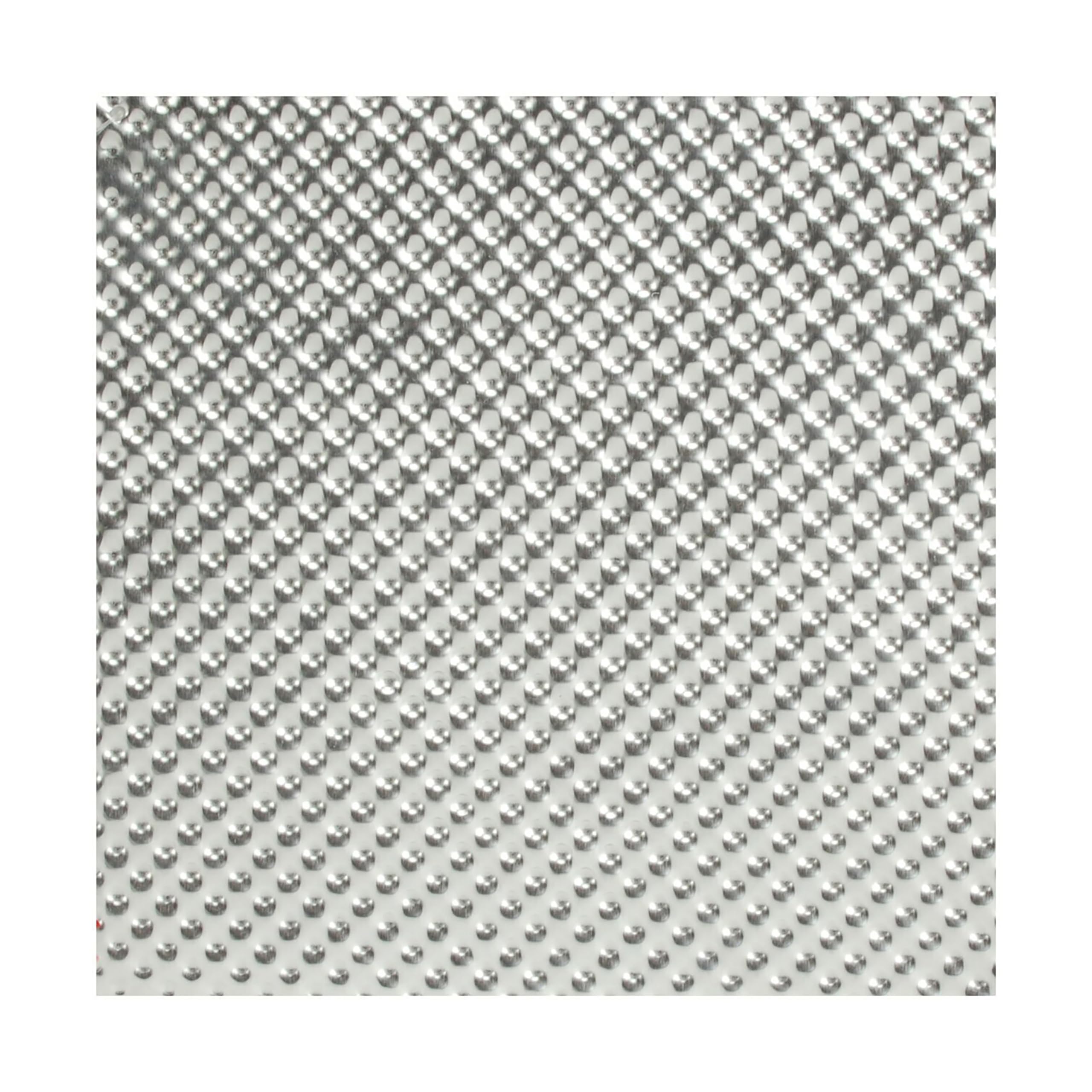
Design Engineering is a well-known brand in the motorsport insulation space, and the Floor & Tunnel Shield II lives up to that reputation. This 10-inch by 10-inch panel is constructed with a durable aluminum outer layer bonded to a thick sound-deadening core, achieving a total thickness of 0.19 inches.
The adhesive backing is designed for permanent installation on metal, fiberglass, and plastic surfaces. It conforms well to contours and curves without cracking, which is essential for transmission tunnel applications where the geometry is complex. The compact panel size covers 0.83 square feet, so it is intended for precise, targeted use rather than large-area coverage.
Owner reports from track-day builders and restoration specialists note that this panel significantly reduces both heat soak and drivetrain noise transfer into the cabin. The 30-day warranty period is short, but the build quality generally eliminates early failure concerns if installed on clean surfaces.
What works
- High build quality from a motorsport-trusted brand
- Excellent conformability to irregular shapes
- Combines heat and sound insulation in one layer
What doesn’t
- Very small coverage area for the price point
- Limited temperature rating for extreme exhaust proximity
4. DEGEOBERLIN Titanium Adhesive Backed Exhaust Heat Shield
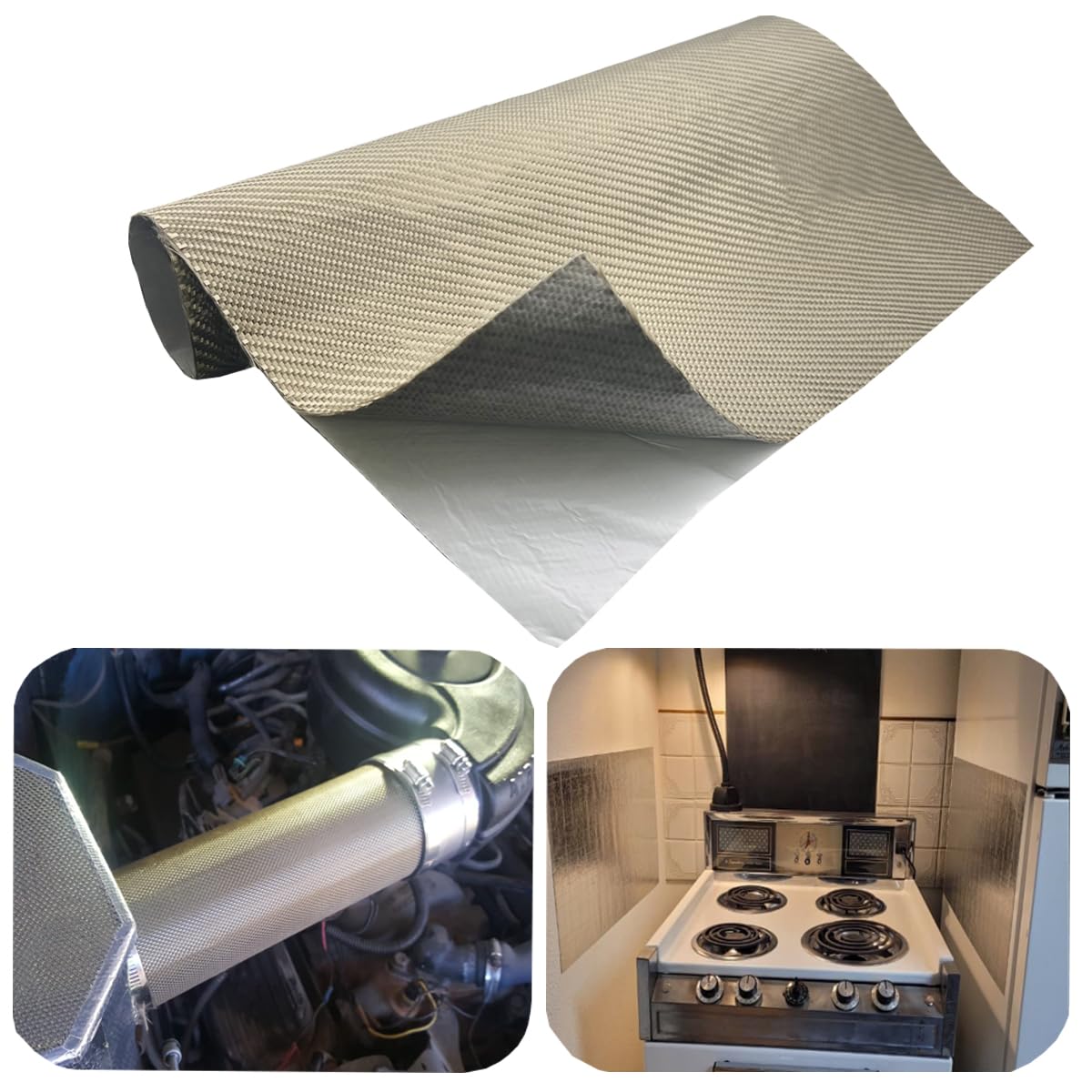
The DEGEOBERLIN shield is built from two layers of basalt material rather than traditional fiberglass, which gives it a distinct advantage in high-temperature environments. It is rated for 1800°F continuous operation and can handle intermittent spikes up to 2500°F, making it one of the most heat-tolerant options available.
The 24-inch by 40-inch sheet is thin at 0.032 inches, allowing it to wrap around mufflers, catalytic converters, and exhaust pipes without adding bulk. The adhesive backing is aggressive and suitable for clean metal surfaces. The manufacturer also offers smaller sizes for targeted battery blanket applications.
User feedback highlights its effectiveness behind grills and near wall-mounted ovens, but automotive owners report good results when using it as a firewall barrier behind the engine. The primary limitation is the thin profile, which provides minimal insulation thickness compared to multi-layer foam products.
What works
- Exceptional temperature tolerance (2500°F peak)
- Very thin and flexible for wrapping irregular shapes
- Basalt material resists corrosion and chemical exposure
What doesn’t
- Thin construction provides limited insulation depth
- Adhesive may struggle on textured or oily surfaces
5. XINPENGLIU Aluminum Backed Self Adhesive Heat Shield

The XINPENGLIU shield provides a generous 48-inch by 12-inch sheet of aluminized fiberglass material at an entry-level price. It is rated for 2000°F peak radiant temperatures and claims to reflect 90% of radiant heat, making it suitable for general-purpose heat wrapping projects.
The fiberglass backing is thin at 0.03 inches, which allows it to be cut and trimmed easily for custom shapes. The self-adhesive composite on the back is sufficient for clean, flat surfaces but may require additional mechanical fastening for vertical installations or high-vibration areas.
This product works well for protecting wire looms, fuel lines, and intake pipes from proximity heat. It also serves as a basic battery blanket or grill backing. The lifetime after-sale service offer adds some peace of mind, though the brand is relatively new to the thermal management market.
What works
- Large 48″ x 12″ sheet provides ample material for multiple projects
- High peak temperature rating of 2000°F
- Very easy to cut and shape for custom applications
What doesn’t
- Thin material offers limited structural insulation
- Adhesive may not hold well on heavily curved surfaces
Hardware & Specs Guide
Material Composition
The best adhesive heat shields use a multi-layer approach. An aluminized outer layer reflects radiant heat, while an inner core of fiberglass, basalt, or PET foam provides thermal break and insulation. Single-layer foil products are fine for simple reflective tasks but lack the thickness needed for genuine temperature reduction. Always prioritize products that specify both the facing material and the core composition.
Temperature Ratings Clarified
Manufacturers often quote intermittent peak temperatures, which are less meaningful than continuous operating ratings. For example, a shield rated for 2500°F intermittent may only withstand 500°F continuously. When shielding exhaust components, look for a continuous rating of at least 800°F. For firewalls and floor pans, 300°F to 500°F continuous is typically sufficient.
Thickness vs. Flexibility
Thicker shields (0.1″ to 0.4″) provide superior thermal insulation and sound dampening but can be difficult to mold around tight bends. Thin shields (0.03″) are extremely flexible and easy to wrap around pipes and hoses but offer less overall heat blocking capability. Choose based on the complexity of the installation surface and the required level of thermal resistance.
FAQ
Do I need a heat shield for my car’s firewall?
Can I install an adhesive heat shield on top of sound deadener?
What is the difference between a reflective barrier and an insulating mat?
How do I calculate how much adhesive heat shield I need?
Final Thoughts: The Verdict
For most buyers, the best adhesive heat shield winner is the Second Skin Thermal Block because it combines OEM-grade materials, a high continuous temperature rating, and a proven peel-and-stick design that works across multiple automotive zones. If you need large-area coverage for sound and heat control on a budget, grab the ALLWIN Mat. And for extreme exhaust-side shielding where thin flexibility is key, nothing beats the DEGEOBERLIN Titanium Shield.

Certification: BSc in Mechanical Engineering
Education: Mechanical engineer
Lives In: 539 W Commerce St, Dallas, TX 75208, USA
Md Amir is an auto mechanic student and writer with over half a decade of experience in the automotive field. He has worked with top automotive brands such as Lexus, Quantum, and also owns two automotive blogs autocarneed.com and taxiwiz.com.