Household odors, pet smells, and airborne particles can turn a home into a stuffy, uncomfortable space. An activated carbon air filter tackles these issues head-on by chemically adsorbing volatile organic compounds, smoke, and cooking fumes that standard fiberglass filters simply recirculate.
I’m Amir — the founder and writer behind Four Wheel Ask. I’ve spent years analyzing filter media specifications, carbon bed density ratings, and real-world owner feedback to separate high-performing air filters from ones that just look the part.
Whether you need a universal cut‑to‑fit sheet for a window AC or a precise replacement for your Winix or Coway purifier, this guide breaks down the five best options available. My pick for the best activated carbon air filter balances adsorption capacity, proper fit, and long‑term value without the guesswork.
How To Choose The Best Activated Carbon Air Filter
Not all carbon filters work the same. The biggest mistake buyers make is grabbing the cheapest pad without checking whether the carbon is coconut‑shell based or how thick the bed actually is. Thin pads saturate fast and stop adsorbing odors within weeks.
Carbon Type and Bed Thickness
Virgin coconut‑shell activated carbon has a higher microporosity than bituminous coal carbon, meaning it traps more VOCs per gram. Look for bed thicknesses of at least 0.2 inches for pad‑style filters and 1+ inches for canister designs. Thicker beds give the air more contact time, which directly improves odor removal.
Fit and Bypass Prevention
A carbon filter that doesn’t seal tightly against the frame lets polluted air sneak around the media. For brand‑specific replacements like those made for Winix or Coway units, the gasket material and exact outer dimensions matter as much as the carbon itself. Universal sheets require careful trimming and a snug frame fit.
Quick Comparison
On smaller screens, swipe sideways to see the full table.
| Model | Category | Best For | Key Spec | Amazon |
|---|---|---|---|---|
| isinlive AP-1512HH Set | Replacement Kit | Coway Airmega users | 2 HEPA + 6 carbon pre-filters | Amazon |
| ToLife TZ-K2 3-in-1 | 3‑Stage Filter | All‑around home use | 6,000‑hour lifespan | Amazon |
| Colorfullife C545 Kit | Combo Pack | Winix C545 owners | H13 True HEPA + 8 carbon pads | Amazon |
| MELONFARM 4×11 Canister | Inline Canister | Grow tents and hydroponics | 1050+ IAV Australian charcoal | Amazon |
| Bagean Cut‑to‑Fit Sheet | Universal Pad | Custom DIY installations | 16×48 inch roll, 0.2 inch thick | Amazon |
In‑Depth Reviews
1. isinlive AP-1512HH Filter Replacement Set

This isinlive kit delivers two H13 True HEPA filters and six carbon pre‑filters engineered for the Coway Airmega AP‑1512HH and 200M units. The carbon pre‑filters use a high‑efficiency activated carbon sponge formulation that adsorbs cooking fumes, pet dander, and wildfire smoke without introducing secondary pollution.
Each HEPA filter captures 99.97% of airborne particles down to 0.3 microns, and the electrostatic electret technology keeps airflow resistance low so the fan doesn’t struggle. The carbon pre‑filters measure 15 by 13 inches with a 0.2‑inch thickness, providing a large surface area for odor contact without restricting CFM.
With a suggested replacement cycle of 12 months for the HEPA and six months for the carbon pre‑filters, this set offers a strong balance of filtration depth and long‑term value.
What works
- Includes six carbon pre-filters for extended odor control
- Low airflow resistance keeps purifier fans efficient
What doesn’t
- Only fits Coway AP-1512HH and 200M models
- Carbon pads are relatively thin at 0.2 inches
2. ToLife TZ-K2 Air Purifier Replacement Filter 2‑Pack
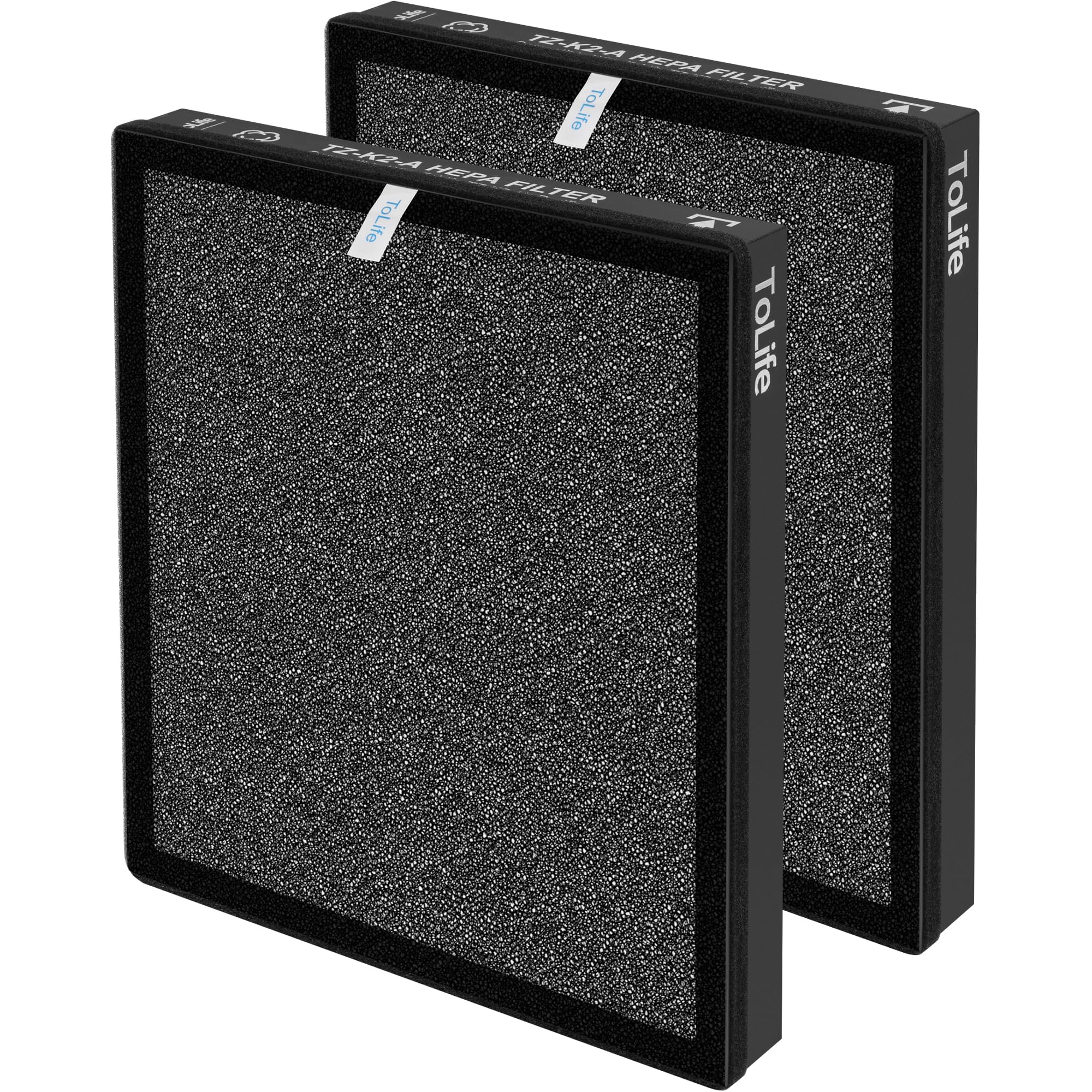
ToLife’s TZ‑K2 replacement uses a three‑stage design: a nylon pre‑filter for hair and lint, an activated carbon layer for VOCs and odors, and an H13 True HEPA media rated at MERV 13. The carbon layer sits between the pre‑filter and HEPA to capture gases before they reach the fine particulate media, extending the HEPA’s usable life.
The rated 6,000‑hour lifespan means a pair of these filters can run continuously for about eight months before needing a swap. The washable nylon pre‑filter handles the coarse debris, so the carbon bed doesn’t clog with dust prematurely. That directly translates to consistent odor adsorption over the entire service interval.
This kit comes as a two‑pack intended for the TZ‑K2 purifier, and the compact 11.8‑ by 10.8‑inch footprint fits snugly without frame gaps. For households dealing with pet smells or light kitchen odors, this combo delivers reliable performance at a steady replacement cost.
What works
- Washable pre-filter reduces waste and extends carbon life
- Excellent 6,000-hour filter service life
What doesn’t
- Only compatible with ToLife TZ-K2 purifiers
- Carbon layer is thin compared to canister-style filters
3. Colorfullife C545 Replacement Filter for Winix C545

Designed specifically for the Winix C545, this Colorfullife kit bundles two H13 True HEPA filters with eight activated carbon pads. The HEPA element is constructed from FSC‑certified paper and uses a low‑density structure that keeps static pressure low, so the Winix fan maintains its rated airflow even as the filter loads up.
The eight carbon pads are separate from the HEPA frame, meaning you can replace the carbon layer independently without tossing the HEPA. That gives you flexibility to swap the carbon more frequently if you live in a heavy‑odor environment. The carbon material is a non‑woven fabric impregnated with activated carbon rather than a loose fill, which prevents carbon dust from escaping into the room.
Note that this set is not compatible with the Winix 5500‑2 or C535 models, so double‑check your purifier’s model number before ordering. For C545 owners, this is a cost‑effective way to maintain both particulate and odor filtration without reaching for premium OEM pricing.
What works
- Independent carbon pads allow flexible replacement schedules
- FSC-certified paper HEPA with low pressure drop
What doesn’t
- Incompatible with Winix 5500-2 and C535 models
- Carbon pads are adhesive-backed, not framed
4. MELONFARM 4 Inch Air Carbon Filter Canister
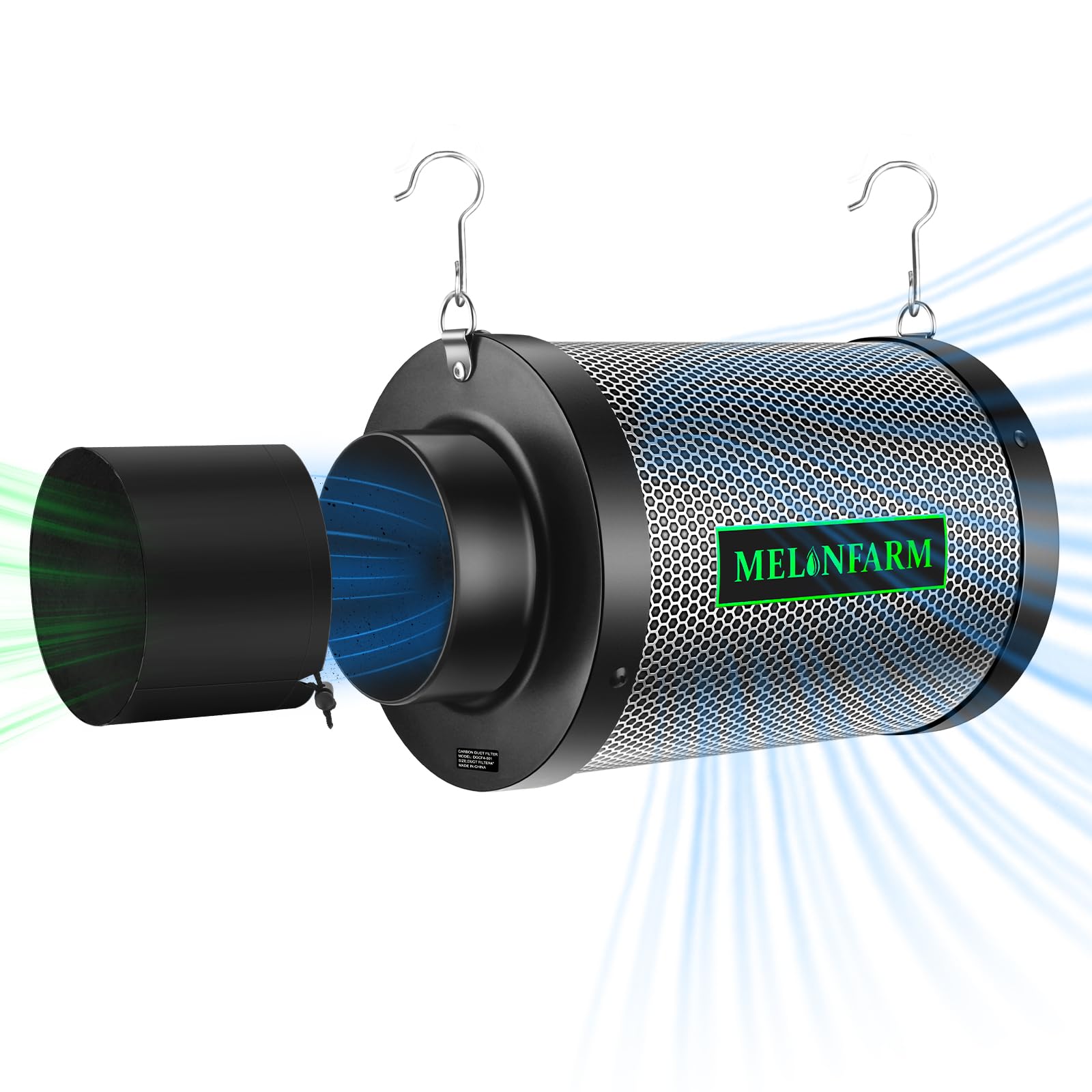
This MELONFARM canister filter uses a 38‑mm thick bed of Australian virgin charcoal rated at 1050+ IAV, which is among the highest iodine adsorption values in this price range. Higher IAV means more micropores per gram, directly translating to greater VOC and odor capacity compared to standard coconut carbon.
The double‑sided galvanized steel mesh uses a hexagonal pattern that maximizes open area while keeping the charcoal bed contained. At 224 CFM maximum airflow, this filter pairs well with a 4‑inch inline duct fan for grow tents, bathrooms, or kitchen exhaust setups. The pre‑filter sleeve catches dust before it reaches the carbon, preserving adsorption sites for odor molecules.
The heavy‑duty flange is non‑removable and precision‑welded to prevent carbon leakage, which is a common failure point on cheaper canisters. At 4.92 pounds, this is a solid unit built to handle continuous operation in high‑humidity environments without degrading the carbon’s adsorptive properties.
What works
- High 1050+ IAV Australian charcoal for superior adsorption
- 38mm thick carbon bed handles heavy odor loads
What doesn’t
- Requires a 4-inch inline fan for operation
- Flange is fixed and cannot be rotated
5. Bagean Cut to Fit Activated Carbon Filter Sheet 2‑Pack
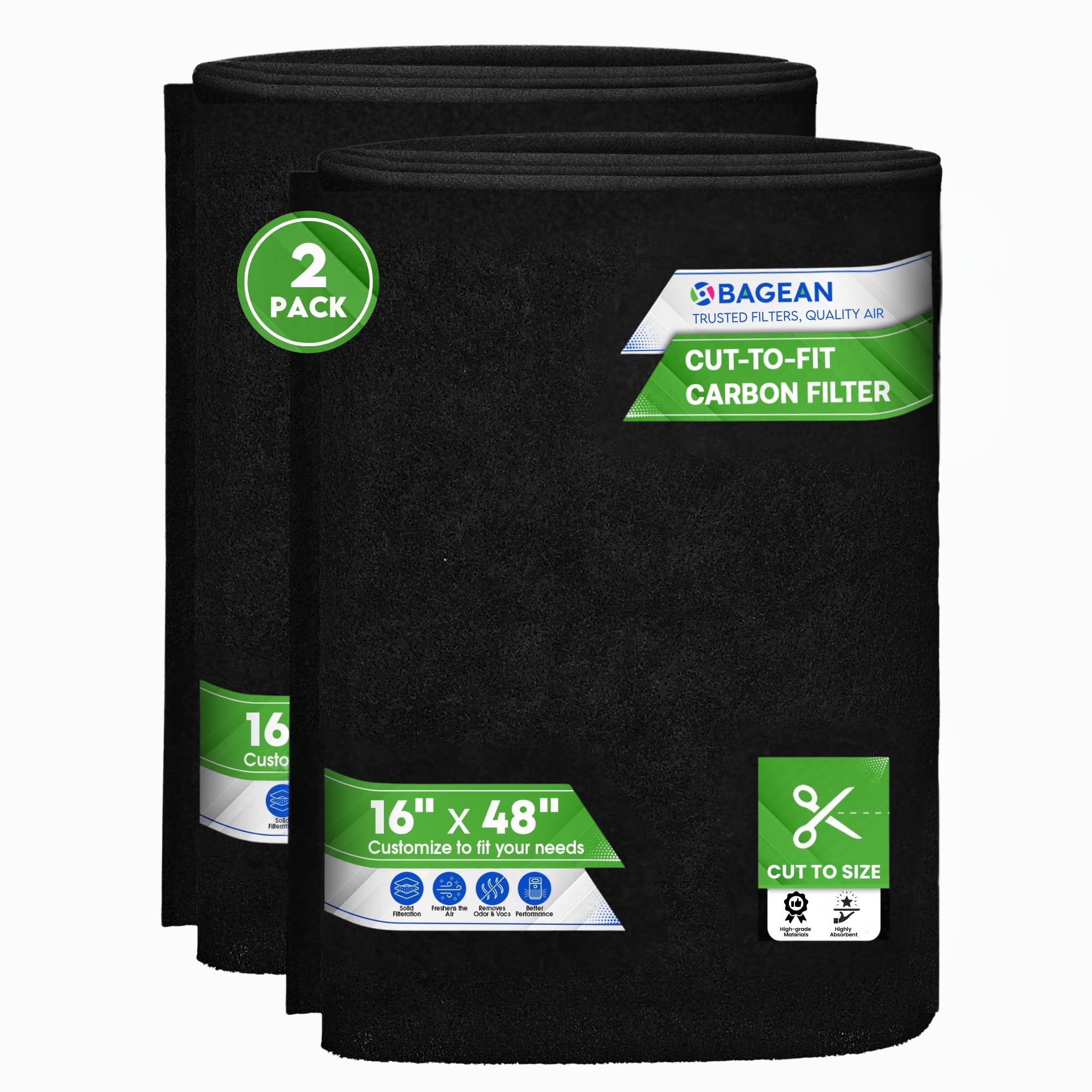
Bagean’s 16‑ by 48‑inch roll offers a universal solution for anyone needing a custom‑sized carbon pad. The material is made from highly absorbent coconut‑shell activated carbon, which naturally has a higher micropore volume than synthetic alternatives. You can trim it with standard scissors to fit window AC units, range hoods, microwaves, vent covers, or DIY air purifier builds.
At 0.2 inches thick, this pad is on the thinner side and works best in applications where airflow is already restricted by the appliance’s design. The extra carbon loading Bagean mentions means the density per square inch is higher than basic filter foam, so it holds more odor before saturation than a standard fiberglass pad would.
The two‑pack gives you 64 square inches of usable carbon media, which is enough for several small projects or one large custom panel. For anyone with non‑standard vent sizes or multiple small appliances, this roll‑based approach eliminates the frustration of hunting for the exact dimension.
What works
- Universal fit works with almost any appliance vent
- Coconut-shell carbon has high microporosity for odor trapping
What doesn’t
- Thin 0.2-inch bed saturates faster than thick pads
- Requires trimming and may not seal perfectly in all frames
Hardware & Specs Guide
IAV (Iodine Adsorption Value)
Measured in milligrams of iodine adsorbed per gram of carbon, IAV indicates the micropore volume available for trapping VOCs. Values above 1000 mg/g are considered high and are typical of premium coconut‑shell carbons. Lower IAV carbons saturate faster and lose odor‑control ability sooner.
Bed Thickness vs. Airflow
Thicker carbon beds (20mm and up) provide longer contact time for adsorption but restrict airflow. For canister filters used with inline fans, a 38mm bed is a solid trade‑off. For appliance pre‑filters where space is tight, 0.2‑inch pads are common but require more frequent replacement.
FAQ
How often should I replace an activated carbon air filter?
Can I wash and reuse an activated carbon filter?
What is the difference between coconut carbon and coal carbon?
Final Thoughts: The Verdict
For most buyers, the best activated carbon air filter winner is the isinlive AP‑1512HH Set because it pairs H13 HEPA performance with six carbon pre‑filters that can be swapped independently for long‑term odor control. If you want a grow‑tent or heavy‑duty inline setup, grab the MELONFARM 4‑inch Canister with its 38mm Australian charcoal bed. And for a universal pad that fits odd‑sized vents, nothing beats the Bagean Cut‑to‑Fit Sheet.

Certification: BSc in Mechanical Engineering
Education: Mechanical engineer
Lives In: 539 W Commerce St, Dallas, TX 75208, USA
Md Amir is an auto mechanic student and writer with over half a decade of experience in the automotive field. He has worked with top automotive brands such as Lexus, Quantum, and also owns two automotive blogs autocarneed.com and taxiwiz.com.