A socket that rounds a fastener costs more than its purchase price — it costs the time, the frustration, and sometimes the part itself. When reaching for a 7/16 inch socket, the margin between a secure grip and a stripped hex is measured in how well the drive geometry mates with the fastener. This is not a category where surface finish alone decides value; the metallurgy, the broaching precision, and the corner relief design separate tools that last a lifetime from those that fail under real torque.
I’m Amir — the founder and writer behind Four Wheel Ask. My approach to tool evaluations focuses on dissecting manufacturer claims, cross-referencing material compositions, drive-system tolerances, and long-term owner feedback to separate marketing from genuine engineering merit.
Selecting a best 7/16 inch socket requires weighing drive size compatibility, wall thickness, and whether impact-rated construction matters for your work. I have broken down five top contenders across shallow, deep, and specialty formats.
How To Choose The Best 7/16 Inch Socket
A 7/16 inch socket looks simple, but its performance depends on three critical factors: drive size compatibility, socket depth, and whether the material and heat treat match the application. Choosing wrong means either damaging the fastener or owning a socket that cannot reach the work.
Drive Size Compatibility
The drive size — 1/4-inch, 3/8-inch, or 1/2-inch — determines what ratchet or impact gun drives the socket. A 1/4-inch drive suits low-torque work like interior panels. A 3/8-inch drive is the generalist sweet spot for most automotive tasks. A 1/2-inch drive is for higher torque and impact applications. Ensure your existing toolkit matches the drive square you select.
Socket Depth: Shallow vs. Deep
Shallow sockets offer better access in tight engine bays and suspension cavities. Deep sockets provide reach over long studs or threaded rods. A deep well 7/16-inch socket is essential for tasks like exhaust manifold bolts or spark plug access on some engines where the fastener sits recessed.
Material and Finish
Chrome-vanadium (Cr-V) steel with a polished chrome finish is standard for hand tools — corrosion resistant and sufficiently strong. Chrome-molybdenum (Cr-Mo) steel is tougher and preferred for impact-rated sockets because it absorbs shock better without cracking. The finish also matters: a full chrome exterior resists rust, while a powder-coated impact socket is less slippery under gloved use.
Quick Comparison
On smaller screens, swipe sideways to see the full table.
| Model | Category | Best For | Key Spec | Amazon |
|---|---|---|---|---|
| Klein Tools 65711 | Premium | Deep reach, high durability | Forged Alloy Steel, 6-point, 3/8″ drive, deep well | Amazon |
| Makita A-96241 | Performance | Impact-rated, long studs | Cr-Mo steel, 1/2″ drive, deep well, 3-3/16″ length | Amazon |
| TEKTON SHD12011 | Value | Everyday hand-tool use | Chrome-plated steel, 6-point, 3/8″ drive, shallow | Amazon |
| Stanley Proto J7121 | Specialty | Square-to-hex extension | Forged steel, 1/2″ sq. to 7/16″ hex, ball detent | Amazon |
| Williams M-1214 | Budget | Light-duty, 1/4″ drive tasks | Polished metal, 12-point, 1/4″ drive, shallow | Amazon |
In‑Depth Reviews
1. Klein Tools 65711 7/16-Inch Deep 6-Point Socket, 3/8-Inch Drive

The Klein Tools 65711 delivers a deep-well 7/16-inch socket with a 3/8-inch drive — the exact combination that covers the widest range of automotive fasteners. Forged from alloy steel with a brushed chrome finish, it resists corrosion while maintaining the hardness needed for repeated high-torque cycles. The 6-point broaching ensures maximum contact on the hex flats, which directly reduces the chance of rounding off a stubborn bolt.
At 1.6 ounces and a manageable depth, this socket reaches recessed fasteners without adding unnecessary length that binds against surrounding components. The snug fit mentioned in owner feedback correlates directly with the manufacturing tolerances Klein holds across its professional lineup. The chrome finish also wipes clean easily after greasy jobs, which matters for anyone who reaches for this socket daily.
Klein backs this with a one-year manufacturer warranty, indicating confidence in the forging and heat-treat process. For any mechanic or serious DIYer looking for a single do-it-all deep 7/16 socket, this is the most balanced pick between durability, reach, and drive-size convenience.
What works
- Forged alloy steel construction withstands high torque
- Deep-well profile reaches long studs and recessed fasteners
- 6-point geometry grips flat sides to prevent rounding
What doesn’t
- Not rated for impact driver use
- Brushed finish shows wear faster than full chrome
2. Makita A-96241 7/16″ Deep Well Impact Socket with 1/2″ Drive
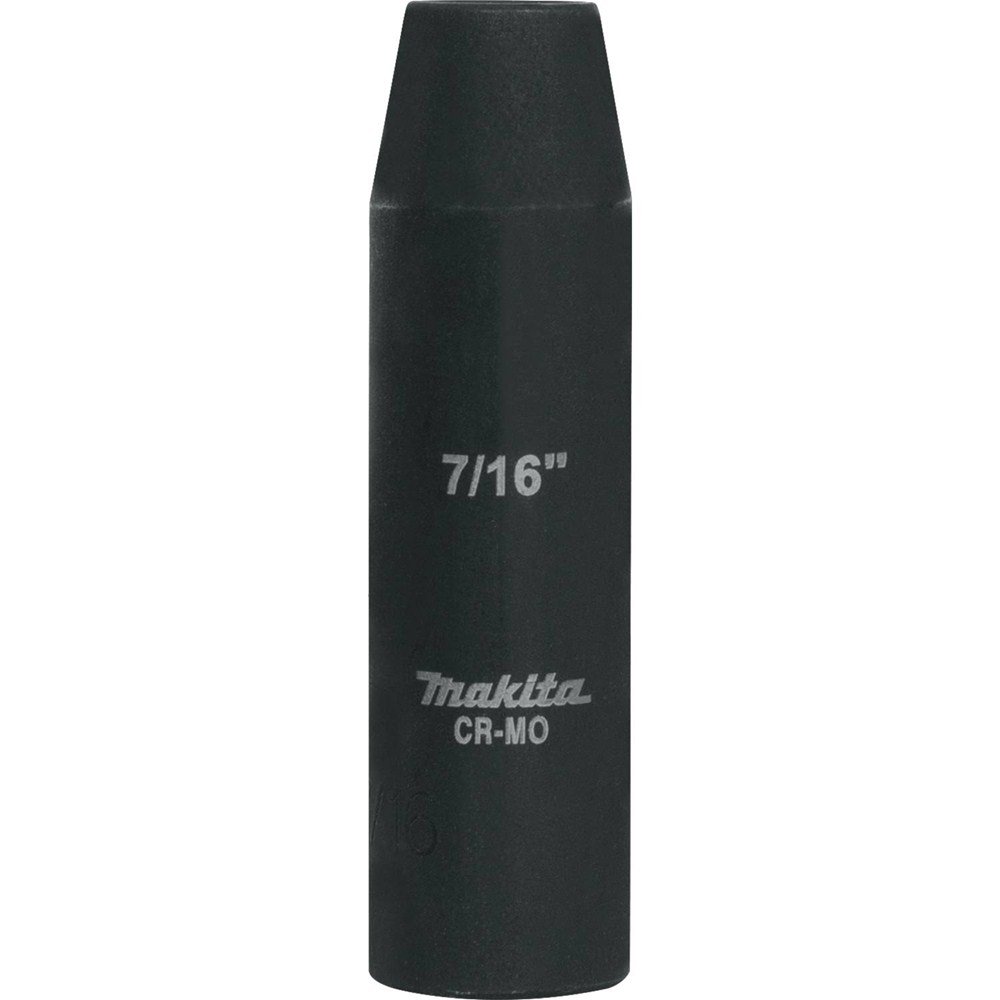
The Makita A-96241 enters the premium tier with a chromium-molybdenum steel formulation that is purpose-built for impact drivers. Unlike standard chrome sockets that can shatter under impact loads, Cr-Mo steel absorbs the vibration and shock from an impact wrench without cracking. The 1/2-inch drive square matches full-size impact guns commonly used in suspension and drivetrain work.
The deep well profile measures 3-3/16 inches, making it long enough to reach over exhaust studs and threaded rod ends where a shallow socket would bottom out. A locking retention hole near the drive end keeps the socket securely attached to the anvil — a critical safety detail when running high-torque impacts in tight engine compartments.
Laser-etched sizing stays readable even after grease and dirt accumulate, and the powder-coated exterior provides a non-slip grip under gloved use. This is not a socket for light-duty interior work; it is a heavy lifter designed for the most demanding fasteners on the vehicle.
What works
- Chrome-molybdenum steel withstands impact shock
- Deep 3-3/16″ length reaches long fasteners
- Locking hole improves retention on impact anvil
What doesn’t
- 1/2″ drive requires a larger ratchet or impact gun
- Powder coat can chip with heavy abuse
3. TEKTON 3/8 Inch Drive x 7/16 Inch Shallow 6-Point Socket | SHD12011
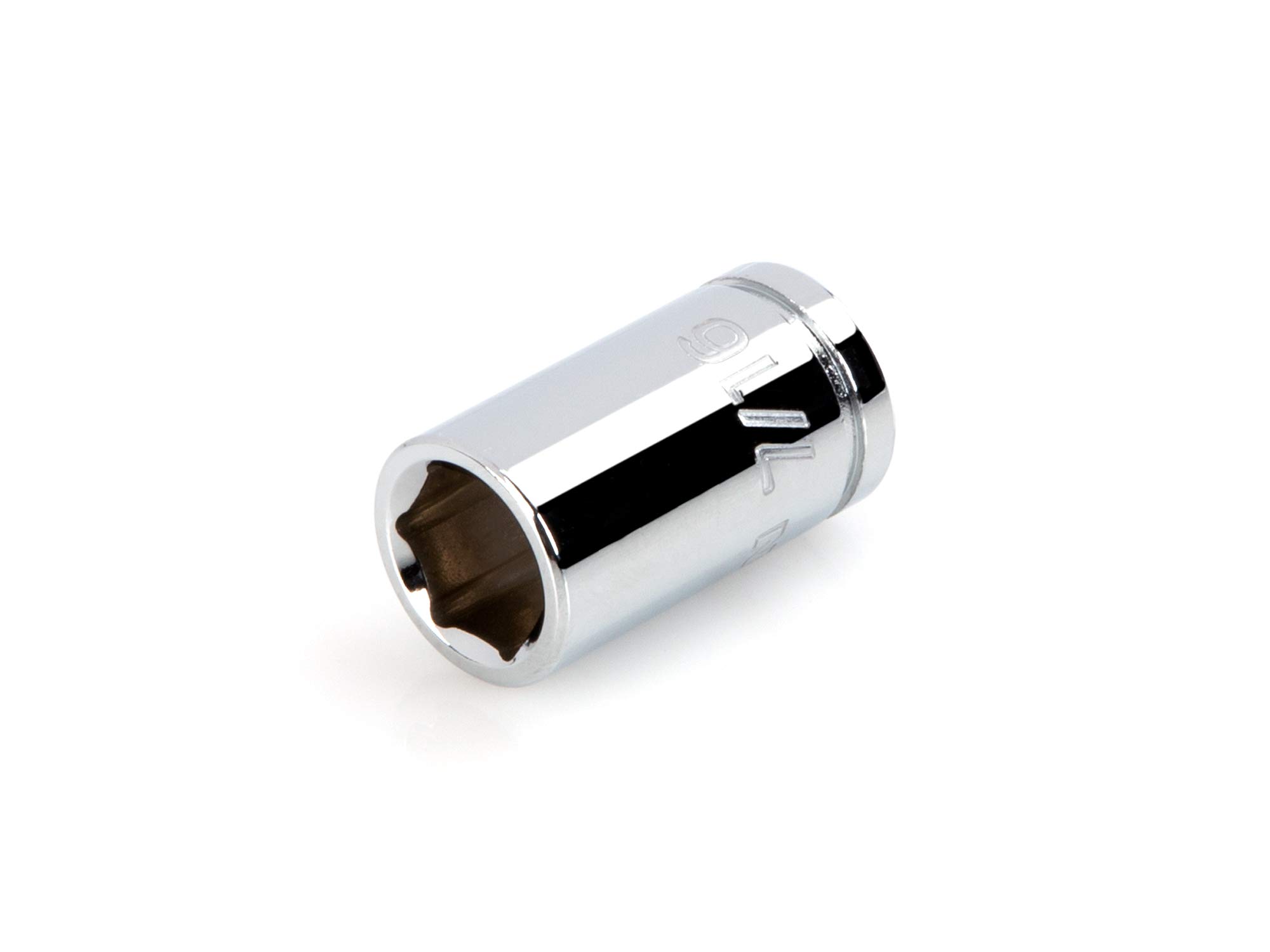
The TEKTON SHD12011 is a textbook example of a well-executed entry-level socket. The 3/8-inch drive and shallow profile make it ideal for general automotive work where clearance is limited — think brake caliper brackets, alternator bolts, and suspension link fasteners. Chrome plating covers both the exterior and interior surfaces, with a supplementary clear coat in the drive bore to resist corrosion where a bare steel socket would rust.
The roll-stamped markings are large and permanently pressed into the metal, readable even after years of shop use. Radiused corners at each of the six points transfer force to the flat sides of the fastener rather than its corners, which is the primary mechanism preventing rounding. Detent grooves and beveled edges on the drive end provide a smooth but secure engagement with the ratchet, reducing wobble during use.
The no-questions-asked warranty — no time limits, no receipt required — adds long-term confidence that is rare at this tier. For someone building a socket set from scratch or replacing a lost shallow 7/16, this is the benchmark for value without cutting corners on the features that matter most.
What works
- Full chrome interior and exterior prevents rust
- Radiused corners reduce fastener rounding
- Lifetime warranty with no receipt needed
What doesn’t
- Shallow profile won’t reach long studs
- Not suitable for impact driver use
4. Stanley Proto J7121 1/2″ Square Ext, 7/16″ Hex

The Proto J7121 is not a standard socket — it is a square-to-hex extension adapter that bridges a 1/2-inch square drive (from a ratchet or impact) to a 7/16-inch hex bit. This is a niche but essential tool for anyone working with hex-headed fasteners in equipment, machinery, or automotive applications where a conventional socket will not seat properly.
Forged from steel in the USA, the J7121 incorporates a ball detent on the square drive end that locks the adapter positively into the ratchet or impact anvil. The hex end is machined to tight tolerances to minimize slop when driving hex fasteners. The 6.25-inch overall length provides reach into deep recesses where a stubby socket cannot fit.
Proto explicitly states this is not for impact applications, so it is best used with hand tools or low-speed power tools. The brushed finish is utilitarian but does not offer the corrosion resistance of a full chrome plate. For the specific job of driving a 7/16-inch hex fastener with a 1/2-inch drive system, this is the most robust adapter on the market.
What works
- Forged steel construction for durability
- Ball detent locks securely on drive tool
- Made in USA with tight machining tolerances
What doesn’t
- Not rated for impact driver use
- Brushed finish lacks full corrosion protection
5. Williams M-1214 1/4 Drive Shallow Socket, 12 Point, 7/16-Inch
The Williams M-1214 fills a very specific role: a shallow 7/16-inch socket with a 1/4-inch drive in a 12-point configuration. The 1/4-inch drive is targeted at precision work — interior trim bolts, small brackets, and low-torque fasteners where a 3/8-inch ratchet is too bulky. The 12-point opening allows engagement on both hex and square fasteners, adding versatility for non-automotive tasks like furniture assembly or equipment maintenance.
Williams manufactures this in Taiwan with a polished metal finish that offers basic corrosion resistance. The shallow profile keeps the socket compact enough to fit into tight spaces where even a stubby 3/8-inch drive would struggle. At a minimal weight, it is an excellent addition to a small travel or roadside kit where every ounce counts.
The 12-point design does come with a trade-off: compared to a 6-point, it applies force closer to the corners of the fastener, which increases the risk of rounding on heavily corroded bolts. For clean, low-torque fasteners, however, the quicker engagement speed makes up for the slight reduction in grip security.
What works
- 12-point design engages on hex and square fasteners
- 1/4″ drive fits compact ratchets and speed handles
- Polished finish resists minor corrosion
What doesn’t
- 12-point geometry increases rounding risk on rusted fasteners
- 1/4″ drive limits maximum applicable torque
Hardware & Specs Guide
Drive Sizes Explained
The square drive on a socket determines which ratchet or impact gun it attaches to. Common sizes are 1/4-inch (low torque, precision work), 3/8-inch (general automotive use, good balance of clearance and strength), and 1/2-inch (high torque, impact-rated sockets, suspension and drivetrain fasteners). Matching the drive size to the task prevents over-torquing a small socket or under-powering a large fastener.
6-Point vs. 12-Point
A 6-point socket has six engagement points that contact the flat sides of a hex fastener. This design minimizes rounding because force is applied to the flats, not the corners. A 12-point socket offers twice the engagement positions, allowing it to work on both hex and square fasteners, but each contact point is closer to the corner. For corroded or high-torque fasteners, 6-point is the safer choice.
Chrome vs. Impact Finish
Chrome-plated sockets offer excellent corrosion resistance and a smooth exterior that wipes clean easily. They are designed for hand-tool use only. Impact-rated sockets use a tougher alloy (often Cr-Mo) and a manganese-phosphate or powder-coated finish that absorbs vibration without cracking. Using a chrome socket on an impact gun risks shattering; impact sockets are heavier but survive repeated shock loads.
Shallow vs. Deep Well
Shallow sockets are shorter and provide better access in tight clearance areas like brake calipers and engine bays. Deep well sockets have an extended barrel that reaches over long studs, threaded rod ends, or recessed fasteners. A deep well socket also typically has a longer drive engagement length, which improves stability on the fastener. For most shops, owning both depths in 7/16-inch covers every scenario.
FAQ
Can I use a 7/16 inch socket on a 3/8 inch drive ratchet?
What is the difference between a 6-point and a 12-point 7/16 socket?
Can I use a chrome 7/16 socket with an impact wrench?
What does deep well mean on a 7/16 socket?
Final Thoughts: The Verdict
For most buyers, the best 7/16 inch socket winner is the Klein Tools 65711 because it combines forged alloy steel, a deep well profile, and a 3/8-inch drive in one balanced package that covers the broadest range of automotive tasks. If you need impact-rated durability for high-torque work, grab the Makita A-96241. And for a budget-friendly shallow socket that does not compromise on the essentials, nothing beats the TEKTON SHD12011.

Certification: BSc in Mechanical Engineering
Education: Mechanical engineer
Lives In: 539 W Commerce St, Dallas, TX 75208, USA
Md Amir is an auto mechanic student and writer with over half a decade of experience in the automotive field. He has worked with top automotive brands such as Lexus, Quantum, and also owns two automotive blogs autocarneed.com and taxiwiz.com.