A battery charger that handles both 6V and 12V systems eliminates the need for two separate units, but finding one that delivers consistent voltage regulation, safe float maintenance, and genuine compatibility across lead-acid and lithium chemistries requires more than just a quick glance at the specs. Many chargers claim multi-voltage support yet struggle with correct detection or lack the thermal compensation needed for long battery life.
I’m Amir — the founder and writer behind Four Wheel Ask. Over the years I have spent countless hours digging into product specifications, comparing build quality across brands, and aggregating long-term owner feedback to separate chargers that simply turn on from those that genuinely protect and extend battery health.
After analyzing dozens of models and thousands of owner reports, this guide presents the best 6v 12v battery charger options for every garage and budget.
How To Choose The Best 6V 12V Battery Charger
Selecting the right dual-voltage charger comes down to understanding four core factors: voltage compatibility, current rating, charging algorithm, and safety protections. A charger that mismatches any of these can undercharge, overheat, or shorten battery life. Here is what matters most.
Voltage Compatibility and Automatic Detection
A true 6V 12V charger should automatically detect the connected battery voltage before delivering current. Manual switches invite user error — set to the wrong position and you risk damaging a 6V battery with 12V output or failing to charge a 12V battery at all. Look for units that sense voltage upon connection and adjust the charging profile accordingly. Some premium models also support 24V systems, adding versatility for marine or commercial use.
Amperage and Charge Speed
Lower amp ratings (1–5 amps) are ideal for maintaining batteries during storage or charging small batteries found in motorcycles, lawn mowers, and ATVs. Higher amp ratings (10–26 amps) reduce charge time for deeply discharged car or truck batteries but require careful matching to the battery capacity to avoid excessive current. A good rule of thumb is to select a charger that delivers roughly 10–20 percent of the battery’s amp-hour rating as the charge current.
Smart Features and Charging Stages
Basic trickle chargers lack the logic to stop when full, risking overcharge and electrolyte loss. Smart chargers use multi-stage algorithms — initialization, bulk charge, absorption, and float — to deliver current only as needed. Desulfation mode uses pulse signals to break down sulfate crystals on lead plates, restoring capacity in neglected batteries. Temperature compensation adjusts voltage based on ambient conditions, preventing overcharge in summer and undercharge in winter.
Quick Comparison
On smaller screens, swipe sideways to see the full table.
| Model | Category | Best For | Key Spec | Amazon |
|---|---|---|---|---|
| NOCO GENIUS5 | Smart Charger | Precision multi-chemistry charging | 5A, 6V/12V, LiFePO4, desulfator | Amazon |
| Clore PL2310 | Professional Charger | Durable shop-grade performance | 10A, 6V/12V, power supply mode | Amazon |
| CRAFTSMAN 12A | 4-in-1 Unit | Built-in tester and reconditioning | 12A, 6V/12V, LiFePO4, desulfator | Amazon |
| Battery Tender 2A | Selectable Charger | Lithium and lead-acid flexibility | 2A, 6V/12V, selectable chemistry | Amazon |
| VEVOR 20A | Multi-Mode Charger | Versatile marine and deep-cycle use | 20A, 6V/12V/24V, LCD display | Amazon |
| HTRC 26A | High-Power Unit | Fast charging for large batteries | 26A, 6V/12V/24V, pulse repair | Amazon |
| Battery Tender Jr | Compact Maintainer | Long-term storage and small batteries | 1.25A, 6V, spark-proof LED | Amazon |
In‑Depth Reviews
1. NOCO GENIUS5

The NOCO GENIUS5 delivers one of the most refined charging algorithms available in a compact unit. It supports both 6V and 12V lead-acid chemistries — AGM, Gel, SLA, VRLA — as well as Lithium LiFePO4 batteries. The integrated thermal sensor dynamically adjusts voltage based on ambient temperature, which is a feature typically reserved for much larger shop-grade chargers. Owner feedback consistently highlights how well this unit recovers deeply discharged batteries without triggering error states.
Force Mode allows the GENIUS5 to manually charge batteries that have dropped to zero volts, a scenario where most smart chargers simply refuse to work. The unit also includes a precision pulse desulfation routine that reverses sulfation and acid stratification, restoring lost capacity over repeated cycles. The included mounting bracket and eyelet terminals make permanent installation straightforward for vehicles stored long-term. Build quality feels dense and the DC cable length at 80 inches provides ample reach.
Where the GENIUS5 really stands out is its ability to serve as both a daily maintainer and a recovery tool. It will not overcharge when left connected indefinitely, and the 5-amp output is sufficient for most car, motorcycle, and marine batteries without being aggressive enough to damage smaller cells. For owners who want one charger that covers almost every scenario without compromise, this is the unit to beat.
What works
- Temperature compensation ensures optimal charge in any climate
- Force Mode recovers dead batteries down to zero volts
- Compact footprint with included mounting bracket
What doesn’t
- 5-amp max rate is slower for large truck batteries
- No 24V support for commercial applications
2. Clore Automotive PL2310
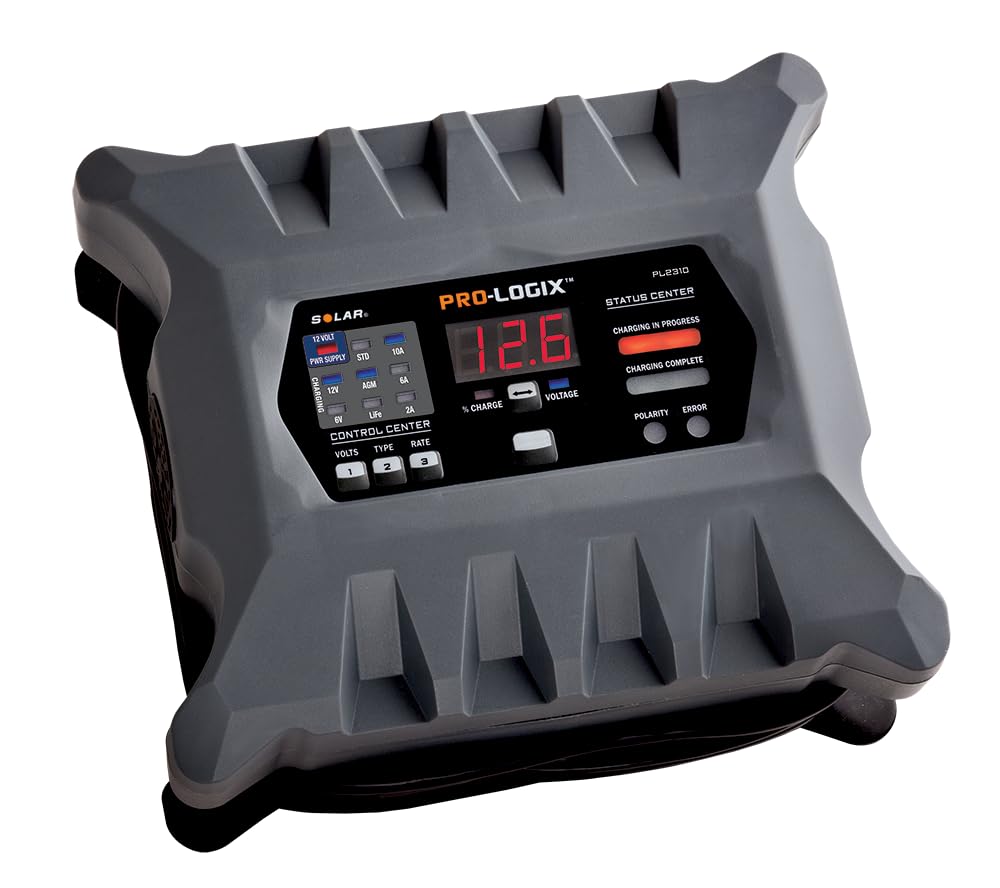
The Clore Automotive PL2310 is built for users who want professional-grade construction without unnecessary complexity. It offers selectable charge rates of 2, 6, and 10 amps across both 6V and 12V batteries, giving fine control over charge speed depending on battery size. The advanced multi-phase charging process handles initialization, bulk charge, absorption, and float stages automatically, and the unit doubles as a stable power supply for maintaining system voltage during diagnostic work or electronic updates.
Temperature compensation is built into the PL2310, adjusting voltage output as ambient conditions change to prevent undercharging in cold weather and overcharging in heat. This is a feature usually found on chargers costing significantly more. The casing feels rugged and the 3.9-pound weight reflects solid internal components rather than cheap plastic. The clamps are heavy-duty and provide a secure connection even on corroded terminals. Owner reports note that this charger has lasted years of regular use without any degradation in performance.
The ability to run in power supply mode sets the PL2310 apart from most competitors. This allows it to maintain a stable voltage for vehicles undergoing electrical testing or ECU programming, a feature seldom seen at this level. For anyone who needs a charger that can handle both routine maintenance and shop-floor diagnostics, this unit delivers exceptional value over the long term.
What works
- Power supply mode supports diagnostic work
- Three selectable charge rates add versatility
- Temperature compensation protects battery health
What doesn’t
- No lithium battery compatibility
- Larger and heavier than compact competitors
3. CRAFTSMAN 12A 4-in-1

The CRAFTSMAN 12A combines charging, maintaining, testing, and reconditioning into a single unit, making it one of the most feature-dense options in this lineup. It delivers 12 amps for 12V fast charging, 3 amps for 12V maintaining, and 2 amps for 6V charging and maintaining, covering a wide range of battery sizes. Compatibility extends across standard lead-acid, AGM, lithium LiFePO4, and deep-cycle batteries, and the built-in battery tester provides instant health diagnostics without needing a separate multimeter.
The advanced desulfation mode uses controlled pulse signals to break down sulfate buildup on lead plates, a common cause of premature battery failure. Reverse polarity protection prevents damage if the clamps are accidentally connected backwards, a safety net that novice users will appreciate. The AC-powered unit includes a 6-foot power cord and booster cables, and the overall build feels in line with CRAFTSMAN’s reputation for durable garage equipment. The red housing is easy to spot on a cluttered workbench.
What makes the CRAFTSMAN 12A particularly appealing is the integration of a battery tester into the charger itself. Instead of guessing whether a battery is simply discharged or已经到了 end of life, the tester provides a clear readout. The recondition mode adds another layer of value for owners who want to extend the service life of aging batteries rather than replacing them prematurely. For a well-rounded garage tool, this unit packs exceptional utility.
What works
- Built-in battery tester eliminates guesswork
- Desulfation mode helps recover sulfated batteries
- 12-amp fast charge for large batteries
What doesn’t
- No 24V support
- Charger is bulkier than dedicated maintainers
4. Battery Tender 6V/12V 2 Amp Selectable
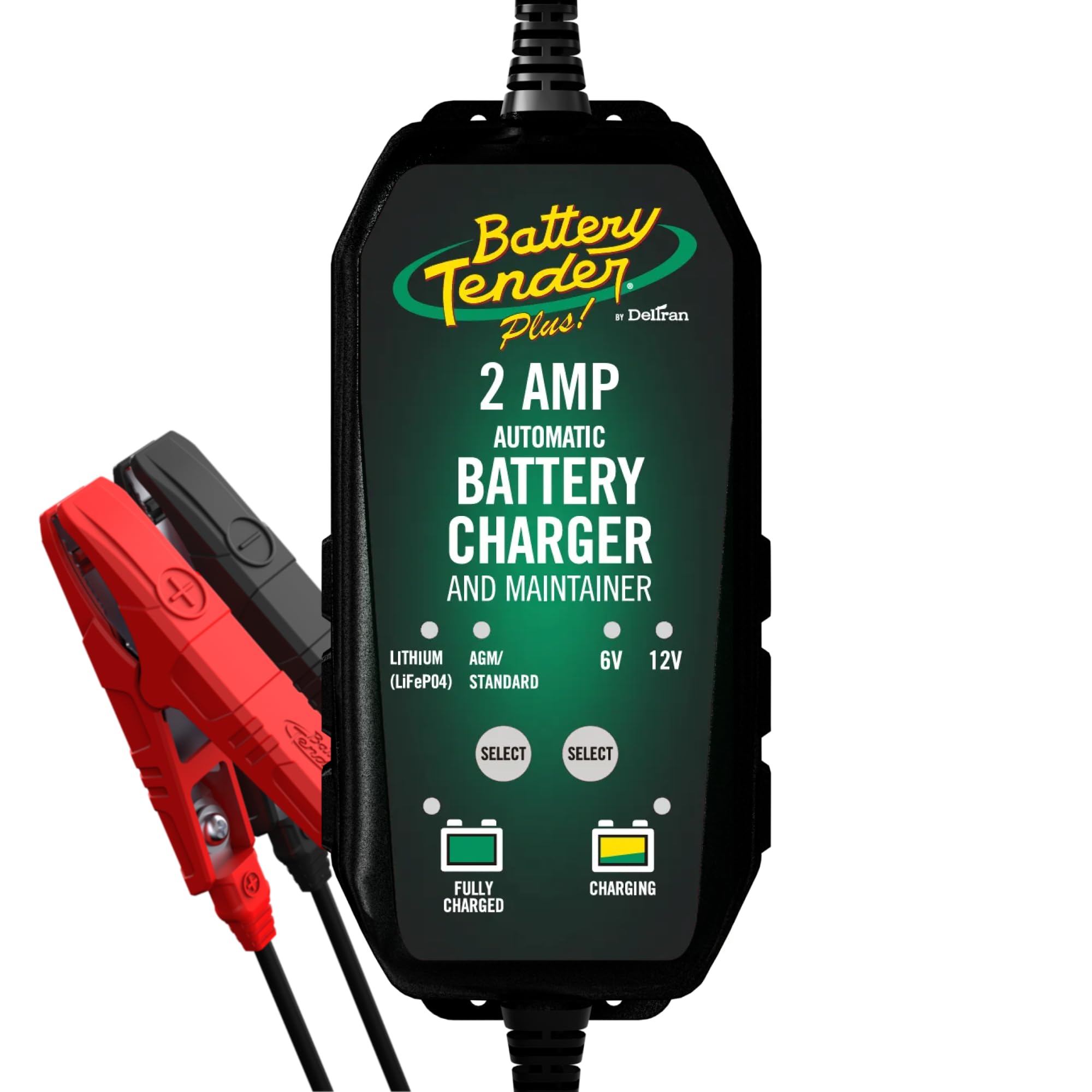
Battery Tender has long been a trusted name in the powersports world, and the 6V/12V 2 Amp Selectable Charger reinforces that reputation with a key upgrade: selectable chemistry profiles. Users can choose between lead-acid and lithium modes, ensuring the correct absorption voltage and float stage for each battery type. The unit delivers a full 4-step charging program — initialization, bulk charge, absorption, and float — and automatically switches to maintain mode once the battery is full, preventing overcharge during extended storage.
The 2-amp output is ideal for motorcycles, ATVs, lawn tractors, and other small to mid-size batteries. It is not designed for rapidly charging a deeply discharged car battery, but for maintaining voltage over weeks or months it performs flawlessly. The included ring terminal and alligator clip combo cable provides flexibility for permanent installation or quick temporary connections. The two-color LED gives clear status indication at a glance, showing when the battery is charging, fully charged, or if a fault condition exists.
A standout detail is the 7-year manufacturer warranty, which is among the longest in this category. That level of coverage signals confidence in the internal electronics and long-term reliability. The compact form factor — just over 8 inches long and under 2 inches wide — allows it to mount easily in tight spaces. For powersports owners who need a dedicated maintainer with the flexibility to handle both old-school lead-acid and modern lithium batteries, this is a refined choice.
What works
- Selectable chemistry for lead-acid and lithium
- 7-year warranty is best in class
- Compact and easy to mount
What doesn’t
- 2-amp output is slow for large batteries
- Only 12V output; 6V support is absent on lithium mode
5. VEVOR 20-Amp Smart Charger

The VEVOR 20-Amp Smart Charger brings a large 3.6-inch LCD screen and an impressive array of features at a highly competitive price point. It supports 6V, 12V, and 24V lead-acid batteries as well as 12V and 24V lithium and LiFePO4 chemistries. The maximum 20-amp output is adjustable for different battery sizes, and the 7-level intelligent charging algorithm automatically transitions through stages including desulfation, bulk charge, absorption, and float maintenance. The LCD provides real-time voltage, current, and battery percentage readouts.
Four operating modes — Charging, Maintain, Desulfation, and Supply — give the user control over how the charger interacts with the battery. The desulfation mode uses pulse repair to break down sulfate crystals, which can restore capacity in batteries that have been sitting unused. The Supply mode allows the charger to act as a stable power source for diagnostic work, similar to units costing much more. Thermal compensation technology adjusts output based on temperature, ensuring safe charging across seasonal changes.
Build quality is respectable for the price, with an ABS flame-retardant shell and a built-in cooling fan that keeps internal temperatures in check during extended high-current operation. The included battery clamps and figure-eight power cord offer adequate reach for most garage setups. Owner feedback indicates that the VEVOR performs reliably for automotive, marine, and deep-cycle applications. For buyers who want maximum features per dollar, this charger delivers an outstanding return.
What works
- Large LCD shows voltage, current, and battery percentage
- Adjustable current up to 20 amps
- Supply mode supports diagnostic work
What doesn’t
- Cooling fan is audible during high-rate charging
- Clamps feel less premium than professional-grade units
6. HTRC 26-Amp 6V/12V/24V Smart Charger
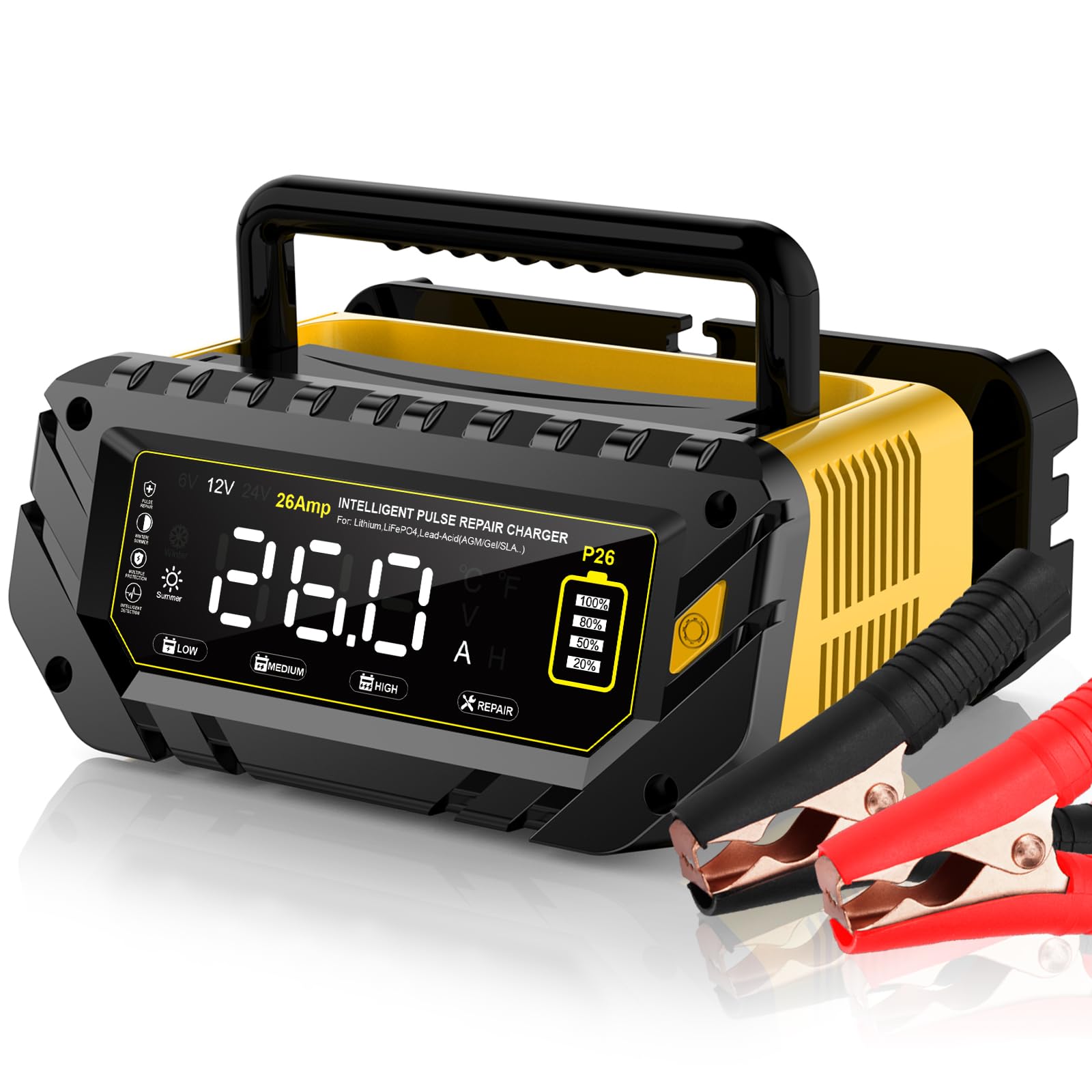
The HTRC 26-Amp Smart Charger is built for speed. With a maximum output of 26 amps on 12V mode and adjustable current levels — 2A, 5A, and 10A for 6V; 3A, 13A, and 26A for 12V; 5A, 8A, and 13A for 24V — it covers an unusually wide range of charging scenarios. The unit automatically detects battery voltage upon connection and offers four charging modes selectable via a single button. A large LCD screen displays voltage, current, battery percentage, and temperature for full visibility.
The 9-stage automatic charging program includes battery detection, desulfurization, trickle charging, and pulse repair. The pulse repair function is designed to help recover batteries that have been idle for extended periods or show signs of sulfation, though the manufacturer notes it cannot restore batteries that are severely damaged. Safety protections are comprehensive: spark-proof circuitry, reverse polarity protection, overcharge protection, overcurrent protection, and a built-in cooling fan manage thermal load during extended high-rate operation.
One unique design element is the foldable handle and bottom bracket, which make the charger more portable and easier to store. The back panel includes cord wrap clips to keep cables organized, and the ABS flame-retardant shell adds an extra layer of safety. For owners who regularly charge large batteries — trucks, RVs, boats — and want the fastest possible recharge times without moving to a heavy commercial unit, the HTRC 26A provides impressive power in a reasonably portable package.
What works
- 26-amp max output for fast charging
- Adjustable current for different battery sizes
- Foldable design with cord management
What doesn’t
- Fan noise is noticeable during high-rate charging
- User interface takes some time to learn
7. Battery Tender Junior 6V 1.25 Amp

The Battery Tender Junior is a purpose-built 6V maintainer that has earned a loyal following among owners of classic cars, motorcycles, and small engines. It delivers 1.25 amps through a 4-step charging program — initialization, bulk charge, float mode — and automatically switches to float maintenance once the battery reaches full charge. The spark-proof circuitry and automatic reverse hook-up detection provide real safety nets for users who may not connect clamps correctly on the first try.
Compatibility covers all 6V lead-acid types including flooded, AGM, and gel cell batteries. The unit is notably small — just 4.4 x 2.9 x 2.15 inches and 0.65 pounds — making it easy to store in a glove box or tool bag. The two-color LED indicates charge status and alerts the user if the battery voltage drops too far, at which point adaptive charging resumes full output. The included ring terminal and alligator clip combo cable offers both permanent and temporary connection options.
What the Junior lacks in power it makes up for in reliability and simplicity. It is not a fast charger, but it excels at keeping a 6V battery topped off over months of storage without risk of overcharge. The 5-year warranty and lifetime customer support reflect Battery Tender’s confidence in the product. For anyone who owns a 6V vehicle or equipment and wants a dedicated, fuss-free maintainer, this remains the benchmark.
What works
- Spark-proof and reverse polarity protected
- Compact and lightweight for portable use
- Proven long-term reliability with 5-year warranty
What doesn’t
- Limited to 6V only; no 12V support
- 1.25-amp output is slow for deeply discharged batteries
Hardware & Specs Guide
Charging Stages Explained
A multi-stage charging algorithm protects battery health far better than a single-stage trickle charge. Most smart chargers use at least four stages: Initialization checks for battery condition and voltage; Bulk Charge delivers the maximum safe current until the battery reaches roughly 80 percent capacity; Absorption reduces current while voltage holds steady to top off the remaining 20 percent; Float Mode drops to a maintenance voltage that prevents self-discharge without overcharging. Some chargers add a Desulfation stage that uses high-frequency pulses to break down lead sulfate crystals, a common cause of capacity loss in batteries left discharged for long periods.
Voltage Detection and Chemistry Profiles
Automatic voltage detection eliminates the risk of selecting the wrong setting. When you connect a smart charger, it measures the battery’s resting voltage and applies the appropriate algorithm. Advanced units also offer selectable chemistry profiles — lead-acid (flooded, AGM, Gel) and lithium (LiFePO4) have different absorption voltages and float thresholds. Using a lead-acid profile on a lithium battery can cause overvoltage damage, while a lithium profile on a lead-acid battery may undercharge it. Always verify that your charger explicitly supports the battery chemistry you plan to use.
Temperature Compensation
Battery voltage requirements shift with temperature. In cold conditions, a higher absorption voltage is needed to push current into the chemical reaction. In heat, the same voltage can cause overcharging and accelerated grid corrosion. Temperature compensation adjusts the charger’s output voltage based on ambient conditions, typically using a built-in thermistor. This feature is critical for users who store vehicles in unheated garages or live in climates with wide seasonal temperature swings. Chargers without this feature may undercharge in winter and overcharge in summer, shortening battery life in both cases.
Amperage and Battery Capacity Matching
Selecting the correct charge current depends on your battery’s amp-hour (Ah) rating. A general guideline is to charge at 10–20 percent of the battery’s capacity. For a 100Ah deep-cycle battery, a 10–20 amp charger is appropriate. For a 20Ah motorcycle battery, 2–4 amps is safer. Higher amperage reduces charge time but generates more heat and can warp plates in smaller batteries. Conversely, charging a large battery with a very low amp unit will take excessively long and may not fully activate the chemical reaction. Multi-rate chargers offer the flexibility to match the current to the battery.
FAQ
Can I use a 12V charger on a 6V battery?
What is the difference between a trickle charger and a smart charger?
How long does it take to charge a car battery with a 5-amp charger?
Does desulfation really work on old batteries?
Final Thoughts: The Verdict
For most buyers, the best 6v 12v battery charger winner is the NOCO GENIUS5 because it combines thermal compensation, Force Mode recovery, and broad chemistry support in a compact, well-built package. If you want professional-grade durability with power supply mode for diagnostic work, grab the Clore PL2310. And for maximum value with a built-in battery tester and desulfation, nothing beats the CRAFTSMAN 12A.

Certification: BSc in Mechanical Engineering
Education: Mechanical engineer
Lives In: 539 W Commerce St, Dallas, TX 75208, USA
Md Amir is an auto mechanic student and writer with over half a decade of experience in the automotive field. He has worked with top automotive brands such as Lexus, Quantum, and also owns two automotive blogs autocarneed.com and taxiwiz.com.