Nothing ruins a good campsite morning faster than a shower that turns icy halfway through. Your RV’s hot water system determines whether you start the day refreshed or gritting your teeth. A 6-gallon tank strikes the ideal balance — enough for a comfortable shower and kitchen use without hogging precious cargo space or requiring a residential-sized setup. The wrong choice means waiting ages for recovery or dealing with a unit that rattles, leaks, or corrodes within two seasons.
I’m Amir — the founder and writer behind Four Wheel Ask. I’ve spent years analyzing RV plumbing systems, comparing recovery rates, tank materials, and burner designs across dozens of models to separate genuine long-haul performers from weekend-only options.
This guide breaks down nine of the most talked-about units on the market, covering gas, electric, and combo configurations. Whether you prioritize fast gas recovery, simplified electric installs, or dual-fuel flexibility, you’ll find a clear winner for your rig. Finding the right 6 gallon rv hot water heater means matching your power setup and usage style to the tank’s actual recovery specs and build quality.
How To Choose The Best 6 Gallon RV Hot Water Heater
Selecting a water heater for your RV isn’t the same as buying one for a house. You’re constrained by cutout dimensions, available power (12V DC, 120V AC shore power, or propane), and how quickly the unit can recover after one person uses the hot water. Focus on these factors first.
Gas vs Electric vs Combo
A gas-only unit uses propane and a direct spark ignition (DSI) burner, typically delivering 10 gallons per hour recovery — enough for quick back-to-back showers. Electric-only models rely on 120V AC and push about 6 gallons per hour, so they’re slower but silent and vent-free. Combo units include both a gas burner and an electric element, giving you the fastest recovery with propane and the option to switch to electric when you have shore power. Choose a combo if you camp across different hookup situations.
Tank Material and Corrosion Protection
Porcelain-lined steel tanks dominate the mid-range and premium tiers because they resist rust and handle thermal stress. They require a replaceable anode rod to divert corrosion, which you should check annually. Aluminum tanks, like Dometic’s design, skip the anode rod entirely — less maintenance, but aluminum can develop pinhole leaks over many years if water chemistry is aggressive. Steel tanks with a thick porcelain lining typically last longer when the anode is replaced regularly.
Recovery Rate and BTU Output
For a 6-gallon tank, recovery rate is the number you actually feel. Gas burners around 12,000 BTU/h produce roughly 10 gallons per hour recovery in ideal conditions. Electric elements at 1,440 watts yield about 6 gallons per hour. If you regularly have two or three people showering in sequence, prioritize a gas or combo unit with at least a 10 GPH recovery rate. If it’s just one person and you always have shore power, an electric unit’s slower recovery may be acceptable.
Quick Comparison
On smaller screens, swipe sideways to see the full table.
| Model | Category | Best For | Key Spec | Amazon |
|---|---|---|---|---|
| Suburban SW6DEL | Gas/Electric Combo | Full-time RVers needing dual fuel flexibility | 12,000 BTU/h gas + 1,440W electric | Amazon |
| Dometic WH-6GEA | Gas/Electric Combo | Low-maintenance buyers wanting aluminum tank | Quick heating burner + electric element | Amazon |
| LandCamp SW6DE | Gas/Electric Combo | Budget-friendly dual-fuel install | 12,000 BTU/h gas input | Amazon |
| Suburban SW6D | Gas with DSI | Gas-only users wanting Suburban build quality | 12,000 BTU/h, 10.1 GPH gas recovery | Amazon |
| RecPro Tankless (42K BTU) | Tankless Gas | Unlimited hot water in compact space | 42,000 BTU/h, 5 GPM flow | Amazon |
| Reliance 6 SOMS K | Electric Tank | Simple electric replacement for small RVs | 1,650W, 1.5 GPM flow | Amazon |
| CAMPLUX ME70B | Electric Tank | Indoor under-counter electric install | 1,440W, 6.5 gal capacity | Amazon |
| EcoSmart ECOMINI 6 | Electric Tank | Energy-focused 120V electric with digital temp display | 99.8% efficient, 6.1 GPM flow | Amazon |
| EXCEL TANKLESS 1.6 GPM | Vent-Free Gas | Ultra-low pressure startup with no flue | 40,000 BTU/h, starts at 2 PSI | Amazon |
In‑Depth Reviews
1. Suburban Advantage SW6DEL (5240A)

The Suburban SW6DEL is the gold standard for dual-fuel RV water heating. Its 12,000 BTU/h gas burner delivers a 10.1 GPH recovery rate, while the Incoloy electric element provides 6.1 GPH when you have shore power. That flexibility alone makes it the top pick for full-time RVers who camp with and without hookups. The porcelain-lined steel tank is protected by a replaceable anode rod, and the flue tube design improves heat transfer efficiency noticeably compared to older Suburban models.
Installation is straightforward for anyone familiar with RV cutouts — the dimensions are 12.75 x 12.75 x 19.19 inches, matching the standard Suburban opening. The included 12VDC relay simplifies the electrical connection, and the DSI ignition lights reliably even at moderate altitudes. Owners report the tank holds temperature well overnight, and the gas burner brings cold water back to shower temp in about 15 minutes.
Where this unit truly separates itself is long-term durability. The replaceable anode rod, when checked annually, extends tank life well beyond what non-serviceable tanks can offer. If you’re rebuilding or upgrading an RV and want one heater that handles everything from dry camping to full hookup resorts, this is the unit to choose.
What works
- Dual-fuel gas and electric with independent operation
- 10.1 GPH gas recovery handles back-to-back showers
- Replaceable anode rod extends steel tank life
What doesn’t
- Heavier than aluminum-tank alternatives at about 36 lbs
- Annual anode rod inspection required for best longevity
2. Dometic WH-6GEA (94002SP)

Dometic’s WH-6GEA takes a different approach by using an aluminum tank that eliminates the need for an anode rod entirely. For RV owners who prefer set-and-forget maintenance, this is the most appealing feature. The unit includes both a gas burner and an electric heating element, so you can heat water with propane when boondocking and switch to 120V AC when plugged into shore power.
The silver burner system is compact — measuring 13.25 x 14 x 20 inches — and designed for indoor installation. Dometic’s burner heats water quickly, and the aluminum construction shaves several pounds off the weight compared to steel-lined competitors. The absence of an anode rod also means no annual replacement cost, which adds up over a decade of ownership. The electric element provides supplementary heat for faster overall recovery.
The trade-off is that aluminum tanks, while corrosion-resistant, don’t handle aggressive water chemistry as gracefully over very long periods as a well-maintained porcelain steel tank. Some users report occasional hard-start issues with the burner at high altitudes, though this is common across many gas RV water heaters. For a quiet, lightweight, low-hassle combo unit, the Dometic WH-6GEA is a strong contender.
What works
- No anode rod to inspect or replace annually
- Lightweight aluminum tank saves on gross vehicle weight
- Gas and electric heating for flexible power use
What doesn’t
- Aluminum may develop pinhole leaks with aggressive water over a decade
- Gas burner can struggle with ignition at higher elevations
3. LandCamp SW6DE

The LandCamp SW6DE is essentially a direct replacement for the Suburban SW6DE at a significantly more accessible price point. It offers the same 12,000 BTU/h gas input and the ability to run on 120V electric, making it a dual-fuel 6-gallon unit that fits the standard 12.75 x 12.75-inch cutout. For budget-conscious builders or those replacing an older Suburban, this is a cost-effective way to gain gas and electric flexibility.
The unit comes with DSI electric ignition and includes the necessary 12VDC relay wiring. Cutout depth is 19.1875 inches, matching industry-standard dimensions. The alloy steel tank is finished in a grey-white color that blends into most RV compartments. At 34.3 pounds, it’s roughly comparable to the Suburban steel tanks in weight. Owners report that the gas burner heats water quickly, and the electric element provides a reliable backup when on shore power.
Fit and finish aren’t quite as refined as the Suburban OEM part, but for the price difference, most users find the trade-off acceptable. Some have noted that the included instructions are sparse, so having basic RV plumbing experience helps during installation. If you need a functional dual-fuel heater without paying a premium for the brand badge, the LandCamp delivers.
What works
- Gas and electric combo at entry-level pricing
- Fits standard Suburban cutout for easy replacement
- DSI ignition reliable at typical campsite altitudes
What doesn’t
- Instructions lack detail for first-time installers
- Build finish not as tight as OEM Suburban units
4. Suburban Advantage SW6D (5238A)

If you operate strictly on propane and don’t need the optional electric element, the Suburban SW6D is the pure gas counterpart to the SW6DEL. It shares the same 12,000 BTU/h gas burner, the same porcelain-lined steel tank, and the same replaceable anode rod. The gas-only recovery hits 10.1 GPH, meaning you can run two showers back-to-back with about 12 minutes of recovery between them under normal conditions.
The construction is identical to the SW6DEL in terms of tank durability and flue tube design. The cutout dimensions remain 12.75 x 12.75 x 19.19 inches, so it drops directly into any existing Suburban opening. The tank weighs 34 pounds and includes the DSI module. Owners consistently report that these units run for 10–15 years with annual anode rod swaps and basic winterization.
The obvious limitation is the lack of an electric element. If you camp exclusively with shore power, you’re still burning propane to heat water, which adds to your propane consumption and requires more frequent tank refills. The SW6D is best suited for RVers who primarily dry camp and have ample propane storage, or for those replacing a failed gas-only unit with minimal electrical work.
What works
- Proven Suburban durability with long owner track record
- 10.1 GPH gas recovery for efficient hot water cycling
- Replaceable anode rod extends steel tank lifespan
What doesn’t
- No electric element means you always burn propane on shore power
- Heavier than aluminum-tank gas units
5. RecPro Tankless (42,000 BTU)
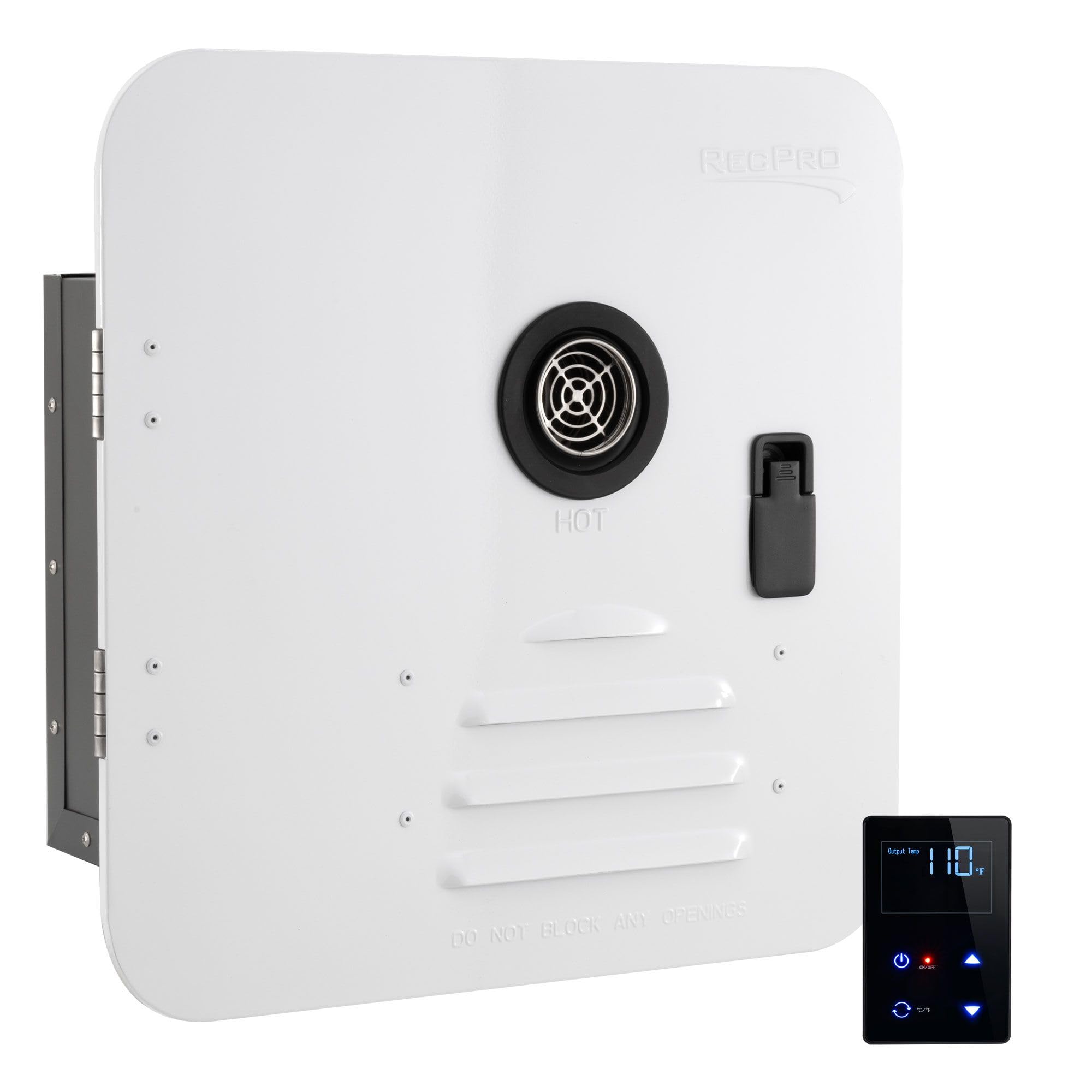
The RecPro tankless water heater breaks away from the 6-gallon tank format entirely, offering unlimited hot water on demand with a 42,000 BTU/h gas burner. It delivers 5 GPM flow, which is more than enough for a single RV shower head. The tankless design saves significant space compared to a 6-gallon tank, measuring just 12.5 x 12.5 x 28.8 inches and weighing 20.3 pounds.
Key features include a copper heat exchanger for efficient heat transfer, a wired remote control for temperature adjustment, and automatic ignition that works with low water pressure, down to around 3 PSI. The forced exhaust structure vents combustion gases safely, and the wind resistance function helps maintain consistent heating in breezy outdoor conditions. The unit comes with two door size options — 15×15 or 18×18 inches — for flexible mounting.
The switch from tank to tankless is not for everyone. If your RV’s existing gas line and water connections are set up for a tank heater, the RecPro requires a different venting configuration and potentially a larger gas line. Also, tankless heaters can’t store hot water for quick rinses; they only heat when water is flowing. For full-timers who hate running out of hot water mid-shower, this unit is a legitimate upgrade path.
What works
- Unlimited hot water at 5 GPM flow rate
- Compact and lightweight versus a 6-gallon tank
- Wired remote control for precise temperature setting
What doesn’t
- Requires different gas line and venting setup, not a direct tank swap
- No stored hot water for quick sink rinses without running the burner
6. Reliance 6 SOMS K

The Reliance 6 SOMS K is a straight-ahead 6-gallon electric water heater built for simplicity. It runs on 1,650 watts at 120V AC and requires no gas line, no venting, and no DSI module. This makes it one of the easiest units to install for a DIY owner who just needs hot water from shore power. The dimensions are compact at 14.12 x 14.12 x 14.25 inches, fitting into smaller compartments where a gas unit may not.
With a 1.5 GPM flow rating and 1,650W of heating power, this unit delivers about 6 GPH recovery in ideal conditions. That’s slower than gas, but adequate for a solo traveler or couple who shower sequentially with a wait between. The tank is made in Mexico and carries the Reliance name, a brand well known in residential water heating. The included rough plumbing kit simplifies hookup.
The big limitation is that it’s electric-only. Without propane heating, you cannot use it during dry camping unless you have a generator or inverter setup capable of running the 1,650W element. Additionally, the heater is banned for sale in Idaho per the product data, likely due to a state-specific energy code issue. For those exclusively on shore power who want a no-fuss electric tank, this remains a functional entry-level choice.
What works
- Simple plug-and-play electric installation with no venting needed
- Compact dimensions fit tight RV spaces
- Familiar Reliance brand for residential water heating
What doesn’t
- Electric-only design limits use during dry camping
- Slower recovery compared to gas or combo units
7. CAMPLUX ME70B (6.5 Gallon)

The CAMPLUX ME70B is a 6.5-gallon electric mini-tank heater designed for under-counter installation in RVs and mobile homes. It operates on 120V AC with a 1,440W element and includes a UL listing for safety. The glass-lined tank provides basic corrosion protection, and the unit features an adjustable thermostat with three temperature settings ranging from 50°F to 149°F.
Dimensions are 17.7 x 17.7 x 14.6 inches, making it larger than the Reliance but still compact enough for a cabinet or closet. The included T&P relief valve and mounting bracket simplify installation. Thermal efficiency is rated up to 99%, and an overheat protection circuit automatically shuts down the element if internal temperature exceeds 203°F. The freeze protection mode is useful for cold-weather campers who keep their RV powered up in winter.
The main drawback is its 1,440W power draw. While efficient, it recovers slower than higher-wattage electric units and much slower than any gas option at approximately 6 GPH. The 6.5-gallon capacity gives a slight edge over standard 6-gallon tanks, but the difference is marginal — about 30 extra seconds of shower time. This unit works best for RV owners with consistent shore power who want a safe, UL-listed electric heater with adjustable temperature control.
What works
- UL listed with overheat protection and freeze mode
- Adjustable thermostat with three temperature levels
- Glass-lined tank with decent corrosion resistance
What doesn’t
- 1,440W element recovers water slower than gas alternatives
- Larger than some 6-gallon electric competitors
8. EcoSmart ECOMINI 6

The EcoSmart ECOMINI 6 is an American-made electric mini-tank heater that focuses on energy efficiency, claiming 99.8% thermal efficiency. The 6-gallon tank runs on 120V AC and includes a digital output temperature display on the front panel — a rare feature in this category that lets you verify water temperature at a glance without running the tap. The white compact body measures 14.19 inches deep and weighs 24.9 pounds.
EcoSmart backs the unit with a 6-year limited warranty on the tank and a 2-year warranty on parts, which is stronger than most competitors in the electric mini-tank segment. The included rough plumbing kit covers what you need for a basic install. It heats water on demand from the tank and maintains temperature well due to the foam insulation. The digital display is especially useful for families who want to ensure the water isn’t too hot for young children.
The efficiency spec is a standout, but the recovery rate is typical for a 1,440W-class electric heater at around 6 GPH. If you’re used to gas, you’ll notice the wait. Also, the digital display adds a slight premium to the price compared to simpler electric tanks. For RV owners who prioritize energy efficiency and want a tank with a visible temperature readout, the EcoSmart ECOMINI 6 is the most polished electric option here.
What works
- 99.8% energy efficiency reduces electrical draw
- Digital temperature display for precise monitoring
- 6-year tank warranty shows manufacturer confidence
What doesn’t
- 1,440W power draw limits recovery speed
- Premium price for a mini-tank electric heater
9. EXCEL TANKLESS 1.6 GPM (Propane)
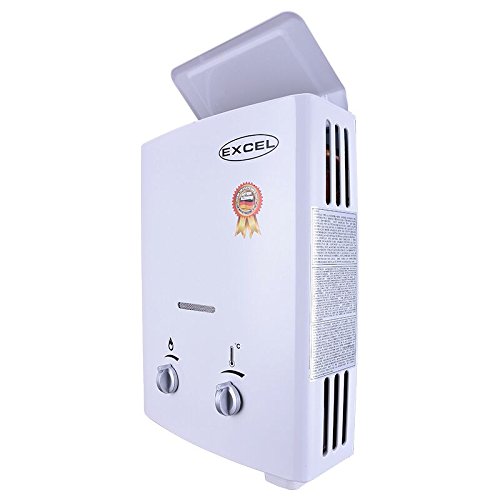
The EXCEL TANKLESS 1.6 GPM propane water heater is an Amazon-exclusive vent-free unit designed for ultra-low water pressure startup — it ignites at just 2 PSI. That makes it suitable for gravity-fed water systems or RVs with weak pumps that would stall other tankless heaters. The 40,000 BTU/h burner heats water on demand, and the compact 12.8 x 8 x 18.75-inch body weighs only 8.6 pounds.
Vent-free technology means no expensive flue installation is required, though you must still ensure adequate fresh airflow in the compartment. The copper heat exchanger and stainless steel burners resist corrosion. Power comes from two D-cell batteries for automatic ignition, so you don’t need to be connected to shore power. An included exhaust diffuser plate helps direct warm air away from the unit.
The 1.6 GPM flow rate is adequate for a single shower or sink but won’t handle large draws. Being a tankless design, there’s no stored hot water — the burner fires only when water flows. Users report that temperature consistency can vary with inlet water temperature changes. For RVers with very low water pressure who need a propane-fired tankless unit without complex venting, the EXCEL fills a niche that few competitors address.
What works
- Ignites at only 2 PSI, works with low-pressure or gravity systems
- Vent-free design eliminates flue installation cost
- Lightweight and compact at 8.6 pounds
What doesn’t
- 1.6 GPM flow is limiting for multiple simultaneous uses
- Battery-powered ignition requires periodic battery changes
Hardware & Specs Guide
Porcelain-Lined Steel vs Aluminum Tank
The Suburban SW6DEL and SW6D use a porcelain-lined steel tank with a replaceable anode rod. This combination is the most corrosion-resistant over the long term, provided you swap the anode every one to two years. Dometic’s WH-6GEA uses an aluminum tank that requires no anode rod, saving maintenance but potentially reducing lifespan in areas with high mineral or low pH water. Steel tanks generally weigh more but are more commonly stocked at RV dealers for replacement parts.
Gas Recovery Rate and Burner Power
The gas burner output is measured in BTU/h. The Suburban units and LandCamp SW6DE all use 12,000 BTU/h burners that deliver roughly 10.1 GPH recovery. This means after a 5-minute shower using about 3 gallons, the tank recovers in under 20 minutes. The RecPro tankless uses 42,000 BTU/h but applies that energy continuously as water flows, eliminating stored hot water entirely. For tank-style heaters, higher BTU/h directly translates to faster recovery — a critical spec for households with multiple users.
FAQ
How long does a 6 gallon RV hot water heater take to recover after a shower?
Can I replace a standard Suburban 6 gallon RV water heater with the LandCamp SW6DE?
Should I choose a tankless RV water heater over a 6 gallon tank?
Final Thoughts: The Verdict
For most buyers, the 6 gallon rv hot water heater winner is the Suburban Advantage SW6DEL because it delivers proven long-term durability with a porcelain-lined steel tank, a replaceable anode rod, and dual-fuel gas/electric flexibility that covers every camping scenario. If you want a maintenance-free tank material and lighter weight, grab the Dometic WH-6GEA. And for budget dual-fuel performance without the premium badge, nothing beats the LandCamp SW6DE.

Certification: BSc in Mechanical Engineering
Education: Mechanical engineer
Lives In: 539 W Commerce St, Dallas, TX 75208, USA
Md Amir is an auto mechanic student and writer with over half a decade of experience in the automotive field. He has worked with top automotive brands such as Lexus, Quantum, and also owns two automotive blogs autocarneed.com and taxiwiz.com.