A circular saw blade is the single component that determines whether a cut comes out glass-smooth or rough enough to ruin a workpiece. Most buyers grab whatever blade is cheapest or comes with the saw, only to fight burning, tear-out, and premature dulling on the very first project. Selecting the right 6 1/2-inch blade means understanding tooth geometry, carbide quality, and how the blade’s coating interacts with the material you cut most often.
I’m Amir — the founder and writer behind Four Wheel Ask. I’ve spent years analyzing owner reports, specification sheets, and build quality data across dozens of blade models to help buyers make informed decisions.
Whether you are framing walls, trimming plywood, or making fine crosscuts on a track saw, the right blade saves time, material, and frustration. After evaluating five top contenders across multiple use cases and price tiers, the Freud Diablo 2-Pack stands out as the best 6 1/2 circular saw blade for the majority of buyers.
How To Choose The Best 6 1/2 Circular Saw Blade
Choosing the right blade comes down to three core factors: tooth count, carbide quality, and kerf design. Each one directly affects cut quality, motor strain, and how many projects a blade will survive before needing replacement.
Tooth Count and Cut Application
Fewer teeth remove material faster but leave a rougher surface. An 18-tooth framing blade rips through dimensional lumber with speed, while a 24-tooth general-purpose blade balances speed with a cleaner edge. For finish work like trim or plywood, 40-tooth or higher blades produce smooth, chip-free cuts at the cost of slower feed rates. Choosing the wrong tooth count either wastes time sanding or forces the saw to work harder than necessary.
Carbide Quality and Anti-Stick Coatings
Not all carbide is equal. Premium blades use micrograin carbide grades (C3 or C4) that resist chipping and stay sharp longer through abrasive materials like plywood glue lines. Anti-stick coatings such as Perma-Shield, SpeedCoat, or PTFE reduce friction, prevent resin buildup, and keep the blade running cooler. A blade without coating will gum up faster, especially when cutting pressure-treated lumber or green wood.
Kerf Design and Arbor Compatibility
Thin-kerf blades (roughly 1.5mm to 2.0mm wide) remove less material per cut, which reduces drag on the motor and extends battery runtime on cordless saws. Full-kerf blades are more stable in dense hardwoods but demand more power. Always verify the arbor size before purchasing: most standard circular saws use a 5/8-inch arbor, while many track saws require a 20mm arbor. A blade with the wrong arbor simply will not mount safely.
Quick Comparison
On smaller screens, swipe sideways to see the full table.
| Model | Category | Best For | Key Spec | Amazon |
|---|---|---|---|---|
| Freud Diablo D0624A | Combo Pack | All-Around Value | 24T, Perma-Shield Coating | Amazon |
| Makita T-01410 | Fine Crosscut | Smooth Finishing | 40T, Hand-Tensioned Steel | Amazon |
| WEN BL6556 | Track Saw | Precision Cuts | 56T, PTFE Coating | Amazon |
| Bosch DCB624 | General Purpose | Everyday Use | 24T, SpeedCoat Finish | Amazon |
| DEWALT DWA161218 | Framing | Rough Framing | 18T, ToughTrack Design | Amazon |
In-Depth Reviews
1. Freud Diablo D0624A 2-Pack

The Freud Diablo D0624A arrives as a two-pack of 24-tooth, 6 1/2-inch blades with a permanent Perma-Shield coating applied at the factory. Owner feedback consistently highlights how the coating prevents pitch and resin from bonding to the blade surface, which keeps cuts clean and reduces the need for frequent cleaning. The laser-cut stabilizer vents are a meaningful engineering detail that reduces vibration and heat buildup during extended ripping sessions.
Each blade uses an alternate top bevel (ATB) tooth geometry that delivers fast crosscuts and clean edges in plywood, OSB, and dimensional lumber. The thin kerf design makes these blades particularly well suited for cordless saws where every bit of battery efficiency matters. Buyers frequently note that one blade in the pack handles rough framing while the other stays reserved for trim work, effectively doubling the value proposition.
For buyers who want a single purchase that covers both rough and finish applications without compromising on cut quality, this two-pack delivers. The Perma-Shield coating and vibration-dampening vents add genuine longevity advantages over uncoated competitors at a similar price tier.
What works
- Perma-Shield coating prevents gumming and corrosion
- Laser-cut vents reduce vibration and heat buildup
- Thin kerf ideal for cordless saws
What doesn’t
- Not ideal for dense hardwoods or thick stock
- Does not include a storage case
2. Makita T-01410 40-Tooth
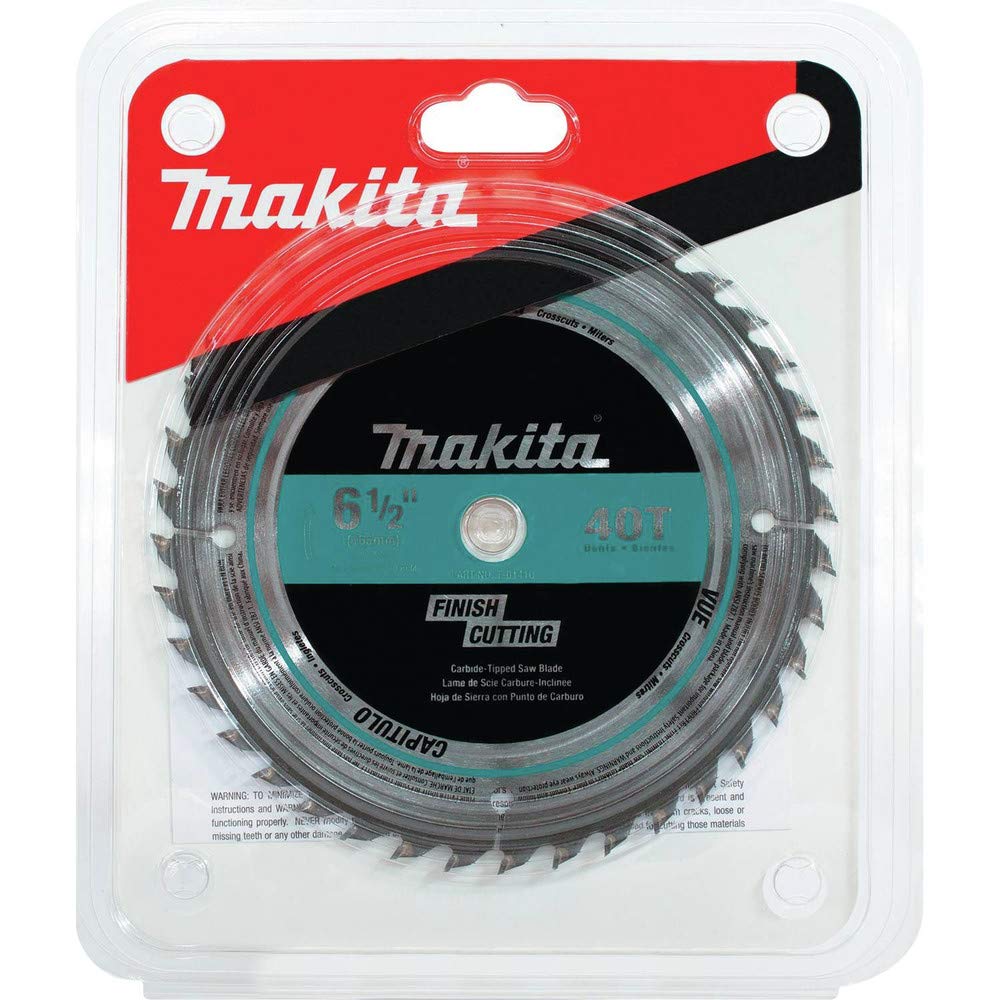
The Makita T-01410 is built for users who prioritize finish quality over raw cutting speed. Its 40 carbide-tipped teeth produce smooth, splinter-free edges in plywood, melamine, and hardwood trim without requiring secondary sanding. The ultra-thin kerf design reduces drag on the motor, which is particularly beneficial when paired with cordless circular saws where every watt of power matters.
Makita fully hardens and hand-tensions each steel saw plate, a manufacturing step that ensures the blade runs true under load. Owner reports consistently note that this blade delivers straight cuts without wander even after extended use in trim and cabinet work. The 5/8-inch arbor fits the majority of standard circular saws on the market, and the 40-tooth count makes it a strong choice for anyone who crosscuts more often than they rip.
Users who regularly work with veneered panels, pre-finished plywood, or hardwood flooring will find this blade reduces chip-out significantly compared to general-purpose or framing blades. It is purpose-built for fine crosscutting and performs that single job at a level that justifies the premium positioning.
What works
- Hand-tensioned steel plate runs true
- Ultra-thin kerf preserves battery life
- Excellent chip resistance on coated materials
What doesn’t
- Slow feed rate for ripping thick lumber
- Single blade purchase at a higher cost per blade
3. WEN BL6556 56-Tooth Track Saw Blade

The WEN BL6556 is a 56-tooth blade designed explicitly for track saw systems, using an Alternate Top Alternate Face with Raker (ATAFR) tooth geometry that produces exceptionally smooth cuts in wood, plastic, and composite materials. The non-abrasive heat-resistant PTFE coating stays cool during operation, which reduces the risk of workpiece burns on delicate surfaces like melamine or veneered plywood.
This blade features an ultra-thin 1.5mm kerf that removes very little material per pass, making it highly efficient for track-guided cuts where accuracy and minimal waste are paramount. The 20mm arbor is standard for most track saws, including the WEN CT1065, but buyers should verify compatibility with their specific saw before purchasing. Owner feedback emphasizes that this blade produces glue-ready edges straight off the saw with minimal tear-out.
For users who own a track saw and demand panel-grade cut quality without the price of European specialty blades, the WEN BL6556 offers strong performance. The high tooth count and PTFE coating make it a specialized tool, but within its intended application it performs at a level that competes with blades costing significantly more.
What works
- ATAFR geometry produces tear-out-free edges
- PTFE coating prevents heat buildup and burns
- Thin kerf maximizes material yield
What doesn’t
- 20mm arbor not compatible with standard circular saws
- Slow feed speed for ripping applications
4. Bosch DCB624 24-Tooth General Purpose
The Bosch DCB624 uses upgraded C3/C4 micrograin carbide formulated to resist impact damage from nail-embedded wood and abrasive plywood glue lines. The 24-tooth alternate top bevel geometry allows the blade to crosscut and trim with speed while still producing a finish that requires minimal cleanup. Bosch applies a SpeedCoat anti-friction finish that reduces heat and prevents material from sticking to the blade body during long cuts.
The blade features an extra-hard steel body that resists bending and deflection under load, which translates to truer cuts over the life of the blade. The thin kerf design cuts faster and produces less waste compared to full-kerf alternatives, making it a practical choice for corded and cordless saws alike. Owner reports note that the blade arrives sharp and holds its edge well through dozens of cuts in standard construction lumber.
For budget-conscious buyers who still want a blade with quality carbide and a functional coating, the Bosch DCB624 represents a strong entry-level option. It does not include the advanced venting or premium packaging of higher-priced competitors, but the core cutting performance holds up well against blades in higher price brackets.
What works
- C3/C4 micrograin carbide resists chipping
- SpeedCoat reduces friction and burning
- Reinforced steel body resists deflection
What doesn’t
- No vibration dampening vents
- Coating durability trails premium blades
5. DEWALT DWA161218 18-Tooth Framing

The DEWALT DWA161218 is an 18-tooth framing blade built around a patent-pending ToughTrack tooth design engineered to maintain accurate tracking over the blade’s service life. High-density tungsten carbide tips provide wear resistance in nail-embedded lumber, and a reinforced shoulder adds impact resistance when the blade encounters unexpected hardware. The Tough Coat anti-stick coating reduces friction and gumming during aggressive ripping cuts.
With only 18 teeth, this blade cuts aggressively and clears waste quickly, making it a strong choice for rough framing where speed matters more than surface finish. The thin kerf reduces drag on the saw motor, allowing a cordless 6 1/2-inch saw to rip through studs and sheathing with less strain. Owner feedback indicates the blade performs well in dimensional lumber but produces noticeable tear-out in plywood and OSB.
For users whose primary work involves framing walls, building decks, or cutting roof sheathing, this blade offers focused performance at an accessible price point. It is not designed for finish work, but within its intended role as a fast framing blade it delivers consistent results and solid durability.
What works
- Aggressive tooth design clears material fast
- Tungsten carbide holds up in nail-embedded wood
- Reinforced shoulder improves impact resistance
What doesn’t
- Rough cut quality on plywood and sheet goods
- Limited versatility outside framing applications
Hardware & Specs Guide
Tooth Count and Cut Application
The number of teeth on a circular saw blade directly determines how fast it cuts and how smooth the resulting surface will be. Low-tooth blades (18 to 24 teeth) excel at ripping dimensional lumber and crosscutting studs because they clear material aggressively. Mid-range blades (24 to 40 teeth) offer a practical balance for general construction, plywood, and trim work. High-tooth blades (40 to 56 teeth) produce finish-quality cuts with minimal tear-out but require slower feed rates. Choosing a blade with the wrong tooth count for the task either wastes time on sanding or forces the saw to work harder than needed.
Carbide Materials and Anti-Stick Coatings
The grade of carbide brazed onto the tips determines how long a blade stays sharp. Premium blades use micrograin C3 or C4 carbide that resists micro-chipping when cutting through abrasive glue lines or embedded debris. Anti-stick coatings such as Bosch SpeedCoat, Diablo Perma-Shield, or WEN PTFE serve a dual purpose: they reduce friction heat that can burn workpiece edges, and they prevent pitch and resin from bonding to the blade body. A coated blade running through pressure-treated lumber or green wood will outlast an uncoated blade by a significant margin before requiring cleaning or replacement.
FAQ
What tooth count should I choose for general purpose cutting?
What does thin kerf mean and why does it matter?
Can I use a track saw blade in a standard circular saw?
How do anti-stick coatings affect blade performance?
Final Thoughts: The Verdict
For most buyers, the best 6 1/2 circular saw blade winner is the Freud Diablo D0624A 2-Pack because it delivers two well-coated, vibration-dampened blades at a combined value that undercuts buying singles. If you want the finest finish for trim and cabinet work, grab the Makita T-01410 40-Tooth for its hand-tensioned plate and chip-resistant performance. And for track saw owners who need panel-grade cuts, nothing beats the WEN BL6556 56-Tooth with its ATAFR geometry and PTFE coating.

Certification: BSc in Mechanical Engineering
Education: Mechanical engineer
Lives In: 539 W Commerce St, Dallas, TX 75208, USA
Md Amir is an auto mechanic student and writer with over half a decade of experience in the automotive field. He has worked with top automotive brands such as Lexus, Quantum, and also owns two automotive blogs autocarneed.com and taxiwiz.com.