Choosing the wrong viscosity or formulation for your engine is one of the fastest ways to accelerate wear, reduce fuel economy, and shorten engine life. With dozens of bottle designs and marketing claims lining the shelves, separating genuine engineering from clever packaging requires a systematic look at the specifications that actually matter.
I’m Amir — the founder and writer behind Four Wheel Ask. I’ve spent years dissecting motor oil formulation data, decoding API and ACEA certification changes, and cross-referencing real owner feedback from thousands of miles of service to identify which bottles deliver on their promises.
This guide breaks down the critical specs, service categories, and real-world performance data behind each formula. After analyzing formulation data, owner feedback, and industry specifications, I have identified the very strongest contenders for the best 5w-30 oil.
How To Choose The Best 5W-30 Oil
Selecting the right 5W-30 oil goes beyond grabbing the bottle with the most aggressive marketing. Your engine’s design, age, operating conditions, and manufacturer requirements all dictate which formulation will provide optimal protection and longevity. Understanding the key factors below will help you make an informed decision.
Viscosity Grade Decoded
The 5W-30 rating follows the SAE J300 standard. The 5W refers to the oil’s flow characteristics at cold temperatures, measured at minus 30 degrees Celsius. A lower winter rating means easier cranking and faster oil circulation during cold starts. The 30 indicates the oil’s viscosity at operating temperature, which determines film thickness and load-carrying capacity at normal engine heat levels. Using the wrong viscosity can lead to insufficient lubrication or excessive drag that reduces fuel economy.
Full Synthetic vs. Conventional
Full synthetic oils use chemically engineered base stocks with uniform molecular structures that provide superior resistance to thermal breakdown, oxidation, and viscosity loss. Conventional oils are refined from crude oil and contain a wider range of molecular sizes, which makes them more prone to shearing down in viscosity over time. For modern engines with turbochargers, variable valve timing, or direct injection, a full synthetic 5W-30 is strongly recommended to protect against deposits and high-temperature degradation.
Certifications and Approvals
Look for the API donut and ILSAC starburst on the bottle. API SP is the current gasoline engine standard, providing protection against low-speed pre-ignition (LSPI) and timing chain wear. ILSAC GF-6 adds fuel economy and deposit control requirements. European vehicles often require ACEA C3 or manufacturer-specific approvals like BMW LL-04, Mercedes-Benz 229.51, or Porsche C30. Using an oil without the proper certification can void warranties or cause emissions system damage.
High Mileage Formulations
Engines with over 75,000 miles may benefit from high mileage oils that include seal conditioners to reduce leaks, detergents to clean deposits, and additives to restore lost compression. These formulations are not marketing gimmicks — they address real changes in engine clearances and seal flexibility that occur with age. If your engine consumes oil or shows minor external seepage, a high mileage 5W-30 can often reduce both issues.
Quick Comparison
On smaller screens, swipe sideways to see the full table.
| Model | Category | Best For | Key Spec | Amazon |
|---|---|---|---|---|
| Mobil 1 Extended Performance | Full Synthetic | Extended Oil Change Intervals | 20,000 Mile Protection | Amazon |
| Liqui Moly Special Tec LL | European Synthetic | German Engine Performance | BMW LL-04 Approved | Amazon |
| Valvoline European Vehicle XL-III | European Synthetic | European Gas & Diesel Engines | ACEA C3, Low-SAPS | Amazon |
| Motorcraft 5W-30 | OEM Synthetic Blend | Ford & Lincoln Vehicles | Ford WSS-M2C961-A1 | Amazon |
| Valvoline MaxLife High Mileage | High Mileage Synthetic | Engines Over 75K Miles | Dual Defense Technology | Amazon |
In-Depth Reviews
1. Mobil 1 Extended Performance Full Synthetic 5W-30

Mobil 1 Extended Performance is engineered around the Triple Action+ Formula, which balances engine performance, cleanliness, and protection while also contributing to power output. The formulation meets ILSAC GF-6 standards, meaning it addresses low-speed pre-ignition (LSPI) in turbocharged engines and provides timing chain wear protection — critical factors for modern downsized engines. The oil maintains viscosity stability across an exceptional temperature range, from minus 40 degrees Fahrenheit up to 500 degrees Fahrenheit internal heat.
The extended drain capability of up to 20,000 miles between changes is supported by oxidation control additives that prevent the oil from thickening or breaking down prematurely. Owner feedback from vehicles including the Ford Edge and earlier model years consistently highlights the oil’s ability to maintain quiet engine operation and consistent pressure readings across the full service interval. The six-quart package format is practical for most passenger cars and light trucks that require a full sump fill without leftovers.
For drivers who prefer extended service intervals and want a premium synthetic that exceeds current API and ILSAC requirements, this formulation provides one of the highest margins of protection available in the 5W-30 category. The cold-flow characteristics at startup are particularly strong, reducing dry-start wear during the critical first seconds of engine operation.
What works
- Class-leading 20,000-mile drain interval capability with robust oxidation control
- Excellent low-temperature flow for cold-start protection in winter climates
- Meets latest ILSAC GF-6 and API SP standards for modern engine compatibility
What doesn’t
- Premium price point reflects extended performance engineering
- Six-quart pack may leave short measure for engines requiring a full 5-quart fill
2. Liqui Moly Special Tec LL 5W-30

Liqui Moly Special Tec LL is a synthesis technology oil developed specifically for modern long-life service intervals required by European manufacturers. The formulation carries BMW LL-04 approval, making it a direct replacement oil for many BMW gasoline and diesel engines, as well as meeting Mercedes-Benz specifications. The 5-liter jug size matches the sump capacity of most European vehicles, eliminating guesswork at oil change time.
Technical analysis of the formulation shows robust shear stability, meaning the oil maintains its 5W-30 viscosity grade under sustained high-load and high-temperature conditions common in Autobahn-style driving. Owner reports from BMW 3 Series and 5 Series owners note a measurable reduction in oil temperature — as much as 15 degrees Fahrenheit lower in some cases — compared to standard synthetic oils. The improved thermal management contributes to better engine efficiency and reduced wear on heat-sensitive components.
The cleaning detergent package keeps internal engine surfaces free of deposits, which is particularly important for direct-injection engines that are prone to carbon buildup on intake valves. For owners of German vehicles who want an oil that meets the strict manufacturer approvals without paying dealer markup, this represents a direct alternative to factory-filled oils. The cold-start behavior in winter conditions is notably smooth, with rapid oil pressure establishment reported even at subzero temperatures.
What works
- Direct BMW LL-04 and MB-Approval certifications for European engines
- Measurable reduction in engine oil operating temperature in many applications
- 5-liter jug provides correct fill volume for most European passenger cars
What doesn’t
- Higher cost per quart compared to mass-market synthetic options
- Vehicle-specific fit may not be suitable for Asian or domestic engines
3. Valvoline European Vehicle Full Synthetic 5W-30 XL-III
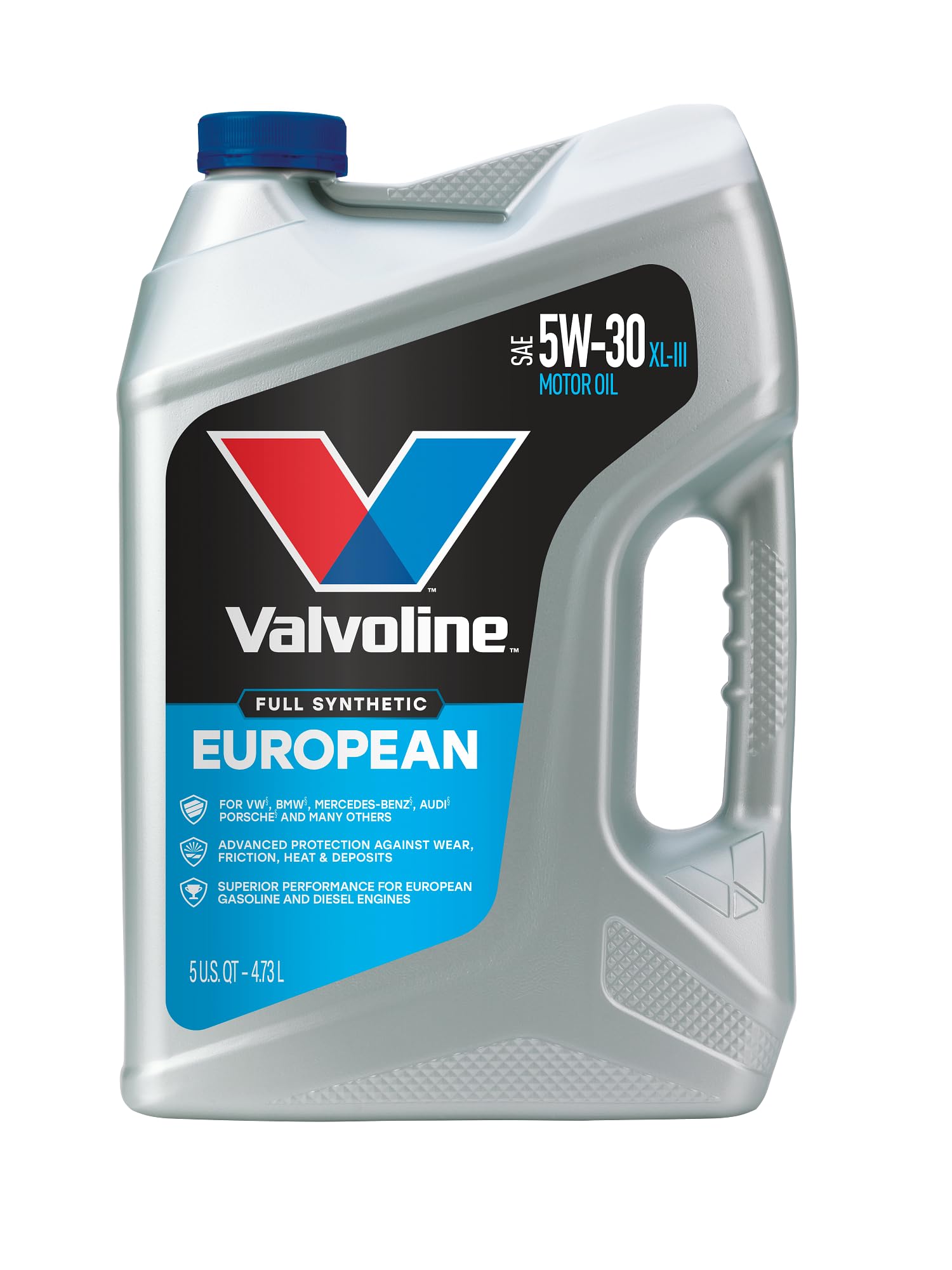
Valvoline European Vehicle XL-III is formulated with low-SAPS technology — reduced Sulfated Ash, Phosphorus, and Sulfur content — to protect sensitive exhaust aftertreatment systems in European gasoline and diesel engines. The ACEA C3 specification ensures compatibility with diesel particulate filters (DPF) and gasoline particulate filters (GPF), preventing clogging that can occur with high-ash oils. The triple-certification approach covers BMW, Mercedes-Benz, and Porsche requirements, making it a versatile choice across multiple European brands.
The additive package targets the four primary causes of engine breakdown: wear, friction, heat, and deposits. Anti-wear additives provide extra protection beyond industry standards, while antioxidants and cleaning detergents work together to prevent sludge formation and varnish buildup. Owner feedback from BMW diesel owners, specifically the 335d and 328d models, reports smooth operation and reliable performance across extended oil change intervals. The flash point rating of 446 degrees Fahrenheit indicates good resistance to oil consumption and volatility under high-load conditions.
For owners of European vehicles who want a single oil that covers multiple manufacturer approvals without needing to track separate formulations for gasoline and diesel engines, this provides a practical consolidated option. The low-SAPS formulation is particularly important for newer European vehicles equipped with particulate filters, as using the wrong oil can lead to expensive emissions system repairs. The 5-quart bottle size is convenient for most European sedans and SUVs that require a 5-liter fill.
What works
- Low-SAPS formulation compatible with DPF and GPF equipped vehicles
- Covers BMW, Mercedes-Benz, and Porsche approvals in a single product
- Strong anti-wear and antioxidant additive package for extended service life
What doesn’t
- Not recommended for vehicles that require higher viscosity grades like 5W-40
- European-specific formulation offers no advantage for domestic Asian engines
4. Motorcraft 5W-30 Motor Oil
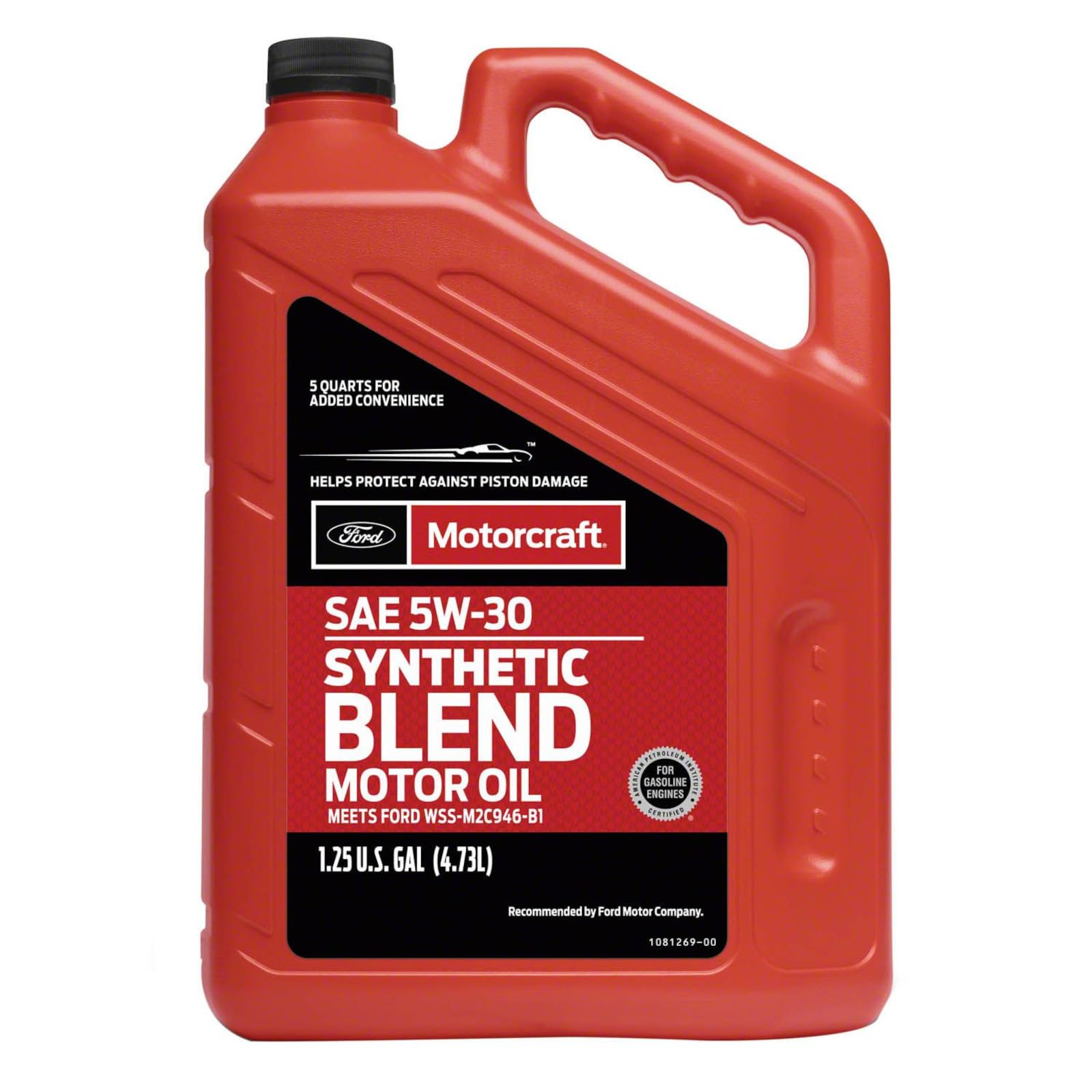
Motorcraft 5W-30 is the factory-fill oil for Ford and Lincoln vehicles, engineered specifically to meet Ford WSS-M2C961-A1 and related specifications. As an OEM-formulated product, it eliminates any question about warranty compliance or compatibility with Ford-designed engine components. The synthetic blend formulation provides a balance of cold-flow protection and high-temperature film strength that matches the factory engineering targets for vehicles like the F-150, Mustang, Explorer, and Lincoln Navigator.
The technical specifications show a flash point of 446 degrees Fahrenheit, indicating good resistance to oil consumption and volatility under normal operating conditions. Owner feedback across multiple Ford platforms, including the 2018 F-150 with the 5.0L V8 and the 2.7L EcoBoost engines, consistently reports quick cold-start oil pressure buildup and maintained fuel economy across the service interval. Several long-term Ford owners note that sticking with Motorcraft oil has resulted in cleaner internal engine components during teardown inspections compared to off-brand alternatives.
For Ford and Lincoln owners who prefer the simplicity of using the exact oil specified in the owner’s manual, Motorcraft offers peace of mind without the premium cost of boutique European oils. The universal fit classification means it works across Ford’s entire passenger car and truck lineup, simplifying inventory for households with multiple Ford vehicles. The competitive pricing and convenient home delivery make it a practical choice for routine maintenance.
What works
- OEM specification ensures full warranty compliance for Ford and Lincoln vehicles
- Good cold-start flow characteristics and maintained viscosity across service life
- Competitive pricing with convenient home delivery option
What doesn’t
- Synthetic blend formulation rather than full synthetic base stock
- No European or Asian manufacturer approvals for cross-brand use
5. Valvoline MaxLife Extended Protection High Mileage 5W-30
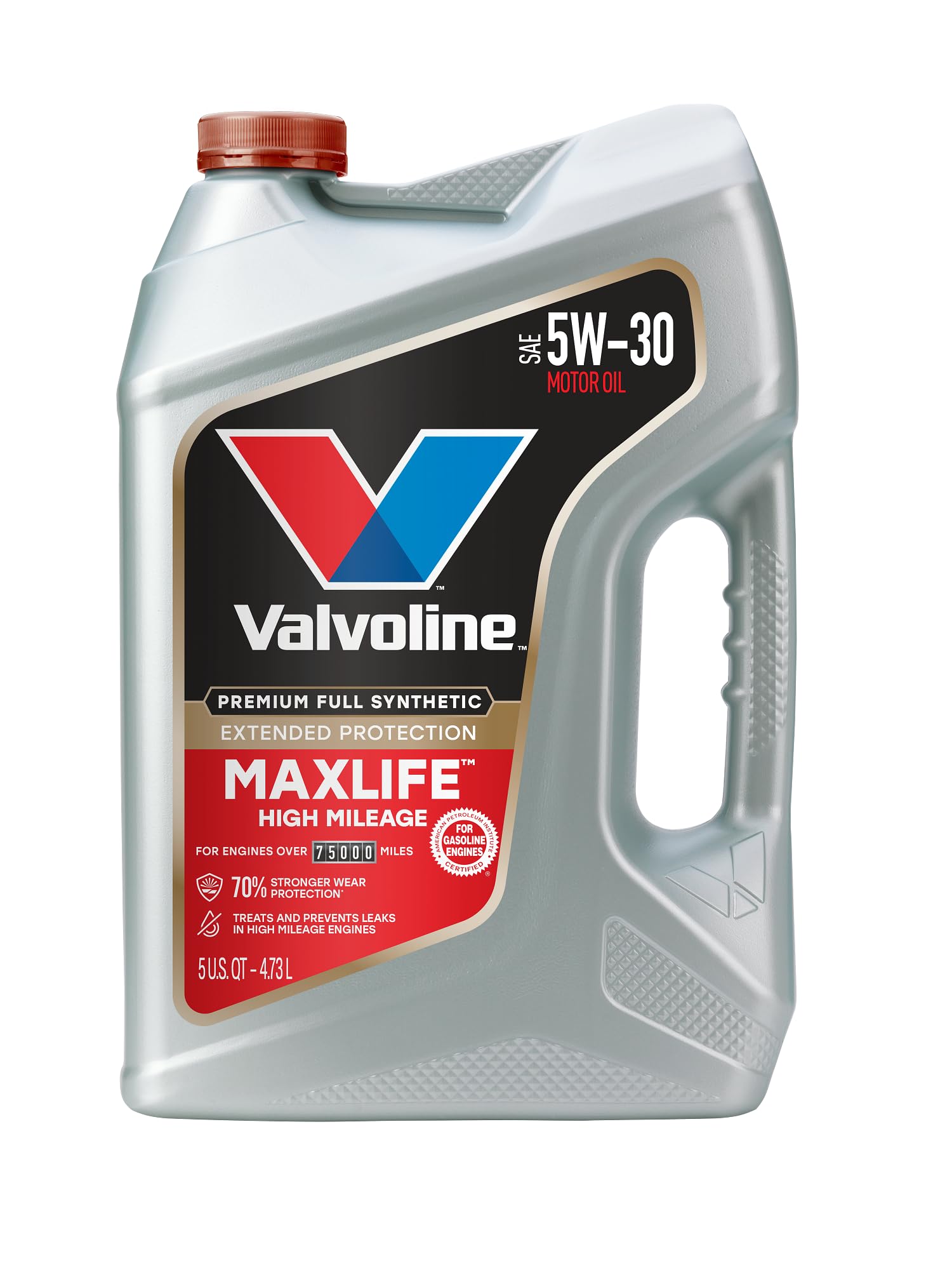
Valvoline MaxLife Extended Protection is designed specifically for engines with over 75,000 miles, addressing the common issues that emerge as engines age: seal shrinkage, deposit buildup, and increased clearances. The Dual Defense Additive Technology combines enhanced detergents with anti-wear boosters that provide 70 percent stronger wear protection compared to industry test standards. The formulation includes premium seal conditioners that treat and prevent oil leaks, reduce oil consumption, and improve fuel efficiency in aging engines.
Technical data shows 20 percent better sludge defense and 20 times better heat protection compared to industry standards, which is particularly relevant for high-mileage engines that may have compromised cooling system efficiency or existing deposit accumulation. Owner reports from a Mini Cooper with 80,000 miles describe smooth operation and no leak development after switching to this formulation. A Toyota 4Runner owner reported consistent oil pressure and maintained smoothness over a 4,000-mile observation period, with only normal darkening of the oil indicating it was performing its cleaning function.
The formulation meets the latest API SP and ILSAC GF-7A standards, so high-mileage engines receive the same protection against LSPI and timing chain wear as newer vehicles. This is important for older turbocharged engines that may still be vulnerable to pre-ignition despite their age. For owners keeping a vehicle past the 100,000-mile mark, the seal conditioners alone can offset the cost of the oil by reducing or eliminating minor leaks that would otherwise require gasket replacement.
What works
- Seal conditioners effectively reduce leaks and oil consumption in aging engines
- 70 percent stronger wear protection versus industry standards for long-term durability
- Meets latest API SP and ILSAC GF-7A standards for comprehensive protection
What doesn’t
- High-mileage additives provide no benefit for engines under 75,000 miles
- Some engines may require an additional quart beyond the 5-quart jug for full fill
Hardware & Specs Guide
Understanding API and ILSAC Standards
The American Petroleum Institute (API) assigns service categories that define an oil’s performance capabilities. API SP is the current standard for gasoline engines, introduced to address low-speed pre-ignition in turbocharged direct-injection engines and timing chain wear. The International Lubricant Standardization and Advisory Committee (ILSAC) GF-6 adds fuel economy and emissions system compatibility requirements. Oils meeting both standards carry the API donut and ILSAC starburst on the label. For engines built after 2010, using an oil that meets these standards ensures compatibility with modern emissions controls and engine designs.
Full Synthetic vs. Conventional Base Oils
Full synthetic oils use Group III, Group IV, or Group V base stocks that are chemically engineered for uniform molecular structure. This uniformity provides superior resistance to thermal breakdown, oxidation, and viscosity loss under high-stress conditions. Conventional oils (Group I and Group II) contain a broader distribution of molecular sizes, making them more susceptible to shearing and evaporation at high temperatures. For engines operating under severe conditions — towing, extreme temperatures, turbocharging, or extended oil change intervals — a full synthetic 5W-30 provides a measurable margin of additional protection that can extend engine life and maintain performance consistency.
FAQ
What does the 5W-30 viscosity rating actually mean?
How do I select the right 5W-30 oil for my vehicle?
Final Thoughts: The Verdict
For most buyers, the best 5w-30 oil winner is the Mobil 1 Extended Performance because it combines the longest certified drain interval, the latest API and ILSAC standards, and proven cold-flow characteristics that protect engines across a wide range of operating conditions. If you need a European-certified option with manufacturer approvals, grab the Liqui Moly Special Tec LL. And for high-mileage engines where leak prevention and wear reduction are the top priorities, nothing beats the Valvoline MaxLife High Mileage.

Certification: BSc in Mechanical Engineering
Education: Mechanical engineer
Lives In: 539 W Commerce St, Dallas, TX 75208, USA
Md Amir is an auto mechanic student and writer with over half a decade of experience in the automotive field. He has worked with top automotive brands such as Lexus, Quantum, and also owns two automotive blogs autocarneed.com and taxiwiz.com.