For riders who split their time equally between pavement and the trail, finding a tire that doesn’t force a compromise on either surface is the defining challenge. A 50/50 dual sport tire must deliver predictable cornering on asphalt while still biting into loam, gravel, and rock when the pavement ends. The wrong choice leaves you sliding in the turns on the road or spinning helplessly on a steep trail.
I’m Amir — the founder and writer behind Four Wheel Ask. My deep market research involves dissecting tire construction, tread compound chemistry, and ply ratings across dozens of models, then cross-referencing thousands of owner reports to identify which tires actually deliver on their 50/50 promise.
This guide cuts through the marketing noise to help you find the right 50/50 dual sport tire for your bike, riding style, and terrain mix based on real-world performance data.
How To Choose The Best Dual Sport Tire
Choosing a 50/50 tire means balancing on-road stability against off-road bite. The tread pattern tells only part of the story — construction type, ply rating, and compound all determine whether a tire can handle your specific mix of pavement and dirt.
Construction Type: Bias vs. Radial
Bias-ply tires use overlapping cord layers that create a stiffer carcass, making them more durable for heavy off-road abuse and less prone to sidewall punctures. Radial tires use cords running perpendicular to the tread, offering a more flexible sidewall that improves on-road grip and heat dissipation at higher speeds. For a true 50/50 rider who spends significant time on pavement, radial construction delivers noticeably better handling in corners and longer tread life on the road.
Ply Rating and Load Capacity
Ply rating indicates the tire’s resistance to impact and punctures. A 6-ply rating is common for dual sport tires and offers a good balance of weight and durability. Heavier adventure bikes or riders carrying gear should consider 8-ply or 10-ply options for added sidewall protection against sharp rocks. However, higher ply counts also mean a stiffer ride that can feel harsh on washboard gravel roads.
Tread Pattern and Knob Layout
The spacing, height, and shape of the knobs determine how the tire performs on each surface. Dense, closely spaced knobs with continuous center ribs provide stable pavement contact and reduce road noise. Tall, widely spaced knobs dig into loose dirt for traction but can feel vague or squirm on asphalt. A true 50/50 tire uses a compromise — moderately tall knobs with a staggered step design that creates a stable contact patch on pavement while still being aggressive enough for off-road climbing.
Quick Comparison
On smaller screens, swipe sideways to see the full table.
| Model | Category | Best For | Key Spec | Amazon |
|---|---|---|---|---|
| Dunlop Trailmax Mission Rear Tire | Premium | High-speed adventure touring | 150/70B-17 | 8-Ply | Amazon |
| MICHELIN Anakee Adventure Dual-Sport Radial | Premium | Wet pavement grip & stability | 110/80R-19 | Radial | Amazon |
| Tusk Waypoint Adventure Tire Set | Mid-Range | Adventure bikes needing a complete set | 90/90-21 & 130/90-17 | 6-Ply | Amazon |
| Tusk Dsport Adventure Tire Set | Mid-Range | Aggressive off-road with road legality | 90/90-21 & 120/90-18 | 10-Ply | Amazon |
| Dunlop D606 Dual Purpose Tire | Mid-Range | Trail-heavy 90/10 riding | 90/90-21 | 6-Ply | Amazon |
| Shinko Dual Sport 705 Series Tire | Mid-Range | Budget-conscious on-road commuters | 130/80-17 | Bias Ply | Amazon |
| Kenda K760 Dual/Enduro Front Tire | Budget | Entry-level trail riding | 80/100-21 | 6-Ply | Amazon |
In‑Depth Reviews
1. Dunlop Trailmax Mission Rear Tire

Dunlop invested over two years developing the Trailmax Mission, and it shows in the balanced performance across pavement and dirt. The staggered step design built into the rugged tread blocks creates a stable contact patch that delivers confident cornering on asphalt while still providing the bite needed for loose gravel and hard-packed trails. The 8-ply construction adds significant sidewall protection against sharp rocks without turning the ride into a harsh experience on washboard surfaces.
On the road, the wrap-around lugs on the tire’s edge do double duty — they protect the carcass from rock damage and add extra traction when you’re leaned over in a turn. The compound is formulated to resist chunking at highway speeds, which is a common failure point on softer dual sport tires. Riders report consistent wear patterns even after several thousand miles of mixed riding, which is rare for a tire this aggressive off-road.
The 150/70B-17 sizing fits a wide range of adventure bikes, and the load capacity of 716 pounds handles fully loaded touring setups. The only real tradeoff is weight — at 19.31 pounds, it isn’t the lightest option, but the durability payoff is substantial for riders who don’t want to change tires mid-season.
What works
- Staggered step design provides excellent on-road stability for a knobbie tire
- Wrap-around edge lugs protect against rock damage off-road
- 8-ply construction offers great puncture resistance for adventure touring
What doesn’t
- Heavier than some competitors at over 19 pounds
- Limited to 17-inch rear rim sizes
2. MICHELIN Anakee Adventure Dual-Sport Radial Tire
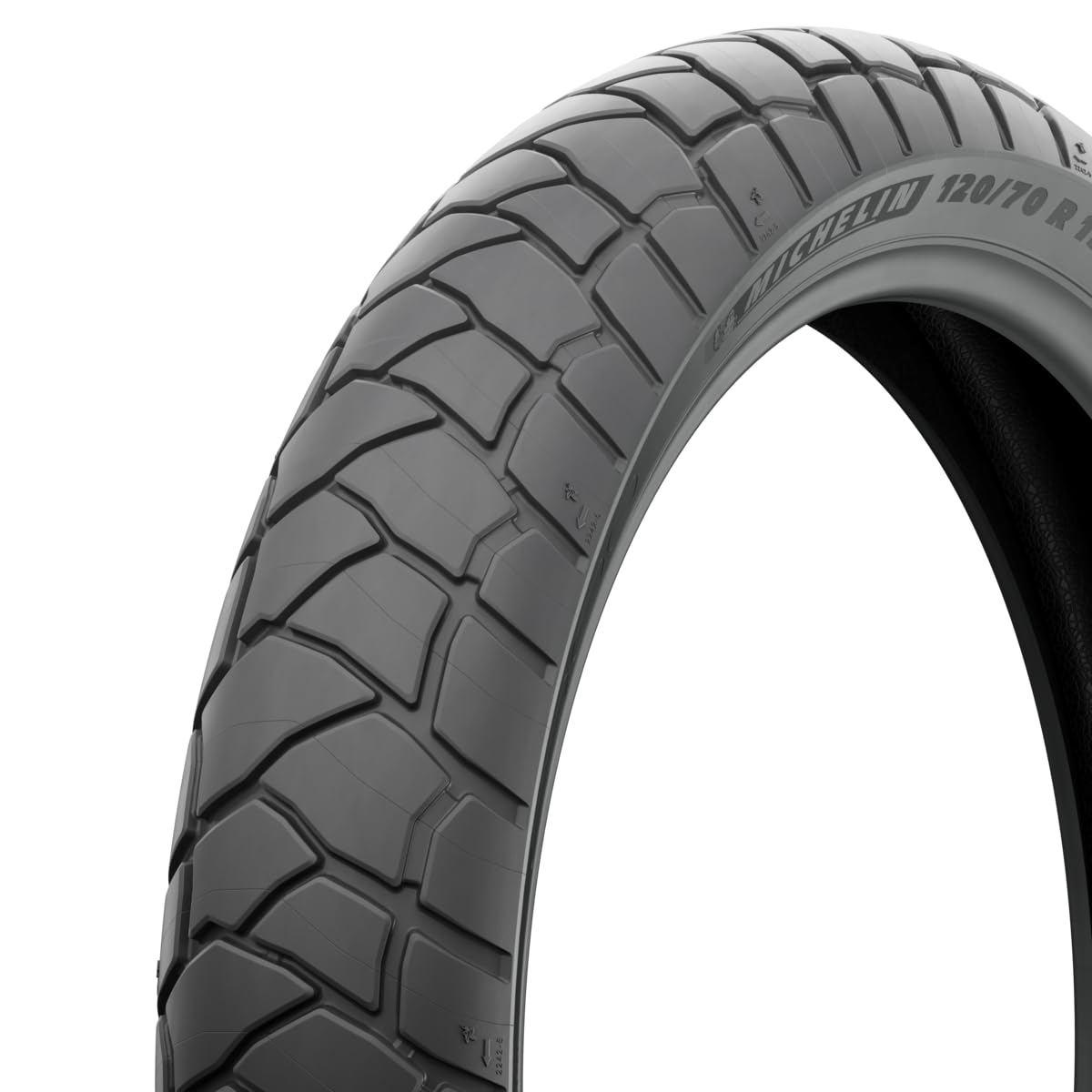
MICHELIN brought its silica tread compound technology from the automotive world to the Anakee Adventure, resulting in a dual sport tire that refuses to give up grip in wet conditions. The silica compound stays pliable in cold rain and provides tremendous adhesion on slick pavement, which is the area where most 50/50 tires fall dangerously short. The radial construction with a flexible sidewall allows the tread to conform to road imperfections rather than skipping over them.
The Bridge Block Technology borrowed from the Anakee Wild line keeps the center of the tire stable at speed, while the fully grooved geometric tread pattern provides reliable off-road traction in loose conditions. MICHELIN’s 2CT compound technology uses a harder base layer under a softer tread surface, which prevents the knobs from folding over under hard braking while maintaining the grip needed for dirt. The 10.78-pound weight is impressively low for a radial tire of this size, reducing unsprung mass and improving suspension response.
The 110/80R-19 front sizing is common on mid-size to large adventure bikes, and the 890-pound load capacity covers heavily loaded touring. The six-year warranty from date of purchase adds peace of mind that most dual sport tire manufacturers don’t offer. The tradeoff is that the silica compound wears faster on hot asphalt during aggressive riding, so it favors riders who prioritize wet safety over ultimate mileage.
What works
- Silica tread compound delivers exceptional wet pavement grip
- Radial construction improves high-speed stability and ride comfort
- Low weight reduces unsprung mass for better suspension action
What doesn’t
- Softer compound wears faster on hot pavement at sustained highway speeds
- Limited to 19-inch front rim applications
3. Tusk Waypoint Adventure Motorcycle Tire Set

The Tusk Waypoint set covers both front and rear in one purchase, making it a convenient option for riders who want a matched pair without hunting for separate sizes. The 90/90-21 front and 130/90-17 rear combination fits many popular dual sport and adventure bikes from KLR650s to DR650s. The tread profile is designed to deliver predictable handling as the tire wears, so you don’t get that nervous wandering sensation common on squared-off dual sport tires after a few thousand miles.
Off-road, the aggressive knobs dig into loose terrain with authority, while the rubber compound balances grip against long-lasting wear. The 6-ply construction provides adequate sidewall protection for most trail riding without the harshness that comes with higher ply counts. On pavement, the tread profile offers consistent cornering feel, though the knobs do produce the expected hum at highway speeds that is characteristic of any 50/50 tire.
The set includes tube-type tires, so make sure your wheels are compatible or plan for tube installation. At a combined weight that keeps both tires manageable, the Waypoint set represents a solid mid-range investment for riders who want genuine 50/50 capability without stepping into premium pricing territory.
What works
- Complete front and rear set simplifies buying and matching
- Tread profile maintains consistent handling characteristics as tire wears
- Aggressive knobs provide strong off-road traction in loose conditions
What doesn’t
- Tube-type design requires compatible wheels or tubes
- Noticeable road noise at highway speeds
4. Tusk Dsport Adventure Motorcycle Tire Set

The Tusk Dsport Adventure set leans heavily toward the off-road side of the 50/50 equation with its tall, widely spaced knobbies that bite into deep loam and loose rock. The 10-ply construction is overkill for pavement-only use but becomes a lifesaver when you’re navigating sharp volcanic rock or jagged trail debris that would slice through a standard 6-ply tire. The DOT compliance means you can legally ride between trail sections on pavement, though the tire’s on-road manners are clearly secondary to its off-road aggression.
On the trail, the tall knobs provide exceptional traction in soft conditions, and the wide spacing allows mud to clear instead of packing solid. The rubber compound is formulated to resist chunking, which is a common issue with softer-end dual sport tires when ridden hard on rocky terrain. The set comes as a matched front and rear pair with 90/90-21 front and 120/90-18 rear sizing, fitting many enduro and smaller adventure bikes.
The tradeoff for this off-road prowess is noticeable on pavement. The tire hums loudly at speed, and the tall, spaced-out knobs can feel vague during cornering on asphalt. Riders who spend more than 50% of their time on pavement should look elsewhere, but for those who need serious off-road capability with occasional road legality, this set delivers.
What works
- 10-ply construction offers outstanding puncture and impact resistance
- Tall, wide-spaced knobs provide excellent traction in loose and muddy terrain
- Matched front and rear set simplifies purchasing
What doesn’t
- Significant road noise and reduced on-road cornering confidence
- 10-ply construction creates a stiff ride on washboard surfaces
5. Dunlop D606 Dual Purpose Tire

The Dunlop D606 is the go-to choice for riders who spend 90% of their time off-road but need DOT approval for the short pavement sections connecting trails. With a 90/10 dirt-to-road rating, this front tire prioritizes aggressive trail riding over highway comfort. The 6-ply construction keeps the carcass stiff enough to prevent pinch flats when hitting rocks at speed, and the tall, widely spaced knobs dig deep into loose soil and gravel.
Where the D606 excels is in technical terrain where precise front-end control matters. The knobs are firm enough to hold an edge on side slopes and provide predictable steering in loose corners. On pavement, the 90/90-21 size offers adequate contact for brief highway stretches, but the tire will feel squirmy at higher speeds and produce significant noise. Riders should keep pressures lower for trail use and be prepared to adjust when hitting the road.
The 10-pound weight is reasonable for a front tire of this size, and the 6-ply rating offers a good balance between protection and flexibility. This is a front-only tire, so you’ll need to pair it with a compatible rear, such as the D606 rear or a dedicated trail tire. For riders who genuinely ride more dirt than pavement, the D606 is a proven performer that has earned its reputation over decades of use.
What works
- Aggressive knob pattern provides excellent traction in technical off-road terrain
- 6-ply construction resists pinch flats at low trail pressures
- Proven, long-standing design with decades of rider validation
What doesn’t
- 90/10 rating means poor on-road stability at highway speeds
- Front-only tire requires separate rear tire purchase
6. Shinko Dual Sport 705 Series Tire

The Shinko 705 Series is a value-oriented tire that leans toward the road side of the 50/50 equation. The aggressive tread pattern features dense, interlocking grooves that provide excellent wet and dry pavement adhesion while still offering enough bite for hard-packed dirt and gravel roads. The bias-ply construction keeps the tire stable at highway speeds, and the 639-pound load capacity is sufficient for most mid-size dual sport bikes.
Where the 705 shines is in predictable on-road behavior. The compound resists tearing when you do venture off-road, but it’s clearly tuned for riders who commute on pavement during the week and hit fire roads on the weekend. The 130/80-17 rear sizing is common on bikes like the Suzuki DR650, Kawasaki KLR650, and similar 650-class dual sports. Riders report consistent wear patterns that allow the tire to last well past the 5,000-mile mark on pavement-heavy riding.
The tradeoff becomes apparent in deeper off-road conditions. In loose sand, mud, or wet clay, the 705’s relatively shallow tread spacing will pack up and lose traction faster than a more off-road-focused tire. It’s also a tube-type tire, so ensure compatibility with your wheels. For the rider who prioritizes road mileage and occasional dirt capability, the Shinko 705 delivers strong value.
What works
- Excellent wet and dry pavement adhesion for a dual sport tire
- Long-lasting tread compound suitable for highway commuting
- Affordable price point for budget-conscious riders
What doesn’t
- Limited off-road traction in loose sand, mud, or wet clay
- Tube-type design requires compatible wheels or inner tubes
7. Kenda K760 Dual/Enduro Front Tire
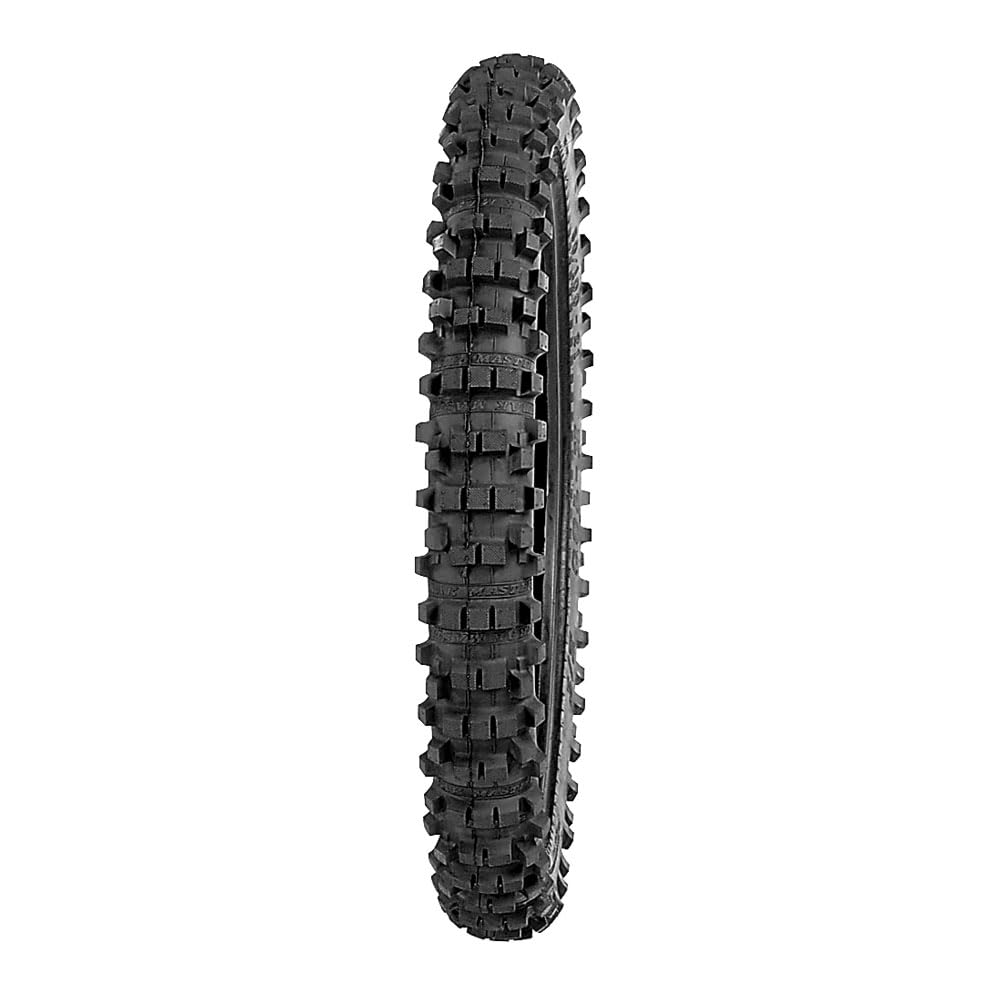
The Kenda K760 Trakmaster is a legendary name in the dual sport world, known for offering serious off-road performance at a budget-friendly price. The 80/100-21 front tire features tall, aggressive knobs that are DOT approved for 90% dirt and 10% road use. The 6-ply construction provides solid puncture resistance for rocky trails, and the durable compound is formulated to extend tread life despite the aggressive knob design.
On the trail, the K760 delivers predictable front-end grip that inspires confidence in loose corners and steep climbs. The tall knobs bite deep into soft terrain, and the 9-pound weight keeps steering feel light and responsive. On pavement, the aggressive tread pattern produces significant noise, and the tire will squirm at highway speeds — this is not a tire for long-distance touring. It’s designed for riders who trailer to the trail and endure short pavement transfers.
The 80/100-21 sizing fits most enduro and dual sport bikes with standard 21-inch front wheels. The load capacity of 430 pounds is adequate for the front end of most bikes. The K760 is a no-frills tire that focuses on off-road grip above all else, making it an excellent choice for budget-focused riders who prioritize trail performance and don’t mind the on-road compromises.
What works
- Tall, aggressive knobs provide excellent off-road traction at a low cost
- 6-ply construction offers good puncture resistance for trail riding
- Lightweight at 9 pounds for responsive front-end steering
What doesn’t
- Significant road noise and poor highway stability
- 90/10 rating means limited on-road capability
Hardware & Specs Guide
Ply Rating and Sidewall Protection
Ply rating directly impacts how much abuse a tire can take off-road. Standard 6-ply tires offer adequate protection for most trail riding, while 8-ply and 10-ply options provide dramatically better resistance to sidewall cuts from sharp rocks. The tradeoff is ride harshness — higher ply counts create a stiffer carcass that transmits more vibration through the handlebars and seat. On heavy adventure bikes with luggage, 8-ply is the sweet spot; on lighter enduro bikes, 6-ply preserves suspension compliance.
Bias vs. Radial Construction
Bias-ply tires use overlapping cord plies that create a stiff, durable carcass ideal for off-road abuse and heavy loads. Radial tires use cords that run perpendicular to the tread, allowing the sidewall to flex independently from the tread for better road contact at high speeds and improved heat dissipation. For 50/50 use, radial construction offers noticeably better highway stability and cornering grip, while bias-ply tires are more forgiving on rocky trails and easier to repair in the field.
FAQ
Can I use a 50/50 tire on a bike that came with full street tires?
How often should I replace a 50/50 dual sport tire?
Final Thoughts: The Verdict
For most buyers, the 50/50 dual sport tire winner is the Dunlop Trailmax Mission because its staggered step tread design delivers genuine off-road traction without sacrificing the high-speed stability needed for pavement sections. If you prioritize wet weather safety and highway comfort, grab the MICHELIN Anakee Adventure. And for riders who need a complete matched set with aggressive off-road capability at a mid-range price, nothing beats the Tusk Waypoint set.

Certification: BSc in Mechanical Engineering
Education: Mechanical engineer
Lives In: 539 W Commerce St, Dallas, TX 75208, USA
Md Amir is an auto mechanic student and writer with over half a decade of experience in the automotive field. He has worked with top automotive brands such as Lexus, Quantum, and also owns two automotive blogs autocarneed.com and taxiwiz.com.